 Dave King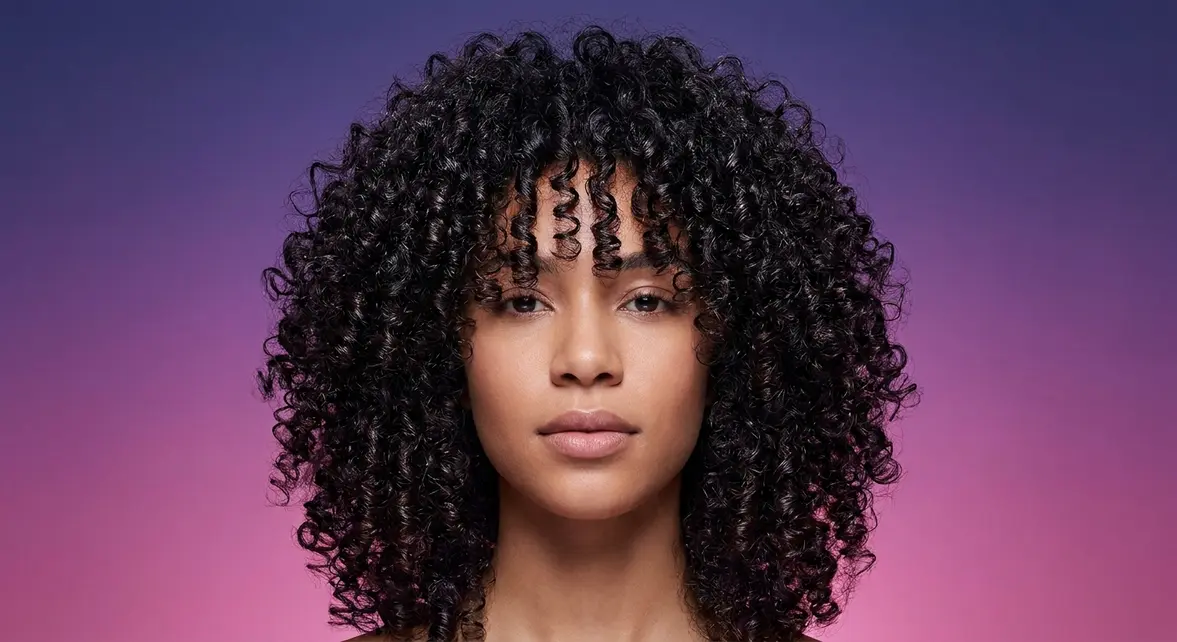
“3a or 3b hair? It’s always straighter on top… product recs?”
If this sounds familiar, you’re not alone — and you’re in exactly the right place.
Using the wrong products for your curl type doesn’t just waste money — it actively works against your curls, causing the frizz, dryness, and lack of definition you’re trying to fix. Misidentifying your 3B hair as 3A or 3C sends you down entirely different product aisles, and your curls pay the price every wash day.
By the end of this guide, you’ll know exactly what 3B hair is, how to tell if you have it, and how to build a step-by-step routine that finally gives your curls the definition and moisture they need. At careaboutyourhair.com, our team reviewed clinical research and community consensus across professional curl communities to compile this guide — so every recommendation here is grounded in evidence, not guesswork.
We cover everything from identifying your curl type and comparing 3B to 3A and 3C hair, to the best washing routine, styling products, and even a dedicated section for men with 3B curls.
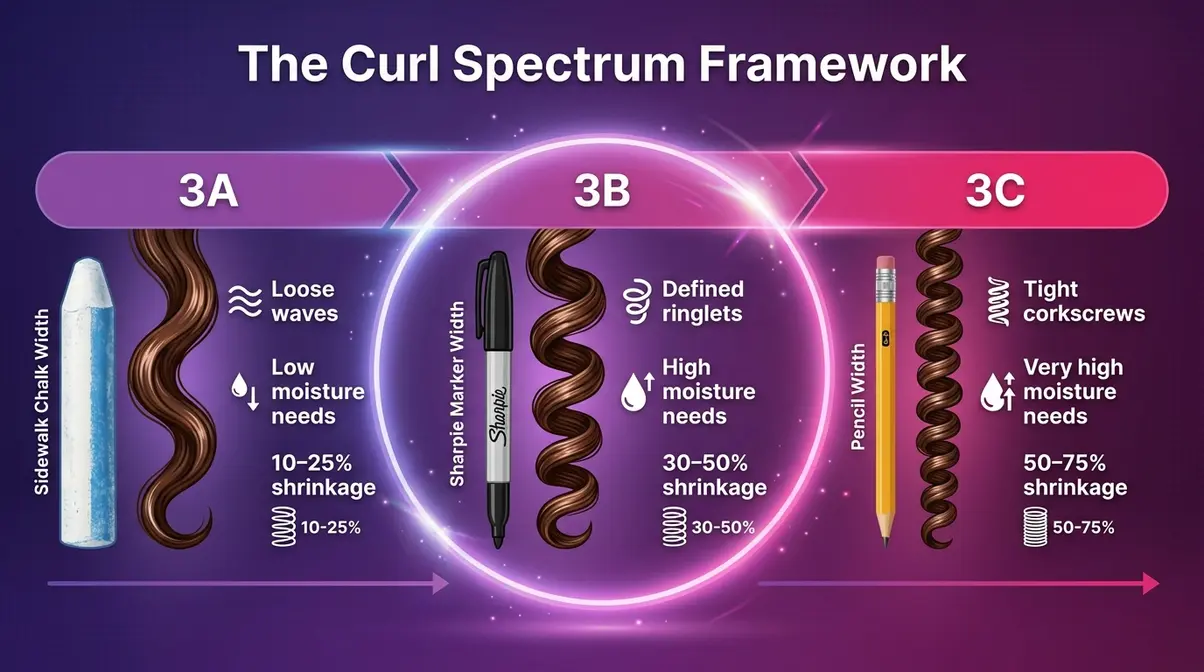
3B hair features springy ringlets roughly the circumference of a Sharpie marker — defined, voluminous, and prone to dryness because natural oils struggle to travel down the spiral shaft. Using The Curl Spectrum Framework, you can identify your exact curl position and prescribe the right routine.
- 3B curls sit between looser 3A waves and tighter 3C corkscrews on the curl spectrum
- Dryness is the #1 challenge: sebum cannot travel down a spiral hair shaft efficiently
- The LOC Method (Liquid, Oil, Cream) is the most effective moisture-layering technique for 3B hair
- Sulfate-free shampoo is non-negotiable — sulfates strip the natural oils 3B curls desperately need
- Men with 3B hair are underserved by most guides — a dedicated routine section is included below
****
- Table of Contents
- What Is 3B Hair? Understanding Your Curl Type
- 3A vs. 3B vs. 3C Hair: What’s the Difference?
- The Complete 3B Hair Care Routine
- Best Products and Ingredients for 3B Hair
- Hairstyles and Cuts for 3B Curls
- 3B Hair for Men: Routines, Cuts, and Products
- Do Hair Subliminals Work for Changing Curl Type?
- Common 3B Hair Mistakes to Avoid
- FAQ
What Is 3B Hair? Understanding Your Curl Type
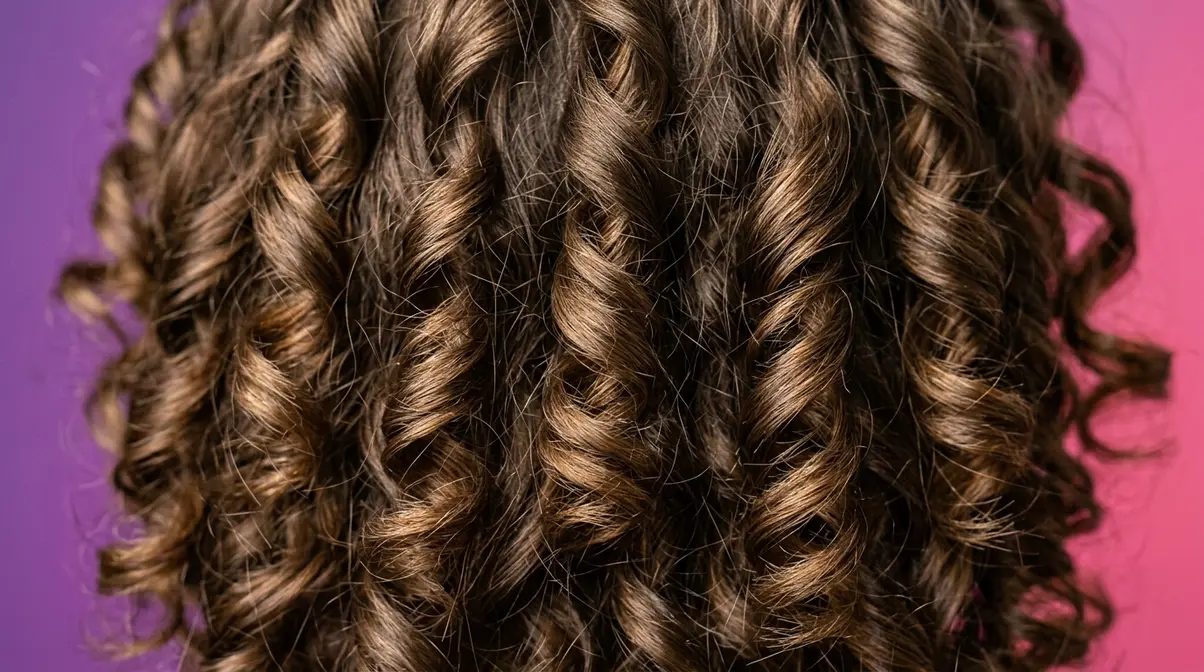
3B hair features springy ringlets roughly the circumference of a Sharpie marker, sitting between looser 3A waves and tighter 3C corkscrews on the curl spectrum. Research confirms that curly hair forms when asymmetrical follicles create a spiral growth pattern that prevents sebum from traveling down the shaft (NCBI, 2015). This structural quirk is why 3B curls are chronically prone to dryness and frizz — understanding it is the first step to fixing it.
This section introduces The Curl Spectrum Framework — our way of visualizing 3A, 3B, and 3C curls on a continuum of tightness, moisture needs, and product weight. Think of it less like a rigid category and more like a position on a dial. Knowing where you sit on that dial tells you exactly which products to reach for.
The Science Behind 3B Curl Formation
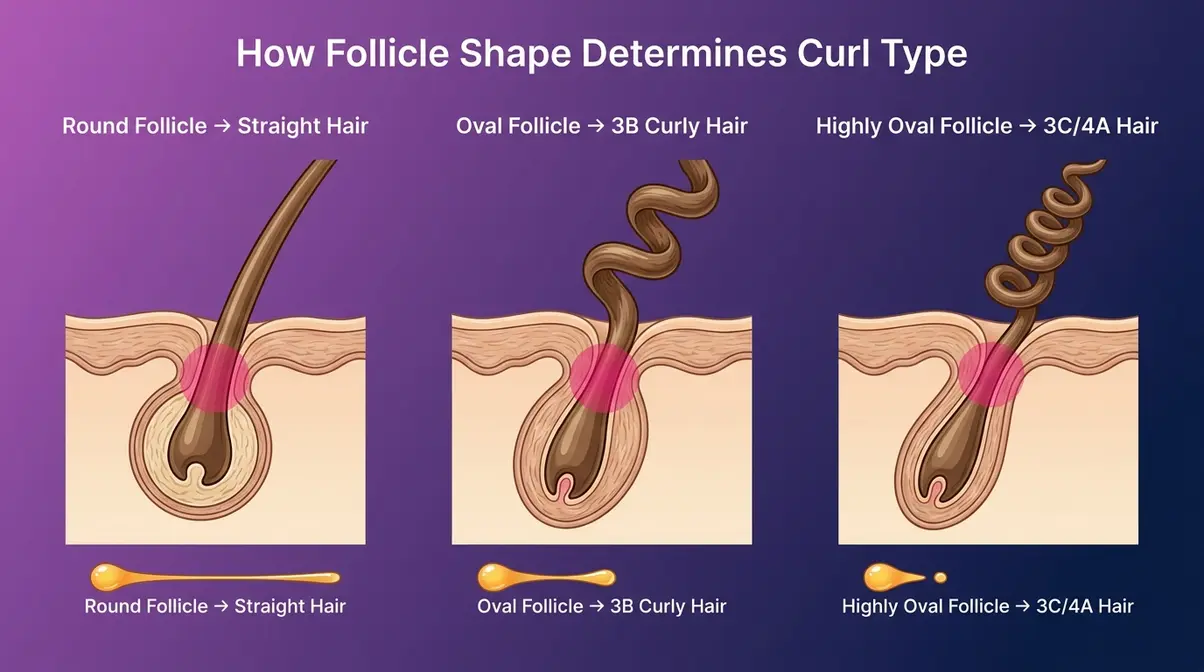
Why do some people have straight hair and others have springy ringlets? The answer lives in your follicle — specifically, its shape.
Hair follicles are not all round. Straight hair grows from round, symmetrical follicles. Curly hair grows from oval or asymmetrical ones. The more oval the follicle, the more curved the hair shaft as it grows — and the tighter the resulting curl. Scientific research on curly hair follicles confirms this relationship between follicle asymmetry and curl curvature (NCBI, 2015). For 3B hair type, the follicle is moderately oval, producing that distinctive Sharpie-sized ringlet.
Here’s a simple way to picture it: imagine a garden hose being pinched on one side. Water (or in this case, hair) curves away from the pinched side. The more the hose is pinched, the tighter the curve. That pinch is what your follicle does to your hair shaft every single millimeter it grows.
Now consider sebum (your scalp’s natural moisturizing oil). On straight hair, sebum slides down the shaft easily. On 3B curls, the spiral bends prevent that journey — sebum gets stranded near the roots while your ends stay dry. This is the core physics of why 3B hair behaves the way it does.
This is why you might notice your roots feel oily while your ends feel dry — it’s not a product problem, it’s physics. The Curl Spectrum Framework acknowledges this structural reality and builds every product and routine recommendation around it.
Now that you understand why 3B hair behaves the way it does, let’s get specific about what it actually looks like — and how to recognize it.
Key Characteristics of 3B Hair
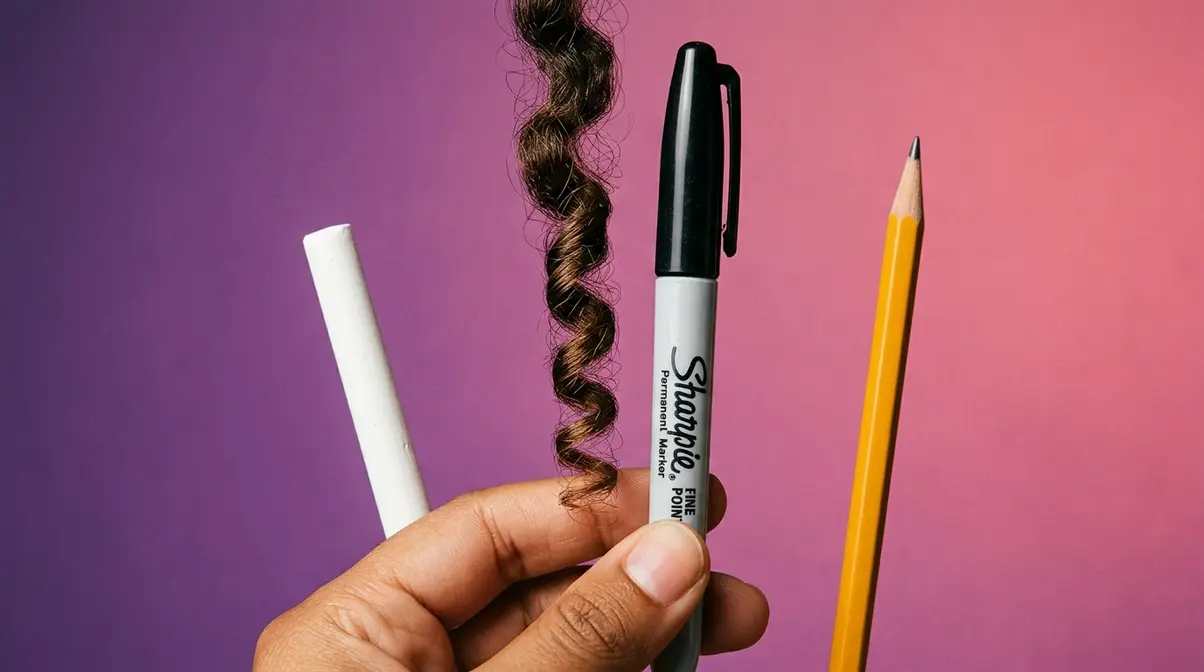
3B hair has a distinctive set of traits that set it apart from its neighbors on the curl spectrum. Here’s what to look for:
- Curl circumference: Roughly the size of a Sharpie marker barrel. Larger than a pencil (which is closer to 3C) and smaller than sidewalk chalk (which is closer to 3A).
- Texture: Dense and voluminous. 3B curls have more body than 3A waves and less compactness than 3C coils.
- Shrinkage: Significant — expect 30–50% shrinkage from wet to dry length. Your hair will look much shorter once dry.
- Wet vs. dry behavior: When wet, curls appear elongated and clumped. When dry, they spring up and separate, gaining volume.
- Frizz tendency: High. The spiral structure creates friction between strands, especially in humidity.
- Moisture needs: Above average. Because sebum can’t travel the full shaft length, 3B curls rely heavily on applied moisture from products.
- Curl memory (how well curls return to their natural pattern after being disturbed): Moderate to strong — 3B hair can “revert” to its curl pattern even after light manipulation.
3B hair texture tends to feel soft when properly moisturized and rough or brittle when dry. If your curls feel crunchy after drying without product, that’s a hydration signal, not a styling failure.
The key distinction between curly hair 3B and neighboring types: 3A curls are looser and more S-shaped, 3C curls are tighter and rope-like. 3B sits firmly in the middle — defined enough to have real structure, loose enough to be styled in multiple ways.
How to Tell If You Have 3B Hair: A Simple Self-Test
Most guides tell you to assess your hair while it’s wet. That’s actually backwards. The professional standard is to assess your curl type on dry, unmanipulated hair — ideally the day after washing, without any stretching or touching while it dries. Wet hair elongates curls and makes 3B look like 3A. Wait until it’s fully dry.
Your 3B self-test checklist:
- [ ] Your dry curls form defined, bouncy ringlets (not waves, not tight coils)
- [ ] A Sharpie marker held next to your curl is roughly the same diameter
- [ ] Your hair has noticeable shrinkage — it looks shorter dry than wet
- [ ] Your roots sit flatter or straighter than your mid-lengths and ends (this is normal for 3B)
- [ ] Your hair feels dry at the ends even when your scalp feels fine
- [ ] Humidity makes your curls frizz rather than tighten further
- [ ] Products that work on straight hair or very tight coils don’t seem to work on you
If you checked 4 or more of these boxes, you very likely have 3B curls. If you’re still between 3A and 3B, the next section’s comparison chart will help you decide.
One more tip: your curl pattern can vary across your head. Many people with 3B hair have looser curls at the crown (appearing straighter on top) and tighter curls underneath. This is completely normal — and it’s addressed fully in the next section.
Hair Porosity and Why It Matters for 3B Curls
Knowing your curl type is step one. Knowing your porosity — the term for how well your hair shaft absorbs and retains moisture — is step two. Two people can both have 3B curls and need completely different products based on porosity alone.
The three porosity levels:
| Porosity | What It Means | Best Products |
|---|---|---|
| Low porosity | Cuticles lie flat; moisture is hard to absorb | Lightweight liquids, heat to open cuticles |
| Medium porosity | Cuticles slightly raised; absorbs and retains moisture well | Most products work — the sweet spot |
| High porosity | Cuticles raised or damaged; absorbs moisture quickly but loses it fast | Heavy butters, sealants, protein treatments |
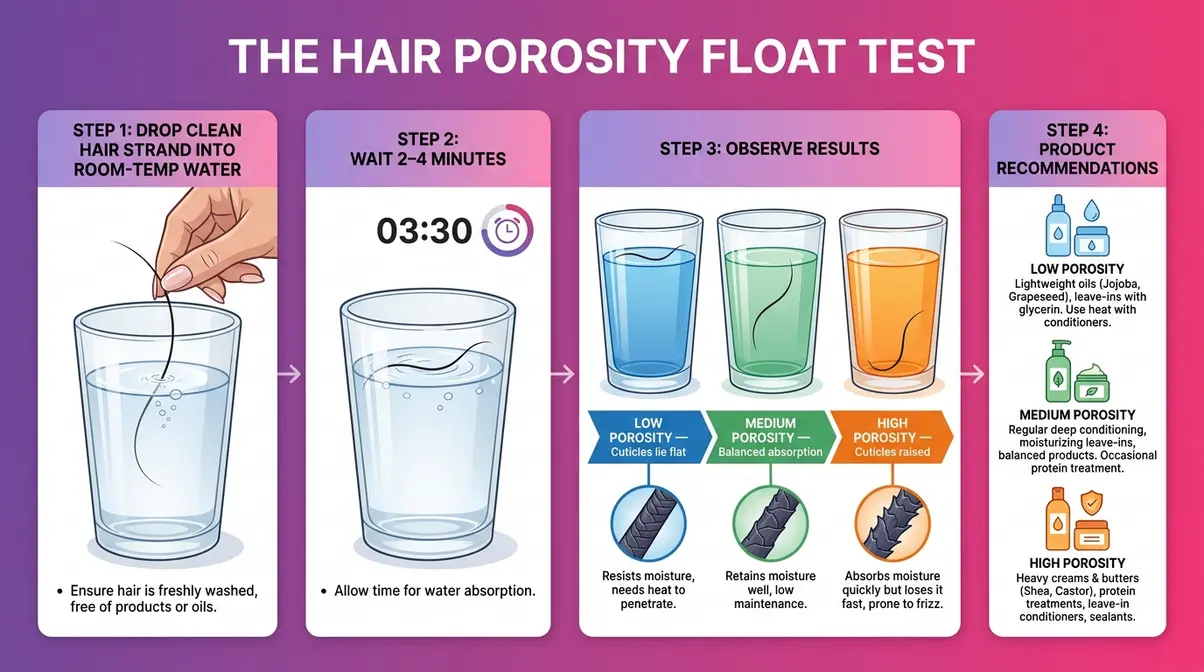
- The float test (a simple home porosity check):
- Take a clean strand of shed hair (no product on it)
- Drop it into a glass of room-temperature water
- Wait 2–4 minutes
- If it floats: low porosity. If it sinks slowly: medium. If it sinks quickly: high porosity.
Note: this test isn’t perfectly scientific, but it gives a reliable directional signal used widely across professional curl communities.
Why this matters for 3B hair: High-porosity 3B curls need heavier sealants to lock moisture in. Low-porosity 3B curls need lightweight liquids and heat (like a warm shower cap during deep conditioning) to help the cuticle open. Using the wrong weight of product for your porosity is one of the most common reasons 3B routines fail.
3A vs. 3B vs. 3C Hair: What’s the Difference?
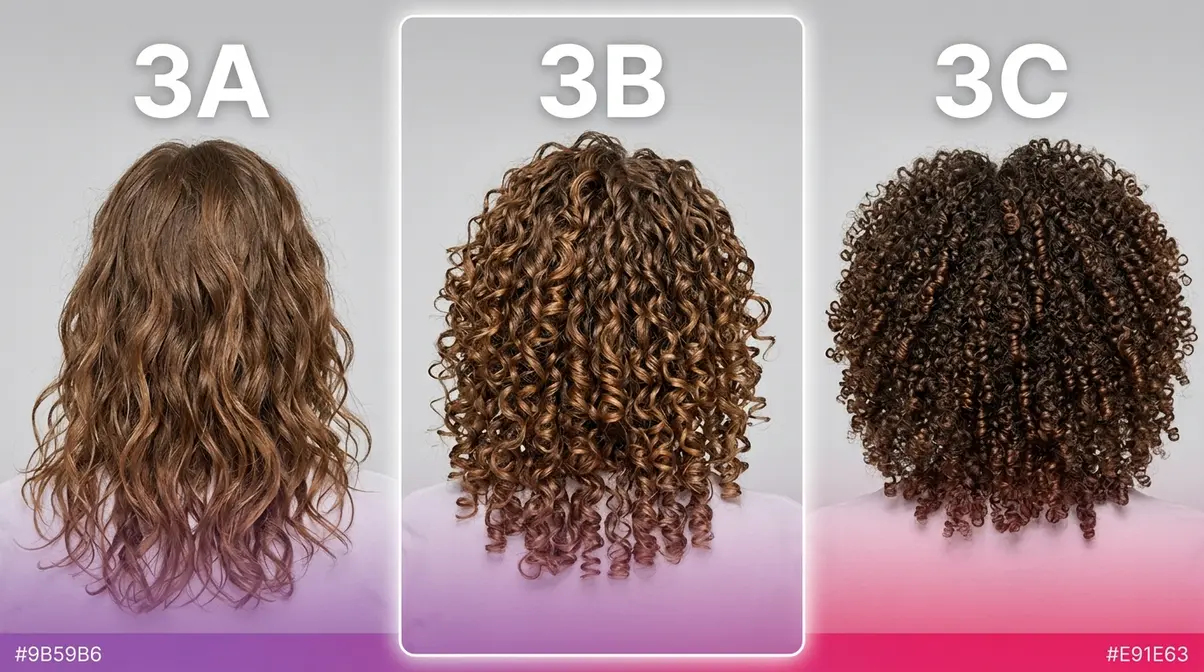
Understanding where 3B sits on the curl spectrum requires seeing all three types side by side. The Curl Spectrum Framework positions these not as isolated boxes but as neighboring zones on a continuum — and the differences between them directly determine what products and techniques you need.
According to Living Proof’s hair typing guide, 3B curls are defined by their Sharpie-sized ringlets and high moisture demand, distinguishing them clearly from the softer 3A pattern and the tighter 3C coil.
Side-by-Side: Curl Size, Pattern, and Behavior
| Feature | 3A Hair | 3B Hair | 3C Hair |
|---|---|---|---|
| Curl size | Large, loose S-waves | Sharpie-sized ringlets | Pencil-sized corkscrews |
| Texture | Lightweight, fine | Medium-dense | Dense, tightly packed |
| Shrinkage | 10–25% | 30–50% | 50–75% |
| Frizz tendency | Moderate | High | Moderate to high |
| Moisture needs | Moderate | High | Very high |
| Product weight | Light creams, mousses | Medium creams, gels | Heavy butters, oils |
| Curl memory | Moderate | Moderate-strong | Strong |
The clearest visual test: hold a marker, a pencil, and a piece of sidewalk chalk next to your dry curl. 3A matches the chalk. 3B matches the Sharpie. 3C matches the pencil.
- Key behavioral differences:
- 3A curls tend to lose definition in humidity, going flat or wavy rather than frizzy
- 3B curls frizz outward in humidity, maintaining some ringlet structure at the core
- 3C curls shrink dramatically and can look almost coil-like when dry
What If You Have a Mix of Curl Types?
Here’s something most guides don’t tell you: having a mix of curl types is the norm, not the exception. The hair at your crown is often looser (closer to 3A) while the underneath layers are tighter (closer to 3C). This is why so many people report their hair looking “straighter on top” — it’s not a misidentification, it’s your natural curl distribution.
Common mixed-type patterns for 3B hair:
- 3A/3B mix: Looser waves on top, defined ringlets underneath. Very common at the crown.
- 3B/3C mix: Defined ringlets on top, tighter corkscrews at the nape. Common in thicker hair.
- Varying by humidity: Your curls may tighten or loosen depending on weather — this doesn’t change your base type.
How to care for a mixed pattern: Focus your routine on the drier, tighter sections, since those have higher moisture needs. Use lighter products on the looser sections at the crown to avoid weighing them down. Diffusing (covered in the care routine section) helps encourage uniform definition across mixed patterns.
Your dominant curl type — the pattern covering the most surface area — is what you use to anchor your product choices. For most people reading this guide, that dominant type is 3B, even if the crown leans 3A.
Where 3B sits in the middle of the spectrum, 3C demands an even heavier moisture commitment. The next section shows you exactly how to build a routine calibrated for the 3B zone.
The Complete 3B Hair Care Routine
A great 3B hair care routine does three things: cleanses without stripping, conditions deeply, and locks in moisture before it can escape. The sequence matters as much as the products.
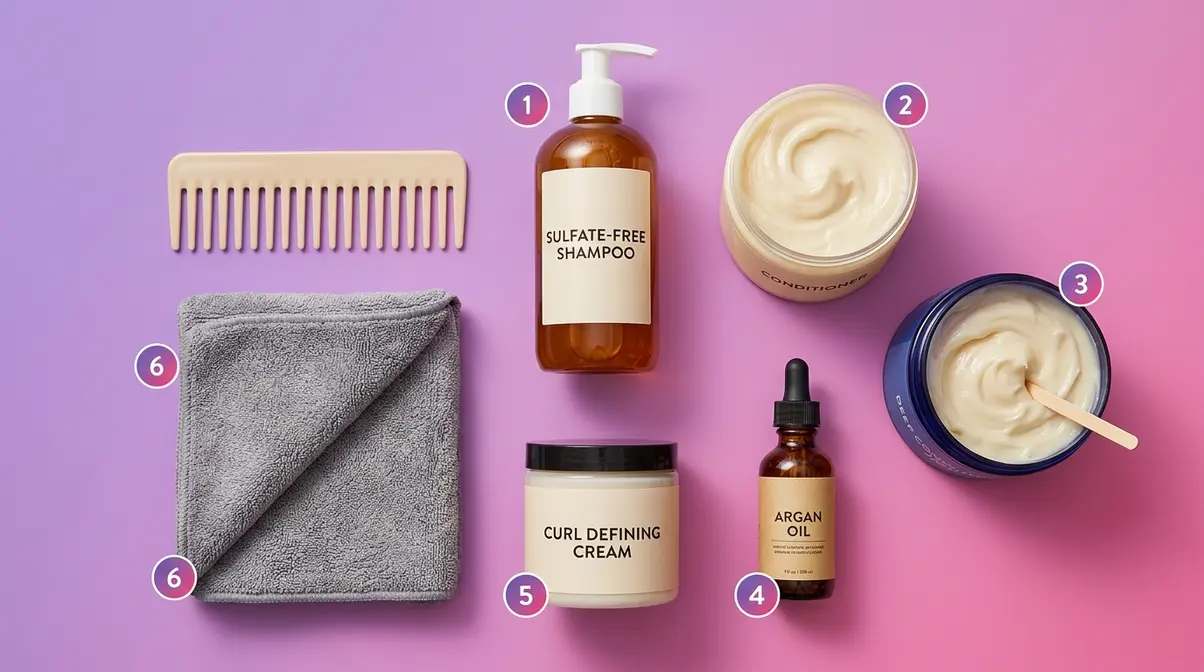
Before you start, here’s what you’ll need:
- What You’ll Need:
- Sulfate-free shampoo
- Rinse-out conditioner
- Deep conditioner (use weekly or bi-weekly)
- Leave-in conditioner (liquid)
- A light oil (e.g., argan, jojoba)
- A curl cream or gel
- A microfiber towel or old cotton T-shirt
- A diffuser attachment for your blow dryer (optional but recommended)
Step 1 — How to Wash 3B Hair Without Stripping Moisture
Estimated time: 10–15 minutes | Frequency: Every 5–7 days for most 3B hair
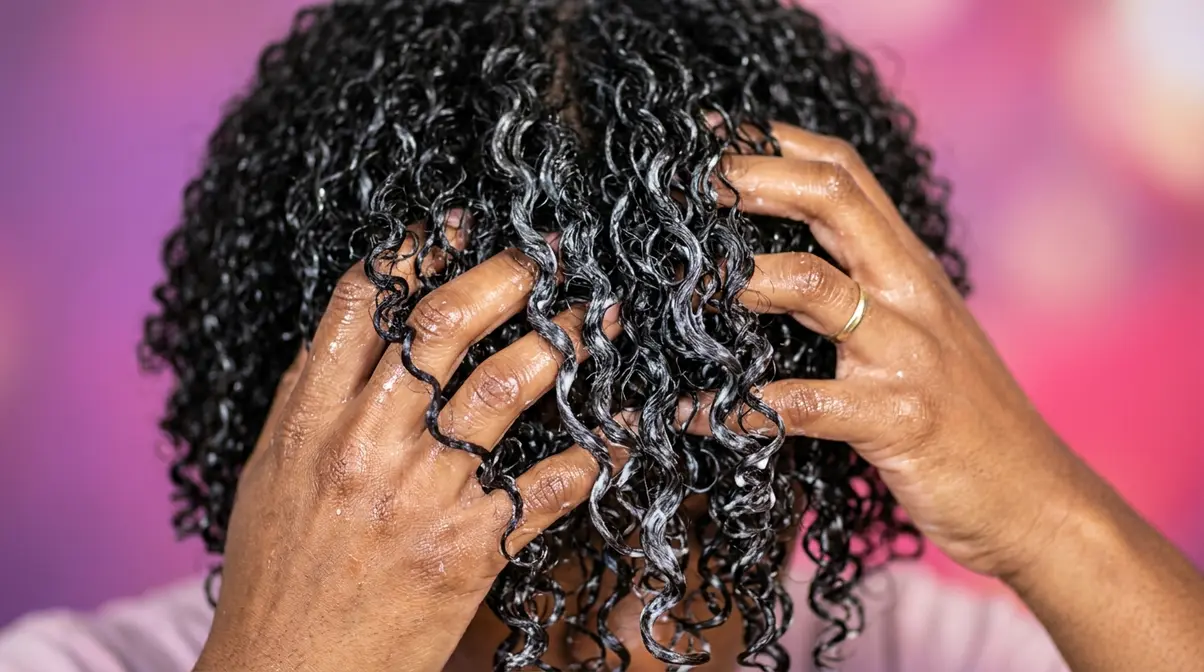
Washing too often strips 3B curls of the sebum they already struggle to retain. Most people with 3B curls wash once a week or every 5–7 days. If your scalp gets oily faster, co-washing (conditioner-only washing between shampoo days) is a gentle alternative.
Step-by-step wash routine:
- Detangle before water. Use your fingers or a wide-tooth comb on dry or slightly damp hair to remove knots. Trying to detangle wet, tangled 3B curls causes breakage.
- Saturate fully. Rinse with warm (not hot) water for at least 60 seconds. Hot water opens the cuticle too aggressively and increases frizz.
- Apply sulfate-free shampoo to the scalp only. Work it in with your fingertips — not your nails — using circular motions. Let the lather rinse through the lengths as you rinse; you don’t need to scrub the ends.
- Rinse thoroughly. Leftover shampoo residue causes buildup and weighs down curls.
- Squeeze, don’t rub. Press water out with your hands. Rubbing with a towel disrupts the curl pattern and creates frizz.
Why this matters: Sulfates (sodium lauryl sulfate, sodium laureth sulfate) are detergents strong enough to degrease engine parts. They clean effectively but remove every trace of natural oil from the hair shaft — oil that 3B curls already struggle to produce enough of. According to Carol’s Daughter’s curl care guide, sulfate-free formulas cleanse the scalp without disrupting the curl’s moisture balance.
| Setting | Recommendation | Why |
|---|---|---|
| Water temperature | Warm, not hot | Hot water raises cuticle too aggressively |
| Wash frequency | Every 5–7 days | Preserves sebum and curl memory |
| Shampoo type | Sulfate-free | Avoids stripping natural oils |
| Application zone | Scalp only | Prevents over-drying the lengths |
Step 2 — Conditioning and Deep Conditioning for 3B Curls
Estimated time: 5–30 minutes (5 for rinse-out, 20–30 for deep conditioning) | Frequency: Conditioner every wash; deep conditioner weekly or bi-weekly
Conditioning is where 3B hair gets its definition back after washing. Skipping this step — or using too little — is the most direct path to frizz and dryness.
Rinse-out conditioner steps:
- Apply generously from mid-lengths to ends while hair is wet.
- Use a wide-tooth comb or your fingers to detangle from ends upward.
- Leave on for 3–5 minutes (longer for drier or high-porosity hair).
- Rinse with cool water — cool water closes the cuticle and locks in shine.
Deep conditioning (weekly):
- Apply deep conditioner to clean, damp hair after shampooing.
- Use a shower cap or plastic bag to trap heat — this helps the conditioner penetrate the shaft.
- Leave on for 20–30 minutes. You can sit under a hooded dryer or use a warm towel wrap.
- Rinse with cool water.
Why deep conditioning matters for 3B hair: Deep conditioners contain larger conditioning molecules that penetrate the cortex (inner layer) of the hair shaft, not just coat the surface. Regular use can reduce breakage, improve elasticity, and restore curl memory after heat or color damage. Common pain points reported by people with 3B hair include mid-shaft breakage and loss of definition — both of which deep conditioning directly addresses.
Step 3 — The LOC Method for Maximum Moisture
The LOC Method stands for Liquid → Oil → Cream. It’s a moisture-layering technique designed specifically for high-porosity or dry curly hair, and it’s one of the most consistently recommended approaches across professional curl communities.
- Here’s why the order matters:
- Liquid (L) — usually a leave-in conditioner or water-based product — hydrates the hair shaft first.
- Oil (O) — seals the liquid layer in by slowing evaporation. The oil sits on top of the water-based layer, trapping moisture inside.
- Cream (C) — a curl cream or butter adds definition, controls frizz, and provides a final seal.
Reversing the order defeats the purpose. Applying oil before liquid prevents the water-based product from penetrating the shaft at all.
Step-by-step LOC application for 3B hair:
- Start with soaking-wet hair. The LOC method works best when hair is dripping — not just damp.
- Apply leave-in conditioner (L). Work through sections from root to tip. Don’t skimp — your hair should feel coated.
- Apply a light oil (O). Argan oil, jojoba oil, and sweet almond oil work well for 3B hair. Use 2–4 drops per section (more for high porosity, less for low porosity).
- Apply curl cream or gel (C). Scrunch upward toward the scalp to encourage curl clumping. Don’t rake through — scrunching preserves the ringlet pattern.
- Scrunch out excess product with a microfiber towel or T-shirt.
LOC vs. LCO: Some 3B hair responds better to the LCO order (Liquid → Cream → Oil), especially low-porosity hair that absorbs creams more easily. If LOC leaves your hair feeling heavy, try LCO instead.
Step 4 — Drying 3B Hair (Plopping and Diffusing)
How you dry your hair is as important as how you wash it. Heat damage and friction during drying are two of the top causes of frizz and curl pattern disruption for 3B hair.
Method 1: Plopping (no-heat)
Plopping is a technique where you wrap wet, product-coated hair in a microfiber towel or T-shirt to encourage curl clumping without friction.
- Lay your microfiber towel flat on a surface.
- Flip your wet hair forward so your curls fall onto the center of the towel.
- Wrap the back of the towel up over your nape, then twist the sides and tuck them in.
- Leave for 15–30 minutes.
- Release carefully and allow to air dry, or proceed to diffusing.
Method 2: Diffusing (low-heat)
A diffuser is a blow dryer attachment with a wide, cupped head that distributes air gently. It reduces drying time without the direct force that disrupts curl clumping.
- Set your dryer to low heat and low speed.
- Cup sections of your curls into the diffuser bowl and hold in place for 30–60 seconds.
- Move section by section, keeping the dryer moving rather than holding it still.
- Stop when hair is about 80% dry — letting the remaining 20% air dry prevents heat damage.
Heat protection rule: If you diffuse more than twice a week, apply a heat protectant spray before diffusing. Consistent heat exposure — even on low settings — degrades the protein structure of 3B curls over time.
Best Products and Ingredients for 3B Hair
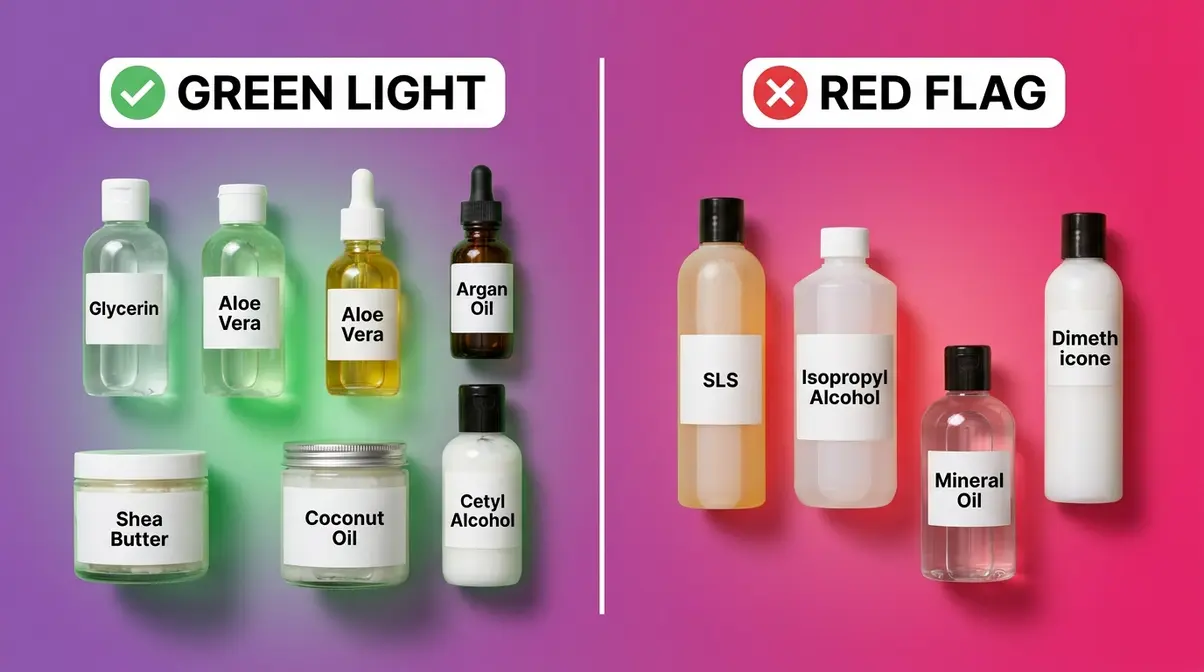
Choosing the right products for 3B hair comes down to two variables: moisture weight and porosity compatibility. Our team evaluated product formulations and community consensus across professional curl forums to identify the most consistently effective ingredient profiles for 3B curls.
Byrdie’s 3B hair product guide highlights that ingredient literacy — knowing what to look for and what to avoid — is more valuable than any specific product recommendation, since formulations change and availability varies.
Shampoos: Why Sulfate-Free Is Non-Negotiable
Sulfate-free shampoo for 3B hair isn’t a preference — it’s a structural necessity. Sulfates (primarily sodium lauryl sulfate and sodium laureth sulfate) are surfactants powerful enough to strip all oils from the hair shaft. For 3B curls that already struggle with sebum distribution, sulfate shampoos accelerate dryness, frizz, and breakage.
- What to look for in a 3B shampoo:
- Gentle surfactants: Cocamidopropyl betaine, sodium cocoyl isethionate, or decyl glucoside — these clean without stripping.
- Humectants (ingredients that draw water into the hair shaft): glycerin, aloe vera, panthenol (vitamin B5).
- Lightweight oils: Listed in the lower half of the ingredient list (meaning lower concentration) to add slip without heaviness.
- What to avoid:
- Sodium lauryl sulfate (SLS) and sodium laureth sulfate (SLES)
- Isopropyl alcohol (drying)
- Silicones without a co-wash plan (dimethicone, cyclomethicone) — these build up without sulfates to remove them
Conditioners and Deep Treatments for 3B Curls
Leave-in conditioner for 3B hair is the foundation of the LOC method and the most important daily product in your routine. Deep conditioner for 3B hair is the weekly reset that keeps curl memory strong and breakage low.
- Leave-in conditioner criteria:
- Water-based (water should be the first ingredient)
- Light to medium weight — heavy leave-ins flatten 3B ringlets
- Contains slip agents (cetyl alcohol, cetearyl alcohol) for detangling
- Deep conditioner criteria:
- Contains hydrolyzed proteins (keratin, silk, wheat) to strengthen the hair shaft
- Contains penetrating oils (coconut oil, avocado oil) that can enter the cortex
- Free of heavy waxes that coat without penetrating
Frequency guide:
| Hair Condition | Deep Conditioning Frequency |
|---|---|
| Healthy, normal | Once every 2 weeks |
| Dry or high porosity | Once weekly |
| Color-treated or heat-damaged | Once weekly + protein treatment monthly |
| Low porosity | Once every 3 weeks (don’t over-condition) |
Styling Products: Curl Creams, Gels, and Leave-Ins
Curl creams for 3B hair provide definition and moisture. Gels provide hold and reduce frizz. Most 3B routines benefit from layering both — cream first for moisture, gel on top for hold.
- The weight rule for 3B styling products:
- Fine or low-porosity 3B hair → lightweight mousse or light-hold gel
- Medium or normal 3B hair → curl cream + medium-hold gel
- Coarse or high-porosity 3B hair → heavy curl cream + strong-hold gel or butter
Moisturizer for 3B hair should be the cream layer in your LOC method — not a heavy butter, which is more appropriate for 3C or 4A hair. Heavy butters weigh 3B ringlets down and prevent them from springing up into their natural shape.
The gel “crunch” problem: Many beginners panic when their curls feel hard and crunchy after drying with gel. This is normal — it’s called the “cast.” Once hair is fully dry, scrunch the cast out with your hands (called “scrunching out the crunch” or SOTC). Underneath the cast, your curls will be defined and soft.
Ingredients to Look For (and Avoid)
Green-light ingredients for 3B hair:
| Ingredient | Category | Benefit |
|---|---|---|
| Glycerin | Humectant | Draws moisture into the hair shaft |
| Aloe vera | Humectant + soother | Hydrates and reduces scalp irritation |
| Shea butter (light use) | Emollient | Softens and adds shine; use sparingly |
| Argan oil | Lightweight oil | Seals moisture without heaviness |
| Coconut oil | Penetrating oil | Enters the cortex; reduces protein loss |
| Cetyl/cetearyl alcohol | Fatty alcohol | Adds slip and softness (NOT drying) |
| Hydrolyzed keratin | Protein | Strengthens and repairs hair shaft |
Red-flag ingredients for 3B hair:
| Ingredient | Why to Avoid |
|---|---|
| Sodium lauryl sulfate | Strips natural oils aggressively |
| Isopropyl alcohol | Dries and brittles the hair shaft |
| Petrolatum / mineral oil | Coats without penetrating; causes buildup |
| Heavy silicones (dimethicone) | Buildup without sulfate removal |
| Drying alcohols (SD alcohol 40) | Evaporates moisture from the shaft |
Note on “fatty alcohols” vs. “drying alcohols”: Cetyl alcohol and cetearyl alcohol are not drying — they’re conditioning agents derived from plant sources. Only short-chain alcohols (isopropyl, SD-40, ethanol) are drying. This distinction trips up a lot of beginners.
Hairstyles and Cuts for 3B Curls
The right haircut can make or break a 3B routine. Cuts designed for straight hair often leave 3B curls looking bulky at the bottom and flat on top. According to Davines’ guide to 3B hair, the best cuts for 3B curls work with the hair’s natural spring and volume rather than fighting it.
The Best Haircuts for 3B Hair
Layered cuts are the gold standard for 3B hair. Layers remove bulk from the mid-lengths and ends, allowing ringlets to spring freely instead of weighing each other down. The key is cutting with the curl — not stretching it straight.
Top cuts for 3B curls:
- The DevaCut: Curls are cut dry, in their natural state, one ringlet at a time. This is the most curl-specific cutting technique and produces the most natural shape.
- Layered cut with long layers: Removes bulk without shortening overall length. Best for medium to long 3B hair.
- Curly shag: Short-to-medium length with heavy layering throughout. Creates volume at the crown and definition throughout.
- Wash-and-go bob: A blunt or slightly graduated bob cut that works well for shorter 3B hair — the weight at the bottom helps elongate ringlets.
What to avoid: Blunt cuts with no layers leave 3B hair looking like a triangle — narrow at the top, wide at the bottom. Thinning shears can damage the curl pattern and cause frizz at the cut points.
How to find a curl-competent stylist: Ask specifically if they cut curly hair dry or wet. A stylist who always cuts wet hasn’t been trained in curl-specific techniques and may not understand shrinkage.
Styles for Short, Medium, and Long 3B Hair
- Short 3B hair (above the shoulder):
- Wash-and-go with gel for definition
- Finger coils on individual sections for extra definition
- TWA (teeny weeny afro) styling with a curl cream
- Medium 3B hair (shoulder length):
- Half-up, half-down styles work beautifully — the crown is pulled back while ringlets frame the face
- Braid-outs: braid damp, product-coated hair into 6–10 sections overnight; release in the morning for stretched, defined waves
- Pineappling overnight (gathering hair loosely at the crown with a silk scrunchie) preserves curl definition between wash days
- Long 3B hair:
- The classic wash-and-go, diffused for volume
- Twist-outs for elongated, defined spirals
- High puff or bun styles that show off length while keeping hair protected
For all lengths: Sleeping on a silk or satin pillowcase (or using a silk bonnet) dramatically reduces frizz and breakage overnight. Cotton pillowcases create friction that disrupts the curl pattern and dries out the hair shaft.
Protective Styles: Braids and Updos for 3B Curls
Protective styles are hairstyles that tuck the ends of your hair away, minimizing exposure to friction, weather, and manipulation. They’re a powerful tool for retaining length and giving your curls a break from daily styling.
Popular protective styles for 3B hair braids and updos:
- Box braids: Individual braids with or without extensions. Keep for 6–8 weeks maximum to prevent matting at the roots.
- Twists: Two-strand twists using your natural hair or extensions. Gentler than braids and easier to remove.
- Bantu knots: Small sectioned knots that double as a style. Can be worn as-is or released for a twist-out effect.
- Low buns and updos: Quick protective styles for daily wear that don’t require extensions.
Protective style rules for 3B hair: Moisturize before installing any protective style. Dry hair under tension is the top cause of breakage at the hairline. Don’t keep styles in longer than 8 weeks, and avoid styles that pull tightly at the roots.
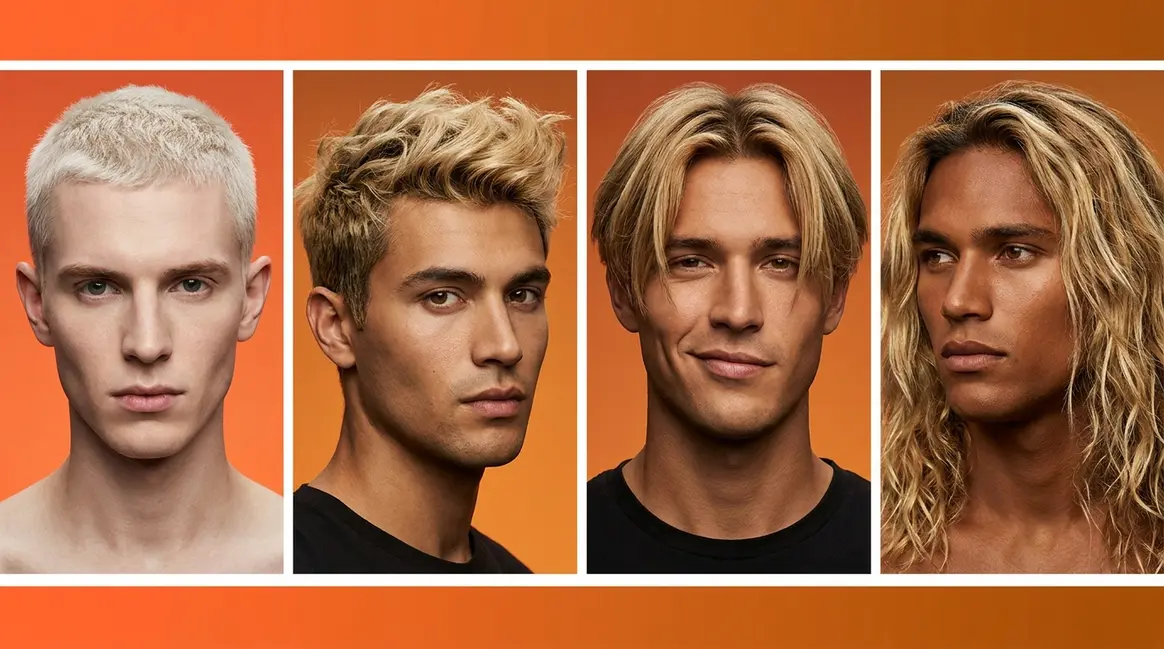
3B Hair for Men: Routines, Cuts, and Products
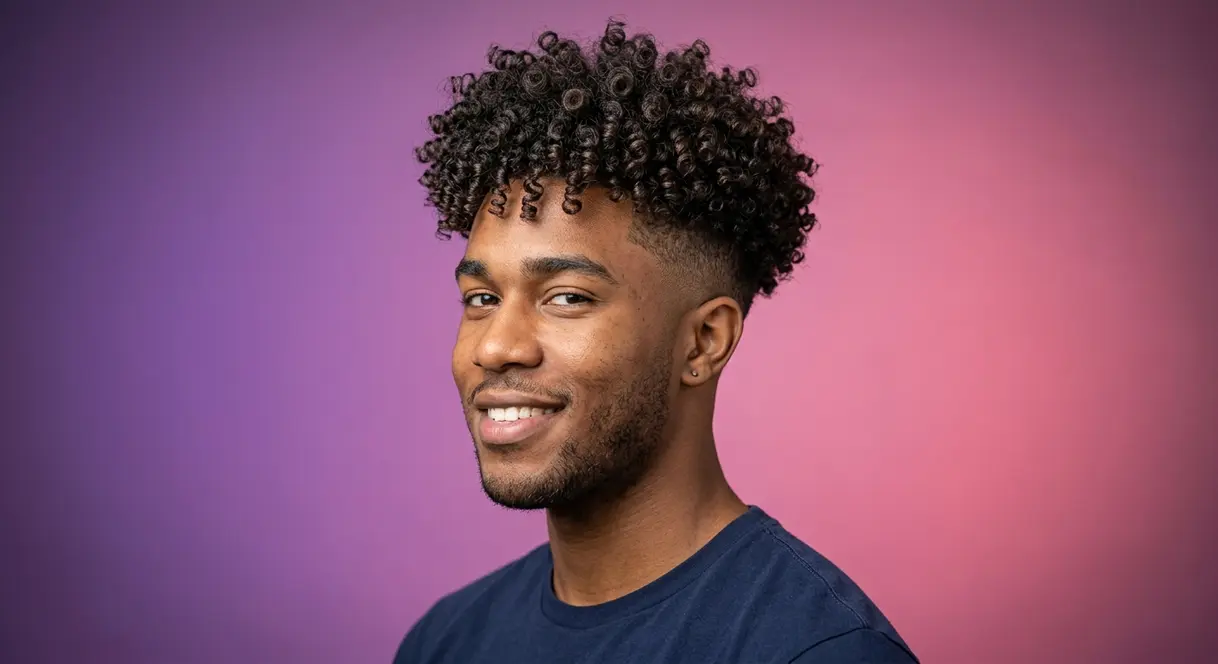
Most curly hair content is built around long hair and female-presenting styling. If you’re a man with 3B curls, you’ve probably felt invisible in most guides. This section is specifically for you.
3B hair men face the same structural challenges as anyone with this curl type — sebum distribution, frizz, and dryness — but with shorter lengths, different style goals, and often a preference for simpler routines.
Men’s 3B Hair Routine: The Simplified Approach
The good news: the core science doesn’t change. Sulfate-free shampoo, conditioning, and moisture sealing still apply. The difference is in frequency and product quantity — shorter hair needs less product and can handle slightly more frequent washing.
Simplified men’s 3B routine:
- Wash 2–3 times per week with a sulfate-free shampoo (shorter hair can handle slightly more frequent washing without over-drying).
- Condition every wash. Even a 2-minute rinse-out conditioner makes a significant difference in frizz and definition.
- Apply a curl cream or light gel to damp hair. Work through sections with your fingers — don’t use a brush, which disrupts the curl pattern.
- Diffuse or air dry. For shorter hair, a quick diffuse on low heat takes 5–10 minutes.
- Refresh mid-week with a spray bottle of water + leave-in conditioner mix. Mist, scrunch, and go.
The one product most men skip — and shouldn’t: Leave-in conditioner. It feels unnecessary on short hair, but it’s the step that separates defined, bouncy curls from frizzy, dry ones. A dime-sized amount is all you need.
Best Haircuts for Men with 3B Curls
The right cut for men with 3B curls does two things: manages volume and showcases the curl pattern. Cuts that work against the natural shape create the “triangle head” problem — too much width, not enough height.
Best cuts for men with 3B curls:
- Tapered sides with curly top: The most versatile option. Short, faded sides let the 3B curl pattern show on top without overwhelming volume.
- Curly fringe / textured crop: A shorter overall length with texture left on top. Works well for men who want low maintenance.
- Medium-length ringlets (3–5 inches on top): Allows the full 3B ringlet to form while keeping an overall clean shape.
- Curly undercut: Shaved or very short sides with longer curls on top — a high-contrast style that emphasizes the 3B pattern.
What to avoid: Asking for a “taper” without specifying that the top should be cut dry and in its natural state. A wet cut on the top section will leave curls longer than intended after shrinkage.
Product Picks for Men with 3B Hair
Men’s curl products tend to come in smaller bottles with simpler routines in mind. The ingredient rules are the same — sulfate-free, no heavy silicones, lightweight moisture — but the format and marketing differ.
What to look for in men’s 3B products:
- Shampoo: Sulfate-free, with glycerin or aloe vera. Avoid “2-in-1” formulas — they rarely condition adequately for 3B hair.
- Conditioner: A lightweight rinse-out conditioner is enough for most men with shorter 3B hair. Deep conditioning once a month is a reasonable minimum.
- Styling product: A light-hold curl cream or water-based gel. Avoid pomades and waxes — these create buildup and flatten ringlets.
Men’s product tip: If you can’t find dedicated “men’s” curl products in your budget, standard curl creams and gels work identically. The gendering of hair products is largely marketing. What matters is the ingredient list, not the packaging.
Where men’s routines tend toward simplicity, the next section addresses something entirely different — the online trend of using “subliminals” to change your curl type altogether.
Do Hair Subliminals Work for Changing Curl Type?
Hair subliminals are audio tracks — often found on YouTube — that combine affirmations, binaural beats, or frequency tones with the stated goal of changing physical traits, including curl type, hair texture, or hair growth rate. Searches for “3B hair subliminal results” reflect genuine curiosity about whether these methods can alter your natural curl pattern.
The straightforward answer: there is no scientific evidence that subliminal audio can change your hair’s curl type. Your curl pattern is determined by the shape of your hair follicle — a structural feature encoded in your genetics. No amount of audio exposure alters follicle geometry. This YouTube overview of hair subliminals captures the community debate, but community consensus in professional hair science circles remains firmly in the “no biological mechanism exists” camp.
What can appear to change your curl pattern:
- Improved moisture levels: Properly moisturized 3B hair has tighter, more defined ringlets than dry, neglected 3B hair. If someone starts a proper routine alongside subliminals, they may attribute the curl improvement to the audio — but it’s the routine doing the work.
- Reduced heat damage: Stopping heat styling allows your natural curl pattern to recover. Again, this is chemistry, not audio.
- Growth and breakage reduction: Healthier practices lead to longer, less damaged hair that shows its curl pattern more clearly.
If you’ve been listening to subliminals hoping to change your curl type, redirect that energy into your routine. The results you’re hoping for are achievable through moisture, proper products, and consistent care — and those results are real.
Common 3B Hair Mistakes to Avoid
Even with the right products and intentions, certain habits consistently undermine 3B curl health. Across professional curl communities, the same damage patterns appear repeatedly — and most are entirely avoidable.
The 5 Most Damaging Habits for 3B Curls
1. Towel-drying with a cotton bath towel
Cotton terry cloth creates friction that roughens the cuticle, disrupts curl clumping, and dramatically increases frizz. Switch to a microfiber towel or a clean cotton T-shirt. The difference is visible within one wash.
2. Brushing dry 3B hair
Brushing dry curls separates the ringlet strands from each other, creating a frizzy, undefined mass. Detangle only when wet and conditioned, using a wide-tooth comb or fingers — always from the ends upward.
3. Skipping deep conditioning
Rinse-out conditioner coats the surface. Deep conditioner penetrates the cortex. Skipping deep conditioning for more than two weeks leads to progressive moisture loss, increased breakage, and loss of curl memory. This is especially damaging for color-treated 3B hair.
4. Using too much product
More product doesn’t equal more definition. Overloading 3B curls — especially with heavy butters — weighs ringlets down, causes buildup, and makes hair look greasy rather than defined. Start with a small amount and add more only if needed.
5. Washing too frequently with shampoo
Daily shampooing strips 3B curls of the sebum they desperately need. Even sulfate-free shampoos remove natural oils when used daily. Limit shampoo to once or twice weekly; use co-washing (conditioner only) for mid-week refreshes if needed.
When to See a Professional Stylist for 3B Hair
Home routines cover most 3B hair care needs. However, certain situations call for professional expertise:
- Significant heat or color damage: If your curl pattern has changed noticeably after heat styling or chemical coloring, a stylist trained in curl restoration can assess the damage and recommend a protein treatment plan.
- Scalp concerns: Persistent flaking, itching, or hair loss that doesn’t respond to routine changes warrants a visit to a dermatologist, not just a stylist.
- First DevaCut: If you’ve never had a curl-specific haircut, one appointment with a certified DevaCut stylist is worth the investment. It sets the shape that all future growth follows.
- Transitioning from chemical relaxers: Moving from relaxed to natural 3B hair involves a “two-texture” period where straight ends and curly roots coexist. A professional can guide the transition and timing of trims to minimize breakage.
FAQ
What is a 3B hair type?
3B hair is a curly hair type characterized by springy ringlets roughly the circumference of a Sharpie marker. It sits between looser 3A waves and tighter 3C corkscrews on the curl spectrum. 3B curls are defined and voluminous, with significant shrinkage (30–50%) from wet to dry. The hair is prone to dryness because the spiral shaft prevents sebum from traveling to the ends. Most people with 3B hair benefit from sulfate-free shampoo, regular deep conditioning, and the LOC method.
Do I have 3A, 3B, or 3C hair?
The key identifier is curl circumference on dry, unmanipulated hair. 3A curls match the width of sidewalk chalk — loose, S-shaped waves. 3B curls match a Sharpie marker — defined, springy ringlets. 3C curls match a pencil — tighter corkscrews with significant shrinkage. Assess your curl type the day after washing without touching or stretching your hair as it dries. Many people have a mix of types, which is entirely normal — use your dominant curl pattern to anchor your product choices.
Is 3B hair African American?
3B hair appears across all ethnicities and is not exclusive to any racial group. The Andre Walker hair typing system (which created the 3A/3B/3C classifications) was designed to describe curl patterns across all hair textures regardless of ethnicity. However, 3B and 3C curl patterns are statistically more common among people of African, mixed-African, Caribbean, and South Asian descent due to genetic variation in follicle shape. Anyone of any background can have 3B curls.
Is type 3B hair rare?
3B hair is not particularly rare — it’s one of the more common curl types globally. Estimates suggest that curly and coily hair types (types 3 and 4 combined) represent roughly 65% of the world’s population (Loussouarn et al., 2016). Within the type 3 category, 3B is arguably the most common subtype. The perception of rarity often comes from underrepresentation in mainstream media, where straighter hair textures have historically dominated beauty marketing.
What are 2A, 2B, 2C, 3A, 3B curls?
These are curl type classifications from the Andre Walker Hair Typing System, ranging from wavy to coily. Type 2 (2A, 2B, 2C) describes wavy hair — loose S-waves with minimal shrinkage. Type 3 (3A, 3B, 3C) describes curly hair — defined ringlets with moderate to high shrinkage. 3A is the loosest (chalk-sized), 3B is medium (Sharpie-sized), 3C is the tightest (pencil-sized). Type 4 (4A, 4B, 4C) describes coily and kinky hair with the tightest patterns and highest shrinkage.
What are the top 3 rarest hair types?
The rarest hair types are generally considered to be 1A (bone-straight with zero texture), 4C (tightly coiled with minimal definition), and true 2A (barely-there waves). Rarity in hair typing refers to how infrequently the “pure” version of a type appears — most people have a mix. Red hair (a separate genetic trait) is also notably rare, affecting roughly 1–2% of the global population (Rees, 2003). Your curl type’s rarity has no bearing on how to care for it.
Can 3B hair be straight on top?
Yes — having straighter or looser hair at the crown is extremely common for people with 3B hair. The hair at the crown experiences more tension from gravity and more manipulation, which can stretch the curl pattern. Additionally, many people naturally have a mix of 3A and 3B curl patterns across their head, with looser curls at the top and tighter ones underneath. This doesn’t mean you’ve misidentified your type — assess your curl pattern at the sides and underneath for the most accurate reading.
What is the rarest hair type?
The rarest hair type is generally considered to be 1A — perfectly straight hair with zero natural wave or texture, extremely fine, and with no tendency to curl even in humidity. Within curly hair, pure 4C (tightly coiled with no defined curl pattern) is also considered rare in its textbook form. Most people fall somewhere between types rather than at the extremes. Red hair color — a distinct genetic trait from curl pattern — affects approximately 1–2% of the global population (Rees, 2003), making it one of the rarest hair characteristics overall.
Conclusion
For anyone with springy ringlets that frizz in humidity, run dry at the ends, and sit straighter on top, 3B hair care doesn’t have to be a guessing game. This guide has shown that 3B curls — defined by their Sharpie-sized ringlet and high moisture demand — respond predictably to the right sequence: sulfate-free cleansing, consistent deep conditioning, and moisture-locking through the LOC method. Research confirms that the spiral follicle structure prevents sebum from reaching the ends (NCBI, 2015), which means applied moisture isn’t a luxury for 3B hair — it’s a structural requirement.
The Curl Spectrum Framework changes the way you approach your routine. Instead of chasing a product that “fixes” your curls, you identify your position on the spectrum — 3B, leaning 3A on top, perhaps 3C underneath — and build a routine calibrated to that exact position. Every recommendation in this guide flows from that framework, from product weight selection to drying technique to haircut choice.
Your next step: pick one section of this guide and apply it on your next wash day. Start with the self-test to confirm your curl type, then try the LOC method if you haven’t already. Give it three consistent wash days before judging results — curl routines reward patience. At careaboutyourhair.com, we’ve seen the most dramatic transformations come not from expensive products, but from understanding the science behind the curl and building a routine around it.

Dave King
Writes evidence-based hair-care guides for Care About Your Hair — for every hair type, jargon-free and independent.