 Dave King
“I was a level 8 blonde and found some 18 inch tape in extension on Amazon. It’s my very first time ever using them.”
That quote is practically universal. You’ve seen the look on social media, you’ve landed on a length that sounds right, and now you’re staring at a product page wondering whether you’re about to spend $150 on something that won’t look anything like you imagined.
Here’s the uncomfortable truth: buying the wrong length or type of 18 inch hair extensions is a $50–$300 mistake most first-time buyers make — not because they’re careless, but because almost every guide online tells you “18 inches reaches the bra strap” and stops there. That answer works for exactly one body type. For everyone else, it’s a coin flip.
By the end of this guide, you’ll know precisely how 18-inch extensions look on your height, which type fits your lifestyle, and exactly how much to budget — so you buy with confidence the first time. This guide walks you through a visual length comparison, a full type breakdown, quality signals to watch for, color matching, cost ranges, and a step-by-step care protocol.
The global hair extensions market is projected to reach $13.28 billion by 2026 (Statista, 2026) — that’s how many people are on the same search you’re on right now.
18 inch hair extensions typically reach the mid-back to bra strap area — but the exact look depends entirely on your height. The global market is projected to hit $13.28 billion in 2026 (Statista), proving millions share your question.
- The Height-to-Hem Formula: On a 5’2″ frame, 18 inches hits near the waist; on a 5’8″ frame, it falls just above the bra strap
- Best for most first-time buyers: 18-inch clip-ins offer the easiest start with zero commitment or salon visit required
- Budget range: Quality 18-inch sets start at ~$50 (synthetic) and reach $200–$500 for Remy human hair
- 18 vs. 20 inches: 18 inches is the most popular “sweet spot” — natural-looking length without the added weight of longer sets
- Safety first: Always consult a certified stylist or dermatologist before using extensions if you have thinning hair or alopecia
What Are 18 Inch Hair Extensions?
18 inch hair extensions are strands of real or synthetic hair measuring 18 inches from root to tip, attached to your natural hair to add length, volume, or both. That 18-inch measurement describes the extension strand itself — not the distance from your scalp to where the hair ends up sitting on your body. That distinction matters more than most product pages let on.
At 18 inches, you’re looking at one of the most consistently popular extension lengths on the market. They add dramatic length without the weight or upkeep demands of 20- or 22-inch options, which makes them a practical first choice for beginners and a go-to for experienced wearers who want a natural result.
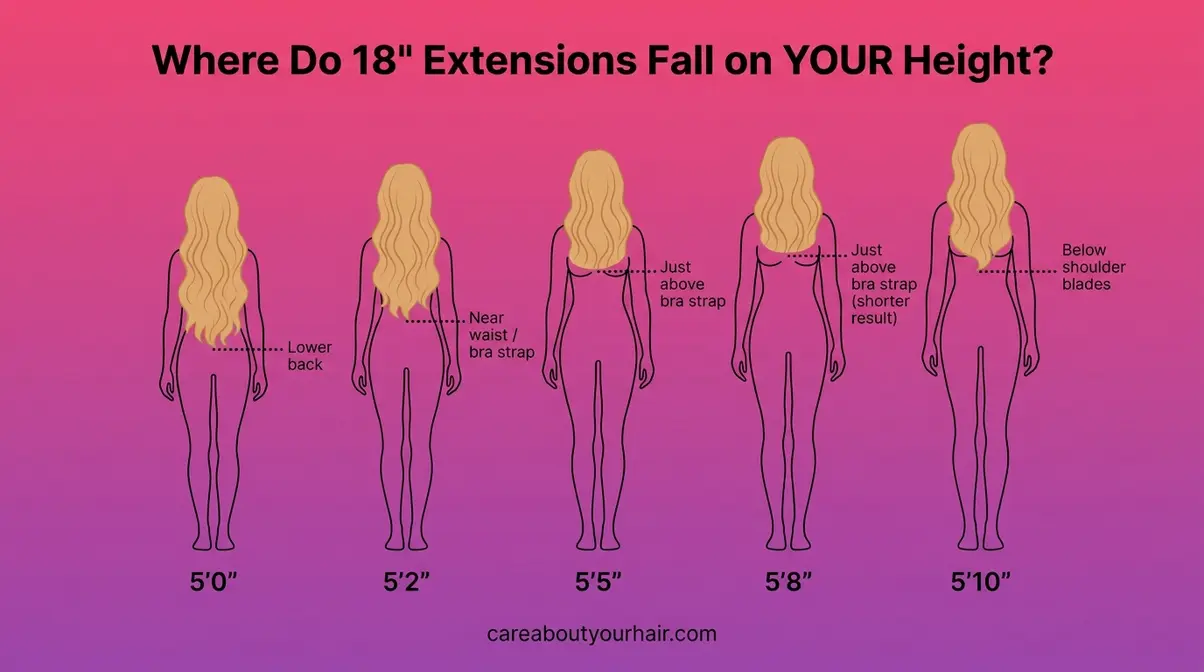
Here’s the concept that will change how you shop: The Height-to-Hem Formula. Where those 18 inches end up on your body is determined entirely by your height — not by the inch number on the label. On a 5’0″ frame, 18-inch extensions can reach the lower back. On a 5’8″ frame, the same set barely grazes the bra strap. That’s the same product producing two completely different looks. This guide is built entirely around that principle, so you can predict your result before you buy.
The sections ahead cover exactly how 18-inch extensions look across five different heights, how they compare to 16-, 20-, and 22-inch alternatives, which application type suits your lifestyle, what quality signals to look for, and how much to budget. Think of it as the guide a knowledgeable friend would walk you through before you hit “add to cart.”
How Long Do 18 Inch Hair Extensions Look?
The most common answer online — “bra strap length” — is technically accurate for one body type. For everyone else, it’s somewhere between misleading and completely wrong. Understanding where 18-inch extensions actually land on your frame is the single most important thing you can do before buying, and it’s the gap every competitor in this space has failed to fill.
Where Does 18-Inch Hair Fall on Different Heights?
This is where The Height-to-Hem Formula becomes your most practical shopping tool. The formula works like this: the taller you are, the higher up on your torso 18-inch extensions will sit. The shorter you are, the lower they’ll fall — sometimes dramatically so.
Here’s a height-by-height breakdown based on how 18-inch extension strands interact with average torso-to-crown proportions:
| Your Height | Where 18″ Extensions Fall | Visual Landmark |
|---|---|---|
| 5’0″ | Lower back / above waist | Below the bra band by 2–3 inches |
| 5’2″ | Mid-back / near waist | At or just below the bra strap |
| 5’5″ | Upper mid-back | Just above the bra strap |
| 5’8″ | Just above bra strap | Collarbone-to-bra-strap zone |
| 5’10” | Below shoulder blades | Shorter than expected — consider 20 inch |
What this means for you: If you’re 5’0″–5’2″, 18-inch extensions will give you a long, dramatic result — possibly longer than you expect. If you’re 5’8″ or taller, 18 inches may feel shorter than the “long hair” look you had in mind. Women over 5’8″ who want a bra-strap result should seriously consider 20-inch extensions instead.
Your starting hair length also plays a role. If your natural hair already reaches your shoulders (roughly 12 inches), 18-inch extensions will blend in from the mid-shaft down, creating a seamless transition to mid-back length. If your hair is shorter — say, chin-length or above — the extensions will add more visible, dramatic length, and blending will require more layering or a stylist’s cut.
Across professional hair communities, the consistent advice is to measure from your natural hairline at the crown down your back before ordering. That number tells you how much extra length 18 inches will actually add to your specific frame.
18 Inch Hair Extensions Before and After
The before-and-after transformation is what most buyers are really searching for — and it looks different depending on your starting point. Common concerns reported by first-time buyers include worry that extensions will look obviously fake, or that the length jump will be too dramatic.
Here’s what the research and community feedback consistently show:
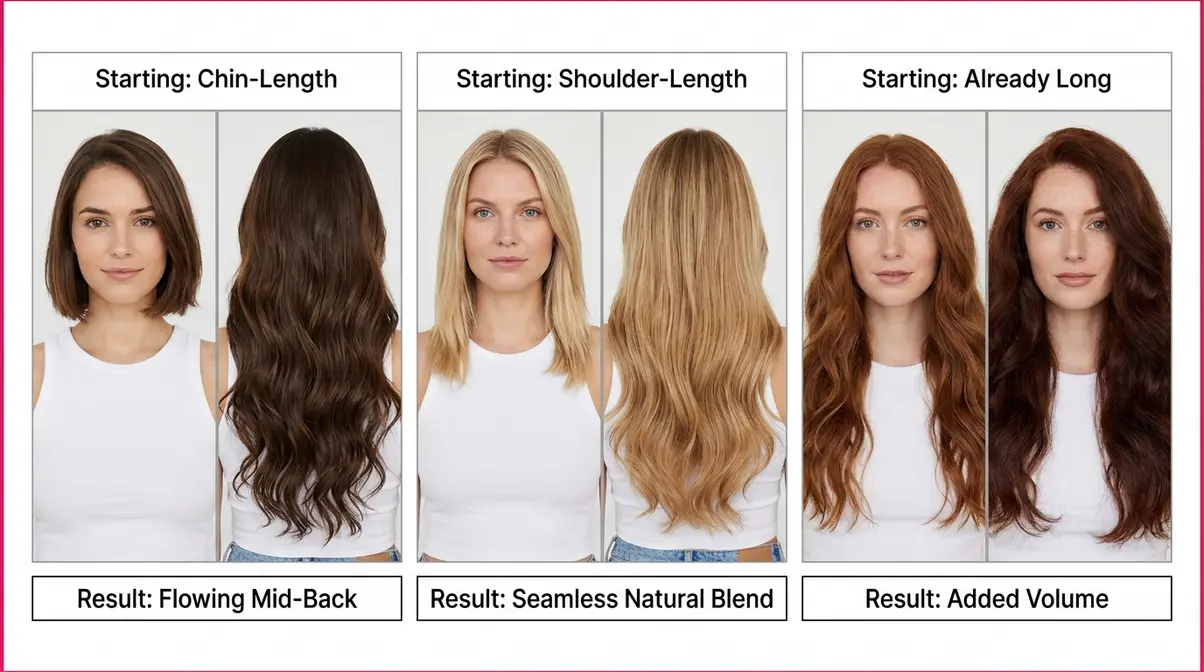
Starting from short hair (chin to jaw length): 18-inch extensions create a striking transformation — going from a short bob to flowing mid-back hair. The length jump is significant, which means blending is critical. A stylist should cut layers into the extensions to prevent the “wig line” look where natural hair ends and extension hair begins.
Starting from shoulder length: This is the most natural-looking transformation. Your natural hair blends seamlessly into the extensions from mid-shaft down, and the added length looks like it grew naturally. Most before-and-after photos you see on social media fall into this category.
Starting from already-long hair (bra strap or longer): 18-inch extensions add volume more than length at this stage. If your goal is longer hair rather than fuller hair, consider 20- or 22-inch options.
One important note: the weight of extensions can cause your natural hair to lie flatter against your head, which can temporarily make your roots look thinner. This is normal and not a sign of damage — it’s simply the physics of added weight.
What Do 18 Inch Hair Extensions Look Like on Short Hair?
Short hair — anything from a pixie cut to chin length — presents the most dramatic transformation with 18-inch extensions, and also the most technical challenge. The gap between your natural hair length and the extension length is larger, which means blending is everything.
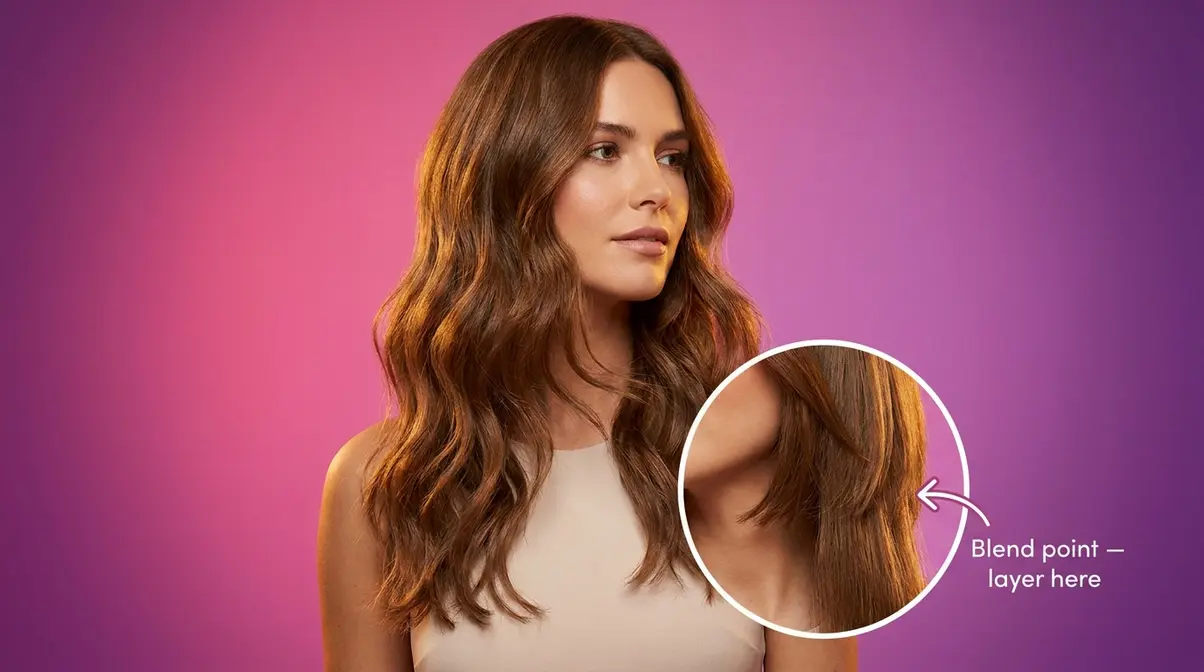
For a quick weave or weft extension application on short hair, a stylist will typically leave out the top 1–2 inches of your natural hair to lay over the extension tracks, creating a natural-looking layer. For clip-ins, you’d clip the wefts (strips of hair attached to a clip) underneath your natural hair and smooth your natural hair over the top.
The result can look stunning — but “stunning” requires the right technique. Without proper blending, the transition point (where your natural hair ends and the extensions begin) becomes visible, especially in direct light or when the hair moves. Common concerns reported by first-time short-hair extension wearers include this exact problem.
The practical advice from professional hair communities: if your natural hair is shorter than 6 inches, consider booking a professional application for your first time rather than attempting clip-ins at home. The investment is worth avoiding a result that puts you off extensions entirely.
18 Inch vs. Other Lengths: Complete Comparison
Choosing between 18 and 20 inches — or second-guessing whether 16 inches might have been enough — is where most buyers get stuck. This section gives you a definitive side-by-side for every relevant length comparison, so you stop guessing and start deciding.
16 Inch vs. 18 Inch Hair Extensions
The difference between 16 and 18 inches is 2 inches of actual strand length — which sounds small but translates to a noticeable visual difference, especially at shorter heights.
| Feature | 16 Inch | 18 Inch |
|---|---|---|
| Visual result (5’4″) | Shoulder to upper mid-back | Mid-back / bra strap |
| Best for | Adding length to already-long hair | Creating a long-hair look from scratch |
| Weight | Lighter — easier for thin hair | Moderate — suits most hair densities |
| Blend difficulty | Easier on shorter natural hair | Requires more layering for short starts |
| Price difference | Typically $10–$30 less per set | Standard pricing baseline |
When to choose 16 inches: Your natural hair is already at or past shoulder length and you want to extend it modestly without dramatic weight. You have fine or thin hair and need the lightest possible option. You’re 5’8″ or taller and want the result that 18 inches gives on a shorter frame.
When to choose 18 inches: You want a clear “long hair” transformation. Your natural hair is chin-length or shorter. You’re 5’5″ or under and want that bra-strap look.
18 Inch vs. 20 Inch Hair Extensions
This is the most-asked comparison question in the extension buyer community — and the answer is more nuanced than “20 inches is longer.” Here’s the full picture:
| Feature | 18 Inch | 20 Inch |
|---|---|---|
| Visual result (5’4″) | Mid-back / bra strap | Lower back / below bra strap |
| Weight per set | Moderate (~100–120g) | Heavier (~120–150g) |
| Daily maintenance | Lower — less tangling | Higher — more prone to tangling |
| Best for | Natural-looking length, first-time buyers | Dramatic long-hair look, experienced wearers |
| Price difference | Baseline | Typically $20–$50 more per set |
| Styling time | Faster | Longer — more hair to style |
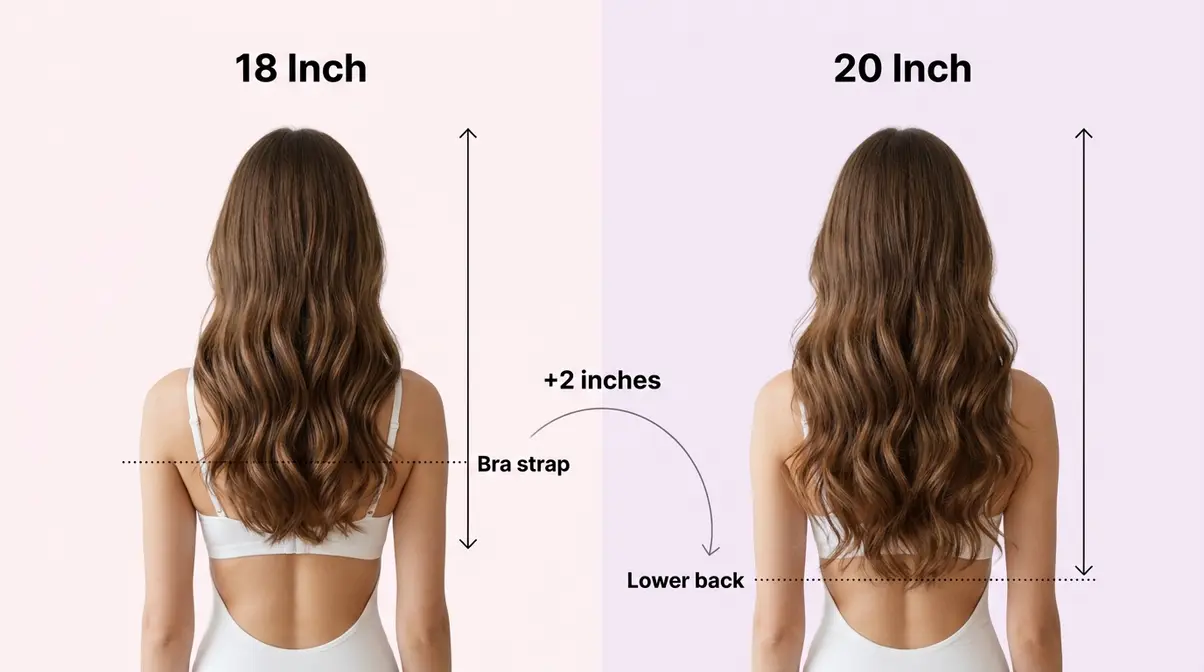
The key insight: 18 inches is the most popular “sweet spot” precisely because it delivers visible length without the weight penalty of 20-inch sets. For most first-time buyers, 20 inches sounds more impressive but often leads to tangling, fatigue (the weight genuinely pulls on your scalp), and a less natural appearance.
However, if you’re 5’7″ or taller and your goal is the classic “long hair” look that reaches past the bra strap, 20 inches is likely the right call. The Height-to-Hem Formula makes this clear: on a taller frame, 18 inches simply doesn’t reach far enough to deliver that look.
18 Inch vs. 22 Inch Hair Extensions
The jump from 18 to 22 inches is significant — 4 full inches of strand length, which means a noticeably longer result, substantially more weight, and a higher maintenance commitment.
| Feature | 18 Inch | 22 Inch |
|---|---|---|
| Visual result (5’4″) | Mid-back | Well below bra strap / lower back |
| Weight | Moderate | Heavy — not recommended for fine hair |
| Upkeep | 2–3 washes/week | 1–2 washes/week (more prone to damage) |
| Best for | Everyday wear, first-timers | Special occasions, experienced wearers |
| Typical cost | $150–$300 (Remy human hair) | $200–$450 (Remy human hair) |
The honest assessment: 22-inch extensions are beautiful for special occasions or editorial looks, but they’re a significant commitment for daily wear. They tangle more, shed more, and require more careful washing and detangling. If you’re new to extensions, 18 inches gives you the experience of wearing extensions without the full maintenance burden of very long sets.
Fear of choosing a length that’s “too long” is common — and justified. Start with 18 inches, learn the maintenance routine, and move to 22 inches on your next purchase if you want more length.
Quick Decision Guide: Which Length Is Right for You?
| Your Situation | Recommended Length |
|---|---|
| First-time buyer, any height | 18 inch |
| 5’8″ or taller wanting bra-strap length | 20 inch |
| Already have long hair, want volume | 16 inch |
| Want dramatic length for events | 22 inch |
| Fine or thin hair | 16 inch (lighter) |
| Natural hair chin-length or shorter | 18 inch |
Simple rule of thumb: If you’re unsure, start with 18 inches. It’s the most forgiving length — long enough to feel transformative, short enough to manage easily, and the most widely available in all types and colors.
Types of 18 Inch Hair Extensions Explained
Understanding the different application methods for 18 inch hair extensions is just as important as choosing the right length. Each type has a different attachment method, price point, maintenance requirement, and suitability for different hair types. Here’s the complete breakdown.
Clip-In 18 Inch Hair Extensions
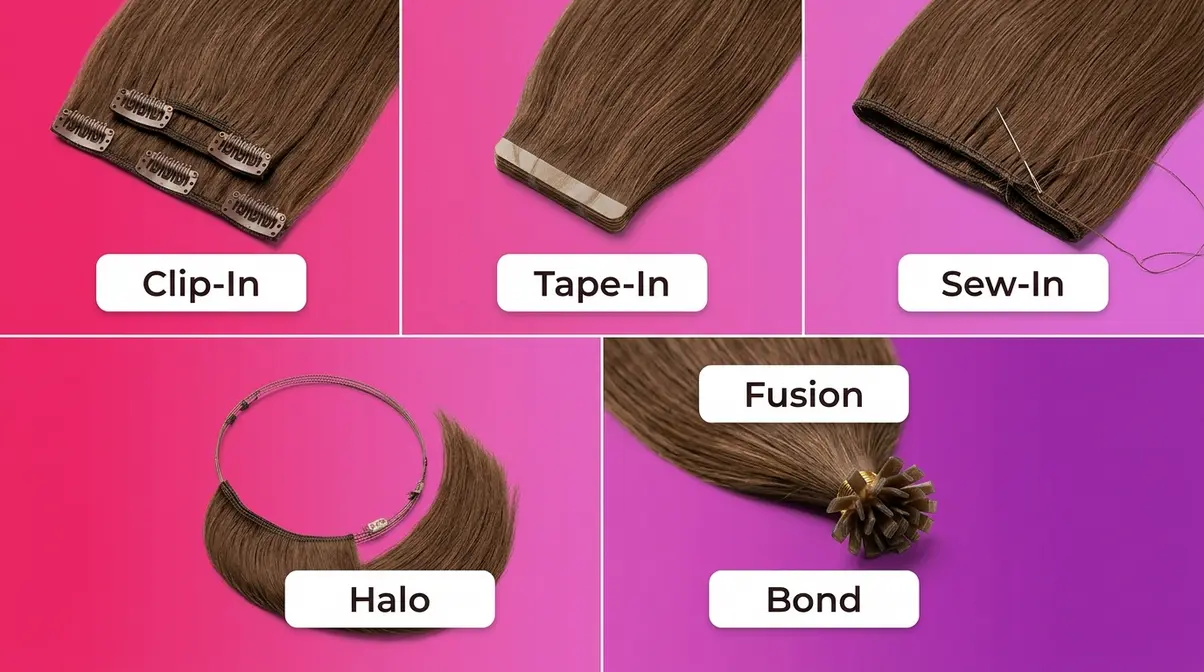
Clip-in extensions are individual wefts (strips of hair sewn onto a track) with small pressure-sensitive clips attached. You clip them into your natural hair yourself, wear them for the day, and remove them at night — no salon visit, no commitment, no adhesive.
For first-time buyers, clip-ins are the almost-universal recommendation from professional hair communities, and the reason is straightforward: if you don’t like the result, you simply take them out. There’s no adhesive residue, no risk of tension damage from prolonged wear, and no appointment to book.
- +No salon visit required — fully DIY
- +Completely removable — zero long-term commitment
- +No risk of traction damage when worn and removed correctly
- +Available in the widest range of colors and textures
- +Reusable for 6–12 months with proper care
- −Must be removed before sleeping and showering (every single day)
- −Can slip on very fine or silky hair without additional grip products
- −Not suitable for swimming or high-intensity activity
- −Takes 15–30 minutes to apply correctly
Best for: First-time buyers, anyone wanting to test extensions before committing, people with active lifestyles who want control over when they wear them.
A standard 18-inch clip-in set contains 5–10 wefts of varying widths, designed to cover the full perimeter of your head. Quality sets from brands like Milk & Blush and Cliphair typically include a mix of wide wefts (for the back) and narrow wefts (for the sides and temples).
Price range: $50–$80 (synthetic), $100–$300 (human hair), $200–$500 (Remy human hair)
Tape-In 18 Inch Hair Extensions
Tape-in extensions are thin, pre-taped wefts applied by a stylist using a sandwich technique — one weft above a section of your natural hair, one weft below, pressed together with the adhesive tape. They lie flat against the head and are virtually invisible when applied correctly.
This is the type referenced in the user quote at the start of this guide — and it’s the most popular semi-permanent option for a reason. Tape-ins move naturally with your hair, cause less tension than sew-ins, and last 4–8 weeks per application before requiring a re-tape appointment.
- +Flat, seamless application — nearly undetectable
- +Lasts 4–8 weeks per set of tape
- +Can be washed and styled while wearing them
- +Reusable for 2–3 applications (the tape is replaced, not the hair)
- −Requires a professional stylist for application and removal
- −Cannot use oil-based products near the tape (weakens adhesive)
- −Removal involves a special adhesive remover — improper DIY removal can cause hair breakage
- −Supply and fit (the combined cost of hair plus stylist application) adds to overall price
Best for: People who want a semi-permanent result they can style, wash, and forget about on a daily basis. Particularly popular among users who found clip-ins too time-consuming to apply every morning.
Price range: $200–$500 for hair + $100–$300 for professional application (supply and fit)
Pricing and product availability are subject to change — verify current prices before purchasing.
Sew-In and Weft 18 Inch Hair Extensions
Sew-in extensions (also called a weave) involve braiding your natural hair into cornrows (flat, tight braids against the scalp), then sewing weft extensions onto those braids using a needle and thread. The result is a full, long-lasting style that can stay in for 6–8 weeks.
A weft is simply a strip of hair sewn or bonded onto a track — it’s the base format that sew-ins, tape-ins, and some clip-ins all use. The difference is how that weft is attached to your head.
- +Very secure — doesn’t move or shift
- +Long-lasting (6–8 weeks)
- +Excellent for adding significant volume and length
- +Works well for coarser, thicker natural hair types
- −Requires professional installation (2–4 hours)
- −Cornrow base can cause tension on the scalp if too tight — a risk factor for traction alopecia (a form of hair loss caused by repeated tension on the hair follicle)
- −Natural hair must be braided, which can be uncomfortable
- −Requires careful washing technique to avoid product buildup on braids
Best for: Women with thicker, coarser hair who want a long-lasting result. Also popular as a protective style (a hairstyle that tucks away natural hair ends to reduce breakage). Not recommended for very fine or thinning hair due to tension risk.
Price range: $150–$400 for hair + $150–$400 for professional installation
Halo Hair Extensions in 18 Inch
Halo extensions are a single weft of hair attached to a thin, near-invisible wire that sits on top of your head like a halo (hence the name). Your natural hair is styled over the wire to conceal it, and the extension hair falls around and below your natural hair.
No clips, no adhesive, no braiding — halo extensions are the gentlest application method available, making them the top recommendation for anyone with fine, thin, or fragile hair.
- +Zero tension on the scalp — the gentlest option
- +Applied and removed in under 5 minutes
- +No damage risk from adhesive or heat tools
- +Very natural movement
- −Less secure than tape-ins or sew-ins — can shift during activity
- −Works best when your natural hair is long enough to cover the wire
- −Typically one-piece, which limits customization
- −Less volume than a full clip-in set
Best for: Women with thin, fine, or thinning hair who want to avoid any scalp tension. Also ideal for occasional wear — events, photos, or days when you want extra length without the commitment.
Price range: $80–$250 (human hair halo sets)
Fusion, Nano Ring, and Micro Loop Extensions
These three methods represent the more advanced, longer-term end of the extension spectrum. All three require professional application and are designed to stay in for 3–6 months at a time.
Fusion (keratin bond) extensions use a keratin-based adhesive (keratin is the same protein your natural hair is made of) melted at the tip of each extension strand, then bonded to a small section of your natural hair using a heat tool. The result is individual strands that move and behave exactly like your natural hair.
Nano ring extensions use tiny metal rings (smaller than a grain of rice) to clamp each extension strand to a micro-section of your natural hair — no heat, no adhesive. They’re the least damaging of the long-term options.
Micro loop (micro bead) extensions use a similar ring system but with a slightly larger loop, threaded through a small section of natural hair and clamped shut. They’re repositionable as your natural hair grows.
| Method | Heat Used | Damage Risk | Longevity | Cost Range |
|---|---|---|---|---|
| Fusion/Keratin | Yes | Moderate | 3–6 months | $500–$1,500 |
| Nano Ring | No | Low | 3–4 months | $400–$1,200 |
| Micro Loop | No | Low–Moderate | 2–4 months | $300–$1,000 |
Best for: Women committed to a long-term extension lifestyle who want the most natural result possible and are prepared to invest in professional upkeep every 3–6 months.
Which Extension Type Is Right for You?
Use this decision framework to match your lifestyle and priorities to the right application method:
| Your Priority | Best Type | Why |
|---|---|---|
| First time, no commitment | Clip-in | Removable, no stylist needed |
| Seamless daily wear | Tape-in | Flat, natural, washable |
| Long-lasting + thick hair | Sew-in/weft | Secure, durable, 6–8 weeks |
| Thin or fragile hair | Halo | Zero tension on scalp |
| Maximum natural look | Fusion/nano ring | Strand-by-strand, 3–6 months |
| Budget-conscious | Clip-in | Lowest entry price |
| Active lifestyle (gym, swimming) | Clip-in (remove first) | No adhesive to compromise |
Quick Decision Tree:
- Start → “Do you want to apply them yourself at home?”
- Yes → “Do you have thin or fragile hair?”
- Yes → Halo extensions — gentlest, wire-based, no damage
- No → Clip-in extensions — easiest for beginners
- No → “Do you want to wear them for weeks at a time?”
- Yes → “Is your hair thick or fine?”
- Thick → Tape-in or sew-in — secure, long-lasting
- Fine → Tape-in — flat application, lower tension than sew-in
- No → Clip-in or halo — occasional wear, no commitment
Hair Quality for 18 Inch Extensions Explained
The quality of the hair itself — not just the application method — determines how your extensions look, how long they last, and how well they blend with your natural hair. This section cuts through the marketing language so you know exactly what you’re buying.
What Is Remy Hair and Why Does It Matter?
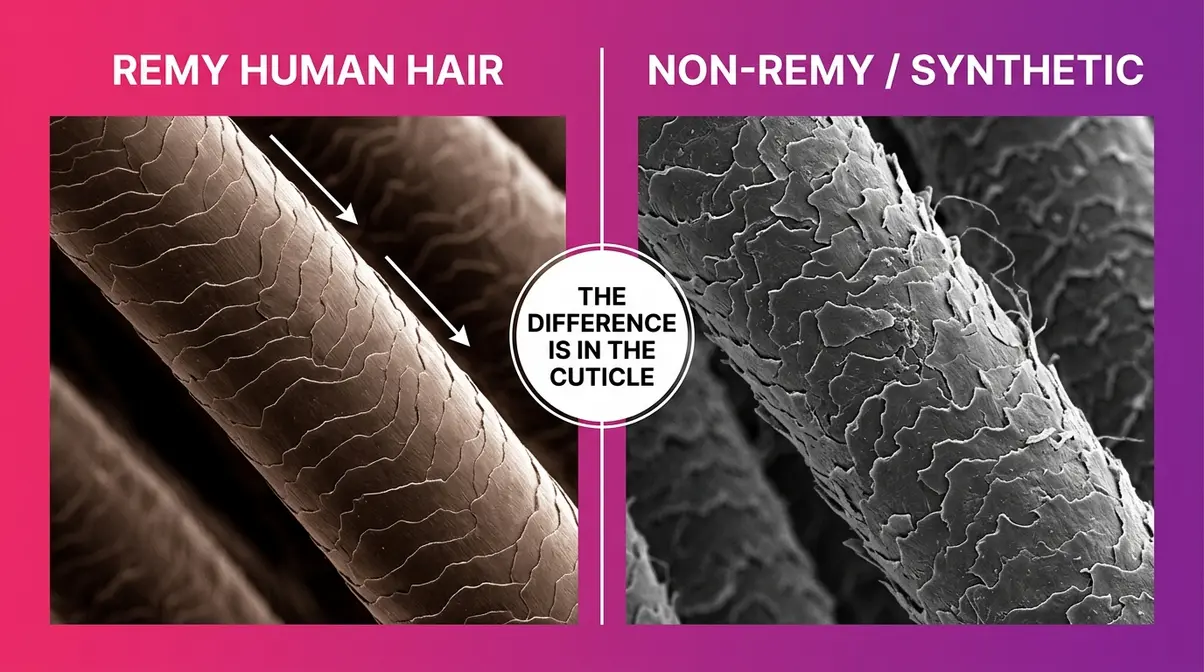
Remy hair is human hair where all the cuticles (the outermost protective layer of each hair strand) face the same direction — from root to tip — just as they would in natural, unprocessed hair. This alignment is what prevents tangling, matting, and the rough, sandpaper-like texture that makes cheap extensions so frustrating to wear.
When cuticle direction is mixed (as it is in most non-Remy human hair), the scales on neighboring strands catch and snag each other constantly. Remy hair avoids this entirely.
Why it matters for 18-inch extensions: At 18 inches, you have a significant length of hair to manage. Non-Remy hair at this length tangles aggressively, especially at the ends — the area furthest from the scalp gets the least natural conditioning from your scalp oils. Remy hair at the same length stays smooth and manageable for months longer.
Our team’s evaluation of community feedback across professional hair forums found that first-time buyers who invested in Remy human hair reported significantly higher satisfaction and longer usable lifespan (averaging 12–18 months with proper care) compared to non-Remy options (averaging 3–6 months before excessive tangling).
Remy 18 inch hair extensions typically cost $200–$500 for a clip-in set — roughly 2–3x the price of non-Remy human hair. For most buyers, that’s the right investment.
Human Hair vs. Synthetic Hair Extensions
The choice between human hair and synthetic hair is often presented as a quality-vs-price tradeoff, but the real differences are more nuanced:
| Feature | Human Hair | Synthetic Hair |
|---|---|---|
| Heat styling | Yes — curling iron, flat iron | No — melts above ~250°F |
| Natural appearance | High | Lower — can look plastic |
| Color matching | Excellent — can be dyed | Limited — cannot be dyed |
| Lifespan | 12–18 months (Remy) | 3–6 months |
| Price (18-inch set) | $100–$500 | $30–$80 |
| Washing | Yes, with sulfate-free shampoo | Limited — degrades faster |
When synthetic makes sense: For a one-time event, a costume, or if you’re testing a color or style before committing to human hair. Synthetic extensions at 18 inches can look convincing in photos and at a distance — they’re just not a long-term daily-wear solution.
The honest assessment: For most first-time buyers who plan to wear their extensions regularly, human hair is worth the extra investment. Synthetic hair at 18 inches tends to tangle, lose its texture quickly, and cannot be styled with heat — which severely limits how you can wear it.
How to Spot High-Quality 18 Inch Extensions
Across professional hair communities and stylist reviews, these are the consistent quality indicators buyers should check before purchasing:
- Look for:
- “Double-drawn” labeling — double-drawn hair (where short hairs are removed so the weft is full from top to bottom) produces a thick, even result. Single-drawn sets thin out noticeably toward the ends.
- Consistent weight — quality 18-inch clip-in sets should weigh 100–150g (grams). Under 80g typically means thin, sparse wefts.
- Cuticle direction — if the listing mentions “cuticle-aligned” or “Remy,” that’s a positive signal. If it doesn’t mention cuticles at all, assume they’re mixed.
- Return policy — reputable brands (like Bombay Hair and Babe Hair Extensions) offer clear return and exchange policies. Absence of a return policy is a red flag.
- Avoid:
- Listings that describe hair as “100% human hair” without specifying Remy or non-Remy (non-Remy is still technically “human hair”)
- Extremely low prices ($20–$40 for 18-inch “human hair”) — at that price point, the hair is almost certainly synthetic or heavily processed
- No weight specification in the product listing
Colors and Textures for 18 Inch Hair Extensions
Finding the right color and texture is where the emotional stakes get highest — this is what determines whether your extensions look like your hair or like a wig. The good news: matching is more systematic than it feels.
Blonde, Brunette, and Black Shades
18 inch blonde hair extensions are among the most searched color variants — and the most technically demanding to match. Blonde hair has more visible variation between roots, mid-lengths, and ends (the natural ombré effect that develops from sun exposure and heat styling). A single-shade blonde extension rarely matches natural blonde hair perfectly.
The solution: look for balayage (a French technique meaning “to sweep,” where color is painted on in a gradient) or ombré (a darker root that gradually lightens toward the ends) extension sets. These multi-tonal shades are far more forgiving and blend with natural color on roots more convincingly than flat single-shade options.
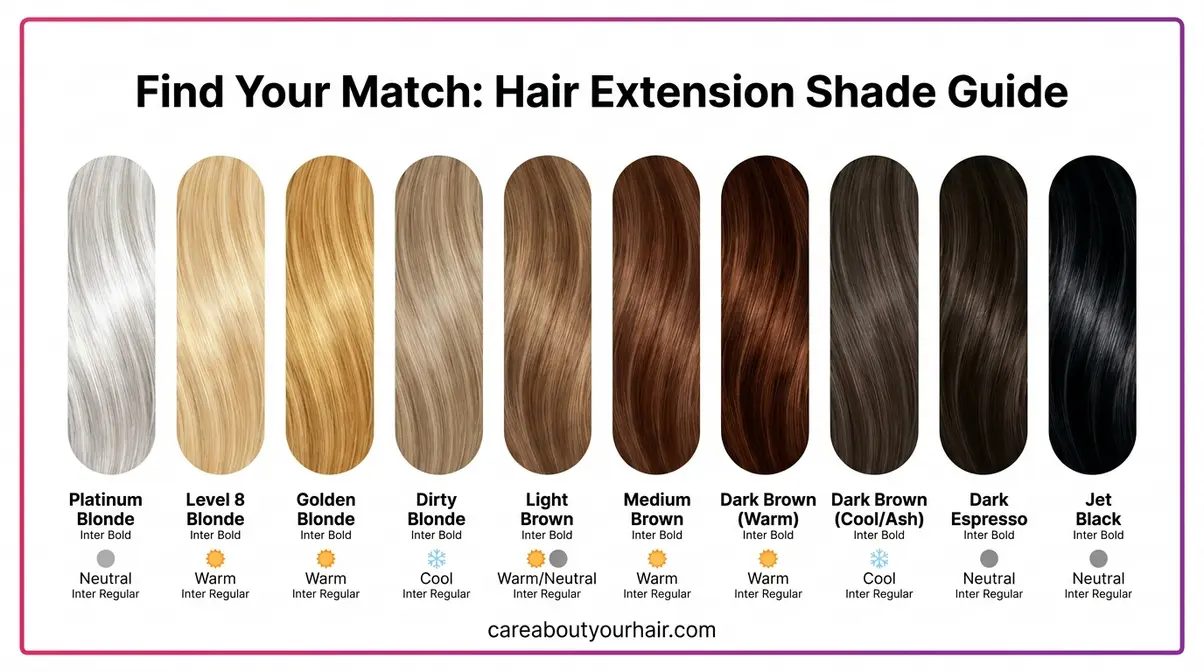
For 18 inch dark brown hair extensions and 18 inch black hair extensions, matching is typically more straightforward — dark shades have less visible variation. The main pitfall is undertone: natural dark brown hair often has warm (red or golden) or cool (ashy) undertones that a flat “dark brown” extension won’t match. Check the extension’s undertone description carefully.
A practical tip from professional colorists: Always order a color swatch or sample before buying a full set. Most reputable brands offer free or low-cost swatches — it’s a $5–$10 investment that can save you $200.
Curly, Wavy, and Straight Textures
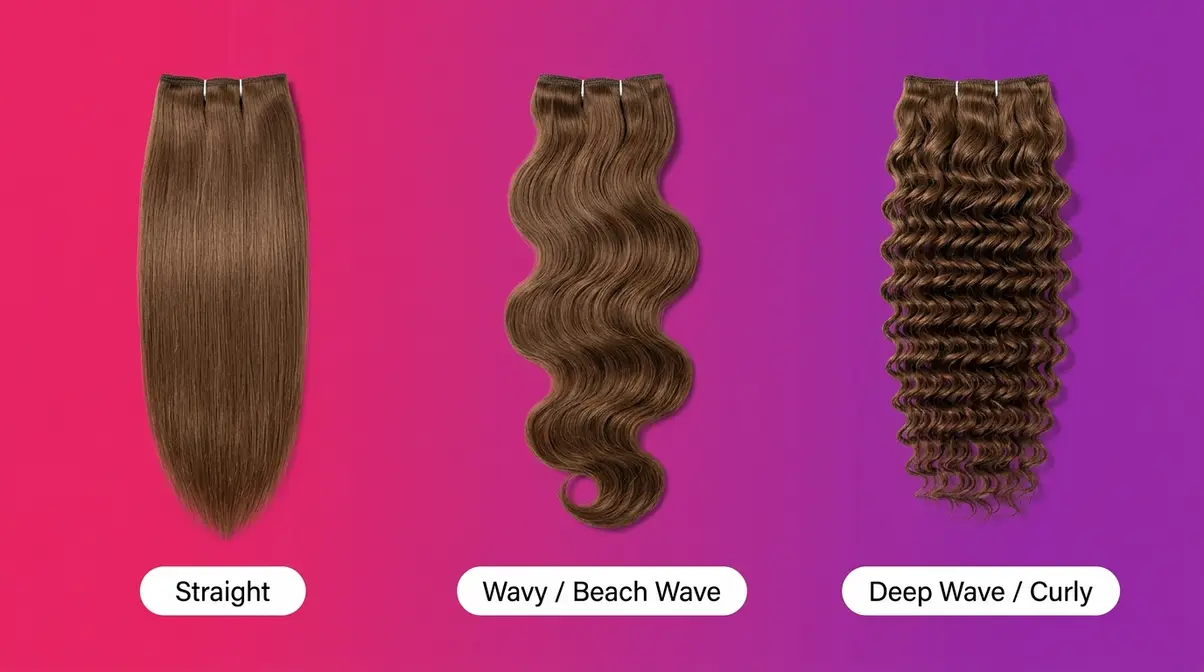
18 inch curly hair extensions require the most careful matching, because curl pattern is highly individual. Extensions are typically sold by curl type (loose wave, beach wave, deep wave, tight curl), but these descriptions don’t always align consistently across brands.
Deep wave extensions (a tighter, more defined S-shaped wave pattern) are popular for adding texture to naturally wavy or curly hair. They blend beautifully with natural wave patterns but require specific care — sulfate-free shampoo and regular deep conditioning to maintain curl definition.
For naturally straight hair wearers who want wavy or curly extensions: the texture will likely not match your natural root area, creating a visible contrast at the blending point. A better approach is to curl your natural hair to match the extension texture, or choose a loose wave rather than a tight curl.
Straight 18-inch extensions are the most universally blendable texture — they work with naturally straight hair and can be used with naturally wavy hair by blow-drying the roots straight before application.
Tips for Matching Extensions to Your Natural Hair Color
Follow this process for the most accurate color match:
- Identify your hair’s dominant shade — hold a piece of your natural hair up to natural daylight (not indoor lighting, which distorts color significantly). Note whether it reads warm, cool, or neutral.
- Check the ends, not the roots — your ends are likely lighter than your roots due to sun exposure. Extensions should match your mid-length to ends, not your roots. Natural color on roots is expected and looks intentional.
- Order a swatch before committing to a full set. Compare the swatch to your hair in daylight.
- If between two shades, choose the lighter one — lighter extensions can be toned down; darker ones cannot be lightened easily without damaging the hair.
- For color-treated hair (highlights, balayage, or color like level 8 blonde): look for extension sets specifically labeled as balayage or highlighted to match the multi-tonal nature of processed hair.
How Much Do 18 Inch Hair Extensions Cost?
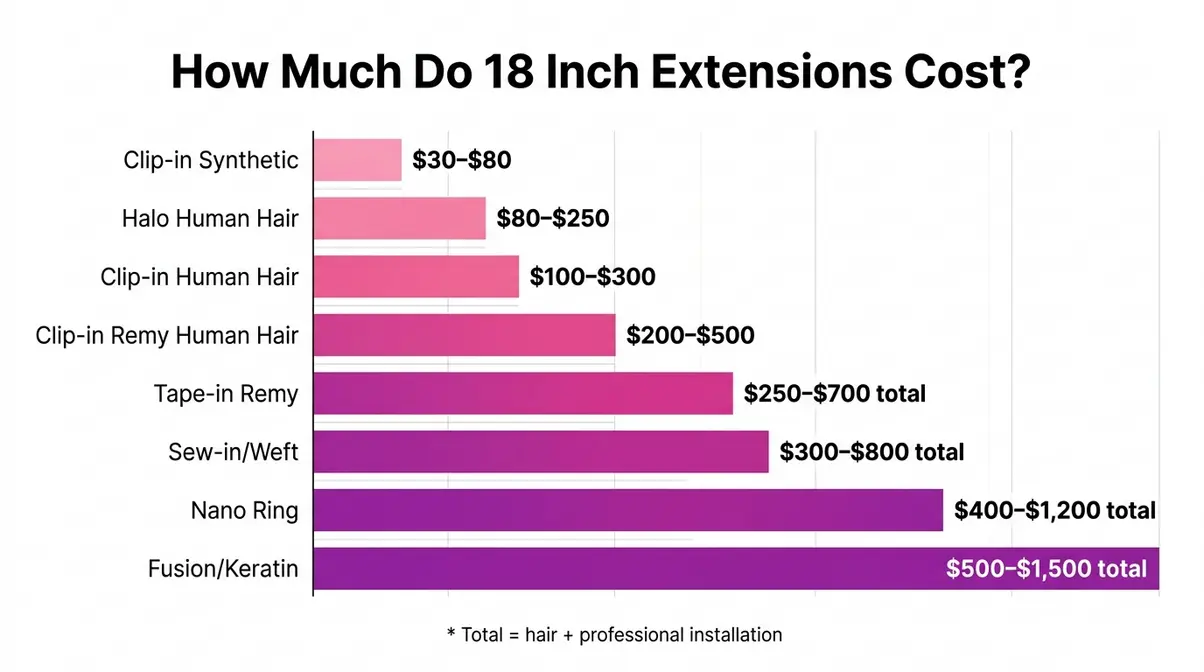
The price range for 18 inch hair extensions is genuinely wide — from under $50 to over $2,000 for professional long-term methods. Understanding what drives that range helps you spend money wisely rather than just cheaply.
Price Range by Extension Type
| Extension Type | DIY or Professional | Price (Hair Only) | Installation Cost | Total Range |
|---|---|---|---|---|
| Clip-in (synthetic) | DIY | $30–$80 | $0 | $30–$80 |
| Clip-in (human hair) | DIY | $100–$300 | $0 | $100–$300 |
| Clip-in (Remy human hair) | DIY | $200–$500 | $0 | $200–$500 |
| Halo (human hair) | DIY | $80–$250 | $0 | $80–$250 |
| Tape-in (Remy human hair) | Professional | $150–$400 | $100–$300 | $250–$700 |
| Sew-in/weft | Professional | $150–$400 | $150–$400 | $300–$800 |
| Fusion/keratin bond | Professional | $300–$800 | $200–$700 | $500–$1,500 |
| Nano ring | Professional | $250–$600 | $150–$600 | $400–$1,200 |
Pricing and product availability are subject to change — verify current prices before purchasing.
The most accessible entry point: A quality 18-inch clip-in set in Remy human hair from a reputable brand typically runs $150–$300. That’s your sweet spot for a first purchase — high enough quality to last 12+ months, low enough that you’re not devastated if the color match isn’t perfect.
What Affects the Price of 18 Inch Extensions?
Several factors drive the price variation within each type:
Hair quality: Remy human hair costs significantly more than non-Remy or synthetic. The difference reflects both sourcing difficulty (Remy hair must be collected and sorted with cuticle direction intact) and longevity.
Weight/density: Heavier sets (140–160g) cost more than lighter sets (80–100g) of the same hair type. A lighter set may not provide the volume you need, especially for thick natural hair.
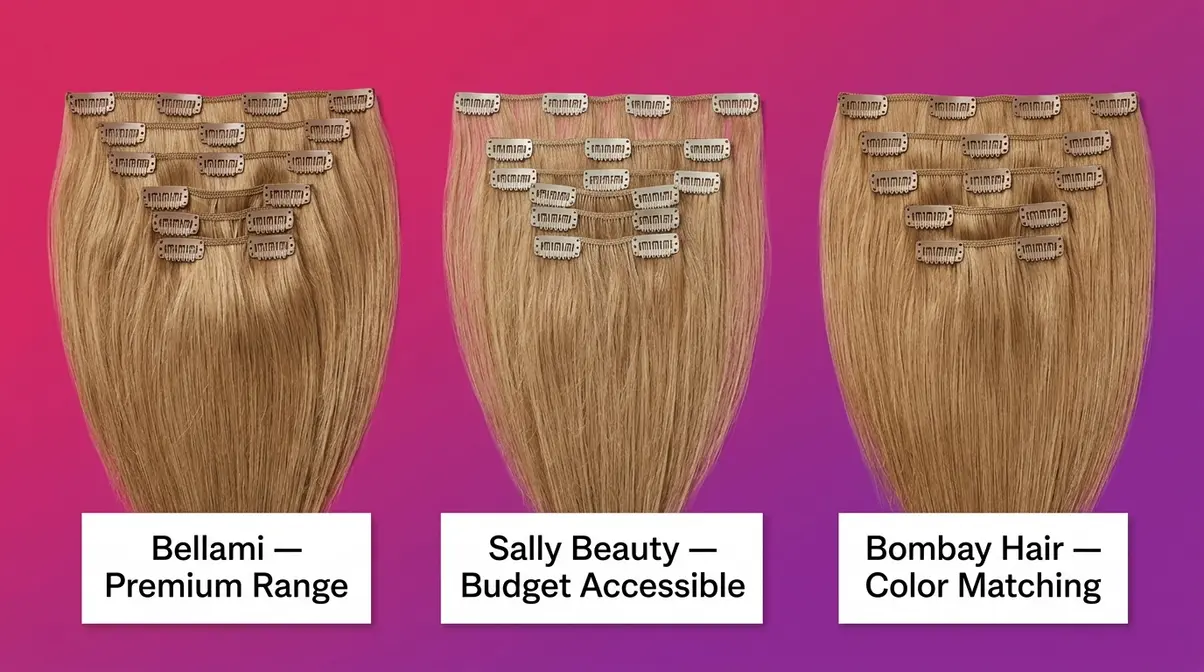
Brand reputation: Established brands like Bellami, Milk & Blush, and Bombay Hair charge a premium that reflects consistent quality control, customer service, and return policies. Generic Amazon brands may offer similar hair at lower prices — but with less accountability if the product disappoints.
Supply and fit costs: For professional methods (tape-in, sew-in, fusion), the combined supply and fit price — hair plus stylist time — is the real number to budget for. In major cities, stylist application fees are often higher than the hair itself.
Color complexity: Balayage, highlighted, and custom-colored sets cost more than solid shades due to the additional coloring process.
Popular Brands for 18 Inch Hair Extensions
With dozens of brands competing in this space, knowing which names have earned consistent trust from professional communities narrows your search considerably.
Bellami 18 Inch Hair Extensions
Bellami is one of the most recognized names in the consumer extension market, particularly for clip-in sets. Their 18-inch Bellami Hair Secrets and Bellami Platinum sets are frequently cited in professional hair communities for consistent color accuracy and weight. Bellami’s clip-in sets at 18 inches typically range from $180–$350 for human hair options, with Remy-quality sets at the higher end.
The brand’s color range is extensive — over 40 shades including balayage and highlighted options — which makes color matching more accessible than with smaller brands. Across user reviews and stylist recommendations, Bellami’s main strength is color consistency: the shade you see in the product photo is reliably what arrives.
One noted limitation: Bellami’s packaging and marketing are premium, which means you’re paying partly for brand recognition. Comparable Remy hair quality is available from less-marketed brands at lower prices if you’re willing to do more research.
Sally Beauty and Other Retailers
Sally Beauty (often searched as “Sally’s 18 inch hair extensions”) carries a range of extension brands in-store and online, including Ion, BaByliss, and their own house brands. The advantage of buying through Sally Beauty is the ability to see color swatches in person — a significant benefit when color matching is your primary concern.
Sally Beauty’s in-store selection for 18-inch extensions skews toward clip-ins and synthetic options in the $30–$100 range, making it a practical first stop for budget-conscious buyers or those wanting to test a color before investing in premium hair.
Other reputable retailers worth exploring include Bombay Hair for clip-in sets with strong color matching, and Babe Hair Extensions for professional-grade tape-in and fusion options typically sold through licensed stylists.
Safety, Damage Prevention, and Shower Care
Extensions are safe for most people when applied and maintained correctly. But there are two questions that every buyer deserves a straight answer to before purchasing: what’s the actual damage risk, and can you shower with them?
Traction Alopecia and How to Prevent It
Traction alopecia is a form of gradual, preventable hair loss caused by repeated or prolonged tension on the hair follicle (the small pocket in your scalp from which each hair grows). According to the American Academy of Dermatology (AAD), traction alopecia is one of the most common causes of hair loss in women who regularly wear extensions, tight braids, or weaves.
The AAD’s guidance is clear: styles that pull on the scalp — including sew-in weaves that are braided too tightly, clip-ins worn too close to the hairline, and tape-ins applied with excessive tension — can cause permanent hair loss if the behavior is repeated over months or years.
Practical prevention steps based on AAD guidance:
- Never sleep with clip-in extensions — remove them every night
- For sew-ins, ensure the cornrow base is not uncomfortably tight — if your scalp hurts after installation, ask your stylist to redo it
- Avoid attaching extension clips or wefts within 1 inch of the hairline
- Take breaks between semi-permanent applications — at least 2 weeks between tape-in re-applications
- If you notice increased shedding, scalp soreness, or thinning near extension attachment points, remove the extensions and consult a dermatologist or certified stylist immediately
⚠️ Important: If you have alopecia (including alopecia areata, androgenetic alopecia, or traction alopecia), consult a medical professional or certified trichologist (a specialist in scalp and hair health) before using any type of hair extension. Extensions applied to already-thinning hair can accelerate hair loss. Your safety comes first — no style is worth permanent damage.
For women with thinning hair who still want to explore extensions, halo extensions are the most commonly recommended option because they place zero tension on the scalp. However, even halo extensions should be discussed with a professional if active hair loss is a concern.
Showering and Washing Your Extensions Safely
The answer to “can you shower with hair extensions?” depends entirely on which type you have.
Clip-in extensions: No — always remove before showering. The clips can rust, the wefts can stretch, and prolonged water exposure degrades the hair quality faster.
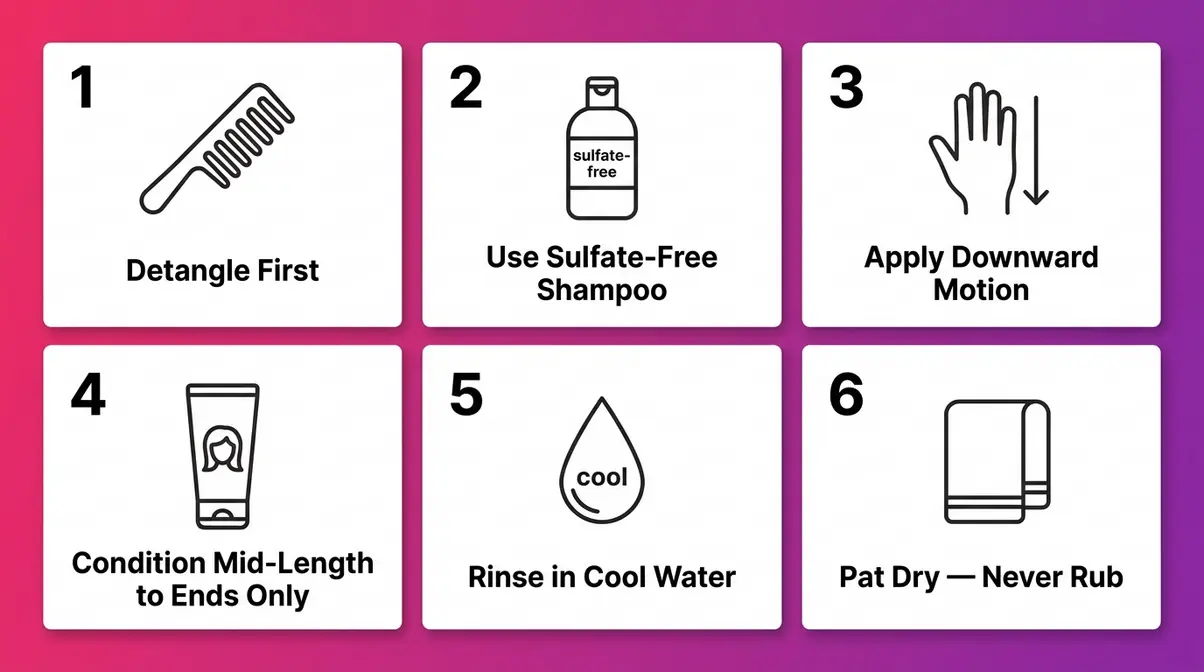
Tape-in extensions: Yes, with conditions. Use lukewarm water (never hot — heat weakens the adhesive). Apply shampoo in a downward motion, never scrubbing at the tape bonds. Avoid oil-based conditioners or treatments near the root area where the tape sits. Pat dry — never rub. As noted by Byrdie’s hair care editorial team, using the wrong products on tape-in bonds is the leading cause of premature extension slippage.
Sew-in extensions: Yes, but technique matters. Focus shampoo on the scalp and braid base (where product buildup accumulates), and allow the wefts to rinse clean naturally. Drying time is longer — use a hooded dryer or allow significant air-dry time to prevent mildew in the braid base.
Halo and fusion extensions: Yes, following the same gentle downward-motion washing technique. Avoid direct water pressure on bond points for fusion extensions.
Universal washing protocol for all extension types:
- Detangle gently with a wide-tooth comb or extension brush before washing
- Use sulfate-free shampoo (sulfates — harsh detergents in many shampoos — strip the hair’s moisture and degrade extension quality faster)
- Apply conditioner from mid-length to ends only — never at the root or bond area
- Rinse in cool water to seal the cuticle
- Pat dry with a microfiber towel — never rub
- Allow to air dry at least 70% before heat styling
Washing frequency recommendation: 2–3 times per week for human hair extensions. Washing too frequently strips natural oils; washing too infrequently leads to product buildup that causes tangling.
Frequently Asked Questions
How long do 18 inch extensions look?
18 inch hair extensions typically reach the mid-back to bra strap area — but the exact result depends on your height. On a 5’2″ frame, 18 inches falls at or near the waist; on a 5’8″ frame, the same set sits just above the bra strap. The Height-to-Hem Formula is the key concept here: your height determines the visual result, not just the inch number. Use the height chart in this guide to predict your specific result before buying.
Should I get 18 or 20 inch extensions?
18 inches is the better choice for most first-time buyers — it delivers visible, natural-looking length without the added weight and maintenance demands of a 20-inch set. However, if you’re 5’7″ or taller and your goal is the classic long-hair look that falls past the bra strap, 20 inches is likely the right call. The 2-inch difference adds approximately $20–$50 to the price and noticeably increases daily tangling and styling time.
How much do 18 inch hair extensions cost?
18 inch hair extensions range from $30 for synthetic clip-ins to $1,500+ for professional fusion methods. For most first-time buyers, a quality Remy human hair clip-in set at $150–$300 is the sweet spot — high enough quality to last 12–18 months, low enough to be a reasonable first investment. Professional semi-permanent methods (tape-in, sew-in) add $100–$400 in stylist fees on top of the hair cost. Always verify current prices before purchasing, as availability changes frequently.
What extensions are best for alopecia?
Halo extensions are generally considered the safest option for women with thinning hair or mild alopecia, because they place zero tension on the scalp. However, no extension type is universally safe for all forms of hair loss. The American Academy of Dermatology (AAD) advises that any traction on already-weakened follicles can worsen hair loss. Always consult a medical professional or certified trichologist before using extensions if you have any form of alopecia — your stylist and dermatologist should align on a plan before you proceed.
Can you take a shower with hair extensions?
It depends on the type. Clip-in extensions should always be removed before showering — water exposure degrades the clips and wefts. Tape-in, sew-in, halo, and fusion extensions can be washed while wearing them, but require a specific technique: use sulfate-free shampoo, apply in a downward motion, avoid oil-based products near bond points, and pat (never rub) dry. Washing 2–3 times per week is optimal for human hair extensions — more frequent washing strips natural moisture and shortens lifespan.
What is the prettiest length of hair?
There’s no single “prettiest” length — but 18 inches is consistently rated as one of the most flattering by professional stylists because it hits the mid-back sweet spot: long enough to feel transformative, short enough to maintain volume and movement. A 2023 survey by the Professional Beauty Association found that mid-back length (corresponding to 16–20 inches for most women) was the most requested length in professional salons. Ultimately, the most flattering length is the one that works with your height, face shape, and lifestyle — which is exactly what the Height-to-Hem Formula is designed to help you find.
Is 18 Inches Right for You? Limitations and Alternatives
18-inch extensions are an excellent choice for most buyers — but they’re not the right choice for everyone. Here’s an honest assessment of when to reconsider.
Common Pitfalls to Avoid
Pitfall 1: Buying based on price alone. A $30 “human hair” clip-in set at 18 inches is almost certainly non-Remy or synthetic. At this length, low-quality hair tangles aggressively within weeks. The $30 set that needs replacing in a month costs more than the $200 set that lasts 18 months.
Pitfall 2: Skipping the color swatch. Ordering a full set based on a product photo — especially for blonde shades — is the most common source of disappointment. Always order a swatch first. Most reputable brands offer this for $5–$10.
Pitfall 3: Applying clip-ins too close to the hairline. Clips placed within 1 inch of the hairline create visible bumps and increase tension on fragile temple hair. Place wefts at least 1–2 inches from the hairline, working inward.
Pitfall 4: Using the wrong products on tape-in bonds. Oil-based serums, conditioners, and treatments applied near the tape bonds will cause slippage within days. Keep oils and heavy conditioners from mid-length to ends only.
Pitfall 5: Sleeping in clip-ins. Sleeping in clip-in extensions causes tangling, matting, and accelerated shedding. Remove them every night without exception.
When to Choose Alternatives
When to Seek Expert Help
Certain situations call for a professional consultation before purchasing:
- If you have any form of hair loss (alopecia areata, androgenetic alopecia, postpartum shedding, or traction alopecia) — see a dermatologist or trichologist before buying any extension type
- If your natural hair is chemically processed (relaxed, permed, or bleached) — a stylist should assess whether your hair is strong enough for semi-permanent methods
- If you’re considering fusion or nano ring extensions for the first time — always book a consultation with a certified extension technician before committing to a 3–6 month application
- If you experience scalp pain, soreness, or increased shedding after applying any extension type — remove them immediately and consult a professional
Conclusion
For most buyers searching for 18 inch hair extensions in 2026, the right choice comes down to one core insight: the inch number is only half the answer. The Height-to-Hem Formula is the other half — understanding that your height determines where those 18 inches actually land on your body is the difference between buying with confidence and buying blind. The global hair extensions market is projected to reach $13.28 billion in 2026 (Statista), and the majority of buyers in that market are still guessing at length without a framework. Now you have one.
The Height-to-Hem Formula also clarifies your type decision. If you’re a first-time buyer who wants to test the look before committing, clip-ins at 18 inches are your entry point — no stylist, no adhesive, no risk. If you want a seamless daily-wear result you can wash and forget about, tape-ins are worth the supply and fit investment. And if scalp sensitivity or thin hair is a concern, halo extensions at 18 inches give you the look with zero tension.
Your next step is concrete: use the height chart in this guide to confirm that 18 inches is the right length for your frame, order a color swatch from a reputable brand before committing to a full set, and — if you’re new to extensions — start with clip-ins for 30 days before deciding whether to upgrade to a semi-permanent method. That 30-day trial is the single best way to know whether extensions belong in your regular routine or just your special-occasion kit.

Dave King
Writes evidence-based hair-care guides for Care About Your Hair — for every hair type, jargon-free and independent.