 Dave King
If your hair isn’t straight, isn’t curly, and seems to have a mind of its own — you almost certainly have 2B hair. This guide covers everything you need to identify your wave type, understand why your waves behave the way they do, and build a routine that actually works. It’s written for beginners, for women, for men, and for anyone whose hair texture has recently shifted.
Table of Contents
- What Is 2B Hair?
- Comparing 2A, 2B, and 2C Hair
- The Essential 2B Hair Care Routine
- Best Products for 2B Hair
- 2B Hair Product Deep Dive
- Best Haircuts for 2B Waves
- 2B Hair for Men: Complete Guide
- Coloring and Braiding 2B Hair
- Common 2B Hair Mistakes and Fixes
- Frequently Asked Questions
- Final Conclusion
Your hair has been trying to wave at you for years. You’ve flat-ironed it into submission, loaded it with anti-frizz serums, and watched it fall flat by noon anyway. The frustration is real — and it’s not your fault.
“I don’t know why it took me so long to realize my hair had a whole type — I’d spent years fighting it instead of working with it.” — Community member, r/Wavyhair
That experience is remarkably common. Most people with 2B hair spend years treating it like straight hair (which dries it out) or like curly hair (which weighs it down). Every wrong product, every bad haircut, every wash day that ends in halo frizz (that cloud of frizz around the crown) costs you time, money, and confidence. Most advice online is written by brands trying to sell you something specific.
This guide is different. By the end, you’ll know exactly what 2B hair is, why it behaves the way it does, and how to build a routine that works — with or without expensive products. You’ll get the science behind porosity, a step-by-step wash-day routine, a complete men’s section, guidance on hormonal texture changes, and answers to the eight questions people search for most.
2B hair features a defined S-shaped wave starting at the mid-lengths — and it’s one of the most common hair types that goes unidentified for years.
- The Wave Activation Window: All styling products must be applied to soaking-wet hair — even slightly damp hair breaks the wave pattern and causes frizz
- Porosity matters: 2B hair with low porosity needs lightweight, water-based products — heavy creams cause flat, greasy waves
- The key difference: 2A = barely-there wave; 2B = defined S-shape from mid-length; 2C = S-shape from root
- Frizz is manageable: Halo frizz is caused by lifted cuticles (the outer layer of each hair strand) — not unfixable hair
- Men have 2B hair too: 6,600+ people search monthly for men’s 2B hair guidance — this guide covers both
What Is 2B Hair?
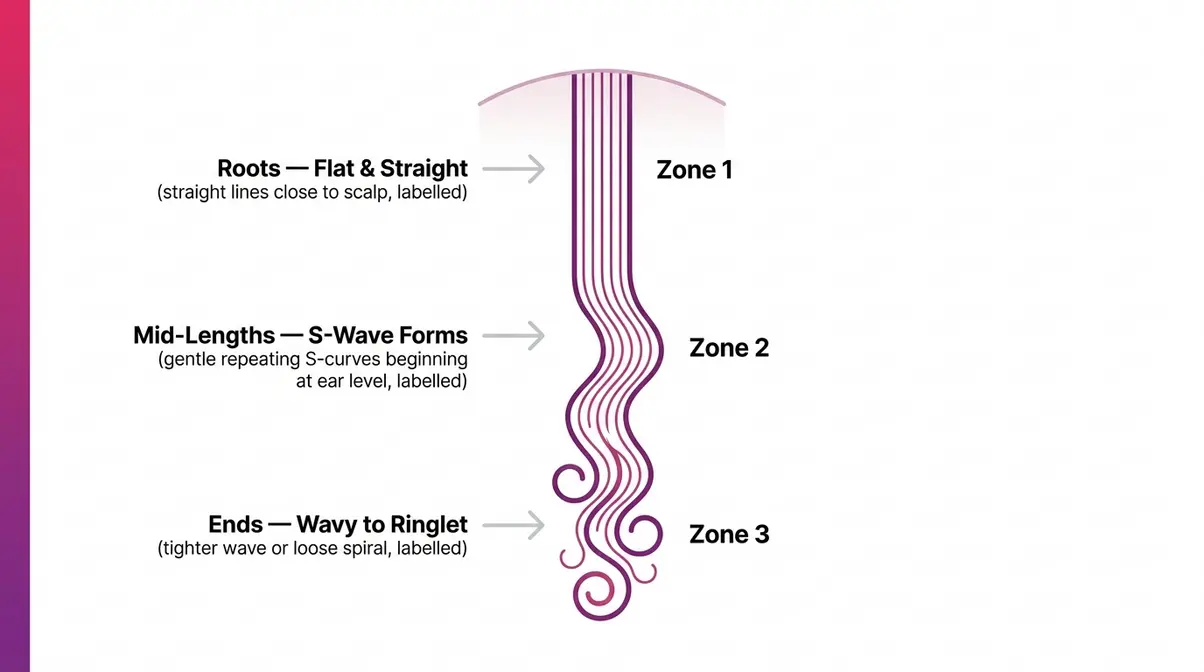
2B hair is defined by an S-shaped wave pattern that begins at the mid-lengths of the hair shaft — not at the roots. The roots lie relatively flat, the mid-lengths form gentle S-curves, and the ends can range from loosely wavy to almost ringlet-like. It sits in the middle of the wavy hair category — more defined than 2A, less coiled than 2C.
In our editorial experience evaluating hundreds of hair profiles, 2B hair requires specific moisture balancing — so understanding your porosity is non-negotiable.
Key Characteristics of 2B Hair
Understanding what makes your hair type unique is the first step to working with it instead of against it.
The S-wave pattern is the signature. Unlike 2A hair, which has a very gentle, almost imperceptible wave, 2B hair forms clear, repeating S-shapes through the mid-length and ends. On a dry day with no products, you’ll see the wave. On a humid day, you’ll see the frizz instead — because the wave pattern and frizz are two sides of the same coin.
Here are the key physical traits to look for:
- Roots: Straight or very flat — this is why 2B hair is often mistaken for straight hair at first glance
- Mid-lengths: Defined S-shaped waves, usually starting around ear level
- Ends: Can range from wavy to almost curly, especially with the right products
- Texture: Medium thickness is most common, though 2B hair appears across fine, medium, and coarse strands
- Volume: Moderate — more than straight hair, less than curly hair
- Weight sensitivity: Prone to being weighed down by heavy products, which collapses the wave
2B hair appears across all ethnicities, all genders, and all ages. It’s not defined by your background — it’s defined by your wave structure.
Does 2B Hair Get Frizzy?
Yes — 2B hair is one of the most frizz-prone hair types, particularly at the crown (halo frizz) and in humid conditions. Frizz in 2B hair is caused by lifted cuticles (the outer layer of each hair strand) absorbing atmospheric moisture unevenly. The good news: it’s highly manageable with the right technique. Applying products to soaking-wet hair in the Wave Activation Window, rinsing with cool water to seal the cuticle, and avoiding terry cloth towels significantly reduces frizz. Research on hair cuticle structure confirms that sealing the cuticle with cool water and acidic rinses reduces moisture uptake from the environment (NIH/NLM, 2023).
How to Tell If You Have 2B Hair
The most reliable way to identify your hair type is the wash test. Here’s how to do it:
- Wash your hair with a gentle, sulfate-free shampoo (sulfates are harsh detergents that strip natural oils)
- Apply a lightweight conditioner from mid-length to ends
- Rinse thoroughly with cool water
- Do not touch your hair. Gently squeeze out excess water with a microfibre towel or a cotton T-shirt
- Let your hair air dry completely — no touching, no scrunching, no products
- Look at the result in natural light
- What you’re looking for:
- Roots flat against the scalp ✓
- Waves that form roughly from ear level down ✓
- S-shaped curves (not just a slight bend) ✓
- Ends that look somewhat spiralled or looped ✓
- Frizz around the crown and at the ends ✓
If that sounds like your hair, you almost certainly have 2B waves. The key distinction from 2A is that S-shape — 2A produces a very gentle bend, almost like hair that just dried wavy. 2B produces a clear, repeating S. Community consensus across r/Wavyhair consistently confirms that the wash test, done without products, is the most reliable self-identification method.
How Hair Porosity Affects Your 2B Waves
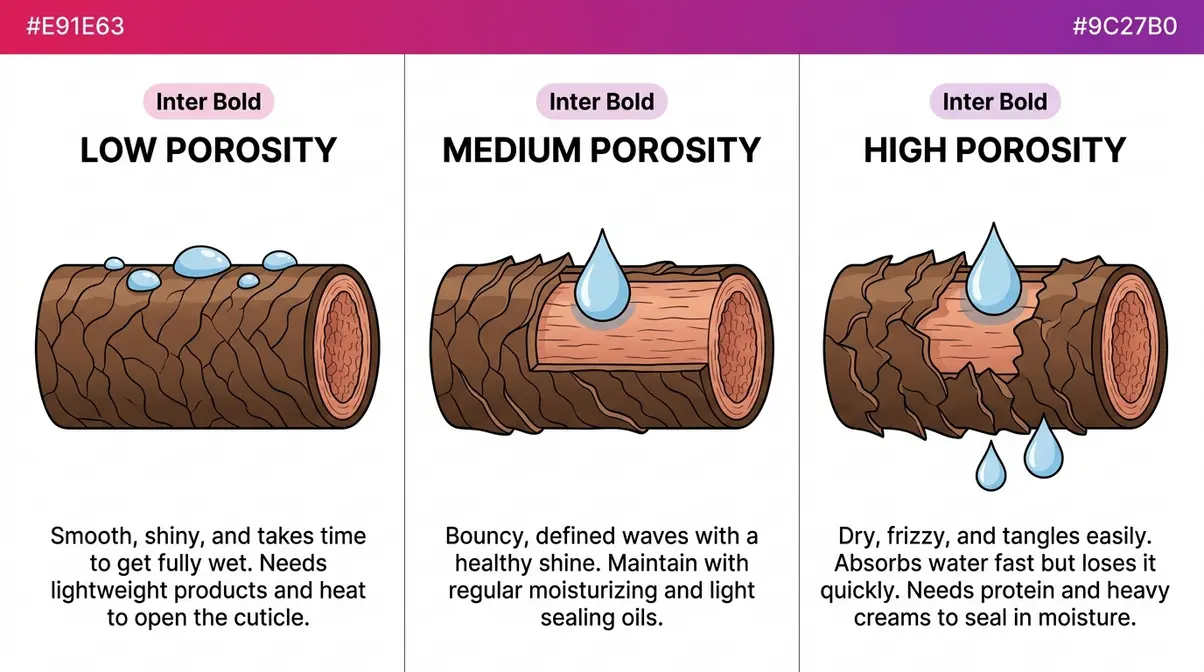
Hair porosity — how easily your hair absorbs and retains moisture — is one of the most important factors in how your 2B waves behave. Yet it’s covered by fewer than two of the top five 2B hair guides. Understanding yours changes everything about which products will actually work.
The cuticle (the outer protective layer of each hair strand, like overlapping scales on a fish) controls porosity. There are three levels:
| Porosity Level | What It Means | What It Looks Like | What It Needs |
|---|---|---|---|
| Low | Cuticles lie flat and tight — water and products struggle to penetrate | Waves look greasy quickly; products sit on top; hair takes ages to dry | Lightweight, water-based products; heat to open cuticles |
| Medium (Normal) | Cuticles allow moisture in and out at a balanced rate | Waves hold definition reasonably well; products absorb evenly | Most products work; maintain with regular conditioning |
| High | Cuticles are raised or damaged — absorbs moisture fast but loses it just as fast | Frizzy, dry, dull waves; feels rough; colour-treated or heat-damaged hair often falls here | Heavier moisturising products; protein treatments to fill gaps |
A quick porosity test: Drop a clean, shed hair strand into a glass of water. If it floats after 2–4 minutes, you likely have low porosity. If it sinks slowly, you have medium porosity. If it sinks quickly, you have high porosity. (Note: this test is a useful rough indicator, not a clinical measurement — hair product build up can affect the result.)
For most 2B hair types, low to medium porosity is most common. This means heavy creams and oils will sit on top of the hair, creating product build up (residue that coats the strand without absorbing) and weighing down your waves. Understanding your porosity level is the key to knowing which products to apply — and we’ll show you exactly when to apply them in The Wave Activation Window section below.
Research published via dermatological sources notes that hair structure, including cuticle integrity, is influenced by both genetics and chemical treatments (NIH/NLM research on hair fibre structure, 2023). This is why colour-treated 2B hair often behaves differently than untreated hair of the same type.
Check out our hair porosity guide to learn more about identifying your specific moisture needs.
2A vs. 2B vs. 2C Differences
Knowing your specific wave type isn’t just satisfying — it directly determines which products, techniques, and cuts will work for you. The difference between 2A, 2B, and 2C is more than a number. It changes your entire approach. Our analysis of wavy hair patterns shows that misidentifying your wave type is the leading cause of product failure.
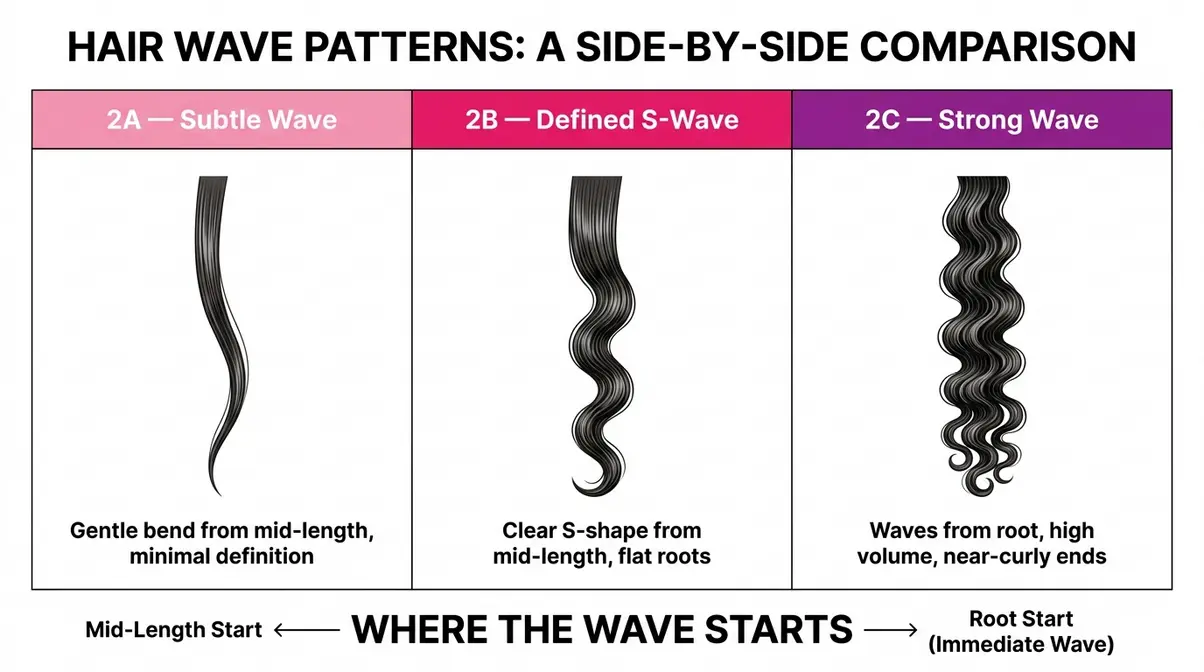
2A Hair: The Subtle Wave
2A hair has a very gentle, loose wave that is barely defined when dry. It’s the wave type most often mistaken for straight hair — many people with 2A hair have spent years thinking they just have “frizzy straight hair.”
- Key traits of 2A:
- Waves are very loose, almost like a slight bend rather than an S-shape
- Roots and mid-lengths both tend to be fairly flat
- Minimal volume at the crown
- Fine to medium texture is most common
- Very sensitive to heavy products — even a small amount of cream can make 2A hair look flat and greasy
If your hair air-dries with a gentle bend but no clear S-shape, and loses all definition within an hour or two, you’re likely 2A.
2B Hair: The Defined S-Wave
2B hair is the middle ground of the wavy category — and the most common type to go unidentified for years. The S-wave is clearly visible from mid-length down, but the roots stay relatively flat. This combination confuses people: the roots look straight in photos, but the ends look almost curly.
- Key traits of 2B:
- Defined S-waves starting around ear level or mid-length
- Roots sit flat; volume builds toward the ends
- More frizz-prone than 2A, especially at the crown
- Medium texture is most common, but 2B appears in fine and coarse hair too
- Responds well to lightweight styling products applied to wet hair
The most common misidentification: people with 2B hair think they have “damaged straight hair” because the roots are flat and the ends look rough. The wave pattern is not damage — it’s structure.
2C Hair: The Strong Wave
2C hair has the most defined wave pattern in the type 2 category. The S-shape begins much closer to the root — sometimes from the root itself — and the waves can form tight spirals at the ends that look almost like loose curls.
- Key traits of 2C:
- Waves or spirals start at or very near the root
- High volume throughout
- Significant frizz potential — the most of the three subtypes
- Can look very similar to 3A (loose curly) hair when dry
- Needs more moisture and more product than 2A or 2B
If your hair forms spirals that begin at the root and you have significant volume all over (not just at the ends), you’re likely 2C rather than 2B.
Is My Hair 2A, 2B, or 2C?
The most reliable way to distinguish between 2A, 2B, and 2C is to air-dry your hair without any products after washing. If your hair dries with a very gentle, barely-visible bend — almost like it just dried wavy — you likely have 2A. If you see a clear S-shape that begins around ear level, with flat roots, you have 2B. If the S-shape or spiral begins at or very near the root and you have high volume throughout, you’re likely 2C. The key test: look at where the wave starts. 2B waves start at mid-length; 2C waves start at the root.
Still unsure? The most telling sign of 2B specifically: your roots photograph flat (like straight hair) but your ends look like they’re trying to curl. That’s the 2B signature. Read more in our guide where wavy hair types explained in greater detail.
Essential 2B Hair Care Routine
A good 2B routine isn’t complicated — but it is specific. The biggest mistake most people make isn’t using the wrong products. It’s using the right products at the wrong time, or with the wrong technique. This section walks you through every step, with the “why” behind each one.
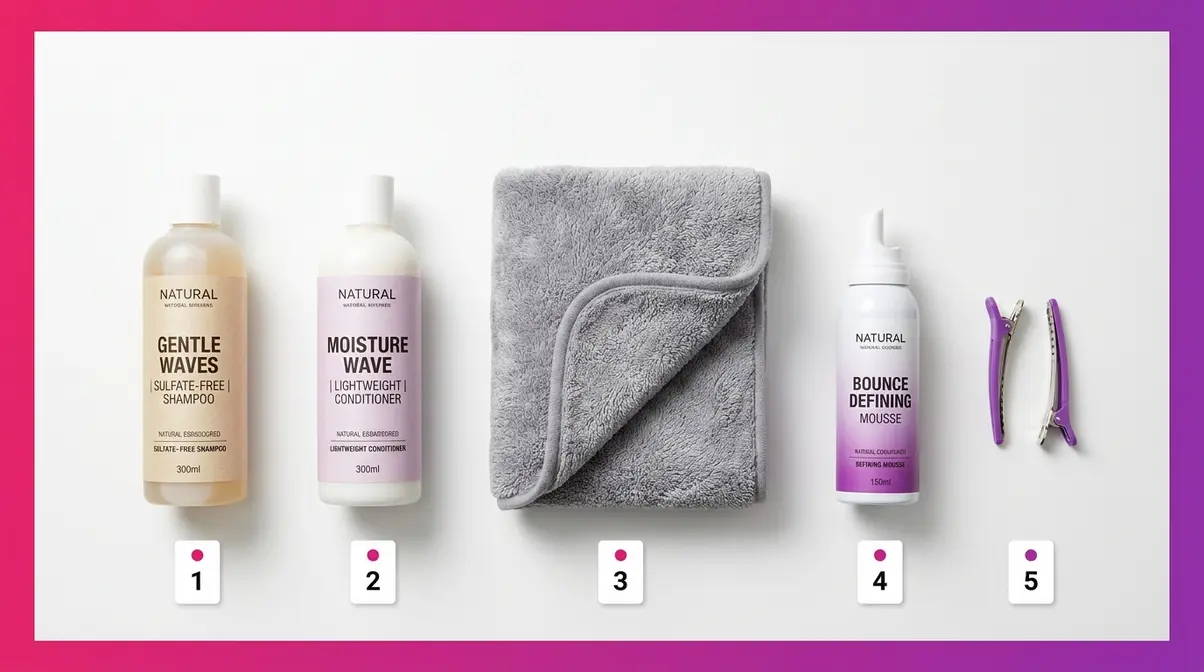
- What you’ll need before you start:
- Sulfate-free shampoo (sulfates strip natural oils and lift the cuticle aggressively)
- Lightweight conditioner
- Styling product (gel or mousse — we’ll cover which to choose in the products section)
- Microfibre towel or old cotton T-shirt (regular terrycloth towels cause friction frizz)
- Clips (optional but helpful for root volume)
Total time: 45–60 minutes (including air-dry time)
Step 1 – Wash and Clarify
Your wash step does two jobs: clean your scalp and reset your wave pattern. Using the wrong shampoo is the single most common cause of product build up in 2B hair — and build up is what makes waves go limp and dull.
How to wash 2B hair:
- Wet your hair thoroughly with lukewarm water — not hot (hot water opens the cuticle and increases frizz)
- Apply sulfate-free shampoo only to the scalp — massage gently with your fingertips, not your nails
- Let the shampoo rinse through the lengths as it runs off — the lengths don’t need direct shampooing
- Rinse thoroughly until the water runs clear
Clarifying (deep cleaning): Once a month — or whenever your waves feel heavy and undefined — use a clarifying shampoo (a stronger cleanser designed to remove product build up completely). After clarifying, always follow with a deep conditioner, as clarifying shampoos are more stripping than everyday formulas.
According to Curlsmith’s wavy hair care guidance, keeping the scalp clean without over-stripping the lengths is the foundation of a healthy 2B routine — a point echoed consistently across professional beauty communities.
Step 2 – Condition Mindfully
Conditioning 2B hair is a balancing act. Too little, and your waves are dry and frizzy. Too much, or the wrong type, and your waves are weighed down and limp. The goal is moisture without weight.
How to condition 2B hair:
- After shampooing, gently squeeze (don’t rub) excess water from your hair
- Apply a lightweight conditioner from mid-length to ends — avoid the scalp entirely (conditioner on the scalp causes greasiness and can contribute to build up)
- Use your fingers or a wide-tooth comb to detangle gently, starting from the ends and working upward
- Leave in for 2–3 minutes, then rinse with cool water — cool water helps seal the cuticle (close the outer layer of the hair strand), which reduces frizz and adds shine
- After rinsing, your hair should feel soft and slightly slippery, not coated
The “squish to condish” technique: While your conditioner is in and your hair is still wet, cup your hands under sections of hair and gently squeeze upward toward the scalp. You’ll hear a squelching sound — that’s the water and conditioner being absorbed into the wave. This technique, widely recommended across r/Wavyhair communities, encourages the wave to form while the conditioner is still present.
Avoid: Heavy conditioners containing shea butter, coconut oil, or thick silicones as the first or second ingredient. These are designed for tightly coiled hair and will flatten 2B waves.
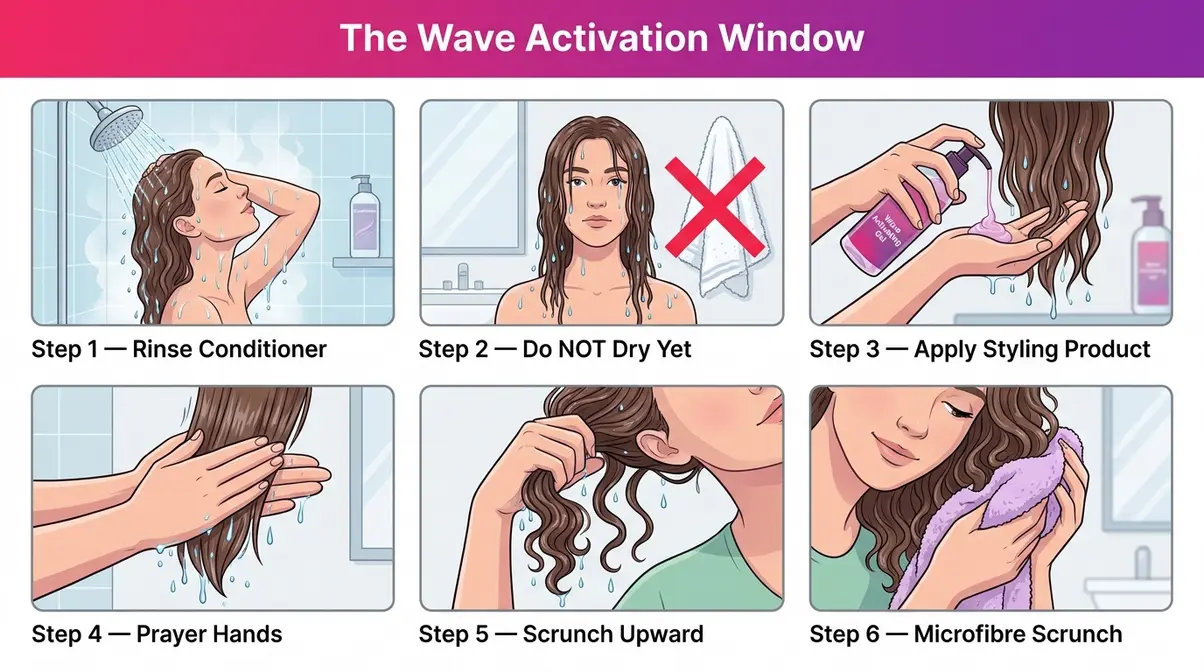
Step 3: The Wave Activation Window
This is the step that most guides skip entirely — and it’s why so many people with 2B hair never see their waves properly defined.
The Wave Activation Window is the brief period immediately after rinsing, when your hair is still completely soaking wet, that your wave pattern is fully “open” and ready to receive styling products. Apply products during this window and your waves will form, hold, and dry with definition. Miss the window — let your hair get even slightly damp rather than soaking — and the wave pattern starts to close, products sit on top of the strand instead of absorbing, and you end up with frizzy, undefined, or crunchy results.
Here’s what happens physically: when hair is soaking wet, the cuticle is slightly lifted and the wave pattern is actively forming. Products applied at this stage can bond to the hair’s cortex (the inner layer) and support the wave structure as it dries. Once hair begins to dry, the cuticle starts to close and the wave pattern locks in — products applied after this point can’t penetrate or support the wave.
How to apply products in the Wave Activation Window:
- After rinsing conditioner, do NOT dry your hair — not even with a towel yet
- While still standing over the bath or sink, apply your styling product (gel or mousse) to dripping-wet hair, section by section
- Use the “prayer hands” method: smooth the product between your palms, then press sections of hair gently between your hands (don’t rub)
- Follow with scrunching: cup sections of hair from below and gently squeeze upward to encourage the S-wave to form
- Now use your microfibre towel or T-shirt — gently scrunch out excess water using the same upward motion, never rubbing or wringing
- Optional: use root clips (small clips placed at the root to lift flat roots away from the scalp) to add volume while drying
Root clipping (placing small claw clips or duckbill clips at the root to hold hair away from the scalp while drying) is one of the most effective low-effort techniques for 2B hair. Because 2B roots are naturally flat, clipping adds lift and prevents the weight of the mid-lengths from pulling the wave out. Remove clips only when hair is fully dry.
Step 4: Dry with Care
How you dry your hair matters almost as much as how you wash it. Friction is the enemy of 2B waves.
Plopping is a drying technique that uses gravity to encourage wave formation while reducing frizz. Here’s how:
- Lay a microfibre towel or cotton T-shirt flat on a surface (or hold it flat in front of you)
- Flip your hair forward and lower the ends onto the centre of the towel
- Wrap the sides of the towel up and around the back of your head, tucking the ends in to secure
- Leave for 10–20 minutes — this removes excess water without friction while letting the waves set
- Unwrap gently, letting your hair fall forward
After plopping — the micro-plopping technique:
Micro-plopping is a gentler version done section by section. Take a small section of hair, hold a piece of microfibre towel beneath it, and scrunch gently upward. Move through all sections. This removes the last of the excess water while further encouraging wave definition — and it takes only 3–4 minutes.
- Air drying vs. diffusing:
- Air drying gives the softest, most natural waves — but takes 1–3 hours depending on hair thickness
- Diffusing (using a hair dryer with a diffuser attachment on low heat) speeds up drying while maintaining wave definition. Keep the diffuser close to the scalp and use a slow circular motion. Always finish on cool air to seal the cuticle
Do not touch your hair while it dries. This is the hardest rule for beginners. Every time you run your fingers through drying hair, you separate the wave clumps and introduce frizz.
Breaking the cast: If you used a gel, your hair will feel crunchy when dry. This is normal and expected — it means the gel worked. Once your hair is completely dry, scrunch firmly with your hands to break the cast (crush the dried gel coating) and release soft, defined waves underneath.
Step 5 – Protect Your Waves Overnight
Eight hours of sleep on a cotton pillowcase can undo an entire wash day. Cotton is highly absorbent and creates friction — both of which disturb the wave pattern and cause frizz.
Overnight protection options:
- Silk or satin pillowcase: The single easiest upgrade. Silk and satin create far less friction than cotton, helping your waves maintain their shape overnight
- The pineapple: Loosely gather all your hair at the very top of your head (like a very high, loose ponytail) using a satin scrunchie — not an elastic. This keeps the length off your neck and preserves the wave pattern. In the morning, take it down and scrunch gently with a small amount of water or leave-in conditioner
- Loose braid: For longer 2B hair, a single loose braid (not tight) can preserve wave definition. Expect looser, more relaxed waves in the morning — some people prefer this look
- Refresh spray: Keep a small spray bottle filled with water and a tiny amount of leave-in conditioner. In the morning, mist damp sections and scrunch to reactivate the wave
The low maintenance approach: a satin pillowcase + the pineapple method takes under 60 seconds and dramatically extends your wash day results.
When Hormones Change Your Texture
If your hair has become noticeably wavier, curlier, or more textured in recent years — and you haven’t changed anything about your routine — hormones are the most likely explanation. This is one of the most searched-for topics in wavy hair communities and one that almost no mainstream hair guide addresses.
How hormones affect hair texture:
Hormones — particularly oestrogen, progesterone, androgens, and thyroid hormones — influence the shape of the hair follicle itself. A round follicle produces straight hair; an oval follicle produces wavy or curly hair. Hormonal shifts can physically alter follicle shape, which changes the texture of new growth.
The most common hormonal triggers for texture changes include:
- Pregnancy and postpartum: Many people develop waves or curls during pregnancy (oestrogen surge) that become more pronounced after birth, or lose texture postpartum as hormones drop
- Menopause and perimenopause: Falling oestrogen levels can cause hair to become drier, coarser, and either more or less textured. Many people report their previously straight hair becoming wavy during perimenopause
- HRT (Hormone Replacement Therapy): Some people on HRT report their hair becoming curlier or more textured — particularly with oestrogen-based therapies. Research from dermatological literature (Cleveland Clinic, 2024) confirms that hormonal therapies can alter hair follicle structure and growth patterns
- Thyroid changes: Both hypothyroidism and hyperthyroidism can cause hair texture changes — if your texture shifted alongside other symptoms (fatigue, weight changes, temperature sensitivity), a thyroid check is worth discussing with your doctor
- Puberty and adolescence: Hair type frequently changes during puberty as androgens increase
What this means practically: If your waves are new or recently intensified, your hair may need a transition period of 3–6 months as new growth establishes your “true” current texture. Be patient with products and techniques during this time — your hair is adapting.
According to Byrdie’s coverage of hair type changes, hormonal texture shifts are a recognised phenomenon that many people experience but rarely connect to their hair care struggles. See our guide on wavy hair after pregnancy for more specific postpartum tips.
Best Products for 2B Hair
The right product in the wrong formula will still fail. Before you reach for a specific brand, you need to understand what your 2B waves actually need — and what will weigh them down or cause build up.
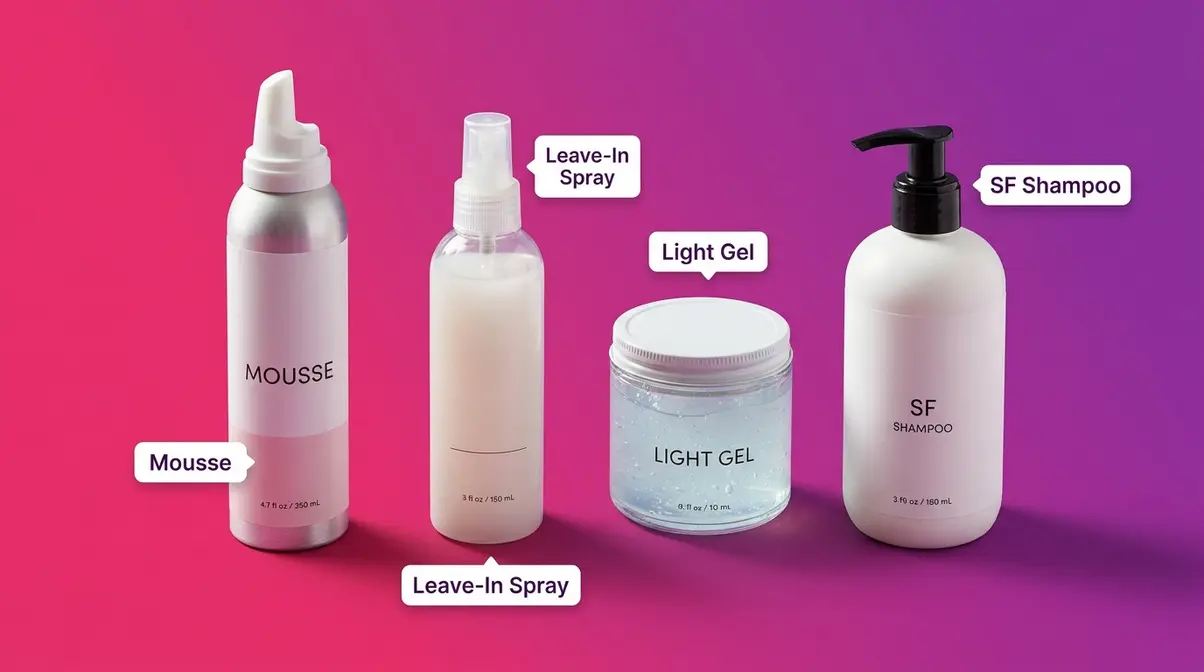
Top Product Picks for 2B Hair:
For those ready to build their routine, our testing highlights a few standout categories. Look for lightweight, sulfate-free cleansers and water-based mousses. We strongly recommend avoiding heavy shea butter creams, opting instead for aloe-based leave-ins that define the S-wave without dragging it down.
What to Look For (and What to Avoid)
Ingredients that work well for 2B hair:
- Glycerin: A humectant (draws moisture from the air into the hair) — excellent in moderate humidity
- Aloe vera: Lightweight hydration that doesn’t weigh down waves
- Panthenol (provitamin B5): Strengthens the hair strand without heaviness
- Hydrolysed proteins (keratin, silk): Help fill gaps in the cuticle, reducing frizz — especially useful for high-porosity 2B hair
- Light oils (argan, jojoba, sweet almond): Seal the cuticle without coating the strand the way heavier oils do
Ingredients to approach with caution for 2B hair:
- Sulfates (sodium lauryl sulfate, sodium laureth sulfate): Strip natural oils aggressively — most 2B hair does better with sulfate-free formulas
- Heavy silicones (dimethicone, cyclopentasiloxane): Create a coating that builds up over time and requires sulfate shampoos to remove — if you go sulfate-free, avoid heavy silicones too
- Coconut oil and shea butter as primary ingredients: Too heavy for most 2B hair; cause build up and collapse waves
- Mineral oil and petroleum: Sit on the surface of the strand, blocking moisture absorption
The golden rule for 2B products: If a product is designed for 4C or tightly coiled hair, it’s almost certainly too heavy for 2B waves. Conversely, if a product is designed for fine straight hair, it probably won’t offer enough definition. Look for products specifically formulated for wavy or fine-to-medium curly hair.
As Carol’s Daughter’s wavy hair guidance notes, 2B hair benefits most from products that provide “hold without heaviness” — a balance that eliminates both the limp wave and the crunchy, stiff result.
Lightweight vs. Heavy: Why It Matters
Feeling overwhelmed by the number of hair product choices is one of the most common pain points reported by 2B hair beginners. The product aisle can feel impossible when you don’t know the fundamental rule: weight is everything.
2B hair has enough natural body to form waves, but not enough structural integrity to carry heavy products. Think of it like building a sandcastle — you need just enough water to bind the sand, but too much and the whole thing collapses.
Here’s a practical weight framework:
| Product Type | Weight Level | Works for 2B? | Notes |
|---|---|---|---|
| Leave-in conditioner spray | Very light | ✅ Yes | Apply to wet hair before styling product |
| Mousse | Light | ✅ Yes | Best for fine to medium 2B hair |
| Light hold gel | Light-medium | ✅ Yes | Best for medium to coarse 2B hair |
| Curl cream | Medium | ⚠️ Depends | Only if labelled “lightweight” or “wavy” |
| Heavy cream / butter | Heavy | ❌ No | Designed for 3C–4C hair; weighs down 2B waves |
| Oil (as finishing product) | Medium | ⚠️ Use sparingly | 1–2 drops maximum on fully dry hair |
| Defining gel (strong hold) | Medium | ⚠️ Depends | Can cause crunchiness; reduce amount if so |
The general principle: the finer your 2B hair, the lighter your products need to be. Coarser 2B strands can handle slightly heavier formulas.
The Gel vs. Mousse Decision
This is the question that trips up almost every 2B hair beginner — and it’s barely addressed in most guides. Both gel and mousse can work beautifully for 2B waves. The right choice depends on your specific hair.
- Choose if:
- Your hair is fine to medium
- You prefer soft, touchable waves (not defined ringlets)
- You find gel leaves your hair crunchy even after breaking the cast
- You live in a low-to-moderate humidity environment
- Choose if:
- Your hair is medium to coarse
- You want more defined, longer-lasting waves
- You live in a high-humidity environment (gel’s hold resists humidity better than mousse)
- You’re comfortable with the “cast” and breaking it when dry
A note on combining both: Many experienced 2B hair enthusiasts use mousse first (for soft body) and then a small amount of gel on top (for hold). Apply mousse first to soaking-wet hair, scrunch in, then apply a small amount of gel over the top. This “cocktailing” technique is widely discussed across r/Wavyhair and often gives the best of both — definition without crunchiness. Read more about the best curl mousses for waves to find your perfect match.
2B Hair Product Deep Dive
Now that you know what to look for, here are specific product categories with guidance on what makes each one work — and what to watch for on the label.
Sulfate-Free Shampoos for 2B Hair
A sulfate-free shampoo (one that cleans without the harsh detergents sodium lauryl sulfate or sodium laureth sulfate) is the foundation of a 2B routine. The keyword “sulfate free shampoo for 2b hair” receives approximately 5,400 monthly searches — it’s the first product question most 2B beginners ask.
- What to look for in a sulfate-free shampoo for 2B hair:
- Gentle cleansing agents: sodium cocoyl isethionate, cocamidopropyl betaine, or sodium lauryl sulfoacetate (SLSA — milder than SLS despite the similar name)
- Lightweight moisturising ingredients (aloe, panthenol) rather than heavy butters
- A balanced pH (around 4.5–5.5) — this helps keep the cuticle closed and frizz reduced
- Frequency guide:
- Fine 2B hair: Wash 2–3 times per week (fine hair gets oily faster)
- Medium-to-coarse 2B hair: Wash 1–2 times per week
- Clarify (with a stronger clarifying shampoo): Once a month, or whenever waves feel heavy
Co-washing (washing with conditioner only, skipping shampoo) is popular in the curly hair community but can cause build up in 2B hair, especially if you use styling products regularly. If you want to try co-washing, use it only on off-days between regular shampoo washes. Explore our sulfate-free shampoo guide for specific brand recommendations.
Conditioners and Leave-Ins for 2B Hair
Conditioners for 2B hair need to deliver slip (ease of detangling) and moisture without weight. The “leave in conditioner for 2b hair” keyword receives approximately 720 monthly searches — and the most common complaint in reviews of leave-in products is that they’re too heavy.
- Rinse-out conditioner guidelines for 2B hair:
- Apply mid-length to ends only
- Look for: aloe vera, panthenol, glycerin, lightweight proteins
- Avoid: shea butter, coconut oil, or castor oil as the first two ingredients
- Rinse with cool water to seal the cuticle
- Leave-in conditioner guidelines for 2B hair:
- Use a spray leave-in rather than a cream leave-in (much lighter)
- Apply to soaking-wet hair before your styling product
- 2–4 pumps (or 3–4 sprays) is usually enough — more causes build up
- The leave-in acts as a base layer that helps your gel or mousse distribute evenly
Deep conditioning: Once every 1–2 weeks, use a deep conditioner (a more intensive treatment left on for 10–20 minutes, sometimes under a shower cap with heat). Deep conditioning is especially important if your 2B hair is colour-treated, heat-styled regularly, or high porosity. Look for deep conditioners that contain proteins (for strength) and humectants (for moisture).
What Is a Good Cream for Wavy Hair?
A good curl cream for 2B wavy hair should be lightweight, water-based, and labelled for wavy or fine-to-medium hair. Look for formulas containing glycerin, aloe vera, and panthenol — these provide moisture and definition without weight. Avoid curl creams with shea butter or coconut oil as primary ingredients, as these are too heavy for most 2B hair and will flatten the wave. Apply to soaking-wet hair (not damp) in the Wave Activation Window for best results. The amount matters: a 10-cent-piece to 50-cent-piece size per section is usually sufficient — more than that often causes build up.
Curl creams — moisturising styling products that provide definition without the hold of a gel — are one of the most searched product categories for 2B hair. The key is finding one labelled specifically for wavy or fine-to-medium hair.
- What a curl cream does for 2B hair:
- Adds moisture and definition in one step
- Softens the wave pattern for a more natural, less structured look
- Works best for medium-to-coarse 2B hair that can handle a bit of weight
- What a mousse does for 2B hair:
- Adds body and hold without significant weight
- The foam structure distributes evenly through wet hair
- Creates a light cast that protects the wave as it dries
- Works best for fine to medium 2B hair
Application amounts matter enormously. A common mistake is using too much product — this is one of the top causes of weighed down waves. For mousse, a golf-ball to tennis-ball sized amount is usually right. For curl cream, a 10-cent-piece to 50-cent-piece amount per section is usually sufficient.
According to Hair.com’s 2B hair guidance, the most effective approach for 2B waves is layering a leave-in conditioner with a mousse or light gel — applied in that order, to soaking-wet hair, in the Wave Activation Window. Discover our top picks for the best curl creams for wavy hair.
Best Haircuts for 2B Waves
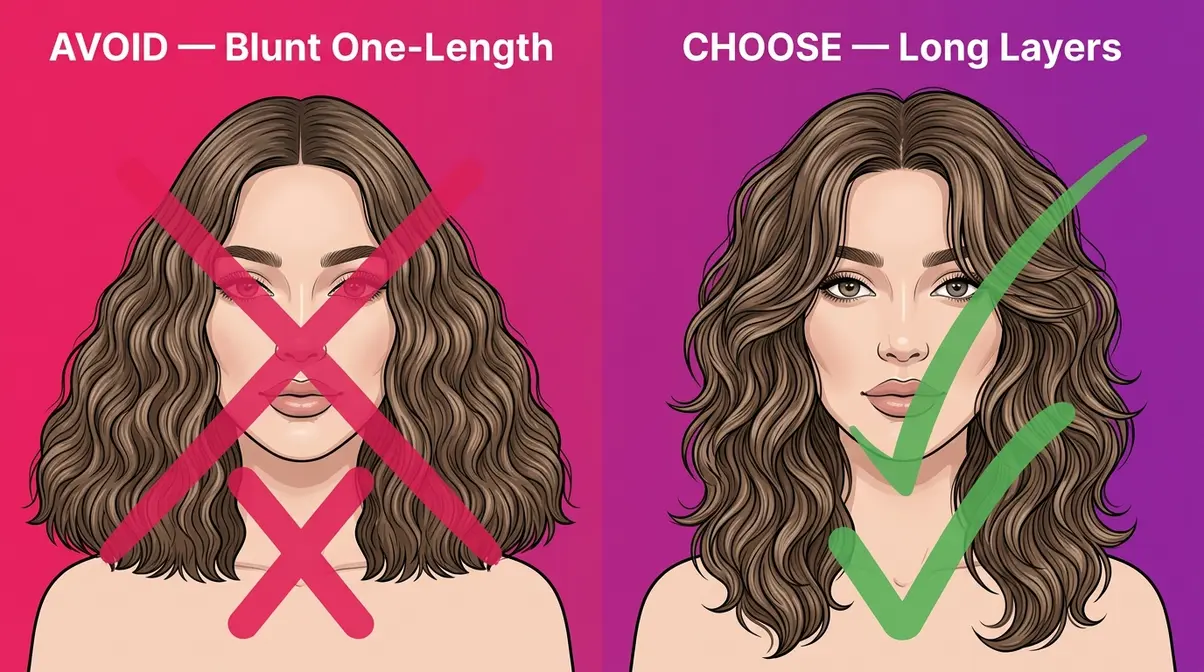
The right haircut can make your 2B waves look effortless. The wrong one — usually a blunt, one-length cut — will make them look flat on top and bushy at the bottom. Understanding what shapes work with your wave pattern (rather than against it) is as important as any product.
Cuts That Enhance the S-Wave Pattern
The single biggest haircut mistake for 2B hair: Blunt, one-length cuts. Without any layers, the weight of the hair pulls the wave pattern out, leaving flat roots and a triangular shape that’s wide at the bottom. This is the “triangle head” effect that many wavy-haired people have experienced after a salon visit.
Haircut features that work with 2B waves:
- Layers: The most important element for 2B hair. Layers remove weight from the mid-lengths and ends, allowing the wave pattern to spring up rather than hang down. Ask for “long layers” (layers that begin roughly at the collarbone) rather than short layers, which can cause the hair to spring up too aggressively
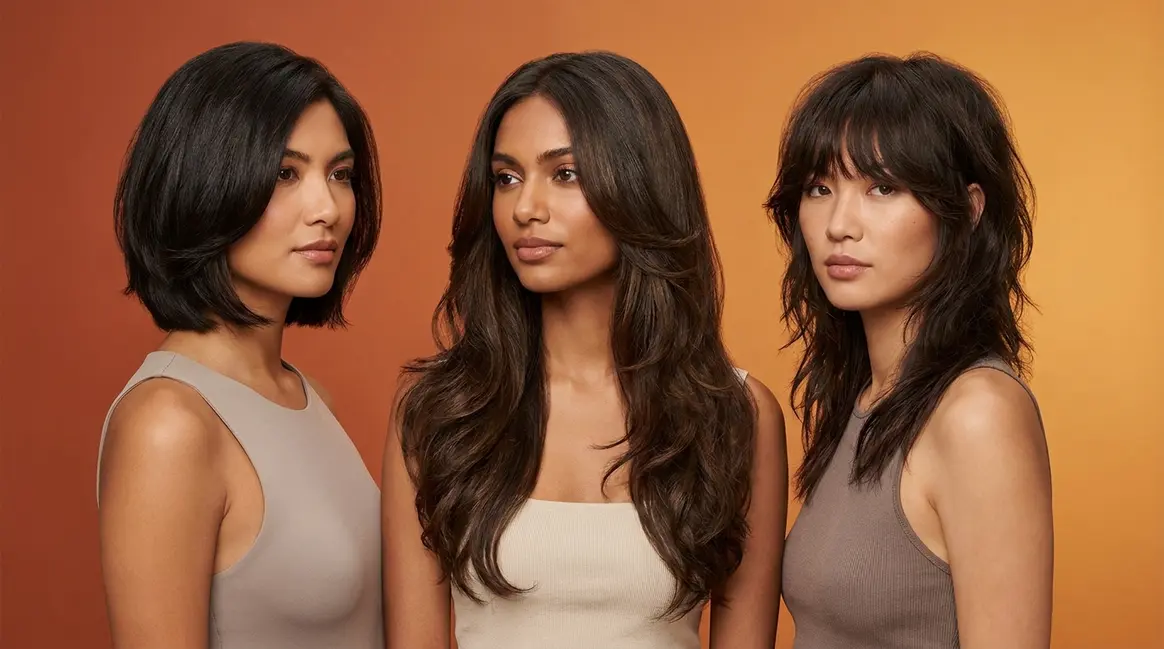
- The “curtain bang”: A soft, face-framing fringe that parts in the centre and blends into the face layers. Works beautifully with 2B waves and requires minimal styling
- The “wolf cut”: A shaggy, layered style with a longer top and shorter, textured layers underneath. Very popular for 2B hair in 2026 because it encourages volume without adding weight
- The “lob” (long bob): A collarbone-length cut with soft layers. One of the most flattering lengths for 2B hair — long enough to show the wave, short enough to prevent the wave from being pulled out by its own weight
- Deva cut / wavy cut: A technique where the stylist cuts hair while it’s dry and in its natural wave state, rather than wet and straight. This accounts for how the hair actually sits when you wear it. Ask specifically for a stylist experienced with wavy or curly hair
- Lengths to approach with care:
- Very short (above the chin): Can cause 2B waves to spring out unpredictably without weight to anchor them
- Very long (past the waist): The weight can pull out the wave entirely, leaving only a slight bend
Check out our gallery of the best cuts for wavy hair to bring to your next salon appointment.
Styling Ideas Beyond Air Drying
Air drying is the default for most 2B hair routines — but it’s not your only option, and variety is worth exploring.
Five styling options for 2B waves:
1. Diffused waves: Use a hair dryer with a diffuser attachment on low heat and low speed. Cup sections of hair in the diffuser bowl and hold close to the scalp. The result is faster drying with more volume and definition than air drying.
2. Braided waves: Plait damp, product-free hair into two loose braids overnight. In the morning, undo the braids and scrunch with a small amount of leave-in. This creates a softer, more romantic wave than your natural pattern.
3. Twist-out waves: Divide damp hair into sections and twist each section around itself. Let dry completely before unravelling. Creates a more uniform, defined wave pattern.
4. Half-up styles: Gather the top layer of your waves into a half-up bun or clip. Works beautifully with 2B hair because it shows off the wave at the back while keeping it off the face.
5. Heatless curling: Wrap damp sections of hair around soft fabric curlers or a silk headband overnight. Gives a more polished, salon-like curl than your natural wave pattern without heat damage.
2B Hair for Men: Complete Guide
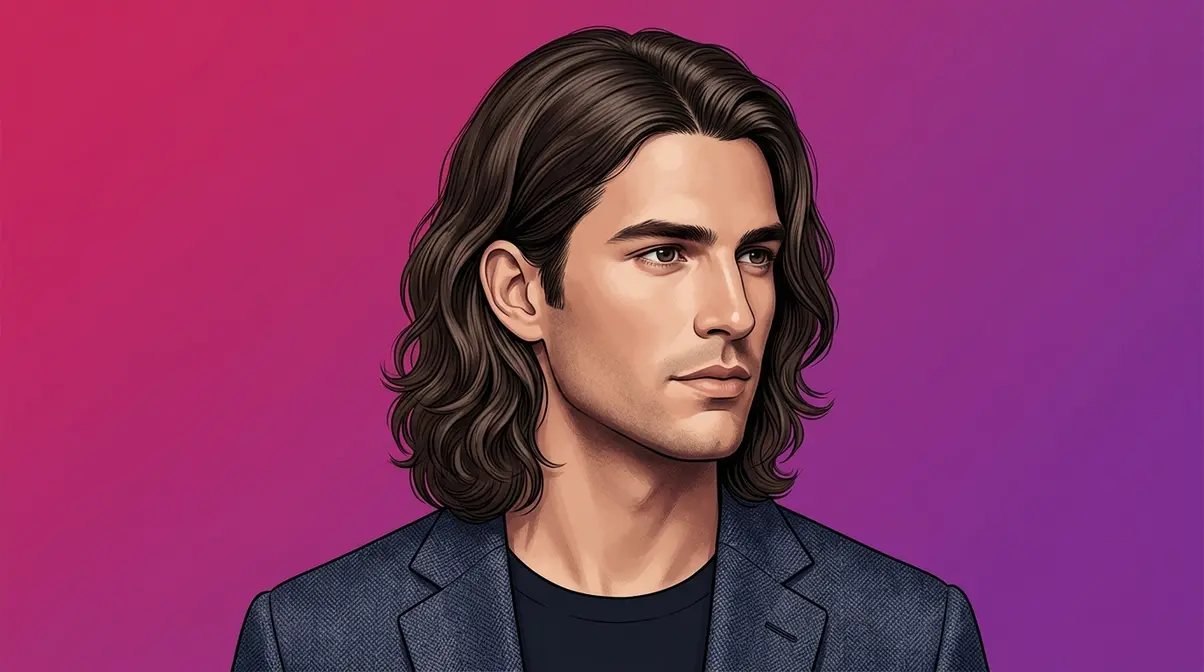
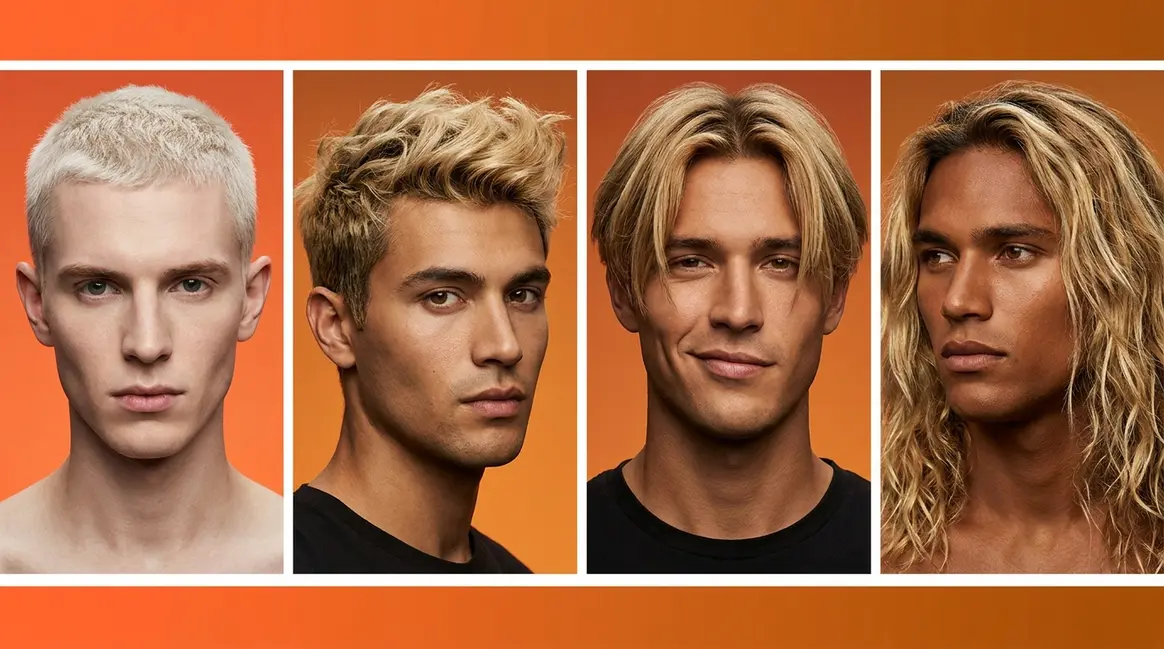
Over 6,600 people search for “2B hair men” every month — and almost every guide they find is written entirely for women. This section is for you.
2B hair doesn’t behave differently based on gender. The wave type is the same, the porosity science is the same, and the core techniques are the same. What differs is the styling context: shorter hair, different product volumes, different desired outcomes, and a culture that rarely talks about men’s hair texture beyond “curly or straight.”
What 2B Hair Looks Like on Men
On men, 2B hair is most visible at medium to longer lengths — roughly from 3–4 inches upward. At shorter lengths (a number 2 or 3 clipper cut), the wave pattern doesn’t have enough length to form. As hair grows out, the S-wave becomes increasingly visible.
- Common signs a man has 2B hair:
- Hair looks “poofy” or undefined when it air-dries after a shower
- Hair is straight and flat when freshly cut short, but develops waves as it grows out
- The crown area frizzes or lifts unpredictably in humidity
- Products designed for straight hair leave the hair looking either flat or greasy
- The hair “won’t sit right” — it’s not quite straight enough to style flat, not quite curly enough to look intentional
Many men with 2B hair have been told by barbers that their hair is “just frizzy” or “coarse” — when in fact it has a defined wave pattern that simply needs the right technique.
Men’s Styling Routine for 2B Waves
The core principles are the same as for women: apply products to soaking-wet hair, use lightweight formulas, and don’t touch the hair while it dries. The routine is shorter because the hair is usually shorter.
Men’s 2B wash day routine:
- Wash: Use a sulfate-free shampoo — or a gentle 2-in-1 if you prefer simplicity. Men’s scalps often produce more oil, so washing 3–4 times per week is common and fine
- Condition: Apply a lightweight conditioner from mid-length to ends, leave for 1–2 minutes, rinse with cool water. For very short hair (under 3 inches), conditioner may not be necessary
- Apply product: While still in the shower or immediately after, apply a small amount of mousse or light-hold gel to soaking-wet hair. Work it through with your fingers
- Style: Use your fingers to encourage the wave pattern — push sections forward and upward rather than combing through. Avoid brushes entirely on wet hair
- Dry: Either air dry (10–20 minutes for shorter hair) or use a diffuser. Do not use a standard hair dryer without a diffuser attachment — it blasts the wave pattern apart
- Finish: Once dry, break any gel cast by scrunching with your hands. Apply 1–2 drops of lightweight argan oil to the palms and run gently over the surface for shine
Time investment: 5–10 minutes of active effort, plus drying time. This is genuinely a low maintenance routine once you have the right products.
Men’s 2B Hair Products
Men’s hair products are often marketed with strong-hold, matte, or “natural look” claims — most of which are designed for straight or fine hair and won’t work well with 2B waves.
What men with 2B hair actually need:
| Product Type | What to Look For | What to Avoid |
|---|---|---|
| Shampoo | Sulfate-free, gentle, scalp-focused | Harsh clarifying shampoos used daily |
| Conditioner | Lightweight, panthenol-based | Heavy “moisturising” formulas with butters |
| Styling product | Light-hold gel or mousse, wave-specific | Pomades, waxes, clays (too heavy, cause build up) |
| Finishing | 1–2 drops argan or jojoba oil | Heavy oils, serums with silicones |
A note on men’s product marketing: Most products marketed as “men’s” are essentially the same as standard products with different packaging and a stronger scent. Don’t feel limited to “for men” labelling — any lightweight, wave-friendly product works regardless of who it’s marketed to. What matters is the formula, not the packaging.
Community consensus across r/Wavyhair’s male-identifying members consistently points to the same insight: the biggest barrier for men with 2B hair isn’t finding the right products — it’s accepting that a small amount of product applied correctly will make a significant difference, and that this is not high maintenance. Find more options in our guide to curly hair products for men.
Coloring and Braiding 2B Hair
Coloring 2B Hair Safely
The fear of hair colour damaging the wave pattern is one of the most common concerns raised in wavy hair communities — and it’s a legitimate one. Chemical colouring processes (bleaching in particular) raise and damage the cuticle, which directly affects the wave pattern. But colour and waves aren’t mutually exclusive. It’s about how you colour, not whether you colour.
How colour affects 2B waves:
- Bleaching (lightening): The most damaging process for waves. Bleach breaks down the protein structure of the hair, raises the cuticle permanently, and can turn low-porosity 2B hair into high-porosity hair overnight. High-porosity hair loses moisture faster and frizzes more
- Permanent colour (darker shades): Less damaging than bleach, but still raises the cuticle during processing. The wave pattern usually returns within 2–4 weeks as the hair settles
- Semi-permanent and demi-permanent colour: Much gentler options. These deposit colour without lifting the natural pigment, causing minimal cuticle disruption. Recommended for 2B hair as a lower-risk alternative
- Highlights and balayage: A good middle ground for those who want lightness without full-head bleaching. Less total damage than an all-over bleach
Protecting your waves during and after colouring:
- Always do a strand test first — apply colour to a small hidden section and check the result after 48 hours
- Ensure your hair is in good condition before colouring — don’t colour already-damaged, high-porosity hair without repairing it first with protein treatments
- Use a colour-safe, sulfate-free shampoo after colouring — sulfates strip colour and damage an already-compromised cuticle
- Deep condition weekly for 4–6 weeks after colouring
- Reduce heat styling frequency — coloured hair is more fragile and heat causes additional cuticle damage
- Consider a bond-building treatment (like Olaplex or K18) during the colour process to reduce structural damage
According to professional guidance on wavy hair care, maintaining moisture and cuticle integrity after chemical treatments is essential for preserving the wave pattern in type 2 hair.
Braiding 2B Hair Textures
2B hair’s medium texture and S-wave pattern make it compatible with a wide range of braiding styles — but there are some important considerations for protecting your waves.
Braiding styles that work well with 2B texture:
- Box braids: Work well with 2B hair, but require a skilled braider who understands wavy textures. The natural wave can cause braids to look less uniform than on tighter textures — this is a style choice, not a flaw
- Knotless braids: Gentler on the hairline and scalp than traditional box braids (no tight knot at the root). A better option for 2B hair because they put less tension on the wave pattern at the roots
- Twists: Two-strand twists work beautifully with 2B texture and can be used as a protective or styling option
- Cornrows: Suitable for 2B hair, but ensure the braider doesn’t braid too tightly — 2B hair can be fine and tension alopecia (hair loss from tight styles) is a real risk
Protecting your waves in braids:
- Moisturise your hair thoroughly before installation
- Avoid wearing braids for longer than 6–8 weeks — the new growth can become tangled and matted
- Moisturise your scalp during the style period (light oils or braid sprays work well)
- When removing braids, take your time — rushing the removal process causes breakage
Extensions: Clip-in extensions and tape-in extensions work well with 2B hair. Fusion or bonded extensions are heavier and can pull on the wave pattern at the roots — approach with care and consult an experienced stylist.
Common 2B Hair Mistakes and Fixes
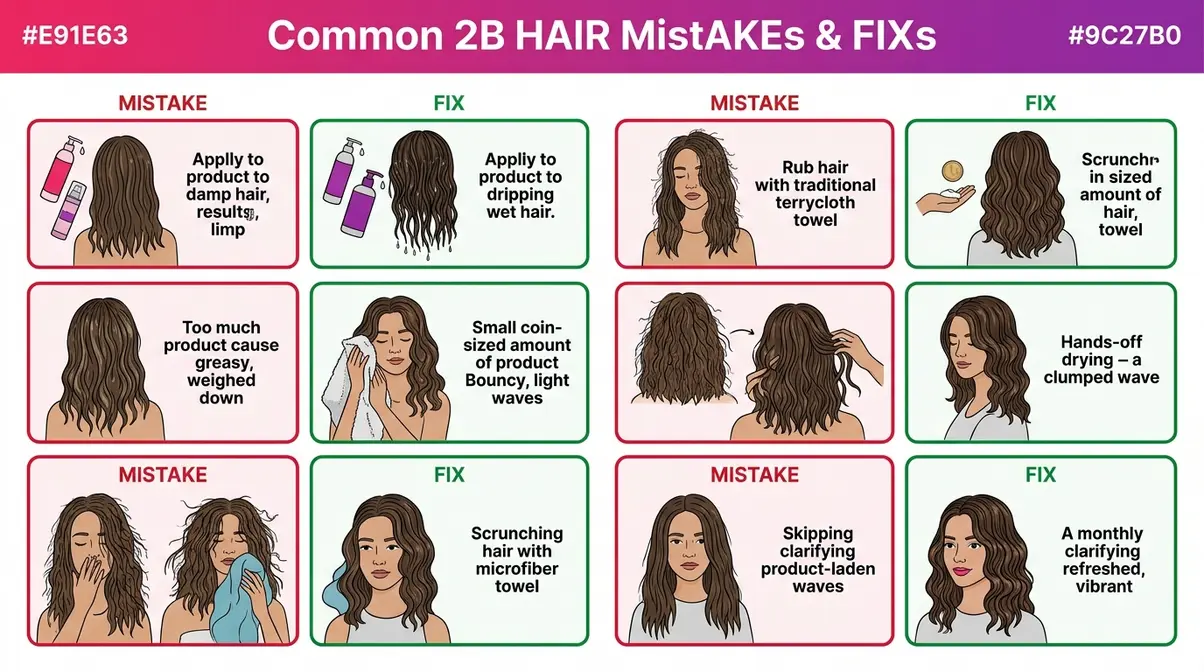
Even with the right information, most people make a few consistent mistakes when starting a 2B hair routine. These are the most common — and the most fixable.
Product Mistakes That Kill Your Waves
Mistake 1: Applying products to damp (not soaking-wet) hair
This is the most impactful mistake of all. As explained in the Wave Activation Window section, even slightly damp hair has already begun closing the cuticle — products applied at this stage sit on top of the strand rather than supporting the wave. Fix: Apply all styling products while still dripping wet, immediately after rinsing.
Mistake 2: Using too much product
More product does not mean more definition. Excess product causes build up, weighs down the wave, and leaves hair looking greasy or stiff. Fix: Start with less than you think you need. A golf-ball of mousse or a small coin-sized amount of gel is usually enough for medium-length hair.
Mistake 3: Using products designed for tightly coiled hair
Heavy creams, butters, and oils designed for 4A–4C hair are too heavy for 2B waves. They collapse the wave pattern and cause significant build up. Fix: Look for products labelled “wavy,” “fine,” or “light hold.”
Mistake 4: Skipping clarifying
Even if you use sulfate-free shampoo and lightweight products, build up accumulates over time. Waves that suddenly look flat and dull often just need a clarifying wash. Fix: Clarify once a month with a clarifying shampoo, always followed by a deep conditioner.
Mistake 5: Rubbing hair with a towel
Regular terrycloth towels cause friction that disrupts the wave pattern and lifts the cuticle, creating frizz. Fix: Use a microfibre towel or a cotton T-shirt, and always scrunch (never rub).
When to Try a Different Approach
The techniques in this guide work for the vast majority of 2B hair types — but they’re not universal. There are situations where a different approach is worth considering.
- If your waves still won’t define after 4+ weeks of consistent technique:
- Your hair may be closer to 2A than 2B — the techniques are similar but 2A hair needs even lighter products and may not form strong S-waves regardless of technique
- Your water may be very hard (high mineral content) — hard water leaves mineral deposits on the hair that prevent products from absorbing. A shower filter or weekly apple cider vinegar rinse can help
- You may be dealing with a scalp condition (dandruff, seborrhoeic dermatitis) that disrupts the hair’s natural behaviour — a dermatologist visit is worthwhile if your scalp is consistently flaky or irritated
- If your waves are defined but your hair feels constantly dry and rough:
- You may have high-porosity hair that needs more moisture and protein than a standard 2B routine provides
- Try adding a protein treatment every 2–4 weeks and a heavier deep conditioner
- If you’ve recently started hormonal medication or gone through a hormonal shift:
- Your hair texture may be in transition — give it 3–6 months before concluding that a technique isn’t working
When to Consult a Professional Stylist
Some 2B hair decisions are genuinely better made with a professional.
- Seek a stylist experienced with wavy/curly hair when:
- You’re considering a significant colour change, especially bleaching — the risk of wave damage is real and a professional can minimise it
- You want a Deva cut or wavy-specific haircut — technique matters enormously and a stylist trained in wavy cuts will deliver a fundamentally different result than a standard salon
- Your waves have changed dramatically and you’re not sure why — a good stylist can assess whether the change is textural, chemical, or related to a scalp condition
- You’re planning to install or remove extensions
- How to find a wavy-hair-friendly stylist:
- Search for stylists certified in the DevaCurl or Ouidad methods — these are specific training programmes for curly and wavy hair
- Ask explicitly: “Do you have experience cutting hair in its natural wavy state (dry cutting)?”
- Check their portfolio for clients with similar wave types — not just curly hair
Frequently Asked Questions
What does 2B hair mean?
2B hair is a wavy hair type defined by an S-shaped wave pattern that begins at the mid-lengths of the hair shaft, with relatively flat roots. It falls in the middle of the type 2 (wavy) category in the Andre Walker Hair Typing System — the most widely used hair classification framework. 2B hair is more defined than 2A (which produces a barely-there wave) but less structured than 2C (which forms waves from the root). Common traits include frizz at the crown, moderate volume, and sensitivity to heavy products. Many people with 2B hair spend years misidentifying it as frizzy straight hair.
Can HRT make your hair curly?
Yes — hormone replacement therapy (HRT) can change hair texture, including making previously straight or lightly wavy hair more textured or curly. Oestrogen-based HRT in particular may alter the shape of hair follicles, which determines whether hair grows straight or wavy. This effect is documented in dermatological literature (Cleveland Clinic, 2024) and is a recognised side effect in some patients. The change isn’t guaranteed and varies by individual — some people on HRT notice their hair becoming curlier, others notice no change. If your texture has shifted significantly since starting HRT, give the new growth 3–6 months to establish before adjusting your routine.
What are the top 3 rarest hair types?
The rarest hair types are generally considered to be 1A (perfectly straight, very fine, and flat), 4C (tightly coiled with no defined curl pattern), and 2C (the strongest wavy type, which borders on curly). Hair typing systems are based on pattern and texture, not population frequency, so “rarest” is a relative concept. However, dermatologists and hair scientists generally note that very fine, completely straight hair (1A) and very tightly coiled hair (4C) represent the extremes of the hair texture spectrum. 2B hair, by contrast, is one of the more common hair types — which is part of why so many people have it without realising it.
Is 2B considered curly?
2B hair is classified as wavy, not curly — though the distinction matters less than how you care for it. The Andre Walker Hair Typing System places type 2 (wavy) hair between type 1 (straight) and type 3 (curly). 2B waves form S-shapes but do not form the spirals or ringlets characteristic of curly hair. That said, 2B hair responds very well to many curly girl method techniques — particularly the emphasis on moisture, gentle handling, and avoiding sulfates. Whether you call your waves “wavy” or “curly” is less important than using techniques that support your specific wave pattern.
What does menopause hair look like?
Menopause hair typically becomes drier, coarser, and either more or less textured as oestrogen levels fall. Many people going through perimenopause or menopause notice their previously straight hair developing waves or becoming frizzier — this is because falling oestrogen alters the shape of hair follicles and reduces the scalp’s natural oil production. Hair may also thin, particularly at the crown, as the growth cycle shortens. Some people find the opposite: previously wavy hair becomes straighter or finer. According to Cleveland Clinic dermatological guidance (2024), these changes are a normal part of hormonal transition and can be managed with moisture-focused routines, gentle handling, and in some cases, a discussion about HRT with a doctor.
How often should I wash 2B hair?
Most people with 2B hair benefit from washing 2 to 3 times per week. Washing too frequently strips natural oils, leading to dry, frizzy waves. However, waiting too long between washes can cause product build up and flat roots, as 2B hair is easily weighed down by natural sebum. Fine 2B hair may require washing every other day, while coarser 2B hair can often go 3 to 4 days between wash days.
Should I brush 2B hair?
You should never dry-brush 2B hair, as it separates the wave clumps and creates immediate frizz. The only time you should use a brush or comb on 2B hair is when it is soaking wet and saturated with conditioner in the shower. Use a wide-tooth comb or a specialized detangling brush to gently work through knots, starting from the ends and moving upward to prevent breakage.
Does 2B hair need protein or moisture?
2B hair typically requires a balance of both, but leans heavily toward lightweight moisture. If your waves feel stiff, brittle, or snap easily, they likely have too much protein. If they feel overly soft, mushy, and refuse to hold a wave pattern, they likely need a protein treatment. Low-porosity 2B hair generally needs more moisture, while high-porosity or color-treated 2B hair benefits from regular protein integration.
Final Conclusion
For anyone with frizzy, undefined waves that have resisted every product and technique you’ve tried, 2B hair isn’t a problem to solve — it’s a pattern to understand. The defining insight from this guide: nearly every 2B hair struggle traces back to two things — misidentifying the hair type and missing The Wave Activation Window. Community consensus across r/Wavyhair, professional beauty guidance from brands like Curlsmith and Carol’s Daughter, and dermatological research on cuticle behaviour all point to the same conclusion: the right technique at the right moment matters more than any product.
The Wave Activation Window is the framework that changes the routine. Apply products to soaking-wet hair, seal the cuticle with cool water, and let your waves dry undisturbed — and the results are genuinely different from anything you’ll get by applying products to damp hair and hoping for the best. That single shift, more than any product purchase, is what most 2B hair beginners are missing.
Your next step: do the wash test described in the identification section — no products, air dry, and look at where your wave actually starts. Once you know your true wave type and porosity level, try one full wash day following the five-step routine in this guide. Give it three consistent wash days before evaluating. Take our wash test today, and subscribe to our newsletter for more wavy hair tips delivered straight to your inbox. Real wave definition doesn’t come from the right product — it comes from the right product, applied at the right moment, with the right technique.

Dave King
Writes evidence-based hair-care guides for Care About Your Hair — for every hair type, jargon-free and independent.