
Table of Contents
- Understanding Dense Hair: More Than Just “Thick”
- Core Principles for Cutting Dense Hair
- The Best Short Hairstyles for Dense Hair
- Flattering Medium-Length Hairstyles for Dense Hair
- Stunning Long Hairstyles for Dense Hair
- Hairstyles for Dense Hair by Texture
- Ask the Expert: How to Talk to Your Hairstylist
- Styling and Maintaining Your New Haircut
- Your Dense Hair is Your Crown
- Frequently Asked Questions
This blog post may contain affiliate links. As an Amazon Associate I earn from qualifying purchases.
Dense hair is often seen as both a blessing and a challenge. The natural volume and luxurious fullness that comes with having numerous hair strands per square inch can create stunning hairstyles that hold their shape beautifully. However, many people with dense hair struggle with weight, pyramid-shaped silhouettes, and styles that feel more like a burden than a crown. This comprehensive guide moves beyond generic advice to provide expert insights on the most flattering and manageable hairstyles for dense hair across all lengths and textures. Whether you’re navigating your first consultation with a stylist or looking to refresh your current look, you’ll find practical solutions that celebrate your hair’s natural abundance while keeping it feeling light and looking modern.
Understanding Dense Hair: More Than Just “Thick”
Before diving into specific hairstyles, it’s essential to understand exactly what dense hair means and why it requires different approaches than other hair types. This knowledge empowers you to communicate effectively with your stylist and make informed decisions about your hair.
What is Dense Hair, Really?
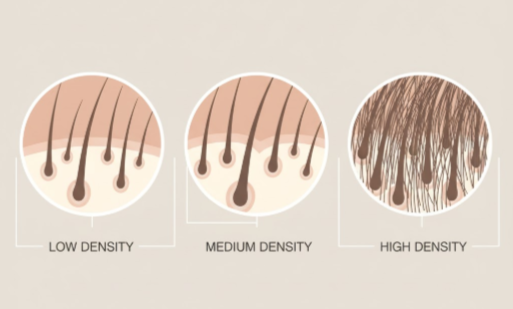
Hair density refers specifically to the number of individual hair strands per square inch on your scalp. Think of it like a forest where the density describes how many trees are packed together in a given area, not how wide each tree trunk is. When you have dense hair, your scalp supports a higher concentration of individual follicles, creating that characteristic fullness and volume.
Most people have between 80,000 and 120,000 hair follicles on their heads, but the distribution and concentration can vary significantly. Dense hair means these follicles are packed more closely together, resulting in more hair growing from each square inch of scalp. This biological reality affects everything from how your hair falls to how it responds to cutting and styling techniques.
Hair Density vs. Hair Thickness: The Crucial Difference
Understanding the distinction between density and thickness is perhaps the most important concept for anyone with abundant hair. Thickness, also called hair texture, refers to the diameter or width of a single hair strand. A coarse or thick strand has a wider diameter, while a fine strand is narrower. Density, as we’ve established, refers to the quantity of strands on your head.
This means you can have fine but dense hair, where each individual strand is narrow but you have many of them growing closely together. Conversely, you might have coarse hair with lower density, where each strand is thick but there are fewer of them overall. The most challenging combination is often coarse and dense hair, which maximizes both the quantity and width of strands.
To determine your hair density at home, try the ponytail test. Gather your hair into a ponytail and measure the circumference. A ponytail measuring less than two inches typically indicates low density, two to three inches suggests medium density, and anything over three inches points to high density. Another method is the scalp visibility test: part your hair in several places and look in a mirror. If you can easily see your scalp, you likely have low to medium density. If your scalp is barely visible or completely hidden, your density is probably high.
This distinction matters tremendously when choosing haircuts and products. A person with fine, dense hair needs volume-enhancing cuts that prevent limpness while managing bulk, whereas someone with coarse, dense hair needs aggressive weight removal to prevent their style from looking too heavy or triangular.
The Pros and Cons of Having Dense Hair
Dense hair comes with a unique set of advantages that many people with finer hair envy. The incredible natural volume means you rarely deal with flat, limp styles. Updos and elaborate hairstyles hold exceptionally well because there’s simply more hair to work with and pin into place. Your hair looks lush, full, and healthy almost effortlessly. Dense hair also tends to appear thicker and more youthful, and it’s less prone to showing scalp or looking sparse as you age.
However, the challenges are real and can impact your daily routine significantly. Dense hair often feels heavy, especially when it’s long, which can lead to headaches or scalp tension. The dreaded triangle or pyramid shape is a common complaint, where hair puffs out at the sides rather than falling gracefully. Drying time can be extensive, sometimes taking hours to air dry completely. Styling also takes longer and often requires more product. Dense hair can be more susceptible to frizz because the sheer volume of strands creates more surface area for humidity to affect. Finally, finding a stylist who truly understands how to work with dense hair can be challenging, as many are trained primarily on medium-density hair models.
Core Principles for Cutting Dense Hair
The foundation of great hair starts with an excellent cut. For dense hair, certain cutting principles consistently produce the most flattering and manageable results. Understanding these concepts helps you recognize skilled stylists and request the right techniques.
The Magic of Layering: Creating Movement and Shape
Layering is not just beneficial for dense hair, it’s often essential. Layers remove weight strategically throughout your hair, preventing the bottom-heavy look that makes dense hair appear triangular or boxy. By creating different lengths, layers introduce movement and dimension that would otherwise be impossible with the sheer volume of hair.
The magic happens because layers allow different sections of your hair to move independently. Instead of one solid mass, your hair becomes a cascade of varying lengths that catch light differently and flow with more grace. This prevents the helmet-like appearance that dense hair can create when cut to one length.
Types of Layering for Dense Hair
Long layers are the most subtle option, starting several inches below the chin or at the shoulders. These create a gentle graduation that removes weight from the ends while maintaining an overall impression of length. Long layers work beautifully for those who want to keep their hair long but need relief from heaviness.
Internal layers, sometimes called invisible or ghost layers, are a more advanced technique where the stylist cuts shorter layers on the interior of your hair while keeping the exterior perimeter relatively uniform. When you look at your hair from the outside, it appears to be one length or minimally layered, but the interior has been strategically debulked. This technique is perfect for those who love the look of long, uniform hair but need significant weight removal.
Shorter layers, particularly around the crown and face, add volume at the top and create flattering frames around your features. For dense hair, shorter layers on top prevent the style from looking bottom-heavy. These layers can start anywhere from eye level to chin level depending on your desired effect.
The Role of Texturizing and Point Cutting
Texturizing is often misunderstood and sometimes feared, but when done correctly by a skilled stylist, it’s transformative for dense hair. Texturizing refers to techniques that remove bulk without dramatically changing the length or shape of the haircut.
Point cutting involves the stylist holding their shears vertically and cutting into the ends of your hair at an angle, creating a softer, more textured edge rather than a blunt line. This technique is gentle and creates beautiful movement at the perimeter of your cut.
Slide cutting, also called slithering, involves the stylist gently sliding their shears down the hair shaft to remove weight from the mid-lengths. When executed properly, it creates seamless blending and removes bulk without creating obvious shorter pieces.
Thinning shears should be used sparingly and strategically on dense hair. While they can remove significant bulk quickly, overuse creates a frizzy, damaged appearance with uneven, wispy ends. A skilled stylist uses thinning shears primarily on the interior layers, never at the surface or ends where the cutting would be visible.
To Blunt or Not to Blunt: The Great Debate
Blunt cuts have surged in popularity, offering a bold, intentional look that can appear very modern and chic. For dense hair, however, a truly blunt cut without any texturizing often creates problems. The sheer weight and volume of hair cut to one uniform length can result in a blocky, heavy appearance that lacks movement and tends toward the dreaded triangle shape.
That said, blunt cuts aren’t off-limits for dense hair. They simply require significant interior work. A stylist can create a blunt-looking perimeter while heavily texturizing and layering the interior to remove bulk. The result is a haircut that appears bold and blunt from the outside but feels lighter and moves more freely than a traditional one-length cut.
If you love the aesthetic of a blunt bob or blunt ends, communicate clearly with your stylist about the need for interior texturizing. The best blunt cuts on dense hair are never actually completely blunt throughout, they’re strategically engineered to look blunt while functioning like a layered, textured cut.
The Undercut: A Secret Weapon for Weight Removal
One of the most effective but underutilized techniques for managing dense hair is a subtle, hidden undercut at the nape of the neck. This involves clipper-cutting or closely cropping the hair at the very back of your head, typically in an area that’s completely covered by the hair above it when worn down.
This technique can remove a massive amount of weight instantly. For people with very dense hair, especially those who wear bobs, lobs, or shoulder-length cuts, an undercut helps the hair lie flatter against the neck and reduces that bulky feeling. The hidden nature means it doesn’t affect your overall style aesthetic, you still appear to have a full head of hair from every visible angle.
Undercuts do require more frequent maintenance, as you’ll need to return to the salon every four to six weeks to keep the undercut area trimmed. However, many people with dense hair find this small inconvenience worthwhile for the dramatic reduction in weight and improved manageability.
The Best Short Hairstyles for Dense Hair
Short hair on dense locks can be incredibly liberating, removing weight and opening up styling possibilities that feel fresh and modern. The key is choosing cuts that work with your hair’s natural volume rather than fighting against it.
The Textured Pixie Cut
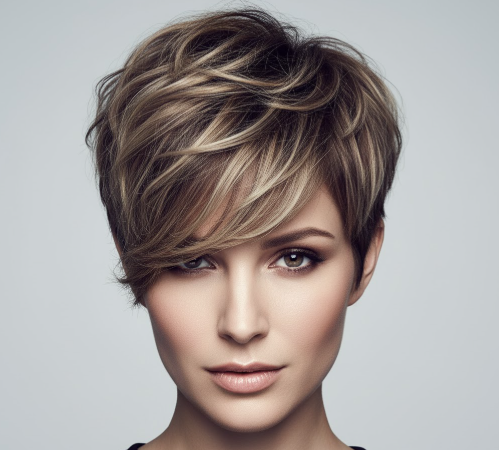
A pixie cut might seem counterintuitive for dense hair, but it’s actually one of the most flattering and easy-to-manage options available. The key difference between a pixie on fine hair versus dense hair lies in the texturizing. Dense hair pixies require significant internal layering and texturizing to prevent the style from looking too full or round.
The most successful pixie cuts for dense hair include slightly longer pieces on top, approximately two to four inches, which can be styled in various directions or swept to the side. The sides and back should be cut shorter but with plenty of texture to create that effortlessly tousled look rather than a solid, helmet-like shape.
Celebrities like Anne Hathaway and Charlize Theron have rocked pixie cuts that showcase how this style can highlight facial features beautifully while managing dense hair effectively. The cut requires regular maintenance every four to six weeks to maintain the shape, but daily styling is often as simple as applying a small amount of texturizing paste and tousling with your fingers.
The Bixie (Bob-Pixie Hybrid)
For those interested in going short but not quite ready for a full pixie commitment, the bixie offers the perfect middle ground. This modern cut combines the ease and nape exposure of a pixie with the slightly longer, more versatile lengths of a bob.
The bixie typically features short, choppy layers throughout, with the shortest pieces around the ears and nape, and slightly longer sections on top and around the face. For dense hair, this cut is particularly effective because the layering removes substantial weight while the varied lengths create natural movement and texture.
This style works especially well for dense, wavy hair, as the natural texture enhances the deliberately messy, lived-in aesthetic the cut is designed to achieve. It’s a wash-and-go style for many people, requiring minimal effort beyond applying a volumizing product and air-drying or quickly blow-drying with your fingers.
The Modern Short Shag
The shag has returned to prominence, and its short iteration is perfect for dense hair. A short shag features heavy layering throughout, with the layers starting quite short at the crown and gradually lengthening toward the nape and perimeter.
This cut removes tremendous bulk through its layering structure while enhancing any natural texture you have. For people with dense, wavy hair, a short shag often requires virtually no styling, the natural wave pattern works with the cut to create that coveted effortless, rock-and-roll aesthetic.
The face-framing layers characteristic of shag cuts also draw attention to your features rather than your hair’s volume. The key for dense hair is ensuring your stylist uses plenty of point cutting and texturizing techniques to soften the layers and prevent them from looking too chunky or piece-y.
Flattering Medium-Length Hairstyles for Dense Hair
Medium-length hair offers versatility and femininity while still providing significant weight relief compared to long styles. This length range, typically falling between the chin and shoulders, is often the sweet spot for dense hair.
The Layered Lob (Long Bob)
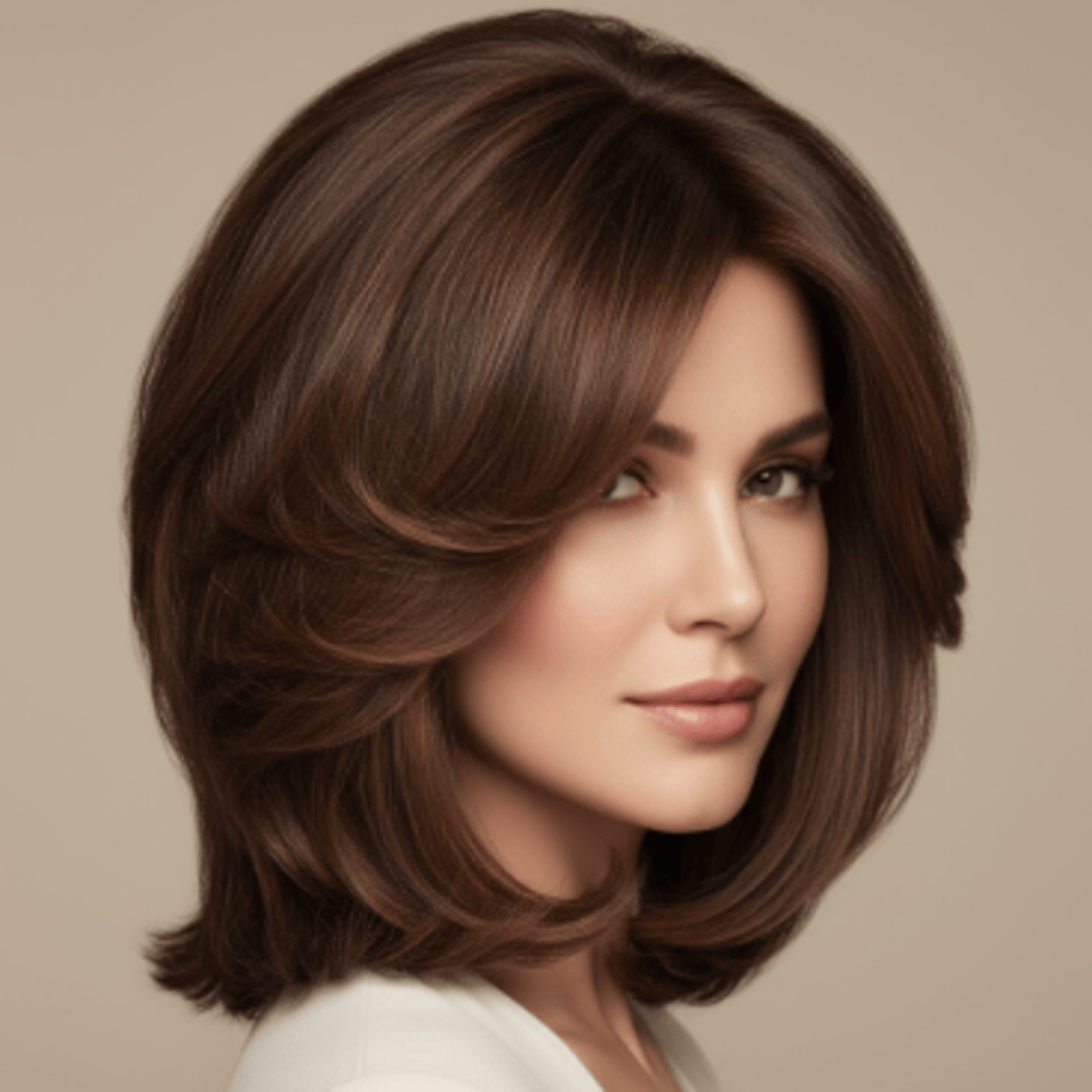
The lob has earned its status as a universally flattering cut, and for dense hair, it’s particularly successful when combined with strategic layering. A lob on dense hair should never be cut blunt and one-length throughout, doing so creates that boxy, heavy look that makes styling difficult.
Instead, the most flattering lobs for dense hair incorporate ghost layers or long, internal layers that remove bulk without creating obvious graduation. The perimeter can be kept relatively uniform for that sleek lob aesthetic, while the interior is debulked significantly. Some face-framing layers starting around the cheekbones or chin also add movement and soften the overall look.
The beauty of a layered lob on dense hair is its versatility. It can be worn straight and sleek for a polished look, tousled and textured for casual elegance, or even styled into effortless waves. The length is also practical for those who want the option of pulling hair back into a small bun or ponytail without dealing with the weight of longer hair.
The Italian Bob: A Chic, Chunky Variation
A recent trend that works beautifully for dense hair is the Italian bob, a slightly longer, less layered version of the classic bob that falls between the jawline and shoulders. This cut deliberately embraces volume and fullness rather than fighting against it, creating a luxurious, 1960s-inspired silhouette.
The Italian bob is characterized by its rounded, full shape with minimal layering. For dense hair, some interior texturizing is still necessary to prevent excessive weight, but the overall aesthetic celebrates abundance. The cut often includes subtle, face-framing pieces or gentle graduation around the face, but maintains significant weight and fullness throughout.
This style works particularly well on those with dense, straight to slightly wavy hair who want a sophisticated, fashion-forward look. It does require styling, typically a blow-dry with a round brush to create the signature smooth, rounded shape, but the result is undeniably elegant.
The Butterfly Cut on Medium Hair
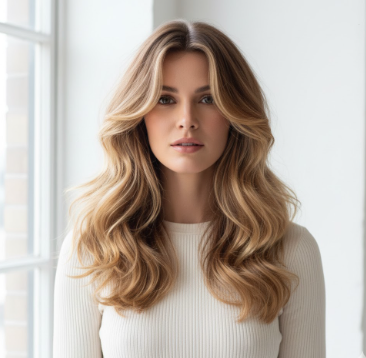
The butterfly cut has gained significant attention for its ability to create the illusion of movement and lightness on dense hair. This cut features very short, face-framing layers that start around the cheekbones or chin, while the interior and back maintain longer layers.
The dramatic variation in layer lengths creates a “butterfly wing” effect when the hair moves, with the shorter face-framing pieces lifting and separating from the longer interior hair. For dense hair, this technique removes weight around the face where it tends to be most noticeable while maintaining length and fullness at the back.
The butterfly cut is particularly effective for those with dense, wavy, or curly hair, as the natural texture enhances the movement and dimension the cut creates. It’s also a relatively low-maintenance option, as the layers are designed to enhance natural texture rather than requiring extensive styling.
The Collarbone-Grazing Shag
A medium-length shag that grazes the collarbone combines manageability with style versatility. This cut features choppy, textured layers throughout, often paired with curtain bangs or face-framing pieces that blend seamlessly into the overall layered structure.
For dense hair, the shag’s heavy layering removes substantial weight while creating built-in volume and texture. The beauty of this cut is that it’s designed to look slightly messy and lived-in, which means it’s forgiving and doesn’t require perfect styling. Many people with dense hair find that a medium shag air-dries beautifully with minimal product.
The curtain bangs often paired with shags are particularly flattering, as they’re typically cut with significant texturizing that prevents them from looking too heavy or blunt. For those interested in exploring different ways to style these bangs or learning about specialized hair care techniques, resources at Care About Your Hair offer extensive guidance on maintaining various hairstyles and textures.
Stunning Long Hairstyles for Dense Hair
Long hair with high density can be challenging, but with the right cut and techniques, it becomes a stunning asset. The key is strategic weight removal that maintains length while improving movement and manageability.
Long Layers for Seamless Movement
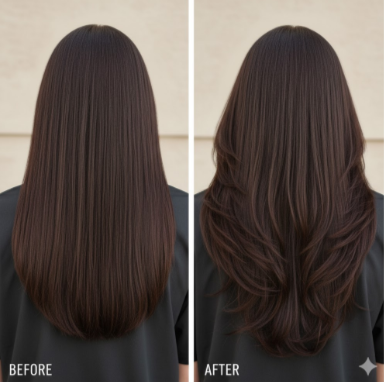
Long layers are the classic solution for dense hair, and for good reason. This approach removes weight from the bottom half of your hair while maintaining the overall impression of length. The layers typically start around the chin or shoulders and gradually lengthen, creating a soft, flowing shape that prevents the heavy, triangular silhouette dense hair often creates when cut to one length.
The key to successful long layers on dense hair is ensuring the layers are blended seamlessly rather than creating obvious steps or shelf-like separations. Your stylist should use a combination of cutting techniques, including point cutting the ends and texturizing the interior, to create soft transitions between layer lengths.
Long layers also offer versatility in styling. They enhance natural wave patterns beautifully, creating dimension and movement. When straightened, they prevent the flat, lifeless look that can occur with one-length hair. They also make updos more interesting and textured rather than appearing as a solid mass of hair.
The U-Shape or V-Shape Haircut
Both U-shaped and V-shaped cuts create more intentional silhouettes than a straight-across perimeter, and both work well for dense hair with slightly different effects. A U-shaped cut features subtle layering that creates a gentle curve, with the hair at the sides slightly shorter than the hair at the back center. This shape is soft and romantic, removing weight at the sides where dense hair tends to push out and create width.
A V-shaped cut creates a more dramatic point at the center back, with more significant graduation from the sides to the center. This shape creates a longer, more dramatic look at the back while keeping the sides lighter and shorter. For very dense hair, the V-shape can be particularly effective at preventing that bottom-heavy triangle shape.
Both cuts should include interior layering and texturizing to remove bulk. The shape you see at the perimeter is just one element, the real work happens in the interior layers that your stylist cuts to debulk and create movement throughout.
Invisible and Ghost Layers for Hidden Debulking
Invisible or ghost layers represent an advanced cutting technique that’s ideal for those who love the aesthetic of long, relatively uniform hair but struggle with the weight and bulk of dense hair. This technique involves cutting significantly shorter layers on the interior of your hair, sometimes six or more inches shorter than the perimeter, while keeping the outermost layer relatively uniform.
When your hair is down, these interior layers are completely hidden by the outer layer, so your hair appears to be all one length or minimally layered. However, you experience dramatic weight reduction and improved movement because a significant portion of your hair’s interior has been shortened.
Ghost layers also create beautiful movement when your hair catches the wind or when you turn your head, as the hidden interior layers shift and create dimension. This technique requires a skilled stylist who understands the structure and fall of dense hair, as improperly executed ghost layers can create visible holes or separation in your hairstyle.
Hairstyles for Dense Hair by Texture
Hair texture significantly impacts how density manifests and what cutting approaches work best. Tailoring your haircut to both your density and texture creates the most harmonious and manageable result.
For Dense, Wavy, and Frizzy Hair
Dense, wavy hair has incredible potential for gorgeous, textured styles, but it can also be prone to frizz and that dreaded pyramid shape. The most successful cuts for this combination work with the natural wave pattern rather than trying to fight it.
Long layered cuts that start around the shoulders allow waves to form beautifully without creating excessive bulk at the ends. Shags and lobs with significant texturizing also work exceptionally well, as the choppy layers enhance the wave pattern and create beachy, effortless texture.
The key to managing frizz in dense, wavy hair is hydration and the right products. Avoiding sulfates in your shampoo, using deep conditioning treatments weekly, and applying anti-frizz serums or leave-in conditioners to damp hair can transform frizzy waves into defined, glossy curves. For those dealing with frizz management while traveling or in challenging environments, specialized care routines like those described in How to Take Care of Wavy Hair After an Airplane Ride can help maintain your style even when conditions work against you.
For Dense, Curly, and Coily Hair
Dense, curly, and coily hair requires specialized knowledge, and finding a curl specialist for your cut is not just recommended, it’s essential. Traditional cutting techniques often fail to account for curl shrinkage and the three-dimensional spring pattern of curly hair, leading to disappointing results.
Dry cutting techniques like the DevaCut or RezoCut method, where the stylist cuts each curl individually while the hair is dry and in its natural state, produce the most flattering results for dense curly hair. These methods allow the stylist to see exactly how each curl falls and to shape the overall style while managing the density.
Rounded shapes work beautifully for dense curls, creating a gorgeous halo effect that celebrates the hair’s natural volume. Long layers throughout prevent the triangular shape while maintaining the integrity and definition of curl clumps. Avoid thinning shears, which can disrupt curl patterns and create frizz. Instead, ask your curl specialist to remove bulk by cutting away entire inner curl clumps at shorter lengths.
For Dense, Straight Hair
Dense, straight hair presents the challenge of avoiding a helmet-like or too-perfect appearance. Without natural texture to create interest, dense straight hair can look flat and shapeless despite its volume, or worse, it can create a solid, heavy look that lacks dimension.
The solution lies in cuts with significant texturizing and intentional shape. An angled lob with the front pieces longer than the back creates visual interest and prevents the blunt, blocky look. Textured pixie cuts with lots of point-cut ends create deliberately messy texture that prevents the overly polished helmet aesthetic.
Long layers on dense, straight hair should be combined with aggressive texturizing of the ends to prevent blunt lines. Some people with dense, straight hair also benefit from adding wave or curl through styling or even getting a body wave or perm to introduce texture that breaks up the density visually.
Ask the Expert: How to Talk to Your Hairstylist
Even the most talented stylist cannot read your mind. Clear communication about your hair’s density, your lifestyle, and your expectations creates the foundation for a successful haircut. Senior stylists emphasize that educated clients who can articulate their needs often get the best results.
Before You Go: Do Your Homework
Preparation before your salon appointment significantly improves outcomes. Gather inspiration photos, but be strategic about your selections. Instead of choosing styles based solely on aesthetics, look for photos of people with similar hair density to yours. A style that looks amazing on someone with fine, medium-density hair may be impossible to replicate on dense hair, or it may require completely different cutting techniques.
Save multiple photos showing different angles of styles you like, and also save a few examples of what you want to avoid. Being able to show your stylist both what you’re drawn to and what you want to steer clear of provides valuable context.
Be realistic about your styling commitment. If you’re not going to blow-dry and style your hair daily, tell your stylist you need a wash-and-go cut that works with your natural texture. If you love sleek, polished styles and enjoy the styling process, communicate that as well so they can create a cut that achieves that aesthetic.
Key Phrases to Use in the Salon
The language you use when communicating with your stylist matters. Certain phrases clearly convey your needs and help stylists understand your priorities. Try incorporating these into your consultation: “I want to remove weight without losing length” tells your stylist that bulk reduction is the priority while length preservation is important. “I’m worried about my hair looking like a triangle” immediately signals that you understand the challenge dense hair faces and alerts them to pay special attention to side weight removal.
“Can we add some internal layers for movement?” shows you understand the concept of hidden layers and want the movement they create without dramatic visible layering. “I want a low-maintenance style that works with my natural texture” communicates that you’re not looking for a high-styling commitment and want to embrace your hair’s natural characteristics.
Avoid vague requests like “just make it look good” or “do whatever you think.” Stylists work with dozens of clients with different preferences, and specificity helps them tailor the cut to your unique needs and aesthetic preferences.
Questions to Ask Your Stylist
An excellent stylist welcomes questions and sees them as part of a collaborative process. Don’t hesitate to ask: “What technique will you use to remove the bulk?” This question invites them to explain their approach and allows you to gauge their understanding of dense hair. A knowledgeable stylist will confidently describe their layering and texturizing plan.
“How often will I need to get this cut trimmed to maintain the shape?” helps you understand the maintenance commitment. Some cuts, like pixies and textured bobs, require frequent trims every four to six weeks. Others, like long layers, can go eight to twelve weeks between appointments.
“What will the grow-out process look like?” is especially important if you’re trying something dramatically different. Understanding how a cut will evolve as it grows helps you make informed decisions and set realistic expectations.
Styling and Maintaining Your New Haircut
The perfect haircut is only part of the equation. Daily styling and maintenance practices significantly impact how your dense hair looks and feels. Understanding the right products and techniques maximizes your cut’s potential.
The Essential Toolkit: Products for Dense Hair
Dense hair has specific product needs that differ from fine or medium-density hair. The goal is to enhance movement and manage bulk without adding weight. Lightweight mousses applied to damp hair add control and definition without the heaviness of creams or gels. Look for volumizing or texturizing mousses rather than strong-hold formulas.
Anti-frizz serums are essential for dense hair prone to frizz. Apply a small amount to damp hair, focusing on mid-lengths and ends, to seal the cuticle and create smoothness. Be cautious with quantity, a little goes a long way, and too much can make dense hair look greasy.
Hydrating leave-in conditioners provide moisture without weight when you choose lightweight, spray-on formulas rather than heavy cream conditioners. Dense hair often needs extra hydration, especially if you’re using texturizing or volumizing products that can be drying.
Heat protectant is non-negotiable if you blow-dry or use hot tools regularly. Dense hair takes longer to style, which means prolonged heat exposure. A quality heat protectant prevents damage and keeps your hair looking healthy.
Avoid heavy creams, thick oils, and strong-hold gels that can weigh dense hair down and make it look limp or greasy. These products work well on fine or medium hair but are generally too much for dense hair. For those considering long-term hair management solutions beyond daily styling, exploring options like How Much Is Laser Hair Removal might provide insights into permanent reduction techniques for body hair, though this is a different concern from managing scalp hair density.
Drying Techniques to Tame the Mane
How you dry your dense hair significantly impacts its appearance and manageability. The most important rule is to never vigorously towel-dry by rubbing. This creates frizz and disrupts the hair cuticle. Instead, gently squeeze excess water from your hair using a microfiber towel or an old t-shirt, which are much gentler on the hair cuticle than traditional terry cloth towels.
Allow your hair to air dry to about eighty percent before blow-drying. This reduces heat exposure time and makes the blow-drying process much faster. Dense hair can take hours to fully air dry, but the eighty percent mark usually comes within thirty to sixty minutes.
When blow-drying, use the tension method with a round brush. This involves pulling sections of hair taut with the brush while directing the dryer’s airflow down the hair shaft from roots to ends. This technique smooths the cuticle, reduces frizz, and creates sleek, polished results. Work in sections, completely drying each section before moving to the next.
For those with curly or wavy dense hair, diffusing is the preferred drying method. Attach a diffuser to your blow-dryer and use low heat and low speed. Cup sections of your hair in the diffuser bowl and hold it close to your scalp, allowing the hair to dry without disturbing the natural curl or wave pattern. This method enhances definition while reducing frizz.
Updos and Styles That Won’t Give You a Headache
Many people with dense hair experience literal headaches from the weight of their hair, especially when styled in updos or high ponytails. The key is choosing styles that distribute weight more evenly rather than pulling all the hair to a single point.
Braided crowns distribute hair around your head rather than pulling it to one spot. This style is elegant and comfortable, even for long periods. Low looped buns at the nape of the neck keep the weight low and centered, reducing scalp tension. Secure the bun with multiple pins distributed throughout rather than relying on a single elastic.
Sectioned ponytails, where you create two or three smaller ponytails stacked vertically rather than one large ponytail, distribute the weight and create the illusion of one full ponytail while being much more comfortable. Use cloth-covered elastics rather than rubber bands, which can pull and break dense hair.
Your Dense Hair is Your Crown
Dense hair is fundamentally an asset, offering natural volume, styling versatility, and that enviable fullness many people try to achieve with products and tools. The key to loving your dense hair lies in finding the right cut that removes weight strategically while maintaining the characteristics you value most, whether that’s length, texture, or ease of styling.
The hairstyles and techniques outlined in this guide represent the most effective approaches based on the experiences of professional stylists and real people managing dense hair daily. From short pixies that celebrate texture to long layers that create flowing movement, there’s a perfect style for every preference and lifestyle. Remember that the best haircut for you considers not just your density but also your hair’s texture, your face shape, your styling commitment, and your personal aesthetic.
Work with a stylist you trust, communicate clearly about your needs and concerns, and don’t be afraid to advocate for the weight removal and texturizing techniques that make dense hair manageable. With the right cut and daily care routine, your dense hair becomes a source of confidence and beauty rather than frustration. Embrace the abundance, experiment with styles that excite you, and wear your dense hair as the crown it truly is.
Frequently Asked Questions
What is the absolute best haircut for very dense hair?
The best haircut for very dense hair depends on your hair length preference, natural texture, and face shape, but layered cuts consistently deliver the most flattering results. A long-layered style for those who want length or a textured lob for medium-length preferences both remove significant weight while adding movement and preventing the triangular shape dense hair often creates.
Should dense hair be layered or one length?
Dense hair should almost always be layered. One-length cuts on dense hair typically result in a heavy, triangular or boxy shape with minimal movement. Layers are essential for removing interior weight, creating dimension, and allowing your hair to move naturally rather than sitting as one solid mass.
How do I ask my stylist to make my dense hair thinner?
Ask your stylist to “remove weight” or “reduce bulk” rather than saying “thin my hair,” which can be misinterpreted. Specifically request “internal layers” or “texturizing techniques” to achieve a lighter feel without sacrificing your overall length or the integrity of your style. Mention that you want to maintain fullness while improving movement and manageability.
Is a blunt bob a bad idea for dense hair?
A blunt bob isn’t necessarily a bad choice for dense hair, but it requires significant interior texturizing to work properly. Your stylist must heavily texturize the interior and use point-cutting on the ends to prevent the bob from looking like a heavy helmet. An angled bob or a layered bob is often a safer and more manageable option that delivers a similar modern aesthetic with better movement.
What is the difference between thick hair and dense hair again?
Thick hair refers to the diameter or width of individual hair strands, with thick or coarse strands being wider than fine strands. Dense hair refers to the number of hair strands packed together on your scalp, regardless of individual strand width. You can have fine textured hair that is dense, meaning many narrow strands growing closely together, or coarse hair with lower density.
How can I manage my dense, frizzy hair?
Managing dense, frizzy hair requires a two-pronged approach focused on the right haircut and proper hydration. Choose a layered cut that removes bulk and allows better air circulation. For your routine, use sulfate-free shampoos that don’t strip natural oils, apply deep conditioning treatments weekly, and use anti-frizz serums or leave-in conditioners on damp hair to seal the cuticle and lock out humidity.
What are the best low-maintenance hairstyles for dense hair?
Long-layered cuts and mid-length shags are among the most low-maintenance options for dense hair. These styles are specifically designed to work with your hair’s natural texture and volume, often looking best when air-dried with minimal product. The layers create built-in movement and shape that doesn’t require extensive styling, making them ideal for busy lifestyles.
Can I get bangs if I have dense hair?
Absolutely, you can wear bangs with dense hair. Curtain bangs are particularly flattering as they blend seamlessly into face-framing layers and work well with the natural volume of dense hair. Wispy or heavily textured bangs also work beautifully. If you prefer blunt, straight-across bangs, ask your stylist to texturize them significantly so they don’t sit too heavily on your forehead or create a wall-like appearance.