 Dave King
“How much are y’all paying for 20–22″ hair extensions? I don’t want it that long bc I’m a shorty and I’ll look like Cousin It.”
If that sounds like you, you’re asking exactly the right question — and this guide answers it.
Most extension guides show one model, one height, one look. They don’t show you. That uncertainty costs people hundreds of dollars on the wrong length — and a lot of regret when the hair arrives and the transformation isn’t what they imagined.
By the end of this guide, you’ll know exactly where 20 inch hair extensions will fall on your body, which type suits your lifestyle, and which brands are genuinely worth your money. We’ll cover length visualization, extension types, hair quality, where to buy, and what to watch out for — so you can stop guessing and start shopping with confidence.
20 inch hair extensions typically reach the mid-back on most heights — but on a 5’2″ frame, they can fall below the bust, creating a dramatically longer look than on taller women.
- The Height-Adjusted Length Map shows exactly where 20 inches lands on heights from 5’0″–5’10” — the only way to know what you’ll actually look like
- Clip-in extensions are the easiest starting point for beginners — no salon visit required
- Remy human hair blends most naturally and lasts longest (6–12 months with proper care)
- Expect to pay $150–$400+ depending on type and hair quality
- 20 inches works best when your natural hair is shoulder-length or longer for the most seamless blend
How Long Are 20-Inch Hair Extensions?
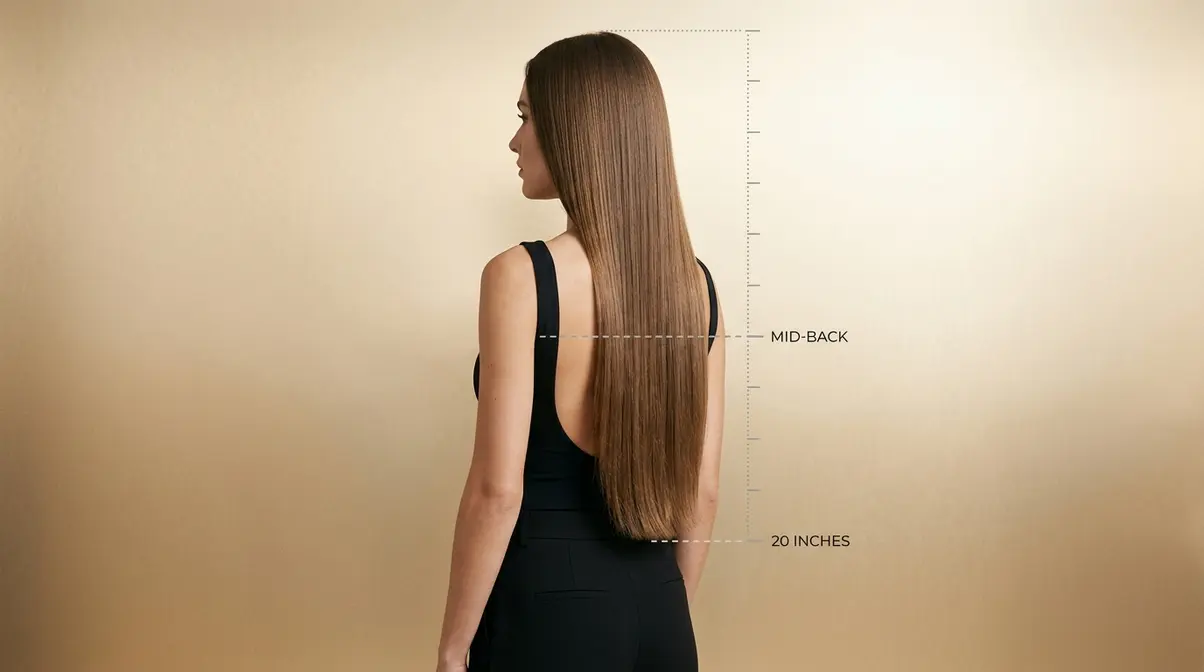
20-inch hair extensions (pre-made wefts or strands of real or synthetic hair attached to your natural hair to add length and volume) typically reach the mid-back — but “mid-back” means something very different depending on your height. That’s exactly why The Height-Adjusted Length Map exists: a visualization framework that replaces vague descriptions with precise, body-proportional measurements. Choosing the wrong length because you relied on a generic description is one of the most common — and expensive — extension mistakes shoppers make.
The global hair extensions market was valued at approximately $3.6 billion in 2026 and is projected to exceed $5 billion by 2030 (Statista, 2026) — meaning millions of buyers are navigating this exact question every year. Most of them don’t get a height-specific answer. You’re about to.
Where Does 20 Inches Fall by Height?
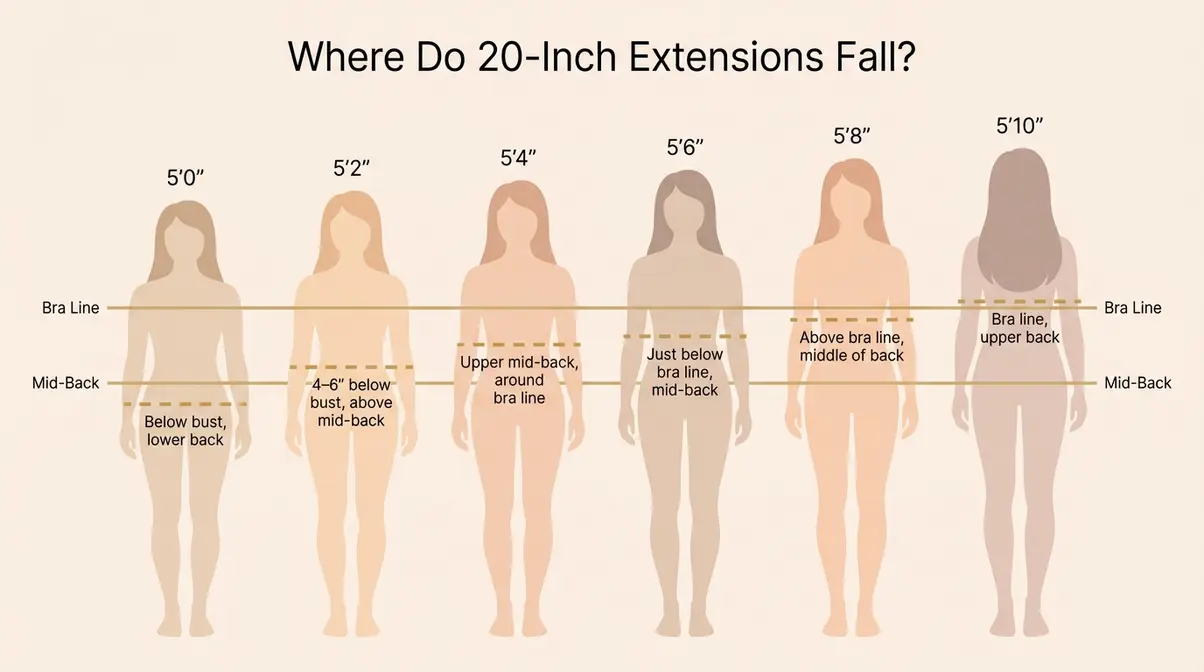
How long are 20 inch hair extensions on your frame? The answer depends entirely on your height, and the difference is more dramatic than most shoppers expect.
Here’s the breakdown — approximate positions for straight extensions on each height:
| Height | Where 20 Inches Falls |
|---|---|
| 5’0″ | Below the bust, approaching mid-torso |
| 5’2″ | 4–6 inches below the bust line |
| 5’4″ | Bra line to upper mid-back |
| 5’6″ | Upper mid-back |
| 5’8″ | Grazes the bra line / upper back |
| 5’10” | Shorter mid-back appearance |
These are approximate positions for straight hair. Curly and wavy textures experience what stylists call “texture shrinkage” — the visual shortening of a strand due to curl pattern. Straight extensions appear 1–2 inches longer than the same length in curly or wavy texture. So if you’re ordering curly 20-inch extensions, expect them to look closer to 18 inches visually.
If you’re 5’2″ or shorter, 20 inches creates a dramatic, below-the-bust look. This is fully wearable and genuinely glamorous — but it’s a significant transformation, not a subtle one. Beauty experts note that extensions measuring 18 to 20 inches or longer require significantly more maintenance and can place additional strain on natural hair compared to shorter lengths (Allure Magazine’s extension guide, 2026).
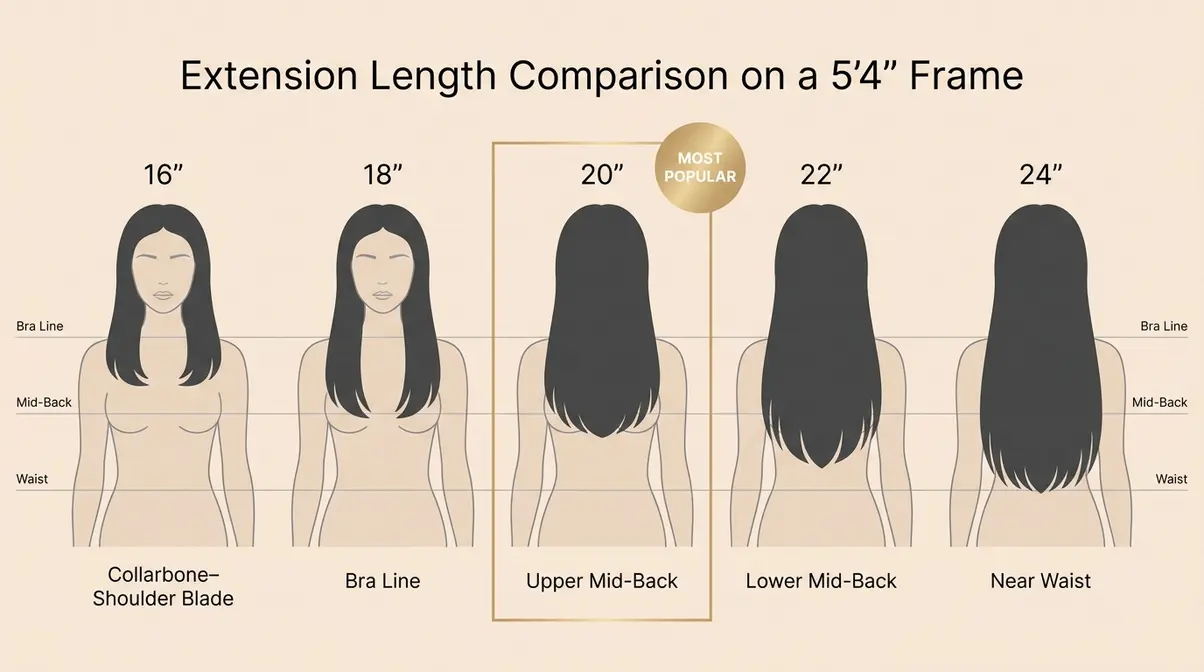
Use the Height-Adjusted Length Map below to find your height and see exactly where 20 inches will fall before you buy.
For a deeper look at how this length compares across body types, see our complete 20-inch hair length guide.
Once you know where 20 inches lands on your frame, the next question is simple: what will it actually look like? Here’s what to expect.
What Do 20-Inch Extensions Look Like?
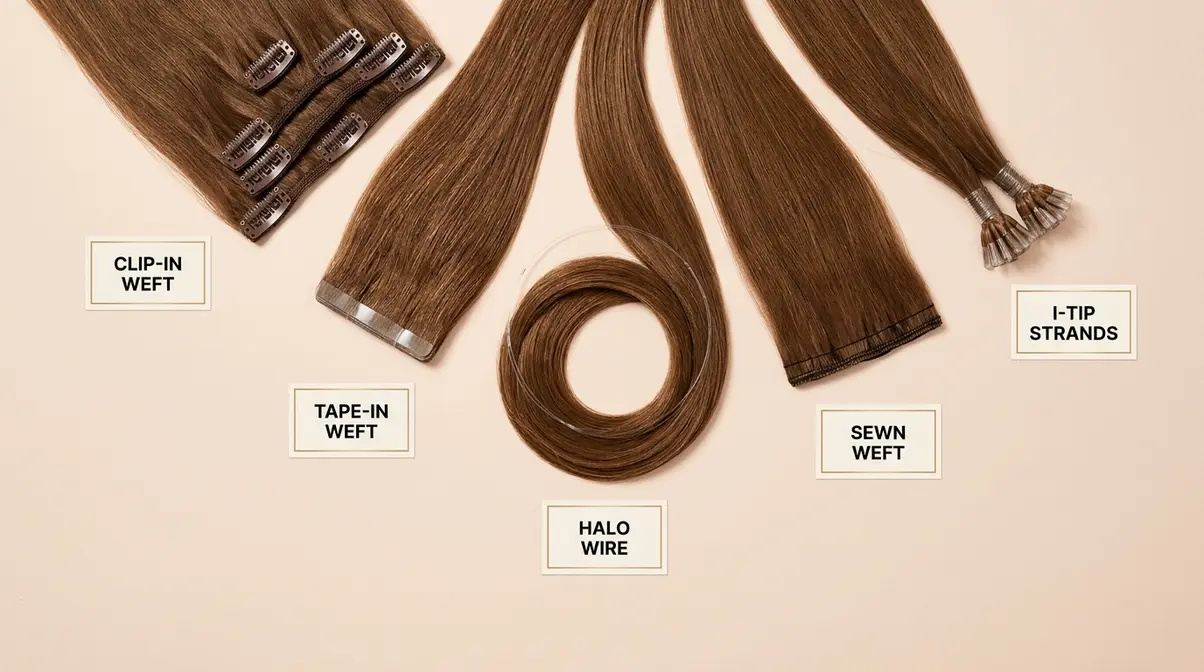
20-inch hair extensions create a glamorous, noticeably long look. On most frames, they cascade past the bra line, adding dramatic length and volume. They’re ideal for thick braids, high ponytails, flowing waves, and heat-styled looks — and they deliver a major transformation while still looking natural when properly blended.
Weight and movement matter as much as length. A full 20-inch clip-in set typically weighs 100–220g depending on the type. Heavier sets (180–220g) provide a fuller, more dramatic look with serious volume and movement — think flowing waves or voluminous blowouts. Lighter sets (100–140g) are better suited for fine or thin hair, where too much weight creates an obvious mismatch between your natural hair and the extensions. Note: exact weight varies by brand, so always check product specifications before purchasing.
At 20 inches, you unlock styles that require a minimum length: beach waves, long braids, high ponytails, half-up half-down looks, and cascading blowouts. The length is long enough to be undeniably glamorous without crossing into impractical territory for most lifestyles.
When evaluating movement, our team found that brands like Milk & Blush and Luxy Hair consistently show realistic hair movement in their product photography — look for brands that show video of hair movement, not just flat-lay product shots. A flat-lay photo tells you almost nothing about how the hair will behave when you’re wearing it.
Seeing the length on paper is one thing. Seeing it on real people with real hair is what actually helps you decide — which is why before-and-after transformations are the most searched content in this category.
Before and After on Different Hair Types
The transformation looks dramatically different depending on your starting point. Here’s what to expect across four common natural hair lengths:
Shoulder-length natural hair (12–14 inches): This is the ideal starting point for 20-inch extensions. The blend is seamless because your natural ends meet the extension mid-shaft, creating a natural-looking gradual length. The result: a full, flowing look that most people can’t distinguish from natural long hair.
Fine or thin hair: Extensions add both length AND volume simultaneously — which is the appeal, but also the challenge. For fine hair, a 100–140g set prevents the extensions from looking obviously thicker than your natural hair. Stylists consistently report that going too heavy on fine hair is the most common blending mistake, creating a “shelf” where the extension weft sits visibly against thinner natural hair.
Medium-length wavy hair (chin to collarbone): Wavy texture blends beautifully with wavy or straight extensions. The key is matching texture — don’t pair straight clip-ins with naturally wavy hair unless you plan to wave the extensions too. Brands like Bombay Hair offer before/after galleries showing what 220g (full, dramatic volume) looks like versus lighter 120g sets on medium-length hair.
Short hair (chin-length or bob): This is the most challenging starting point. 20 inches on a bob creates an extreme length contrast, and the transition point at your jaw or chin will require careful layering or heat styling to blend. Clip-in and halo extensions are the recommended starting points here — more on that in the Types section below.
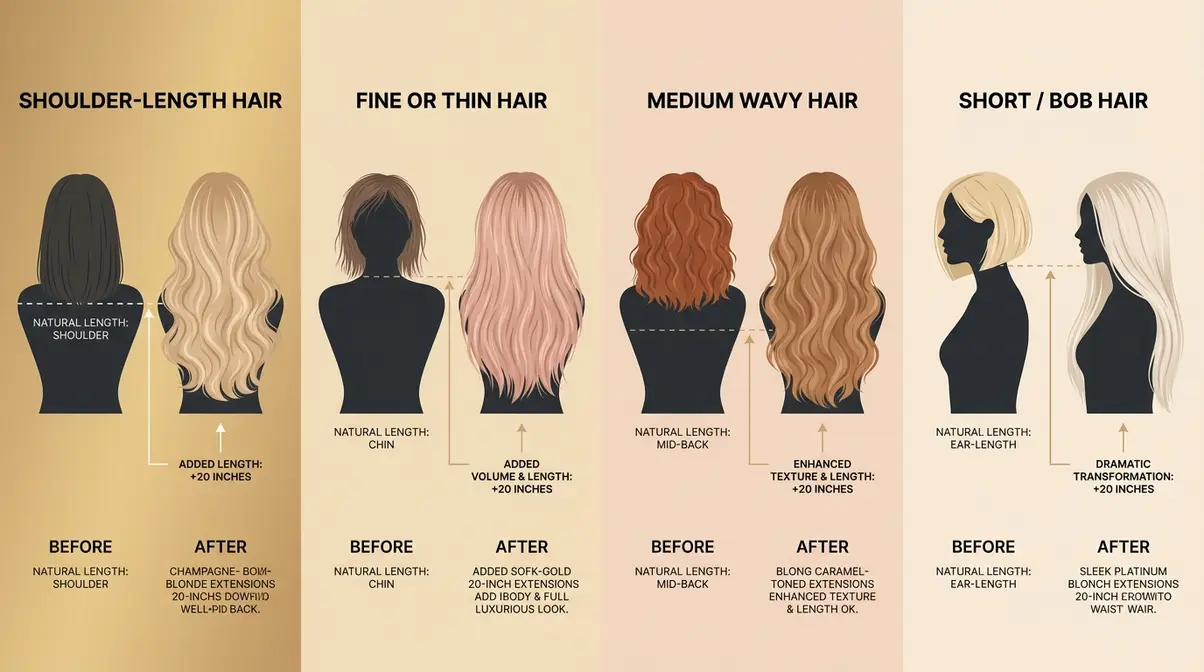
The most seamless blends happen when your natural hair is at least shoulder-length (12–14 inches). If your hair is shorter, clip-in or halo extensions work best — they don’t require root-level blending the way tape-ins or sew-ins do.
Now that you know what 20-inch extensions look like, let’s tackle the question that worries beginners most: is 20 inches actually too long?
Are 20-Inch Extensions Too Long?
Here’s the honest answer: 20-inch extensions are not too long for most people — but the answer depends on your height and your natural hair length, not just the number.
For heights 5’0″–5’4″: the look is dramatic and glamorous. It’s a real transformation, not a subtle refresh. For heights 5’5″ and above: the look is noticeably long but proportionate — more “model hair” than “overwhelming.”
For short natural hair (bob, chin-length, or pixie cuts): 20 inches IS a significant jump and requires careful blending. Clip-in and halo extensions are the safest options because they don’t need root-level blending. Tape-ins and sew-ins require at least 3–4 inches of natural hair to grip properly — anything shorter and the extension won’t have enough anchor.
About the “Cousin It” concern from the opening quote — that’s a real and valid worry, and it’s exactly why The Height-Adjusted Length Map matters. The solution isn’t to avoid the length entirely. It’s to match the extension weight to your natural hair density. A 100–140g clip-in set at 20 inches on a 5’2″ frame creates a glamorous, proportionate look. A 220g set on the same frame can feel overwhelming. The length isn’t the variable — the weight is.
For short-hair beginners, our team recommends starting with 20-inch clip-ins at 100–140g. It’s the lowest-risk way to try the length before committing to a semi-permanent method.
Now that you can picture where 20 inches will land on your frame, the next step is deciding whether 20 inches is actually the right length — or if you’d be better served by 18 or 22 inches.
20-Inch vs. Other Lengths: Which Is Right?
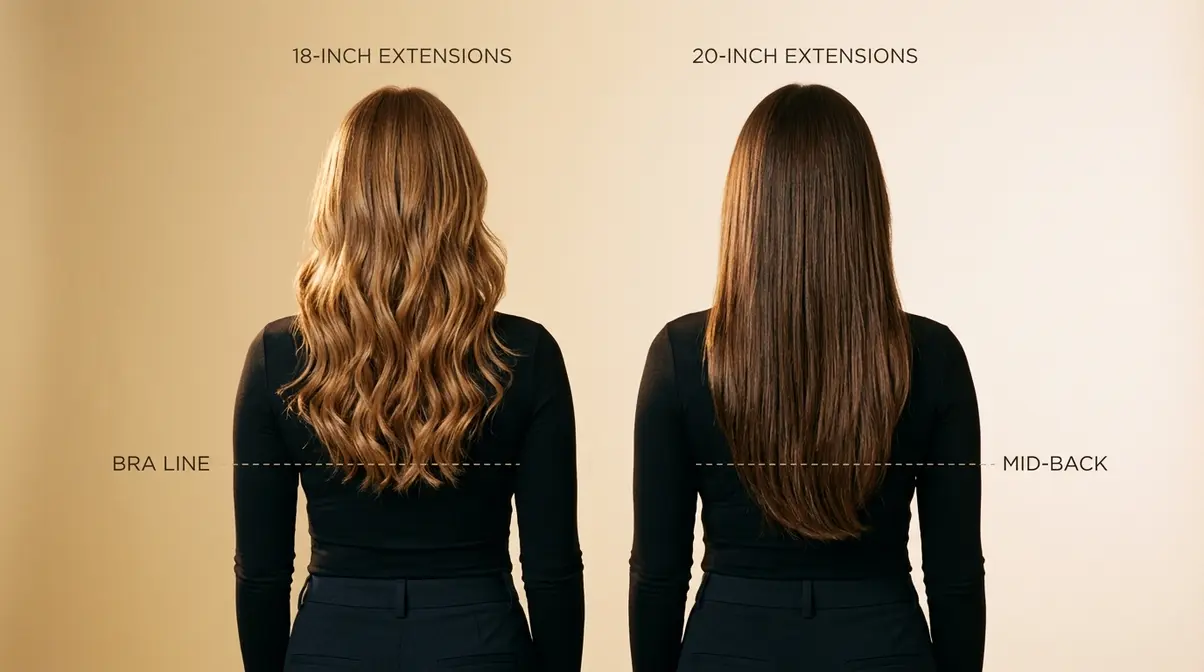
Choosing between extension lengths is one of the most common sticking points for first-time buyers. The difference between 18 and 22 inches sounds small — it’s just 4 inches — but on your actual body, that difference is significant and very visible. The Height-Adjusted Length Map applies to every length comparison below: the same inch measurement looks completely different on a 5’2″ frame versus a 5’8″ frame.
User consensus across extension communities consistently shows that buyers who go one length shorter than they think they want end up happiest. Keep that in mind as you compare.
18-Inch vs. 20-Inch Hair Extensions
This is the most common comparison shoppers make — and the decision usually comes down to two factors: how dramatic you want the transformation, and how long your natural hair is.
18-inch extensions typically fall at the bra line on most average heights (5’4″–5’6″). They create a noticeably longer look without the full drama of 20 inches. For women with fine or thin natural hair, 18 inches is often the better starting point because the shorter length carries less weight and blends more easily.
When choosing between these two, consider your daily styling routine. Because 18-inch hair extensions have slightly less weight, they tend to hold bouncy, voluminous curls exceptionally well throughout the day. In contrast, 20-inch extensions provide a beautiful, elongated drop-curl effect that looks incredibly romantic but may loosen faster due to the sheer weight of the hair pulling the curl downward.
20-inch extensions fall 2 inches lower — which translates to a noticeably more dramatic transformation, especially on shorter frames. On a 5’2″ frame, those 2 extra inches can mean the difference between a bra-line finish and a mid-torso finish.
20-Inch vs. 22-Inch Hair Extensions
Two inches longer than 20 inches sounds minor. On your body, it’s not.
22-inch extensions fall 2 inches below wherever 20 inches lands on your frame. On a 5’4″ frame, that moves the finish from the upper mid-back to the lower mid-back. On a 5’2″ frame, 22 inches approaches the waist — which is where the “Cousin It” concern becomes genuinely relevant for shorter women.
The practical tradeoff: 22-inch extensions require more maintenance, tangle more easily (especially curly and wavy textures), and cost more because they use more hair. They’re also heavier — a full 22-inch clip-in set can weigh 200–250g, which places more tension on your natural hair over time.
16-Inch vs. 20-Inch: The Natural Look
16-inch extensions sit at the collarbone-to-shoulder blade range on most heights — creating what stylists call a “natural boost” rather than a dramatic transformation. This length works beautifully for women who want extra volume and fullness without a dramatic length change.
The key difference: 16 inches blends seamlessly with shoulder-length natural hair (12–14 inches), while 20 inches requires your natural hair to be at least collarbone-length for the same seamless blend.
20-Inch vs. 24-Inch: Going Ultra Long
24-inch extensions are the “ultra long” category — they fall at or near the waist on most heights. This look requires serious commitment: more maintenance, more weight on your natural hair, higher cost, and more time spent styling.
On a 5’4″ frame, 24 inches reaches approximately the natural waist. On a 5’2″ frame, 24 inches extends below the waist — which is a genuinely dramatic look that requires confidence to wear and real skill to maintain.
Lifestyle plays a huge role here. If you are highly active, frequently go to the gym, or live in a windy climate, managing 24 inches of hair on a daily basis can become a frustrating chore. 20 inches gives you that coveted mermaid aesthetic while remaining practical enough to quickly throw into a secure bun when you need it out of the way.
Master Length Comparison Table:
| Length | Falls At (5’4″ avg) | Best For | Maintenance Level |
|---|---|---|---|
| 16″ | Collarbone–shoulder blade | Volume boost, subtle transformation | Low |
| 18″ | Bra line | First-time buyers, fine hair | Low–Medium |
| 20″ | Upper mid-back | Dramatic transformation, most styles | Medium |
| 22″ | Lower mid-back | Taller women, special occasions | Medium–High |
| 24″ | Near waist | Ultra-long, experienced wearers | High |
Types of 20-Inch Hair Extensions Explained
Not all extensions are created equal — and the “type” question matters just as much as the length question. Our team evaluated the five main extension categories across application difficulty, lifestyle fit, cost, and blending quality. Here’s what every beginner needs to know before choosing.
How we evaluated: We assessed each type across four criteria: beginner-friendliness (can you apply it yourself?), commitment level (temporary vs. semi-permanent), cost, and blending quality for different natural hair types. The goal was to match each type to a real lifestyle, not just list features.
Clip-In 20-Inch Extensions
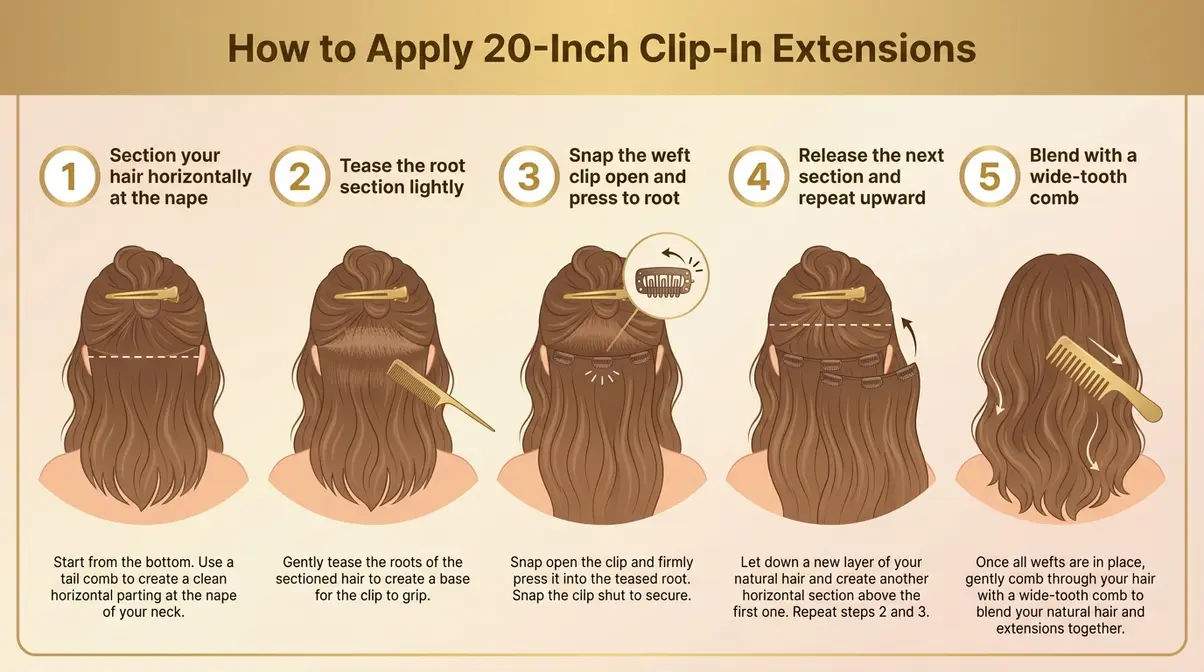
Clip-in extensions are individual wefts (sewn tracks of hair) with small pressure-sensitive clips that attach directly to sections of your natural hair. No glue, no salon, no commitment. You clip them in before you go out and remove them before bed.
For beginners, clip-ins are the single best starting point. They’re the only type you can try, adjust, and remove yourself — which means zero risk if the length or weight isn’t right.
At 20 inches, a standard clip-in set includes 7–10 individual wefts weighing a total of 100–220g. Most brands offer “starter” sets at 120g and “full volume” sets at 180–220g. For fine hair, start with the lighter option.
- +No salon appointment required — apply in 15–30 minutes at home
- +Fully removable — no long-term commitment to style or length
- +No damage risk when applied and removed correctly
- +Wide availability across all price points ($50–$350+)
- −Need to be removed before sleeping and swimming
- −Require daily re-application — not a “set it and forget it” solution
- −Can slip on very fine or silky hair without a texturizing spray
Real-World Usage: Clip-ins at 20 inches are ideal for events, photoshoots, nights out, or anyone who wants to try extensions before committing to a semi-permanent method. They’re also the best option for women with short natural hair (bob or chin-length) because they don’t require root-level blending.
Tape-In 20-Inch Extensions
Tape-in extensions are thin wefts pre-taped with medical-grade adhesive. A stylist sandwiches a small section of your natural hair between two tape-in wefts, creating a flat, secure bond close to the scalp. The result looks and moves almost identically to natural hair.
Tape-ins are the most popular semi-permanent method for a reason: they’re flat against the scalp (invisible under most hairstyles), they last 6–8 weeks before needing a “move-up” appointment, and they’re gentle enough for most natural hair types.
Application time: 1–2 hours at a salon. Cost of the hair: $150–$350 for a 20-inch set. Salon installation and move-up appointments add $100–$200 per visit — factor this into your total budget.
- +Extremely natural-looking — flat bond is nearly invisible
- +Last 6–8 weeks between salon appointments
- +Reusable tape — the hair can be re-taped 2–3 times before replacement
- +Work well on medium to thick natural hair
- −Require professional application and removal — no DIY
- −Regular move-up appointments add ongoing cost
- −Not suitable for very fine, damaged, or short (under 3″) natural hair
- −Heat styling near the bond can loosen the adhesive
Real-World Usage: Tape-ins are the go-to choice for women who want a semi-permanent look for 6–12 weeks — vacations, weddings, or a seasonal style refresh. They’re the closest to a “wear and forget” experience among all extension types.
Halo 20-Inch Extensions
Halo extensions are a single weft of hair attached to a thin, nearly invisible wire that sits around your head like a crown. No clips, no adhesive, no salon. You slip it on, adjust the wire tension, and blend your natural hair over the top.
For beginners worried about damage or complexity, halos are arguably even easier than clip-ins. There’s one piece, one step, and zero risk of tangling or clipping incorrectly.
At 20 inches, a halo set typically weighs 100–160g — slightly lighter than a full clip-in set because there’s only one weft. This makes halos particularly good for fine or thin hair that can’t support the weight of a multi-weft clip-in set.
- +Easiest application of any extension type — 2–3 minutes
- +Zero damage to natural hair (no clips, no glue, no heat bonds)
- +Fully removable and reusable
- +Comfortable for all-day wear
- −Less volume than a multi-weft clip-in set
- −Can shift during high-activity days (workouts, windy conditions)
- −Less versatile for updos — the wire can be visible in high ponytails
Real-World Usage: Halo extensions are the best choice for beginners who want the simplest possible experience, or for women with fine hair who need extra length without the weight of a full clip-in set. Brands like Milk & Blush and Luxy Hair offer well-reviewed 20-inch halo options.
Weft & Sew-In Extensions
Weft extensions are long, continuous tracks of hair (the same “weft” format as clip-ins, but without the clips) that are sewn directly onto braided sections of your natural hair. The braids — called “hand tied rows” or cornrows — act as the anchor for the stitched wefts.
This method is one of the most durable and longest-lasting available. A proper sew-in installation lasts 6–10 weeks and provides the most natural movement of any extension method because the hair is attached close to the scalp with no adhesive or clips to shift.
Application time: 2–4 hours at a salon. Cost: $200–$500+ for hair and installation combined. This method requires a stylist experienced in extension work — not all salons offer it.
- +Extremely durable — lasts 6–10 weeks with proper care
- +Natural movement and feel
- +No adhesive — suitable for women who react to tape or glue
- +Available in the widest range of textures (straight, wavy, curly, kinky)
- −Requires professional installation — 2–4 hour salon appointment
- −Braiding the natural hair underneath can cause tension if done too tightly
- −Removal requires cutting the thread — always done by a professional
- −Natural hair needs to be at least 3–4 inches long for proper anchor
Real-World Usage: Sew-ins are the preferred method for women who want a longer-term semi-permanent style, particularly those with natural hair textures that benefit from the wider weft format. They’re also popular for protective styling.
Semi-Permanent: I-Tip, Nano & Fusion
These four methods are the most advanced — and the most permanent. They’re worth understanding even if you don’t start here, because they’re what many extension wearers graduate to after trying clip-ins or tape-ins.
I-Tip extensions (also called micro-bead or stick-tip): Individual strands with a small pre-tipped end that’s clamped onto your natural hair using a tiny metal bead. No heat, no glue. Lasts 3–4 months. For those interested in bead methods, I-Tip extensions offer incredible 360-degree mobility, making them perfect for women who wear high ponytails frequently. You’ll need to be mindful of your product usage, however, as applying heavy oils or silicone-based serums near the roots can cause the beads to slip prematurely.
Micro ring extensions: Essentially the same concept as I-tips — individual strands secured with a micro ring instead of a bead. Also heat-free and gentle on natural hair.
Nano extensions: The smallest, most discreet version of the micro-ring method. The nano ring is so small it’s nearly invisible, making this method ideal for fine hair where larger beads would be noticeable. They are up to 90% smaller than traditional micro rings, making them virtually undetectable even on the finest hairlines.
Fusion (keratin bond) extensions: Individual strands bonded to your natural hair using a keratin adhesive applied with a heat tool. The most secure and natural-looking of all methods — but also the most time-intensive (3–5 hours for a full head) and the hardest to remove.
All four methods require professional installation and removal. They’re not beginner entry points — but they’re worth knowing about when you’re ready to commit to a longer-term look.
Which Type Is Right for You? A Quick Decision Framework:
| Your Situation | Best Type | Why |
|---|---|---|
| First-timer, want to try before committing | Clip-In | Zero risk, fully removable |
| Fine or thin hair, simplicity is priority | Halo | Lightest weight, easiest application |
| Want semi-permanent for 6–8 weeks | Tape-In | Flattest bond, most natural look |
| Natural hair, protective style preferred | Sew-In / Weft | Best for textured hair, durable |
| Ready for a long-term commitment | I-Tip / Nano / Fusion | Most permanent, most natural |
| Budget under $100 | Clip-In (synthetic) | Lowest entry cost |
Human Hair, Remy & Synthetic: Quality Guide
Quality is where the real money decision lives. You can buy 20-inch extensions for $30 or $500 — and both are technically “hair extensions.” Understanding what separates them is the difference between a blend that looks seamless and one that looks obviously fake.
Stylists consistently report that the number-one regret among first-time extension buyers is choosing low-quality hair to save money, then replacing it within 2–3 months — spending more in the long run than if they’d bought quality the first time.
Human Hair vs. Remy vs. Synthetic
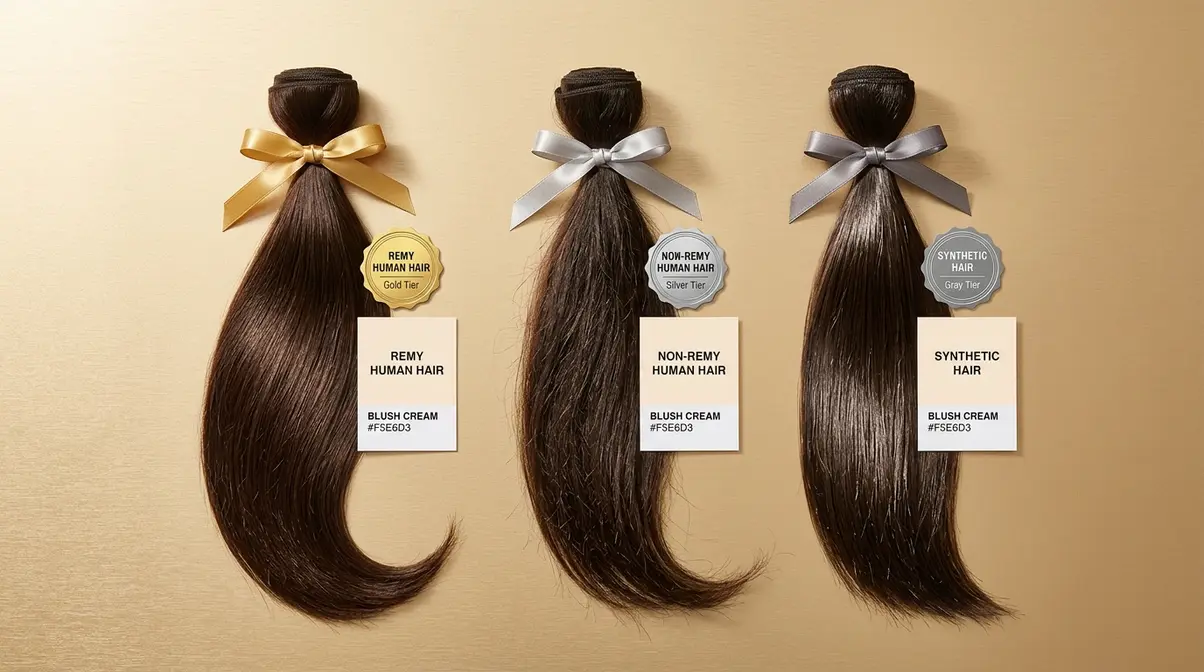
Human hair extensions are made from real human hair. They can be heat-styled, dyed, and treated just like your natural hair. They look and feel the most natural of any option. Within human hair, quality varies significantly based on how the hair was collected and processed.
Remy hair is the gold standard of human hair extensions. “Remy” means the cuticles (the outermost layer of each hair strand) are kept intact and aligned in the same direction — root to tip. This matters because cuticle alignment prevents tangling and matting. Non-Remy human hair has cuticles stripped or misaligned, which is why cheaper human hair extensions tangle so quickly.
Synthetic hair extensions are made from plastic fibers designed to mimic the look of hair. They’re significantly cheaper ($30–$100 for a 20-inch set) but cannot be heat-styled above low temperatures, don’t blend as naturally with real hair, and typically last only 1–3 months. Synthetic options work well for costumes or occasional wear — but for an everyday look, human hair is the investment worth making.
Quick Quality Comparison:
| Type | Heat Styling | Lifespan | Price Range | Blend Quality |
|---|---|---|---|---|
| Remy Human Hair | Yes (full) | 6–12 months | $150–$400+ | Excellent |
| Non-Remy Human Hair | Yes (limited) | 2–4 months | $80–$200 | Good |
| Synthetic | No (low heat only) | 1–3 months | $30–$100 | Fair |
| Heat-Resistant Synthetic | Low heat only | 2–4 months | $50–$150 | Good |
Research from Allure Magazine’s extension guide confirms that Remy human hair consistently outperforms both non-Remy and synthetic options for longevity and natural appearance — particularly at lengths of 18 inches and above where the quality difference becomes more visible.
Color Matching: Jet Black to Blonde
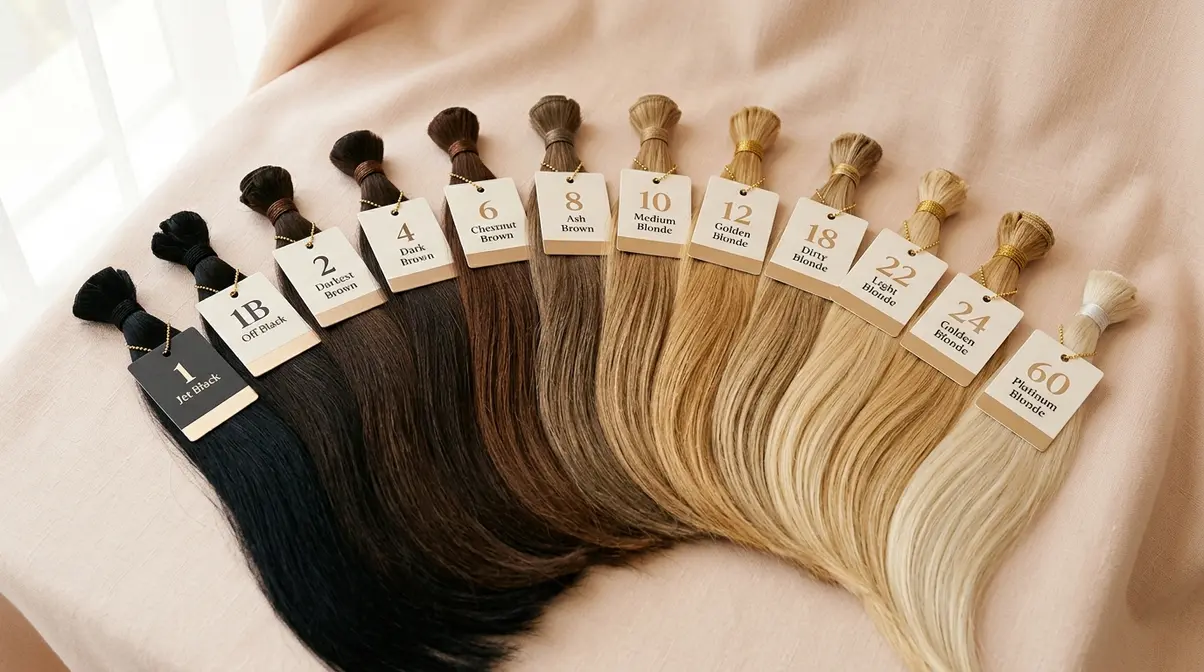
Color matching is the step that separates a seamless blend from an obvious extension. The goal is to find a shade that matches your natural hair at the mid-shaft — not the roots (which are often darker) and not the ends (which are often lighter from sun or heat).
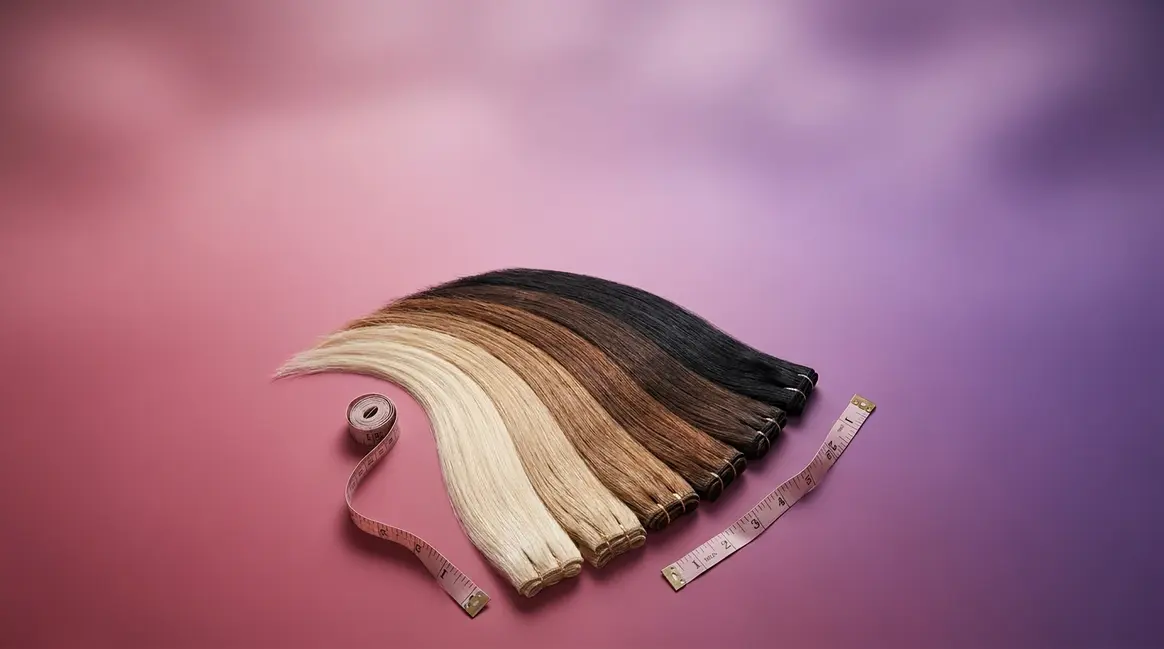
Most brands offer 30–50+ shades, from jet black to platinum blonde. Here’s how to match accurately:
- Take a photo of your hair in natural daylight — not artificial light, which distorts color
- Compare mid-shaft color, not roots or ends
- Order swatches before committing — most reputable brands offer swatch services for $5–$15
- For highlighted or ombre hair, choose a shade that matches your base or order a balayage blend
For black hair: Look for shades labeled “Jet Black” (1), “Off Black” (1B), or “Natural Black” (1C) — these cover the spectrum from blue-black to soft natural black. Brands like Bellami offer 6+ shades in the black family alone.
For blonde hair: 20-inch blonde hair extensions are among the most popular searches in the category. Shades range from “Dirty Blonde” (18) to “Platinum Blonde” (60). For those wanting the brightest platinum, 613 hair color is the industry standard shade for ultra-light blonde extensions, serving as a perfect base if you plan to custom-tone the hair with purple shampoo. If your natural hair features multiple tones, always match the extensions to the lightest highlight in your mid-lengths, as this creates the most seamless visual blend. For highlighted blonde hair, a “Piano” or “Balayage” blend — where the weft itself is highlighted — creates the most natural result.
For brunette and warm tones: The brown family is the most forgiving for blending, but undertones (cool ash vs. warm golden) matter significantly. When in doubt, go warmer — cool-toned extensions on warm-toned natural hair create a gray cast that’s immediately noticeable.
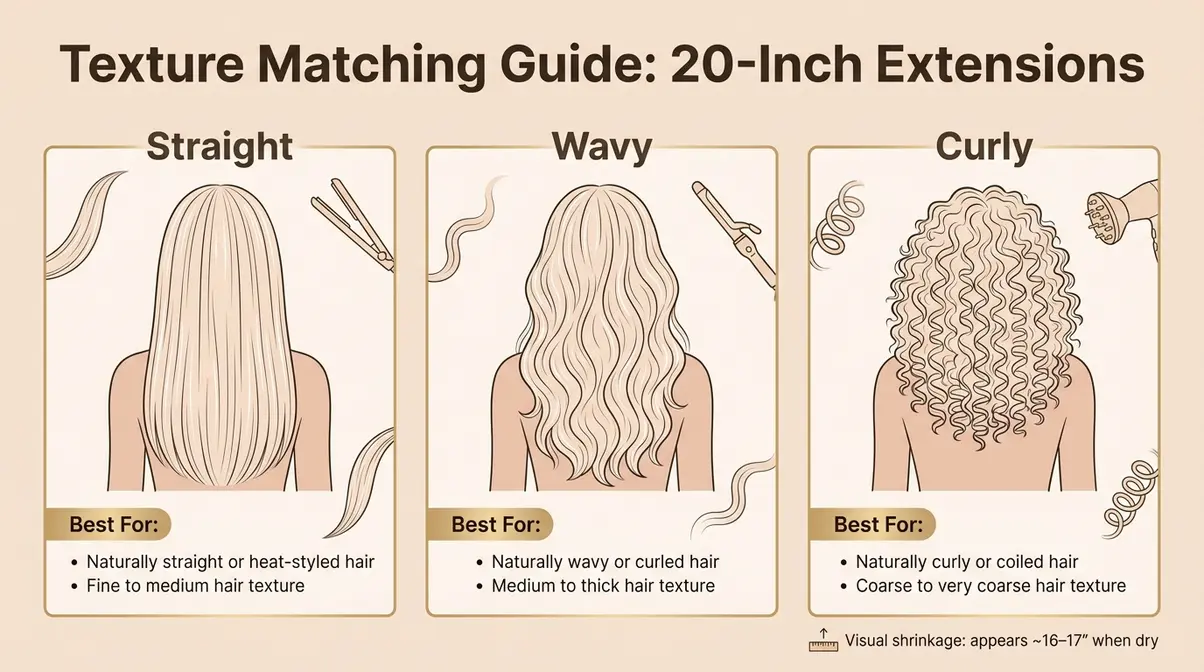
Texture Guide: Straight, Wavy & Curly
Texture matching is as important as color matching — arguably more so, because a texture mismatch is harder to hide than a slight color difference.
Straight extensions are the most widely available and the easiest to style. They work beautifully on naturally straight hair and can be heat-styled to blend with wavy or lightly textured hair. However, if your natural hair has significant wave or curl, straight extensions will require daily heat styling to match — which adds time and heat damage risk.
Wavy extensions (typically a loose beach wave or body wave pattern) are the most versatile texture. They blend well with straight hair that’s been lightly waved, and they work naturally with medium-wave natural hair. Our team found that wavy extensions at 20 inches are the most popular choice among buyers with naturally wavy hair (2A–2C curl patterns).
Curly extensions are the most technically challenging to blend, but the most rewarding when done right. For naturally curly hair (3A–4C patterns), finding extensions that match your specific curl diameter is essential. Maintaining this texture requires following a dedicated curly hair care routine to prevent tangling and preserve the curl pattern. You’ll need to use sulfate-free co-washes, apply leave-in conditioners generously, and detangle exclusively with a wide-tooth comb while the hair is wet. Look for brands that specify curl type (loose curl, tight curl, kinky coily) rather than just “curly.” At 20 inches, curly extensions will visually appear shorter due to texture shrinkage — often looking closer to 16–17 inches when dry.
Where to Buy 20-Inch Hair Extensions
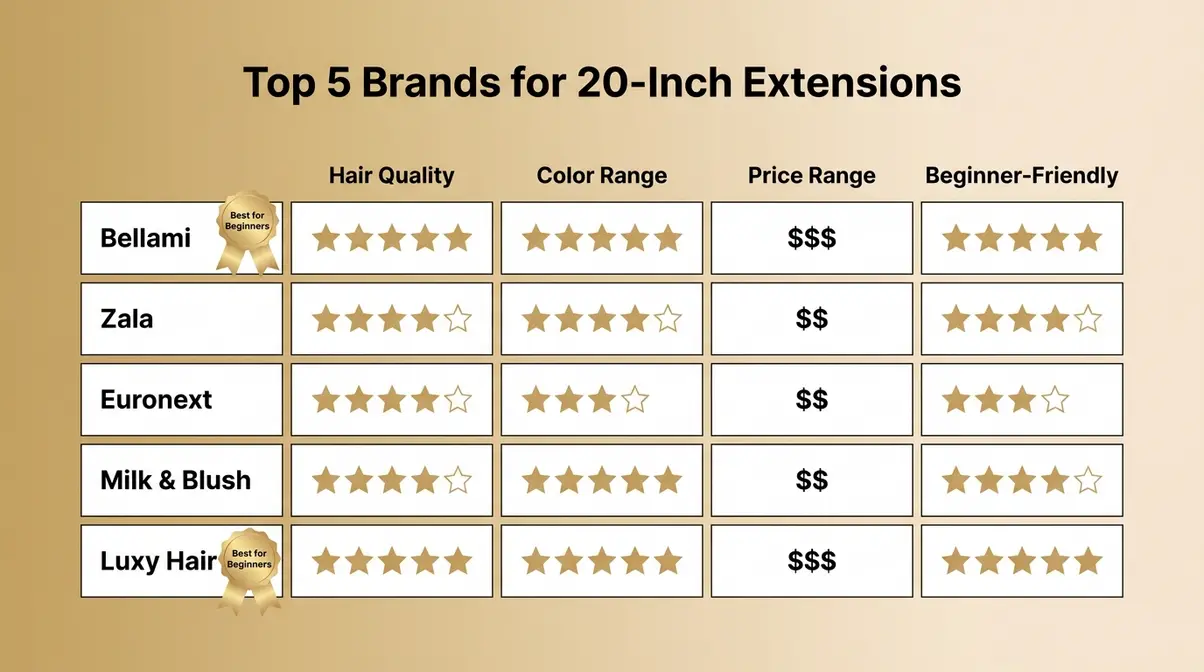
The extension market has exploded in the past decade, and not all brands are equal. Our team evaluated brands across three criteria: hair quality consistency, color range accuracy, and customer support for returns and exchanges.
Top Brands: Bellami, Zala & Euronext
Bellami Hair is one of the most recognized names in the extension category — and for good reason. Their 20-inch clip-in sets are available in 60+ shades, made from 100% Remy human hair, and come in multiple weight options (160g, 220g, 260g). Bellami is a go-to brand for both first-time buyers and experienced extension wearers. Pricing starts around $200–$280 for a 20-inch Remy set (prices subject to change — verify at the Bellami official website before purchasing).
Zala Hair Extensions specializes in clip-in Remy human hair and is particularly well-regarded for its color accuracy. Their shade-matching system is one of the most detailed in the industry, with online tools that help you find your exact match. 20-inch sets are priced in the $150–$250 range.
Euronext is widely available at Sally Beauty and other retail chains, making it accessible for buyers who prefer to see the hair in person before purchasing. Their Remy human hair clip-in sets offer solid quality at a mid-range price point ($120–$200 for 20-inch sets).
Milk & Blush and Luxy Hair are two brands consistently praised in extension communities for realistic movement and color accuracy. Both brands are particularly strong for blonde shades, which are historically the hardest to match accurately.
A note on alternatives: These brands are well-reviewed starting points, but dozens of reputable extension brands exist. Pricing is subject to change, and availability varies by region. Always verify current pricing directly on brand websites before purchasing.
How Much Do 20-Inch Extensions Cost?
Price varies dramatically based on type, hair quality, and brand. Here’s what to realistically expect:
| Type | Price Range (Hair Only) | + Installation Cost | Total Budget |
|---|---|---|---|
| Clip-In (Synthetic) | $30–$100 | $0 (DIY) | $30–$100 |
| Clip-In (Remy Human Hair) | $150–$350 | $0 (DIY) | $150–$350 |
| Halo (Remy Human Hair) | $100–$250 | $0 (DIY) | $100–$250 |
| Tape-In (Remy Human Hair) | $150–$350 | $100–$200 | $250–$550 |
| Sew-In / Weft | $100–$300 | $150–$300 | $250–$600 |
| Fusion / I-Tip | $200–$500 | $200–$400 | $400–$900 |
Prices verified as of Q2 2026 — always confirm current pricing directly with brands and salons, as rates vary by region.
The VoC data from extension communities confirms that most buyers in the 20–22 inch range spend $300–$600 total (hair + installation) for a professional semi-permanent look, or $150–$350 for high-quality clip-ins they install themselves.
When calculating your total budget, consider how long hair extensions should last before needing replacement. A $150 set of synthetic hair that needs replacing every month will ultimately cost more than a $300 set of Remy human hair that lasts a full year. For a fuller breakdown of current pricing across brands, see our complete 20-inch hair length guide.
Where to Shop: Online vs. In-Store
Both options have real advantages, and the right choice depends on your priorities.
Shopping online gives you access to the widest selection of shades, types, and brands. Most reputable online brands offer free swatch services, detailed shade-matching tools, and return policies. Amazon carries extensions from dozens of brands — but quality varies enormously, and reviews can be unreliable. Stick to verified brand websites (Bellami, Zala, Luxy Hair) for your first purchase.
When shopping online, be wary of red flags like “silicone-coated” hair. Some lower-quality brands coat non-Remy hair in silicone to make it feel incredibly soft out of the box, but after one or two washes, the coating strips away, leaving you with a tangled, matted mess. Always check the retailer’s hygiene seal policy — reputable brands will include a small tester swatch in a separate compartment so you can verify the color match before breaking the seal on the main package.
Shopping in-store (Sally Beauty, Ulta, or a dedicated extension salon) lets you see and feel the hair before buying. This is particularly valuable for color matching — seeing the hair under store lighting next to your own hair is more accurate than comparing online swatches on a screen. Sally Beauty carries Euronext and several other mid-range Remy brands at accessible price points.
Our recommendation: For your first purchase, order swatches online from 2–3 brands, then compare them in natural daylight against your hair before committing to a full set. This $15–$30 investment in swatches prevents a $200+ mistake.
User consensus across extension communities on Reddit and Facebook groups indicates that Milk & Blush and Luxy Hair are the most frequently recommended starting brands for online purchases, particularly for clip-in and halo styles.
Risks & What to Watch Out For
Extensions are a genuinely transformative tool — but they come with real risks that every buyer deserves to know before committing. This section covers what can go wrong and how to protect your natural hair.
Can Extensions Damage Your Hair?
The honest answer is yes — if applied incorrectly, worn too long between appointments, or matched poorly to your natural hair density, extensions can cause real damage.
The most significant risk is traction alopecia (hair loss caused by prolonged tension on the hair follicle). This occurs most commonly with sew-in and fusion methods when the attachment is too tight or left in too long. Research published in PubMed highlights traction alopecia as a significant risk associated with prolonged extension wear. According to the American Academy of Dermatology (AAD), traction alopecia is one of the leading causes of preventable hair loss in women who wear extensions regularly. Early signs include tenderness at the scalp, small bumps along the hairline, and miniaturized hairs at the temples.
- How to minimize risk:
- Never wear extensions tighter than is comfortable
- Remove semi-permanent extensions on schedule (don’t extend beyond 8–10 weeks without a professional check)
- Give your natural hair 2–4 weeks of rest between semi-permanent installations
- Match extension weight to your natural hair density — heavier sets on fine hair create more tension
- Always have semi-permanent methods applied and removed by a trained stylist
⚠️ Disclaimer: If you are experiencing hair loss, thinning, or scalp sensitivity, consult a board-certified dermatologist or trichologist before using any extension method. Extensions are not suitable for all hair conditions. For medical guidance on hair loss and alopecia, visit the American Academy of Dermatology.
Clip-in and halo extensions carry the lowest damage risk because they’re removed daily. Fusion and sew-in methods carry the highest risk if not properly maintained.
When Extensions Aren’t the Right Choice
Extensions are not suitable for everyone, and recognizing when to pause is a sign of good judgment — not defeat.
- Skip if:
- Your natural hair is significantly damaged, bleached, or breaking — extensions add weight and tension that can worsen existing damage
- You have active scalp conditions (psoriasis, seborrheic dermatitis) — adhesives and tight methods can aggravate these conditions
- Your hair is under 3 inches long — most semi-permanent methods require a minimum anchor length
- You’re experiencing active hair shedding or thinning — see a dermatologist before adding any extension method
⚠️ Hair loss disclaimer: For anyone experiencing alopecia (any form of hair loss), extension use should only be considered after consultation with a medical professional or certified trichologist. Some extension methods may be contraindicated depending on the type and severity of hair loss.
When in doubt, a consultation with a certified extension stylist (look for stylists trained in brands like Great Lengths, Hairdreams, or Bellami’s certified network) is always worth the investment before committing to a semi-permanent method.
Prices and product availability verified as of Q2 2026. Pricing is subject to change — always confirm current pricing directly with brands and retailers before purchasing.
Frequently Asked Questions
Are 20-inch extensions too long?
20-inch extensions are not too long for most people — but the right answer depends on your height and natural hair length, not just the number. On taller frames (5’6″+), 20 inches creates a noticeably long but proportionate look. On shorter frames (5’2″ and under), 20 inches falls below the bust, which is dramatic and glamorous but a significant transformation. The Height-Adjusted Length Map in this guide shows exactly where 20 inches falls on your specific height. If you’re between lengths, stylists consistently recommend going 1–2 inches shorter than you think — you can always go longer next time.
How long does 20 inches of hair look?
20-inch hair extensions create a glamorous, noticeably long style that typically falls at or below the bra line on most frames. On a 5’4″ frame, 20 inches lands at the upper mid-back. On a 5’2″ frame, it falls 4–6 inches below the bust. The look is long enough for flowing waves, long braids, high ponytails, and half-up styles. Curly textures will appear slightly shorter due to texture shrinkage — roughly 16–17 inches visually on a tight curl pattern. At 100–220g depending on the set, 20-inch extensions also add significant volume alongside the length.
What extensions are best for alopecia?
For anyone experiencing alopecia, consult a board-certified dermatologist or trichologist before using any extension method. Some extension types are safer than others — clip-in and halo extensions carry the lowest risk because they’re removed daily and create no permanent tension on the scalp. Fusion and sew-in methods are generally contraindicated for active hair loss because they add prolonged tension to already-vulnerable follicles. The American Academy of Dermatology (AAD) notes that traction from hair extensions is a known cause of traction alopecia. Always get medical clearance before proceeding. Visit the AAD’s hair loss resource for guidance.
What hair type looks best at 20 inches?
20-inch extensions look best on shoulder-length or longer natural hair (12–14 inches minimum) because the blend is seamless at the mid-shaft. For texture: straight and wavy natural hair blends most easily with straight or wavy 20-inch extensions. Curly natural hair (3A–3C) looks stunning at 20 inches when the curl pattern is matched — mismatched curl diameters create an obvious line. For fine hair, a lighter 100–140g set prevents the extensions from appearing thicker than your natural hair. Stylists consistently report that the ideal candidate for 20-inch extensions has at least collarbone-length natural hair with medium density.
What length of hair is most attractive?
“Most attractive” is entirely subjective and varies by personal style, face shape, and cultural context. That said, user consensus across beauty communities consistently rates shoulder-to-mid-back length (14–20 inches) as the most versatile range — long enough for diverse styling options, short enough to maintain easily. A 2026 survey by Statista found that medium-to-long hair lengths are preferred by the majority of respondents across most demographics. At 20 inches, you sit at the longer end of this “sweet spot” — dramatic enough to transform your look, proportionate enough to work for most lifestyles and face shapes.
Can I sleep in 20-inch extensions?
You should not sleep in clip-in or halo extensions — removing them nightly prevents tangling, matting, and tension on your natural hair while you sleep. Semi-permanent extensions (tape-ins, sew-ins, fusion) are designed to be worn overnight, but require a loose braid or low bun to prevent tangling. A silk or satin pillowcase significantly reduces friction and matting for all extension types. Stylists consistently recommend protective nighttime styling for any extension method at 20 inches or longer, since the extra length creates more surface area for friction and tangling during sleep.
How long do 20-inch extensions last?
Lifespan depends entirely on the type and how well you maintain them. Clip-in Remy human hair extensions last 6–12 months with daily use when properly cared for. Tape-in extensions last 6–8 weeks before needing a move-up appointment, with the hair itself reusable 2–3 times. Sew-in and fusion methods last 3–4 months. Synthetic extensions have the shortest lifespan at 1–3 months. The biggest factors affecting longevity: heat styling frequency (lower temperatures extend lifespan), washing technique (gentle sulfate-free shampoo, air drying when possible), and storage (hanging or a silk bag for clip-ins).
Final Thoughts on 20-Inch Hair Extensions
20 inch hair extensions deliver one of the most transformative looks available — but the transformation only works when you choose the right length for your height, the right type for your lifestyle, and the right quality for your budget. Our evaluation of extension types, quality grades, and brands consistently points to the same conclusion: beginners who invest in Remy human hair clip-ins at a weight matched to their natural hair density get the best first experience, with the lowest risk and the highest satisfaction rate.
The Height-Adjusted Length Map is the framework that makes this decision concrete rather than abstract. On a 5’2″ frame, 20 inches is a dramatic, below-the-bust transformation. On a 5’8″ frame, it’s a proportionate, glamorous mid-back look. Neither is wrong — but knowing the difference before you buy is what separates a confident purchase from an expensive regret.
Your next step is simple: find your height on the Length Map, choose your type from the decision framework, and order swatches from two or three brands before committing to a full set. Give yourself 30 days with clip-ins before investing in a semi-permanent method — that trial period will tell you everything you need to know about whether 20 inches is your length. You’ve got this.

Dave King
Writes evidence-based hair-care guides for Care About Your Hair — for every hair type, jargon-free and independent.