 Dave King
Hair extensions have revolutionized the way we approach hair styling, offering instant length, volume, and versatility. But one of the most common questions people ask before investing in extensions is about their longevity. The truth is, there’s no one-size-fits-all answer. Extension lifespan varies dramatically, ranging from as little as 6 weeks to well over a year of use.
Understanding how long your specific type of extensions should last depends on three critical factors: the method of application, the qualit6y of the hair itself, and how well you care for them. Some extension types require frequent maintenance appointments but can be reused multiple times, while others last longer between salon visits but need complete replacement. The hair quality makes an enormous difference too, with premium Remy human hair outlasting cheaper alternatives by months or even years.
Your daily habits play an equally important role. The same set of extensions on two different people can have vastly different lifespans based solely on their care routines, styling habits, and environmental exposure. In this comprehensive guide, we’ll break down exactly what to expect from each type of extension, how to maximize your investment, and when it’s time to say goodbye to your current set.
Best Sellers: Hair Extension
No products found.
The Lifespan of Hair Extensions by Type: A Detailed Breakdown
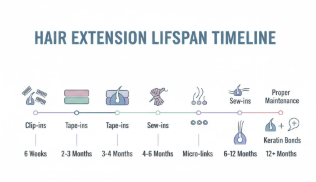
Not all hair extensions are created equal when it comes to longevity. Each application method has its own timeline for both the installation itself and the reusability of the hair. Understanding these differences is essential for making an informed decision that aligns with your lifestyle, budget, and commitment level.
How Long Do Tape-In Extensions Last?
Tape-in extensions are one of the most popular semi-permanent options, known for their relatively quick application and natural appearance. The adhesive wefts typically need to be moved up every 6 to 8 weeks as your natural hair grows. During this maintenance appointment, your stylist will carefully remove the extensions, clean off the old adhesive, apply new tape, and reapply them closer to your roots.
The beauty of tape-ins lies in their reusability. With proper care and professional re-taping, a single set of quality tape-in hair can be reused 2 to 3 times, sometimes even more. This means your initial investment can last anywhere from 4 to 9 months, with some users getting up to a year from one set.
However, tape-ins do require specific product considerations. You must avoid oil-based products, heavy conditioners, and certain styling products near the tape bonds, as these can cause slippage. The adhesive is sensitive to oils, which break down the bond and cause the extensions to slide out prematurely.
Tape-ins are ideal for people with fine to medium hair who want a balance between commitment and flexibility. They’re also excellent for those who like to change their look seasonally, as the hair can be removed and reinstalled relatively easily compared to other permanent methods.
How Long Do Sew-In Weft Extensions (Weaves) Last?
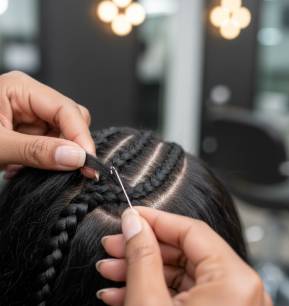
Sew-in weft extensions, commonly called weaves, involve braiding the natural hair into cornrows and then sewing wefts of extension hair onto these braids. The installation itself typically lasts 6 to 8 weeks before requiring a maintenance appointment. At this point, your stylist will either tighten the existing braids or remove everything and start fresh.
The wefts themselves, when made from high-quality human hair, are incredibly durable. A good set of sew-in wefts can be reused for a year or even longer with proper care. Many users report getting 12 to 18 months from premium wefts, making them one of the most cost-effective options over time despite the regular maintenance schedule.
One critical consideration with sew-ins is ensuring your natural hair and scalp are completely dry after washing. Because the hair is sewn close to the scalp and can be dense, moisture can get trapped underneath. This creates an environment conducive to mildew, scalp irritation, and unpleasant odors. Always blow-dry your scalp thoroughly after washing.
Sew-ins work best for people with thicker, coarser hair that can support the weight of the wefts and the tension from braiding. They’re particularly popular among individuals with naturally textured hair who want protective styling options.
How Long Do Keratin Bond (K-Tip/Fusion) Extensions Last?
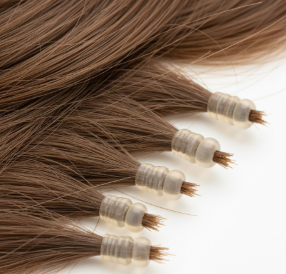
Keratin bond extensions, also known as fusion or K-tip extensions, represent the longest-lasting installation method. These individual strands are bonded to small sections of your natural hair using a keratin adhesive that’s melted with a heat tool. Once applied, they can last 3 to 5 months without any maintenance appointments.
The bonds grow out naturally with your hair, remaining secure throughout the entire wear period. This makes them ideal for people who travel frequently or prefer minimal salon visits. The application is meticulous and time-consuming, often taking 3 to 4 hours for a full head, but the payoff is months of maintenance-free wear.
The downside is that keratin bonds are generally not reusable. When it’s time for removal, your stylist uses a specialized solution to break down the keratin, and the bonds are carefully slid off. The hair typically can’t be re-bonded effectively, meaning you’ll need to invest in new extensions for your next application.
Despite this, many people consider fusion extensions worth the investment because of their incredibly natural look and feel. The bonds are tiny and virtually undetectable, and because they’re applied strand by strand, they move naturally with your hair. This method is best suited for people ready to make a longer commitment who want the most seamless, natural result possible.
How Long Do Micro-Link (I-Tip/Beaded) Extensions Last?
Micro-link extensions, also called I-tip or beaded extensions, offer a heat-free and adhesive-free alternative to other permanent methods. Individual extension strands are attached using small metal or silicone-lined beads that are clamped onto sections of your natural hair. This method typically requires maintenance appointments every 6 to 8 weeks.
During these maintenance visits, your stylist doesn’t remove the extensions entirely. Instead, they open each bead, slide it back up to your roots where new growth has occurred, and re-clamp it. This process is significantly faster than a full removal and reinstallation.
The hair from quality micro-link extensions is highly reusable. With proper care, the same hair can last 6 to 12 months or more, going through multiple move-up appointments. Some users report getting well over a year from a single set of premium micro-link hair.
Because micro-links use no heat or glue, they’re considered one of the gentlest methods for your natural hair when properly installed and maintained. They’re an excellent choice for people concerned about chemical exposure or heat damage, and they work well on a variety of hair types, though they’re particularly suited for fine to medium hair.
How Long Do Clip-In Extensions Last?
Clip-in extensions are the most flexible and temporary option available. They’re not worn continuously but instead clipped in when desired and removed before sleeping. This on-and-off nature dramatically extends their lifespan compared to permanent methods.
With occasional wear, such as for special events or weekend styling, a high-quality set of clip-in extensions can last 3 to 5 years or even longer. With daily wear, the lifespan decreases to approximately 6 to 12 months, depending on how frequently you wash and heat-style them.
The longevity of clip-ins depends heavily on how you store and care for them. After each use, they should be gently brushed and stored either hanging up or laid flat in their original packaging. Because they’re removed daily, they don’t experience the constant friction from pillowcases or exposure to environmental factors that permanent extensions face.
Clip-ins are ideal for people who want versatility without commitment, those who only want volume or length for certain occasions, or individuals trying extensions for the first time. They’re also the most budget-friendly option upfront and require no professional installation, though investing in quality hair still matters significantly.
Key Factors That Determine How Long Your Extensions Will Last
Beyond the application method, several other critical factors influence how long your extensions will remain beautiful and functional. Understanding these variables helps you make smarter purchasing decisions and develop better care habits that can potentially double the lifespan of your investment.
Hair Quality: The Difference Between Remy, Non-Remy, and Synthetic Hair
The quality of the hair itself is arguably the single most important factor determining longevity. Not all extension hair is created equal, and the price differences you see reflect very real differences in how the hair is sourced and processed.
Remy Human Hair: The Gold Standard for Longevity
Remy human hair represents the highest quality available. The term “Remy” refers to hair where all the cuticles remain intact and are aligned in the same direction, from root to tip, just as they grew naturally. This alignment is what prevents tangling and matting, the two most common reasons extensions fail prematurely.
Quality Remy hair can last 12 months or longer with proper care, even with daily wear. It can be washed, heat-styled, colored, and treated much like your natural hair. The investment is significantly higher upfront, but the per-month cost becomes quite reasonable when you factor in the extended lifespan.
True Remy hair should feel silky smooth when you run your fingers down the hair shaft but slightly rougher when you run your hand upward against the cuticles. If the hair feels equally smooth in both directions, the cuticles have likely been stripped, which means it’s not genuine Remy hair.
Non-Remy Human Hair: A Budget-Friendly but Shorter-Lived Option
Non-Remy human hair is real human hair, but the cuticles are not aligned. The hair is collected from various sources, including hairbrushes, salon floors, and temple donations, where the root-to-tip direction becomes mixed. To prevent immediate tangling from opposing cuticles, manufacturers strip the cuticle layer using an acid bath and apply a silicone coating.
This coating gives non-Remy hair an initially appealing shine and smooth texture. However, after several washes, the coating wears away, and the underlying lack of cuticle alignment becomes apparent. The hair begins to tangle, mat, and lose its luster. Non-Remy extensions typically last 3 to 6 months at best, even with excellent care.
Non-Remy hair can be a reasonable choice for someone wanting to try extensions temporarily or for a specific short-term event. However, for anyone planning to wear extensions regularly, investing in Remy hair almost always proves more economical in the long run.
Synthetic Hair: For Short-Term Style, Not Durability
Synthetic hair extensions are made from various types of plastic fibers designed to mimic human hair. Modern synthetic hair has come a long way and can look quite natural initially, but it has significant limitations regarding longevity and styling.
Synthetic extensions cannot withstand heat styling unless specifically labeled as “heat-friendly,” and even then, they have temperature limitations far below what human hair can tolerate. They’re also prone to tangling and frizzing, particularly at the ends, and the fiber degrades relatively quickly with regular wear.
Most synthetic extensions last only a few weeks to a couple of months with regular use. They’re best suited for costume purposes, very temporary style changes, or situations where the hair will only be worn once or twice. For anyone seeking extensions as a longer-term beauty solution, synthetic hair is not a viable option.
Professional Installation and Removal: The Foundation of Longevity

Even the highest quality hair won’t last if it’s not properly applied. Professional installation is crucial for several reasons: correct placement ensures the extensions don’t put excessive tension on your natural hair, proper bonding prevents slippage, and even distribution creates a natural look that blends seamlessly.
A skilled, certified stylist understands hair density, growth patterns, and the mechanics of each extension method. They know how much hair each bond can safely hold, where to place extensions for optimal coverage without detection, and how to customize the application to your specific hair type and lifestyle.
Equally important is professional removal. Attempting to remove permanent extensions yourself, particularly fusion bonds or tapes, can result in significant breakage of your natural hair. The bonds must be dissolved or loosened with specific products and techniques that preserve your natural hair integrity.
When selecting a stylist, look for someone who specializes in extensions and has certification from a recognized extension brand or education program. Don’t hesitate to ask to see before-and-after photos of their work, and read reviews specifically mentioning the longevity and condition of the extensions over time.
Your Daily Aftercare Routine: The Most Important Factor You Control
While you can’t control the quality of hair you’ve already purchased or redo a professional installation, you have complete control over your daily care routine. This is where most people either maximize or sabotage their extension investment.
Extensions don’t receive natural oils from your scalp the way your bio hair does, making them prone to dryness. They also experience friction from clothing, pillowcases, and environmental exposure. Without proper moisture maintenance and gentle handling, even premium Remy hair can become dry, tangled, and damaged within weeks.
Conversely, people who follow a thoughtful care routine regularly report their extensions looking nearly new even after months of wear. The difference between extensions that last 3 months versus 12 months often comes down entirely to aftercare habits.
This includes using the right products for extensions, washing with appropriate frequency, employing proper brushing techniques, protecting hair during sleep, and minimizing heat damage. We’ll cover specific techniques in detail in the care section below.
Your Lifestyle and Environment: Hidden Factors That Affect Durability
Your daily environment and activities significantly impact how long your extensions remain in good condition. Factors you might not immediately consider can accelerate wear and damage.
Impact of Hard Water and Chlorine
Hard water contains high levels of minerals like calcium and magnesium. Over time, these minerals build up on extension hair, creating a coating that makes the hair feel rough, look dull, and become more prone to tangling. Unlike your natural hair, which receives oils from your scalp that provide some protection, extensions absorb these minerals more readily.
Chlorine from swimming pools is even more damaging. It strips moisture from the hair, can cause color fading or even discoloration to lighter shades, and leaves hair feeling brittle and straw-like. Salt water from the ocean has similar effects, though slightly less harsh than chlorine.
If you have hard water at home, consider installing a shower filter designed to remove minerals. If you swim regularly, wet your hair with clean water first and apply a leave-in conditioner before entering the pool, then wash it immediately afterward. For hair after the pool specifically, following a specialized care routine can help prevent long-term damage.
Sun Exposure and Climate
Just as UV rays damage your natural hair, they also affect extensions. Prolonged sun exposure can fade color, particularly in lighter shades, and break down the protein structure of the hair, making it dry and brittle. This is especially relevant if you spend significant time outdoors or live in a sunny climate.
Humidity and dry climates both present challenges. High humidity can cause frizz and make blending with natural hair more difficult, while extremely dry climates accelerate moisture loss from the extensions. If you’re traveling to a different climate and your hair is wavy, understanding how to take care of wavy hair after an airplane ride becomes particularly important to maintain both your natural hair and extensions.
Protect your extensions from sun damage by wearing hats when possible, using leave-in conditioners with UV protection, and limiting exposure during peak sun hours. In humid climates, anti-frizz products become essential, which connects to broader strategies for taming the frizz that affects both natural hair and extensions.
Frequent High-Heat Styling
Heat styling is one of the fastest ways to shorten extension lifespan. Unlike your natural hair, which continuously receives new growth from the follicle, extension hair is a finite resource that can’t repair itself. Each time you apply heat, you’re permanently altering the hair’s structure.
Flat irons, curling wands, and hot blow-drying all contribute to progressive damage. The hair becomes increasingly dry, the ends develop splits, and the overall texture degrades. Even high-quality Remy hair has its limits when subjected to daily heat styling at high temperatures without proper protection.
Whenever possible, embrace heat-free styling methods. When you must use heat tools, always apply a quality heat protectant first, use the lowest effective temperature, and limit frequency. Many extension wearers adopt a routine of heat styling just once or twice per week, then maintaining the style with dry shampoo and touch-ups on other days.
How to Make Your Hair Extensions Last Longer: An Expert-Led Care Guide
Proper care is the single most controllable factor in extending the life of your hair extensions. These practical, proven techniques can potentially double or even triple how long your extensions remain beautiful and functional.
The Right Way to Wash and Condition Your Extensions
Washing extensions too frequently is one of the most common mistakes. Unlike natural hair that becomes oily from sebum production, extensions only get dirty from environmental exposure and product buildup. Most extension wearers should wash only 1 to 2 times per week.
When you do wash, always use sulfate-free shampoo. Sulfates are harsh detergents that strip moisture from hair, which is particularly damaging to extensions that don’t receive natural oil replacement from the scalp. Apply shampoo primarily to your scalp and roots, using gentle massaging motions rather than vigorous scrubbing.
Conditioner should be applied from the mid-lengths to the ends of your hair, avoiding the bonds, tapes, or beads entirely. Conditioner on the attachment points can cause slippage in tape-ins and make other bonds greasy and more visible. Use a hydrating, moisturizing conditioner, and consider leaving it on for several minutes to allow deep penetration.
Never pile your hair on top of your head while washing, as this creates unnecessary tangling. Instead, let your hair hang down naturally, and apply products in a downward motion following the direction of the cuticles. Rinse thoroughly with lukewarm to cool water, as hot water can dry out the hair and potentially weaken adhesive bonds.
Brushing Techniques to Prevent Shedding and Matting
How you brush extensions is just as important as how often. Always use a brush designed for extensions, such as a loop brush, soft bristle brush, or wide-tooth comb. Avoid brushes with ball-tipped bristles, which can snag on bonds.
The proper technique involves holding your hair firmly at the roots to support the bond points and prevent pulling, then gently brushing from the ends upward in small sections. Start at the very tips and work your way up gradually, removing tangles as you go. Never brush from the roots downward in one motion, as this pushes tangles down and can put stress on the bonds.
Brush your extensions at least twice daily, once in the morning and once before bed. If your hair is particularly prone to tangling, you may need to brush more frequently. However, always be gentle, excessive or aggressive brushing causes shedding and can damage the hair fiber itself.
Never brush extensions when they’re soaking wet, as hair is most vulnerable to breakage in this state. If you must detangle wet hair, use a leave-in conditioner or detangling spray first, and use a wide-tooth comb with very gentle strokes.
Safe Heat Styling and Product Usage
When heat styling is necessary, always start with clean, product-prepared hair. Apply a quality heat protectant spray or serum to every section you plan to style. These products create a barrier that reduces direct heat contact and minimizes moisture loss.
Use the lowest temperature setting that achieves your desired result. For most extension hair, 300 to 350 degrees Fahrenheit is sufficient for styling. Avoid repeatedly going over the same section, instead, aim to style each section in one or two passes.
Be cautious with styling products near the attachment points. Oil-based serums, heavy silicones, and some styling creams can cause tape-ins to slip and make other bond types appear greasy or obvious. Lightweight, water-based products work best for extension hair.
Alcohol-based products, like many hairsprays and some dry shampoos, can be extremely drying. If you use these products, apply them sparingly and focus on the mid-lengths and ends rather than saturating the hair from root to tip.
Nighttime Care: Protecting Your Extensions While You Sleep
How you protect your hair while sleeping makes an enormous difference in extension longevity. Friction from cotton pillowcases causes tangling, matting, and breakage. Sleeping on a silk or satin pillowcase dramatically reduces this friction, helping your extensions stay smooth and tangle-free.
Before bed, always brush your extensions thoroughly to remove any tangles. Then, secure your hair in a protective style. For most people, this means either a very loose, low braid or a high, loose bun sometimes called a “pineapple” style.
Avoid tight elastics that can create creases or put stress on the bonds. Instead, use scrunchies made from silk or satin, or soft spiral hair ties. The goal is to keep hair contained without creating tension or kinks.
Never go to bed with damp or wet extensions. Not only does this increase tangling, but it can also create a damp environment near the bonds that may promote mildew or weaken adhesives over time. Always ensure extensions are completely dry before sleeping.
Comparing Hair Extension Types: Lifespan, Cost, and Maintenance
Making an informed decision about which extension type is right for you requires understanding not just how long each lasts, but also the total cost of ownership and the time commitment required for maintenance.
Visual Comparison Table: Which Extension Type is Right for You?
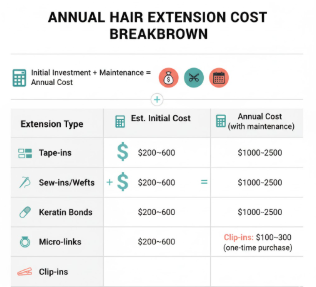
Calculating the True Annual Cost of Each Extension Method
Understanding the complete financial picture requires looking beyond the initial purchase price. Maintenance appointments, replacement schedules, and the reusability of the hair all factor into the true cost.
For example, tape-in extensions might cost $500 to $800 for the initial installation with quality hair. However, you’ll need a move-up appointment every 6 to 8 weeks, typically costing $150 to $250 per visit. Over a six-month period, you’re looking at approximately 3 maintenance appointments, adding $450 to $750 to your total cost. The hair itself can usually be reused one more time before needing replacement, so your six-month cost is around $950 to $1,550, or about $160 to $260 per month.
Keratin bond extensions often have a higher upfront cost, ranging from $1,000 to $2,500 or more for a full head. However, because they require no maintenance appointments and last 4 to 5 months, your monthly cost during that period is $200 to $500. The catch is that you need completely new extensions for each application, so your annual cost if you wear them continuously would be approximately $2,400 to $6,000.
Sew-in wefts present an interesting value proposition. The initial installation ranges from $200 to $600 depending on the amount of hair and complexity. Maintenance every 6 to 8 weeks costs approximately $100 to $200. However, because quality wefts can be reused for 12 to 18 months, your total cost for a year might be $800 to $2,000, making the monthly cost just $65 to $165, often the most economical option for long-term wear.
Micro-link extensions fall somewhere in the middle, with initial costs of $800 to $1,500 and maintenance appointments of $150 to $300 every 6 to 8 weeks. Over a year with reusable hair, you’re looking at approximately $1,700 to $3,300 total, or $140 to $275 monthly.
Clip-in extensions have the lowest barrier to entry, with quality sets ranging from $100 to $500. Because they require no professional installation or maintenance, your only costs are the initial purchase and any care products. If a set lasts three years with occasional use, your monthly cost is negligible, perhaps $3 to $15.
When to Say Goodbye: Signs It’s Time to Replace Your Hair Extensions
Knowing when to replace your extensions is crucial for both maintaining a beautiful appearance and protecting your natural hair from damage. Wearing extensions past their prime can cause more harm than good.
Visible Signs of Wear and Tear
The most obvious indicators that extensions need replacing are visible in the hair’s appearance and texture. Excessive dryness is often the first sign, the hair may feel rough or brittle to the touch, lacking the natural softness it had when new.
Significant split ends that appear throughout the extensions, not just at the very tips, indicate the hair has become damaged beyond repair. While occasional trimming can help maintain extension health, when splits are prevalent throughout, it’s time for replacement.
A straw-like texture, where the hair feels coarse and looks frizzy even after conditioning and styling, means the hair’s protein structure has broken down. This happens with age, heat damage, and chemical exposure, and cannot be reversed with conditioning treatments.
Noticeable color fading or a brassy tone that develops despite toning efforts suggests the hair has been oxidized from sun exposure, minerals, or chlorine. While color can sometimes be refreshed, severe discoloration usually indicates the hair has been compromised.
Performance Issues: Matting, Tangling, and Lack of Blend
Beyond visual appearance, how the extensions perform day-to-day tells you a lot about their remaining lifespan. If your extensions tangle immediately after brushing, developing knots within hours, the cuticle structure has likely degraded. This happens naturally over time, even with excellent care, but when it becomes constant, the hair has reached its limit.
The ends becoming thin and stringy, often called “ratty” ends, is another clear sign. This happens because the protective cuticle layer has worn away, causing individual strands to break at different lengths. Once this process is advanced, the extensions no longer blend seamlessly with your natural hair and create an obviously unnatural appearance.
If your extensions no longer hold curls or styles the way they once did, or if they seem to absorb an unusual amount of product without responding, the hair’s porosity has changed dramatically. This typically indicates chemical or heat damage that has permanently altered the hair’s structure.
A Stylist’s Perspective on Extension Replacement Cycles
Professional extension specialists emphasize that preventive replacement is always better than waiting until damage occurs. As one certified extension artist explains, “The number one cause of preventable natural hair damage I see is clients pushing their extensions past their expiration date. When extensions become dry and tangled, people often try to compensate by using more heat or harsh products, which just creates a damaging cycle.”
Most professionals recommend replacing extensions when they reach about 75 to 80 percent of their expected lifespan, rather than pushing them to the absolute limit. This ensures your natural hair remains healthy and you maintain a consistently polished appearance.
For reusable extension types like tape-ins, micro-links, and wefts, stylists suggest carefully assessing the hair quality at each maintenance appointment. If the hair shows significant wear, consider it the final use rather than attempting another round. The small savings from one more reinstallation isn’t worth the compromised appearance or potential damage to your natural hair.
Maximizing Your Investment: The Key to Long-Lasting Hair Extensions
Getting the most from your hair extension investment comes down to three fundamental pillars that work together to create the best possible outcome.
First, invest in the highest quality hair you can afford. This means prioritizing 100% Remy human hair from reputable suppliers. The difference in longevity between premium Remy hair and lower-quality alternatives is dramatic enough that the higher upfront cost pays for itself through extended wear time. Quality hair not only lasts longer but also looks better throughout its entire lifespan, giving you more days of beautiful, confident styling.
Second, trust a certified, experienced professional for both installation and removal. The skill of your stylist directly impacts how well the extensions blend, how comfortable they feel, how long they stay secure, and whether your natural hair remaicarens healthy throughout the process. This is not an area to cut corners. Research stylists thoroughly, ask about their specific extension training and certification, and view extensive portfolios of their work before booking.
Third, commit to a diligent aftercare routine from day one. The daily habits you develop, from how you brush to what products you use to how you sleep, determine whether your extensions last three months or twelve. This requires some lifestyle adjustments and initial learning, but these practices quickly become second nature. Remember that extensions are an investment not just of money but of time and care.
When all three elements align, quality hair, expert application, and consistent care, your extensions will reward you with months of beautiful, natural-looking length and volume. You’ll maximize every dollar spent while maintaining the health and integrity of your natural hair underneath. This holistic approach transforms extensions from a temporary fix into a sustainable, long-term beauty solution.
Frequently Asked Questions About Hair Extension Longevity
Which hair extensions last the longest?
Fusion or keratin-tip extensions last the longest per single installation, maintaining their security for 3 to 5 months without any maintenance appointments. However, when considering reusability, sew-in wefts and micro-link extensions made from high-quality Remy hair offer the best longevity, as the same hair can be reused for 12 to 18 months or longer through multiple reinstallations.
Can you reuse hair extensions?
Yes, many types of extensions are reusable if the hair quality is good. Tape-in, sew-in, micro-link, and clip-in extensions can all be used multiple times. Tape-ins need new adhesive applied, wefts can be re-sewn, and micro-links just need the beads moved up. Fusion or keratin-tip extensions are generally not reusable because the removal process destroys the bonds.
Do extensions damage your natural hair?
When installed, maintained, and removed by a qualified professional using appropriate techniques, hair extensions should not cause damage to your natural hair. Damage typically occurs from improper application that creates too much tension, inadequate aftercare that leads to matting, or attempting DIY removal. Choosing a certified stylist and following their care instructions prevents these issues.
How often should I wash my hair extensions?
You should wash your hair extensions only 1 to 2 times per week using sulfate-free shampoo and hydrating conditioner. Extensions don’t produce natural oils like your scalp does, so they don’t require frequent washing and actually benefit from less exposure to water and cleansing products. Over-washing strips essential moisture and shortens their lifespan.
What’s the most low-maintenance type of hair extension?
Clip-in extensions are the most low-maintenance option since they’re removed daily and require no professional appointments or chemical bonding. For permanent extensions, keratin bonds are the most “set-it-and-forget-it” method because they last 3 to 5 months without requiring any move-up or maintenance appointments, though they do need professional removal.
How much does it cost to maintain hair extensions?
Maintenance costs vary significantly by extension type. Tape-ins and micro-links require move-up appointments every 6 to 8 weeks, typically costing $100 to $300 per session depending on your location and stylist. Sew-in wefts have a similar maintenance schedule with comparable costs. Keratin bonds require no maintenance appointments but need completely new extensions when it’s time for reapplication.
Can I go swimming with hair extensions?
Swimming with hair extensions is possible but not ideal, as chlorine and salt water can severely dry out and damage the hair. If you do swim, wet your extensions with clean water first, apply a leave-in conditioner throughout, and put your hair in a braid to minimize exposure. Rinse immediately after swimming and follow with a deep conditioning treatment to restore moisture.
Why are my extensions getting dry and tangled?
Extensions become dry and tangled for three primary reasons: the hair is low-quality non-Remy hair with misaligned cuticles, there’s insufficient moisture from infrequent conditioning or over-washing, or the hair has been damaged by excessive heat styling, chlorine, harsh products, or mineral buildup from hard water. Using a weekly deep conditioning mask and improving your care routine usually helps, but severely damaged extensions may need replacement.

Dave King
Writes evidence-based hair-care guides for Care About Your Hair — for every hair type, jargon-free and independent.