
Table of Contents
- 2C Wavy Hair Care: Complete Guide to Defined Waves (2026)
- What Exactly Is 2C Hair?
- Distinguishing 2C From Neighbors: The Comparison
- The Science of 2C Hair: Beyond the Curl Pattern
- The Essential Wash Day Routine for 2C Hair
- Styling Techniques to Maximize Definition
- Ingredients to Look For and Avoid
- Common Challenges and How to Fix Them
- Best Haircuts and Styles for 2C Hair
- Protective Styling and Sleep Care
- Transitioning to Natural 2C Hair
- Understanding How 2C Fits in the Broader Texture Spectrum
- Building Your Personalized 2C Hair Care Routine
- Conclusion
- Frequently Asked Questions
This blog post may contain affiliate links. As an Amazon Associate I earn from qualifying purchases.
2C Wavy Hair Care: Complete Guide to Defined Waves (2026)
If you’ve ever felt stuck between hair worlds, you’re not alone. Type 2C hair exists in that frustrating middle ground where your texture seems too curly to be wavy, yet too wavy to be curly. This leaves many people unsure of how to care for their hair, often defaulting to straightening or fighting against their natural pattern.
But here’s the truth: when properly understood and cared for, 2C hair is one of the most versatile and beautiful textures. With the right approach, you can unlock defined S-waves, enviable volume, and a hair style that turns heads without hours of heat styling.
This guide will walk you through everything you need to know about 2C hair. From identifying your exact texture to building a wash day routine that actually works, you’ll learn the science-backed techniques and ingredient insights that transform frustrating frizz into gorgeous, bouncy waves.
What Exactly Is 2C Hair?
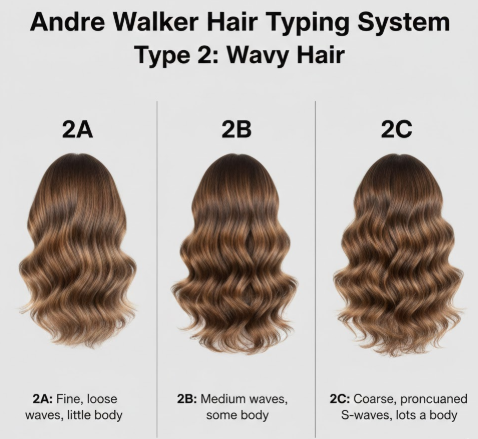
2C hair represents the most textured end of the wavy hair spectrum and sits at the border between waves and curls. Understanding where it fits in the hair typing system helps you make better decisions about products and techniques that will actually work for your specific texture.
The Andre Walker Hair Typing System classifies hair into four main categories, with Type 2 representing wavy textures. Within Type 2, there are three subcategories: 2A (barely there waves), 2B (more defined S-waves), and 2C (the most pronounced wave pattern with characteristics that border on curly).
The Visual Characteristics of 2C Hair
Type 2C hair forms distinct S-shaped waves that begin close to the roots, not just at mid-length or the ends. This creates significant volume and body from the scalp down, which is one of the key identifiers that separate it from looser wave patterns.
The texture itself tends to be coarser than 2A or 2B hair. Individual strands have more body and resistance, which contributes to the overall fullness but also makes the hair more prone to frizz and less cooperative with styling.
At the ends, 2C hair often forms loose ringlets or spirals that resemble 3A curls. This hybrid nature is exactly why so many people with this texture feel confused about whether they should follow wavy or curly hair routines.
The Wet Versus Dry Transformation
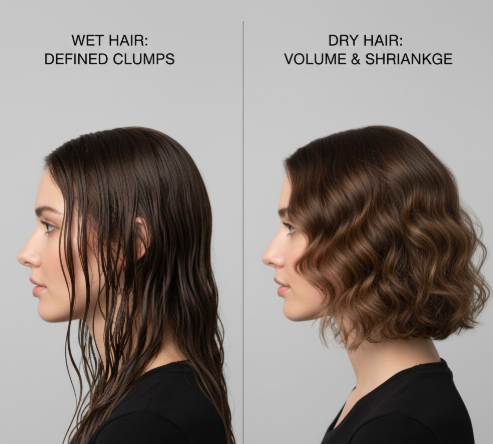
When 2C hair is soaking wet, the waves are typically very defined and clumped together. The S-pattern is obvious, and the hair may even show ringlet formations throughout.
As it dries, however, 2C hair experiences noticeable shrinkage. The waves contract and spring up, which can reduce length by several inches compared to when the hair is wet or straightened. This shrinkage is completely normal and actually indicates healthy elasticity in the hair structure.
The drying process is also when frizz tends to appear. Without proper technique and products, the cuticle layer can lift and create that familiar halo of flyaways that many 2C hair owners battle daily.
Distinguishing 2C From Neighbors: The Comparison
Accurately identifying your hair type matters because it influences which products and techniques will give you the best results. Since 2C hair shares characteristics with both tighter waves and looser curls, knowing the specific differences helps you customize your routine.
2C vs 2B Hair
The primary difference between these two wave patterns comes down to where the wave begins and how much volume it creates. If you’re comparing yourself to someone with 2B hair, you’ll notice some clear distinctions.
2B waves typically start at mid-length or below the ears. The crown and root area remain relatively flat against the head, with the wave pattern only becoming apparent partway down the hair shaft.
In contrast, 2C waves start much closer to the roots, sometimes right at the scalp. This creates significant lift and volume throughout the head, not just at the ends. When you look at 2C hair from the side, you’ll notice it doesn’t lie flat but instead has body and movement from top to bottom.
The wave pattern itself is also more pronounced. While 2B forms loose, gentle S-shapes, 2C creates tighter, more defined S-waves that have more spring and resistance when you pull on them.
2C vs 3A Hair
This comparison is trickier because 2C and 3A can look remarkably similar, especially at the ends of 2C hair where ringlets form. The key difference lies in the fundamental shape of the pattern.
3A hair forms complete spiral curls that loop around themselves in a 360-degree pattern. These spirals are typically the circumference of a piece of sidewalk chalk or a thick marker, creating distinct ringlets throughout the hair.
2C hair, on the other hand, maintains an S-wave shape rather than forming complete spirals. Even where the ends curl, they don’t create the same consistent, looping pattern that defines true curl types.
If you’re still uncertain, try this test: take a single wet strand and let it dry naturally without product. A 2C strand will form an S-shape with perhaps a loose curl at the end, while a 3A strand will spring into a defined spiral from root to tip.
The Science of 2C Hair: Beyond the Curl Pattern
Understanding your hair type goes deeper than just identifying the wave pattern you see in the mirror. The internal structure of your hair, including porosity and density, plays a massive role in how your 2C waves behave and what they need to thrive.
Understanding Porosity and 2C Waves
Porosity refers to your hair’s ability to absorb and retain moisture, which is determined by the condition of the cuticle layer. This single factor explains why some people with 2C hair can use heavy creams without issues while others become instantly weighed down.
The cuticle layer consists of overlapping scales, similar to roof shingles. In low porosity hair, these scales lie flat and tight, making it difficult for moisture and products to penetrate. Water and products tend to sit on top of the hair rather than being absorbed.
High porosity hair has raised or damaged cuticles with gaps and holes. Moisture enters easily but also escapes quickly, leading to hair that feels dry shortly after washing and responds dramatically to humidity with instant frizz.
To test your porosity, take a clean strand of shed hair and place it in a glass of room temperature water. Low porosity hair will float, normal porosity will sink slowly, and high porosity will sink quickly. This simple test can revolutionize your product choices.
For 2C hair specifically, high porosity is common because the textured pattern naturally creates more opportunities for cuticle lifting. This means most 2C hair owners benefit from products that seal the cuticle after providing moisture, like leave-in conditioners followed by lightweight oils.
Hair Density and Thickness
People often confuse density with thickness, but they’re completely different measurements that both impact how you should style your hair. Understanding the distinction helps explain why your hair might look voluminous but feel fine, or vice versa.
Strand thickness refers to the width of individual hair strands. Fine hair has a small diameter, medium is average, and coarse hair has a thick diameter. You can test this by comparing a single strand to a piece of sewing thread.
Density, however, measures how many individual strands are growing on your head. High density means you have a lot of hair follicles, while low density means fewer follicles with more visible scalp.
Here’s where 2C hair gets interesting: the wave pattern automatically creates visual bulk and volume, which can make medium or even low density hair appear thick. Many people with 2C hair believe they have thick hair when they actually have fine strands at medium density.
This matters for product application. Fine 2C hair needs lightweight products in small amounts, even if it looks voluminous. Using too much product or formulas designed for coarse, dense hair will weigh down the waves and cause them to lose definition.
The Essential Wash Day Routine for 2C Hair
Building an effective wash day routine is the foundation of healthy, defined 2C waves. This process isn’t about using expensive products but rather understanding the specific needs of your texture and applying techniques that work with your hair’s natural pattern instead of against it.
Step One: The Pre-Poo and Detangling
Starting your wash routine before you even step into the shower can dramatically reduce breakage and make the entire process easier. Pre-pooing, or applying treatment before shampooing, prepares your hair for the cleansing process.
For 2C hair, detangling should always happen on dry hair with some sort of slip product. Trying to detangle wet 2C hair without conditioner can cause significant breakage because wet hair is in its most fragile state.
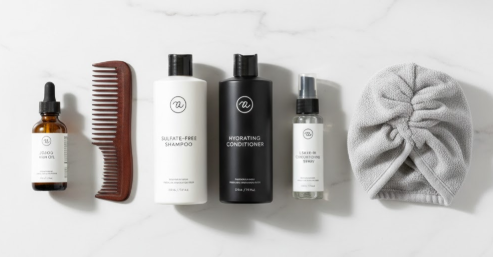
Apply a lightweight oil like argan or jojoba to dry hair in sections. Use your fingers first to gently separate any major tangles, then follow with a wide-tooth comb or detangling brush, working from ends to roots.
Avoid heavy butters like coconut oil or shea butter for this step if you have fine 2C hair. These can create buildup that your shampoo will struggle to remove, leaving your hair feeling greasy and weighed down.
This pre-shower detangling session is also the perfect time to incorporate scalp massage, which stimulates blood flow and promotes healthy hair growth while distributing natural oils down the hair shaft.
Step Two: Cleansing Without Stripping
The shampoo you choose and how you use it can make or break your entire routine. For 2C hair, the goal is to cleanse away dirt, oil, and product buildup without stripping the natural moisture that keeps your waves defined and frizz-free.
Many people in the wavy and curly hair community swear by sulfate-free shampoos, and there’s good reason for this. Sulfates like sodium lauryl sulfate are harsh detergents that can dry out textured hair and contribute to frizz and loss of pattern.
However, 2C hair has a unique challenge: it can handle buildup less well than tighter curl patterns. The wave pattern isn’t tight enough to hide the greasy, weighed-down look that comes from product accumulation, so you need sufficient cleansing power.
The solution is using a gentle, sulfate-free shampoo for most washes, but incorporating a clarifying shampoo once or twice a month. This reset wash removes everything and gives you a clean slate to work from.
Focus your shampoo application on the scalp and roots, not the length of your hair. The suds that rinse through are sufficient to clean the rest without causing unnecessary dryness or frizz.
Step Three: Conditioning and Squish to Condish
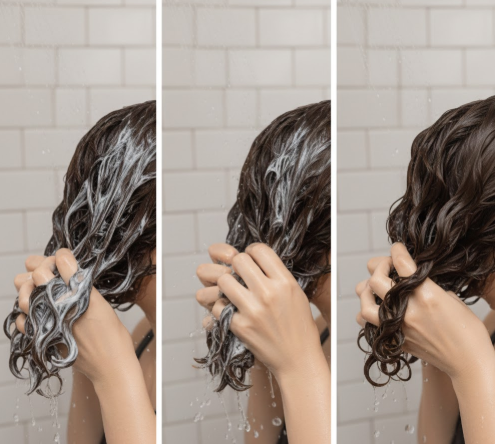
Conditioning is where you add back the moisture that cleansing removed, and for 2C hair, it’s also the first opportunity to encourage clump formation and wave definition. The technique matters just as much as the product you choose.
After rinsing your shampoo completely, apply a generous amount of conditioner from mid-length to ends, avoiding the roots and scalp area. This prevents your roots from becoming greasy and weighed down while ensuring your ends get the moisture they need.
The Squish to Condish method, developed by the curly hair community, works beautifully for 2C waves. Cup handfuls of water and your conditioner-coated hair together, squishing upward toward your scalp repeatedly.
You’ll hear a squelching sound as water pulses into the hair cuticles. This technique helps the conditioner penetrate while beginning to form the clumps that will become your defined wave pattern when dry.
Don’t rinse out all of the conditioner. Leaving some in provides continued moisture and helps with styling product application. If your hair feels too slippery, rinse out about 70 percent, leaving the rest as a built-in leave-in treatment.
Styling Techniques to Maximize Definition
Once your hair is clean and conditioned, how you apply products and encourage your wave pattern determines your final results. These techniques are designed specifically to work with the S-shaped pattern of 2C hair while minimizing frizz and maximizing definition.
The Praying Hands Method
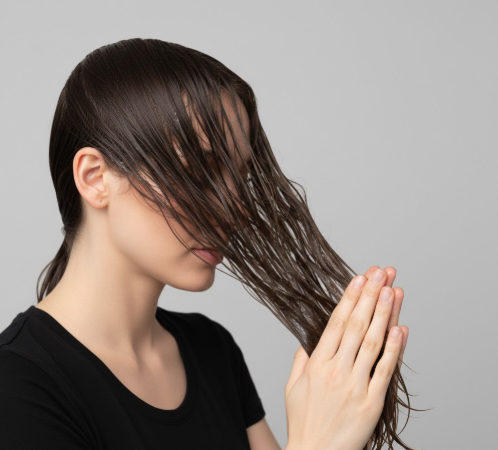
This application technique is essential for smoothing the hair cuticle and preventing frizz before it starts. Instead of scrunching products in with chaotic, rough movements, the praying hands method provides control and intention.
Take your styling product and rub it between your palms. Then, place your hands together in a prayer position with a section of hair between them. Smooth your hands down the hair shaft from roots to ends, almost like you’re ironing the product onto the hair.
This method coats each strand evenly while keeping the cuticle layer smooth. It’s particularly helpful for 2C hair because it enhances the S-pattern without creating the frizz that can come from rougher application techniques.
After using praying hands to apply your product, you can follow up with gentle scrunching to encourage curl formation. The combination of smooth application followed by upward scrunching gives you the best of both worlds.
Plopping vs Micro-Plopping
Both of these techniques involve using a t-shirt or microfiber towel to remove excess water while encouraging wave formation, but they serve slightly different purposes and create different results.
Plopping is a method where you lay a t-shirt or microfiber towel flat, flip your wet hair onto it, and then wrap it on top of your head for 10 to 30 minutes. This encourages root lift and allows the waves to set in their natural pattern without gravity pulling them straight.
The technique works by keeping all your hair piled on top of your head while the fabric absorbs excess water. When you remove the plop, your waves are typically more defined and your roots have more volume than if you’d let your hair hang wet.
Micro-plopping, on the other hand, involves using a microfiber towel or t-shirt to scrunch your hair in an upward motion, absorbing water through repeated scrunching. You’re not wrapping or leaving it on your head, just pressing and scrunching to remove moisture.
For 2C hair, micro-plopping often works better than traditional plopping if you have shorter hair or want to maintain more length. Plopping can create too much shrinkage for some people, while micro-plopping gives you control over each section.
Diffusing vs Air Drying
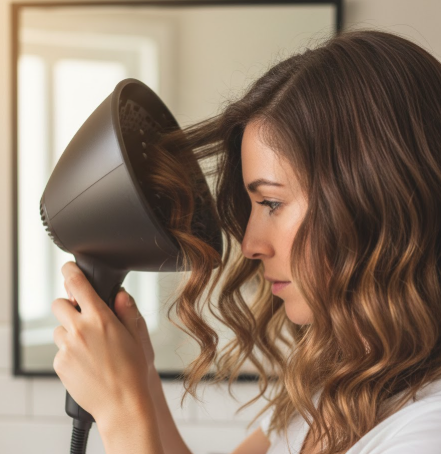
The way you dry your 2C hair has a dramatic impact on the final look, volume level, and frizz factor. Both air drying and diffusing have their place, and many people alternate depending on the look they want to achieve.
Air drying is the most gentle option and tends to create softer, looser waves with more natural movement. The downside is that it takes significantly longer, and the weight of wet hair can pull your wave pattern straighter, especially at the roots.
If you choose to air dry, apply your products to soaking wet hair and then don’t touch it again until it’s completely dry. Touching, scrunching, or playing with your hair while it dries is the fastest route to frizz city.
Diffusing uses a blow dryer attachment to speed up drying time while directing heat in a way that minimizes frizz. For 2C hair, diffusing creates more volume, tighter wave definition, and a style that’s ready to go in under an hour.
The hover diffusing method involves holding the diffuser near your hair without actually touching it, allowing air to flow over the hair. Pixie diffusing, in contrast, involves actually placing sections of hair into the diffuser bowl and holding it close to the scalp.
For maximum volume without frizz, diffuse on low heat and low power. Start at the roots, using the diffuser to lift hair upward toward your scalp, then move through the lengths. Don’t move the diffuser around too much; instead, hold it in place for 30 to 60 seconds before moving to the next section.
Ingredients to Look For and Avoid

Understanding what’s actually in your hair products empowers you to make better choices at the store and troubleshoot when a product isn’t working. For 2C hair, ingredient lists matter because the texture needs hydration without heaviness, which is a delicate balance.
Best Ingredients for 2C Hair
Lightweight hydrators should be the foundation of your product lineup. Aloe vera juice or gel provides moisture without weight and has the added benefit of reducing inflammation on the scalp. Glycerin is a humectant that draws moisture from the air into your hair, though it should be avoided in very dry climates.
Hyaluronic acid, increasingly popular in hair care, holds up to 1,000 times its weight in water. This ingredient gives 2C hair the moisture it craves without the heavy, greasy feeling that butters can create.
Penetrating oils are your friends because they actually enter the hair shaft rather than just sitting on top. Argan oil, grapeseed oil, and sweet almond oil are all lightweight enough for 2C hair while providing nourishment and shine.
Protein is essential for maintaining the structure of your S-wave pattern. Hydrolyzed silk protein, wheat protein, and keratin help fill in gaps in the hair cuticle and give your waves more spring and definition.
Don’t be afraid of protein treatments, but do pay attention to your hair’s response. Some 2C hair is protein-sensitive and becomes straw-like with too much, while other hair types thrive on regular protein doses.
Ingredients to Use with Caution
Heavy butters like shea butter and cocoa butter are beloved by people with tighter curl patterns, but they can be too much for many with 2C hair. These ingredients are occlusive, meaning they sit on top of the hair and create a seal.
For fine or medium density 2C hair, butters can weigh down the wave pattern and cause your hair to lose definition and volume. If your hair feels greasy by day two or your waves are falling flat, check your products for heavy butters.
Harsh sulfates like sodium lauryl sulfate strip the hair of its natural oils and can leave 2C hair feeling dry and straw-like. However, remember that some cleansing power is necessary, so using a gentler sulfate or sulfate-free option for regular washes with occasional clarifying is ideal.
Non-water-soluble silicones, often ending in “-cone” on ingredient lists, can create buildup over time. Dimethicone and similar ingredients coat the hair and provide smoothness but require sulfates to remove. This creates a cycle of buildup and stripping that isn’t healthy for textured hair.
Water-soluble silicones and newer alternatives are fine for most 2C hair types because they rinse away with regular shampoo. Look for ingredients like amodimethicone with specific trideceth or cetearyl alcohol formulations.
Common Challenges and How to Fix Them
Even with a solid routine, 2C hair presents unique challenges that can be frustrating to navigate. Understanding the root cause of common problems helps you implement targeted solutions instead of completely overhauling your routine every time something goes wrong.
Combating the Frizz Halo
That unfortunate halo of flyaway frizz around your head is one of the most common complaints from people with 2C hair. While some frizz is normal and even adds to the natural, textured look, excessive frizz can make your hair look unkempt and undefined.
Humidity is the primary external culprit. Understanding dew points helps you choose products based on weather conditions. In high dew point conditions, avoid humectants like glycerin that will draw too much moisture into your hair and cause swelling and frizz.
In low dew point or dry conditions, you need more humectants to prevent your hair from becoming dehydrated and frizzy from dryness. This is why the same product can work beautifully in one season and terribly in another.
The solution involves layering products strategically: apply water-based hydrators to wet hair first, then seal with a small amount of oil or cream, and finally apply a gel or mousse to create a cast. This cast holds the hair in place while it dries, preventing the cuticle from lifting.
Don’t touch your hair while it dries. Every touch, scrunch, or adjustment raises the cuticle and creates frizz. Once your hair is 100 percent dry and you have a crunchy gel cast, scrunch it out with a tiny amount of oil on your hands for soft, defined waves.
Dealing with Flat Roots
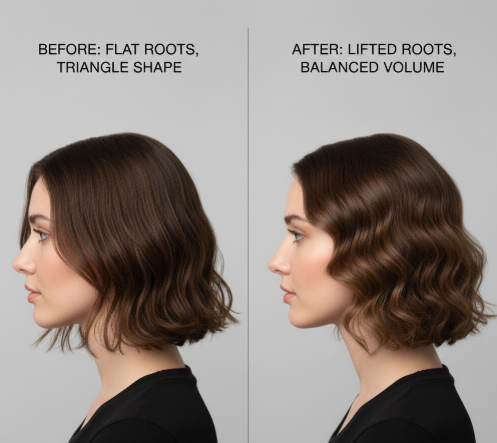
One of the most frustrating aspects of 2C hair is the tendency for roots to lie flat against the head while the mid-lengths and ends have plenty of volume. This creates an unflattering triangle or pyramid shape that many people try to fix with volumizing products that don’t actually address the root cause.
The issue often comes down to the weight of wet hair pulling the roots straight as it dries. When you have several inches of water-saturated hair hanging from your scalp, gravity wins and your roots lose their lift.
Avoid applying conditioner and heavy products to your roots and scalp. These areas produce their own natural oils and don’t need the same moisture that your ends do. Adding products to the roots only weighs them down further.
Root clips are a game-changer for this issue. After applying your styling products, section your hair and place small clips at the root area where you want lift. Leave these in place while your hair dries, then remove them once it’s at least 80 percent dry.
Diffusing upside down also creates more root volume. Flip your head over and diffuse from underneath, allowing gravity to pull your hair away from your scalp. This technique lifts the roots and creates volume throughout.
If you have particularly stubborn flat roots, try applying a lightweight mousse or volumizing spray directly to the root area before the rest of your styling products. This gives the roots something to grip onto without the weight of creams or gels.
Refreshing Waves: The Day Two and Day Three Routine
Unlike some curl patterns that can last for days with minimal intervention, 2C hair often loses significant definition overnight. The waves may become flat, frizzy, or separated, making refresh techniques essential if you want to extend your wash day results.
Sleep disruption is the main culprit. As you move in your sleep, friction from your pillowcase disrupts the wave pattern and can create frizz and tangles. Even with protective styling, some definition will be lost.
For a successful refresh, start with a water spray bottle. Lightly mist sections of your hair until they’re damp but not soaking wet. The goal is to reactivate the products you applied on wash day, not to re-wet the hair completely.
After misting, apply a small amount of leave-in conditioner or curl cream to your palms and scrunch it into the damp sections. Focus on areas that have lost definition or become frizzy, rather than applying product all over.
You can also use the praying hands method with a tiny bit of gel to smooth any particularly frizzy sections. Follow with scrunching to encourage the wave pattern to reform.
For spot-treating frizzy pieces without wetting your whole head, keep a small amount of product in a travel container. Apply it to just the problem areas, smooth with your fingers, and allow to air dry or quickly diffuse.
Some people with 2C hair prefer to refresh with just water and no additional product to avoid buildup. This works well if you used enough product on wash day and your hair is just slightly disrupted rather than completely flat.
Best Haircuts and Styles for 2C Hair
The right haircut can make the difference between fighting your 2C texture daily and having waves that fall into place with minimal effort. Understanding how different cutting techniques interact with your wave pattern helps you communicate effectively with your stylist and achieve results you’ll actually love.
The Importance of Layers
Layers are non-negotiable for most people with 2C hair, but the type of layering matters tremendously. The goal is to remove bulk and weight without creating a choppy, disconnected look.
Blunt cuts, where all the hair is one length, create the dreaded triangle or pyramid shape. Because 2C hair has so much volume and texture, a blunt cut allows all that fullness to accumulate at the bottom, pulling your wave pattern straighter with its weight.
Long layers remove weight from the ends while maintaining overall length. This allows the S-wave pattern to spring up properly instead of being stretched straight by the bulk of hair below it.
Ask your stylist for layers that start around cheekbone or chin level, with the longest pieces at your shoulders or below. This creates movement and dimension while preventing the heavy, bottom-weighted look.
Face-framing layers are particularly flattering with 2C hair because they showcase the texture around your face. These shorter pieces tend to curl more tightly than the rest of your hair, creating a nice contrast and drawing attention to your features.
Avoid razor cutting if your hair is fine or prone to frizz. Razors can create wispy ends that frizz easily. Instead, request point cutting or slide cutting, which are gentier techniques that maintain the integrity of the hair strand.
Trending Cuts for Wavy Hair
Certain haircuts have become particularly popular with the 2C hair community because they enhance the natural texture while creating a modern, stylish look that doesn’t require heat styling.
The shag cut has made a major comeback and works beautifully with 2C waves. This heavily layered cut includes shorter pieces throughout the head, creating tons of movement and volume. The textured, lived-in look of a shag is perfect for showcasing your S-wave pattern.
The wolf cut takes the shag concept further with even more dramatic layering and disconnection. The top is heavily layered and voluminous while the bottom remains longer, creating an edgy, mullet-inspired silhouette that looks intentionally messy and cool with textured hair.
Curtain bangs have become incredibly popular and look stunning with 2C texture. These face-framing bangs part in the middle and sweep to the sides, and when styled with your natural waves, they create a soft, romantic look.
For curtain bangs with 2C hair, you may need to use a round brush and hair dryer to initially shape them, or you can pin them back while they dry to encourage them to sweep to the sides. They typically require more frequent trims than the rest of your hair.
Mid-length cuts, hitting anywhere from the collarbone to just past the shoulders, are particularly flattering for 2C hair. This length showcases the wave pattern beautifully without the weight that can pull longer hair straighter.
If you prefer longer hair, consider requesting internal layers that remove bulk from the inside without affecting your overall length. This technique maintains one-length appearance while reducing the weight that can flatten your waves.
Protective Styling and Sleep Care
What you do between wash days is just as important as your wash day routine itself. Protecting your 2C waves while you sleep and during daily activities prevents damage, maintains definition, and extends the life of your style.
The Pineapple Method
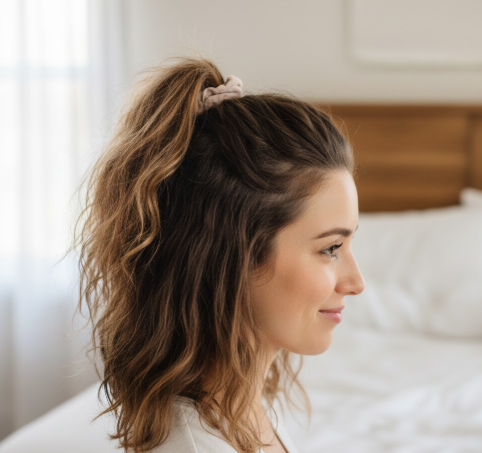
This technique has become famous in the textured hair community for good reason. It’s simple, effective, and protects your wave pattern overnight without creating awkward dents or creases.
To pineapple your hair, flip your head upside down and gather all your hair loosely at the very top of your head. Secure it with a scrunchie or silk hair tie, creating a fountain of hair sprouting from the top of your head.
The key is keeping it loose. You don’t want tension or a tight ponytail, which would create creases and pull on your roots. The pineapple should barely hold, just keeping your hair gathered and off your face and neck.
This method works best for longer 2C hair. If your hair is too short to reach the top of your head, you can create two mini pineapples on either side, or try a different protective style like braiding.
When you take down your pineapple in the morning, your waves will still have their definition and volume, particularly at the roots. You may need to do a light refresh on any sections that got flattened, but the bulk of your style will be preserved.
Silk and Satin Pillowcases
Switching from cotton to silk or satin pillowcases is one of the simplest and most effective things you can do for your 2C hair. The difference in friction level between these materials and cotton is dramatic.
Cotton pillowcases create friction that roughes up the hair cuticle, leading to frizz, tangles, and breakage. They also absorb moisture from your hair, leaving it drier and more prone to damage.
Silk and satin pillowcases allow your hair to glide smoothly as you move in your sleep. This maintains your wave pattern, reduces frizz, and prevents the tangles that come from hair rubbing against rough fabric all night.
If you’re not ready to invest in a silk pillowcase, a satin bonnet or hair wrap works just as well. The key is creating a smooth, friction-free surface for your hair to rest against.
Many people find that combining the pineapple method with a silk pillowcase gives them the best results, preserving definition and volume while minimizing frizz and disruption.
Loose Braids or Buns
For days when you want a break from wearing your waves down, protective styles keep your hair safe while giving you different styling options. The key with 2C hair is keeping these styles loose and low-tension to prevent breakage.
A loose braid, starting low at the nape of your neck, protects your hair during sleep or active days without pulling on your roots or creating stress on your hair follicles. Use a silk scrunchie rather than a regular elastic to minimize breakage at the tie point.
Low, loose buns work similarly, gathering your hair safely without tension. Avoid tight top knots or high ponytails that pull on your hairline and can cause traction alopecia over time.
When creating protective styles with 2C hair, remember that your texture has spring and volume. Styles that look sleek on straight hair will look different on you, and that’s perfectly fine. Embrace the texture that escapes and frames your face.
Avoid protective styling on wet hair unless you’re using a protective style specifically as a drying technique. Putting wet 2C hair in a tight braid or bun and leaving it for hours can cause breakage because wet hair is fragile.
Transitioning to Natural 2C Hair
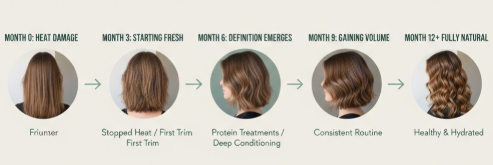
Many people discover they have 2C hair after years of believing their texture was simply “poofy straight hair” that needed to be tamed. If you’ve been heat styling, chemically straightening, or otherwise damaging your hair, the transition to embracing your natural texture requires patience and a shift in mindset.
Understanding the Damage
Heat damage from flat irons, curling wands, and blow dryers can permanently alter your hair’s protein structure. What you thought was naturally straight or barely wavy hair might actually be damaged 2C or even 3A hair that has lost its curl pattern.
Chemical treatments like relaxers, keratin treatments, and certain hair dyes can also damage the bonds in your hair that create the wave or curl pattern. This damage can’t be reversed; it can only be cut off as new, healthy hair grows in.
The transition period can be frustrating because you’ll have two different textures: your new growth showing your true 2C pattern and the damaged length showing straighter, possibly frizzy texture. This multi-textured look is temporary but can last many months depending on your hair length and how quickly you cut.
The Transition Strategy
Start by eliminating heat styling entirely or reducing it to once a month or less. When you do use heat, always apply a heat protectant first and keep temperatures below 350 degrees Fahrenheit.
Incorporate protein treatments to help strengthen your hair and encourage wave pattern return. These won’t fix heat-damaged hair, but they can improve the appearance and make the transition more manageable.
Deep conditioning treatments should become a weekly ritual. Look for treatments with ingredients like shea moisture, argan oil, and keratin that help repair surface damage even though they can’t reverse structural changes.
Get regular trims, cutting off the damaged ends gradually. Some people prefer to do a big chop, removing all damaged hair at once, but this is a personal choice. Gradual trimming allows you to maintain length while slowly removing damage.
During the transition, you might experiment with 18 inch hair extensions or other temporary options to maintain length while growing out damage. This allows you to see what your full natural texture might look like once the damaged portions are removed.
The Mental Shift
Perhaps the hardest part of transitioning to natural 2C hair is accepting that your hair won’t look the way it did when you were fighting against its texture. Waves are meant to be textured, dimensional, and yes, sometimes a little messy.
Social media has helped normalize natural texture, but there’s still pressure to have “perfect” waves that look styled without looking like you tried. This is an unrealistic standard that often relies on extensive styling, professional photography, and filters.
Your natural 2C hair might not form uniform waves from root to tip. You might have different curl patterns in different areas of your head, straighter pieces around your hairline, and tighter coils at the nape. This variation is completely normal and part of the beauty of textured hair.
Embrace the volume. Coming from years of straightening, the body and fullness of properly cared for 2C hair can feel overwhelming. But this volume is one of the texture’s greatest assets, and learning to style it rather than fight it opens up new possibilities.
Connect with others on the same journey. Online communities focused on wavy and curly hair provide support, product recommendations, and the encouragement you need when you’re tempted to reach for the flat iron again.
Understanding How 2C Fits in the Broader Texture Spectrum
2C hair doesn’t exist in isolation but rather sits on a spectrum of hair types, each with unique needs and characteristics. Understanding where your texture fits helps you adapt advice from different hair type communities and recognize that your routine might pull techniques from multiple sources.
If you have experience with other textures or are trying to understand how 2C compares to what you see others doing, the relationships between types become important. For instance, 2B hair requires even lighter products and less intensive techniques than 2C, which helps explain why copying a 2B routine might leave your 2C waves undefined.
On the other end of the spectrum, 4C hair has completely different needs and behaviors. This tightly coiled texture thrives with heavy butters and oils that would weigh down 2C waves. Understanding these differences prevents you from assuming all textured hair needs the same care.
Between these extremes, you’ll find techniques and products that can be adapted. Many people with 2C hair successfully use modified versions of the curly girl method, adjusting for their looser pattern and different weight tolerance.
The key takeaway is that 2C hair benefits from borrowing techniques from both wavy and curly communities while recognizing that your specific needs will be unique. Your hair’s individual porosity, density, and strand thickness matter just as much as your curl pattern.
Building Your Personalized 2C Hair Care Routine
After learning about hair science, techniques, and products, the final step is putting it all together into a routine that works for your specific hair and lifestyle. There’s no one-size-fits-all approach, which means you’ll need to experiment and adjust.
Starting Point: The Basic Framework
Begin with a simple routine before adding complexity. Use a gentle shampoo, a lightweight conditioner, a leave-in product, and a gel or mousse. Master these four products before introducing oils, creams, and specialty treatments.
Wash your hair 2-3 times per week, adjusting based on how quickly your scalp produces oil and how much product buildup you experience. Some people can go longer between washes, while others need more frequent cleansing.
Apply products to soaking wet hair using the squish to condish and praying hands methods. This basic technique works for most people with 2C hair and prevents the product overload that comes from applying too much to damp or dry hair.
Experiment with both air drying and diffusing to see which gives you the results you prefer. Many people use both methods depending on their schedule and the look they want.
Tracking and Adjusting
Keep notes on what you’re using and how your hair responds. When you have a great hair day, write down exactly what you did so you can replicate it. When your hair feels off, note that too, and look for patterns.
Pay attention to weather and seasonal changes. Your hair’s needs will shift with humidity, temperature, and even indoor heating in winter. Products that work beautifully in summer might be too light for winter dryness.
Watch for signs of protein overload: hair that feels straw-like, brittle, or breaks easily likely has too much protein and needs more moisture. Conversely, hair that feels mushy, limp, or won’t hold a wave pattern needs more protein.
Don’t change too many variables at once. If you want to try a new product, switch out only one thing at a time so you can accurately assess whether it’s helping or hurting your results.
Embracing the Journey
Your relationship with your 2C hair will evolve over time. What frustrates you today might become one of your favorite features as you learn to work with your texture instead of against it.
Give yourself grace during the learning process. Everyone has bad hair days, even people who have been caring for their texture for years. One difficult wash day doesn’t mean you’re doing something wrong or that your hair is unmanageable.
The goal isn’t perfection but rather healthy hair that you feel confident wearing in its natural state. Some days your waves will be defined and beautiful, other days they’ll be a bit frizzy and wild, and both versions are valid expressions of your natural texture.
As you become more comfortable with your 2C hair, you’ll develop an intuitive sense of what it needs. You’ll be able to feel when it needs protein versus moisture, when products are building up, and how to adjust your routine seasonally.
This expertise comes with time and experimentation, so be patient with yourself and your hair as you both adapt to a new way of doing things.
Conclusion
2C hair occupies a unique space in the texture world, combining the body and bounce of waves with enough definition to borrow techniques from the curly community. Understanding your specific hair’s needs, from porosity to density to strand thickness, allows you to build a customized routine that brings out the best in your natural pattern.
The foundation of healthy 2C waves is hydration without heaviness. This means choosing lightweight products with moisture-rich ingredients, applying them to soaking wet hair using techniques that smooth the cuticle, and protecting your waves between wash days.
Remember that your hair journey is exactly that, a journey. There will be trial and error, products that don’t work, techniques that don’t deliver the results you hoped for, and days when you feel tempted to reach for heat tools. This is all normal and part of the process of learning to embrace your natural texture.
Your 2C waves are not too curly, too wavy, too frizzy, or too anything. They are exactly right for you, and with the right care, they can become one of your favorite features. Share your wash day wins, connect with others on the same journey, and celebrate the volume, movement, and dimension that your natural texture provides.
Frequently Asked Questions
Is 2C hair considered curly or wavy?
2C hair is technically classified as wavy since it falls under Type 2 in the hair typing system. However, it sits at the border between wavy and curly textures, often forming loose ringlets at the ends and showing enough definition to benefit from curly hair care methods.
How often should you wash 2C hair?
Most people with 2C hair should wash 2 to 3 times per week. Washing too frequently strips natural oils and can lead to dryness and frizz, while washing too infrequently allows product buildup that weighs down the wave pattern and makes hair look greasy.
Can 2C hair turn into 3A?
Yes, it’s possible for damaged or dehydrated 2C hair to reveal a tighter 3A curl pattern once it’s properly cared for. Heat damage can stretch out curls, making 3A hair appear as 2C waves, and restoring hair health can allow the true pattern to return.
Why is my 2C hair straight on top?
This usually happens because of the weight of water and products pulling waves straight at the root, or because of product buildup on the scalp. Using root clips while drying, diffusing upside down, and avoiding heavy products near the scalp can restore volume and wave formation at the roots.
Do I need to use gel on 2C hair?
Yes, most people with 2C hair benefit from using a light to medium hold gel or mousse. These products create a cast that holds the wave pattern in place while drying, preventing frizz and helping maintain definition throughout the day.
How do I stop my 2C hair from getting frizzy?
Apply products to soaking wet hair, avoid touching your hair while it dries, use a microfiber towel or t-shirt instead of a regular towel, and sleep on a silk or satin pillowcase. A gel cast that you scrunch out after hair is completely dry also significantly reduces frizz.
What is the best haircut for 2C hair?
Long layers are generally the most flattering for 2C hair because they remove weight and prevent the triangle shape while maintaining length. The layers allow waves to spring up and define themselves rather than being pulled straight by bulk at the bottom.

1 thought on “The Ultimate Guide to 2C Hair: Identification, Care, and Styling”