
Table of Contents
- Introduction: Redefining the 4C Experience
- Understanding 4C Hair: The Biological Blueprint
- 4C vs. 4B vs. 4A: Identifying the Nuances
- Beyond the Pattern: Porosity, Density, and Width
- The Pillars of 4C Hair Care: A Step-by-Step Regimen
- Essential Ingredients for 4C Hair
- Styling 4C Hair for Length Retention
- Common Challenges and Troubleshooting
- Length Retention: Myth vs. Reality
- Advanced 4C Care: Seasonal and Lifestyle Adjustments
- Conclusion: Embracing the Crown
- Frequently Asked Questions
This blog post may contain affiliate links. As an Amazon Associate I earn from qualifying purchases.
Introduction: Redefining the 4C Experience
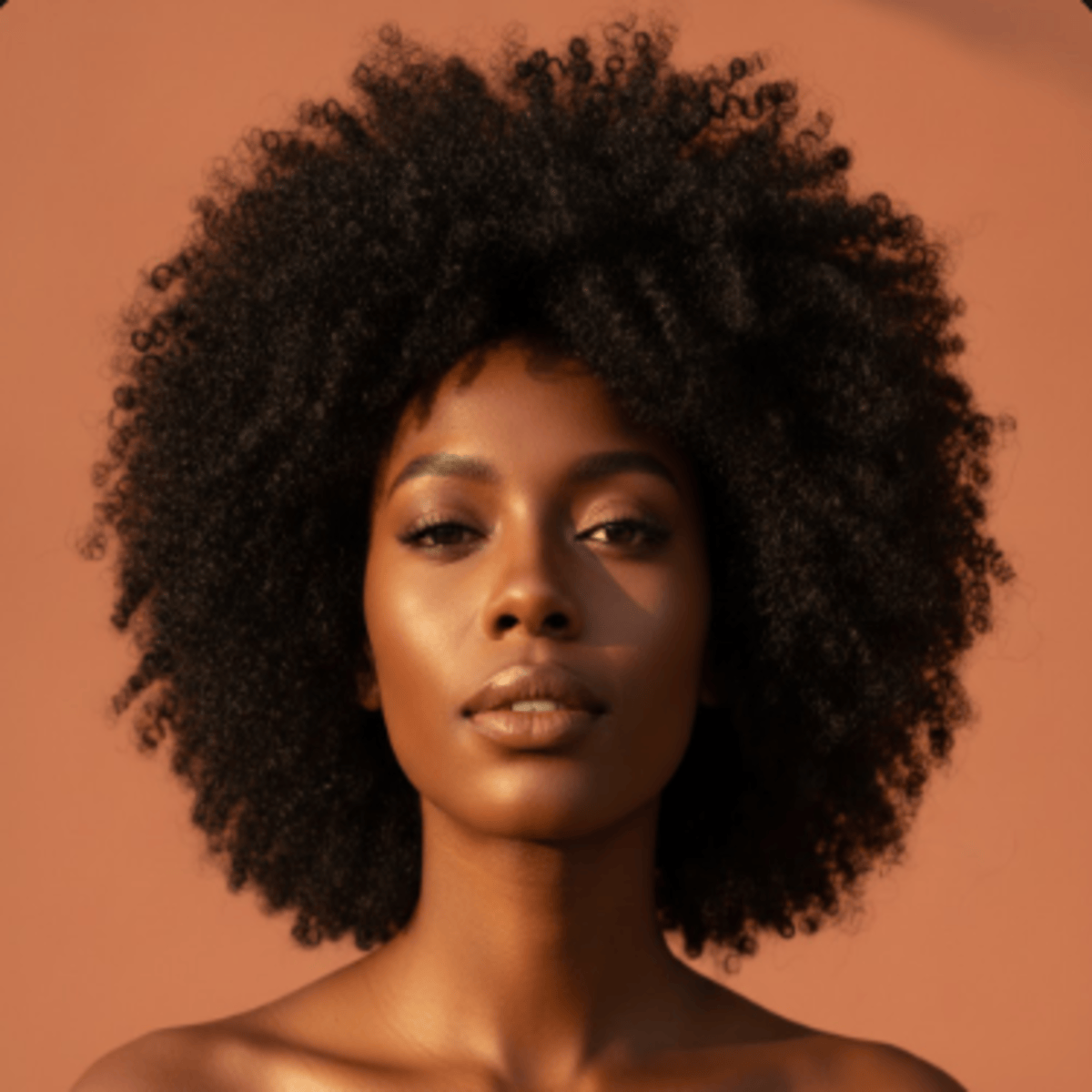
4C hair represents one of the most architecturally stunning and versatile textures in the natural hair world. Far from the outdated narrative of being “difficult” or “unmanageable,” this hair type embodies a unique combination of strength, density, and styling potential that deserves celebration rather than correction.
Within the hair typing system developed by celebrity stylist Andre Walker, 4C sits at the tightest end of the curl pattern spectrum. It features densely packed zig-zag strands that create everything from gravity-defying afros to intricate protective styles. What makes 4C truly remarkable is its paradox of fragility and resilience. When cared for properly, it can achieve impressive length and health while maintaining its distinctive texture.
This guide goes far beyond surface-level tips. You will learn the biological structure of 4C strands, understand why moisture behaves differently in tightly coiled hair, and discover evidence-based strategies for length retention. Whether you are newly natural or have been on your hair journey for years, this resource will help you build a personalized regimen rooted in science and real-world experience.
The modern natural hair movement has brought unprecedented attention to textured hair care. However, much of the available information applies broadly to all type 4 hair without addressing the specific needs of 4C textures. This article fills that gap with precision, offering insights that are both accessible to beginners and valuable to experienced naturals.
Understanding 4C Hair: The Biological Blueprint
4C hair is not simply “curly hair” but a distinct structural phenomenon that begins at the follicle level. Understanding the biology behind your strands empowers you to make informed decisions about products, techniques, and expectations for your hair journey.
The unique characteristics of 4C hair stem from the shape of the follicle, the arrangement of protein bonds within each strand, and the configuration of the cuticle layer. These factors work together to create the signature density, shrinkage, and moisture challenges that define the 4C experience.
The Andre Walker Hair Typing System Explained
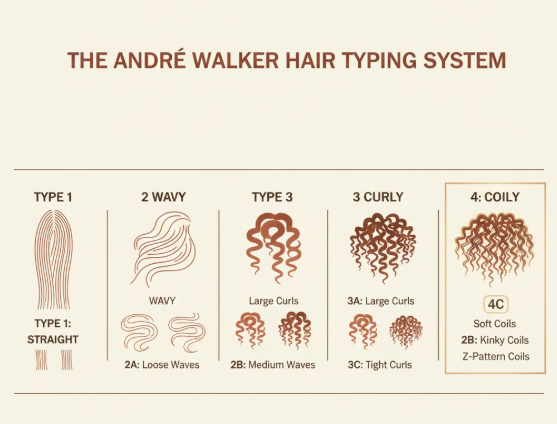
The hair typing system that most naturals use today was created by Andre Walker, Oprah Winfrey’s longtime hairstylist, in the 1990s. This classification ranges from Type 1 (straight) through Type 4 (coily), with subcategories A, B, and C representing variations in curl tightness within each type.
Type 4 hair encompasses all coily and kinky textures, with 4A showing the loosest coils and 4C representing the tightest pattern. The distinction between 4B and 4C often confuses people because both lack the obvious ringlet formation seen in looser curl types. The key difference lies in density and shrinkage percentage, with 4C typically showing more pronounced compactness.
Critics of the typing system argue that it oversimplifies hair care by focusing primarily on curl pattern while ignoring equally important factors like porosity, density, and strand thickness. While this criticism has merit, the typing system remains useful as a starting point for understanding your hair’s basic behavior. Just remember that your curl pattern alone does not determine your entire hair care routine.
Structural Characteristics of 4C Strands
Under magnification, 4C hair strands reveal a distinctive zig-zag pattern rather than the smooth spiral seen in looser curl types. These tight bends occur because the hair grows from a flat, elliptical follicle positioned at an acute angle to the scalp surface. This contrasts with straighter hair types, which emerge from round follicles positioned more perpendicular to the skin.
The protein structure within each strand also differs in 4C hair. Hair is composed primarily of keratin, with the arrangement of disulfide bonds determining how tightly the strand coils. In 4C hair, these bonds create more frequent bending points along the strand, resulting in the characteristic tight coil pattern.
The cuticle layer of 4C hair presents another structural consideration. Research published in the Journal of Cosmetic Science indicates that tightly coiled hair often has fewer cuticle layers than straight or wavy hair. This thinner protective barrier makes 4C strands more vulnerable to moisture loss and mechanical damage, which explains why gentle handling and consistent moisture are so critical.
The Science of Shrinkage
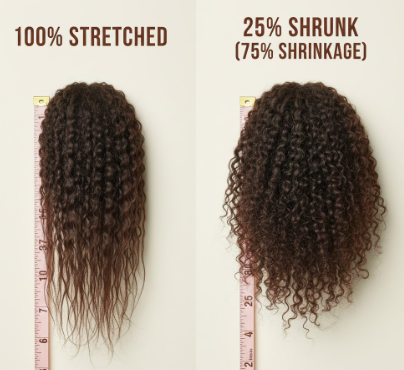
Shrinkage is perhaps the most misunderstood aspect of 4C hair. When your hair draws up to a fraction of its true length after washing, this is not a flaw to overcome but a sign of healthy elasticity and proper hydration. Healthy 4C hair can shrink up to 75 percent of its actual length, though some individuals report even higher percentages.
The mechanism behind shrinkage relates to the hydrogen bonds in hair that break when exposed to water. As hair dries, these bonds reform in the configuration dictated by the strand’s natural pattern. For 4C hair, this means returning to its tightly coiled state, which pulls length upward toward the scalp.
Understanding shrinkage helps you set realistic expectations for your hair journey. That two-inch twist-out might actually represent eight inches of growth when stretched. Rather than fighting this natural behavior, many experienced naturals embrace shrinkage as a protective mechanism that keeps delicate ends tucked safely away from environmental damage.
4C vs. 4B vs. 4A: Identifying the Nuances
Knowing where your hair falls on the type 4 spectrum helps you find relevant styling tutorials and product recommendations. However, the differences between these subcategories are subtler than many online resources suggest, and most people have multiple textures on their head.
Understanding these distinctions helps you decode advice from other naturals and identify which techniques will work best for your specific texture. The goal is not to obsess over classification but to use this knowledge as a practical tool.
Visual Differences
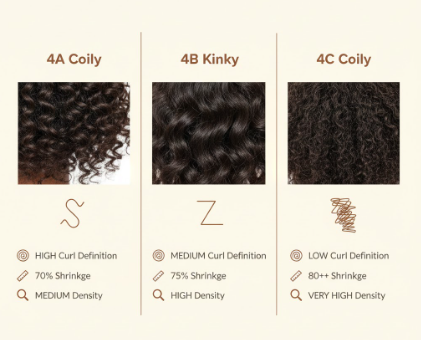
4A hair displays defined S-shaped coils roughly the diameter of a crochet needle. These coils are visible without product manipulation and remain relatively distinct even when dry. The texture tends to have a looser, springier feel and typically experiences less shrinkage than tighter patterns.
4B hair features sharper bends that form a Z-pattern rather than a rounded coil. The texture appears fluffier and less defined than 4A, with individual strands bending at acute angles. Shrinkage is more pronounced, typically ranging from 50 to 65 percent.
4C hair represents the most densely packed and tightly coiled end of the spectrum. Without product manipulation, 4C often appears patternless, creating a cottony or woolly texture. The strands are packed so closely together that individual coils are difficult to distinguish. Shrinkage reaches its maximum in this category, with many 4C naturals reporting 70 to 80 percent shrinkage rates.
Texture Mixing
Very few people have a single, uniform hair texture across their entire head. It is completely normal to have 4C hair at the crown with 4B at the nape, or 4A edges with a 4C interior. This variation reflects differences in follicle shape and scalp blood flow across different areas of the head.
Managing mixed textures requires sectioning your hair during styling and potentially using different products or techniques for different areas. The crown and nape often need extra attention because they experience more friction from pillows and shirt collars. Learning to identify your various textures allows you to customize your routine for optimal results throughout your hair.
Beyond the Pattern: Porosity, Density, and Width
While curl pattern gets most of the attention in natural hair conversations, porosity and density actually have a greater impact on how your hair responds to products and styling. Understanding these characteristics is essential for building an effective hair care routine.
Think of curl pattern as describing how your hair looks, while porosity and density describe how your hair behaves. This distinction helps explain why two people with identical curl patterns can have completely different product needs and moisture challenges.
Hair Porosity and 4C Hair
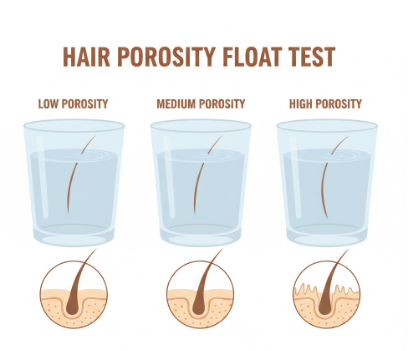
Porosity refers to your hair’s ability to absorb and retain moisture, determined by the condition of the cuticle layer. This single factor influences nearly every aspect of your hair care routine, from product selection to deep conditioning techniques.
Low porosity 4C hair features tightly bound cuticles that resist moisture penetration. Water beads on the surface rather than absorbing, and products tend to sit on top of the hair rather than sinking in. This texture is prone to buildup because products accumulate on the resistant surface. Deep conditioning requires heat to open the cuticles, and lightweight, water-based products work better than heavy butters.
High porosity 4C hair has gaps and damage in the cuticle layer, causing moisture to enter quickly but escape just as fast. This texture absorbs water instantly during washing but dries out rapidly afterward. Heavy sealants and protein treatments help fill the gaps in the cuticle, and layering products becomes essential for moisture retention.
Medium porosity represents the ideal balance, with cuticles that allow adequate moisture in while retaining it effectively. If you have medium porosity 4C hair, you have more flexibility in product choices and techniques.
You can test your porosity at home using the float test. Drop a clean, product-free strand of hair into a glass of room-temperature water and observe it for four minutes. Hair that floats indicates low porosity, hair that sinks quickly indicates high porosity, and hair that hovers in the middle suggests medium porosity.
Density and Strand Thickness
Density refers to how many individual hairs grow on your head, while strand thickness describes the diameter of each individual hair. These are separate characteristics that often get conflated.
Fine-stranded 4C hair has thin individual hairs that can feel silky when stretched. Despite the thin strands, density can still be high, meaning you have many fine hairs packed closely together. This combination needs lightweight products that will not weigh down the delicate strands while still providing adequate moisture.
Coarse-stranded 4C hair has thick, wiry individual hairs with a larger diameter. This texture can handle heavier butters and oils without becoming weighed down. Coarse strands often need more intensive moisture treatments because the larger diameter requires more hydration to penetrate to the core.
Understanding your density helps you select products with appropriate weight. High-density 4C hair with fine strands responds better to hair milks and light creams, while low-density 4C hair with coarse strands can benefit from thicker butters and oils.
The Pillars of 4C Hair Care: A Step-by-Step Regimen
Building a consistent, effective routine is the foundation of healthy 4C hair. The basics include proper cleansing, gentle detangling, deep conditioning, and effective moisture sealing. Mastering these fundamentals produces better results than any expensive product or trendy technique.
Your routine should address the unique challenges of 4C hair while remaining sustainable for your lifestyle. The best regimen is one you will actually follow consistently, so prioritize simplicity and effectiveness over complexity.
Cleansing: The Foundation of Health
Clean hair and scalp provide the foundation for all other aspects of your routine. Product buildup, environmental pollutants, and excess sebum accumulate over time and can block moisture from entering the hair shaft while clogging follicles on the scalp.
Sulfate shampoos provide the most thorough cleansing, effectively removing silicones, heavy oils, and stubborn buildup. However, sulfates can strip natural oils and cause dryness if used too frequently. Many 4C naturals use a clarifying sulfate shampoo once monthly while relying on gentler sulfate-free options for regular washing.
Sulfate-free shampoos cleanse without stripping, making them suitable for weekly or biweekly use. Look for formulas that contain gentle surfactants like cocamidopropyl betaine or decyl glucoside. These clean effectively while preserving your hair’s natural moisture barrier.
Co-washing, or conditioner-only washing, works for some 4C naturals but requires caution. This technique can lead to buildup over time, especially for those who use heavy styling products or have low porosity hair. If you co-wash, incorporate a clarifying wash at least monthly to prevent accumulation.
Most experts recommend washing 4C hair every seven to fourteen days, depending on your lifestyle and scalp needs. Those who exercise frequently or use heavy products may need more frequent cleansing, while those with dry scalps might extend the time between washes.
The Art of Detangling
Detangling represents one of the highest-risk activities for 4C hair. Improper technique leads to breakage, split ends, and unnecessary length loss. Approaching detangling with patience and the right tools protects your strands and preserves your growth.
Always detangle when hair is wet or damp and saturated with a product that provides slip. Attempting to detangle dry 4C hair creates friction that snaps strands at their weakest points. The additional lubrication from conditioner allows tangles to separate without tearing.
Slip refers to how smoothly your fingers or tools glide through the hair. Conditioners containing ingredients like marshmallow root, slippery elm, or behentrimonium methosulfate provide exceptional slip. Some naturals add aloe vera juice or glycerin to their conditioner to increase slip.
Finger detangling offers the gentlest approach because you can feel individual knots and separate them carefully. Start at the ends and work upward toward the roots in small sections, never pulling from the top down. This method takes longer but minimizes breakage.
Wide-tooth combs provide faster detangling once major knots are removed. Look for seamless combs without mold lines that can snag hair. Detangling brushes like the Felicia Leatherwood brush or Denman brush work well for some 4C textures but require careful technique to avoid ripping through tangles.
Deep Conditioning Mastery
Deep conditioning delivers concentrated moisture and nutrients to your strands, addressing the chronic dryness that plagues most 4C hair. This step is non-negotiable for maintaining healthy, manageable hair.
The balance between moisture and protein determines deep conditioning success. Moisture treatments hydrate the hair and restore elasticity, while protein treatments strengthen the hair structure and reduce breakage. Most 4C hair needs more moisture than protein, but both are necessary.
Signs of protein deficiency include hair that feels mushy when wet, excessive stretching before breaking, and overall limpness. Signs of moisture overload include similar symptoms, which is why many people confuse the two. The key distinction is that protein-deficient hair lacks structure while moisture-overloaded hair lacks elasticity.
Low porosity 4C hair needs heat to open the cuticles and allow deep conditioners to penetrate. Use a hooded dryer, steamer, or thermal cap for at least twenty minutes during deep conditioning sessions. High porosity hair absorbs treatments more readily but may need repeated application as the product absorbs quickly.
The Moisture Retention Methods
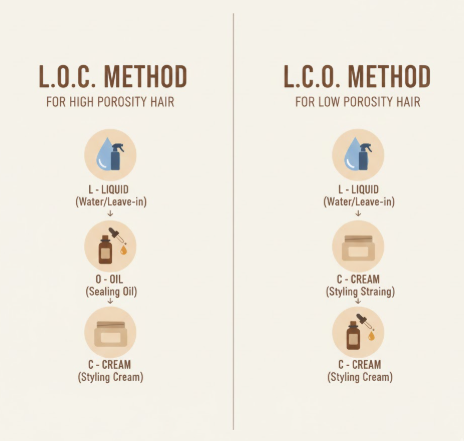
Retaining moisture in 4C hair requires sealing hydration into the strand after application. The two most popular layering methods are LCO and LOC, referring to the order in which products are applied.
The LOC method applies products in this order: Liquid (water or water-based leave-in), Oil, then Cream. This sequence works well for high porosity hair because the oil immediately seals the moisture from the liquid layer, preventing rapid escape through the damaged cuticle.
The LCO method applies products in this order: Liquid, Cream, then Oil. This sequence often works better for low porosity hair because the cream can deliver hydration while the oil provides a final seal on top. The cream layer is more likely to penetrate than an oil applied directly after water.
Experimentation helps you determine which method your hair prefers. Some naturals find success with hybrid approaches or simplified routines using fewer products. The key principle remains consistent: start with water-based hydration and finish with a heavier product to seal.
At Care About Your Hair, we emphasize that finding your perfect moisture routine requires patience and willingness to adjust based on your hair’s feedback.
Essential Ingredients for 4C Hair
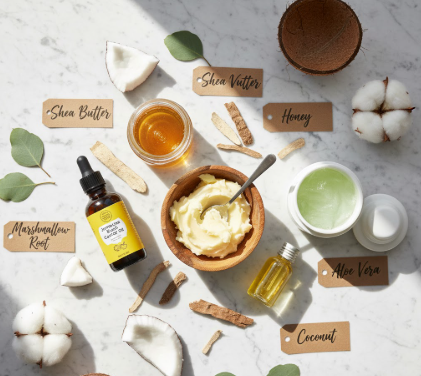
Product selection becomes much easier when you understand which ingredients actually benefit 4C hair and which to avoid. This knowledge allows you to evaluate any product quickly, regardless of marketing claims or price point.
The ingredients that work best for 4C hair address its core challenges: moisture attraction, moisture retention, and strand protection. Learning to read ingredient lists empowers you to make informed purchasing decisions.
Hydrating Humectants
Humectants attract water molecules from the environment and bind them to the hair shaft. These ingredients provide the initial hydration that forms the foundation of any moisture routine.
Glycerin is the most common humectant in hair care, appearing in everything from leave-ins to gels. It works exceptionally well in moderate humidity environments, drawing moisture from the air into your hair. However, glycerin behaves unpredictably in extreme conditions. In very dry climates, it can pull moisture from your hair into the drier environment. In very humid conditions, it can cause excessive swelling and frizz.
Understanding dew point helps you use glycerin effectively. When the outdoor dew point falls between 40 and 60 degrees Fahrenheit, glycerin products work optimally. Outside this range, consider glycerin-free alternatives.
Aloe vera provides hydration along with soothing properties for the scalp. Its lightweight consistency makes it suitable for low porosity hair that rejects heavier products. Many naturals use pure aloe vera juice as the liquid layer in their moisture routine.
Honey offers humectant properties along with natural shine and softening effects. Like glycerin, it attracts moisture from the environment and works best in moderate humidity.
Panthenol, also known as Pro-Vitamin B5, penetrates the hair shaft and attracts moisture from within. This ingredient improves elasticity and provides light conditioning without weight.
Sealing Emollients and Butters
Emollients smooth the cuticle layer and create a barrier that prevents moisture from escaping. These heavier ingredients form the sealing layer in your moisture routine.
Shea butter remains the gold standard for sealing 4C hair. Its rich consistency creates an effective barrier while providing additional conditioning benefits. Unrefined shea butter retains more nutrients than processed versions, though it has a stronger scent that some people find unpleasant.
Jamaican Black Castor Oil has achieved cult status in the natural hair community for its thickness and reputed benefits for edges and overall hair growth. While scientific evidence for growth stimulation is limited, JBCO provides excellent sealing properties and gives hair a lustrous appearance.
Jojoba oil closely mimics the natural sebum produced by your scalp, making it one of the most compatible oils for both hair and scalp application. It provides light sealing without heavy buildup.
Coconut oil and olive oil can penetrate the hair shaft to some degree, providing internal conditioning alongside surface sealing. However, some hair types react negatively to coconut oil, experiencing brittleness rather than hydration. Pay attention to how your hair responds.
Ingredients to Approach with Caution
Not every ingredient works well for 4C hair, and some popular products contain components that may cause problems for your specific texture.
Short-chain alcohols like isopropyl alcohol and SD alcohol can dry out hair when present in high concentrations. These ingredients evaporate quickly, potentially taking moisture with them. Check ingredient lists and avoid products where these alcohols appear near the top.
Mineral oil and petrolatum create effective sealing barriers but can build up on hair if not removed with clarifying shampoos. If you use products containing these ingredients, incorporate regular clarifying into your routine.
Insoluble silicones like dimethicone provide smoothness and shine but require sulfate shampoos for complete removal. Using silicone products with sulfate-free shampoos leads to gradual buildup that blocks moisture absorption. Water-soluble silicones ending in “cone” but beginning with “PEG” wash out more easily.
Styling 4C Hair for Length Retention
Length retention rather than growth rate determines how long your hair becomes. 4C hair grows at the same average rate as other textures, approximately half an inch per month, but its fragility means that breakage often matches or exceeds growth. Strategic styling minimizes manipulation and protects vulnerable ends.
The styling choices you make significantly impact whether you retain the length you grow or lose it to breakage. Low manipulation and protective styling form the core strategies for achieving your length goals.
Protective Styling Explained
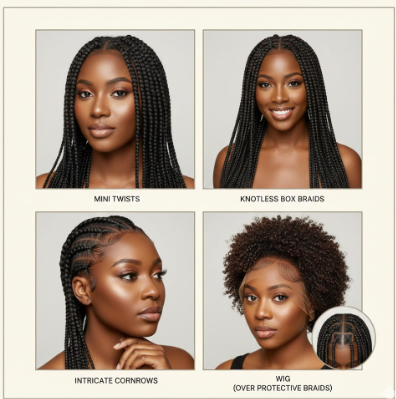
Protective styles tuck away the ends of your hair, shielding the oldest and most vulnerable parts of each strand from environmental damage and daily manipulation. When maintained properly, these styles can accelerate length retention significantly.
Mini twists create a versatile protective style that works for various lengths of 4C hair. The twisting pattern distributes tension evenly and keeps ends contained within the twist formation. Mini twists typically last one to two weeks before needing refreshing.
Box braids and knotless braids rank among the most popular protective styles for 4C hair. These styles can last four to eight weeks with proper care, giving your hair an extended break from daily styling. Knotless braids place less tension on the hairline than traditional box braids, making them a safer choice for those prone to traction sensitivity.
Cornrows provide similar protective benefits in a flatter profile. This style works well under wigs or as a standalone look. Variations like lemonade braids or tribal braids offer styling versatility while maintaining the protective function.
Wigs and crochet styles allow you to experiment with different looks while your natural hair rests underneath in a protective state. Ensure that the braiding pattern underneath does not create excessive tension, and give your scalp regular breaks between installations.
The tension trap represents the primary risk of protective styling. Styles installed too tightly cause traction alopecia, a form of gradual hair loss resulting from consistent pulling on the hair follicles. Warning signs include persistent scalp pain, visible thinning at the hairline, or bumps along the parting. If you experience these symptoms, remove the style immediately and allow your scalp to recover.
Low Manipulation Styles
Low manipulation styles reduce daily handling without fully tucking away the ends. These options work well for naturals who want to wear their hair out while still minimizing breakage risk.
Twist-outs create defined, stretched texture by two-strand twisting wet or damp hair and then unraveling after drying. The resulting waves showcase your hair’s versatility while maintaining some stretch that reduces tangling. Refresh twist-outs by re-twisting sections at night rather than fully restyling each morning.
Braid-outs produce similar results with a slightly different wave pattern. Three-strand braiding creates more defined crimps than twisting. Many naturals alternate between twist-outs and braid-outs to maintain variety without increasing manipulation.
Bantu knots create spiraled, curly results when unraveled. The knots can also serve as a standalone style, offering two looks from one technique. Secure knots gently to avoid creating tension at the roots.
Puff styling gathers hair into a high or low ponytail shape. While this style looks effortless, it can cause breakage at the hairline if you use tight elastic bands or create too much tension. Use satin scrunchies or stretchy headbands designed for natural hair, and vary the placement of your puff to prevent stress on any single area.
Heat Styling and 4C Hair
Heat styling allows for temporary straightening and stretched styles but carries significant risk if done improperly. Understanding safe heat practices helps you enjoy versatility without permanent damage.
The tension method blow-dry uses a comb attachment to stretch hair while drying, creating elongation without direct contact between the heating element and hair. Keep the dryer moving constantly and work in small sections for even results.
Silk presses create sleek, temporarily straightened hair that can last up to two weeks if protected from moisture. The process typically involves blow-drying, flat ironing in small sections with a quality heat protectant, and avoiding humidity. Effective silk presses require professional-grade tools and technique, so many naturals visit salons for this service.
Heat protectants are absolutely essential when using hot tools. These products typically contain silicones that create a barrier between the heating element and your hair structure. While silicones require clarifying shampoos for removal, this trade-off is worthwhile when heat styling. Never apply heat to unprotected hair.
Repeated heat styling without adequate recovery time leads to heat damage, which permanently alters your curl pattern. If you notice that certain sections of your hair no longer curl back after washing, heat damage has likely occurred. These sections will need to be cut off as they grow out.
Common Challenges and Troubleshooting
Every 4C natural encounters obstacles on their hair journey. Understanding the causes of common problems helps you implement effective solutions rather than throwing products at symptoms without addressing root causes.
Most challenges with 4C hair trace back to either moisture imbalance, mechanical damage, or a combination of both. Identifying which category your problem falls into guides you toward the right fix.
Combating Extreme Dryness
Chronic dryness plagues many 4C naturals despite consistent product application. If your hair feels perpetually parched, look beyond your products to identify underlying causes.
The sebum struggle refers to the difficulty natural scalp oils face traveling down tightly coiled hair. On straight hair, sebum slides down the smooth shaft from roots to ends. On 4C hair, each bend and coil creates an obstacle that prevents oil migration. This means your ends rarely receive natural conditioning, requiring manual product application to compensate.
Water quality affects moisture levels more than many people realize. Hard water contains dissolved minerals that can deposit on hair, creating a film that blocks moisture absorption. Signs of hard water damage include product that seems to stop working, persistent dullness, and a residue that rinses out but quickly returns. Installing a showerhead filter can make a noticeable difference for those with hard water.
Sleeping without hair protection accelerates moisture loss. Cotton pillowcases absorb moisture from your hair throughout the night, leaving you drier each morning. Silk or satin pillowcases, bonnets, or scarves create a friction-free surface that preserves your moisture and protects your style.
Dealing with Single Strand Knots
Single strand knots, commonly called fairy knots, occur when the curved end of a strand loops around itself and forms a tiny knot. These knots create weak points that lead to breakage and give ends a rough, uneven appearance.
The cause relates directly to 4C hair’s tight curl pattern. Each strand naturally wants to coil, and loose ends can hook onto themselves or neighboring strands during normal movement. Shrinkage exacerbates this tendency by pulling strands into even tighter formations.
Prevention focuses on keeping ends stretched and sealed. Stretched styles like twist-outs and braids reduce the opportunity for strands to coil upon themselves. Applying a sealing oil or butter to the ends creates a smoother surface less prone to catching.
The search and destroy method involves examining your hair strand by strand and trimming individual knots rather than cutting a uniform length. This preserves your overall length while removing damage. Use sharp hair shears rather than regular scissors, which can create uneven cuts that lead to splitting.
Managing Shrinkage Without Heat
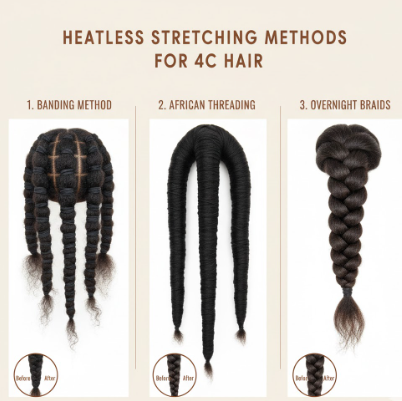
While heat provides the most dramatic stretch, several heatless methods can elongate 4C hair significantly. These techniques allow you to showcase your length without risking heat damage.
The banding method involves wrapping hair elastics along the length of a ponytail or section of hair, creating segments that cannot shrink up. Leave bands in place overnight or until hair is fully dry. Remove carefully to reveal stretched hair.
African threading uses thread wrapped tightly from roots to ends around sections of hair. This traditional technique provides significant stretch and can be worn as a style itself or removed for stretched styling.
Braiding or twisting damp hair at night allows it to dry in a stretched state. Larger sections create more stretch with less definition, while smaller sections create more definition with less stretch. Find your preferred balance based on your styling goals.
Length Retention: Myth vs. Reality
Misinformation about 4C hair growth circulates widely in natural hair communities. Separating fact from fiction helps you focus your energy on practices that actually work rather than wasting time on ineffective techniques.
Understanding the science of hair growth and retention empowers you to evaluate advice critically. When someone claims a product or practice will make your hair grow faster, you can assess that claim against what we know about hair biology.
Myth: 4C Hair Does Not Grow
The reality is that 4C hair grows at the same average rate as all other hair textures, approximately half an inch per month. This growth rate is genetically determined and consistent across ethnicities and hair types.
The confusion arises because 4C hair breaks easily. If your hair grows half an inch monthly but breaks half an inch monthly, your length remains static despite continuous growth. This creates the illusion that 4C hair grows slowly or not at all.
Length retention, not growth stimulation, should be your primary focus. Gentle handling, consistent moisture, and protective styling allow you to retain more of the growth your scalp produces naturally. When retention improves, apparent growth improves proportionally.
Myth: Greasing the Scalp Stimulates Growth
Many people grew up watching parents or grandparents apply grease to their scalps, believing this practice made hair grow. Scientific understanding does not support this belief.
Hair growth occurs within the follicle, beneath the scalp surface, where topical products cannot directly influence cellular activity. Heavy greases can actually clog follicles, potentially impeding healthy growth rather than promoting it.
Scalp health matters for optimal growth, but this means maintaining a clean, balanced environment rather than coating the scalp in occlusive products. Gentle cleansing, occasional scalp massages to increase blood flow, and avoiding irritating ingredients support the best growth conditions.
Myth: Trimming Makes Hair Grow
Trimming hair at the ends cannot possibly affect growth at the root, where new hair emerges from the follicle. This myth persists because of a misunderstanding about what trimming actually accomplishes.
Trimming prevents split ends from traveling up the hair shaft and causing more extensive damage. A split end left untreated will continue splitting upward, eventually breaking off at a point much higher than where a trim would have cut. In this sense, trimming preserves length rather than generating it.
Regular trims, typically every three to four months, maintain healthy ends and prevent splits from causing greater length loss. The goal is not to cut for cutting’s sake but to remove damage before it spreads.
Advanced 4C Care: Seasonal and Lifestyle Adjustments
Static routines rarely serve 4C hair well throughout an entire year. Environmental changes, lifestyle factors, and seasonal shifts all require corresponding adjustments to your regimen. Adapting your approach keeps your hair healthy regardless of external conditions.
Paying attention to how your hair responds to changing conditions allows you to anticipate problems and adjust proactively. This level of awareness develops with experience and transforms you from someone following generic advice to someone who truly understands their own hair.
Winter Care
Cold weather brings multiple challenges for 4C hair. Low humidity, heated indoor air, and friction from winter accessories combine to accelerate moisture loss.
Heavier products become necessary as humidity drops. Butters and thick creams that might feel too heavy in summer provide essential protection during winter months. Layer products more generously and consider reapplying moisture midweek.
Wool hats and scarves create friction that can rough up the cuticle and cause breakage. Line these accessories with satin or silk, or wear a satin bonnet underneath. Pay extra attention to edges and nape areas that contact collars and scarves most frequently.
Protective styles work particularly well during winter because they reduce the manipulation needed in dry, static-prone conditions. Styles like braids or twists under wigs allow your hair to rest while staying protected from the elements.
Summer Care
Summer presents the opposite humidity challenge along with UV exposure and sweat management concerns. Adapting your routine prevents summer-specific damage.
UV radiation can damage hair protein structures, leading to dryness and color fading. Products containing UV filters provide some protection, as do physical coverings like hats or scarves. If you color your hair with products like purple hair dye or other vivid shades, sun protection becomes especially important for maintaining color vibrancy.
Higher humidity allows humectants like glycerin to work optimally, drawing moisture from the abundant environmental water vapor. This is the season to embrace glycerin-based products if your hair tolerates them.
Sweat contains salt that can dry out hair if left to accumulate on the scalp. After workouts or excessive perspiration, rinse your scalp with water even if you are not doing a full wash. This prevents salt buildup without stripping moisture from your strands.
Fitness and 4C Hair
Active lifestyles require specific hair care strategies. Daily workouts generate sweat that cannot be ignored, but daily washing would be excessively drying for most 4C hair.
Protective styles work well for fitness enthusiasts because they contain hair during physical activity while requiring minimal daily maintenance. Braids, twists, and locs accommodate active lifestyles without excessive manipulation.
The rinse and condition approach involves rinsing sweat from the scalp with water after workouts, then applying a light leave-in conditioner. This removes salt and refreshes hair without a full wash cycle. Save thorough shampooing for your regular wash day.
Moisture-wicking headbands can absorb sweat before it reaches your hairline, reducing the amount that accumulates on your scalp and edges. Choose bands designed for natural hair to avoid friction damage.
While discussing hair textures and maintenance, it is worth noting that the principles of understanding your specific hair type apply across all textures. Just as 4C naturals must learn their unique needs, those with other patterns like wavy hair benefit from texture-specific education. For example, information about guy haircuts for wavy hair addresses the particular styling needs of that texture.
Conclusion: Embracing the Crown
Caring for 4C hair successfully requires understanding, patience, and consistency. The knowledge you have gained from this guide equips you to build a personalized routine that addresses your hair’s specific needs rather than following generic advice that may not apply to your texture.
Moisture remains the central concern for healthy 4C hair. Everything from product selection to styling choices should prioritize maintaining hydration within your strands. Master the basics of cleansing, conditioning, and sealing before adding complexity to your routine.
Low manipulation protects the fragile nature of 4C strands. Every time you handle your hair, you create opportunities for breakage. Strategic styling choices reduce these opportunities while still allowing you to express your personal aesthetic.
Patience proves essential because length retention happens gradually. Celebrate small victories along your journey rather than fixating on distant goals. Take progress photos monthly to document changes that happen too slowly to notice day-to-day.
Your 4C hair is not a problem to solve but a feature to understand and nurture. The same structural characteristics that create challenges also enable the incredible versatility and volume that make 4C hair unique. Approach your hair with respect and curiosity, and it will reward you with health, growth, and endless styling possibilities.
Frequently Asked Questions
What is the difference between 4B and 4C hair?
4B hair has a visible Z-pattern with sharp bends, while 4C hair is more tightly coiled with no defined pattern without product manipulation. The main distinctions are that 4C appears denser, experiences greater shrinkage of up to 75 percent, and typically requires more moisture intervention.
How often should I wash 4C hair?
Most 4C naturals wash their hair every seven to fourteen days. Washing more frequently can strip natural oils and cause dryness, while washing less often may lead to scalp buildup. Adjust your schedule based on your lifestyle, scalp condition, and product usage.
Why is my 4C hair so dry and brittle?
4C hair struggles with dryness because natural scalp oils cannot travel down the tightly coiled shaft. Additional factors include low or high porosity issues, hard water deposits, stripping shampoos, and insufficient sealing after moisturizing. Identifying your specific cause helps you target the right solution.
How do I stop 4C hair from shrinking?
Shrinkage cannot be permanently eliminated without chemical alteration, but stretching methods reduce its appearance. Effective techniques include banding, African threading, braiding or twisting while damp, and tension blow-drying. Embrace shrinkage as a sign of healthy, elastic hair.
What are the best oils for 4C hair?
Jamaican Black Castor Oil excels for sealing ends and thickening edges. Jojoba oil works well for scalp application because it mimics natural sebum. Coconut oil and olive oil can penetrate the hair shaft for internal conditioning, though some textures react negatively to coconut oil.
Does 4C hair grow slower than other hair types?
No, 4C hair grows at the same average rate of half an inch per month as all other textures. It appears to grow slower because fragile strands break easily, negating growth through breakage. Improving length retention through gentle handling and moisture makes growth visible.
Is the LOC or LCO method better for 4C hair?
The best method depends on your porosity. Low porosity 4C hair often responds better to LCO because cream penetrates before oil seals. High porosity 4C hair typically prefers LOC because oil immediately seals moisture before it escapes. Experiment to find your hair’s preference.