 Dave King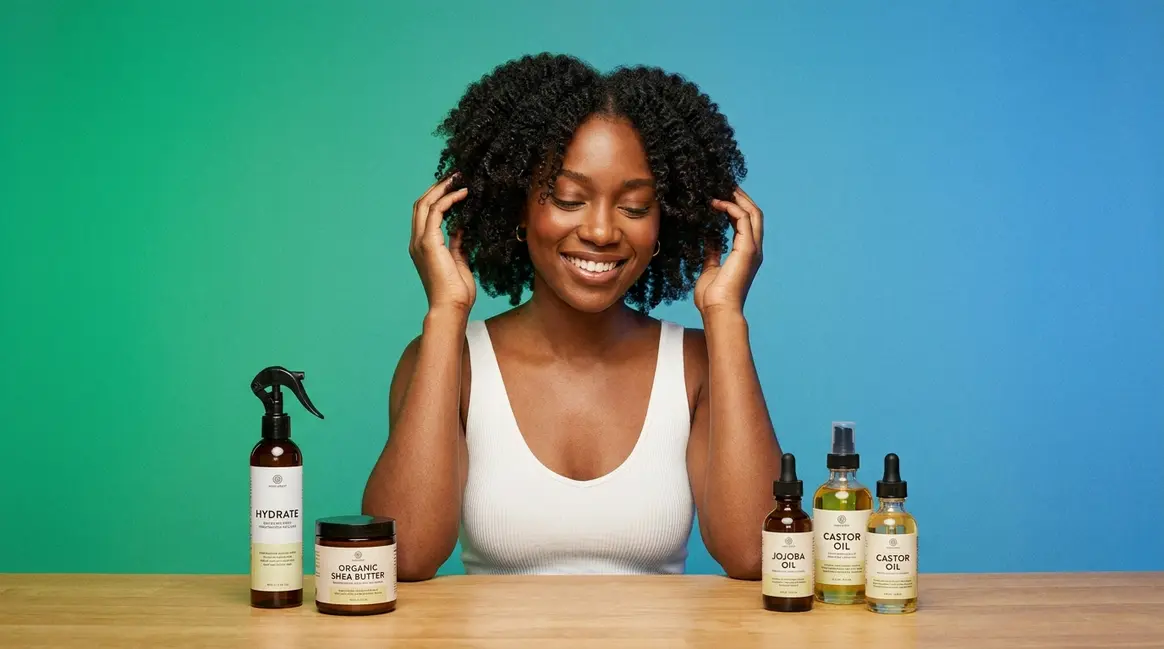
Most people with 4C hair have never seen what their hair can actually look like — not because their hair is “difficult,” but because no one has given them the right system.
“So many people walk into the salon convinced they have ‘4C’ or even ‘4Z’ hair. But the moment that hair is properly cleansed, hydrated, and cared for… a whole different texture shows up. One they’ve never even seen before.”
You’ve tried the products. You’ve watched the videos. You still end every wash day with dry, tangled hair that seems to shrink faster than it grows. That frustration is real — and it has a specific, fixable cause. By the end of this guide, you’ll have a complete, step-by-step 4C hair care system — from wash day routines to growth strategies — so you can stop guessing and start seeing real results. This guide covers everything: understanding your curl type, building a wash day routine, choosing the right products, retaining length, addressing porosity, caring for men’s 4C hair, and navigating medical considerations like Nizoral use and lupus-related fragility.
The Moisture-First Framework treats every 4C hair challenge — dryness, breakage, slow growth — as a moisture-retention problem. Hair of all types grows approximately half an inch per month; the key is keeping it on your head.
- The Moisture-First Framework: Every 4C hair decision traces back to one root problem — moisture escaping the hair shaft faster than it can be replaced
- 4C hair is the tightest curl pattern in the Andre Walker system, making it the most prone to moisture loss and breakage
- The LOC or LCO method (Liquid, Oil, Cream) is the most effective moisture-layering system for 4C coils — which order you use depends on your porosity
- Protective styling reduces daily manipulation and is the #1 driver of visible length retention
- Sulfate-free cleansers + weekly deep conditioning form the non-negotiable foundation of any 4C routine
**
What Is 4C Hair? Understanding Your Curl Type
4C hair is the tightest pattern in the Andre Walker Hair Typing System (a visual classification developed by Oprah Winfrey’s stylist in the 1990s, ranging from Type 1 straight to Type 4 coily). It is characterized by an extremely tight coil or zig-zag pattern with no defined curl when dry, significant shrinkage of up to 70–75% of actual length, and the highest fragility of any curl type. That structural reality is the reason 4C hair care requires a dedicated approach — and it’s the foundation of everything in this guide.
NCBI research on hair structure confirms that African hair’s asymmetric cross-sectional shape and variations in diameter increase susceptibility to weathering and chemical damage (NCBI, 2015).
Understanding your hair’s biology removes the guesswork. Once you know why your coils behave the way they do, every product choice and technique becomes logical rather than arbitrary.
What Is 4C Hair? The Science Behind Tightly Coiled Strands
4C hair is the tightest pattern in the Andre Walker Hair Typing System, defined by coils so compact they often form a dense zig-zag or “Z” shape with no visible curl definition when dry. The strands have an elliptical cross-section (an oval shape rather than round), meaning natural scalp oils — called sebum — cannot travel down the spiral shaft the way they can on straight hair. The result: the ends of 4C hair are naturally the driest part of the strand, regardless of how much product you apply to the roots.
Think of it this way. A straight straw lets water flow freely from one end to the other. A corkscrew holds water in its curves but also loses it at every bend under friction. 4C coils are that corkscrew — beautiful in their complexity, but requiring a deliberate strategy to keep moisture inside.
This is why every step in this guide traces back to one question: how do we get moisture in, and keep it there? That question is the heart of The Moisture-First Framework — the principle that every decision in 4C hair care (products, techniques, protective styling, even how you sleep) is a specific solution to one root problem: moisture escaping the hair shaft faster than it can be replaced. The structural vulnerability of African hair types has been documented in peer-reviewed research confirming that the unique cross-sectional shape increases susceptibility to moisture loss and breakage (NCBI, 2015).
Shrinkage — the dramatic reduction in visible length when 4C hair dries — is one of the most misunderstood features of this hair type. 4C hair can shrink up to 75% of its actual length, making length retention — not growth speed — the real measure of progress. A person with 12 inches of 4C hair may appear to have only 3 inches when dry. This is not damage. It is physics.
Now that you understand why 4C hair behaves the way it does, let’s look at how it compares to the other type 4 patterns — because knowing exactly which type you have changes what products and techniques work best for you.
4A vs. 4B vs. 4C Hair: How to Tell the Difference
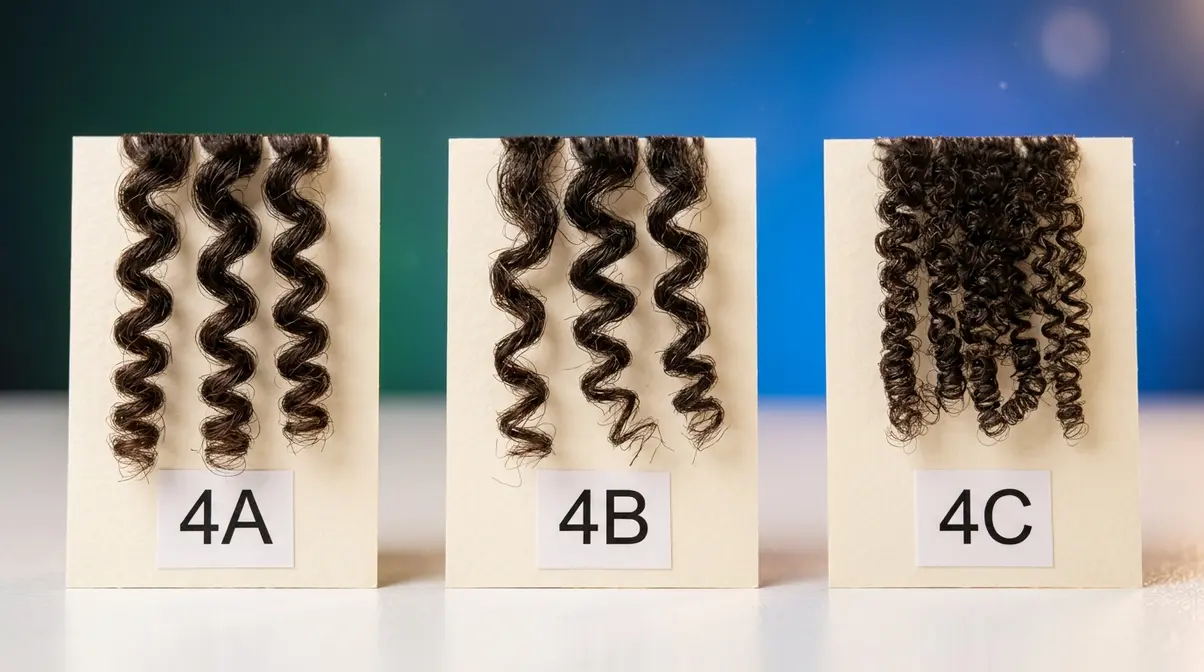
Knowing the difference between 4A, 4B, and 4C hair matters because each subtype responds differently to moisture techniques, and many people have more than one pattern on their head at the same time. The comparison below covers the three type 4 subtypes clearly.
4A hair features a defined S-shaped coil with a diameter roughly similar to a crochet needle. It retains visible curl definition even when dry, and it is the least prone to shrinkage of the three. Moisture retention is relatively easier because the coil is more uniform and the cuticle (the outermost protective layer of the hair shaft) lies flatter.
4B hair has an angular Z-shape with little to no visible curl definition when dry. It shrinks significantly — up to 65% — and needs consistent moisture, but it is slightly less fragile than 4C because the coil bends are less extreme. Many people describe 4B hair as “fluffy” when fully moisturized.
4C hair is the tightest coil, often with no visible pattern when dry, and the highest fragility at the curl bends. Many people with 4C hair also have sections of 4B — this is completely normal and simply means your routine needs to address both. Some people in natural hair communities describe their hair as “4Z” — a term used for hair that seems even tighter or more compact than the standard 4C classification. This usually indicates extremely high shrinkage and fragility, both of which respond well to the Moisture-First Framework.
To identify your pattern at home: wet a single strand and observe. A defined S-curl means 4A. An angular Z without definition means 4B. The tightest coil or no discernible pattern means 4C.
“So many people walk into the salon convinced they have ‘4C’ or even ‘4Z’ hair. But the moment that hair is properly cleansed, hydrated, and cared for… a whole different texture shows up. One they’ve never even seen before.”
Most people with 4C hair have never seen their true texture — not because their hair is damaged, but because they’ve never given it the sustained moisture it needs to reveal itself. The table below summarizes the key differences across all three type 4 subtypes for quick reference.
| Feature | 4A | 4B | 4C |
|---|---|---|---|
| Curl Pattern | Defined S-coil | Angular Z-shape | Tight coil / no visible pattern |
| Shrinkage | 40–50% | 50–65% | 65–75%+ |
| Fragility | Moderate | Moderate-High | Highest |
| Moisture Retention | Better | Moderate | Most challenging |
| Defining Product Need | Light-medium | Medium-heavy | Heavy |
Knowing your type is step one. But here’s something many 4C beginners don’t realize: the biggest myths about this hair type may be what’s been holding your routine back.
Is 4C Hair the Worst Hair Type? Busting Common Myths
The idea that 4C hair is the “worst” hair type is one of the most damaging narratives in natural hair culture — and it has no basis in biology. This belief largely stems from Eurocentric beauty standards that prioritize looser curl patterns and from decades of inadequate care education that left 4C hair owners without the tools to see their hair thrive.
The facts tell a different story. 4C hair is incredibly strong, highly versatile, and fully capable of dramatic length when retained properly. The problem has never been the hair itself — it has been the routine, or the absence of one. L’Oréal Paris on 4C versatility confirms that 4C hair is not inferior; it simply requires a moisture-focused approach tailored to its unique structure.
On the question of rarity: Type 1A hair (bone-straight, ultra-fine) is considered the rarest hair type globally. 4C is among the most common hair types for people of African descent. Rarity does not equal value — and neither does looseness.
When 4C hair is properly cared for, “a whole different texture shows up.” That is not an exception. That is what consistently happens when the Moisture-First Framework is applied with patience and the right tools. The hair was never the problem.
Now that you know exactly what 4C hair is and why it behaves the way it does, you’re ready for the most important part of this guide: building a routine that actually works.
Your Complete 4C Hair Care Routine (Step by Step)
A proper 4C hair care routine is not a collection of random tips — it is a systematic answer to the moisture-loss problem. Every step exists for a specific reason, and understanding that reason is what turns a frustrating wash day into a repeatable, confidence-building process. AAD guidelines for washing afro-textured hair confirm that the American Academy of Dermatology recommends washing tightly coiled hair once a week or every other week to prevent buildup without causing excessive dryness (AAD, 2024).
User consensus across r/Naturalhair consistently identifies two failure points for beginners: skipping the pre-poo step and detangling dry hair. Both are addressed in the routine below.
Before You Start: What You’ll Need (Prerequisites)
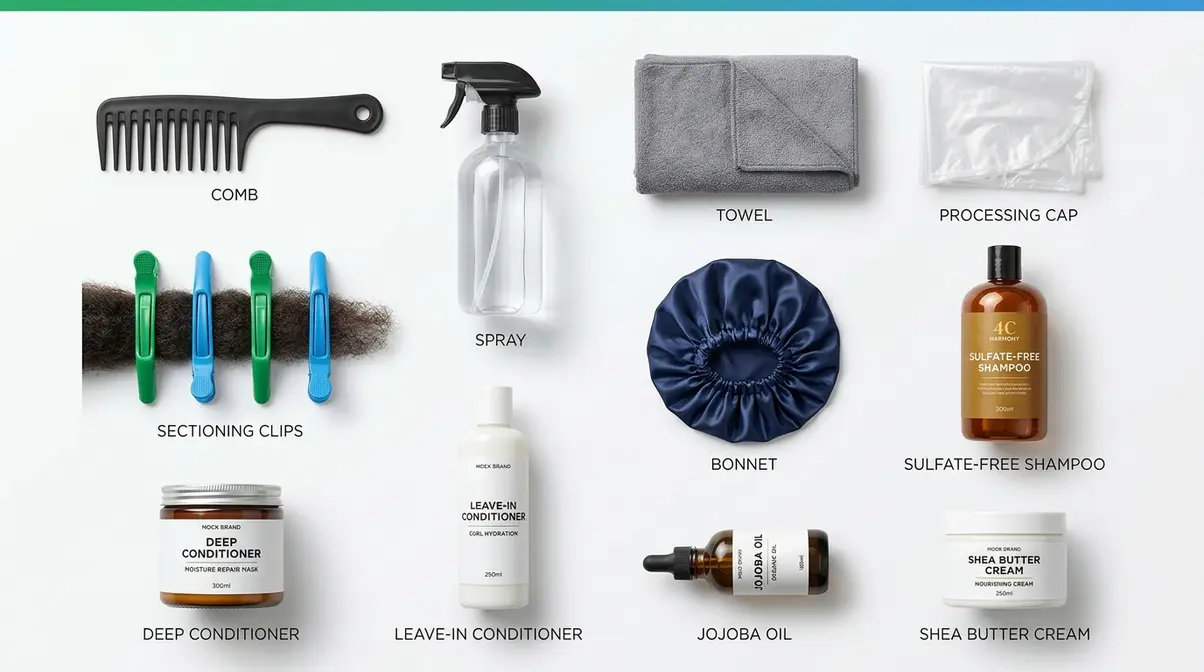
Gather these items before your first wash day and you’ll avoid the most common beginner frustration: stopping mid-routine to search for a missing product.
Your Wash Day Kit:
- Tools:
- Wide-tooth comb (NOT a fine-tooth comb — fine teeth tear through coils)
- Spray bottle filled with water
- Microfiber towel or an old cotton T-shirt (NOT a regular terry cloth towel — terry cloth creates friction that causes frizz and breakage)
- Plastic processing cap (for deep conditioning)
- Sectioning clips (at least 4)
- Satin bonnet (a smooth-fabric sleep cap that reduces friction and moisture loss overnight) or silk pillowcase
- Products:
- Sulfate-free shampoo
- Deep conditioner (moisture or protein-based)
- Leave-in conditioner
- Oil of choice (jojoba, castor, or olive oil)
- Cream or butter sealant (shea butter, hair pudding)
Time: Beginner wash days for 4C hair often take 2–4 hours. This is completely normal. Planning that time is part of the routine — not a sign that something is wrong.
With your kit ready, here’s the complete wash day routine — eight steps that take your hair from dry and tangled to moisturized and defined.
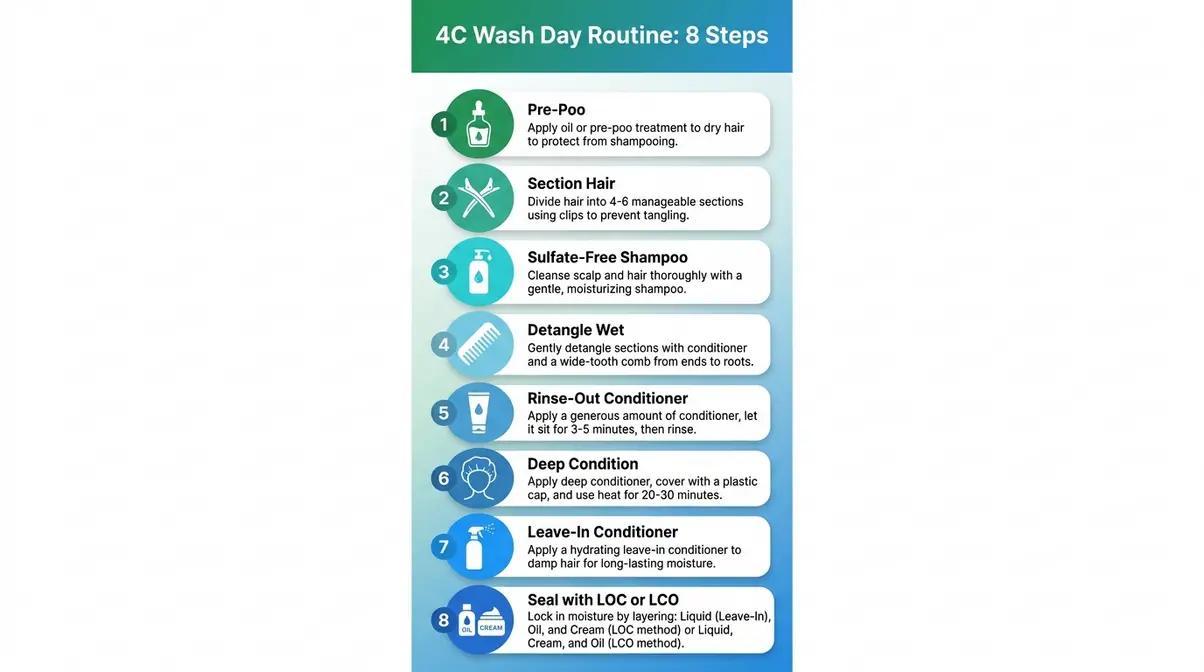
The Wash Day Routine: 8 Steps from Pre-Poo to Seal
Learning how to take care of 4C hair starts with a structured wash day sequence. Each step below includes the why before the how — because when you understand the purpose of a step, you’re far less likely to skip it.
Step 1: Pre-Poo (Pre-Shampoo Treatment)
Why: Shampoo — even sulfate-free formulas — strips some natural oils from the hair. A pre-poo (short for pre-shampoo treatment) creates a protective barrier so the cleanse doesn’t leave your hair bone-dry.
How: Apply a penetrating oil (coconut or olive oil) or a conditioner to dry hair before shampooing. Work it through each section from roots to ends. Leave on 15–30 minutes, or overnight under a plastic cap for maximum benefit.
Step 2: Section Hair into 4 Parts
Why: Working in sections prevents tangling and ensures every part of your hair gets equal product coverage. Unsectioned 4C hair tangles aggressively during washing.
How: Divide hair into four sections using clips. Keep them clipped until you work through each one.
Step 3: Cleanse with Sulfate-Free Shampoo
Why: 4C hair needs scalp cleansing, but the lengths need protection. Applying shampoo to the entire length strips moisture from already-dry ends.
How: Apply shampoo to the scalp only. Massage gently with fingertips — never nails. Allow the lather to rinse through the length without scrubbing. Common Beginner Mistake: Scrubbing the length of the hair causes severe tangling and breakage.
Step 4: Detangle Under Running Water (Wet Only)
Why: Increased risk of breakage from dry detangling is well-documented — PubMed research confirms that mechanical manipulation of dry afro-textured hair significantly increases the risk of trichorrhexis nodosa (a type of hair breakage at the cortex, the inner structural layer of the hair shaft) (PubMed, 2015). Dry detangling is the #1 cause of 4C breakage.
How: Apply a detangling conditioner or leave-in to wet hair. Use a wide-tooth comb starting from the ends and working upward to the roots, section by section.
Step 5: Apply Rinse-Out Conditioner
Why: Rinse-out conditioner softens the hair and prepares the cuticle (the outer protective layer of the hair shaft) for the deep conditioning step.
How: Coat hair generously, leave 3–5 minutes, then rinse with cool water. Cool water closes the cuticle, sealing in moisture.
Step 6: Deep Condition (Non-Negotiable Weekly)
Why: Deep conditioning penetrates the cortex (the inner layer of the hair), providing structural moisture that surface conditioners cannot reach. Skipping this step is the single most common reason 4C hair stays dry.
How: Apply a moisture or protein deep conditioner, cover with a plastic processing cap, and sit under a hooded dryer or use your body heat for 20–45 minutes. Rinse thoroughly.
Step 7: Apply Leave-In Conditioner
Why: Leave-in conditioner is the “L” (Liquid) in the LOC/LCO moisture-layering method. Applied to soaking-wet hair, it delivers a sustained moisture base that the subsequent layers will seal in.
How: Apply leave-in to each section while hair is still dripping wet. Distribute evenly from roots to ends.
Step 8: Seal with Oil + Cream (LOC or LCO Method)
Why: This final step locks in everything from Steps 6 and 7. Without a sealant layer, moisture evaporates within hours.
How: Apply oil and cream in the order that matches your porosity — covered fully in the Specialized Care section. See the LOC vs. LCO comparison below for guidance.
You’ll notice steps 7 and 8 mention the LOC and LCO methods. This is where most beginners get confused — and where choosing the right method for your hair type makes a dramatic difference in how long your moisture lasts.
The LOC vs. LCO Method: Which Is Right for You?
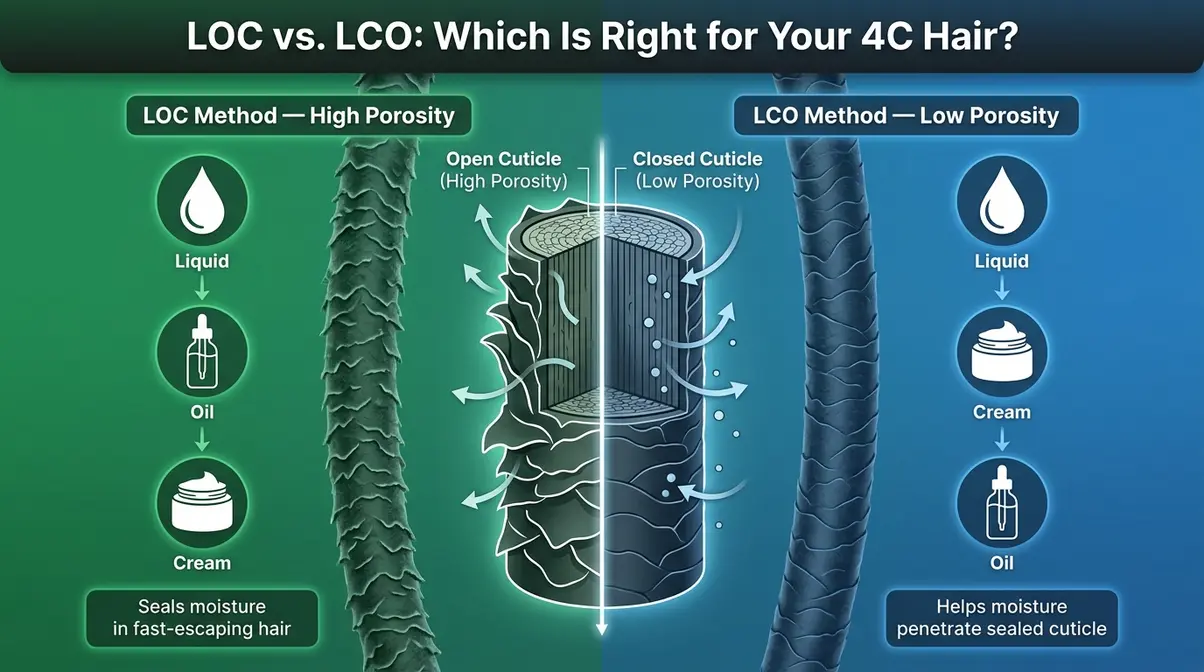
The LOC method (a product-layering technique standing for Liquid, Oil, Cream) and the LCO method (a variation where Cream is applied before Oil) are the two most effective moisture-layering systems for 4C hair care. The difference between them is not arbitrary — it is determined by your hair’s porosity.
LOC works best for high porosity hair — hair that absorbs moisture quickly but loses it just as fast. The oil layer sits between the water and the cream, acting as a barrier that slows moisture escape before the cream seals everything in.
LCO works best for low porosity hair — hair that resists moisture absorption. The cream layer helps water penetrate the cuticle more effectively, and the oil seals last without blocking the absorption that already happened.
Not sure which you are? Try LOC for two weeks, then LCO for two weeks. The method that keeps your hair moisturized longest — without greasiness or dryness — is your match.
For product selection: use a leave-in conditioner as your Liquid (L), jojoba or castor oil as your Oil (O), and shea butter cream or hair pudding as your Cream (C). Exploring the Moisture-First approach to 4C hair helps you match products to your porosity type for better results.
| Method | Order | Best For | Why It Works |
|---|---|---|---|
| LOC | Liquid → Oil → Cream | High porosity hair | Oil barrier slows moisture escape before cream seals |
| LCO | Liquid → Cream → Oil | Low porosity hair | Cream aids water penetration; oil seals without blocking |
Once you’ve nailed your wash day, the real work begins between washes — keeping your hair moisturized every single day.
Your Daily & Weekly Moisture Maintenance Plan
Maintaining a 4C hair care routine between wash days is simpler than most beginners expect — it does not mean re-washing daily. It means protecting the moisture you’ve already built.
Daily: Spritz hair lightly with a water and leave-in conditioner mix, then seal with a light oil. This is called “refreshing.” Focus especially on your ends — they are the oldest, driest part of 4C hair and the most prone to splitting. Keep manipulation minimal. Every time you comb, pull, or style, you risk breakage.
Weekly: Wash day. Deep condition without fail. Across natural hair communities, the consistent feedback is that skipping even one week of deep conditioning leads to noticeable dryness and increased breakage within days. This step is non-negotiable.
Monthly: Trim split ends — even 1/4 inch prevents splits from traveling up the shaft and causing cascading breakage. Follow with a clarifying wash to remove product buildup that accumulates even with sulfate-free products over time.
| Day | Task |
|---|---|
| Sunday | Wash Day (full 8-step routine) |
| Monday–Tuesday | Rest — satin bonnet at night |
| Wednesday | Refresh (spritz + light oil) |
| Thursday–Friday | Rest — satin bonnet at night |
| Saturday | Refresh or protective style maintenance |
The final piece of your daily routine happens at night — and it’s one of the most underestimated steps in 4C hair care.
Nighttime Routine: Protecting 4C Hair While You Sleep
How to care for 4C hair at night comes down to one principle: reduce friction. While you sleep, your hair rubs against whatever surface it contacts. Cotton pillowcases absorb moisture from your hair and create friction that causes breakage by morning.
- Satin or silk bonnet — NOT cotton. Cotton actively pulls moisture out of your hair overnight. A satin bonnet reflects that moisture back. This single swap can dramatically reduce daily dryness, and it costs under $10.
- The pineapple method (for longer 4C hair): Loosely gather all your hair at the top of your head using a satin scrunchie before bed. This preserves your style, reduces tangles, and minimizes friction along the length.
- Satin pillowcase as a backup: For nights when your bonnet slips off, a satin pillowcase ensures your hair is still protected even if you wake up bare-headed.
Your routine is only as good as the products you use. Next, let’s break down exactly what to look for — and what to avoid — when choosing 4C hair care products.
Essential Products for 4C Hair (By Category)
Choosing the right hair care products for 4C hair is not about finding the most expensive options — it is about understanding which ingredients serve the Moisture-First Framework’s three goals: attract moisture, absorb moisture, and seal moisture. Every product category in this section maps directly to one of those goals. NCBI hair cosmetics research confirms that emollients, humectants, and occlusives work synergistically to maintain moisture balance in chemically vulnerable hair types (NCBI, 2015).
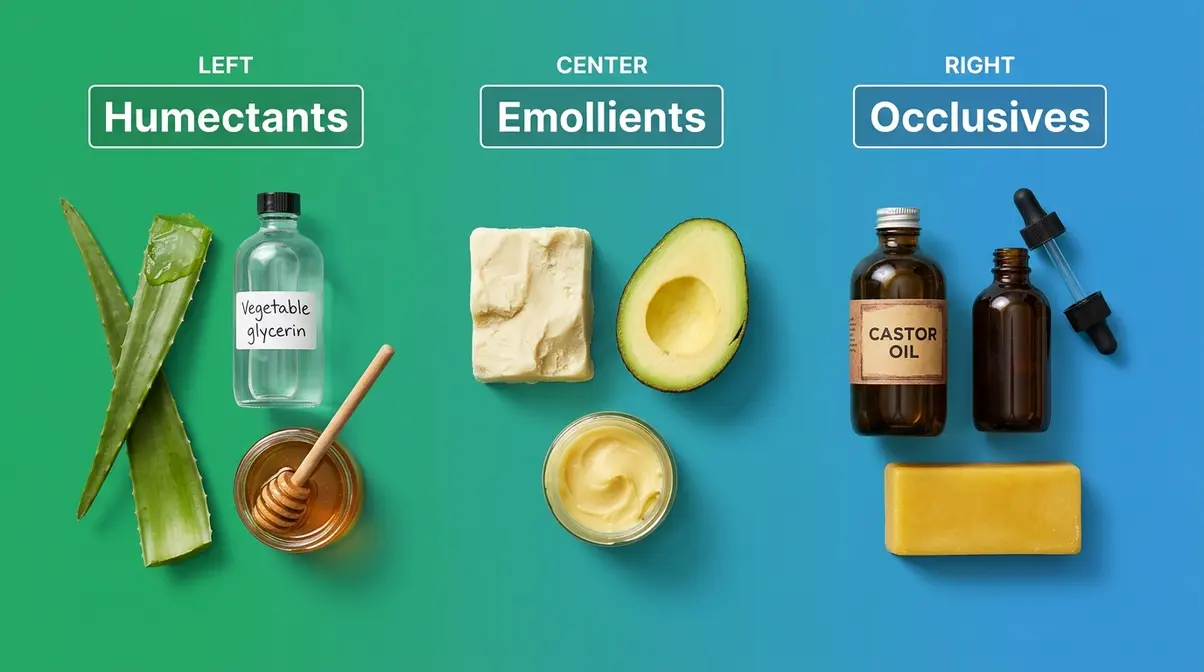
The essential ingredients for 4C hair fall into three functional categories that mirror the LOC/LCO method itself: humectants draw moisture in, emollients soften and smooth, and occlusives seal it all in place.
Ingredients to Look For (and Avoid)
The Moisture-First Framework organizes ingredients by function. Humectants draw moisture from the air — think of them like a magnet for water. Emollients soften and smooth the hair shaft, reducing friction between coils. Occlusives (or sealants) create a physical barrier that slows moisture evaporation from the hair.
- Ingredients to look for:
- Humectants: Glycerin (glycerin, a humectant that draws moisture from the air into the hair shaft), aloe vera, honey
- Emollients: Shea butter (a rich emollient extracted from the shea tree nut, used for sealing and softening), avocado oil, mango butter
- Occlusives: Castor oil (a thick plant-based oil used to seal moisture and support scalp health), jojoba oil, beeswax
- Ingredients to avoid:
- Sulfates (a class of harsh cleansing agents — sodium lauryl sulfate, sodium laureth sulfate — that strip natural oils)
- Drying alcohols (alcohol denat., isopropyl alcohol — these evaporate fast and take your hair’s moisture with them)
- Mineral oil (a cheap occlusive that sits on the hair surface without providing any moisture benefit, and blocks absorption of beneficial ingredients)
- Non-water-soluble silicones (they build up on the hair shaft over time, blocking moisture from entering)
Protein balance is the one nuance beginners often miss. 4C hair needs both moisture AND protein — specifically hydrolyzed keratin or hydrolyzed wheat protein, which temporarily patch the hair shaft. Too much protein makes hair stiff and prone to breakage (“protein overload”). Too little leaves hair limp and weak. A rough guide: aim for a 2:1 moisture-to-protein ratio in your product rotation. Use a protein treatment once or twice a month, not every wash day.
“The three categories of ingredients 4C hair needs most are humectants (attract moisture), emollients (soften), and occlusives (seal) — in that application order.”
| ✅ Look For | ❌ Avoid |
|---|---|
| Glycerin (humectant) | Sodium Lauryl Sulfate (harsh cleanser) |
| Shea Butter (emollient) | Alcohol Denat. (drying alcohol) |
| Aloe Vera (humectant + soothing) | Mineral Oil (blocks absorption) |
| Castor Oil (occlusive + scalp support) | Non-water-soluble Silicones (buildup) |
| Hydrolyzed Keratin (protein) | Petroleum (heavy, pore-clogging) |
With this ingredient knowledge, you can evaluate any product on the shelf. Now let’s walk through the specific product categories your routine needs, starting with the most important: your cleanser.
Cleansers: Sulfate-Free Shampoos That Work for 4C Hair
Sulfate-free cleansers are the foundation of any routine built on the Moisture-First Framework. AAD on scalp cleansing for coiled hair confirms that overwashing tightly coiled hair strips essential oils, with the American Academy of Dermatology recommending once-weekly or biweekly cleansing (AAD, 2024). Products for extremely dry 4C hair should always start with a gentle, sulfate-free cleanser as the baseline.
Look for cleansers containing gentle surfactants like cocamidopropyl betaine or sodium cocoyl isethionate — these remove buildup and excess oil without stripping the scalp. Many moisturizing sulfate-free shampoos also contain conditioning agents like aloe vera or glycerin, which begin the moisture process during the cleanse itself.
Co-washing (conditioner-only washing) is a popular option for 4C hair between full wash days. It works especially well for high porosity hair that loses moisture quickly and benefits from frequent conditioning. However, co-washing alone can cause product buildup in low porosity hair — which is why a sulfate-free shampoo cleanse is still needed weekly, even for those who co-wash mid-week.
Clarifying shampoos — typically stronger formulas that remove stubborn buildup — should be used once a month at most. Even with consistent sulfate-free washing, styling products accumulate on the scalp and shaft over time. A monthly clarifying wash resets the scalp and allows your moisturizing products to penetrate more effectively. After any clarifying wash, deep condition immediately to restore lost moisture.
Once your hair is clean, it’s ready to absorb the most important products in your routine: deep conditioners and leave-ins.
Deep Conditioners & Leave-Ins for Maximum Moisture
Deep conditioners and leave-in conditioners serve different but complementary roles in the Moisture-First Framework. Understanding the difference prevents one of the most common beginner mistakes: using them interchangeably.
- Deep conditioners are formulated to penetrate the cortex during a heat-activated treatment (20–45 minutes under a hooded dryer or processing cap). They address structural moisture deficits — the kind that cause chronic dryness, brittleness, and breakage. There are two types:
- Moisture deep conditioners (containing humectants and emollients) restore hydration to depleted strands — use these most weeks
- Protein deep conditioners (containing hydrolyzed keratin or wheat protein) temporarily strengthen the hair shaft — use once or twice monthly
Look for deep conditioners containing shea butter, avocado, honey, or coconut milk for moisture formulas, and hydrolyzed keratin or silk amino acids for protein formulas.
Leave-in conditioners are lighter formulas applied to wet hair after rinsing out the deep conditioner. They are the “L” (Liquid) in your LOC or LCO routine. They provide a continuous moisture base that the oil and cream layers will seal in. Look for water as the first ingredient, followed by humectants like glycerin or aloe vera. Natural hair care products for 4C hair that combine leave-in with detangling properties are especially useful for beginners — they simplify the post-wash process.
A practical tip from across natural hair communities: if your hair feels dry within 24 hours of wash day, your deep conditioner may not be penetrating properly. Try adding heat to your deep conditioning step — even a warm towel over your processing cap makes a significant difference in penetration.
Oils and Sealants: The Final Step in Your LOC/LCO Routine
Oils and sealants are the final layer in the Moisture-First Framework — the step that determines how long everything else lasts. Without a proper sealant, moisture evaporates from 4C coils within hours. 4C hair products for moisture are only as effective as the seal applied over them.
- Penetrating oils absorb into the hair shaft and provide lasting benefits from within. The best penetrating oils for 4C hair include:
- Coconut oil — high in lauric acid, which penetrates the cortex and reduces protein loss (best for pre-poo and deep conditioning enhancement)
- Olive oil — penetrates the shaft and adds softness; works well for both pre-poo and LOC/LCO
- Jojoba oil — closely mimics sebum, making it an excellent scalp oil and lightweight sealant for fine 4C hair
- Sealing oils (occlusives) sit on top of the hair shaft and create a physical moisture barrier:
- Castor oil — thick, high in ricinoleic acid, excellent for sealing and scalp massage; too heavy for fine hair as a leave-in but ideal as a weekly scalp treatment
- Grapeseed oil — lightweight occlusive, ideal for fine or low porosity 4C hair that gets weighed down easily
Creams and butters are the final layer in the LOC sequence, or the second layer in LCO. Shea butter is the most widely used — it is rich in fatty acids and provides a soft, flexible seal. Hair puddings and curl creams that combine emollients with light occlusives work well as a combined C layer for beginners who want to simplify their product count.
How to Grow 4C Hair: Length Retention Over Speed

Growing 4C hair is largely a retention game, not a speed game. The hair is almost certainly growing — the challenge is keeping what grows. Understanding this distinction changes everything about how you approach your routine and your expectations. User consensus across r/Naturalhair consistently confirms that most people who feel their hair “doesn’t grow” are actually experiencing significant breakage that offsets growth rather than a slow growth rate.
Why 4C Hair Seems Like It Isn’t Growing (The Shrinkage Truth)
How quickly does 4C hair grow? All human hair — regardless of texture — grows at an average of approximately 0.5 inches (1.25 cm) per month, or about 6 inches per year (American Academy of Dermatology, 2024). 4C hair is not an exception to this. The reason it seems slower is a combination of two forces working against visible length: shrinkage and breakage.
Shrinkage alone can make 6 inches of new growth appear as 1.5–2 inches when dry. Add breakage from dry detangling, manipulation, or insufficient moisture, and the hair that grew in January may be gone by March. Length retention — not growth acceleration — is the real goal. Every step in this guide is, at its core, a retention strategy.
The Moisture-First Framework addresses both factors directly. Moisture reduces breakage by keeping the hair shaft flexible and resilient. Low-manipulation styling reduces the mechanical breakage that occurs every time you comb, pull, or re-style. Together, these two habits allow your natural growth rate to accumulate visibly over time.
Protective Styling: Your Best Tool for Length Retention
Protective styles are hairstyles that tuck the ends of your hair away from friction, environmental exposure, and daily manipulation. Because the ends are the oldest, driest, and most fragile part of 4C hair, protecting them directly reduces breakage and allows length to accumulate. Common protective styles include braids, twists, buns, cornrows, wigs, and crochet styles.
Carol’s Daughter guidance on protective styling emphasizes that protective styles work best when the hair underneath is properly moisturized before installation — a dry protective style can cause as much breakage as no protective style at all.
Low-manipulation styles — styles that require minimal daily re-styling, like wash-and-go sets or twist-outs — are a step below full protective styles but still significantly better than daily combing and re-styling. The principle is simple: the less you touch your hair, the less opportunity there is for breakage.
- Guidelines for protective styling success:
- Moisturize and seal thoroughly before installing any protective style
- Do not keep a protective style in for more than 6–8 weeks — extended wear without moisture access causes matting and breakage
- Avoid styles that pull tightly at the hairline — this is the leading cause of traction alopecia (covered in the Scalp Health section)
- Refresh moisture every 1–2 weeks even while in a protective style, using a light spritz and oil on exposed parts of the hair
Scalp Massage, Nutrition & Lifestyle Habits That Support Growth
While retention is the primary growth strategy for 4C hair, supporting the scalp’s health and the body’s natural growth processes creates the optimal environment for the hair you retain to stay strong.
Scalp massage has demonstrated promise in supporting hair health. A small study published in ePlasty (2016) found that standardized scalp massages over 24 weeks were associated with increased hair thickness — suggesting that mechanical stimulation may support dermal papilla cell activity. Use fingertips (not nails) in circular motions for 4–5 minutes before or during washing. Adding castor oil to your scalp massage enhances the benefit by delivering fatty acids directly to the follicle area.
Nutrition plays a supporting role in hair health. Research consistently links deficiencies in iron, zinc, biotin (Vitamin B7), and Vitamin D to increased hair shedding and reduced growth rate (Journal of Cosmetic Dermatology, 2019). A balanced diet rich in leafy greens, eggs, legumes, and fatty fish covers most of these bases. If you suspect a deficiency, consult a healthcare provider before starting supplements — excess biotin and certain fat-soluble vitamins can cause harm at high doses.
Lifestyle factors that negatively affect 4C hair growth include chronic stress (which can trigger telogen effluvium, a temporary but significant increase in shedding), inadequate sleep, and harsh chemical treatments applied without sufficient recovery time between sessions.
Specialized Care: Porosity, Damage & Seasonal Adjustments
Porosity is the single most important variable in 4C hair care — more important than curl pattern, more important than product brand. Yet it is one of the least understood concepts among beginners. The Moisture-First Framework only works when products are matched to your hair’s porosity, because porosity determines whether moisture enters the shaft at all.
The Hair Porosity Test (and Why It Changes Everything)
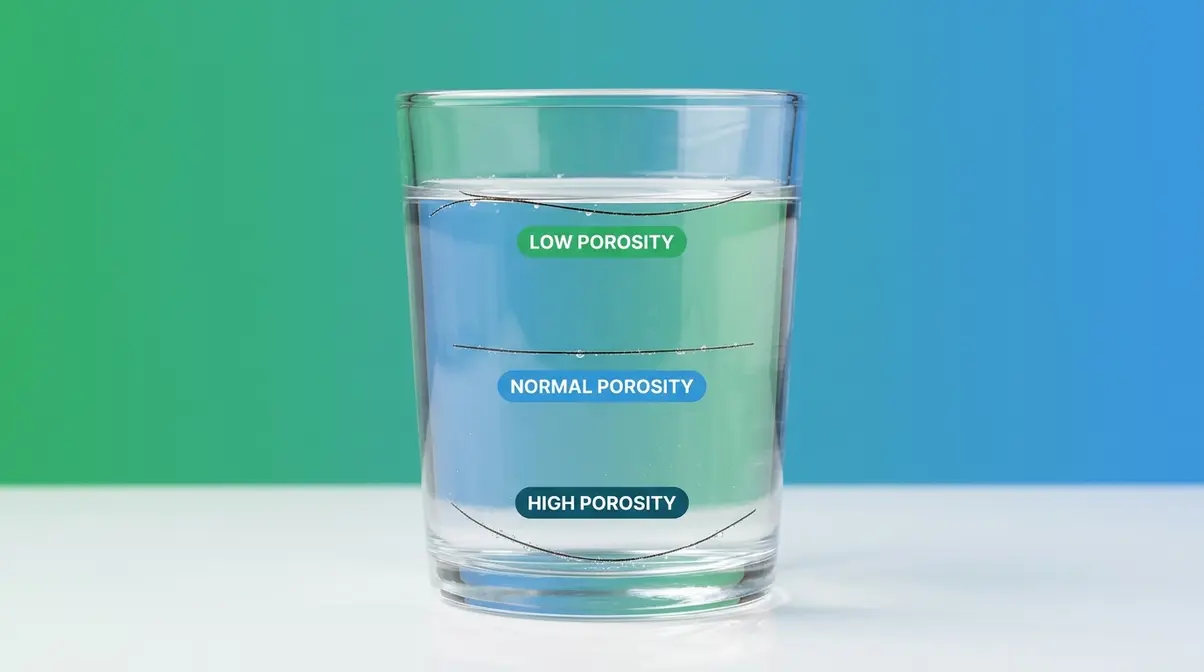
Hair porosity is how well your hair absorbs and retains moisture. It is determined by the state of your cuticle layer — the overlapping scales on the outside of each hair strand. When those scales lie flat and tight, water struggles to enter (low porosity). When they are raised or damaged, water enters easily but also exits just as fast (high porosity).
- The float test: Place a clean, shed hair in a glass of room-temperature water. Wait 2–4 minutes.
- Floats at the surface → Low porosity (cuticle is tight, water isn’t penetrating)
- Sinks slowly to the middle → Normal/medium porosity (ideal balance)
- Sinks quickly to the bottom → High porosity (cuticle is open, water enters and exits fast)
This simple test changes everything about your product and technique choices. Low and high porosity 4C hair require almost opposite approaches — which is why a generic routine often fails one group entirely.
Low Porosity 4C Hair: How to Get Products to Actually Absorb
Low porosity 4C hair has a tightly sealed cuticle that resists moisture absorption. Products often sit on top of the hair rather than absorbing, leading to buildup without hydration — one of the most frustrating experiences in 4C hair care.
The solution is heat. Applying heat during deep conditioning (hooded dryer, steamer, or warm towel) gently lifts the cuticle enough to allow moisture to enter. Without heat, even the best deep conditioner will largely sit on the surface.
- Key strategies for low porosity 4C hair:
- Use lighter, water-based products rather than heavy butters and oils (which build up on a sealed cuticle)
- Apply the LCO method — Liquid → Cream → Oil — so the cream helps water penetrate before the oil seals
- Use the “greenhouse effect” technique: apply a light leave-in to damp hair, cover with a plastic cap for 20–30 minutes before styling — body heat gently opens the cuticle
- Clarify monthly to remove the product buildup that low porosity hair accumulates faster than high porosity hair
- Avoid heavy occlusives like castor oil as a daily leave-in — save them for sealing only
High Porosity 4C Hair: Sealing in Moisture That Escapes Fast
High porosity 4C hair absorbs moisture readily but loses it almost as fast. If your hair feels dry within hours of washing — even after a full LOC routine — high porosity is likely the cause. High porosity can be genetic (natural) or acquired through chemical processing, heat damage, or mechanical damage.
The solution is layering and sealing. The LOC method — Liquid → Oil → Cream — is specifically designed for high porosity hair because the oil layer creates a barrier between the water and the outside environment before the cream adds a final seal.
- Key strategies for high porosity 4C hair:
- Use the LOC method — Oil between Liquid and Cream slows moisture escape
- Rinse with cool water after conditioning — cool water helps close the raised cuticle temporarily
- Use heavier, richer creams and butters as your sealant layer (shea butter, mango butter)
- Incorporate protein treatments every 2–4 weeks — protein temporarily patches gaps in the cuticle, improving moisture retention between washes
- Avoid high heat styling — it further lifts and damages an already open cuticle
- “Super high porosity” — a term used in natural hair communities to describe hair with significant cuticle damage — may benefit from a weekly protein treatment rather than monthly
Winter Care & Seasonal Adjustments for 4C Hair
Winter is the most challenging season for 4C hair. Cold air holds less moisture than warm air, indoor heating strips humidity from the environment, and wool or cotton scarves and coat collars create constant friction against the hairline and ends. The result is increased dryness and breakage that requires a deliberate seasonal adjustment.
Winter 4C Hair Care Checklist:
- ✅ Switch to heavier sealants — shea butter and castor oil over lighter jojoba in cold months
- ✅ Increase deep conditioning frequency to twice weekly if experiencing significant dryness
- ✅ Wear a satin-lined hat or hood — never bare wool against 4C hair
- ✅ Prioritize protective styles (braids, twists, buns) to reduce exposure and manipulation
- ✅ Use a humidifier indoors — adding moisture back to the air directly benefits your hair
- ✅ Refresh moisture more frequently — every 1–2 days instead of every 3
- ✅ Avoid going outside with wet hair — cold air causes the wet hair shaft to contract rapidly, increasing brittleness
Summer requires the opposite adjustment: lighter products to avoid buildup in humidity, UV-protective sprays or oils (argan oil has natural UV-filtering properties), and more frequent clarifying washes if you swim in chlorinated water.
4C Hair Care for Men: The Simplified Approach
4C hair care for men follows the same Moisture-First Framework principles as women’s routines — the hair’s structure and moisture needs are identical. The difference is typically in styling goals and product preference. Most men with 4C hair are working with shorter lengths, fades, or afros, which simplifies the routine considerably.
The 3-Step Men’s 4C Routine: Cleanse, Condition, Moisturize
How to take care of 4C hair for men comes down to three consistent actions: cleanse the scalp, condition the strands, and moisturize daily. Complexity is optional — consistency is not.
Step 1: Cleanse (Once Weekly)
Use a sulfate-free shampoo or a co-wash formula. Focus on the scalp. Men with shorter 4C hair often find that a co-wash is sufficient for most weeks, with a full shampoo cleanse every 2 weeks. Avoid daily washing — it strips the scalp’s natural oils and leads to the dryness that makes 4C hair difficult to manage.
Step 2: Condition (Every Wash)
Apply a rinse-out conditioner after every cleanse. For men with very short hair (under 2 inches), a deep conditioner once every 2 weeks is sufficient. For men growing out their hair or maintaining a mid-length afro, weekly deep conditioning applies.
Step 3: Moisturize (Daily)
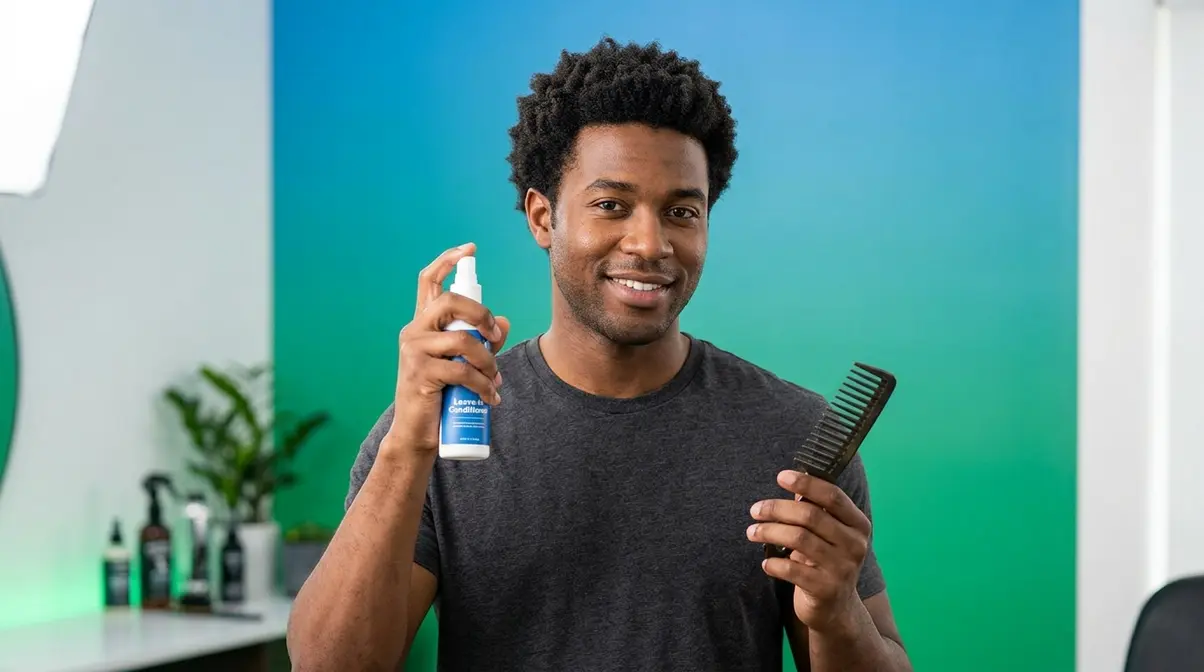
Apply a lightweight leave-in conditioner or moisturizing cream daily, then seal with a light oil. Men often prefer water-based moisturizers that absorb quickly without leaving residue. The LOC or LCO method applies here too — scaled down for shorter hair, it takes under 2 minutes.
Best Products for Men with 4C Hair
The best products for 4C hair for men share one characteristic: they provide moisture without heaviness. Men with short hair don’t need the same layering depth as longer styles, so multi-purpose products that combine leave-in and light sealant properties are ideal.
- Look for:
- Moisturizing co-wash or 2-in-1 cleanse + condition formulas for quick wash days
- Lightweight leave-in sprays rather than thick creams — these absorb into short hair without clumping or residue
- Jojoba or argan oil as a daily sealant — both are lightweight and non-greasy
- Water-based curl creams or pomades for defining short afros or twist styles — look for glycerin and aloe vera as top ingredients
Avoid heavy butters and thick castor oil as daily leave-ins for very short hair — they tend to build up quickly and can cause scalp congestion. Save castor oil for weekly scalp massages to support follicle health.
Short Afros, Twists & Fades: Styling Tips for Men
Men with 4C hair male short styles have more versatility than many beginners realize. The key is maintaining the hair’s health so it has the density and definition to hold any style.
Short afro: Moisturize and seal daily. Use a soft-bristle brush or afro pick to shape and lift. A well-moisturized afro has natural volume without frizz — frizz in a short afro usually signals insufficient moisture or product buildup.
Two-strand twists: Section damp hair, apply leave-in and a curl cream, then twist each section. Twists on short 4C hair are an excellent low-manipulation style that can last 1–2 weeks with nightly satin bonnet protection.
Fades with natural top: The fade portion requires standard barbering care. The natural 4C section on top needs the full Moisture-First routine — cleanse, condition, moisturize, seal. Keep a leave-in spray accessible for daily refreshing between haircuts.
Finger coils: Apply curl cream to small sections of damp hair and coil each section around a finger. This creates defined coils that showcase 4C texture at its most beautiful. Finger coils last 3–5 days with proper nighttime protection.
Scalp Health & Medical Considerations
Scalp health is the foundation of hair health — the follicle lives in the scalp, and what happens at skin level directly affects what grows above it. This section covers medical considerations that are underserved in most 4C hair guides: medicated shampoo use, lupus-related hair fragility, and traction alopecia. All information here is cosmetic and general in nature. For any scalp condition, hair loss, or medical concern, consult a board-certified dermatologist before beginning any treatment.
How to Use Medicated Shampoos (Like Nizoral) on 4C Hair Safely
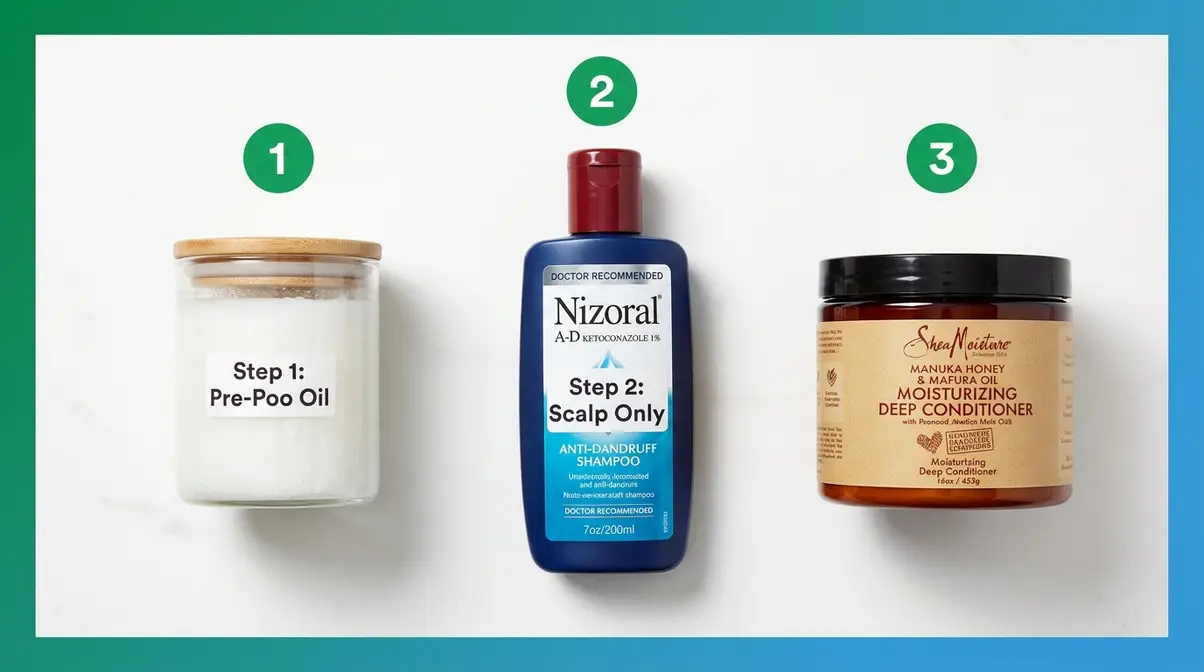
Is Nizoral suitable for afro hair? Yes — ketoconazole shampoos like Nizoral can be used safely on 4C and afro-textured hair, but they require a modified protocol to prevent the significant dryness they cause. Nizoral (ketoconazole 1–2%) is a medicated antifungal shampoo commonly prescribed for seborrheic dermatitis (a common scalp condition causing flaking, itching, and redness, sometimes called “dandruff” in its milder form). Research published in the Journal of the American Academy of Dermatology confirms ketoconazole’s effectiveness for seborrheic dermatitis (JAAD, 2022).
The challenge for 4C hair is that ketoconazole is a harsh cleanser — significantly more stripping than even a regular sulfate shampoo. Applied directly to 4C hair without preparation, it can cause severe dryness and breakage.
- The pre-poo ketoconazole protocol for 4C hair:
- Apply a generous layer of coconut or olive oil to your entire hair and scalp before using Nizoral — this is the pre-poo step used specifically to protect the hair length
- Apply Nizoral only to the scalp (not the length), massage gently, and leave on for 3–5 minutes as directed
- Rinse thoroughly
- Follow immediately with a deep conditioner — do not skip this step after any medicated shampoo use
- Use Nizoral no more than twice weekly as directed by your physician; many dermatologists recommend alternating with a gentle sulfate-free shampoo on other wash days
Does Nizoral cause hair color to fade? Yes — ketoconazole shampoos can accelerate color fading in chemically colored 4C hair. Use a color-protecting deep conditioner after each use and consider spacing Nizoral treatments to once weekly when color maintenance is a priority. Always consult a dermatologist before beginning any medicated shampoo regimen.
4C Hair and Lupus: Managing Fragility and Hair Loss
What shampoo is good for lupus hair loss? Lupus — a chronic autoimmune condition — can cause hair loss through two mechanisms: the disease itself triggers inflammation that damages hair follicles, and many lupus medications (particularly corticosteroids and antimalarials) list hair thinning as a side effect. The Lupus Foundation of America documents that hair loss affects a significant portion of people with lupus, with scalp lesions in discoid lupus erythematosus (DLE) causing the most severe and potentially permanent follicle damage (Lupus Foundation of America, 2023).
For 4C hair specifically, lupus-related fragility compounds the hair type’s existing moisture challenges. The hair shaft may become significantly more brittle during lupus flares, and the scalp may develop sensitivity that makes standard 4C routines uncomfortable.
- Shampoo recommendations for lupus-related hair fragility:
- Use the gentlest sulfate-free, fragrance-free cleansers available — fragrance is a common irritant for sensitized scalps
- Avoid medicated shampoos unless specifically prescribed by your rheumatologist or dermatologist — some antifungal shampoos interact with lupus medications
- A mild, pH-balanced shampoo (pH 4.5–5.5) supports the scalp’s acid mantle and reduces inflammation-related sensitivity
- Deep condition after every wash without exception — lupus-affected hair loses moisture significantly faster than healthy hair
Critical guidance: Hair loss related to lupus requires medical management, not just a hair care routine. Consult a dermatologist or rheumatologist for any lupus-related hair or scalp changes. The information here is general cosmetic guidance only.
Traction Alopecia: Recognizing and Preventing It
Traction alopecia is hair loss caused by repeated tension and pulling on the hair follicle — most commonly from tight protective styles, extensions, or braids installed with excessive tension. It is one of the most preventable forms of hair loss and one of the most common in women with 4C hair. Research cited by Johns Hopkins Medicine identifies traction alopecia as disproportionately affecting Black women due to cultural styling practices that involve chronic tension at the hairline (Johns Hopkins Medicine, 2023).
- Early warning signs to recognize:
- Thinning or recession at the temples and hairline
- Small pimple-like bumps along the hairline (folliculitis from tension)
- Itching or soreness along the part lines after styling
- Broken hairs along the hairline that don’t grow back at the same rate
- Prevention strategies:
- Never install braids, twists, or extensions so tightly that you feel pain at the scalp — pain during installation is a direct warning sign
- Avoid styles that pull consistently at the same hairline points
- Rotate your parting location so tension is distributed across different follicles
- Take protective style breaks of at least 2 weeks between installations
- Massage the hairline with castor or peppermint oil to support circulation in high-tension areas
Early-stage traction alopecia is reversible with style changes and follicle support. Advanced traction alopecia with significant scarring may require medical intervention. Consult a dermatologist if hairline recession is progressing despite style changes.
Common Mistakes to Avoid with 4C Hair
Understanding what not to do is just as important as following the right routine. Common pain points reported by 4C hair owners — consistently flagged across natural hair communities — cluster around a predictable set of mistakes that undermine even the best product choices.
1. Skipping the pre-poo. The most skipped step is also one of the most protective. Without it, shampooing strips your hair of the oils it needs, leaving you starting the moisture process from a deficit.
2. Detangling dry hair. This is the single largest cause of preventable 4C breakage. Always detangle on wet, conditioned hair with a wide-tooth comb starting from the ends.
3. Using regular towels. Terry cloth towels create friction that causes frizz and breakage. A microfiber towel or old cotton T-shirt is the correct tool for drying 4C hair.
4. Skipping deep conditioning. Deep conditioning is not optional for 4C hair. It is the step that addresses structural moisture — the kind that prevents chronic dryness and brittleness. Missing even one week creates a noticeable setback.
5. Applying products to dry hair. Most 4C hair products are designed to be applied to wet or damp hair. Applying leave-ins and creams to dry hair significantly reduces their effectiveness and can cause buildup.
6. Wearing tight protective styles continuously. Protective styles protect the hair — but only when installed correctly and given rest periods. Constant tight styles without breaks lead to traction alopecia.
7. Ignoring porosity. Using the wrong LOC/LCO order for your porosity means products either sit on top of your hair or evaporate before the next layer can seal them. Identify your porosity and match your method to it.
8. Expecting overnight results. 4C hair health is built over months of consistent routine, not weeks of perfect product choices. Patience, paired with the Moisture-First Framework, produces visible results — but the timeline is measured in seasons, not days.
Frequently Asked Questions About 4C Hair Care
What is the best routine for 4C hair?
The best routine for 4C hair follows the Moisture-First Framework: a weekly wash day using the 8-step sequence (pre-poo, cleanse, detangle, condition, deep condition, leave-in, LOC or LCO), daily refreshing with a water and oil spritz, and nightly protection with a satin bonnet. The American Academy of Dermatology recommends washing tightly coiled hair once a week or every other week (AAD, 2024). Consistency matters more than perfection — a simple routine done weekly beats an elaborate routine done monthly.
What should you not do with 4C hair?
Never detangle 4C hair while it is dry — this is the leading cause of breakage. Avoid sulfate-based shampoos, regular terry cloth towels, skipping deep conditioning, and wearing tight protective styles without rest periods. Using the wrong product order for your porosity (LOC vs. LCO) also undermines moisture retention. User consensus across r/Naturalhair identifies dry detangling and skipping deep conditioning as the two most damaging habits for 4C hair health.
Is Nizoral (ketoconazole) suitable for afro hair?
Nizoral can be used safely on afro and 4C hair when a modified protocol is followed. Apply a pre-poo oil (coconut or olive) to the entire hair before use, apply Nizoral only to the scalp, rinse thoroughly, and always deep condition immediately after. Ketoconazole shampoos are significantly more drying than standard cleansers, so this protective sequence is essential. Always follow your dermatologist’s guidance on frequency — typically no more than twice weekly (JAAD, 2022). Consult a dermatologist before starting any medicated shampoo regimen.
What shampoo is good for lupus-related hair loss?
For lupus-related hair fragility, the gentlest sulfate-free, fragrance-free shampoo available is the best starting point. A pH-balanced formula (pH 4.5–5.5) supports the scalp’s acid mantle and reduces sensitivity. Avoid medicated shampoos unless specifically prescribed, as some antifungal formulas may interact with lupus medications. The Lupus Foundation of America notes that hair loss from lupus may require medical management beyond cosmetic care — consult your rheumatologist or dermatologist for any lupus-related scalp changes (Lupus Foundation, 2023).
How quickly does 4C hair grow?
4C hair grows at the same average rate as all human hair — approximately 0.5 inches per month, or about 6 inches per year (AAD, 2024). The reason 4C hair appears to grow slowly is a combination of shrinkage (up to 75% of actual length) and breakage that offsets growth. The Moisture-First Framework addresses both: moisture reduces breakage, and protective styling reduces manipulation — together allowing growth to accumulate visibly over time. Length retention, not growth acceleration, is the real goal.
Growing Your 4C Hair Takes a System — Not a Product
For anyone with 4C hair, the path forward is not about finding the right product. It is about understanding the right system. Every challenge you’ve experienced — the dryness, the breakage, the hair that seems to shrink faster than it grows — traces back to one structural reality: 4C coils lose moisture faster than any other hair type, and most routines were never built to address that specifically.
The Moisture-First Framework changes that. When every decision — what shampoo you use, what order you apply products, how you sleep, how you style, how you protect your scalp — is made through the lens of moisture retention, the results compound over time. Across natural hair communities, people who apply this framework consistently report seeing their “true” texture emerge within 3–6 months: softer, longer, more defined hair than they’d ever seen before.
Start with the wash day routine in this guide. Follow it for four consecutive weeks before changing anything. Then assess your porosity and adjust your LOC or LCO order. Add a protective style in week five. Build the system one layer at a time — the same way the Moisture-First Framework works on your hair.
Your next wash day is the best place to start.

Dave King
Writes evidence-based hair-care guides for Care About Your Hair — for every hair type, jargon-free and independent.