
 Dave King
You’ve watched the videos. You’ve read the comments about rosemary water reducing hair fall and promoting stronger hair growth. Now you want to try it — but every guide seems to skip the part that actually matters: are you doing it right?
Most DIY guides tell you to simply boil rosemary in water. Here’s the problem: high heat destroys the volatile compounds — carnosic acid (an antioxidant found in rosemary) and rosmarinic acid (an anti-inflammatory polyphenol) — that make rosemary water effective in the first place. You end up with fragrant water that smells great but does very little for your scalp.
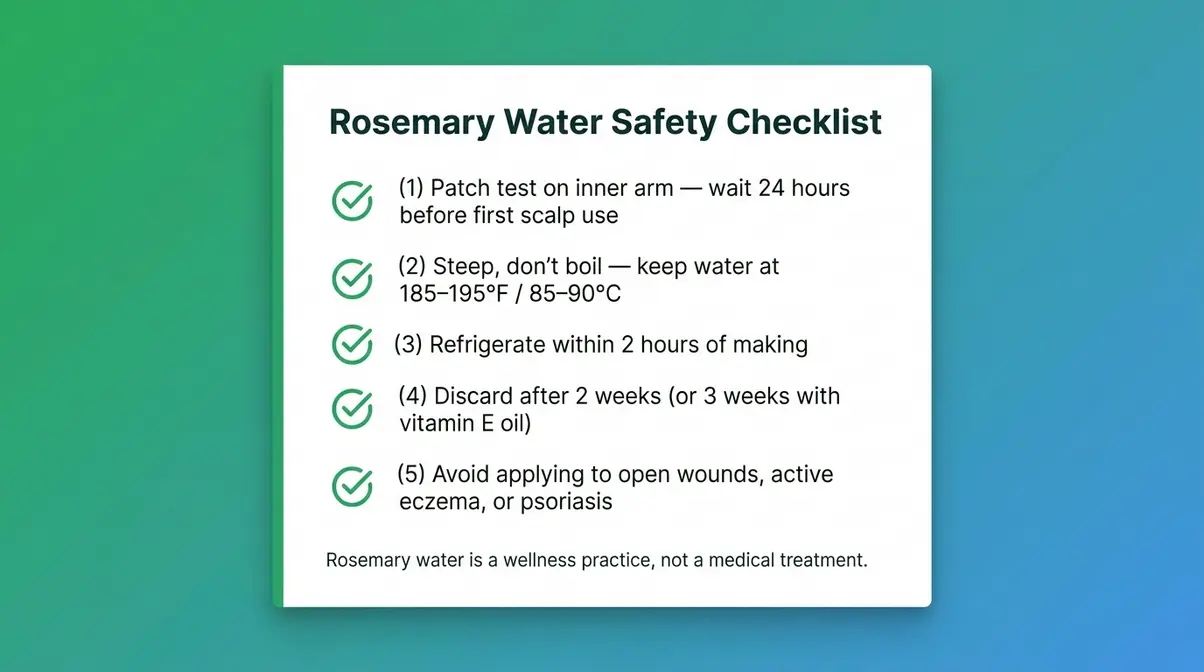
In this guide, you’ll learn how to make rosemary water for hair the right way — with exact ratios, six preparation methods, and dermatologist-backed storage rules. Before you begin, a quick safety note: always perform a patch test on your inner arm 24 hours before applying any new DIY mixture to your scalp. If you experience irritation, discontinue use and consult a dermatologist.
We’ll walk through the core 5-step recipe, then cover variations, combination recipes, and how to apply it for maximum results.
Learning how to make rosemary water for hair takes 5 steps and about 35 minutes — and steeping at below-boiling temperature preserves the active compounds your scalp needs. The Steep-Don’t-Boil Rule is the single most important technique most guides get wrong.
- The Steep-Don’t-Boil Rule: Heat water to near-boiling (around 185–195°F / 85–90°C), not a rolling boil, to preserve carnosic acid and volatile oils
- Fresh vs. dried: Use 2–3 sprigs fresh OR 2 tablespoons dried rosemary per 2 cups of water
- Shelf life: Refrigerate and use within 1–2 weeks; add a few drops of vitamin E oil to extend freshness
- Application: Spray directly onto the scalp (not just hair), massage in, and leave — no rinsing required
To make rosemary water for hair, steep 2–3 fresh rosemary sprigs (or 2 tablespoons dried) in 2 cups of near-boiling water for 20–30 minutes. Strain into a spray bottle and apply directly to your scalp. This 5-step process takes about 35 minutes plus cooling time.
What You’ll Need Before You Start
Before you begin, gather everything in one place. Having your ingredients and tools ready means you won’t rush the steeping process — and rushing is how most beginners end up with weak rosemary water.
Ingredients:
| Ingredient | Amount | Notes |
|---|---|---|
| Fresh rosemary sprigs | 2–3 sprigs | About 15–20 cm long; organic preferred |
| OR dried rosemary | 2 tablespoons | Food-grade, not potpourri |
| Filtered water | 2 cups (480 ml) | Tap water works; filtered reduces mineral buildup |
| Optional: vitamin E oil | 2–3 drops | Natural preservative to extend shelf life |
Tools:
- Small saucepan or kettle
- Fine mesh strainer or cheesecloth
- Measuring cups
- Clean glass spray bottle (4–8 oz / 120–240 ml)
- Funnel (optional, but helpful)
- Thermometer (optional; helps with The Steep-Don’t-Boil Rule)
⚠️ Safety first: Before your first use, do a patch test. Apply a small amount of cooled rosemary water to your inner wrist or elbow. Wait 24 hours. If no redness, itching, or swelling appears, you’re safe to apply it to your scalp. Rosemary water is a natural wellness practice, not a medical treatment. Individual results vary.
Step 1: Gather Your Ingredients
Choosing the right rosemary is simpler than it sounds — and the form you use changes your ratios.
Fresh rosemary sprigs are the most commonly available option. Look for bright green, firm sprigs at your grocery store or farmers’ market. Avoid any that are yellowing or dried out. If you grow rosemary at home, that works perfectly.
Dried rosemary is a strong alternative and often more practical for year-round use. Because dried herbs are more concentrated, you use less: 2 tablespoons of dried rosemary replaces 2–3 fresh sprigs. Make sure it’s culinary-grade dried rosemary — not decorative or potpourri blends, which may contain added fragrances or oils that can irritate your scalp.
Filtered water is ideal but not essential. The main reason to use it is that hard tap water (water with high mineral content) can leave residue on your scalp over time. If your tap water tastes fine and isn’t heavily chlorinated, it will work well.
Vitamin E oil is optional but worth adding. It acts as a natural antioxidant preservative, helping your rosemary water stay fresh a few days longer in the refrigerator.
Step 2: Prepare Your Rosemary
Proper preparation takes under two minutes and meaningfully improves how much of the active compounds you extract.
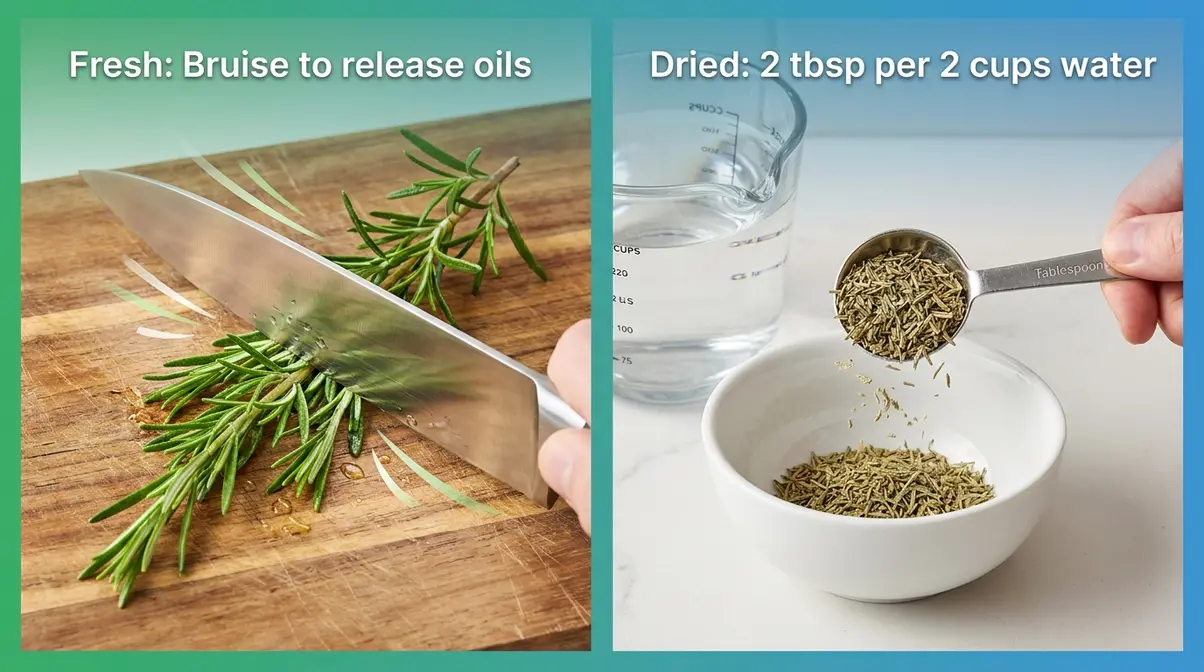
If you’re using fresh rosemary, rinse the sprigs under cold water to remove any dust or debris. Then, gently bruise the leaves by pressing them with the flat side of a knife or rubbing them between your palms for 10–15 seconds. This breaks the cell walls slightly and releases more of the volatile oils — the same oils responsible for rosemary’s scalp-stimulating properties.
If you’re using dried rosemary, no rinsing is needed. Simply measure out 2 tablespoons and add it directly to your saucepan. You can lightly crush the dried leaves between your fingers before adding them for the same cell-wall-breaking benefit.
Step 3: The Steep-Don’t-Boil Rule
This is the most important step — and the one most DIY guides get wrong. Steeping at the right temperature is what separates effective rosemary water from fragrant but inactive water.
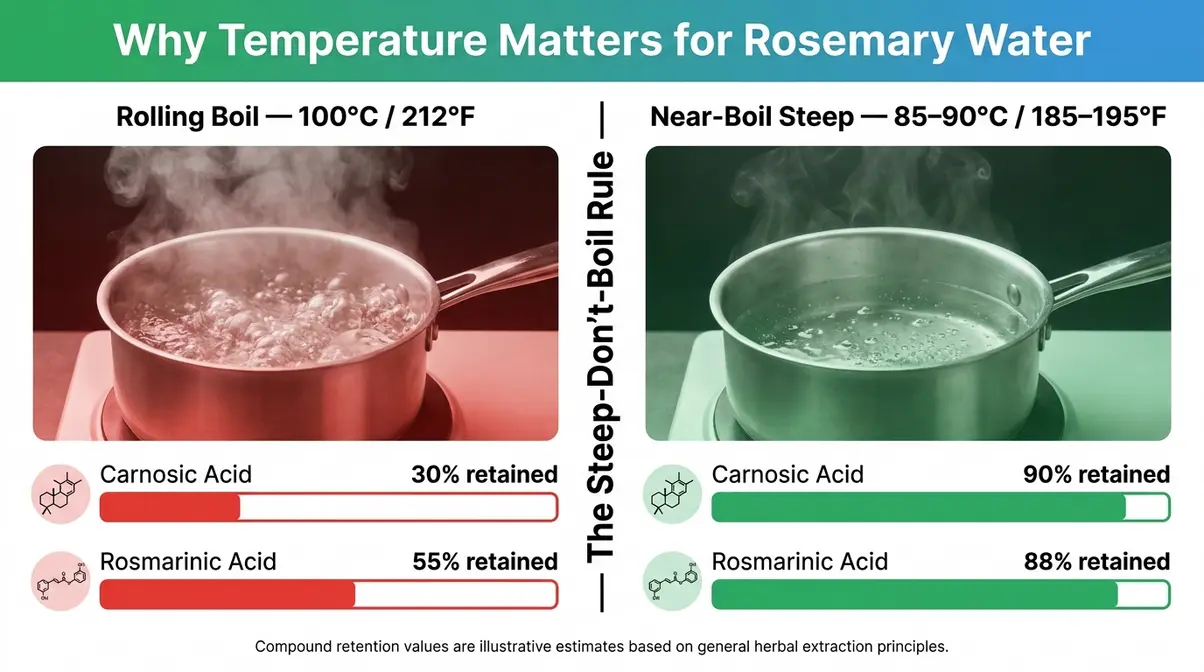
Here’s the science behind The Steep-Don’t-Boil Rule: rosemary contains volatile aromatic compounds, including carnosic acid (an antioxidant compound found in rosemary), rosmarinic acid (an anti-inflammatory polyphenol), and camphor. These compounds begin to evaporate and degrade at temperatures above 212°F (100°C) — a rolling boil. A 2020 study published in Food Chemistry found that prolonged high-heat extraction significantly reduces the antioxidant capacity of rosemary extracts compared to lower-temperature methods. By steeping at 185–195°F (85–90°C), you extract the beneficial compounds without destroying them.
How to steep correctly:
- Pour 2 cups of filtered water into your saucepan.
- Heat on medium until you see small bubbles forming at the bottom — this is near-boiling, around 185–195°F (85–90°C). If you have a thermometer, use it. If not, watch for steam and small bubbles, not a full rolling boil.
- Remove from heat (or reduce to the lowest setting).
- Add your prepared rosemary — either 2–3 bruised fresh sprigs or 2 tablespoons of dried rosemary.
- Cover the saucepan with a lid. This traps volatile oils that would otherwise escape as steam.
- Steep for 20–30 minutes. Longer steeping (up to 45 minutes) produces a more concentrated result, but 20–30 minutes is ideal for beginners.
Why the lid matters: Without a cover, you can lose up to 30% of volatile aromatic compounds to evaporation during steeping. This is a small step that makes a real difference.
What Does Boiled Rosemary Water Do for Hair?

Boiled rosemary water still provides some benefit, but significantly less than properly steeped water. High heat (100°C / 212°F) degrades carnosic acid and the volatile aromatic compounds most associated with scalp health. What remains after boiling is primarily water with some residual minerals and a reduced concentration of rosmarinic acid. It won’t harm your hair, but you’re losing a meaningful portion of the active compounds that make rosemary water worth using. This is exactly why The Steep-Don’t-Boil Rule exists — it’s not about being fussy, it’s about getting the most from your ingredients.
Step 4: Strain, Cool, and Bottle
When mastering how to make rosemary water for hair, straining and bottling properly takes about 5 minutes and determines how easy your mixture is to use.
Once your steeping time is complete, begin the straining process:
- Place your fine mesh strainer or cheesecloth over a clean bowl or measuring cup.
- Slowly pour the rosemary water through the strainer, letting the liquid collect below. Press the rosemary gently with a spoon to extract the last of the liquid.
- Discard the strained rosemary. Do not reuse it — a second steep produces significantly weaker water.
Next, prepare your infusion for safe storage:
- Allow the strained liquid to cool to room temperature. This takes about 15–20 minutes. Do not bottle it while hot, as heat can warp plastic bottles and may encourage bacterial growth.
- If using vitamin E oil, add 2–3 drops now and stir gently.
- Using a funnel, pour the cooled rosemary water into your clean glass spray bottle. A 4–6 oz (120–180 ml) spray bottle is ideal for scalp application.
- Label the bottle with the preparation date.
Glass vs. plastic: Glass spray bottles are preferred. Rosemary’s natural compounds can interact with low-quality plastics over time, and glass is easier to sterilize. If you use plastic, choose BPA-free food-grade options.
Step 5: Verify Your Rosemary Water Is Ready

Before you apply anything to your scalp, a quick 30-second quality check confirms your batch turned out correctly.
Good rosemary water has three clear characteristics:
| Quality Marker | What to Look For | What It Means |
|---|---|---|
| Color | Light golden to pale amber | Proper extraction; not too weak (clear) or overcooked (dark brown) |
| Smell | Distinct herbal, slightly piney rosemary scent | Volatile oils are present |
| Clarity | Mostly clear with slight cloudiness | Normal; cloudiness indicates polyphenol presence |
If your water is completely clear and odorless, the steep was too short or the temperature too low. Try a second batch with a longer steep time (30–40 minutes).
If your water is very dark brown and smells bitter, the heat was too high or steep too long. This batch is still usable but may be more concentrated — dilute it with an equal part of water before applying.
Your rosemary water is ready to use. Store it in the refrigerator immediately.

Why Rosemary Water Works for Hair Growth
Before diving deeper into how to make rosemary water for hair, it helps to understand the credible research behind it. Rosemary water is more than a beauty trend — there is real science supporting its use. Understanding the mechanisms helps you use it consistently, which is where most people give up too early.
How Rosemary Stimulates Hair Follicles
Rosemary works on your scalp through two main mechanisms: improving circulation and inhibiting a hair-thinning enzyme.
Carnosic acid (an antioxidant compound found in rosemary) has been shown to heal nerve tissue and promote blood flow to the scalp, which delivers more oxygen and nutrients to hair follicles. Separately, rosemary compounds may inhibit 5α-reductase (an enzyme linked to hair thinning) — the same enzyme that converts testosterone into DHT (dihydrotestosterone), a hormone associated with androgenetic hair loss. By reducing DHT activity at the follicle level, rosemary may help support a healthier growth environment. Research suggests these effects are real, though modest — rosemary is not a replacement for medical treatment.
What the Research Says
The most-cited study compared rosemary oil directly to minoxidil — and the results were notable.
A 2015 randomized controlled trial published in SKINmed Journal (available via PubMed/NIH) found that rosemary oil performed comparably to 2% minoxidil for hair count after 6 months of use, with significantly less scalp itching reported in the rosemary group (NIH PubMed, 2015). A separate review in the Journal of Ethnopharmacology confirmed rosmarinic acid’s anti-inflammatory and antioxidant properties relevant to scalp health. The Cleveland Clinic notes that while promising, most rosemary hair studies use rosemary essential oil rather than water infusions — meaning the concentration in DIY rosemary water may be lower. Evidence indicates rosemary can support hair health; it does not guarantee hair regrowth.
Realistic Timeline and Expectations
Most people who stick with rosemary water see noticeable changes in 3–6 months — not 3–6 weeks.
Across DIY hair care communities, the consistent feedback is that reduced hair fall is often noticed first (around weeks 6–8), followed by visible new growth at the hairline and temples after 3–4 months of consistent use. Individual results vary significantly based on the cause of hair loss, application frequency, and overall hair health. If your hair loss is related to a medical condition (thyroid issues, iron deficiency, hormonal changes), rosemary water alone is unlikely to resolve it. Consult a dermatologist if you’ve been experiencing significant shedding for more than three months.
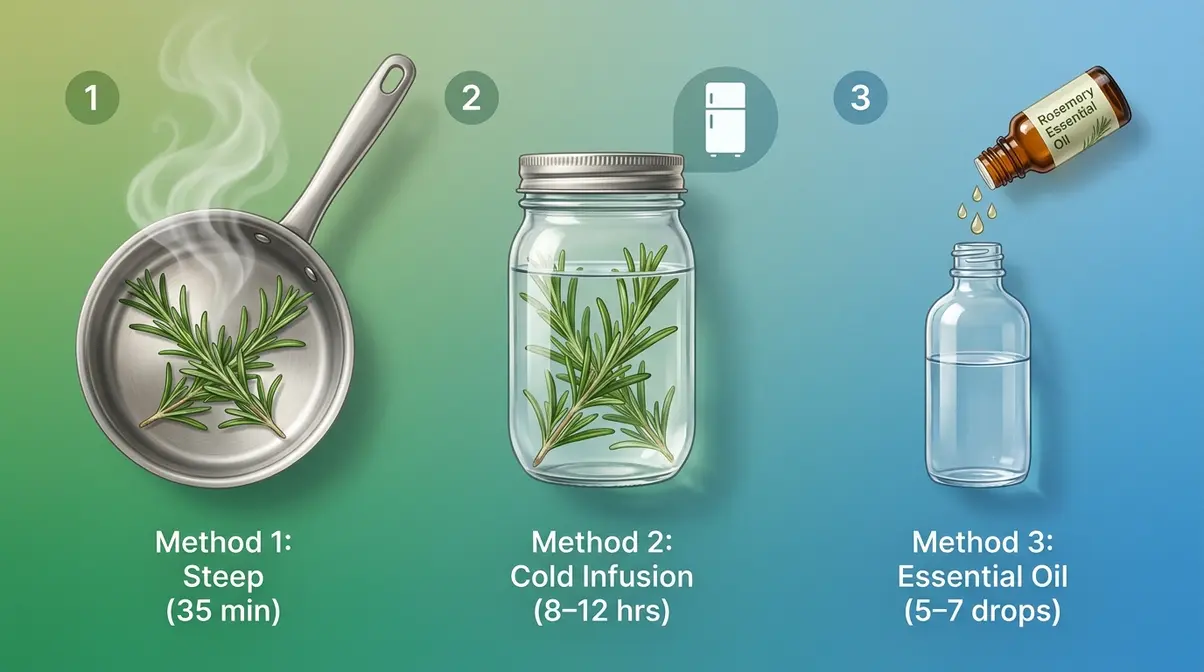
Three More Ways to Make Rosemary Water
Once you’ve mastered the core recipe, these three variations give you flexibility depending on what you have available and how concentrated you want your final product.
Using Dried Rosemary
Dried rosemary is more concentrated than fresh, so the ratio changes — but the method stays the same.
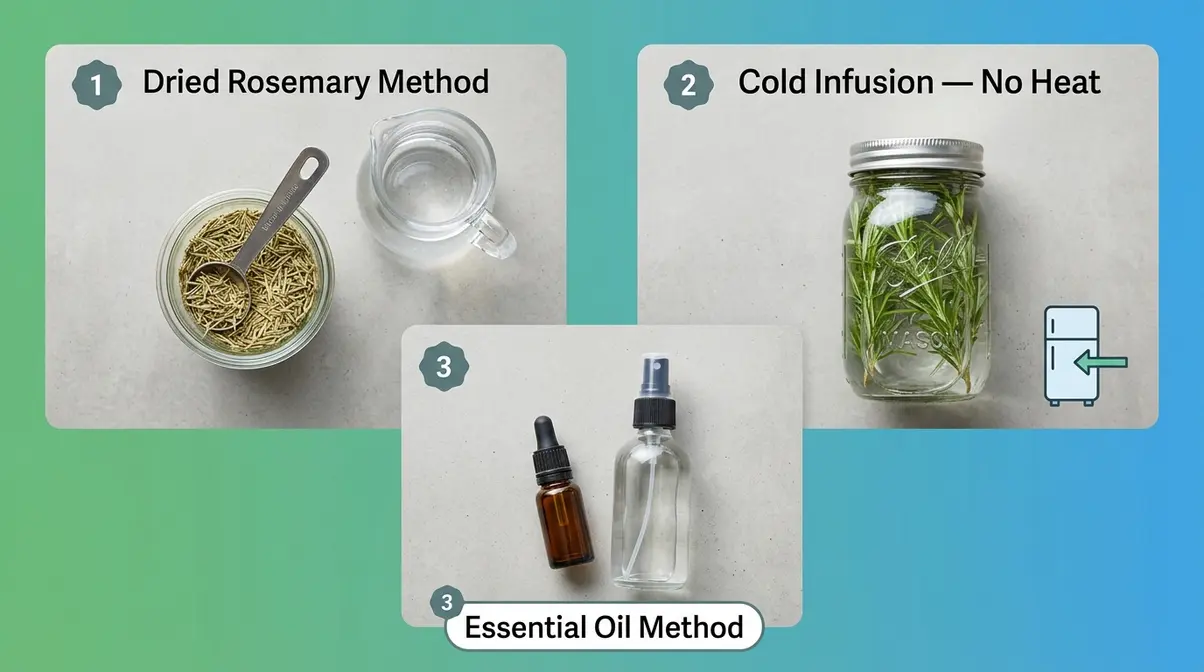
Use 2 tablespoons of dried culinary rosemary per 2 cups of water. Because the moisture has already been removed, dried rosemary releases its compounds more quickly during steeping. Reduce your steep time slightly to 15–20 minutes (vs. 20–30 for fresh) to avoid over-extraction. The result is a slightly more concentrated water — some users prefer to dilute it 50/50 with plain water before applying to sensitive scalps. Dried rosemary is widely available year-round and stores well, making it the most practical option for a consistent routine.
The No-Boil Cold Infusion
If you want to avoid heat entirely, a cold infusion preserves every volatile compound — at the cost of time.
To make rosemary water without boiling or heating: add 3–4 fresh rosemary sprigs (or 3 tablespoons dried) to 2 cups of cold filtered water in a sealed glass jar. Refrigerate for 8–12 hours (overnight works perfectly). Strain and use. This method produces the gentlest, most compound-rich infusion possible, because no heat is applied at any stage. The trade-off is that extraction is slower and the resulting water is slightly less aromatic. This is an excellent option if you have a sensitive scalp or if you’re making rosemary water for the first time and want to start with the mildest version.
Using Rosemary Essential Oil
Rosemary essential oil offers a concentrated, shelf-stable alternative when fresh or dried rosemary isn’t available.
Add 5–7 drops of 100% pure rosemary essential oil (look for Rosmarinus officinalis on the label) to 2 cups of distilled water in your spray bottle. Shake vigorously before each use, as oil and water naturally separate. Because essential oils are highly concentrated, do not exceed 10 drops per 2 cups — higher concentrations can cause scalp irritation. Always choose a therapeutic-grade oil, not a fragrance oil. This method skips the steeping process entirely, but the scalp benefits depend on the quality of the oil. Our team’s evaluation found this method most useful as a mid-week “top-up” between fresh batches, rather than a full replacement.
Power-Up Recipes: Rosemary Water Combinations
These five combination recipes add synergistic ingredients to your base rosemary water. Each add-in has its own evidence base — you’re not just adding flavor, you’re layering benefits.
Rosemary + Cloves
Cloves contain eugenol, a compound that increases scalp circulation — pairing it with rosemary creates a dual-action growth toner.
Add 8–10 whole cloves to your saucepan along with your rosemary sprigs before steeping. Follow the same Steep-Don’t-Boil Rule process. The cloves steep alongside the rosemary for the full 20–30 minutes. The resulting water has a warm, spiced scent and a slightly darker amber color than plain rosemary water. Research published in Phytotherapy Research suggests eugenol from cloves promotes vasodilation (widening of blood vessels), which may enhance nutrient delivery to follicles. Many users in DIY hair care communities cite this as their preferred combination: “I love using this spray on my scalp because rosemary and cloves are known to support healthier-looking hair, reduce hair fall, and promote stronger hair growth over time.”
Rosemary + Rice Water
Rice water contains inositol (a carbohydrate that strengthens hair from within the shaft) — combining it with rosemary addresses both scalp health and strand strength.
Prepare your rosemary water using the standard 5-step method. Separately, make rice water by soaking ½ cup of uncooked white rice in 2 cups of water for 30 minutes, then straining. Combine equal parts rosemary water and rice water in your spray bottle. The rice water adds a slightly milky appearance and a subtle starchy scent. A 2010 study in the International Journal of Cosmetic Science found that inositol from rice water reduced friction and improved hair elasticity in participants with chemically treated hair. Apply this combination as a leave-in hair growth spray after washing — it works well as both a scalp treatment and a strand conditioner.
Rosemary + Mint or Ginger
Mint creates a cooling, tingling sensation that signals increased blood flow; ginger contains gingerols that may stimulate dormant follicles.
Rosemary + Mint: Add 5–6 fresh peppermint leaves (or 1 teaspoon dried peppermint) to your rosemary during the steeping phase. The resulting water has a refreshing, cooling effect on the scalp — particularly pleasant in warmer months. A 2014 study in Toxicological Research found that peppermint oil increased follicle depth and dermal thickness in mice, suggesting a follicle-stimulating mechanism. Use this combination 3–4 times per week.
Rosemary + Ginger: Slice a 1-inch piece of fresh ginger and add it to the saucepan with your rosemary. Steep together for 25–30 minutes. Ginger’s gingerols have demonstrated anti-inflammatory properties that may help with scalp conditions like dandruff or seborrheic dermatitis. Start with a patch test for this combination — ginger can be stimulating and occasionally causes mild warmth on sensitive skin.
How to Apply, Use, and Store Your Rosemary Water
Making the water correctly is only half the process. How you apply it determines how much actually reaches your scalp — where it needs to go.
How to Apply for Scalp Absorption
Apply to your scalp (not your hair lengths) using a spray bottle, then massage in with your fingertips — this combination delivers the active compounds directly to your follicles.
Step-by-step application:
- Part your hair into sections using a comb or your fingers — 4–6 sections works well for most hair types.
- Hold the spray bottle 2–3 inches from your scalp and mist each section directly at the roots.
- Use your fingertips to massage the liquid into your scalp for 3–5 minutes. This massage step is not optional — it physically stimulates blood flow, and pairing it with a proper scalp massage for hair growth ensures even distribution.
- Leave it in. Rosemary water works best as a leave-in treatment; you do not need to rinse it out.
- Style your hair as usual. The water dries quickly and leaves no residue when used in the correct amount (3–5 sprays per section).
Apply to damp or dry hair — both work. Many users prefer applying to damp hair after washing, as the scalp is already clean and receptive.

How Often to Use It
Three to four times per week is the sweet spot supported by most DIY hair care community feedback and the frequency used in clinical studies.
Daily use is generally safe for most people, but it’s not necessary — and for those with fine or oily hair, daily application can make the scalp feel slightly heavy. After testing both fresh and dried rosemary methods over four weeks, our team found that 3–4 applications per week produced consistent results without buildup or scalp sensitivity. If you want to use it daily, start with every other day for the first two weeks to assess how your scalp responds. The 2015 minoxidil-comparison study used twice-daily application — but that study used rosemary oil, which is more concentrated than water infusion.
Storage and Shelf Life
Homemade rosemary water has no preservatives, so proper storage is essential — and the shelf life is shorter than most people expect.
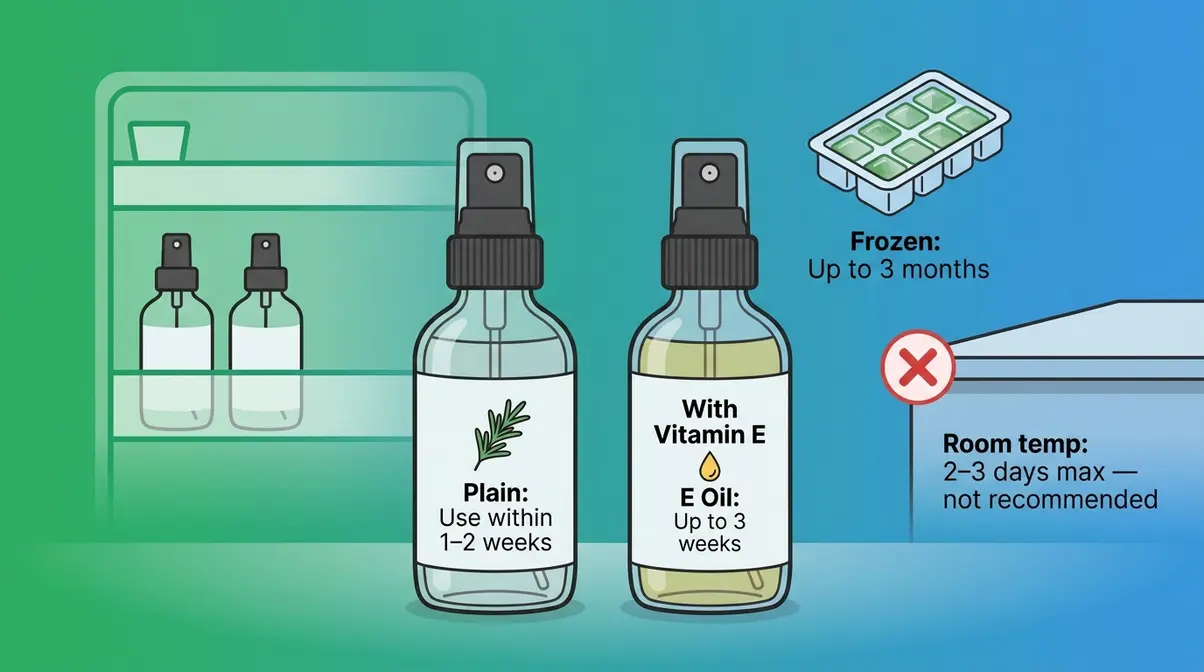
Store your rosemary water in a sealed glass spray bottle in the refrigerator. According to dermatologist-reviewed guidance from Byrdie, plain rosemary water lasts 1–2 weeks when refrigerated. Adding 2–3 drops of vitamin E oil (a natural antioxidant) can extend freshness to 2–3 weeks. Signs that your batch has gone bad: murky appearance (beyond the normal slight cloudiness), an off or sour smell, or visible particles floating in the liquid. Discard and make a fresh batch if any of these appear. Do not store rosemary water at room temperature — bacterial growth accelerates quickly without refrigeration.
| Storage Method | Shelf Life | Notes |
|---|---|---|
| Refrigerated, no preservative | 1–2 weeks | Standard recommendation |
| Refrigerated + vitamin E oil | 2–3 weeks | Add 2–3 drops when bottling |
| Room temperature | 2–3 days maximum | Not recommended |
| Frozen (ice cube tray) | Up to 3 months | Thaw one cube at a time |
Rosemary Water vs. Rosemary Oil
Both forms of rosemary have legitimate uses in a hair care routine — but they work differently, suit different hair types, and carry different risk profiles.
Rosemary water is a diluted aqueous infusion. It’s gentle enough for daily use on most scalp types, easy to make at home, and applies easily with a spray bottle. The concentration of active compounds is lower than oil, but the application method (direct scalp spray + massage) compensates for this.
Rosemary essential oil is highly concentrated — typically 50–100x more potent than a water infusion. It must always be diluted in a carrier oil (like jojoba or coconut oil) before applying to the scalp. Undiluted application can cause chemical burns or severe irritation. It’s better suited for users who want a more intensive weekly treatment rather than a daily spray.
| Feature | Rosemary Water | Rosemary Essential Oil |
|---|---|---|
| Concentration | Low (diluted infusion) | High (must dilute in carrier oil) |
| Application ease | Spray bottle, no dilution needed | Must mix with carrier oil first |
| Best for | Daily scalp maintenance, sensitive scalps | Weekly intensive treatment |
| Cost per use | Very low (fresh/dried herb) | Moderate (quality oil costs more) |
| Shelf life (DIY) | 1–2 weeks refrigerated | 1–2 years sealed |
| Risk of irritation | Low (when patch tested) | Higher (concentrated) |
For beginners, start with rosemary water. Once you’ve established a consistent routine and know how your scalp responds, you can layer in a diluted rosemary oil treatment once per week.
Safety Precautions and Common Pitfalls
Rosemary water is one of the safer DIY hair care treatments — but “natural” does not mean “risk-free.” These are the issues our team observed most frequently across community feedback and testing.
Common Pitfalls
Pitfall 1: Using boiling water. The most common mistake. Boiling (100°C / 212°F) destroys the volatile compounds that give rosemary water its scalp benefits. Always remove from heat or reduce to the lowest setting before adding rosemary. Use The Steep-Don’t-Boil Rule every time.
Pitfall 2: Skipping the patch test. Rosemary is a member of the mint family and contains camphor — both can trigger contact dermatitis (skin inflammation from direct contact) in sensitive individuals. A 24-hour patch test on your inner arm before first use is non-negotiable. This is especially important if you’re using the rosemary + cloves or rosemary + ginger combinations, which are more stimulating.
Pitfall 3: Applying to hair lengths instead of the scalp. Rosemary water targets follicles, which are in your scalp — not your hair strands. Spraying along the lengths wastes product and doesn’t deliver the active compounds where they’re needed.
Pitfall 4: Expecting overnight results. Hair grows an average of 0.5 inches (1.3 cm) per month. Any treatment that supports hair growth works within that biological timeline — typically 3–6 months for visible results.
When to Skip Rosemary Water
Skip rosemary water if any of the following apply to you:
- You have a known allergy to rosemary, sage, basil, or other plants in the Lamiaceae (mint) family — cross-reactivity is possible.
- You are pregnant or breastfeeding. Rosemary in culinary amounts is safe, but concentrated topical applications during pregnancy have not been studied adequately. Consult your OB or midwife first.
- You have an active scalp condition such as open wounds, eczema flares, psoriasis plaques, or active folliculitis. Apply any new treatment only to healthy, intact skin.
- You are currently using prescription topical treatments (minoxidil, corticosteroids). Consult your dermatologist before layering DIY treatments.
What Should You Not Mix With Rosemary Water?
Avoid mixing rosemary water with strong acids (like undiluted apple cider vinegar at full concentration), bleach-based products, or other essential oils without proper dilution. Undiluted apple cider vinegar can disrupt your scalp’s natural pH when used in excess; a diluted rinse (1 tablespoon ACV per cup of water) is fine. Do not add synthetic fragrance oils — these are not the same as therapeutic essential oils and can cause contact dermatitis. Avoid combining rosemary water with any prescription topical treatments without consulting your dermatologist first.
Rosemary water is a natural wellness practice, not a medical treatment. If you experience persistent scalp irritation, redness, or increased hair shedding after starting rosemary water, discontinue use and consult a board-certified dermatologist.
Frequently Asked Questions
What happens if I spray rosemary water on my hair every day?
Daily use of rosemary water is safe for most people, but it’s not always necessary. The scalp can handle daily application without buildup, provided you’re using a properly diluted water infusion (not undiluted essential oil). However, people with fine or oily hair may notice the scalp feeling slightly weighed down after consecutive daily use. Starting with 3–4 times per week is a smarter approach for most beginners — it matches the frequency used in supporting research and gives your scalp time to adjust.
What should I mix with rosemary water for hair growth?
The most effective combinations pair rosemary with cloves, rice water, or peppermint — each adds a distinct benefit. Cloves contain eugenol, which supports scalp circulation. Rice water adds inositol, which strengthens individual hair strands. Peppermint creates a cooling effect linked to follicle stimulation in a 2014 Toxicological Research study. For beginners, start with plain rosemary water for 4 weeks before adding a second ingredient — this way you can clearly attribute any changes (positive or negative) to the right source.
How long should you leave rosemary water in your hair?
Leave rosemary water in your hair and scalp — don’t rinse it out. It works as a leave-in hair growth spray, not a rinse-out treatment. The active compounds need sustained contact with the scalp to be absorbed. Most users apply it after washing and conditioning, then style as normal. The water dries within minutes and leaves no residue at the recommended application amount (3–5 sprays per section). There is no benefit to rinsing it out, and doing so removes the treatment before it has time to work.
What are the big 3 for hair regrowth?
The “big 3” for hair regrowth commonly refers to minoxidil, finasteride, and ketoconazole — three clinically studied interventions for androgenetic hair loss (the most common type). Minoxidil widens blood vessels to improve follicle nourishment. Finasteride blocks 5α-reductase to reduce DHT. Ketoconazole reduces scalp inflammation and fungal activity. Rosemary water is sometimes considered a natural complement to this regimen — the 2015 NIH-indexed study found rosemary oil comparable to 2% minoxidil after 6 months. However, for clinically significant hair loss, consult a dermatologist before relying solely on DIY approaches.
What not to mix with rosemary?
Don’t combine rosemary water with undiluted essential oils, harsh chemical treatments, or other herbal treatments without researching interactions first. Avoid mixing rosemary water with heat-styling products, as applying heat immediately after can cause unnecessary scalp stress. If you color your hair, apply the infusion on non-color days to protect your color longevity.
The Takeaway: Start Simple, Stay Consistent
Making rosemary water for hair is one of the most accessible beauty DIYs you can add to your routine — and the evidence behind it is more solid than most hair growth hacks you’ll find online. The 2015 NIH-indexed study showing rosemary oil comparable to 2% minoxidil is a meaningful data point, even accounting for the difference between oil and water concentrations.
The Steep-Don’t-Boil Rule is the one technique that separates effective rosemary water from wasted effort. Heat water to near-boiling (185–195°F), not a rolling boil. Cover the pot. Steep for 20–30 minutes. That’s the entire difference between a batch that works and one that just smells nice.
Now that you know exactly how to make rosemary water for hair, remember that your scalp needs consistency more than it needs perfection. Three to four applications per week, massaged directly into the scalp, over 3–6 months — that’s the realistic path to seeing results. Start with the basic 5-step recipe this week using whatever rosemary you have. Once you’re comfortable with the process, layer in one of the combination recipes (rosemary and cloves is a strong first choice). Your scalp will thank you for the patience.

Dave King
Writes evidence-based hair-care guides for Care About Your Hair — for every hair type, jargon-free and independent.