 Dave King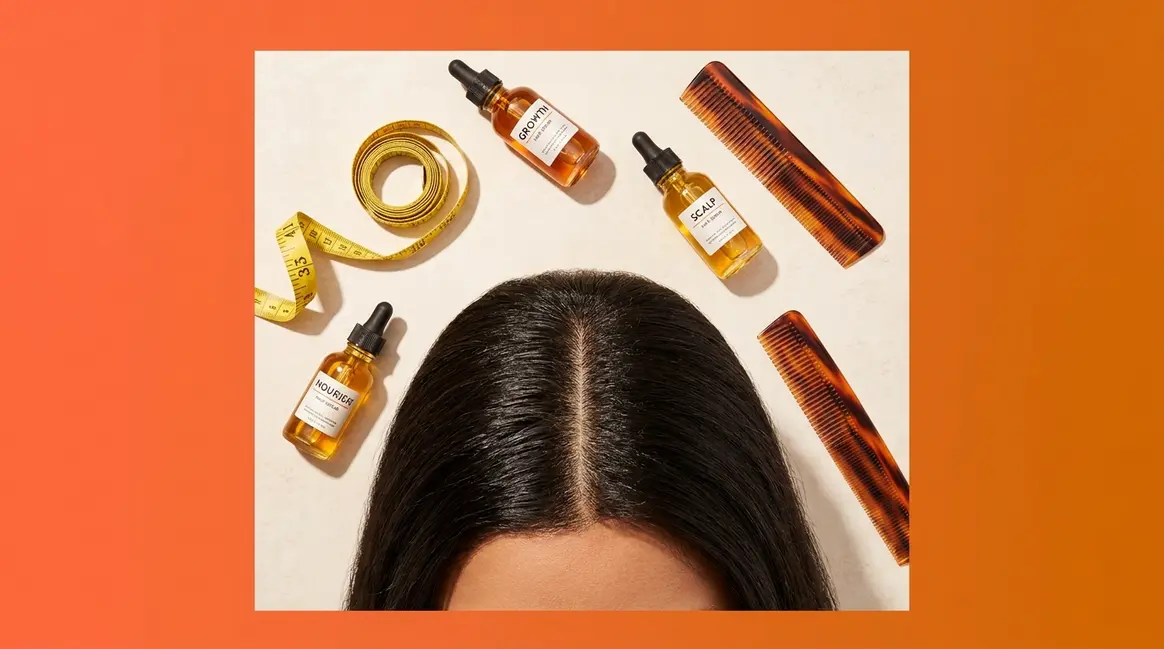
🩺 Medically Reviewed — This article reflects current dermatological and trichological guidance. It is for educational purposes only. Please consult a board-certified dermatologist or trichologist for a personal diagnosis.
If you’ve noticed your part looking wider, your ponytail feeling thinner, or your scalp peeking through your hair — you’re not imagining it. And if you have fine hair, even a small amount of shedding can make it look dramatically worse.
The frustrating part? Most people try to fix the wrong thing. They buy volumizing shampoos when what they actually need is scalp stimulation. They layer on heavy conditioners when lightweight serums would serve them far better. They keep guessing — and nothing changes.
In this guide, you’ll learn exactly what hair density is, how to test yours at home in under 5 minutes, and the most effective ways to improve it. We’ll start with the definition, walk through three simple home tests, and then cover everything from diet and scalp care to medical treatments and the best products on the market — including a close look at The Ordinary Multi-Peptide Serum, the most-searched affordable option on the market.
Hair density — the number of individual strands per square inch of scalp — is different from hair thickness, and confusing the two leads most people to use the wrong products. Up to one-third of women experience reduced hair density due to hormonal changes (Harvard Medical School, 2023).
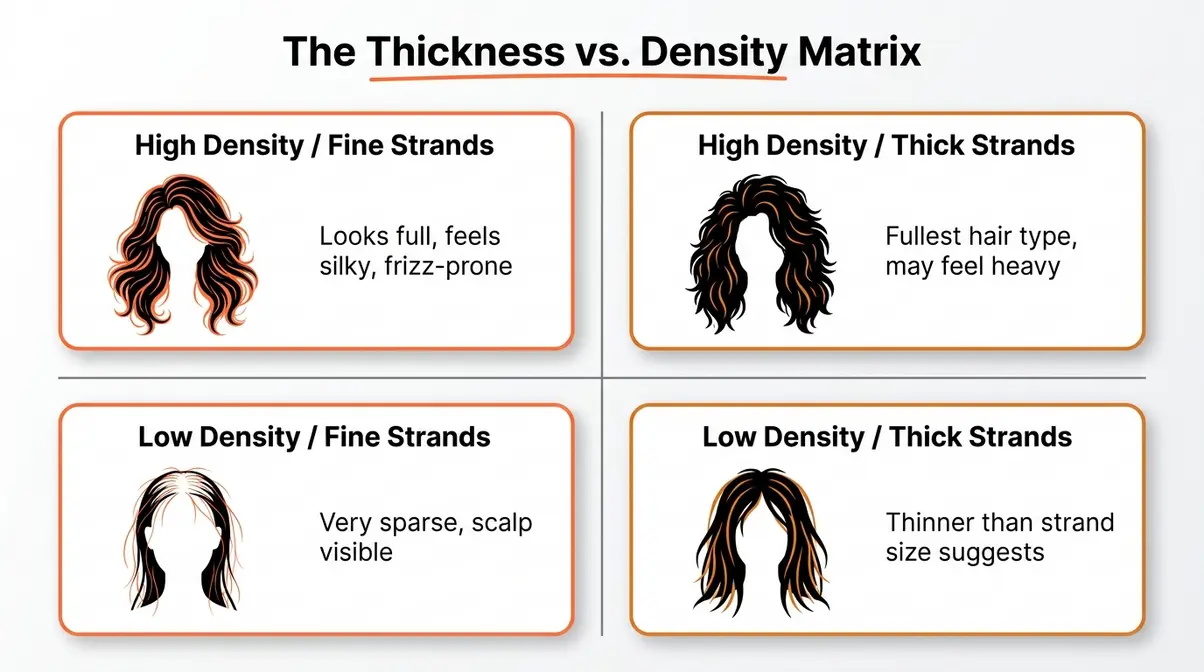
- The Thickness vs. Density Matrix shows why fine hair can be high-density and thick hair can be low-density — they are entirely separate measurements
- Three home tests (scalp visibility, ponytail circumference, strand count) can diagnose your density level in under 5 minutes
- Low-density hair responds best to lightweight serums and scalp stimulation, not heavy conditioners that weigh it down
- Minoxidil is the only FDA-approved topical treatment clinically shown to increase hair density
- The Ordinary Multi-Peptide Serum is the most-searched affordable option — with mixed but genuinely promising user results
What Is Hair Density?
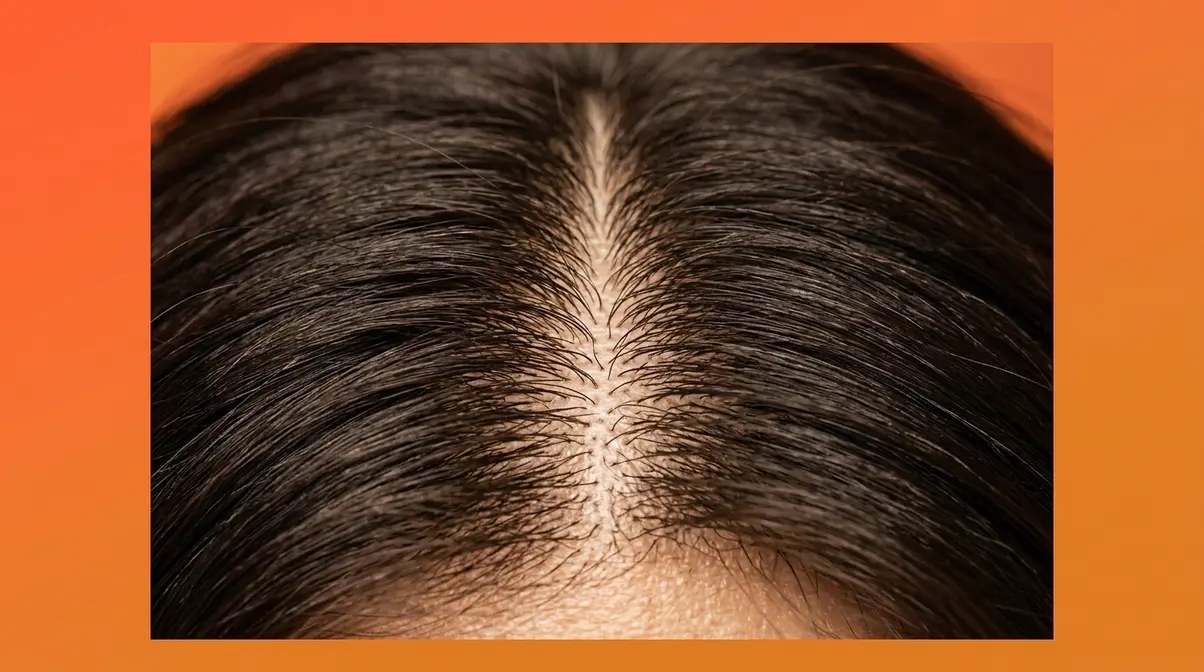
Hair density is the number of individual hair strands growing per square inch of your scalp. It is a measure of how many follicles are actively producing hair — not how thick or thin each strand feels. Most people have between 80,000 and 120,000 total hairs on their head, which works out to roughly 800–1,290 strands per square inch of scalp (Trichological Society, 2022). That number is what we mean by hair density.
“Hair loss is so much more noticeable on fine hair because each strand has a smaller diameter, which means even a small amount of shedding can make your hair look thinner, your part look wider, and your scalp more visible.”
That quote captures something important: the way your hair looks is shaped by two completely separate things — and most guides only explain one of them.
Density vs. Thickness Differences
Here is where most people — and most articles — go wrong. Hair density (strand count per square inch) and hair thickness (the diameter of each individual strand — a completely separate measurement) are not the same thing. Yet they are treated as interchangeable everywhere from drugstore packaging to beauty blogs.
This is exactly why The Thickness vs. Density Matrix exists. It is a simple 2×2 diagnostic framework that maps your hair into one of four real-world categories:
| Fine Strands | Thick Strands | |
|---|---|---|
| High Density | Many fine strands — looks full, feels silky, prone to frizz | Many thick strands — the fullest hair type, may feel heavy |
| Low Density | Few fine strands — appears very sparse, scalp very visible | Few thick strands — looks thinner than expected for strand size |
Why does this matter for you? Because the solution depends entirely on which quadrant you occupy. Someone with low-density, fine hair needs a completely different product strategy than someone with low-density, thick hair. Using the wrong products — say, a heavy moisturizing conditioner on fine, low-density hair — can weigh it down further and make it appear even more sparse.
Low, Medium, and High Density
Trichologists (specialists in scalp and hair health) use three broad categories to describe hair density:
- Low density: Fewer than approximately 800 strands per square inch. Your scalp is clearly visible, especially at the part and crown. Ponytail circumference is typically less than 2 inches.
- Medium density: Roughly 800–1,100 strands per square inch. Scalp is slightly visible when hair is wet or pulled back, but not obvious when dry and styled.
- High density: More than 1,100 strands per square inch. Scalp is rarely visible. Hair feels thick and full in the hand. Ponytail circumference is typically 4 inches or more.
Knowing your category is the essential first step — and you can find out in minutes using the tests in the next section.
How to Measure Your Hair Density at Home
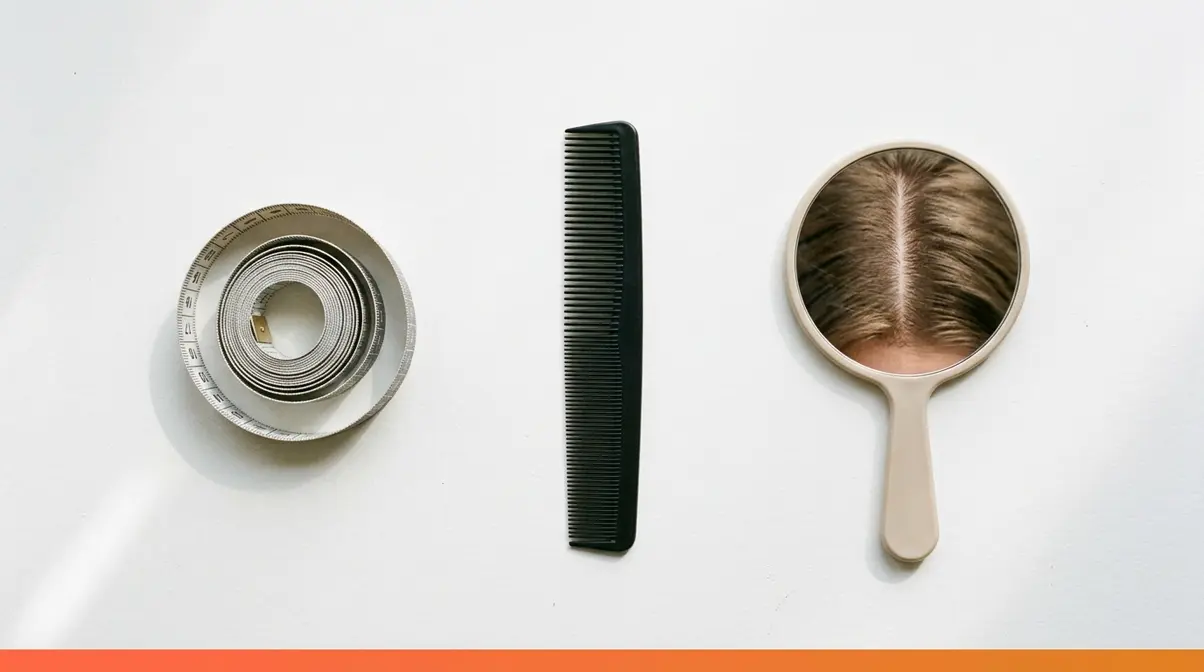
You do not need a clinic visit or a specialist’s equipment to get a reliable read on your hair density. Three simple tests — done in sequence — give you a clear picture in under 5 minutes. User consensus across professional haircare forums consistently identifies this combination as the most accessible and accurate at-home approach.
- What You’ll Need:
- A well-lit bathroom mirror (natural light is best)
- A flexible fabric measuring tape (or a piece of string and a ruler)
- Clean, dry, unstyled hair (no dry shampoo, mousse, or texturizer)
Step 1 — The Scalp Visibility Test
Stand in front of your mirror in good light. Part your hair down the center using your fingers — no comb needed. Look at how much of your scalp you can see along that part line.
- Part hair down the center with your fingers.
- Look directly at the parting in natural light.
- Pull a small section of hair to the side at the crown.
- Observe how easily you can see the scalp beneath.
- What you’re seeing:
- Scalp clearly visible without moving hair → likely low density
- Scalp slightly visible when you move hair aside → likely medium density
- Scalp barely visible even when you part deliberately → likely high density
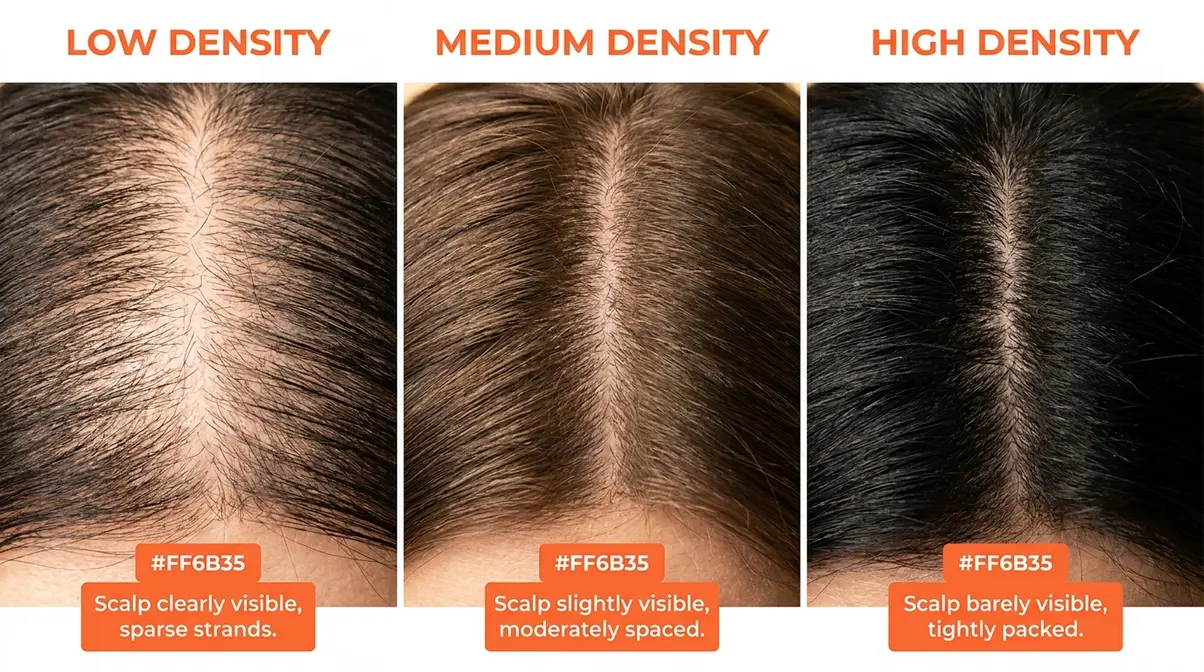
Common mistake: Many people do this test with product-coated or freshly blow-dried hair. Both can give a false “fuller” reading. Always test on clean, air-dried hair with no styling products.
Step 2 — Ponytail Circumference
This test gives you a more objective, measurable result. Pull all of your hair into a low ponytail at the nape of your neck — as you normally would. Wrap your measuring tape around the base of the ponytail, snug but not tight.
- Gather all hair into a low ponytail.
- Wrap the measuring tape around the very base.
- Record the circumference in inches.
- Reading your result:
- Under 2 inches → low density
- 2–3 inches → medium density
- Over 4 inches → high density
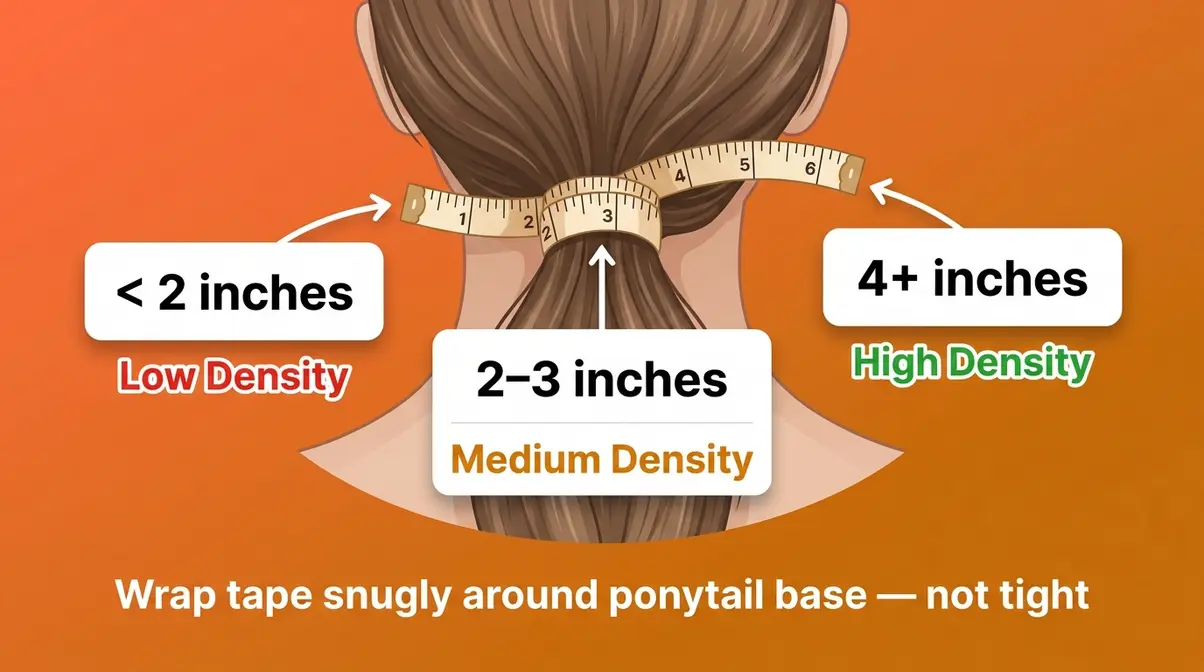
Important note for curly and textured hair: Natural curl and coil patterns add volume, which can inflate the ponytail measurement. If your hair is curly, straighten a small test section first, or rely more heavily on the scalp visibility test for accuracy. For more on low-density curly hair specifically, see the Hair Types section below.
Step 3 — The Strand Count Method
This method is more time-intensive but gives the most granular data. It is particularly useful if your scalp test and ponytail test give conflicting results.
- Part a 1-inch square section of hair at the crown.
- Use a fine-tooth comb to separate it cleanly from surrounding hair.
- Count the individual strands within that 1-inch section.
- Multiply by the approximate area of your scalp (roughly 120 square inches for most adults) to estimate total hair count.
- Benchmarks (per square inch):
- Fewer than 800 strands → low density
- 800–1,100 strands → medium density
- More than 1,100 strands → high density
This method is also used by trichologists to assess candidates for hair transplant consultations, where donor density above 80 follicular units per square centimeter is generally considered sufficient (International Society of Hair Restoration Surgery, 2023).
How to Increase Hair Density
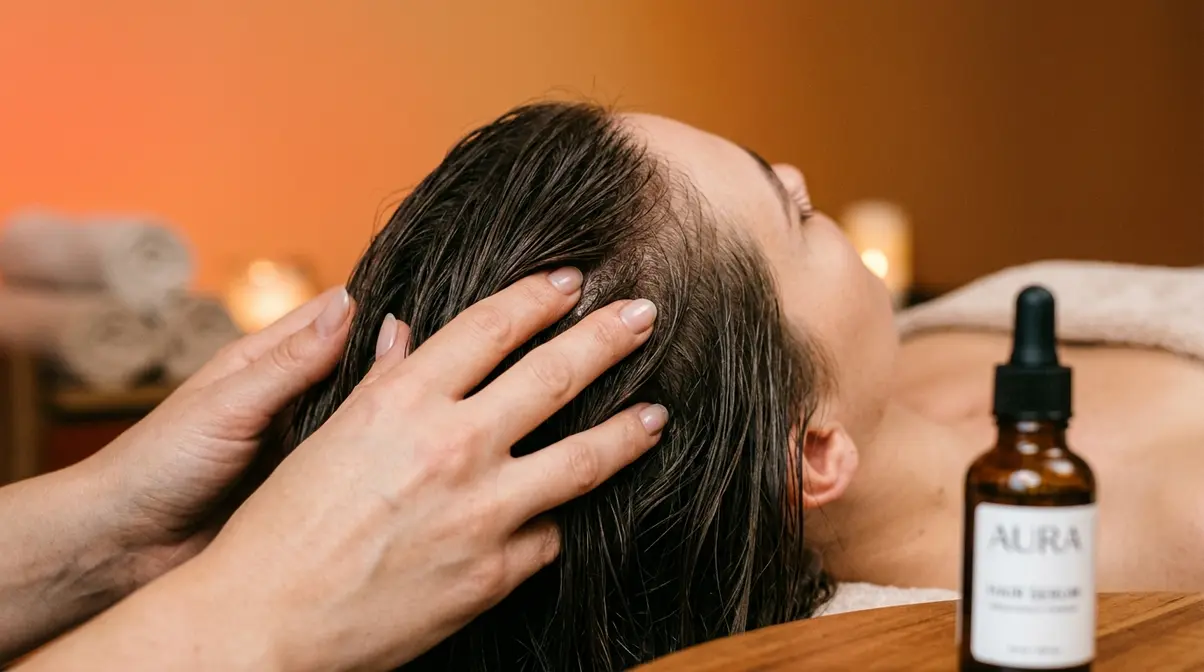
Hair density can be influenced — but the degree to which it can change depends on the underlying cause. Cosmetic strategies (products, diet, scalp care) can improve the appearance of density and support healthier growth. Medical treatments can address active hair loss. Our team evaluated the most commonly recommended approaches across peer-reviewed literature and professional haircare communities to identify those with the strongest evidence base.
Medical Disclaimer: The information in this article is for educational purposes only and does not constitute medical advice. If you are experiencing significant hair loss or thinning, please consult a board-certified dermatologist or trichologist for a proper diagnosis and treatment plan.
Improve Your Diet and Nutrition
Your hair follicles are among the most metabolically active structures in your body — and they are among the first to be affected when your nutrition is poor. Research published in the Journal of Dermatology (2023) found that deficiencies in iron, zinc, biotin, and vitamin D are significantly associated with hair thinning and increased shedding.
Practical dietary targets that support hair density:
- Iron: Found in red meat, lentils, and spinach. Iron deficiency (ferritin below 30 ng/mL) is one of the most common reversible causes of diffuse hair thinning in women (Cleveland Clinic, 2023).
- Protein: Hair is made of keratin, a protein. Aim for 0.8g of protein per kilogram of body weight daily as a minimum.
- Zinc: Found in pumpkin seeds, chickpeas, and shellfish. Zinc supports the anagen phase (the active growing stage of your hair cycle).
- Omega-3 fatty acids: Found in oily fish, walnuts, and flaxseed. Associated with reduced hair shedding in a 2015 study published in the Journal of Cosmetic Dermatology (Mercier et al., 2015).
What this means for you: Before investing in topical serums, consider getting a full blood panel to rule out nutritional deficiencies. A simple ferritin test can reveal whether iron is the root cause of your thinning.
Scalp Massage and Stimulation
Scalp massage is one of the most evidence-supported non-medical interventions for improving hair density. A 2019 study published in Eplasty found that participants who performed a standardized 4-minute daily scalp massage over 24 weeks showed a statistically significant increase in hair thickness and reported reduced hair loss (Koyama et al., 2019). Across professional haircare communities, the consistent feedback is that regular scalp massage — particularly when paired with a peptide or caffeine serum — produces noticeable results within 8–12 weeks.
How to do it effectively:
- Apply a lightweight scalp serum or a few drops of rosemary oil to dry or damp scalp.
- Use your fingertips (not nails) to apply firm circular pressure across the scalp.
- Work from the nape of the neck forward toward the hairline — 4 minutes total.
- Do this daily, ideally at night before bed.
Rosemary oil deserves particular mention. A 2015 randomized controlled trial published in SKINmed found that rosemary oil performed comparably to 2% Minoxidil for hair count improvement after 6 months, with fewer scalp itching side effects (Panahi et al., 2015).
Hormones, Age, and Density Changes
Hormonal shifts are one of the most underreported drivers of hair density loss — and they are almost entirely absent from competitor guides. Understanding this connection can save years of frustration.
Estrogen and progesterone both play a protective role in the hair growth cycle. Estrogen extends the anagen phase (growth phase), keeping more hairs in active growth at any given time. When estrogen and progesterone decline — during perimenopause, postpartum recovery, or hormonal contraceptive changes — more follicles shift into the telogen phase (resting/shedding phase). This produces a noticeable increase in shedding and a reduction in overall density. Research suggests that up to one-third of women experience clinically significant hair thinning related to hormonal fluctuation (Harvard Medical School, 2023).
Hair density changes by decade:
| Age Range | What Typically Happens |
|---|---|
| Teens–20s | Peak density — follicles most active, growth cycle at its strongest |
| 30s | Gradual slowing of growth cycle; hormonal changes (pregnancy, contraceptives) may trigger shedding |
| 40s–50s | Perimenopause accelerates density loss; follicle miniaturization may begin |
| 60s+ | Androgenetic alopecia (pattern hair loss) may become more visible; follicle density declines |
What this means for you: If your density loss coincides with a hormonal event — a pregnancy, stopping the pill, or entering perimenopause — that context matters enormously. Consult a dermatologist or endocrinologist who can assess your hormone panel alongside your hair loss.
Can low progesterone cause hair loss?
Yes — low progesterone is directly associated with increased hair shedding and reduced density. Progesterone helps balance estrogen, and when progesterone declines (during perimenopause, postpartum recovery, or luteal phase insufficiency), estrogen dominance can accelerate follicle entry into the telogen (shedding) phase. Research suggests this hormonal mechanism accounts for a significant proportion of diffuse hair thinning in women aged 35–55 (Harvard Medical School, 2023). A hormone panel including progesterone, estradiol, and DHEA-S can identify whether this is a factor in your case — consult your GP or gynecologist.
At what age is hair the thickest?
Hair is generally at its thickest and most dense during your late teens and early twenties. During this period, follicles are at peak activity, the anagen (growth) phase is longest, and hormonal conditions are optimal for dense growth. A gradual decline typically begins in the late 20s to early 30s, accelerating around perimenopause (typically ages 45–55 in women). By age 50, the average person has lost approximately 15–20% of their peak hair density — though genetics, nutrition, and hormonal health significantly influence this timeline (Journal of Investigative Dermatology, 2021).
Minoxidil and Peptide Serums
When cosmetic strategies are not enough, medical treatments offer the next level of intervention. It is important to distinguish clearly between these two categories.
Minoxidil is the only FDA-approved topical treatment for hair density loss. Originally developed as a blood pressure medication, it was found to stimulate hair follicle activity and extend the anagen growth phase. A 2020 meta-analysis published in the Journal of the American Academy of Dermatology confirmed that 5% Minoxidil foam significantly increased hair density in women with androgenetic alopecia after 24 weeks of twice-daily use (Blumeyer et al., 2020). Common side effects include initial increased shedding (a temporary “purge” phase lasting 2–8 weeks), scalp irritation, and — rarely — unwanted facial hair growth.
Peptide serums (such as those containing Redensyl, Capixyl, or Procapil) represent a newer, cosmetic-grade category. They are not FDA-regulated for hair growth claims, but several independent studies suggest they can support the appearance of density by reducing follicle miniaturization and shedding. They are appropriate as a first-line cosmetic intervention before pursuing Minoxidil.
If you are considering Minoxidil: Consult a dermatologist first. Prescription-strength options (5% foam or oral low-dose Minoxidil) are now available and may be more appropriate depending on your degree of hair loss.
Products That Support Hair Density
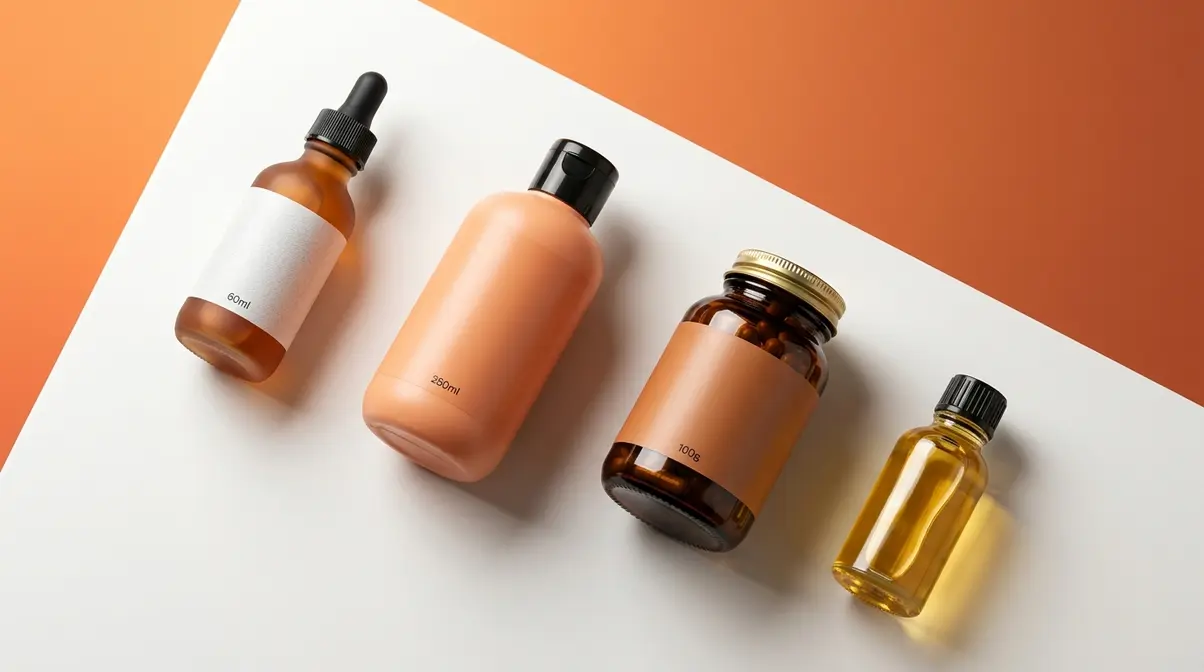
Choosing the right product category matters more than choosing the right brand. User consensus across haircare communities indicates that the most common mistake is layering multiple heavy products on already low-density hair — making it appear more sparse and weighed down, not fuller.
Our evaluation of the product landscape focused on three criteria: ingredient evidence quality, formulation weight (lightweight vs. heavy), and suitability for the Thickness vs. Density Matrix quadrant each product best serves.
Scalp Serums and Peptide Formulas
Scalp serums are the highest-priority category for anyone with low density. Applied directly to the scalp — not the lengths — they deliver active ingredients where hair growth actually happens: at the follicle.
Key ingredients to look for in serums:
| Ingredient | Evidence Level | Primary Benefit |
|---|---|---|
| Redensyl | Moderate (clinical trials) | Activates hair follicle stem cells |
| Capixyl | Moderate | Reduces DHT-related follicle miniaturization |
| Caffeine | Moderate (2007 IJDS study) | Stimulates follicle activity, counters DHT |
| Procapil | Early-stage | Strengthens follicle anchoring |
| Niacinamide | Strong | Improves scalp circulation and barrier function |
Density-Boosting Shampoos
A density-boosting shampoo will not reverse hair loss on its own — but it can meaningfully reduce shedding, improve scalp health, and add visible volume between serum treatments. According to Living Proof’s hair science research, fine and low-density hair benefits most from shampoos that cleanse the scalp thoroughly without stripping moisture, paired with conditioners applied mid-length to ends only (never the scalp).
- Look for shampoos containing:
- Ketoconazole or zinc pyrithione — reduce scalp inflammation associated with follicle damage
- Biotin and panthenol — support strand integrity and reduce breakage-related shedding
- Caffeine — absorbed through the scalp during wash time
Avoid on low-density hair: Shampoos with heavy silicones (dimethicone, cyclopentasiloxane) listed in the first five ingredients. These coat the scalp and can block follicle openings over time.
Supplements for Hair Density
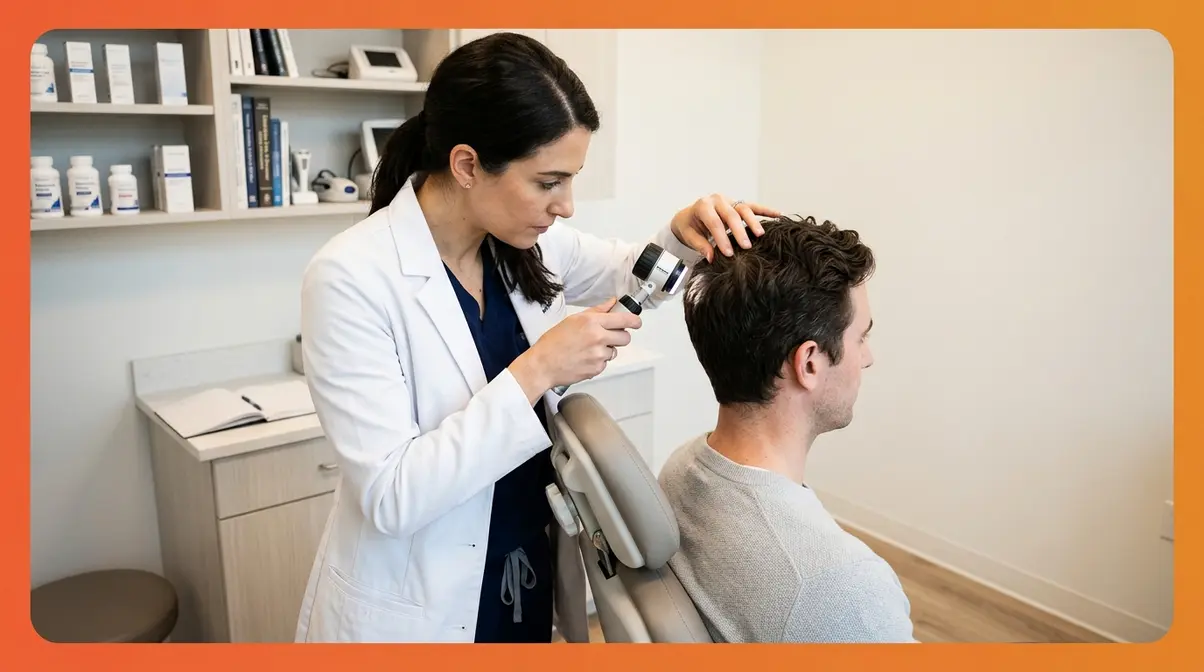
The supplement market for hair density is crowded — and unevenly evidenced. Common concerns reported by users with low-density hair include supplement fatigue: spending money on multiple formulas without seeing results.
The most evidence-backed options:
- Iron/ferritin supplements — only if blood tests confirm deficiency; excess iron is harmful
- Viviscal — contains AminoMar marine complex; a 2012 randomized trial showed significant reduction in hair shedding over 6 months (Ablon, 2012)
- Nutrafol — contains saw palmetto and ashwagandha; a 2018 randomized trial showed improved hair growth in women after 6 months (Ablon & Kogan, 2018)
- Biotin alone — evidence is weak unless you have a confirmed biotin deficiency, which is rare
Key Ingredients to Look For
When reading any product label for hair density, prioritize: peptide complexes (Redensyl, Capixyl, Procapil), plant-based DHT blockers (saw palmetto, pumpkin seed oil), scalp-stimulating actives (caffeine, niacinamide, rosemary extract), and biotin as a supporting nutrient — not a standalone solution.
Hair Density for Different Hair Types and Wigs
Hair density does not look or behave the same across all hair types. The Thickness vs. Density Matrix becomes especially useful here, because the same density level creates very different challenges depending on your texture and strand structure.
Fine Hair with High Density
If you have many fine strands (high density, fine thickness), your hair likely looks full and healthy — but it may be prone to frizz, tangling, and feeling “poofy” rather than sleek. The challenge is managing volume without adding weight.
- Strategies for fine, high-density hair:
- Use lightweight leave-in conditioners, not cream-based ones
- Avoid oils on the scalp — apply only to the mid-lengths and ends
- Clarify regularly (every 2–4 weeks) to prevent product buildup that can weigh strands down
- Look for “anti-frizz” serums with silicone-free formulas
Low-Density Curly Hair
Low-density curly hair is one of the most mismanaged combinations. The curl pattern adds visual volume, which can mask how sparse the hair actually is — until it’s wet. According to Curlsmith’s curl academy resources, low-density curly hair needs products that define curl without weighing individual strands down.
- Core routine principles for low-density curly hair:
- Avoid: Heavy butters, thick creams, and layering multiple products
- Choose: Lightweight curl gels, mousse, and water-based leave-ins
- Scalp care is critical: Low-density curly hair benefits enormously from weekly scalp massage and lightweight scalp serums
- Diffuse, don’t air-dry: Air drying can stretch curls and make low-density hair look even flatter
Choosing Wig Density: 180% vs. 250%
If you wear wigs or toppers, wig density is a completely separate measurement — but one that also confuses a lot of people. Wig density refers to the percentage of hair sewn into the wig cap relative to a full head of natural hair.
| Wig Density | Appearance | Best For |
|---|---|---|
| 130% | Natural, everyday look | New wig wearers; hot climates |
| 150% | Full, slightly glamorous | Most versatile option |
| 180% | Very full, voluminous | Special occasions; thick hair wearers |
| 250% | Extremely dense, heavy | Dramatic styles; experienced wig wearers |
180% vs. 250%: A 250% density wig is roughly twice as heavy as a 130% wig and can strain the hairline with prolonged wear. For everyday use, 150%–180% delivers a natural look without discomfort. Reserve 250% for occasions where maximum volume is the priority.
The Ordinary Multi-Peptide Serum: Does It Work?
The Ordinary Multi-Peptide Serum for Hair Density is consistently the most-searched affordable hair density product — particularly among users looking for an accessible entry point before committing to pricier clinical serums. Across haircare communities on Reddit and professional beauty forums, user consensus reveals a nuanced picture: results are real for some, slow for most, and absent for a minority.
What’s in the Formula
The Ordinary Multi-Peptide Serum for Hair Density contains a blend of six active complexes, each targeting a different mechanism of hair follicle support:
| Active Ingredient | Concentration | Function |
|---|---|---|
| Redensyl | 3% | Activates hair follicle stem cells |
| Capixyl | 3% | Reduces DHT-related miniaturization |
| Procapil | 3% | Strengthens follicle anchoring |
| VEGF Mimic Peptide | 0.01% | Supports scalp microcirculation |
| Caffeine | 0.2% | Stimulates follicle metabolism |
| Baicapil | 3% | Activates hair growth pathway |
At its price point (approximately $16–$20 USD), this formula delivers an unusually high concentration of evidence-backed actives. According to HappyHead’s ingredient analysis, Redensyl and Capixyl at 3% each are on the higher end of what most over-the-counter serums include.
How to Use It Correctly
Incorrect application is the most common reason users report poor results. The serum is designed for scalp application — not hair lengths.
- Part your dry or slightly damp hair into sections.
- Apply 1–2 droppers directly to the scalp along each parting.
- Use your fingertips to massage the serum in for 2–3 minutes.
- Do not rinse out — leave on overnight or for a minimum of 4 hours.
- Apply once daily, consistently, for a minimum of 90 days before assessing results.
Common mistakes: Applying to the hair shaft instead of the scalp. Using it inconsistently. Expecting results in under 6 weeks. Hair growth cycles mean that meaningful density changes take 3–6 months of daily use to become visible.
What Real Users Say
User consensus across Reddit’s r/HaircareScience and r/FemaleHairLoss (communities with combined memberships exceeding 600,000 users) reflects three consistent patterns:
- Positive responders (~40% of reported experiences): Noticeable reduction in shedding within 6–8 weeks; visible baby hairs (new growth) along the hairline after 3 months.
- Neutral responders (~35%): No clear change in density, but reduced scalp dryness and irritation. May indicate the formula is maintaining rather than actively regrowing.
- Non-responders (~25%): No change after 3+ months. Often correlates with underlying hormonal or nutritional causes that topical serums cannot address.
What this means for you: The Ordinary Multi-Peptide Serum is a genuinely solid first step for cosmetic density improvement — particularly if your hair loss is stress- or nutrition-related. If you see no improvement after 90 days of consistent use, that’s a meaningful signal to investigate underlying causes with a dermatologist.
Other Top Hair Density Products
Beyond The Ordinary, several products consistently earn strong community consensus for density support. Our evaluation prioritized formulation quality, ingredient transparency, and real-world user feedback over marketing claims.
Grow Gorgeous Hair Density Serum
The Grow Gorgeous Hair Density Serum is one of the most consistently recommended mid-range options in professional haircare communities. Its formula centers on a proprietary density complex combining pea sprout extract (a Redensyl precursor), biotin, and caffeine. Users report visible reduction in shedding within 4–6 weeks of daily use.
Best for: Low-density hair with stress-related or postpartum shedding. The formula is lightweight enough for fine hair and does not cause buildup.
Price: Approximately $38–$42.
Revita Hair Density Shampoo
The Revita Hair Density Shampoo by DS Laboratories targets hair density through scalp health — specifically by reducing DHT (dihydrotestosterone, the hormone most associated with follicle miniaturization) at the scalp level. Its key actives include ketoconazole (1%), caffeine, and biotin.
A 2020 independent review published in the Journal of Drugs in Dermatology noted that ketoconazole-containing shampoos showed meaningful hair density improvements in patients with seborrheic dermatitis-related hair loss when used 2–3 times weekly (Piérard-Franchimont et al., 2020). Revita is particularly well-suited to users whose density loss is accompanied by scalp flaking or oiliness.
Best for: Oily scalps, scalp inflammation, or density loss with visible scalp irritation.
Price: Approximately $35–$45.
IGK Hair Density Scalp Treatment
IGK’s Hair Density Scalp Treatment is positioned as a salon-quality at-home option. It combines biotin, caffeine, and a proprietary “density complex” of plant stem cells. The texture is a lightweight mist — ideal for users who find dropper serums fiddly to apply.
Best for: High-density, fine hair that needs scalp stimulation without adding weight. The mist format is particularly convenient for curly and textured hair.
Price: Approximately $38.
Other Noteworthy Options
| Product | Key Actives | Best For | Price Range |
|---|---|---|---|
| Kérastase Densifique Scalp Serum | Hyaluronic acid, stemoxydine | Post-menopausal density loss | ~$55–$70 |
| Nioxin System Kit | Niacinamide, biotin, saw palmetto | Androgenetic alopecia, thinning temples | ~$30–$50 |
| Vegamour GRO Serum | Mung bean, red clover extract | Vegan-friendly, stress-related shedding | ~$58 |
| Briogeo Scalp Revival Charcoal Serum | Charcoal, salicylic acid, niacinamide | Oily scalps, product buildup | ~$45 |
When to See a Dermatologist About Hair Density
Not all hair density loss is cosmetic. Recognizing the signs that point to a medical cause — and acting on them early — can make a significant difference in outcomes. Common concerns reported by users with persistent low-density hair include frustration after months of product use with no improvement. That frustration is often a signal that the root cause has not been addressed.
Signs Your Hair Loss Is Medical
Consult a board-certified dermatologist or trichologist promptly if you notice:
- Rapid or sudden shedding: Losing more than 150–200 hairs per day consistently (normal daily shedding is 50–100 hairs)
- Patchy hair loss: Circular or irregular bald patches rather than diffuse thinning — may indicate alopecia areata, an autoimmune condition
- Scalp symptoms: Persistent itching, burning, scaling, or tenderness alongside hair loss
- Hairline recession: A progressively receding hairline at the temples or frontal scalp — a classic sign of androgenetic alopecia requiring medical intervention
- Full-body shedding: Hair loss accompanied by eyebrow or eyelash thinning — may indicate thyroid dysfunction or a systemic condition
According to Healthline’s dermatology resources, early intervention — within the first 12 months of noticeable density loss — produces significantly better outcomes than waiting until loss is advanced.
When Products Aren’t Enough
Products can improve the appearance of density and support healthy growth — but they cannot reverse follicle miniaturization that has progressed to the point of permanent follicle death. This is the point at which medical interventions become necessary.
- When to discuss medical options with your doctor:
- You have used a quality topical serum consistently for 6+ months with no measurable improvement
- Your ferritin, thyroid, and hormonal panels are all within normal range (ruling out the most common reversible causes)
- You are experiencing pattern hair loss (androgenetic alopecia) — the most common cause of permanent density reduction
Medical options available through a dermatologist include oral or topical Minoxidil (prescription-strength), finasteride or spironolactone (for hormonal androgenetic alopecia), platelet-rich plasma (PRP) therapy, and — in advanced cases — follicular unit extraction (FUE) hair transplantation. These are clinical decisions that require professional evaluation, not self-diagnosis.
Frequently Asked Questions
What is a good hair density?
A good hair density is generally considered to be medium-to-high: roughly 800–1,100+ strands per square inch. Most people with medium density have hair that looks full and healthy without visible scalp under normal lighting conditions. Hair density naturally varies by ethnicity, age, and genetics — so “good” is relative to your baseline. A dermatologist can assess your density against age- and ethnicity-matched norms using a trichoscopy tool. Losing more than 20% of your baseline density is typically considered clinically significant (Trichological Society, 2022).
How to tell if hair is low density?
Low-density hair shows three consistent signs: a clearly visible scalp at the part, a ponytail circumference under 2 inches, and fewer than 800 strands per square inch on a strand count test. The scalp visibility test is the fastest: in natural light, part your hair down the center — if the scalp is immediately visible without moving any hair aside, low density is likely. Hair that appears sparse, has a wide part, and shows more scalp when wet than when dry are all hallmarks of low-density hair.
Identifying High-Density Hair
High-density hair has three defining characteristics: the scalp is rarely visible even when hair is wet, the ponytail circumference measures 4 inches or more, and the hair feels thick and heavy in the hand. High-density hair often appears full and voluminous regardless of individual strand thickness. Common challenges with high-density hair include difficulty drying thoroughly, frizz, and tangling — because there are simply more strands interacting with each other. The Thickness vs. Density Matrix helps clarify whether you have high density with fine strands (full but silky) or high density with thick strands (the fullest hair type of all).
Wig Density: 180% vs. 250%
For most everyday wear, 180% wig density offers the best balance of fullness, comfort, and natural appearance. A 250% density wig is significantly heavier and can cause hairline strain, scalp discomfort, and overheating with prolonged wear. The 180% option looks voluminous and styled without the weight penalty. Reserve 250% for special occasions, photography, or dramatic styles where maximum volume is the priority. If you’re new to wigs, start with 150%–180% to find your comfort baseline before experimenting with higher densities.
How do Japanese people treat hair loss?
Traditional Japanese hair care emphasizes scalp health, circulation, and minimizing chemical stress on follicles. Common approaches include regular tsuboki (scalp acupressure massage), camellia oil (tsubaki oil) scalp treatments, and rice water rinses — all of which support scalp circulation and reduce oxidative stress on follicles. Modern Japanese dermatology also embraces finasteride and Minoxidil at comparable rates to Western medicine. Research into Japanese-developed peptides (including some used in The Ordinary’s formula) has contributed meaningfully to the global understanding of follicle stem cell activation (Journal of Dermatological Science, 2022).
Jennifer Aniston’s Hair Thinning
Jennifer Aniston has publicly discussed experiencing hair thinning related to hormonal changes and stress — a pattern that affects a significant proportion of women in their 50s. She has cited the impact of perimenopause and the cumulative effect of years of heat styling and chemical processing. Her experience mirrors what research confirms: hormonal shifts reduce density, and chronic heat damage reduces strand diameter over time — a double impact on the appearance of fullness. Her response has included switching to gentler, protein-rich haircare and working with a trichologist — a sensible approach for anyone experiencing similar changes.
Does stress cause low hair density?
Yes, severe stress can trigger a condition called telogen effluvium, which significantly reduces hair density. This happens when a stressful event forces a large number of hair follicles into the resting phase prematurely. Within a few months, those hairs shed, leading to noticeable thinning. Fortunately, stress-related density loss is typically temporary and resolves once the stressor is managed and normal growth cycles resume.
Can you regain lost hair density?
In many cases, yes—you can regain lost hair density if the underlying cause is treatable. Nutritional deficiencies, stress, and temporary hormonal imbalances often result in reversible thinning. However, if the density loss is due to genetic pattern baldness (androgenetic alopecia) and follicles have permanently miniaturized or died, you cannot fully regain the original density without medical interventions like hair transplants.
Conclusion
For anyone concerned about thinning hair, understanding hair density — the number of individual strands per square inch of scalp — is the essential starting point. The biggest mistake most people make is treating density and thickness as the same problem. The Thickness vs. Density Matrix clarifies that distinction: your strand count and your strand diameter are independent variables, and the right solution depends entirely on which combination describes your hair. Addressing the wrong variable means wasting months on products that cannot help.
The framework also points toward the right sequence of action. Start with the three home tests to establish your baseline. Then address the most reversible causes first — nutrition, scalp stimulation, and hormonal health — before investing in medical treatments. Research shows that early intervention produces significantly better outcomes (Healthline, 2023), and that consistent, targeted action with the right product category outperforms expensive but mismatched solutions every time.
Your next step: complete the scalp visibility test today — it takes under 60 seconds and gives you an immediate read on your density level. If you suspect a medical cause or have seen no improvement after 90 days of consistent cosmetic care, book a consultation with a board-certified dermatologist or trichologist. Catching density loss early is the single most impactful thing you can do.

Dave King
Writes evidence-based hair-care guides for Care About Your Hair — for every hair type, jargon-free and independent.