 Dave King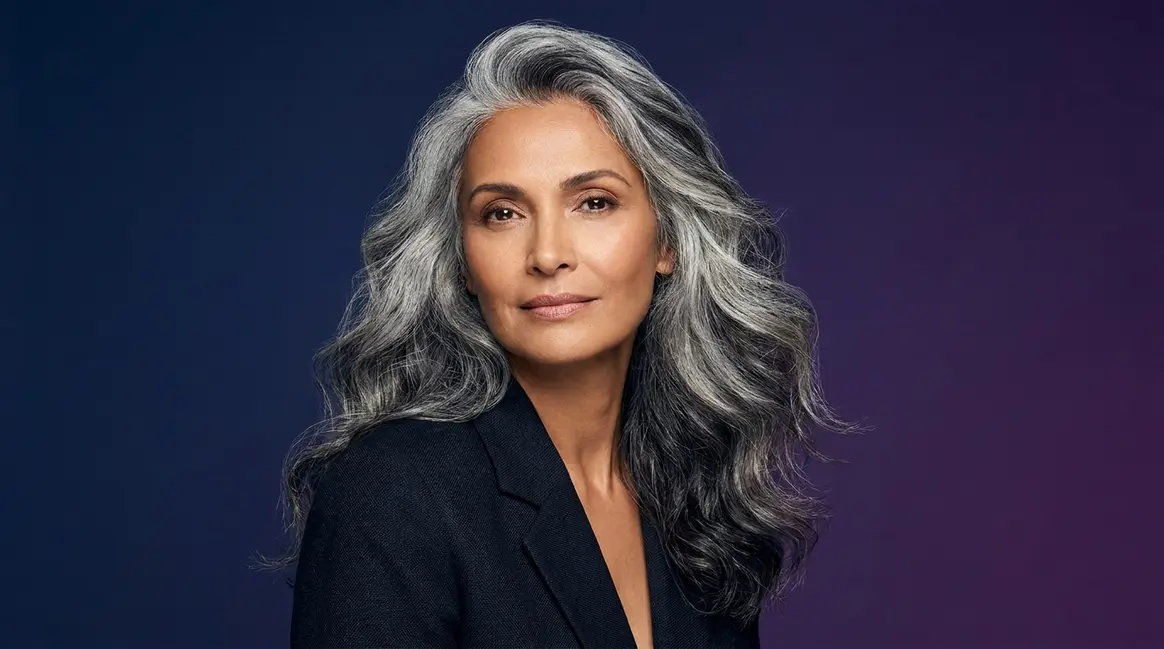
Most people spend years — and hundreds of dollars — trying to hide their gray, only to realize the most stylish thing on their head was already there. Salt and pepper hair now draws over 12,100 monthly searches, which means thousands of people every month are actively choosing silver over the dye chair.
And yet the thing that stops most of them? That dreaded grow-out phase — the “skunk stripe” of dark roots meeting a previously colored mid-length that makes you feel caught between two worlds, belonging to neither.
Here’s the good news: that awkward phase is entirely manageable with the right approach. By the end of this guide, you’ll know exactly how to transition to salt and pepper hair — whether naturally or in a salon — style it for your age and face shape, and keep it vibrant for months. We’ll cover the science behind graying, step-by-step coloring techniques, haircut recommendations, product picks, age-specific styling for both women and men, hair extensions and wigs, and the most common mistakes to avoid.
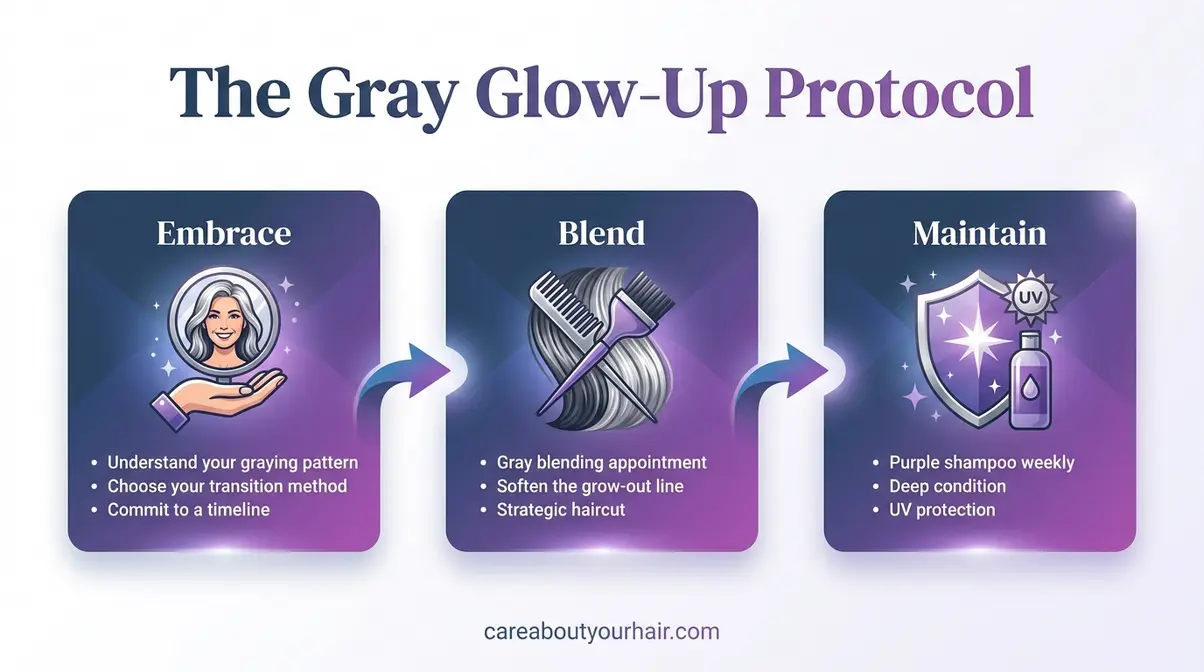
Salt and pepper hair — a blend of dark and silver strands — has become one of the most sought-after looks of the decade, embraced by both men and women at every age. The Gray Glow-Up Protocol makes it achievable in three stages: Embrace, Blend, and Maintain.
- Natural or salon-created: You can grow it out gradually or have a colorist create the look with highlights in one appointment.
- Gray blending (a salon technique using toners and strategic highlights) eliminates the harsh grow-out line most people fear.
- Purple shampoo is the single most important maintenance product — used weekly, it neutralizes the yellow tones that make silver look dull.
- Age-defying styling is about the cut, not just the color — the right haircut makes silver strands look intentional and chic at any age.
- The Gray Glow-Up Protocol (Embrace → Blend → Maintain) is your three-stage roadmap to owning your silver strands with confidence.
Table of Contents
What Is Salt and Pepper Hair?
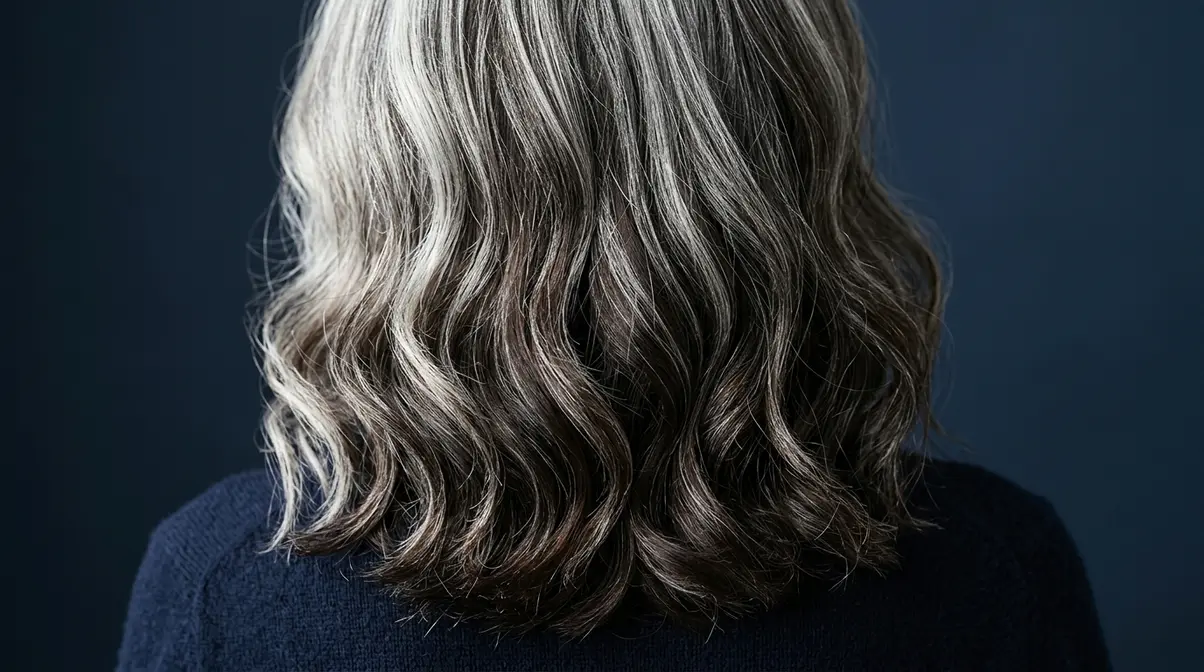
Salt and pepper hair is a natural or intentionally created mix of dark (the “pepper”) and white or silver strands (the “salt”) that blend together throughout the hair. It’s distinct from fully gray or fully white hair — it’s the in-between, and that contrast is exactly what makes it so visually striking. To truly understand salt and pepper hair, you must recognize that whether you’re growing it out naturally or asking a colorist to craft the look, knowing what creates it — and why — helps you work with your hair rather than against it.
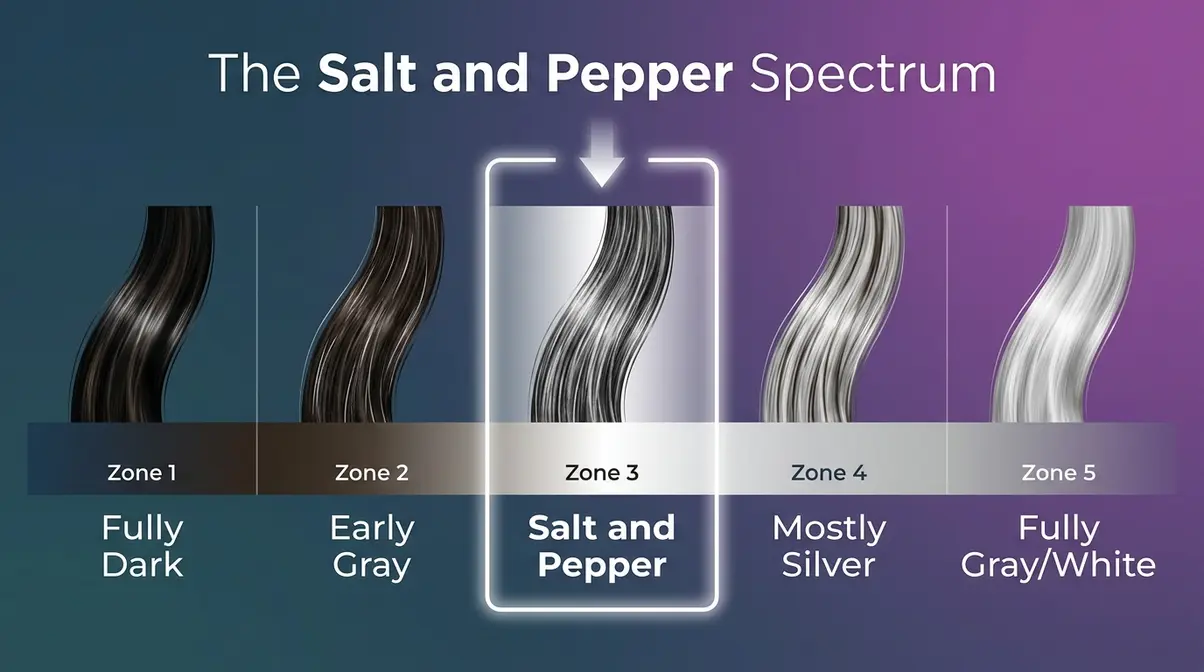
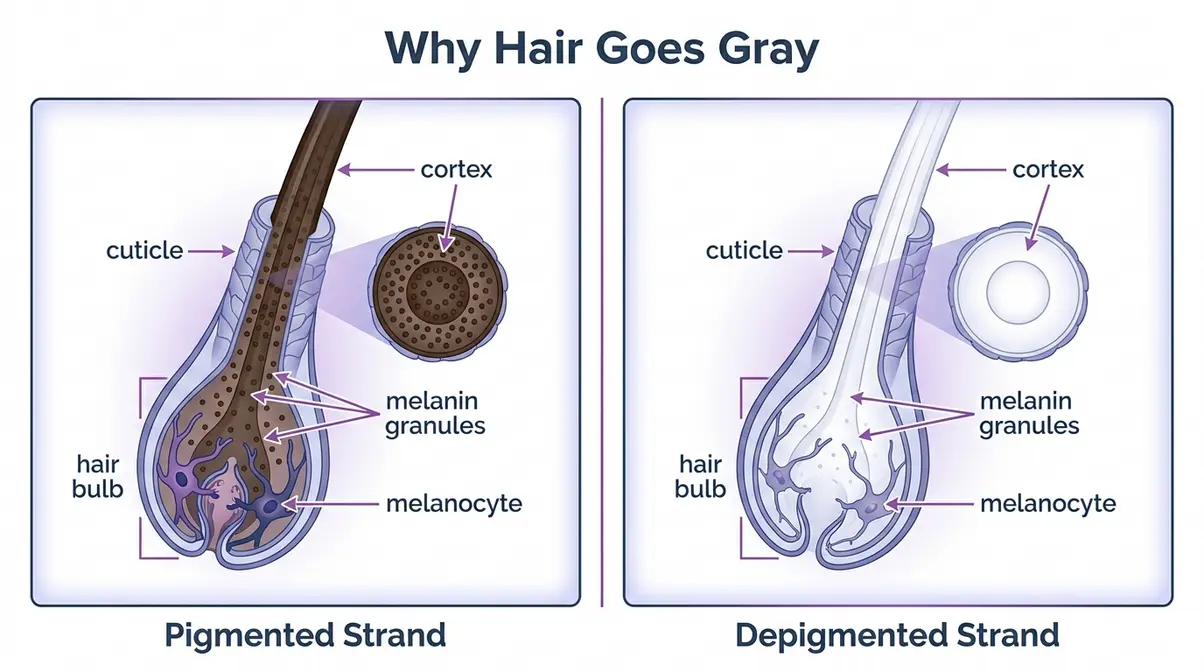
The Science Behind Gray Hair
Your hair gets its color from melanin — a pigment (a natural coloring substance) produced by specialized cells called melanocytes, which live inside each hair follicle. As you age, those melanocytes gradually slow down and eventually stop producing melanin altogether. When a strand grows in without any pigment, it appears white or silver. Mixed in with your remaining pigmented strands, the result is the salt and pepper effect.
Trichologists — hair and scalp specialists with clinical training — consistently note that this process is largely genetic. If your parents went gray early, there’s a strong chance you will too. Research published on MedlinePlus confirms that genetics account for the majority of graying timing, though other factors play a role as well.
Contributing factors beyond genetics include:
- Chronic stress: Elevated cortisol may accelerate the depletion of melanocyte stem cells, according to a 2020 study from Columbia University.
- Nutritional deficiencies: Low levels of B12, iron, and copper are associated with premature graying (MedlinePlus, 2023).
- Smoking: Smokers are up to four times more likely to go gray before age 30 than non-smokers, per research cited by the Cleveland Clinic.
- Autoimmune conditions: Conditions like vitiligo can affect melanocyte function and accelerate depigmentation.
Premature graying — defined as graying before age 20 in Caucasians, before 25 in Asians, or before 30 in people of African descent — affects a meaningful percentage of the population and carries no health risk on its own. “The loss of melanin is a normal biological process,” trichologist and hair health educator Dr. Anabel Kingsley has noted. “It doesn’t mean your hair is unhealthy — it simply means the pigment-producing cells have completed their cycle.”
Natural vs. Curated Gray Styles
There’s an important distinction worth making early: natural salt and pepper hair grows in on its own as your melanin production declines. Curated salt and pepper style, on the other hand, is a deliberate salon technique — a colorist uses highlights (lightened strands), lowlights (darker strands), and balayage (a freehand painting technique) to recreate the salt and pepper blend on hair that may be fully dark or fully gray.
Both are valid. Both are beautiful. The difference matters because your starting point determines your path:
| Starting Point | Best Route |
|---|---|
| Naturally graying (20–50% gray) | Embrace naturally OR use gray blending to soften grow-out |
| Fully dark, wants the look | Salon highlights and balayage to create the blend |
| Fully gray/white, wants contrast | Strategic lowlights (darker strands added back) |
| Previously colored, transitioning | Gray blending + grow-out timeline (see H2-2) |
Understanding where you’re starting from is the first step in the Gray Glow-Up Protocol.
The Gray Glow-Up Protocol
The Gray Glow-Up Protocol is a three-stage framework for approaching salt and pepper hair as a deliberate, strategic style choice — not a passive surrender to aging. Here’s the structure:
Stage 1 — Embrace: Accept that your gray strands are an asset, not a flaw. This stage involves understanding your graying pattern, choosing your transition method (natural or salon-assisted), and committing to a timeline. The biggest mindset shift: you’re not “letting yourself go” — you’re making a curated choice.
Stage 2 — Blend: This is the active transition phase. Whether you go cold turkey or use salon techniques to soften the grow-out, blending is about creating a seamless, intentional-looking result rather than an accidental one. This stage covers coloring methods, the 8-step grow-out timeline, and haircut decisions that support the transition.
Stage 3 — Maintain: Once you’ve arrived at your salt and pepper look, maintenance keeps it vibrant, hydrated, and free from the yellowing and brassiness that can make silver look dull. This stage covers purple shampoos, UV protection, conditioning routines, and when to revisit the salon.
“The biggest mistake people make is treating gray hair like a problem to solve,” says master colorist Lorraine Massey, author of Silver Hair. “When you reframe it as a style choice — something you’re doing, not something happening to you — everything changes.”
Coloring & Highlighting Techniques
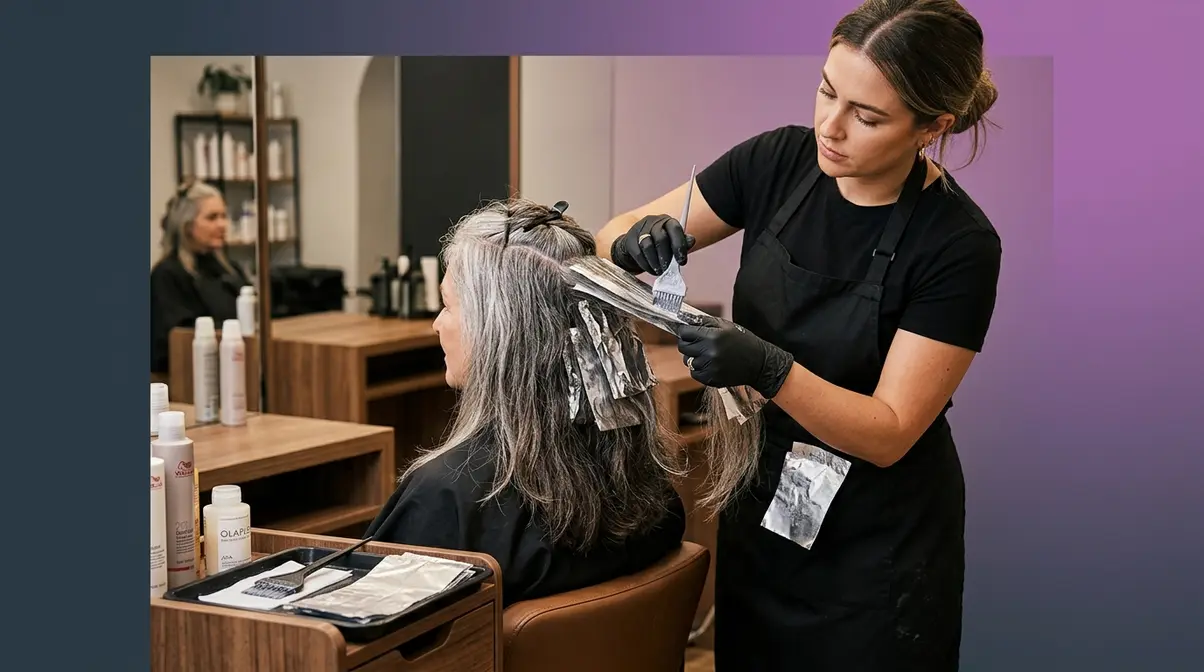
Getting your salt and pepper hair right — whether you’re growing it out naturally or creating the look from scratch — comes down to understanding your options and choosing the one that fits your lifestyle, budget, and patience level. There are four main routes: going cold turkey, using professional gray blending techniques, adding strategic highlights or balayage, or coloring at home. Each has trade-offs worth knowing before you commit.
What to Know Before You Start
Before picking up a box of dye or booking a salon appointment, take stock of these three factors:
- Your current hair color and percentage of gray. If you’re less than 30% gray, a cold turkey grow-out will take longer to look intentional. Salon blending may give you a faster, cleaner result.
- Your hair’s condition. Previously bleached or chemically processed hair is more fragile. A trichologist or colorist can assess whether your strands can handle additional chemical services.
- Your timeline and budget. A full gray blending service can cost $150–$400+ depending on your location and colorist. The cold turkey method costs nothing but requires patience — typically 12–18 months for mid-length hair.
The Cold Turkey Transition Method
Going cold turkey means stopping all color services and allowing your natural gray to grow in without any chemical assistance. It’s the most straightforward approach — and the most intimidating, because the grow-out line between your dyed ends and your natural roots is visible and stark for months. However, when transitioning to natural hair, patience is key.
Here’s an honest 8-milestone timeline for mid-length (shoulder-length) hair:
Month 1–2 (Milestone 1: The Reveal): Your natural root growth appears — typically ½ to 1 inch. The contrast between your new silver roots and your colored mid-lengths and ends is most noticeable here. This is the phase most people bail on. Don’t.
Month 2–3 (Milestone 2: The Skunk Stripe): The demarcation line — the visible border between new growth and old color — is at its most obvious. A skilled colorist can apply a toner (a semi-permanent color treatment that adjusts tone without adding pigment) to soften this line without stopping your progress.
Month 3–4 (Milestone 3: Root Confidence): With 2–3 inches of natural growth, your silver pattern starts becoming visible. You can see whether your gray grows in at the temples, crown, or throughout — and that pattern informs your styling decisions going forward.
Month 4–6 (Milestone 4: The Halfway Point): At shoulder length, you’re roughly halfway through. This is a good time for a strategic trim — removing some of the old color from the ends while preserving length creates a cleaner blend.
Month 6–8 (Milestone 5: The Blend Zone): Your natural growth now dominates. The colored ends are shorter and less visible. Many people find this phase surprisingly manageable because the proportions have shifted in favor of the new growth.
Month 8–10 (Milestone 6: The Tipping Point): The majority of your visible hair is now your natural color. If you’ve been trimming regularly, you may only have 1–2 inches of old color remaining at the ends.
Month 10–12 (Milestone 7: The Final Stretch): One to two more trims typically remove the remaining colored ends. Your hair is now fully transitioned — or close to it.
Month 12+ (Milestone 8: Full Arrival): You’ve completed the cold turkey transition. Your hair is fully natural, and your salt and pepper pattern is entirely your own. Welcome to Stage 3 of the Gray Glow-Up Protocol: Maintain.
Gray Blending to Soften Grow-Out
Gray blending is a professional salon technique in which a colorist uses a combination of toners, lowlights (strands colored slightly darker than your base), and highlights (strands lightened slightly) to create a seamless gradation between your natural gray roots and your existing color. The goal isn’t to cover the gray — it’s to make the transition look intentional rather than accidental.
Here’s how a gray blending appointment typically works:
- Consultation: Your colorist assesses your natural gray percentage, your current color, and your desired end result. They’ll recommend a formula based on your specific blend.
- Base softening: A demi-permanent color (a formula that deposits color without fully lifting it, using a low-volume developer — the activating agent mixed with color) is applied to the mid-lengths to soften the contrast between your roots and ends.
- Strategic highlights: Fine babylights — ultra-fine highlights that mimic the look of natural sun-lightened strands — are woven through the crown and temples to blur the line between gray roots and darker lengths.
- Toner application: A toner is applied to unify the overall tone, often cooling down any brassiness and creating the cohesive salt and pepper effect.
- Gloss finish: Many colorists finish with a clear or tinted gloss to add shine and seal the cuticle.
Professional colorists consistently report that gray blending typically requires 2–3 appointments spaced 8–12 weeks apart before the transition looks fully seamless. “The biggest mistake clients make is expecting a single appointment to do it all,” says master colorist Josh Wood. “Gray blending is a process — each session gets you closer to the finish line.”
Highlights, Lowlights & Balayage
If you’re starting from fully dark hair and want to create the salt and pepper look rather than grow it out, these three techniques are your primary tools for achieving the salt and pepper look artificially:
Highlights are sections of hair that are lightened — typically using foils or a cap — to create contrast with the base color. For salt and pepper hair, highlights are placed around the face frame and crown to mimic where gray naturally appears first. They add the “salt” to darker hair.
Lowlights work in the opposite direction: they add darker strands to hair that’s too uniformly gray or silver. If your hair has gone mostly white and you want to restore the “pepper,” lowlights reintroduce depth and dimension. They’re also used to soften highlights that have gone too bright.
Balayage (pronounced bah-lee-AHZH) is a freehand painting technique in which color is swept onto the hair surface in a graduated pattern, rather than applied uniformly with foils. For salt and pepper hair, balayage creates the most natural-looking result because the lightened sections blend seamlessly into the base — no harsh lines. It’s particularly effective for creating the “lived-in” salt and pepper effect that looks like natural graying rather than a salon service.
For the most dimensional result, many colorists combine all three: balayage for the overall lightening pattern, babylights around the face frame for softness, and a toner to unify the final color.
At-Home Color Safety Precautions
You can achieve a salt and pepper effect at home, but it requires more care than a standard box color application. Here’s what to know:
- What works at home:
- Salt and pepper dye kits from brands like L’Oréal, Revlon ColorSilk, and Schwarzkopf offer pre-formulated blends that deposit a mix of lighter and darker tones simultaneously.
- Root touch-up products in silver or ash-gray shades help extend the time between salon visits during a natural transition.
- Color-depositing conditioners in silver or violet tones maintain the cool, ashy quality of salt and pepper hair between appointments.
- Safety precautions the FDA recommends:
- Always perform a patch test 48 hours before applying any hair dye — apply a small amount behind your ear or on your inner elbow and check for redness, itching, or swelling. The FDA advises this step even if you’ve used the same product before, as sensitivities can develop over time.
- Never apply hair dye to eyelashes or eyebrows. The FDA explicitly warns that this can cause permanent eye damage.
- Keep hair dye away from cuts, sores, or irritated scalp areas.
- Follow the developer volume instructions precisely. Using a higher-volume developer than recommended can cause significant breakage, especially on previously processed hair.
When NOT to DIY: If your hair has been bleached, relaxed, or permed within the past 6 months, at-home lightening services carry a serious risk of breakage. Consult a professional colorist before attempting any lightening at home.
Salt and Pepper Haircuts & Styles
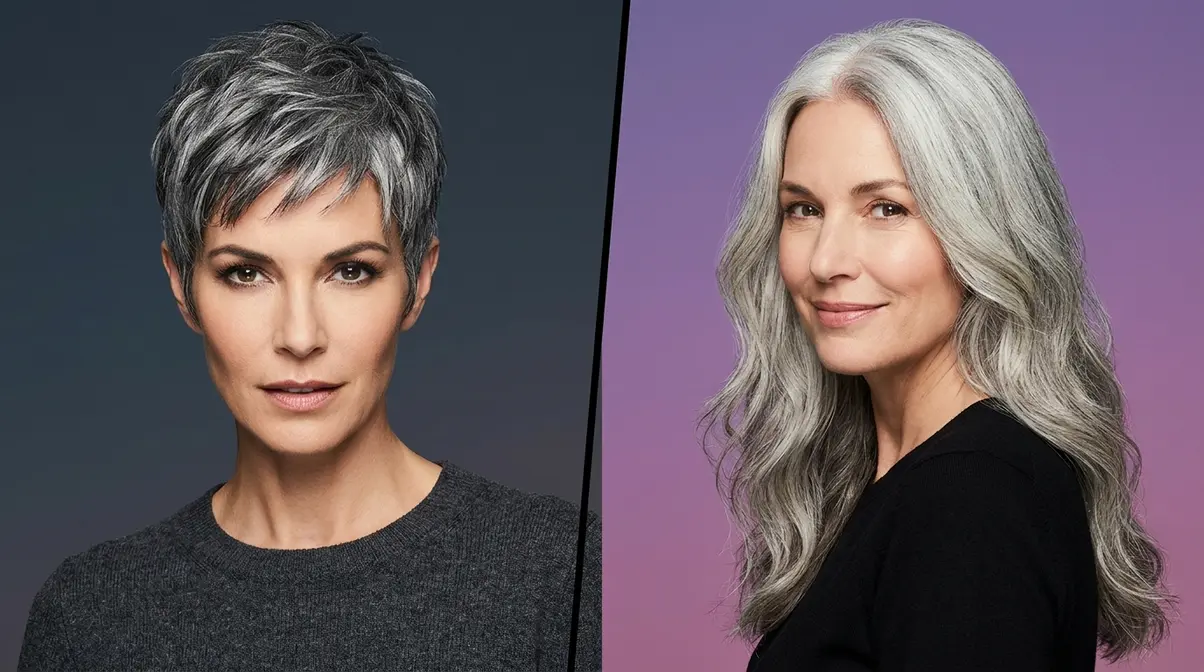
The right haircut amplifies salt and pepper hair in a way that styling products alone never can. Silver and gray tones add visual texture and dimension — but a poorly chosen cut can make that same texture look unruly or aging rather than sophisticated. The good news: salt and pepper hair is genuinely versatile. It looks stunning short, stunning long, and everything in between.
Short Salt and Pepper Haircuts
Short cuts are among the most popular choices for salt and pepper hair — and for good reason. A shorter length means the color contrast is concentrated and visible, making even a small percentage of silver look intentional and striking. Short cuts also require less maintenance and tend to grow out more gracefully during a natural transition.
Top short styles to consider:
- The Pixie Cut: A cropped, close-cut style that works especially well when silver strands cluster at the temples and crown. The contrast between the dark base and silver highlights is most visible at this length. Works best with fine to medium hair texture.
- The Bob (Chin to Jaw Length): One of the most universally flattering short styles for salt and pepper hair. A blunt bob emphasizes the color mix; a textured bob adds movement. Both work for straight and wavy textures.
- The Shag: A layered, textured cut with curtain bangs or wispy fringe. The layers create movement that makes salt and pepper color look dimensional rather than flat.
- The Undercut (for men and women): Shorter sides with more length on top create a striking contrast that draws the eye upward — toward the most salt and pepper-rich area for most people.
- The Tapered Pixie: A longer pixie with tapered sides and a slightly longer crown — a good middle ground for people nervous about going very short.
Medium & Long Salt and Pepper Styles
Medium and long salt and pepper hair carries a different kind of glamour — more flowing, more dramatic, and increasingly common among women who’ve chosen to grow out their natural silver.
- For medium-length hair (collarbone to shoulder):
- Layered lob (long bob): Layers add movement and prevent the blunt demarcation line of grow-out from looking harsh. A lob at collarbone length is ideal for the transition phase.
- Beachy waves: Loose, textured waves distribute the salt and pepper pattern throughout the length, making the color mix look more intentional. A sea salt spray or texturizing mousse creates this effect without heat.
- Half-up styles: Pulling the top section back reveals the salt and pepper pattern at the crown — often where gray is most concentrated — while the length adds femininity.
- For long hair (below the collarbone):
- Long layers with face-framing pieces: Longer lengths can look heavy without layers. Face-framing pieces that are slightly lightened draw attention to your features rather than the hair’s weight.
- Braids and updos: Long salt and pepper hair in a loose braid or a low chignon looks particularly sophisticated — the silver strands catch the light differently at length.
- Mermaid waves: Deep, defined waves on long silver-and-dark hair are among the most striking looks in the salt and pepper repertoire.
Curly Hair Texture-Forward Styling
Curly salt and pepper hair is genuinely spectacular — the natural coil pattern distributes the silver and dark strands in a way that creates incredible depth and dimension. Each curl becomes its own micro-blend of pepper and salt.
The challenge with curly gray hair is moisture. Gray and white strands tend to be more porous (meaning the outer cuticle layer is more open, allowing moisture to escape more easily) and coarser in texture than pigmented strands. This means curly gray hair dries out faster and needs more intensive hydration.
Styling tips for curly salt and pepper hair:
- Avoid sulfate shampoos. Sulfates (cleansing agents in most standard shampoos) strip the natural oils that curly hair needs for definition. Switch to a sulfate-free, moisturizing cleanser.
- Use the “squish to condish” method: Apply conditioner to soaking-wet hair and scrunch upward to encourage curl clumping and moisture absorption.
- Layer your products: A leave-in conditioner as a base, followed by a curl cream for definition, followed by a light gel to hold — this layering approach keeps curls defined without crunchiness.
- Diffuse, don’t air-dry flat. Diffusing on low heat while scrunching upward maintains volume and curl shape.
- Refresh with water and conditioner. On second or third-day hair, a spray bottle with water and a few drops of conditioner re-activates the curl pattern without re-washing.
Choosing a Cut for Your Face Shape
Your face shape should guide your haircut choice just as much as your personal style preferences, especially when finding the best hairstyles for your face shape. Here’s a quick reference:
| Face Shape | Best Cuts | Avoid |
|---|---|---|
| Oval | Almost anything — lucky you. Pixie, bob, lob, long layers all work | Very heavy, blunt fringes that hide the forehead |
| Round | Long layers, asymmetric bobs, height at the crown | Blunt bobs at chin length — they widen the face |
| Square | Soft layers, wispy bangs, side parts | Blunt, geometric cuts that emphasize the jawline |
| Heart | Side-swept bangs, chin-length bobs, lobs | Very short cuts that emphasize the wide forehead |
| Long/Oblong | Bobs, lobs, curtain bangs — anything that adds width | Very long, straight styles that elongate the face further |
For salt and pepper hair specifically, face-framing highlights around the front sections draw the eye to your features rather than the overall hair mass — a technique that works regardless of face shape. Ask your colorist to concentrate the lightest, most silver-toned strands around your face frame for the most flattering result.
Maintenance, Products & Care
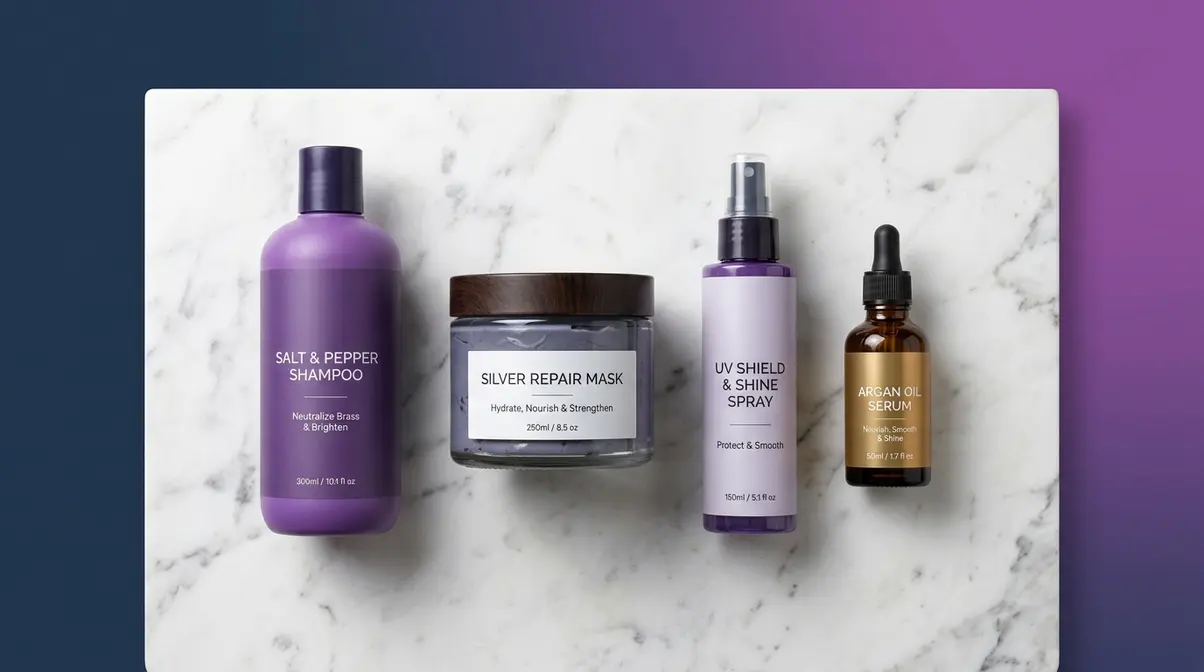
Once you’ve arrived at your salt and pepper look, keeping it vibrant and healthy requires a slightly different routine than you may have used with pigmented hair. Gray and silver strands have a different structural profile — and they respond best to products formulated for their specific needs to maintain colored hair vibrancy.
Why Gray Hair Needs Special Care
Gray and white hair strands are structurally different from pigmented ones in three key ways. First, they’re more porous — the cuticle (the outer protective layer of each strand) tends to be more raised, making the hair more prone to moisture loss and frizz. Second, they have a coarser, sometimes wiry texture because the melanin that used to fill the cortex (the inner layer of the strand) is no longer present. Third, and most importantly for aesthetics: they absorb color from the environment. Minerals in hard water, chlorine from pools, and UV radiation from sunlight can all deposit yellowish or brassy tones onto white and silver strands.
Trichologists consistently report that the number one complaint from people with gray hair is unwanted yellowing — and the number one solution is a purple or blue shampoo used consistently. “Silver hair is essentially porous and transparent,” notes celebrity colorist Rita Hazan. “It picks up everything around it. The right products create a protective, toning layer.”
Purple & Blue Shampoos for Brass
Purple shampoo contains violet pigment that, when left on hair, deposits a cool, ashy tone that counteracts the warm yellow and orange tones (called brassiness) that accumulate on gray and silver hair. Think of it as a color wheel principle: purple sits opposite yellow, so the two cancel each other out.
Blue shampoo works on the same principle but targets orange tones specifically — more relevant for salt and pepper hair that still has significant dark brown or brunette sections, since brown hair tends to go orange rather than yellow when it brasses.
How to use purple shampoo effectively:
- Wet your hair thoroughly.
- Apply a generous amount of purple shampoo — enough to saturate all sections.
- Leave it on for 3–5 minutes (not the 30 seconds you’d use a regular shampoo). The longer contact time is what deposits the toning pigment.
- Rinse thoroughly and follow with a moisturizing conditioner.
- Use once or twice per week — not every wash. Daily use can deposit too much purple pigment and give silver hair a lavender tint.
- Top-rated options (as of July 2026):
- Wella Professionals Color Charm Brass Kicker: Specifically formulated for gray and highlighted hair; strong toning action.
- L’Oréal EverPure Blonde Sulfate-Free Shampoo: Gentler formula; good for color-treated or fragile hair.
- Schwarzkopf BlondMe Cool Blondes Shampoo: Professional-grade toning; particularly effective on white and silver tones.
- Shimmer Lights by Clairol: A cult favorite among gray-haired women for decades; intense violet pigment for stubborn yellowing.
Conditioners & Masks for Gray Hair
Because gray hair is more porous and prone to dryness, hydration is the foundation of any salt and pepper maintenance routine. A standard rinse-out conditioner is the minimum — but weekly deep conditioning masks make a significant difference in texture, softness, and manageability.
What to look for in a conditioner for gray hair:
- Ingredients: Hyaluronic acid, argan oil, shea butter, and keratin are all effective for sealing the cuticle and restoring softness to coarse gray strands.
- Sulfate-free formula: Sulfates strip the natural oils that gray hair needs to stay hydrated. Always pair your purple shampoo with a sulfate-free conditioner.
- Protein content: Gray hair can benefit from occasional protein treatments (look for hydrolyzed keratin or silk protein) to strengthen the cuticle — but don’t over-do it. Too much protein makes hair brittle. Aim for one protein treatment per month maximum.
Weekly deep conditioning routine:
- After shampooing, apply a generous amount of a moisturizing hair mask (options include the Wella Professionals Invigo Color Brilliance Mask or L’Oréal EverPure Repair & Defend Mask).
- Comb through with a wide-tooth comb to ensure even distribution.
- Cover with a shower cap and leave for 10–20 minutes.
- Rinse with cool water — cool water helps close the cuticle and adds shine.
UV Protection & Weekly Routine
UV radiation is one of the most underestimated threats to salt and pepper hair. Sunlight doesn’t just fade color-treated hair — it oxidizes the melanin in your remaining dark strands, causing them to turn reddish or brassy. It also degrades the protein structure of the hair shaft itself, leading to dryness and breakage.
Look for a UV-protective hair spray or serum — products containing UV filters (similar to SPF in sunscreen, but formulated for hair) create a barrier between your strands and the sun. Brands like Wella, Aveda, and Kenra offer UV-protective leave-in sprays that can be applied before outdoor activities.
A simple weekly maintenance routine for salt and pepper hair:
| Day | Product | Purpose |
|---|---|---|
| Wash Day (2–3x/week) | Purple shampoo + moisturizing conditioner | Tone + hydrate |
| Weekly | Deep conditioning mask (10–20 min) | Restore moisture and softness |
| Daily | UV-protective leave-in spray | Prevent oxidation and fading |
| Daily | Lightweight argan oil or serum | Seal cuticle, add shine |
| Monthly | Protein treatment | Strengthen cuticle |
Women’s Styles at Every Age
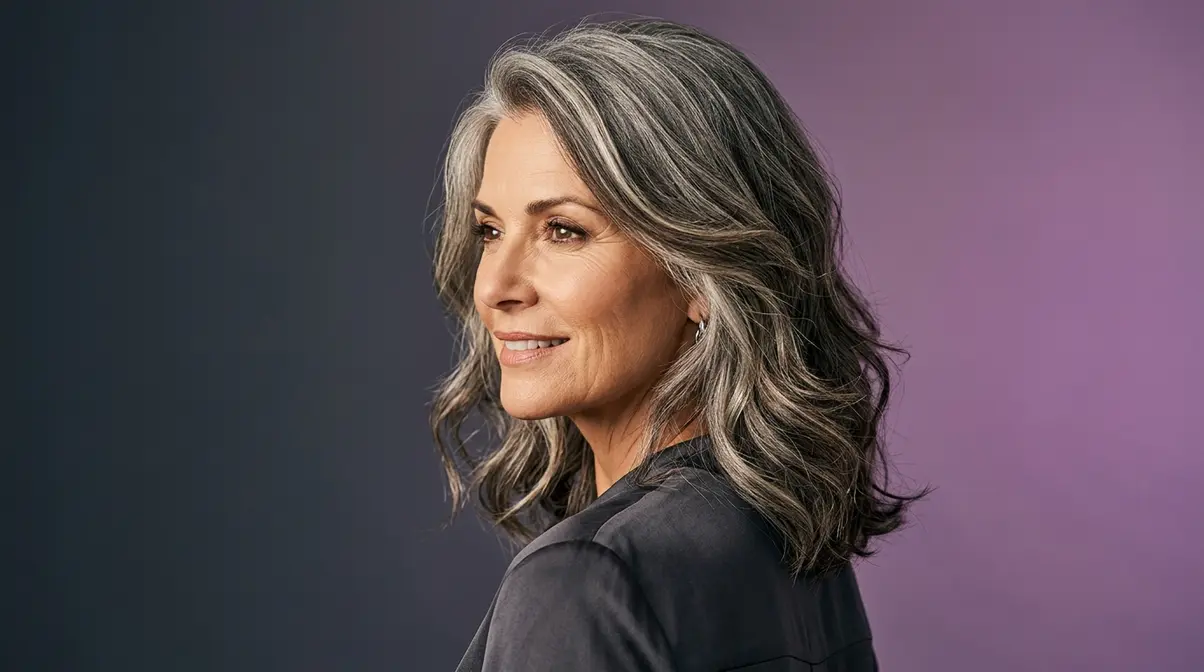
Salt and pepper hair looks different — and requires different styling strategies — depending on your age, face shape, and how your graying pattern has developed. The goal at every age is the same: make the silver look intentional, chic, and current. Here’s how to do that at each life stage while choosing flattering hairstyles for women.
Styles for Your 40s and 50s
Your 40s are often when the first significant graying begins — and for many women, this coincides with a time when they’re most invested in how they look professionally and personally. The good news: salt and pepper at this stage tends to be partial, which means you have the most styling flexibility.
What works in your 40s and 50s:
- Gray blending: At 20–40% gray, your natural pattern is the foundation of a beautiful blend. A skilled colorist can use babylights and toners to make your natural gray look like an expensive highlight job — because structurally, it is.
- Warm-toned lowlights: If your gray has a cool, ashy tone and your complexion is warm, adding a few warm-toned lowlights (caramel, chocolate) prevents the overall look from washing you out.
- Bold cuts: Your 40s and 50s are a great time to experiment with a statement cut — a sharp bob, a textured lob, or a chic pixie. Salt and pepper hair gives any cut more visual interest.
- Face-framing color: Concentrate your lightest, most silver tones around the face frame. This draws light toward your features and creates a natural-looking brightness.
For women with olive skin tones, colder tones in the hair tend to be particularly flattering:
“Generally colder tones look good on olive skin, so either keep it natural or if you want to dye it, I’d go with a dark cool-toned brown.” — Professional colorist community consensus
This means if you’re olive-skinned and transitioning, resist the urge to add warm highlights. Let the natural ashy, cool quality of your gray work with your skin tone rather than against it.
Haircuts for Women Over 60
Women over 60 have more gray — often 60–100% — which means the styling challenge shifts from managing the transition to maximizing the silver’s impact. The goal is vibrancy, not subtlety.
Five age-defying haircuts for women over 60:
- The French Bob (Chin-Length): A blunt or slightly textured bob at chin length is sophisticated, modern, and extremely low-maintenance. It frames the face and draws attention upward, away from the neck.
- The Layered Lob: A shoulder-length lob with layers adds volume to hair that may have thinned slightly with age. The movement prevents the style from looking flat or heavy.
- The Textured Pixie: A slightly longer pixie with soft, wispy layers around the temples is one of the most youthful and chic options for women over 60. Silver hair at this length looks intentionally styled, never accidental.
- The Silver Shag: A layered cut with curtain bangs and texture throughout. The layers create volume; the bangs soften the forehead. Works beautifully with naturally wavy or slightly curly hair.
- The Classic Updo (Low Chignon or Twist): For formal occasions or days when you want a polished look, a low chignon or French twist on silver hair looks effortlessly elegant. The key is keeping it slightly loose and modern rather than tightly pinned.
Hair color that makes women over 60 look younger:
The most flattering approach for women over 60 is cool-toned silver with strategic dimension — not a flat, uniform gray. Ask your colorist for a few shades of variation: some strands slightly lighter (near white), some slightly darker (ash gray), and a few remaining dark strands for depth. This dimensional approach catches light the way younger hair naturally does.
Avoid: warm, brassy tones that read as “faded brown” rather than intentional silver. A toning gloss in a cool ash or violet-neutralizing shade keeps the silver looking crisp and intentional.
How to Avoid Looking Older
The fear of looking older is the single biggest barrier to embracing salt and pepper hair. Here’s the truth that professional colorists consistently share: it’s almost never the gray itself that ages someone. It’s the combination of gray with unflattering elements — the wrong cut, the wrong makeup palette, or a lack of overall grooming intentionality.
The five-point age-defying styling system:
- The right cut: Volume and movement are your allies. A cut that adds lift at the roots — through layers, a good blowout, or a diffuser on curly hair — counteracts any heaviness that gray can add.
- Makeup adjustment: Silver hair shifts the color palette around your face. Move toward warmer-toned foundation, a berry or rose lip color, and a slightly warmer blush. The contrast between warm makeup and cool silver hair is striking and modern.
- Brow maintenance: Gray hair can make sparse or light brows disappear. Keep your brows defined with a brow pencil or powder in a shade that’s one to two levels darker than your natural gray — taupe, soft brown, or ash.
- Toning consistency: Dull, yellowed gray hair reads as “neglected.” Vibrant, cool-toned silver reads as “intentional.” Your purple shampoo routine is your single most powerful anti-aging tool in this context.
- Clothing color awareness: Silver hair is a neutral — it pairs beautifully with jewel tones (sapphire, emerald, plum), crisp whites, and deep navy. Avoid muted, washed-out colors that compete with your hair’s natural vibrancy.
Men’s Cuts, Dye & Grooming

Salt and pepper hair has long been associated with a particular kind of masculine appeal — think George Clooney, Anderson Cooper, or Idris Elba. For men, the graying process often reads as distinguished and authoritative rather than aged, particularly when paired with the right cut and grooming approach, in line with recent Wall Street Journal grooming advice. Whether you’re embracing your natural silver or considering creating the look artificially, here’s what works.
Popular Men’s Haircuts
The most flattering salt and pepper cuts for men share one quality: they create contrast that draws attention to the face rather than the hair. Investing in the best hair products for men helps maintain the structure of these consistently recommended styles:
- The Classic Side Part: A timeless cut with a clean side part, slightly longer on top and tapered on the sides. The length on top showcases the salt and pepper blend; the taper keeps it sharp. Works for virtually all face shapes.
- The Textured Crew Cut: A short, even cut with slight texture on top. The salt and pepper pattern is visible throughout, and the overall effect is clean and low-maintenance. Ideal for men who want minimal styling time.
- The Ivy League (Princeton Clip): Similar to the crew cut but with more length on top, allowing for a slight sweep or quiff. More versatile for professional settings.
- The Slick Back: Longer hair swept back from the forehead and held with a pomade or wax. Works particularly well for men with a higher percentage of silver, as the swept-back style showcases the color mix.
- The Modern Quiff: Volume at the front, tapered sides. The height at the crown draws the eye upward and elongates the face — flattering for round or square face shapes.
- The Undercut: Shaved or very short sides with significantly more length on top. Creates a dramatic contrast and a fashion-forward look. Works best with a higher percentage of silver on top, especially for curly hairstyles for men.
Styling with a Beard
Pairing salt and pepper hair with a beard creates one of the most cohesive and visually striking men’s grooming looks available. The key is intentional coordination between the hair and beard color and length.
Grooming principles for the salt and pepper hair and beard combination:
- Match the tone, not the shade: Your beard may be more or less gray than your hair — that’s fine. What matters is that both have a similar overall tone (both cool and ashy, or both with some warm undertones). Mismatched tones look accidental; matched tones look deliberate.
- Keep the beard shaped: An untrimmed, shapeless beard undermines the polished quality of well-groomed salt and pepper hair. Regular trims to maintain a clean neckline and cheek line make the combination look intentional.
- Use beard oil: Gray beard hairs have the same porosity and coarseness issues as gray head hair. A few drops of beard oil daily (argan, jojoba, or a dedicated beard oil formula) keeps the beard soft, reduces wiry texture, and adds a healthy sheen.
- Consider beard toner: Products like Just For Men Control GX allow men to subtly adjust the gray-to-dark ratio in their beard, deepening the color slightly without looking dyed. This is particularly useful if the beard is significantly grayer than the hair.
- Neckline precision: A clean, precise neckline — either done at home with a trimmer or maintained by a barber — is the single most important grooming step for the beard-and-salt-and-pepper combination.
Hair Dye Options for Men
Not every man’s natural graying pattern produces the salt and pepper blend they want. Some men go fully gray before achieving the ideal mix; others have significant gray in their beard but very little in their hair. For these situations, men’s hair dye can create or enhance the salt and pepper effect.
Options for men:
- Salt and pepper dye kits: Brands like Just For Men, Schwarzkopf, and L’Oréal Men Expert offer color products specifically designed to create a natural-looking blend rather than a uniform single color. These typically use a two-step application that deposits both lighter and darker tones simultaneously.
- Partial gray coverage: If you’re mostly gray and want to add back some dark strands (the “pepper”), a semi-permanent men’s color in a shade two to three levels darker than your current gray can restore dimension without looking heavily dyed.
- Highlighting for men: An increasing number of men are visiting colorists for subtle highlights that create a more photogenic salt and pepper blend. A skilled colorist can add fine highlights around the temples and crown to balance a graying pattern that’s uneven.
- Application tips for men’s at-home dye:
- Always follow the patch test instructions — even men’s formulas carry allergy risk.
- Apply to dry hair for most men’s box dye products (check your specific product instructions).
- Use gloves. Hair dye stains skin and surfaces permanently.
- Start with a shade lighter than you think you need — you can always go darker, but lifting color requires bleach.
Hair Extensions, Wigs & Braids
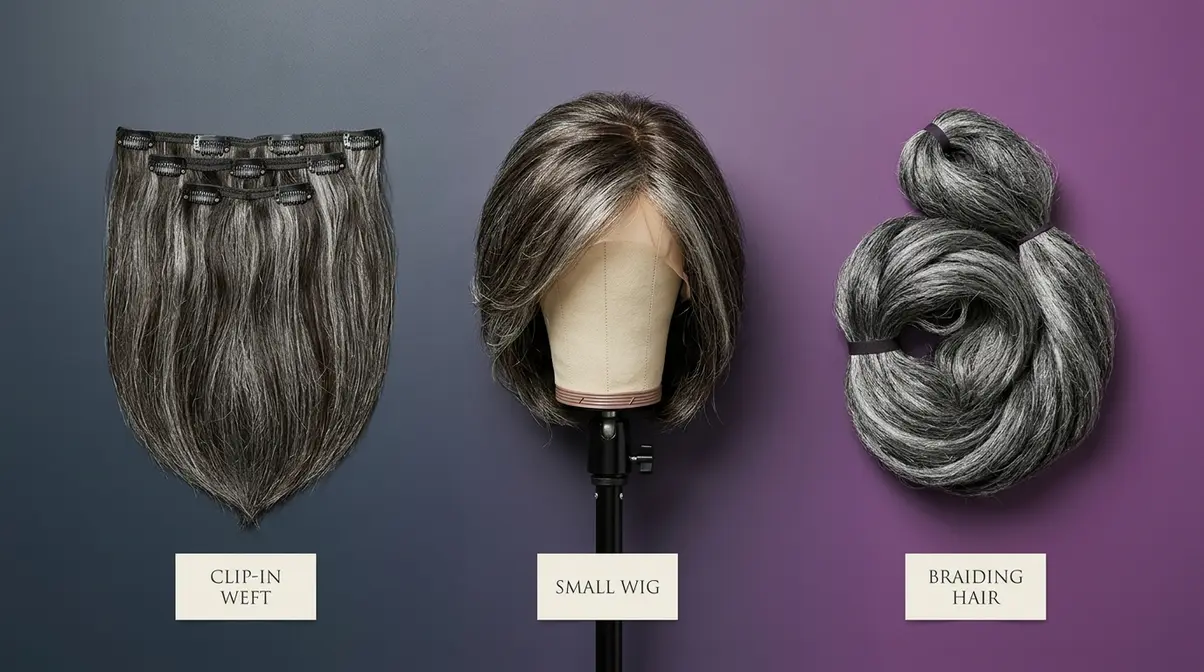
Not everyone wants to commit to a permanent color change or wait through a 12-month grow-out. Salt and pepper hair extensions, wigs, toppers, and braiding hair offer a flexible, commitment-free way to experiment with — or fully adopt — the look without chemical services.
Clip-In Extensions & Weaves
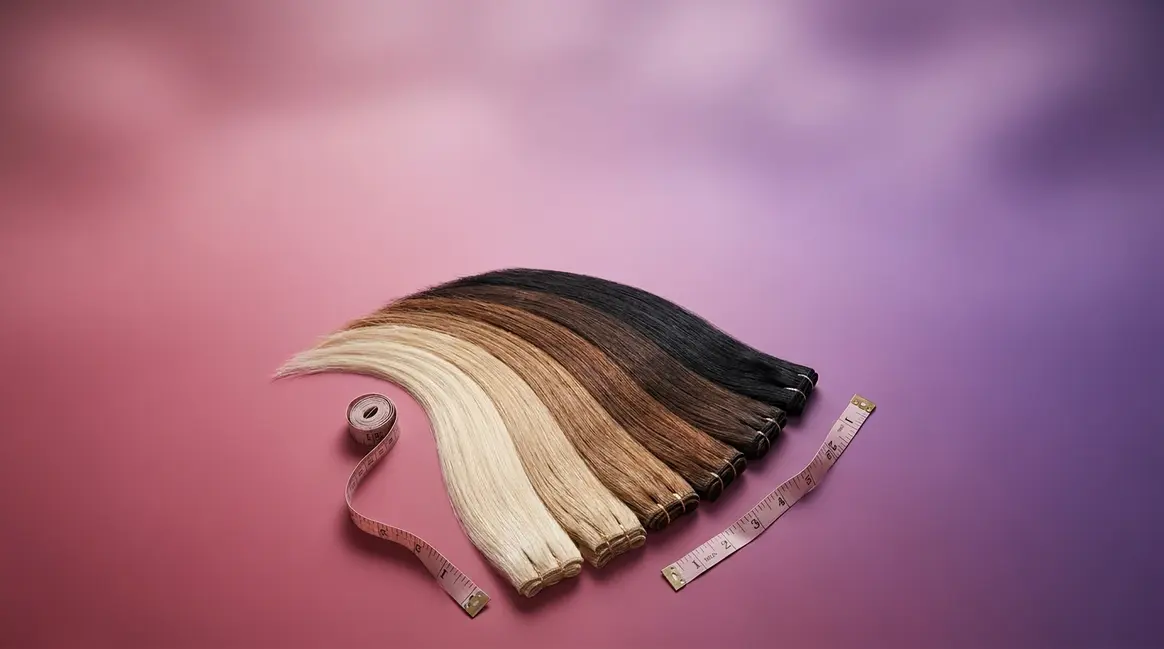
Salt and pepper hair extensions come in two primary attachment styles: clip-in extensions (temporary, removed daily) and sewn-in weaves (semi-permanent, installed by a professional). Both are available in human hair and synthetic options. If you are dealing with sparse volume, check out our guide to hair extensions.
- Clip-in extensions are ideal for:
- Testing the salt and pepper look before committing to color
- Adding length or volume to natural salt and pepper hair that’s thinning
- Special occasions where you want more dramatic length or density
- What to look for when buying salt and pepper clip-ins:
- Color match: Salt and pepper blends vary widely — some are 50/50 dark and silver, others are 70% dark with silver highlights. Compare swatches carefully to your natural hair.
- Texture match: Choose extensions that match your natural hair texture (straight, wavy, or curly). Mismatched texture is the most obvious tell.
- Clip quality: Heavy-duty clips with silicone grips hold better and cause less damage to the natural hair.
Sewn-in weaves require professional installation and last 6–8 weeks before needing repositioning. They offer more durability for everyday wear and are better suited for women with thicker natural hair.
Wigs & Toppers for Seamless Looks
Salt and pepper wigs offer full coverage and maximum versatility — you can change your look entirely without any commitment to your natural hair. Hair toppers (also called wiglets or top pieces) are smaller units designed to cover only the crown area, making them ideal for women experiencing thinning at the top.
- Human hair salt and pepper wigs:
- More expensive ($200–$1,500+) but look and feel the most natural
- Can be heat-styled, colored, and treated like natural hair
- Last 1–3 years with proper care
- The most realistic option for everyday wear
- Synthetic salt and pepper wigs:
- More affordable ($30–$200)
- Cannot be heat-styled (unless specifically labeled “heat-resistant”)
- Last 6–12 months with regular wear
- Ideal for occasional use or as a backup option
Hair toppers are a particularly good solution for women with natural salt and pepper hair who are experiencing crown thinning — a common side effect of hormonal changes in perimenopause and menopause. A topper that matches your natural blend adds density exactly where you need it without covering the rest of your hair.
Braiding Hair: Crochet & Box Braids
Salt and pepper braiding hair has surged in popularity as more women with natural textures embrace protective styles in silver and mixed-gray tones. The most popular styles using salt and pepper braiding hair include:
- Box braids: Individual braids that can be any thickness, from micro to jumbo. Salt and pepper box braids are particularly striking in medium thickness — the color contrast is visible throughout each braid.
- Crochet braids: Pre-braided or pre-looped extensions attached to a cornrowed base using a crochet hook. Crochet styles in salt and pepper tones are one of the fastest-growing protective style trends, especially if you want to explore crochet hair styles.
- Senegalese twists: Two-strand twists using braiding hair. Salt and pepper Senegalese twists have a particularly elegant, sophisticated quality — the silver strands catch the light throughout the twist.
- Faux locs: Wrapped locs created with braiding hair. Salt and pepper faux locs in varying lengths are a popular choice for women who want a textured, voluminous look with the salt and pepper color story.
Popular braiding hair brands for salt and pepper tones include Outre, X-Pression, and Freetress — all of which offer pre-blended salt and pepper options that don’t require mixing multiple packs.
Human vs. Synthetic Hair Pieces
Across extensions, wigs, toppers, and braiding hair, the human vs. synthetic choice comes down to five factors:
| Factor | Human Hair | Synthetic Hair |
|---|---|---|
| Appearance | Most natural; moves and shines like natural hair | Improved significantly; modern synthetics are convincing |
| Styling | Heat-styleable, colorable | Most cannot be heat-styled; color changes risk damage |
| Longevity | 1–3 years with proper care | 6–18 months depending on use frequency |
| Price | $100–$1,500+ depending on type and length | $15–$200 depending on type |
| Maintenance | Same as natural hair — wash, condition, store properly | Easier care; specialized synthetic wig shampoo recommended |
For everyday use and the most natural-looking result, human hair is the preferred choice. For occasional wear, budget-conscious buyers, or first-time explorers of the salt and pepper look, high-quality synthetic options have improved dramatically and are a perfectly viable starting point.
Mistakes & When to See a Colorist
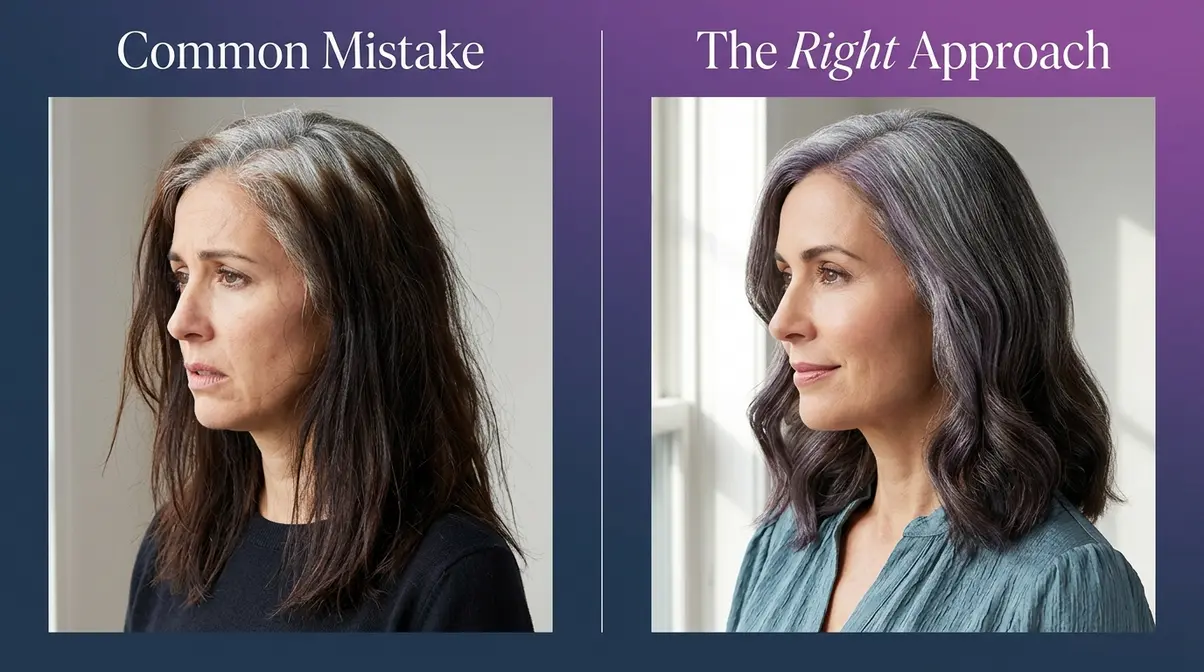
Even with the best intentions, the transition to salt and pepper hair has predictable pitfalls. Knowing them in advance helps you avoid the most common frustrations.
Common Transition Mistakes
Mistake 1: Quitting the process during the skunk stripe phase. The 6–10 week mark — when your new gray growth sits visibly above your old color — is the moment most people abandon the transition. This is exactly when a single toner or gloss appointment can soften the line enough to keep you going. Giving up here means restarting the entire timeline.
Mistake 2: Using the wrong shampoo. Continuing to use a clarifying or volumizing shampoo during the transition strips natural oils and accelerates yellowing. Switching to a sulfate-free, moisturizing shampoo — and adding purple shampoo once or twice weekly — prevents the most common maintenance complaint before it starts.
Mistake 3: Skipping deep conditioning. Gray hair is more porous and dries out faster than pigmented hair. Skipping weekly conditioning masks leads to a coarse, frizzy texture that reads as “unkempt” rather than “chic.”
Mistake 4: Choosing the wrong tone for your skin. Not all gray is flattering on all skin tones. Warm, golden-toned skin (yellow or olive undertones) is best served by cool, ashy gray rather than warm, yellowish gray. If your growing-in gray has a warm tone, a cool toner can correct it.
Mistake 5: Ignoring the haircut. Growing out gray without updating your cut is the single fastest way to look older rather than more sophisticated. A fresh cut every 8–10 weeks during the transition removes old color from the ends and keeps the overall shape intentional.
When to Choose Professional Help
See a professional colorist if:
- Your hair has been bleached, relaxed, or permed in the past 12 months. Overlapping chemical services on compromised hair causes breakage that can take years to recover from.
- You want a specific gray blending or balayage result. These techniques require a trained eye and precise application — at-home attempts frequently result in uneven, patchy results.
- You’re experiencing significant scalp irritation, flaking, or hair loss alongside graying. These can signal underlying conditions that a trichologist should assess.
- Your grow-out line is more than 2 inches of visible contrast and you cant tolerate the look. A single gloss or toner appointment can buy you months of comfort without stopping the natural transition.
- You’re attempting to go from heavily pigmented, dark hair to a salt and pepper look artificially. This requires professional-grade lightening services that carry real damage risk if done incorrectly.
Professional colorists consistently recommend scheduling a consultation — not a full service — as a first step. A 20-minute consultation lets you discuss your goals, assess your hair’s condition, and get a realistic timeline before committing to a single appointment.
Frequently Asked Questions
What is salt and pepper hair?
Salt and pepper hair is a blend of dark (the “pepper”) and white or silver strands (the “salt”) that create a naturally dimensional, two-toned effect. It occurs when melanin-producing cells in the hair follicle slow down and stop, causing new strands to grow in without pigment. The proportion of dark to silver varies widely — according to trichology data, some people are 30% gray, others 70% — and both can be stunning.
How do I get salt and pepper hair?
You can get salt and pepper hair two ways: grow it out naturally or have a colorist create it. For natural graying, the cold turkey method takes 12–18 months for mid-length hair. If you prefer a smoother transition, gray blending (a professional technique using highlights and toners) speeds up the process and softens the grow-out line. If you’re starting from fully dark hair and want the look immediately, a skilled colorist can use balayage, babylights, and a cool toner to create a convincing salt and pepper blend. At-home salt and pepper dye kits from brands like L’Oréal and Schwarzkopf are also an accessible option.
How do you maintain salt and pepper hair?
Maintaining salt and pepper hair requires three consistent habits: toning, moisturizing, and protecting. Purple shampoo used one to two times per week neutralizes the yellow tones that accumulate on silver strands. A weekly deep conditioning mask restores moisture, while a UV-protective leave-in spray prevents sun oxidation that causes dark strands to go brassy.
How to wear grey hair without looking old – for women?
The key to wearing gray hair without looking older is combining the right cut, makeup, and toning routine. A cut with volume and movement — layers, a lob, or a textured pixie — prevents gray hair from looking flat or heavy. Warm-toned makeup (berry lips, rosy blush, warm foundation) contrasts beautifully with cool silver strands and adds life to the complexion. Defined brows in a slightly darker shade prevent the face from disappearing against pale hair. Well-toned, vibrant silver reads as intentional and chic; dull, yellowed gray reads as neglected.
What color hair makes a 60-year-old look younger?
Cool-toned, dimensional silver is the most flattering hair color for most women over 60 — not a flat, uniform gray, but a varied blend with lighter strands near the face and slightly darker strands throughout for depth. Warm, golden-toned gray can look washed out against the complexion changes that occur with age. A skilled colorist can create a dimensional silver blend that works with your specific skin tone.
What is the most flattering hair length for a woman over 60?
A chin-to-collarbone length — the bob or lob range — is consistently cited as the most universally flattering length for women over 60. This length frames the face, adds perceived volume, and avoids the heaviness of very long hair, which can pull the face downward visually. Short styles like a textured pixie or silver shag are also excellent choices, as they create lift and lightness. Very long, straight hair past the collarbone can look heavy and emphasize facial changes. The key at any length is movement and texture — layers, waves, or a good blowout make the difference.
What color hair should a 70-year-old have?
Women in their 70s look most vibrant with cool, bright silver hair — well-toned and dimensional rather than flat or yellowed. At this stage, most women are fully or nearly fully gray, which makes toning the most important styling tool. Some women choose to add a few strategic lowlights (soft ash-brown strands) for dimension, which prevents an all-white look from washing out the complexion.
What does God say about having gray hair?
Several passages in the Bible describe gray hair as a symbol of wisdom, honor, and long life. Proverbs 16:31 states: “Gray hair is a crown of glory; it is gained in a righteous life” (ESV). Proverbs 20:29 notes that “the glory of young men is their strength, but the splendor of old men is their gray hair.” In this context, gray hair carries a positive spiritual connotation — a marker of a life well-lived and worthy of respect. Many people find this framing genuinely comforting when navigating the emotional aspects of embracing their natural silver.
Conclusion
Salt and pepper hair — when approached with the right knowledge and tools — is one of the most sophisticated, low-maintenance style choices available to both men and women at any age. Research consistently shows that the fear of looking older is the primary barrier to embracing natural silver, but trichologists and professional colorists agree: it’s not the gray that ages you, it’s the combination of gray with the wrong cut, the wrong products, and the wrong maintenance routine. The solution to all three is covered in this guide.
The Gray Glow-Up Protocol — Embrace, Blend, Maintain — gives your transition a clear structure so you’re never guessing what comes next. Whether you’re in Stage 1 (deciding whether to transition), Stage 2 (navigating the grow-out or booking your first gray blending appointment), or Stage 3 (maintaining the vibrancy of the look you’ve already achieved), the framework keeps you moving forward rather than back toward the dye chair.
Your next step is simple: identify which stage of the Gray Glow-Up Protocol you’re in right now. If you’re in Stage 1 or 2, book a consultation with a colorist — not a full appointment, just a conversation — and bring this guide with you. If you’re in Stage 3, start with the weekly maintenance routine in H2-4 and add a purple shampoo to your next shopping order. Your gleaming silver strands are already there. The Gray Glow-Up Protocol is just the roadmap to making them shine.

Dave King
Writes evidence-based hair-care guides for Care About Your Hair — for every hair type, jargon-free and independent.