 Dave King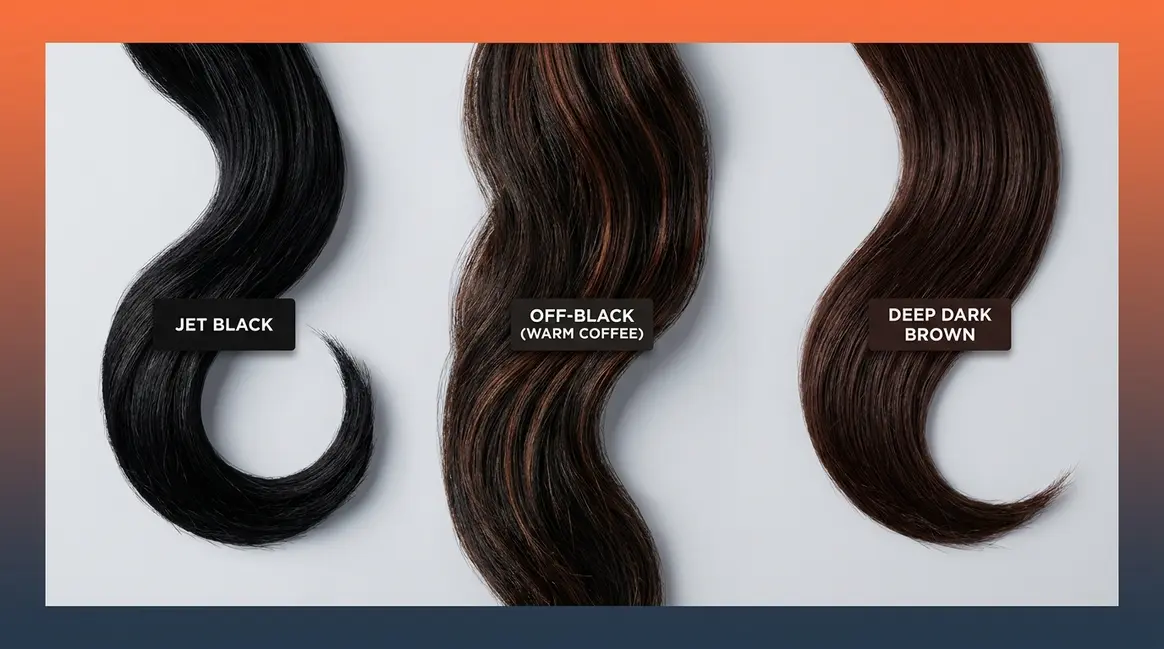
You’re staring at a wig listing or a box of braiding hair and you see “1B.” Not black. Not brown. Just “1B.” What does that even mean?
Order the wrong shade and you end up with hair that looks nothing like your natural color — too stark, too flat, or just off. That one wrong click can cost you time, money, and a style that doesn’t feel like you.
In this guide, you’ll learn exactly what 1b hair color is, how it differs from #1 and #2, and which shade is right for your look. We cover the definition, side-by-side comparisons, braiding applications, skin tone matching, and a quick-reference chart — all in plain English.
1B hair color — known as “off-black” — is the natural, unprocessed shade of very dark hair, sitting between jet black (#1) and darkest brown (#2) on the color scale. This is the center of what we call The Off-Black Spectrum.
- 1B is off-black: Warm brown undertones make it look natural, not dyed
- #1 is jet black: Cooler, darker, and more artificial-looking
- #2 is dark brown: Noticeably warmer, especially in sunlight
- 1B is the default for extensions: It blends with most naturally dark hair
- The Off-Black Spectrum: Natural dark hair lives on a warm spectrum — 1B is the center, #1 is the artificial extreme, and #2 is where black ends and brown begins
What Is 1B Hair Color? The “Off-Black” Defined
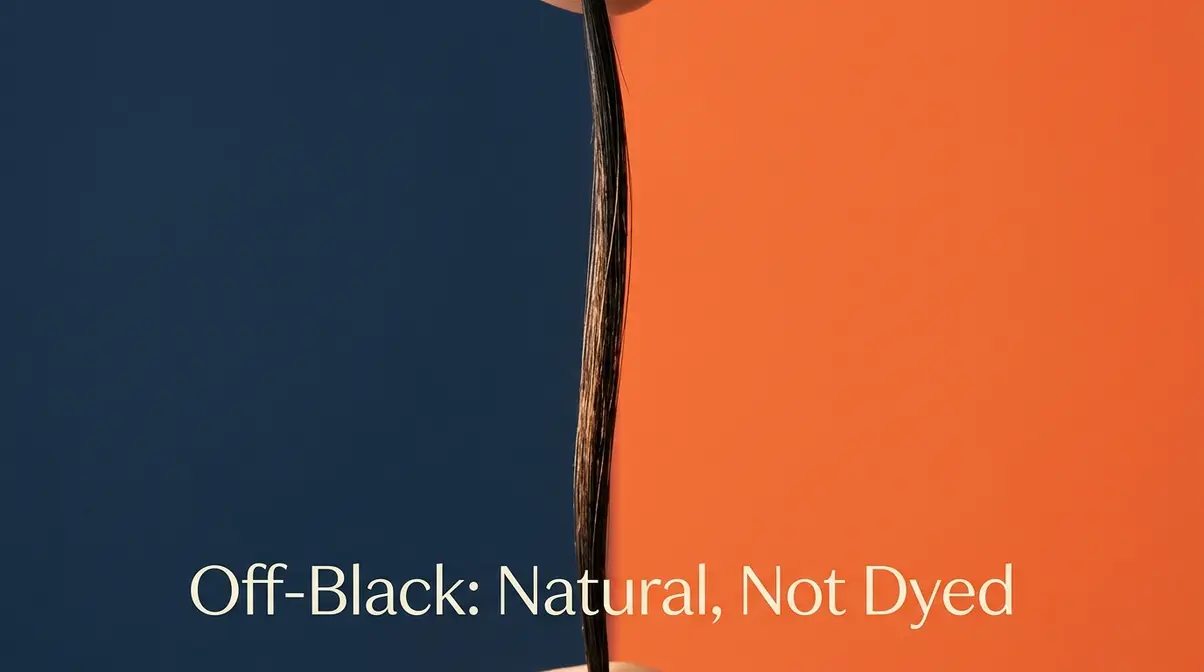
1B hair color is the shade the hair industry calls “off-black” — a very dark, near-black color with subtle warm brown undertones (the faint secondary color you see in bright light). It sits between jet black (#1) and darkest brown (#2) on the standard hair color scale, and it’s the most widely used shade in the extension and braiding hair industry because it mimics the look of real, unprocessed hair.
The 1B Color Code: What “Off-Black” Really Means
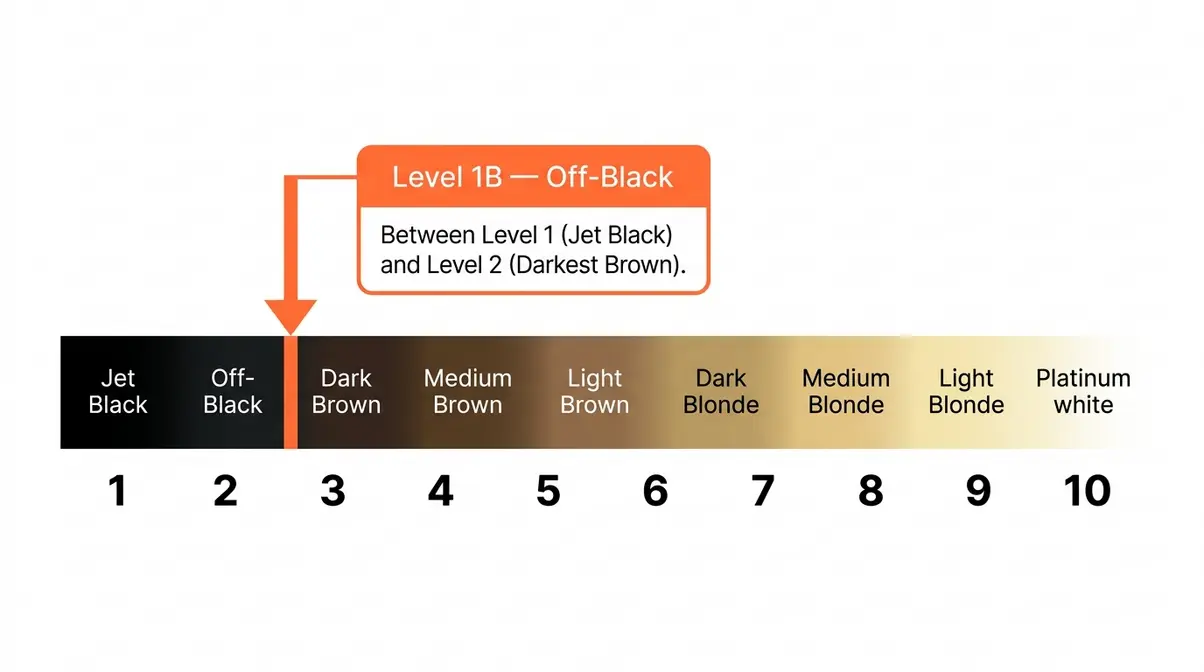
What is 1B hair color, exactly — and why does the code look so strange? The answer lives in two parts: the number and the letter.
The “1” refers to Level 1 on the universal hair color scale — the darkest level possible. Hair color numbers run from 1 (the darkest black) to 10 (the palest blonde). Think of it like a brightness dial: 1 is fully off, and 10 is fully on. The “B” is a variant designation used by the extension and wig industry to indicate a natural, unprocessed-looking black — as opposed to the chemically dyed jet black of a true Level 1. This “B” convention is industry-specific; not every dye brand uses it, but you’ll see it on nearly every braiding hair, wig, and extension package.
Why does this matter when you’re shopping? Because when you see “1B” on a product listing, it’s a signal: this hair is designed to look natural, not dyed. If you’ve never colored your hair and it’s very dark, there’s a good chance your natural shade is closest to 1B — not #1 Jet Black.
Milady’s cosmetology color level system identifies the standard level system by lightness and darkness; 1B denotes a natural, uncolored black sitting between level 1 and level 2 darkest brown (Milady Training).
What Does 1B Hair Look Like in Person?
What color is 1B hair? That depends on where you’re standing.
Indoors under artificial light, 1B appears very dark — almost identical to black. Most people genuinely cannot tell the difference between 1B and #1 under fluorescent or dim lighting. Both look dark, rich, and deep.
Outdoors in direct sunlight, the picture changes. The warm brown undertones of 1B become visible: a soft, dark-coffee warmth along the hair shaft that reads as natural rather than dyed. This is the defining visual characteristic of 1B, and it’s exactly why it blends so well with most people’s natural dark hair — which also shows those same warm tones in the sun.
As the comparison below shows, 1B hair color transforms dramatically between lighting conditions.
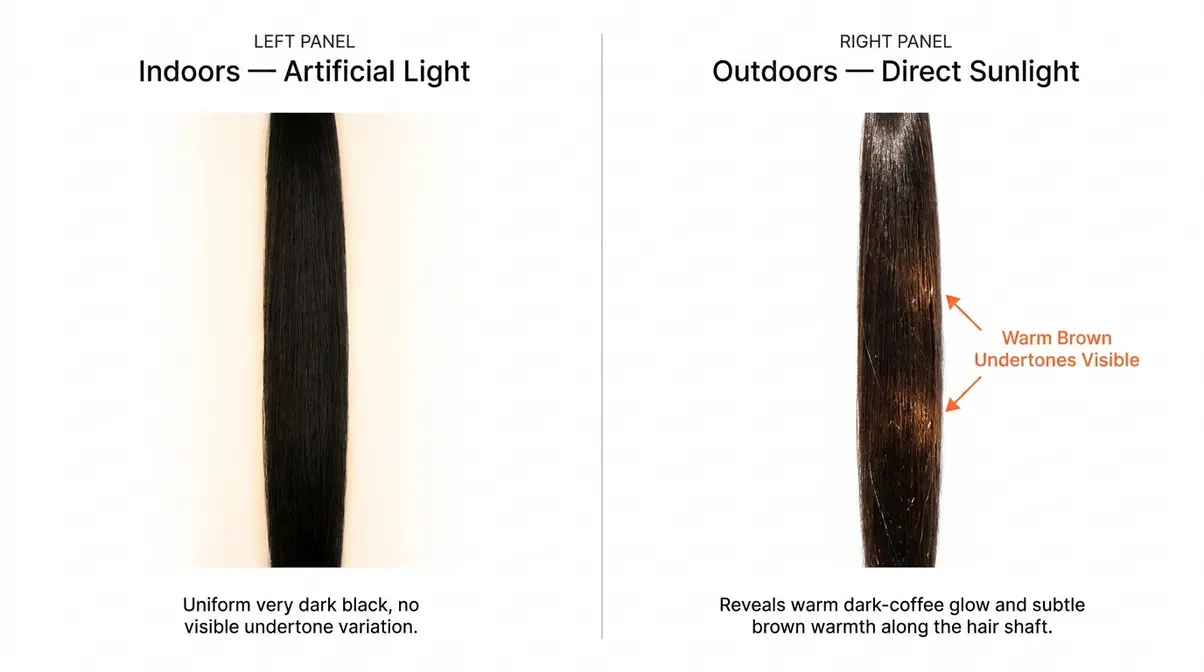
This lighting behavior is also why 1B is the right choice for anyone who wants natural-looking extensions. Real, uncolored dark hair behaves exactly the same way.
“1 is like jet black. 1b is like a very, very dark brown. Whatever will match your natural color, if that’s your goal.”
Professional cosmetologists agree: that description is spot-on. 1B isn’t trying to be the darkest black possible — it’s trying to be the most realistic one.
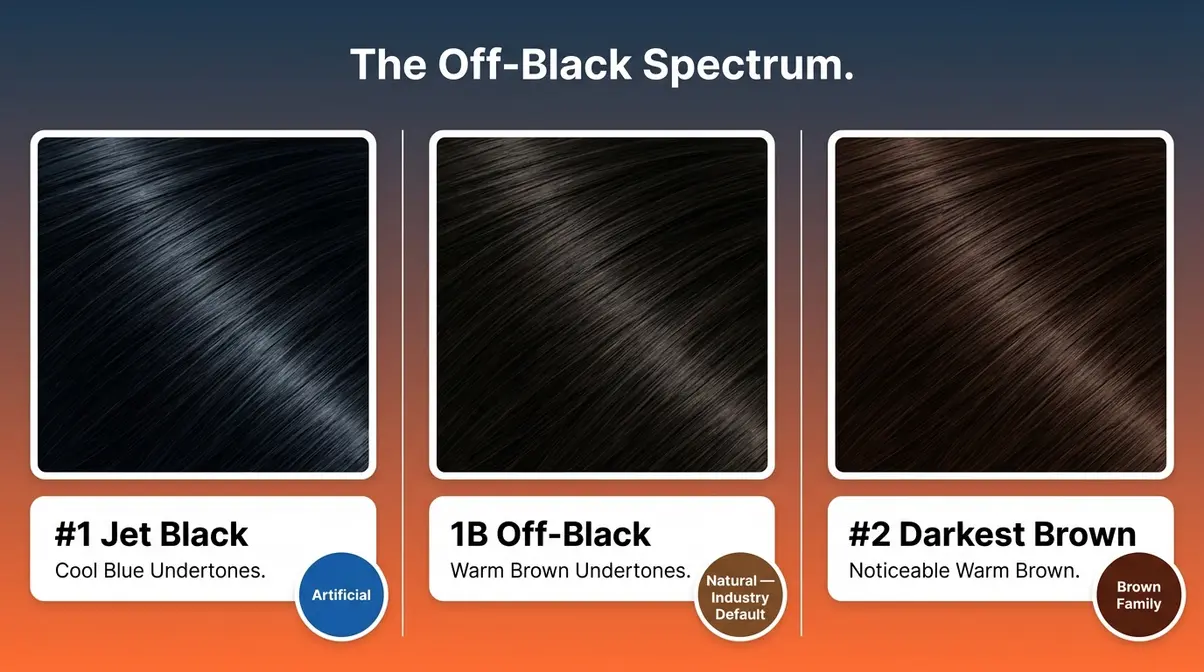
Now that you know what 1B is, the most common question is how it compares to its closest neighbor: #1 Jet Black.
1B vs. #1 Jet Black: Why One Looks Natural and One Doesn’t
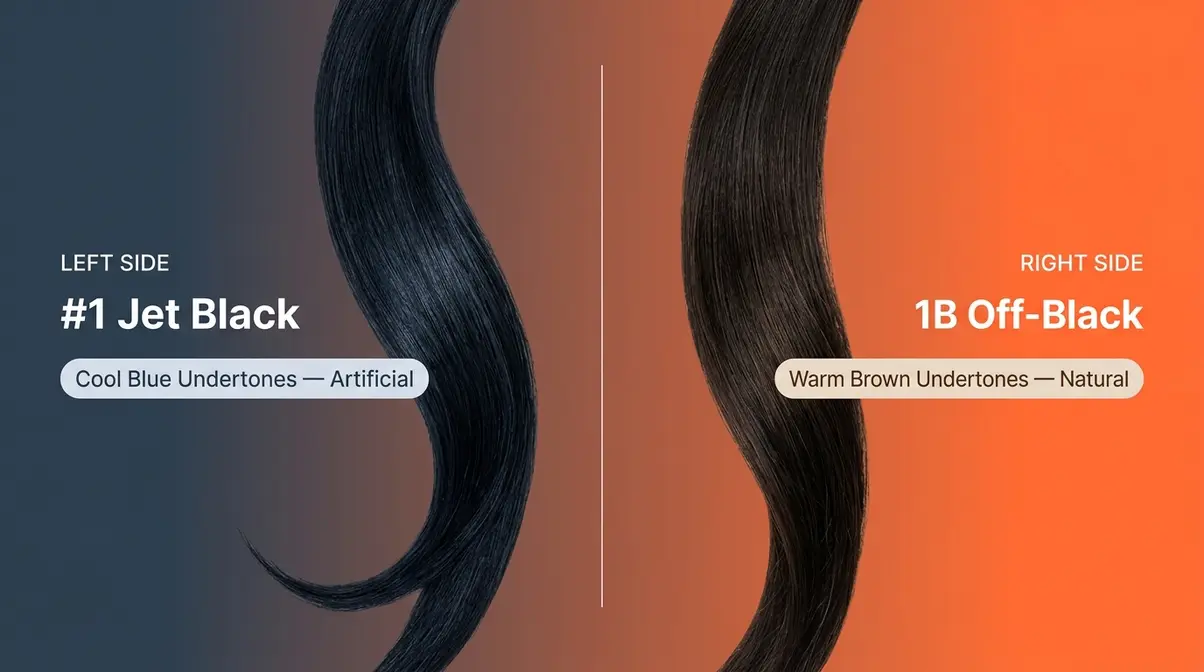
#1 Jet Black is slightly darker than 1B Off-Black — but the bigger difference is undertone, not depth. According to professional breakdowns of underlying hair pigment, a Level 1 hair color carries cool, blue-black tones created by artificial dye, while natural black hair is rarely a true Level 1 (Behind The Chair). For most people, that means 1B will always look more like their hair than #1 ever will.
On The Off-Black Spectrum, #1 sits at the artificial extreme — while 1B is the natural center.
| Feature | #1 Jet Black | 1B Off-Black |
|---|---|---|
| Depth | Darkest (Level 1) | Very dark (between Level 1–2) |
| Undertones | Cool, blue-black | Warm, subtle brown |
| Appearance | Artificial, ink-like | Natural, organic |
| Best for | Dramatic, dyed looks | Natural blending, extensions |
| Common use | Hair dye (chemical) | Extensions, wigs, braiding hair |
Side-by-Side: Off-Black vs. Jet Black
The biggest takeaway from that table is undertone. The difference between 1 and 1b hair color comes down to this: #1 has a cool, blue-black quality that comes from artificial dye; 1B has a warm, soft quality that comes from natural pigment.
Is 1B darker than black? No — #1 is darker. But 1B looks more like real hair. Look back at the swatch chart above — notice how #1 has a flat, matte quality while 1B has a subtle warmth that catches light differently.
A professional breakdown of underlying hair pigments confirms that Level 1 jet black is almost always the result of artificial dye, not natural pigment (Behind The Chair) — which is exactly why it can look so stark against natural skin and hair.
You can also understand the differences between 1B and #1 jet black hair in more depth on our dedicated guide.
Undertones Explained: Why #1 Looks Harsh and 1B Looks Natural
Think of undertones like the secondary color hiding inside the dominant color. In #1, that secondary color is a cool blue. In 1B, it’s a warm brown. It’s a bit like comparing a freshly painted black fence (#1) to the color of healthy black soil (1B) — both are technically “black,” but one looks manufactured and one looks organic.
Why do cool undertones (blue-black) read as artificial? Because they’re created by dye, not natural pigment. Most people’s natural very-dark hair has warm undertones — which is exactly why natural 1b hair color matches so seamlessly when used in extensions or wigs.
The practical test: hold a strand of your natural hair next to a 1B swatch and a #1 swatch in direct sunlight. The 1B will almost always match more closely.
When to Choose #1 vs. 1B
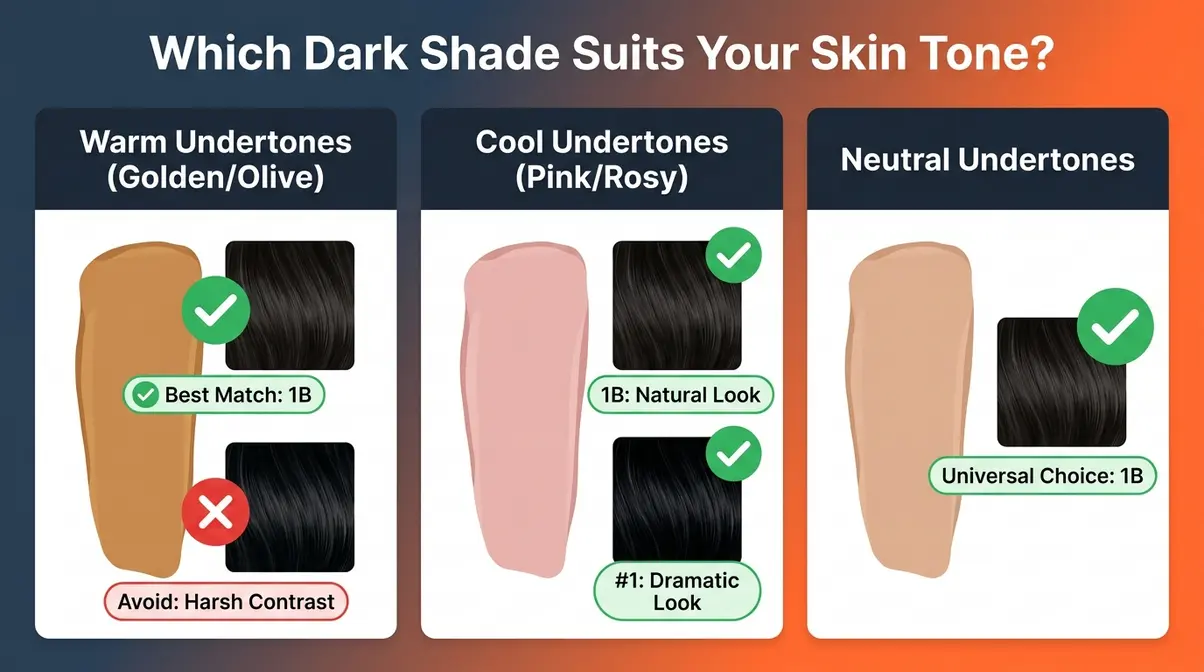
Is it 1 or 1b hair color you actually need? Here’s a simple decision guide:
- Choose #1 Jet Black when:
- You want a dramatic, high-gloss, clearly-dyed style
- You’re going for a bold, fashion-forward look where “natural” isn’t the goal
- You’re dyeing already-processed hair and want maximum depth and intensity
- Choose 1B Off-Black when:
- You want extensions or braids that blend seamlessly with your natural dark hair
- You want a natural-looking wig that doesn’t read as obviously purchased
- Your natural hair is very dark but not a true, ink-black color
For knotless braids that look like your hair grew that way — 1B. For a sleek, statement look with high-gloss drama — #1.
With #1 vs. 1B clear, let’s look at the other common source of confusion: 1B vs. #2 Darkest Brown.
1B vs. #2 Darkest Brown: Where Black Ends and Brown Begins
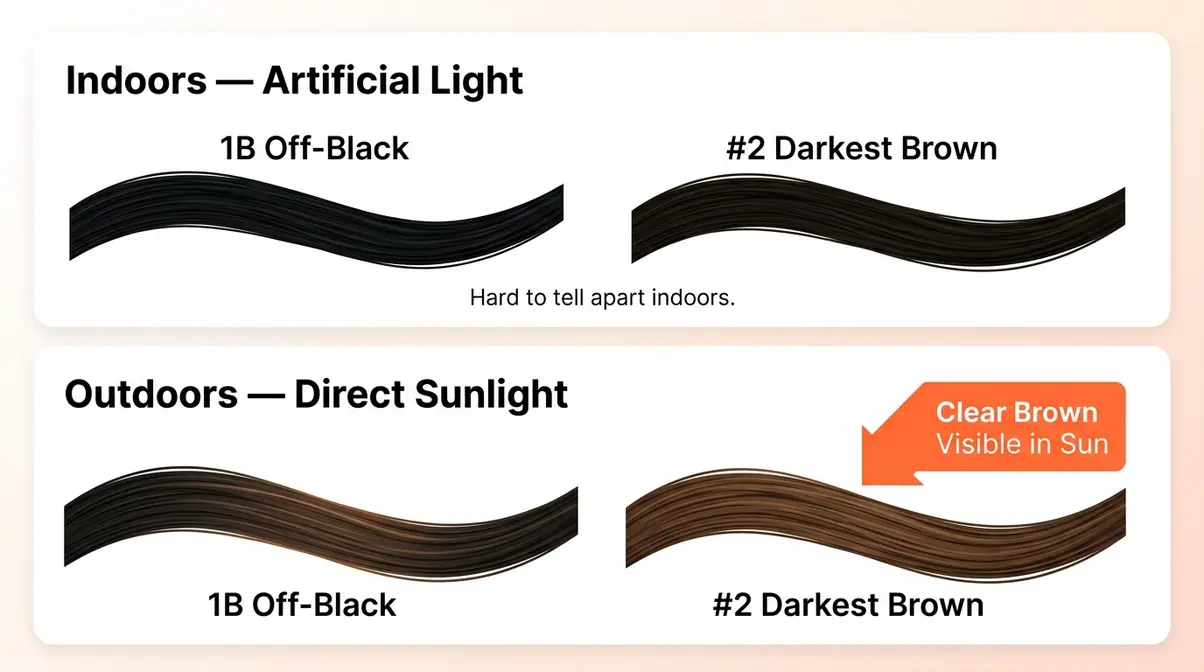
1B is much closer to #1 than to #2 — both #1 and 1B are shades of black, while #2 Darkest Brown is the darkest shade in the brown family on the standard hair color scale. The key visual difference between 1b and 2 hair color only appears in direct sunlight: indoors, they look nearly identical, but outdoors, #2 reveals clearly warm brown tones across the full hair shaft. For anyone choosing extensions, this distinction determines whether your color blends naturally or stands out.
According to Allure’s expert advice on matching hair extension colors, understanding the difference between 1B (natural black) and #2 (darkest brown) is crucial — 1B has subtle brown undertones that look more realistic in natural light (Allure).
You can also explore the nuances between 1B off-black and #2 darkest brown in our full breakdown.
The Visible Difference: How #2 Shows Brown in Sunlight
The 1b hair color vs 2 comparison is one of those things that’s hard to see in a product photo — but obvious in real life.
Indoors, 1B and #2 can look almost identical to the untrained eye. Both appear very dark with minimal visible color difference. This is the most common reason shoppers accidentally order the wrong shade.
In direct sunlight, the gap becomes clear. #2 shows warm, medium-brown tones across the full hair shaft — not just at the tips. 1B, by contrast, shows only a subtle warmth and remains predominantly black. If you can clearly read “brown” on a strand in sunlight, it’s likely #2. If it still reads as dark black with a hint of warmth, it’s 1B.
Think of 1B as a dark night sky with a faint warm glow — and #2 as a rich dark chocolate bar. Both are dark, but one is clearly brown.
1B Off-Black and #2 Darkest Brown look nearly identical indoors — but in direct sunlight, #2 reveals clearly warm brown tones across the full hair shaft.
Which One Blends Better with Your Natural Hair?
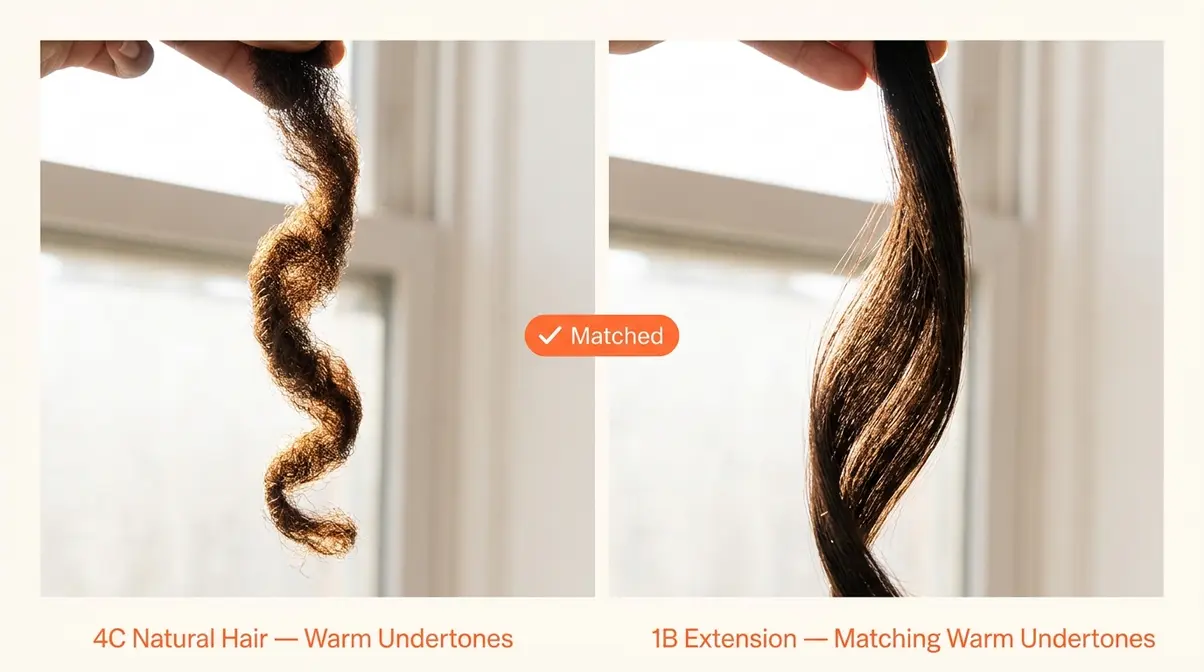
If your natural hair is very dark and has never been colored — 1B will almost always blend better. Most uncolored dark hair sits in the 1B range, not the #2 range.
If your natural hair is dark but you can see warm brown tones clearly in sunlight, you might be a #2 — and you should choose #2 extensions to match. The sunlight test is the most reliable way to find out.
For braids specifically: 1B is the safe default. When in doubt for 1b vs 2 hair color braids, choose 1B — it blends with the widest range of natural dark hair colors and is the industry standard for a reason.
You can discover 1B hair color options for braiding in our full braiding hair color chart.
Speaking of the dark color scale — let’s zoom out and look at where 1B sits among all the dark shades, including the less-talked-about 1A, 1C, and #4.
The Full Dark Spectrum: #1A, #1B, #1C, #2, and #4
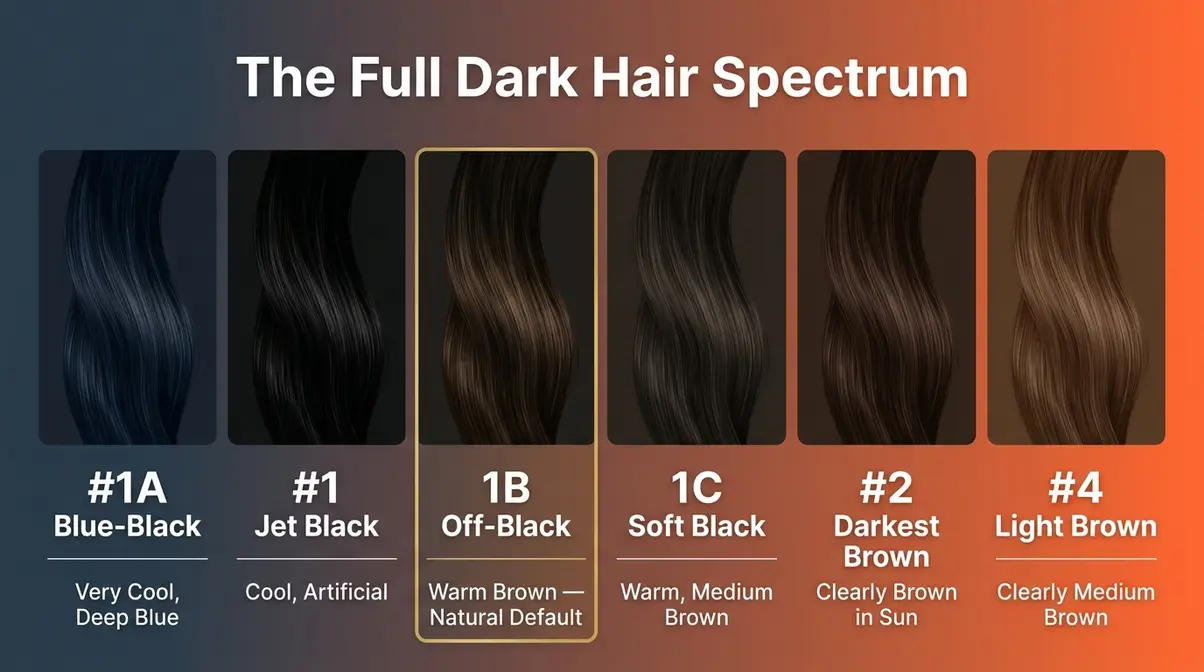
Most people shopping for dark hair only encounter 1B and #2. But the full dark spectrum has more shades — and knowing them means you’ll never be confused by a product code again. The hair color 1, 1B, 2, and 4 range covers everything from artificial jet black to visible medium brown.
| Color Code | Name | Undertones | Looks Like |
|---|---|---|---|
| #1 | Jet Black | Cool, blue-black | Artificial, ink-like |
| 1A | Blue-Black | Very cool, deep blue | Rarer; dramatic and dark |
| 1B | Off-Black / Natural Black | Warm, subtle brown | Most natural dark hair |
| 1C | Soft Black | Warm, medium brown | Slightly lighter than 1B |
| #2 | Darkest Brown | Warm, noticeable brown | Clearly brown in sunlight |
| #4 | Light Brown | Warm, medium brown | Clearly medium brown |
You can compare 1B with other dark braiding hair shades like #4 on our full braiding chart, or understand 1B in relation to other dark hair colors in our complete guide.
1A, 1B, and 1C: What the Letters Mean
The “A,” “B,” and “C” suffixes are used by the extension and wig industry — not all dye brands — to indicate subtle variants within Level 1.
For the 1a vs 1b hair color question: 1A is the deepest, most blue-toned variant and the rarest in natural hair. 1B is the most common natural black and the industry default. 1C is slightly warmer and softer, with more visible brown — a middle ground between 1B and #2.
How do you tell if you have 1A or 1B hair? Take a strand to a bright window in daylight. If you see any blue or purple sheen, you’re closer to 1A. If you see a warm, dark-coffee warmth, you’re 1B. If you’re shopping for extensions and unsure, 1B is always the safer bet — it’s the most universally flattering and the most widely available.
Quick Chart: Dark Hair Colors 1 Through 4
Notice how the jump from 1B to #2 is a family change — from black to brown. The jump from #2 to #4 is a shade change within the brown family. Hair color 2 vs 4 is a difference in warmth and depth within the brown range, not a black-to-brown boundary.
The Off-Black Spectrum technically runs from 1A to #2 — but 1B is where most people’s natural dark hair lands. Most extension brands only stock #1, 1B, and #2 in their dark range. If you see 1A or 1C, it’s a specialty product. Most shoppers will never need to go beyond knowing 1B and #2.
Now let’s talk about the most common real-world use for 1B: braiding hair, extensions, and weaves.
1B Hair Color for Braids, Extensions, and Weaves
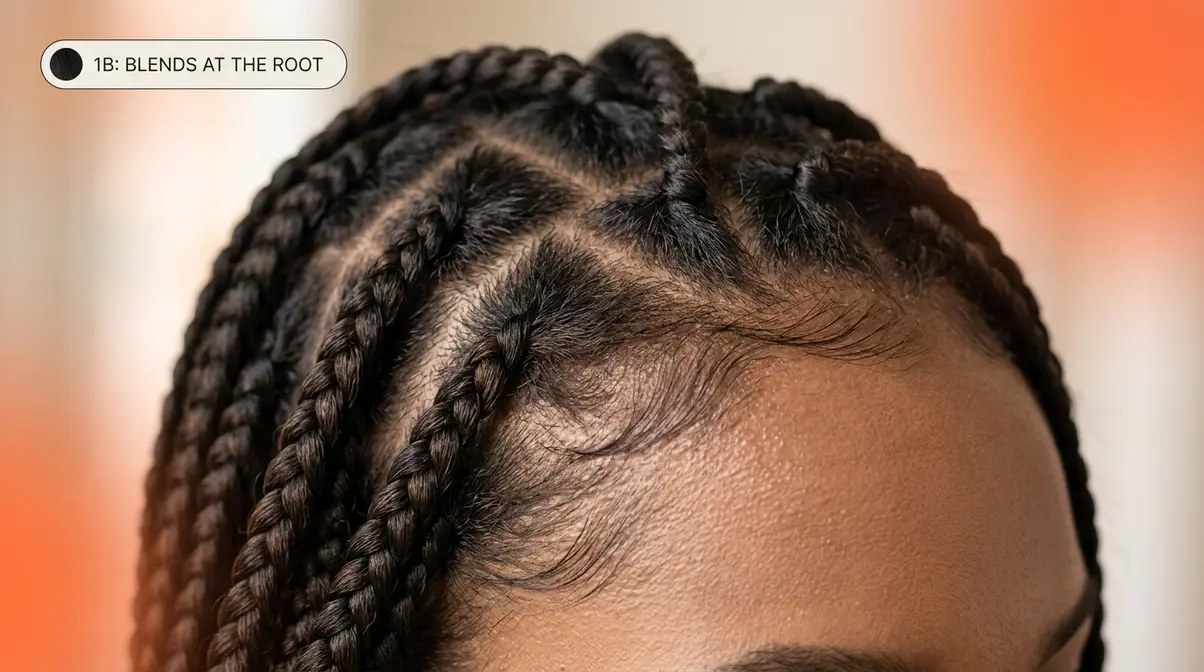
1B is the default color for braiding hair, box braids, knotless braids, passion twists, and most hair extensions — and for good reason. Professional braiders across communities consistently reach for 1B first because its warm undertones match the natural undertones of most uncolored dark hair, regardless of texture. The result is a seamless blend that reads as natural, not purchased.
Why 1B Is the Default for Braiding Hair
1B hair color for braiding dominates the market because of one practical truth: its warm undertones match the natural undertones of most uncolored dark hair — including 3C and 4C textures, which often show warm brown tones in sunlight.
#1 Jet Black, by contrast, can look too dark and too artificial when braided. It creates a visible contrast between the braid and the natural hairline — especially in outdoor lighting where your natural hair reveals its warm tones and the #1 extension stays flat and cool. The result is a look that reads as added-on, not grown-in.
1B braids look like they grew from the scalp. #1 braids look like an add-on. This is why most braiding hair packages default to 1B — it’s not just the most popular, it’s the most universally flattering for naturally dark hair.
Matching 1B Extensions to 3C/4C Natural Hair
This is the matching guidance that most articles skip entirely — and it’s the most important step for anyone with natural hair.
3C and 4C hair often has visible warm brown tones in direct light. This is a natural feature of melanin structure in tightly coiled hair, and it’s exactly what makes 1B the right match. The warm undertones in 1B mirror the warm undertones in natural 4C and 3C hair, creating a seamless blend at the root.
Here’s the practical matching step: hold a strand of your natural hair and a 1B extension swatch side by side in bright window light. They should look nearly identical in depth and warmth.
If your 3C/4C hair is very dark but appears slightly lighter than 1B — common in hair that’s been exposed to sun or has natural variation — consider #2 extensions instead.
For knotless braids or locs specifically, 1B braiding hair color is the safe choice because the braiding process blends the extension fiber with your natural hair at the root. 1B’s warm undertones will match at the hairline, where the blend is most visible.
Our recommendation: when in doubt, order 1B. Professional braiders consistently recommend it as the first choice across every client with naturally dark hair.
Popular Combinations: 1B/30, 1B/27, and 1B/33 Explained
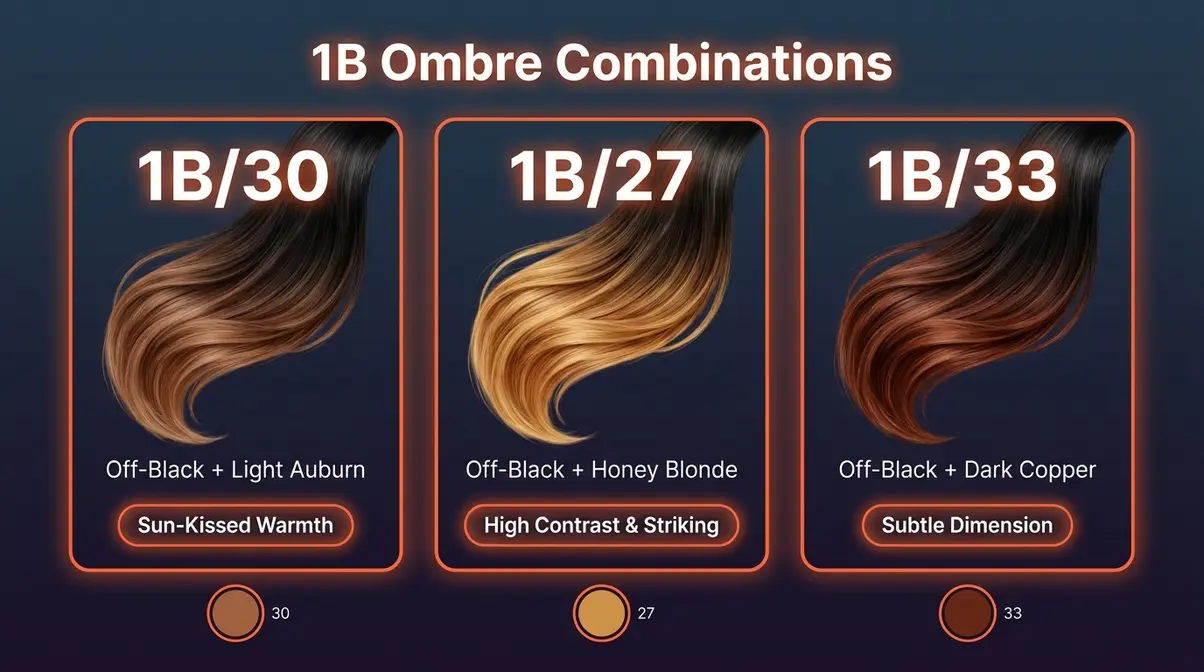
Before you can choose a combination, you need to understand the notation. 1B/30 means the hair starts at the root as 1B (off-black) and blends into color 30 (light auburn) toward the tips. Think of it like a two-flavor blend — 1B is the base, and the second number is the second flavor mixed in.
Here are the three most popular combinations:
- 1B/30: Off-black roots + light auburn ends. Warm, sun-kissed look. Popular for box braids and passion twists — the auburn tips add dimension without looking too bold.
- 1B/27: Off-black roots + honey blonde ends. High-contrast, striking look. Especially flattering on deeper skin tones, where the contrast between the dark root and the golden tip creates a dimensional, eye-catching effect.
- 1B/33: Off-black roots + dark auburn/copper ends. Subtle warmth with less contrast than 1B/30 — a good choice if you want color without committing to a bold look.
As the inspiration board below shows, each combination creates a distinct look — from barely-there warmth to bold color contrast.
You can explore coloring and styling options for 1B hair in our full styling guide.
You can also learn about 1B ombre and highlighted braiding hair colors in our complete braiding chart.
Now that you know the colors and the codes, the last step is matching them to your specific skin tone.
How to Choose: 1B, #1, or #2 for Your Skin Tone
The right dark hair color for you depends on your skin’s undertones (the subtle secondary color in your complexion, visible in natural light). Choosing a color that works with your undertones — not against them — is what separates a look that feels natural from one that feels off. Our team evaluated skin tone matching guidance across professional stylist communities to bring you these actionable walkthroughs.
Warm Undertones (Golden, Peachy, Olive Skin)
Warm undertones mean your skin has golden, peachy, or olive tones. The veins on your inner wrist look green, and gold jewelry flatters you more than silver.
Best match: 1B Off-Black. The warm brown undertones in 1B complement the golden tones in your skin, creating harmony rather than contrast. The result looks like your natural hair — which, if you have warm undertones, almost certainly has warm brown tones of its own.
- 1B: Enhances natural warmth, looks seamless and organic
- #2: Works if your hair is visibly warm-brown; adds richness without looking artificial
- #1: Avoid — the cool blue undertones in jet black can clash with warm skin, creating a harsh, artificial contrast at the hairline
Actionable example: If you have golden-brown skin and you’re installing knotless braids, 1B will look like your hair grew that way. #1 will look like a wig — even when it isn’t.
Cool Undertones (Pink, Rosy, Bluish Skin)
Cool undertones mean your skin has pink, rosy, or bluish tones. Your veins look blue or purple, and silver jewelry flatters you more than gold.
Best match: 1B or #1, depending on the look you want. Cool undertones are the one skin type where #1 Jet Black can work — the cool blue tones in #1 can harmonize with cool-toned skin rather than clash with it.
- #1: Can work for dramatic, high-fashion looks on cool-toned skin — the cool-on-cool pairing reduces harshness
- 1B: Still the safer choice for natural-looking results; its warmth is subtle enough not to clash with cool skin
- #2: May look slightly too warm or “off” against very cool, pink-toned skin
Actionable example: If you have fair, rosy skin and want a sleek, bold style for an event — #1 can be striking. For everyday natural-looking braids or a wig — 1B is still the better choice.
Neutral Undertones
Neutral undertones mean your skin has a balance of warm and cool tones. Your veins look blue-green, and both gold and silver jewelry work for you.
Best match: 1B — universally. Neutral undertones are the most flexible, and 1B’s balanced warmth works beautifully across the board. You have the most freedom of any undertone type.
- 1B: The ideal neutral-undertone match — warm enough to look natural, cool enough not to overwhelm
- #2: A good option if your natural hair is visibly warm-brown
- #1: Can work for dramatic looks, but 1B will always look more natural
Actionable example: Neutral-undertone shoppers who are unsure should always default to 1B. It’s the shade that works for the widest range of people — which is exactly why it’s the industry standard.
When 1B Isn’t the Right Choice
1B is the default for good reason — but it isn’t the right choice for every situation. Here’s an honest look at when to choose differently.
Common Pitfalls
Pitfall 1 — Choosing 1B when your natural hair is clearly brown: If you can see obvious warm-brown tones in your hair in sunlight (not just a hint of warmth), 1B may be slightly too dark and cool. Test in natural light before buying.
Pitfall 2 — Using 1B for dramatic fashion looks: 1B is designed to look natural. If you want a bold, high-contrast style — a sleek jet-black wig, a dramatic dye job — 1B will look muted compared to #1. Choose #1 for maximum impact.
Pitfall 3 — Assuming all 1B products are identical: The “1B” designation is industry-standard, but the exact shade can vary slightly between brands. Two different packages labeled 1B from two different manufacturers may not be a perfect match. When installing braids, buy all packs from the same brand and batch.
When to Choose Alternatives
Choose #1 instead if your goal is a dramatic, clearly-dyed look — a bold fashion statement, a high-gloss wig, or a style where “natural” is not the objective. #1 is also the right choice if you’re dyeing already-processed hair and need maximum color depth.
Choose #2 instead if your natural hair shows clearly visible warm-brown tones in sunlight, or if you want extensions that match hair that has been lightened slightly by sun exposure.
Choose a 1B blend (1B/27, 1B/30) if you want your natural-looking base with added dimension — a subtle ombre that transitions from off-black roots into warmth at the tips.
When to Seek Expert Help
If you’re color-matching for a wedding, professional shoot, or an event where the hair needs to photograph perfectly — consult a professional braider or colorist in person. Lighting in photos behaves differently than lighting in real life, and a professional can assess your specific hair and skin tone in ways a guide cannot.
Frequently Asked Questions
What is a 1B hair color?
1B hair color is “off-black” — a very dark, near-black shade with subtle warm brown undertones that make it look natural rather than dyed. It sits between jet black (#1) and darkest brown (#2) on the standard hair color level scale, which runs from 1 (darkest) to 10 (lightest). 1B is the most common shade used in extensions, wigs, and braiding hair because it mimics the look of real, unprocessed dark hair. Most people with naturally very dark hair are a 1B, not a true #1 Jet Black.
Is 1B darker than black?
No — #1 Jet Black is darker than 1B. However, 1B looks more natural because its warm brown undertones mirror the way real, unprocessed hair reflects light. #1 has cool, blue-black undertones created by artificial dye, which gives it a flat, ink-like appearance. The difference in depth is subtle; the difference in undertone is significant. For most people, 1B looks more like their hair than #1 does, even though #1 is technically the darker shade.
Is 1B considered black or brown?
1B is considered black — specifically, a natural or “off-black” shade with warm brown undertones. It is not a brown color. The brown undertones are subtle and only become clearly visible in direct sunlight; indoors, 1B reads as very dark black. The distinction matters when shopping: 1B belongs to the black family on the color scale, while #2 (Darkest Brown) is the first shade that crosses into the brown family.
Is 1B closer to 1 or 2?
1B is much closer to #1 than to #2. Both #1 and 1B are black shades; #2 is the darkest shade of brown. Think of it this way: 1B and #1 are siblings — same family, slightly different character. 1B and #2 are cousins — related but visibly different, especially in sunlight. When choosing between them, the sunlight test is the most reliable guide: #2 shows clear brown tones in direct light, while 1B remains predominantly black with only a subtle warmth.
Is 1B darker or lighter than #1?
1B is lighter than #1. #1 Jet Black is the absolute darkest point on the hair color scale. 1B sits just above it — very slightly lighter and noticeably warmer in undertone. The difference in lightness is minimal (you’d struggle to see it indoors), but the undertone difference is meaningful: #1 reads cool and artificial, 1B reads warm and natural. Which hair is lighter, 1 or 1B? 1B is lighter, though only barely.
How do I tell if I have 1A or 1B hair?
Take a single strand to a bright window in natural daylight. If you see a blue or purple sheen along the hair shaft, your hair is closer to 1A (Blue-Black) — a rarer, deeper variant. If you see a warm, dark-coffee warmth, your hair is 1B (Off-Black). The vast majority of people with naturally very dark hair are 1B. 1A is uncommon in natural hair and almost always the result of a cool-toned dye. If you’re unsure, default to 1B when shopping for extensions — it’s the safer, more universally flattering choice.
Which hair is lighter, 1 or 1B?
1B is lighter than #1, though the difference is subtle. On the standard hair color scale, #1 is the absolute darkest level — a true jet black with cool, blue-toned undertones created by artificial dye. 1B sits just above it, with a marginally lighter depth and warm brown undertones. In practice, most people cannot tell the difference in dim lighting. In direct sunlight, 1B’s warmth becomes visible while #1 stays flat and cool.
What hair color makes you look younger over 50?
For very dark hair, 1B Off-Black is generally more flattering than #1 Jet Black for women over 50. Cosmetologist consensus suggests that as skin lightens with age, the stark contrast of jet black (#1) can appear harsh against the face — emphasizing lines rather than softening them. 1B’s warm undertones create a softer contrast that tends to look more natural and youthful. If you’re lightening from a very dark color, transitioning to a warm shade like 1B or adding highlights like a 1B/27 blend can refresh the look significantly.
Putting It All Together: Your 1B Decision
1B hair color is the center of The Off-Black Spectrum — the natural, warm-toned black that sits between artificial jet black (#1) and darkest brown (#2). It’s the most widely used shade in the braiding, extension, and wig industry because its warm undertones match the way real, unprocessed dark hair actually looks. For most shoppers with naturally dark hair, 1B is simply the correct choice.
The Off-Black Spectrum gives you a mental model you can use beyond this single purchase. Natural dark hair is not a single flat color — it lives on a warm spectrum. #1 is the artificial extreme. #2 is where black ends and brown begins. 1B is the center: the shade that looks like your hair, in real light, on a real day.
If you’re still unsure after reading this, here’s the simplest rule: when in doubt, choose 1B. It’s the shade professional braiders and stylists reach for first, it blends with the widest range of natural dark hair colors, and it’s the most forgiving choice at the point of purchase. Browse our braiding hair color chart to see 1B in context with ombre and highlighted options, or find the best 1B hair extensions and weaves to start shopping with confidence.

Dave King
Writes evidence-based hair-care guides for Care About Your Hair — for every hair type, jargon-free and independent.