 Dave King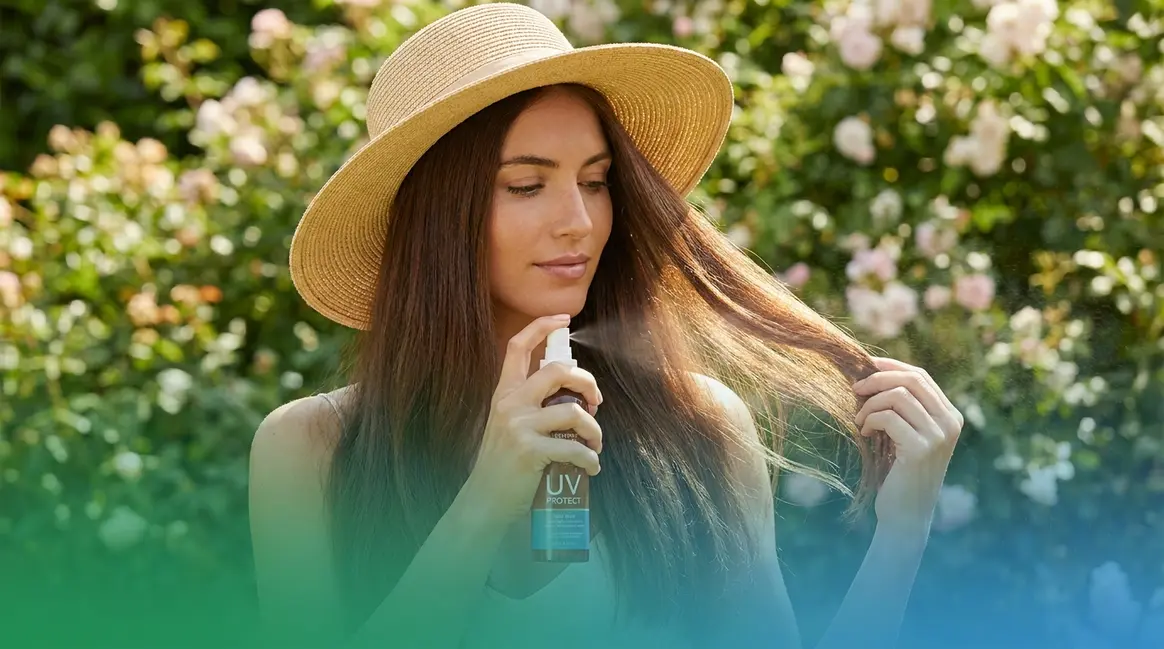
To protect your hair from sun damage, combine three layers of defense: a physical barrier (hat or scarf), a UV-protective spray or leave-in product, and small routine adjustments like avoiding peak sun hours. This 7-step system takes about 10 minutes to set up and can be maintained daily throughout summer — keeping your hair sun-kissed, not sun-damaged.
Your hair feels like straw after a week in the sun. You’ve tried every deep conditioner on the shelf, but nothing sticks. Here’s the truth: this isn’t a hydration problem. It’s a chemistry problem.
“A lot of people don’t realize that the sun is a direct cause of hair damage… Long periods of sun exposure is detrimental to our hair health because it degrades the proteins & lipids in our hair that give our hair strength.”
Every hour outside without protection continues the damage chain. UV rays strip keratin (the protein that gives hair its strength) and oxidise melanin (the pigment that gives hair its colour) — leaving strands structurally damaged from the inside out. The good news? You can stop it.
In this guide, you’ll learn exactly how to protect hair from sun using a science-backed, step-by-step system — so you can stay sun-kissed, not sun-damaged. You’ll move through 7 clear steps covering physical barriers, UV products, routine shifts, natural remedies, hair-type protocols, swim protection, and repair.
Knowing how to protect hair from sun starts with the 3-Layer Defense System: stack physical barriers, UV-protective products, and routine adjustments for complete coverage.
- Layer 1 — Physical Barriers: Wide-brimmed hats (UPF 50+) and scarves block UV before it reaches your strands.
- Layer 2 — UV Products: Leave-in sprays with UV filters prevent keratin degradation and color fade.
- Layer 3 — Routine Adjustments: Avoiding peak hours (10 a.m.–2 p.m.) and deep conditioning weekly dramatically reduce cumulative damage.
Before You Start: What You’ll Need
The Right Mindset: Sun Damage Is Cumulative
Sun damage doesn’t announce itself after one afternoon. It builds quietly — each UV exposure strips a little more keratin, fades a little more colour, and weakens the cuticle layer that keeps moisture locked in. Hair care professionals consistently note that clients who complain of sudden dryness or breakage in late summer often trace the damage back to weeks of unprotected sun exposure. Think of protection as a daily habit, not a crisis response.
You’ll also need about 10 minutes to assemble your summer hair toolkit before heading out. The steps ahead build on each other — which is exactly how the 3-Layer Defense System works.
What to Gather Before You Begin
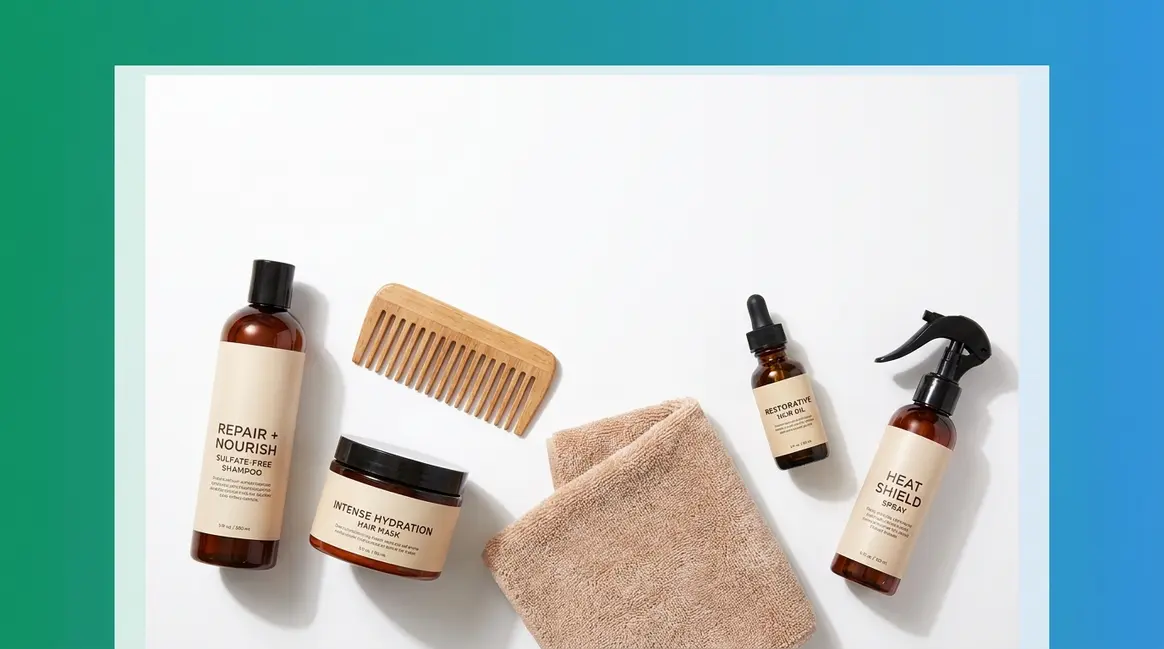
Collect these items before moving through the steps:
- A wide-brimmed hat or silk/cotton scarf
- A UV-protective leave-in spray or conditioner (look for “UV filters” on the label)
- A scalp-safe SPF 30+ sunscreen (powder or spray format)
- A weekly deep-conditioning mask
- Swim cap (optional, for pool or ocean days)
Step 1: Understand How the Sun Actually Damages Your Hair
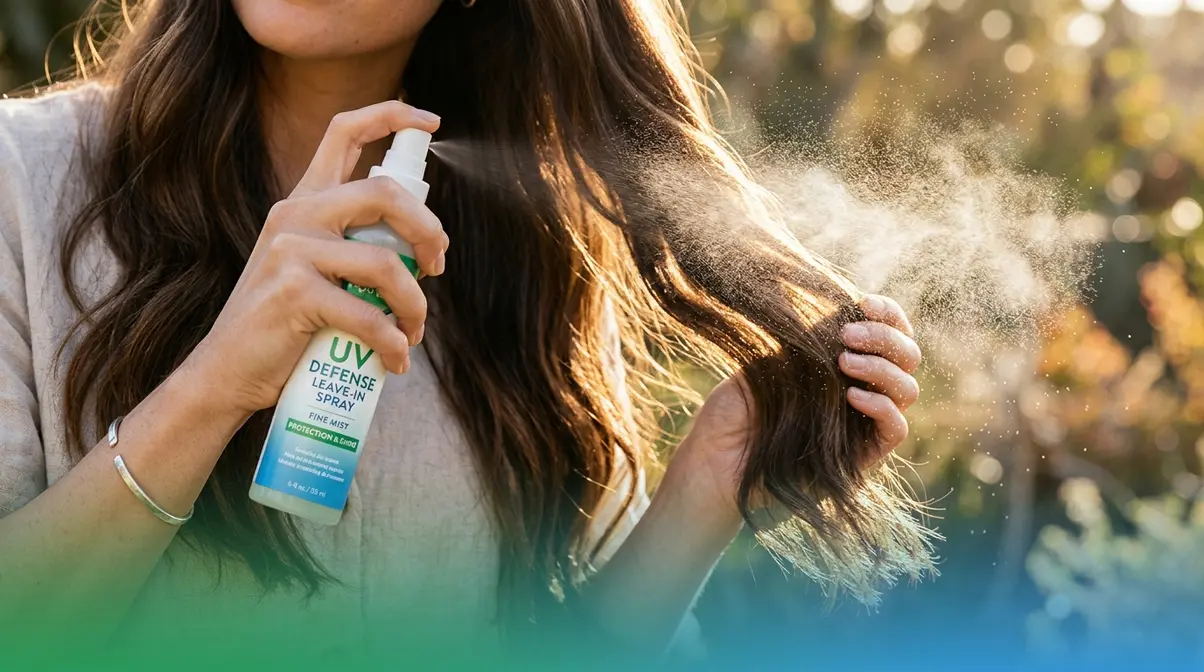
Sun damage is predictable once you understand the mechanism. UVB radiation targets the outer cuticle and causes protein loss; UVA penetrates deeper into the cortex and degrades melanin (Journal of Cosmetic Dermatology, 2008). Together, they degrade the proteins and lipids that give hair its strength — breaking down the internal scaffold that keeps each strand intact.
What UV Rays Do to Your Hair at the Molecular Level
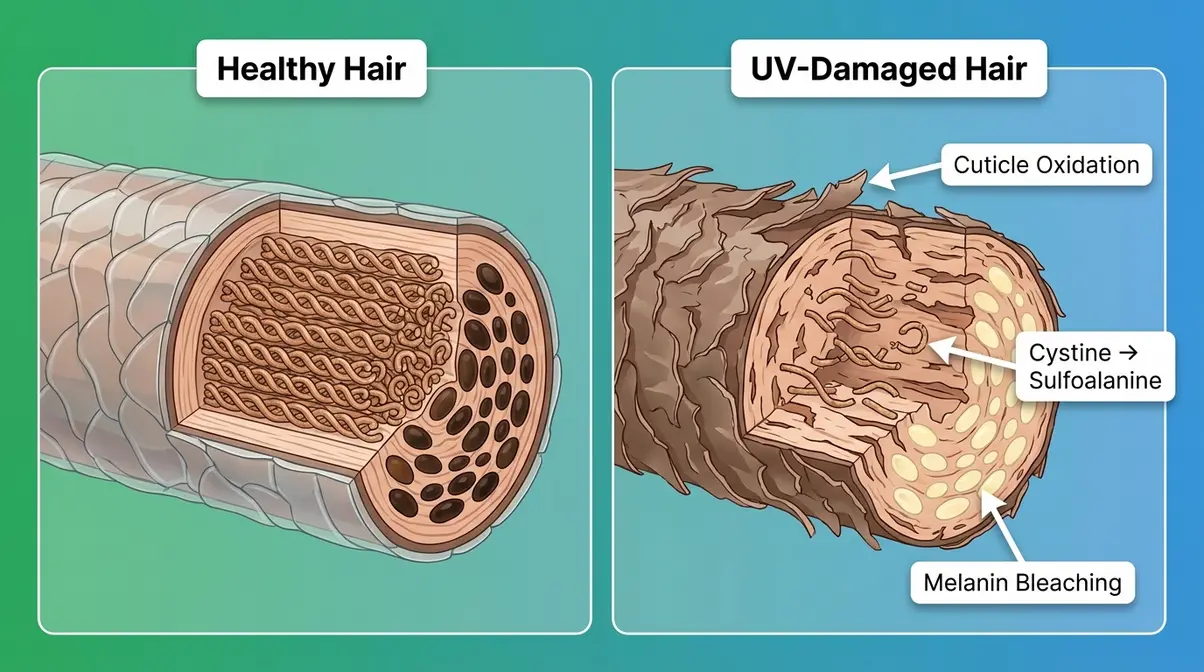
Think of each hair strand as a layered structure. The outer cuticle is made of overlapping scales, like roof tiles. Beneath it, the cortex holds keratin fibres — tightly wound protein chains — and melanin granules that give your hair its colour.
UVB radiation hits the cuticle first. It photodegrades specific amino acids in the keratin chain, generating free radicals that attack the protein matrix. A 2017 study in Scientific Reports confirmed that UV irradiation causes cystine (a key amino acid in hair) to oxidise into sulfoalanine — a marker of fibre decomposition that directly weakens mechanical properties like tensile strength.
UVA goes deeper. It reaches the cortex and bleaches melanin granules, disrupting the quinone structures that give melanin its photoprotective function. Research from TRI Princeton (2025) showed that UV exposure measurably reduces keratin denaturation temperature — a direct indicator of structural weakening. Meanwhile, cuticle lipids oxidise, breaking the adhesion between cuticle layers and the cortex. Dead keratin cells can’t repair themselves, so each UV session adds to the total damage.
Quotable fact: UVB causes protein loss in hair; UVA causes color changes — both happen simultaneously on every unprotected sunny day (Journal of Cosmetic Dermatology, 2008).
Signs Your Hair Has Already Been Sun-Damaged
Hair that’s been sun-damaged doesn’t just feel dry. Look for these specific signals:
- Brassiness or warm, orange tones in colour-treated or brunette hair — a sign melanin has been oxidised
- Straw-like texture that returns even after conditioning — the cuticle can no longer hold moisture
- Increased breakage on the mid-lengths and ends, where the cuticle is most worn
- Faded, chalky colour in blonde, grey, or bleached hair — melanin has been stripped
- Increased frizz in curly hair, as the raised cuticle absorbs humidity unevenly
If you’re seeing two or more of these signs, your hair is already in the damage chain. The steps below will help you stop the cycle.
Step 2: Wear Physical Barriers to Block UV Rays
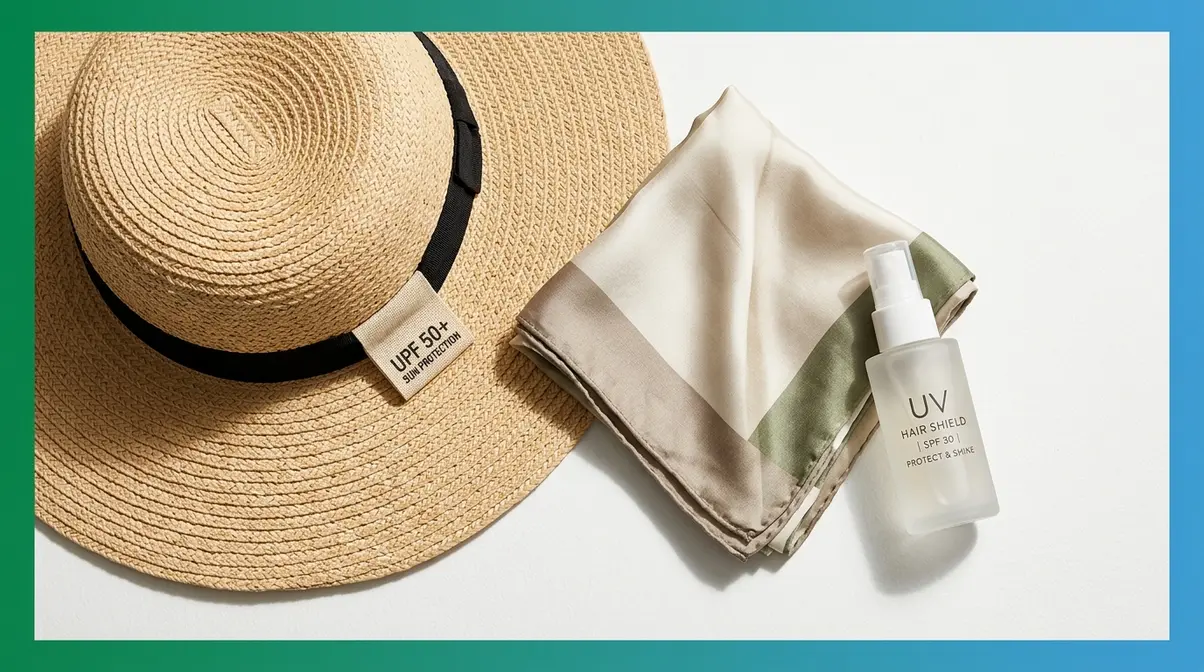
Physical barriers are Layer 1 of the 3-Layer Defense System — and the most immediately effective. No product replaces a hat that blocks UV before it reaches your hair. The American Academy of Dermatology recommends wide-brimmed hats as the first line of defense against UV exposure, particularly during peak hours of 10 a.m. to 2 p.m.
Choose the Right Hat or Scarf for Your Hair
Not all hats offer equal protection. For genuine UV defense, look for these features:
- UPF 50+ rating — blocks 98% of UV radiation. Straw hats with large gaps offer minimal protection; tightly woven fabric or synthetic UPF materials are far more effective.
- Wide brim (3+ inches) — covers the hairline, ears, and back of the neck, not just the crown.
- Breathable fabric — linen, cotton, or moisture-wicking synthetics prevent scalp sweating that can worsen product wash-off.
Silk and satin scarves are an excellent alternative. They armour your hair against UV while simultaneously reducing friction damage — a double benefit for colour-treated or fine hair. A loose turban or headscarf also covers the scalp parting, which is one of the most overlooked UV exposure points on the body.
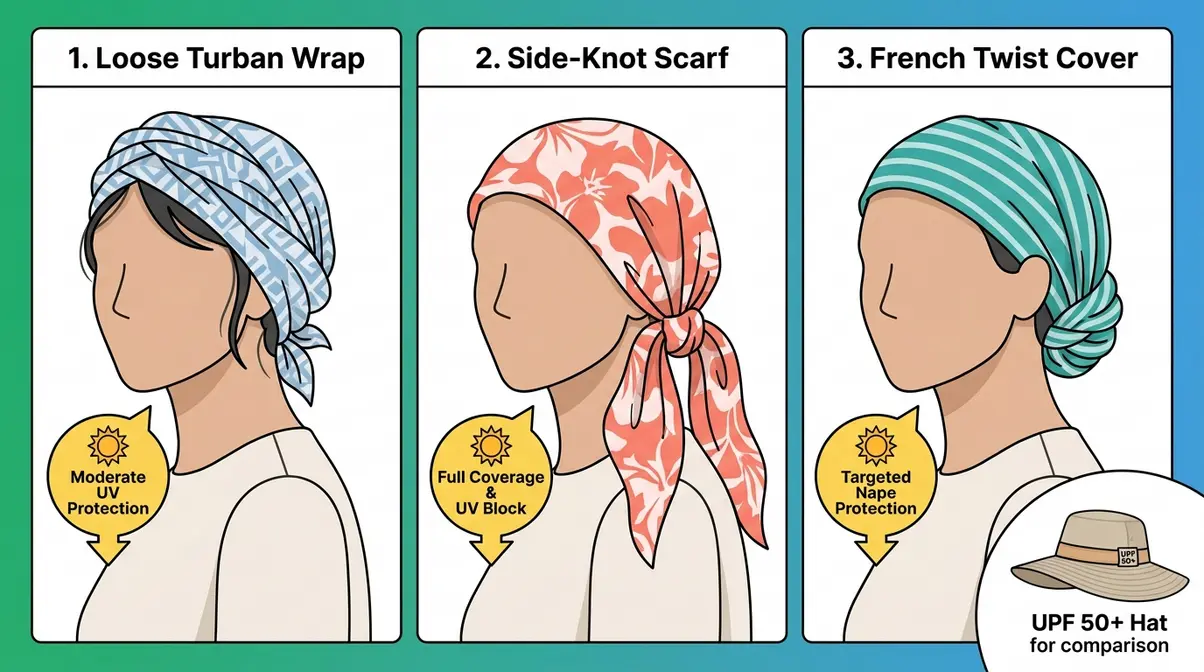
How to Protect Your Scalp Parting from Sunburn
The scalp parting is a long, exposed strip of skin that burns faster than almost anywhere else on your body — yet it’s absent from most sun protection guides. According to the Skin Cancer Foundation (2020), wearing a hat with a UPF 50+ rating is the best protection for the scalp, but when a hat isn’t practical, targeted sunscreen is essential.
For your parting line, follow these steps:
- Choose a powder or spray SPF 30+ formulated for the scalp — these don’t weigh hair down or create greasiness. Dermatologists specifically recommend powder sunscreens (like mineral SPF powders) for the parting because they’re easy to apply without disrupting your style (Glamour, 2025).
- Apply before heading out — run the powder brush or spray nozzle directly along your parting line.
- Reapply every 2 hours if you’re sweating or in direct sun (American Academy of Dermatology, 2026).
- Consider changing your part on beach or pool days — shifting from a centre to a side part, or wearing hair in a braid that conceals the scalp, eliminates the exposed strip entirely.
Hair care communities consistently flag the parting as the most neglected UV zone. A simple mineral powder SPF takes under 30 seconds to apply and dramatically reduces cumulative scalp damage over a summer.
Step 3: Apply UV-Protective Hair Products
Layer 2 of the 3-Layer Defense System is chemical protection. UV-filter products work differently from physical barriers — they absorb or scatter UV radiation at the strand level, protecting keratin and melanin from within. Research from TRI Princeton (2025) demonstrated that leave-on UV protectant products measurably reduced UV-induced keratin degradation compared to unprotected hair in controlled testing.
What to Look for in a UV Hair Spray or Leave-In
When shopping for UV hair protection, the label is your guide. Look for:
| Ingredient/Claim | What It Does |
|---|---|
| Benzophenone-4 | Absorbs UVA + UVB rays; common in colour-safe formulas |
| Ethylhexyl methoxycinnamate | UVB filter; protects protein bonds |
| Buriti oil | Natural UV absorber; also conditions |
| “UV filters” on label | Broad-spectrum claim; verify it covers both UVA and UVB |
| Antioxidants (Vitamin C, E) | Neutralise free radicals generated by UV exposure |
Products that combine UV filters with conditioning agents offer the best value. The Bumble and bumble Hairdresser’s Invisible Oil Heat/UV Protective Primer is rated their #1 best-seller and includes UV filters specifically to protect against the drying effects of sun, alongside heat protection to 450°F. Living Proof’s Leave-In Conditioning Spray offers both UV and heat protection in a lightweight formula. For a plant-powered option, the Rahua Hydration Detangler + UV Barrier uses buriti oil as a natural UV protectant and was named a top pick by The New Knew (2026).
How to Apply UV Protection Without Making Hair Greasy
The most common reason people skip UV hair products is fear of greasiness. Across hair care communities, the consistent feedback is that application technique matters more than the product itself.
Follow this application method:
- Apply to damp hair after washing — products absorb more evenly and dry down lighter.
- Use 2–3 pumps for shoulder-length hair; scale up for longer or thicker hair.
- Focus on mid-lengths and ends — these are most UV-exposed and most prone to dryness.
- Avoid the root area if you have fine or oily hair — concentrate product from ear-level downward.
- Comb through with a wide-tooth comb to distribute evenly, then air-dry or style as usual.
For re-application mid-day (e.g., at the beach), a fine-mist UV spray works without disrupting your style. Spritz from 6–8 inches away, concentrating on the top layer of hair that receives direct sunlight.
Step 4: Adjust Your Haircare Routine for Sun Season
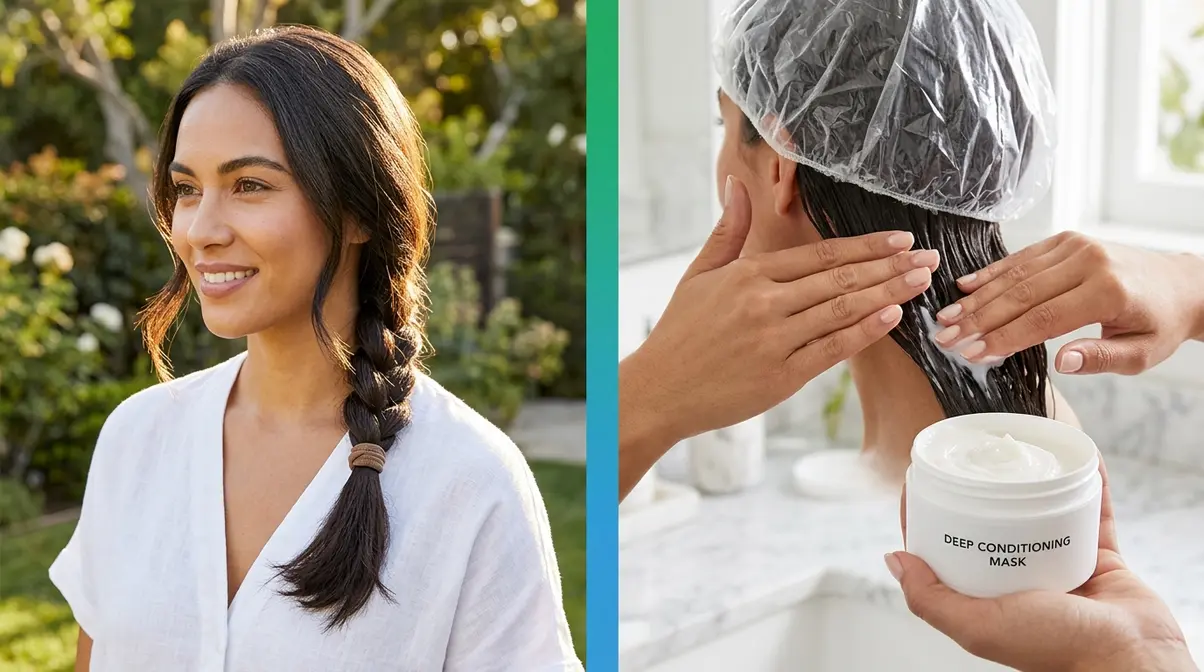
Layer 3 of the 3-Layer Defense System is behavioural: small, consistent changes to your daily habits that reduce cumulative UV exposure and help your hair recover from the damage it does receive.
Avoid Peak Sun Hours and Limit Heat Styling
The American Academy of Dermatology confirms UV rays are strongest between 10 a.m. and 2 p.m. — scheduling outdoor time before 10 a.m. or after 2 p.m. meaningfully reduces exposure without requiring any product change.
Heat styling compounds sun damage. UV radiation already weakens keratin cross-links; adding a 400°F flat iron to already-compromised protein structures accelerates breakage. Hair care professionals consistently recommend reducing heat styling frequency to 1–2 times per week during summer, and always using a heat protectant spray (which often doubles as a UV protectant).
Use Protective Hairstyles That Minimise Exposure
Protective hairstyles reduce the surface area of hair exposed to direct UV. The most effective options:
- Braids and plaits — enclose the hair shaft, significantly reducing UV contact along the length
- Buns and updos — keep ends (the most fragile section) tucked away from sun exposure
- Loose twists — particularly effective for curly hair; reduce frizz-causing cuticle disruption
- Ponytails with a covered elastic — quick and effective for casual sun exposure
Avoid tight styles that stress the hairline — the scalp’s hairline zone is already UV-exposed and adding tension can compound damage.
Deep Condition Weekly to Restore Lost Moisture
UV exposure strips your hair’s natural waterproofing layer — the lipid film that coats the cuticle and keeps moisture sealed inside. A weekly deep-conditioning treatment replenishes this barrier.
- Look for masks containing:
- Ceramides — rebuild lipid barriers between cuticle cells
- Hydrolysed proteins — temporarily fill gaps in the keratin structure
- Panthenol (Vitamin B5) — penetrates the shaft and improves flexibility
Apply to clean, damp hair, cover with a shower cap, and leave for 20–30 minutes before rinsing. Users who’ve added a weekly mask to their summer routine consistently report improved elasticity and reduced mid-length breakage within 4–6 weeks.
Step 5: Try Natural and DIY Sun Protection Methods
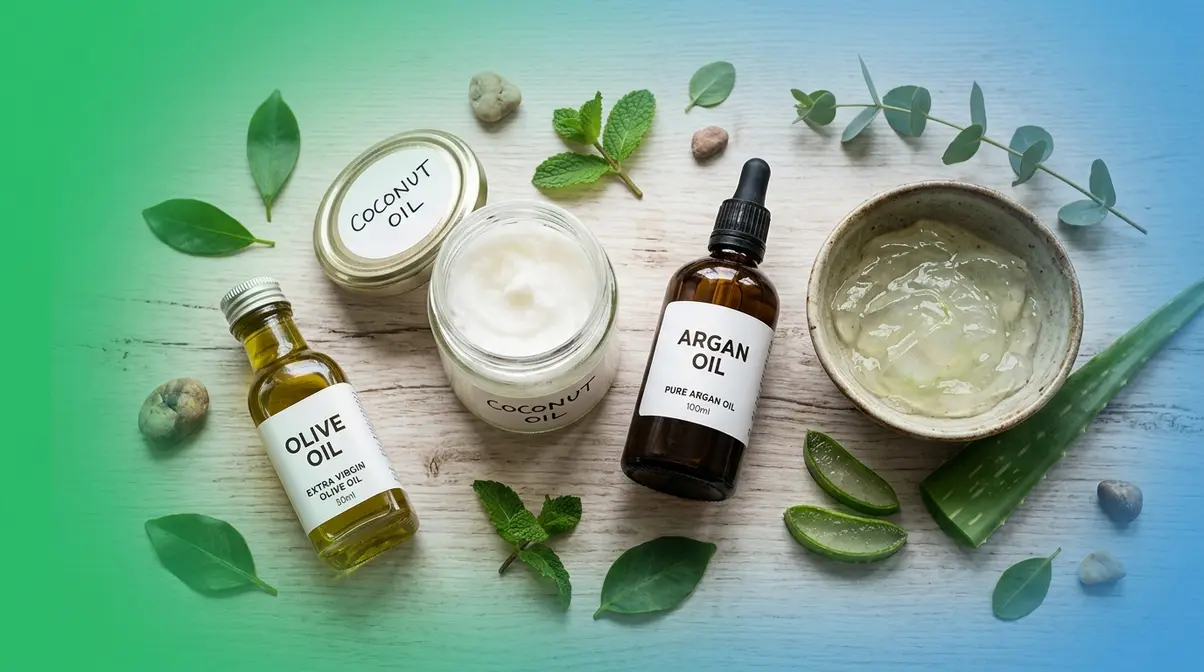
Natural oils and DIY remedies can support your protection routine — but it’s critical to understand what they can and can’t do. They work best as conditioning and barrier agents, not as replacements for UV-filter products or physical barriers.
Does Coconut Oil Protect Hair from the Sun?
Coconut oil offers some UV absorption — but its protection is minimal. In vitro studies have measured coconut oil’s SPF at approximately 4–8, depending on methodology (peer-reviewed research cited in Photochemical & Photobiological Sciences). To put that in context: SPF 30 blocks 97% of UVB rays; SPF 7 blocks roughly 86% — and that’s measured on skin substrates, not hair fibres, where real-world performance is likely lower.
What coconut oil does well: it penetrates the hair shaft and reduces protein loss during washing and UV exposure, improves moisture retention, and forms a light film that may scatter a small amount of UV. It’s a genuine conditioning agent that supports your protection system. It is not a replacement for UV spray.
Use it as a pre-sun treatment: Apply a small amount (coin-sized) to dry or damp hair 15–20 minutes before sun exposure. It conditions while providing a supplementary barrier. Just don’t skip your UV spray on the assumption that coconut oil alone is covering you.
Other Natural Oils That Offer UV Defense
Several other oils have measured UV-absorption properties in laboratory settings:
| Oil | Approximate In Vitro SPF | Best Used As |
|---|---|---|
| Coconut oil | ~4–8 | Pre-sun conditioning treatment |
| Olive oil | ~7–8 | Overnight mask, not leave-in |
| Argan oil | Low (UV scatter, not absorption) | Cuticle smoother + antioxidant |
| Raspberry seed oil | Claims vary widely; not confirmed | Not recommended as primary UV protection |
| Buriti oil | Natural UVA/UVB absorber | Ingredient in UV hair sprays (e.g., Rahua) |
Important caveat: All in vitro SPF measurements for oils are based on skin substrate testing. Hair-specific UV protection data for natural oils is very limited. Treat these numbers as indicative, not clinical guarantees.
Simple DIY Pre-Sun Hair Masks
These two masks take under 5 minutes to prepare and can be applied the morning of a beach or outdoor day:
- Coconut + Argan Pre-Sun Mask (for all hair types):
- 2 tbsp coconut oil
- 5 drops argan oil
- Optional: 3 drops lavender essential oil
Apply to dry hair from mid-lengths to ends. Leave 15–20 minutes, then style as normal. Follow with a UV spray for complete coverage.
- Aloe Vera + Olive Oil Mask (for colour-treated hair):
- 2 tbsp pure aloe vera gel
- 1 tbsp olive oil
Aloe vera forms a light film on the hair shaft that may help reflect UV; olive oil conditions and smooths the cuticle. Apply the same way. This combination is particularly gentle on colour-treated hair because it adds no additional chemical load.
These masks are supportive tools — part of a complete protection routine, not a standalone solution.
Step 6: Protect Your Specific Hair Type from Sun Damage
Different hair types have different vulnerabilities. A one-size approach leaves critical gaps. Hair care professionals who work across diverse clients consistently recommend tailoring your UV protection protocol to your specific hair chemistry and structure.
Color-Treated and Dyed Hair
Color-treated hair is the most UV-vulnerable hair type. Here’s why: the colouring process opens the cuticle to deposit or remove pigment, leaving the cuticle permanently more porous. UV radiation then enters the cortex more easily, oxidising both the artificial colour molecules and any remaining natural melanin. The result: brassiness, fading, and an uneven tone that develops faster than expected.
Your color-protection protocol:
- Use a UV-specific colour-protecting spray every time you go outdoors — look for products that explicitly mention “colour fade protection” alongside UV filters
- Wash with colour-safe, sulfate-free shampoo — sulfates accelerate colour loss, especially in UV-exposed hair
- Use a purple or blue toning shampoo weekly if you’re blonde or highlighted — this neutralises the brassy, warm tones that UV oxidation causes
- Apply a leave-in conditioner with antioxidants (Vitamin C, E) — these neutralise the free radicals that degrade artificial colour molecules
According to eSalon colorists, UV is one of the top three causes of premature colour fading — alongside heat styling and hard water. Addressing all three simultaneously extends colour vibrancy by several weeks per cycle.
Curly and Natural Hair
Curly hair has a structural advantage and a structural vulnerability. Its coiled shape means the cuticle is naturally more raised at the curves — which means UV radiation finds more entry points. Additionally, the sebum (natural oil) that protects straight hair struggles to travel down a coiled shaft, leaving curly hair inherently drier and more susceptible to UV-induced frizz.
Your curly hair protocol:
- Apply a UV-protective leave-in cream (not spray) — creams provide more sustained coverage for highly textured strands
- Seal with a light oil (argan or jojoba) over the leave-in — this locks in moisture and creates an additional physical barrier
- Protective styles (braids, twists, buns) are particularly valuable for curly hair — they dramatically reduce UV surface exposure
- Deep condition every 5–7 days during summer — curly hair loses moisture faster under UV stress
Blonde, Grey, and Bleached Hair
Blonde, grey, and bleached hair share a critical vulnerability: they contain very little eumelanin (the dark pigment that offers the most UV protection). A 2007 study in the Journal of Photochemistry and Photobiology found that all hair types suffer mechanical damage from UVB, but hair with less melanin is more susceptible to structural degradation.
For grey hair, UV causes yellowing — the oxidation of the remaining protein structures creates a warm, yellow cast that many grey-haired people mistake for product buildup. It’s actually UV damage. For bleached hair, the cuticle is already compromised by the bleaching process, making UV penetration to the cortex almost immediate.
Your blonde/grey/bleached protocol:
- Purple-toning conditioners or shampoos are essential — they neutralise UV-induced yellowing and brassiness
- Use a UV spray with antioxidant ingredients every single time you go outdoors
- Avoid leaving hair wet in direct sun — wet hair has a raised cuticle, maximising UV penetration
- Consider a UV-protective hair gloss treatment every 4–6 weeks at the salon — this deposits a protective film over the cuticle
Step 7: Protect Your Hair When Swimming or Outdoors
Swimming adds chlorine and saltwater to the UV damage equation — a triple threat. Chlorine strips the cuticle’s protective lipid layer; salt draws moisture out of the shaft; UV does both simultaneously. Hair care professionals consistently describe this combination as the fastest route to straw-like texture.
Before You Swim: Pre-Soak and Seal Your Hair
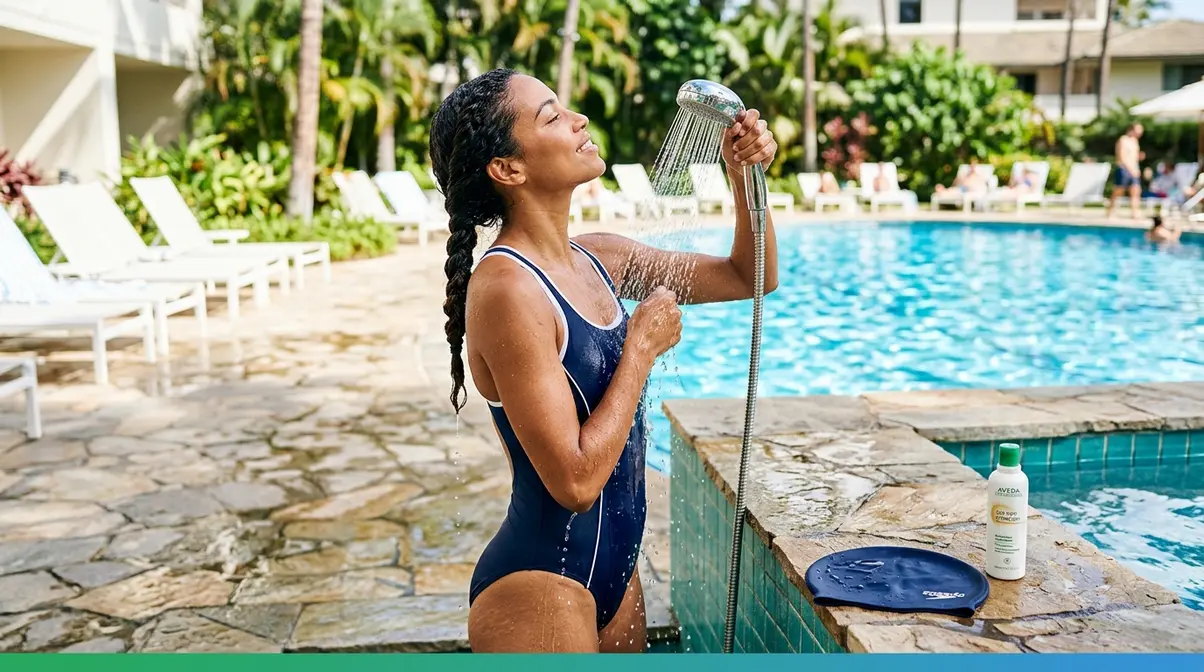
Wet your hair with fresh water before entering the pool or ocean. This is one of the most effective and underused strategies: a pre-saturated hair shaft absorbs significantly less chlorinated or salt water because the spaces between cuticle cells are already filled.
Pre-swim routine (5 minutes):
- Rinse hair thoroughly with fresh water until fully saturated
- Apply a leave-in conditioner or UV-protective oil (coconut or argan) to seal the cuticle
- Braid or twist hair into a low bun — this minimises surface area exposed to chlorine and UV simultaneously
- For extended pool sessions, use a silicone swim cap over your braid — it’s the most complete protection available
After Swimming: Rinse, Replenish, and Repair
Rinsing immediately after swimming is non-negotiable. Every minute chlorine or salt remains on the hair shaft, it continues drawing out moisture and weakening protein bonds.
Post-swim routine:
- Rinse with fresh water within 5 minutes of leaving the pool or ocean
- Apply a clarifying or swimmer’s shampoo once per week to remove chlorine mineral buildup — not after every swim, as this over-strips
- Use a deep-conditioning mask within 24 hours of a long swim session — this replenishes the lipid barrier stripped by chlorine
- Avoid heat styling the day after swimming — hair is most fragile in the 24 hours following chemical exposure
This two-part routine (pre-soak + immediate rinse) can prevent the majority of swimming-related damage that compounds UV stress over a summer.
Troubleshooting — How to Fix Straw-Like Sun-Damaged Hair
Emergency Repair Treatments for Severely Damaged Hair
If your hair is already at the straw-like stage — brittle, breaking at the mid-length, and refusing to hold moisture — intensive protein and moisture treatments are your first tool.
Protein treatments temporarily fill gaps in the keratin structure, restoring tensile strength. Look for hydrolysed keratin or hydrolysed wheat protein in the ingredient list. Apply once per week for 4 weeks, then reduce to once per month as maintenance.
Bond-building treatments (such as those containing bis-aminopropyl diglycol dimaleate, the active in Olaplex-style formulas) work at a deeper level — they reconnect broken disulfide bonds in the keratin structure. These are particularly effective for bleached or colour-treated hair that has suffered both chemical and UV damage. Use in-salon for best results, or follow at-home instructions precisely — overuse of protein can cause its own brittleness.
Olaplex No. 3 Hair Perfector (or equivalent bond-building treatment): apply to damp hair, leave 10 minutes minimum (up to 90 minutes for severe damage), then shampoo and condition as normal. Users with severely UV-damaged hair report noticeable improvement in elasticity after 3–4 consecutive weekly treatments.
When to See a Hairstylist About Sun Damage
Some damage is beyond what at-home treatments can address. See a professional hairstylist if:
- Breakage is occurring above the ear — this indicates cortex-level damage that has compromised structural integrity throughout the length
- Hair is snapping during gentle combing — tensile strength has fallen below a threshold that at-home protein treatments won’t restore
- You’ve had bleach + extended sun exposure — this combination can cause “chemical fatigue” where the cortex literally crumbles; a stylist can assess whether a trim or bond-building in-salon treatment is the better path
- Colour has shifted to an unusual tone (green tones from chlorine, extreme brassiness) — a professional colour correction is faster and safer than DIY attempts
Hair care professionals can perform a strand elasticity test in under 2 minutes to assess damage severity — this tells you whether your hair needs conditioning, protein, bond rebuilding, or a strategic trim.
Limitations and When Natural Remedies Aren’t Enough
When Natural Remedies Aren’t Enough
Natural oils and DIY masks are genuinely useful — as supporting tools in a complete protection system. However, they have clear limits that are important to acknowledge honestly.
Coconut oil offers only SPF ~4–8 (in vitro, skin-substrate testing) — far below the SPF 30+ recommended by dermatologists for adequate UV protection. It is not a substitute for a UV-filter spray. Similarly, aloe vera and olive oil provide conditioning benefits and minor UV scatter, but no published clinical study confirms they prevent keratin degradation at meaningful levels.
If you have colour-treated, bleached, or fine/thinning hair, relying on natural remedies alone will leave you with faded colour and increased breakage by mid-summer. These hair types need formulated UV filters — not just conditioning agents.
The honest summary: Natural remedies are a useful Layer 2 supplement when you already have Layer 1 (physical barrier) and a UV spray in place. They are not a Layer 2 replacement.
When to Seek Professional Hair Care Advice
Consider a consultation with a trichologist (a specialist in hair and scalp health) or a professional hairstylist in these situations:
- Scalp burning repeatedly despite using SPF — your scalp skin may need a dermatologist’s assessment for sun sensitivity or early damage
- Hair loss or thinning accelerating in summer — UV radiation has been shown to reduce hair follicle cell proliferation and accelerate the transition to the inactive growth phase (Alpecin Research, 2026); this warrants professional evaluation
- You’re unsure which UV products suit your hair type — a stylist can assess porosity and recommend targeted products in a single appointment
Frequently Asked Questions
What is the best sun protection for hair?
The best sun protection for hair combines physical barriers with UV-filter products. Dermatologists recommend a wide-brimmed hat with UPF 50+ as the first line of defense, paired with a UV-protective leave-in spray or conditioner applied before sun exposure. Products containing benzophenone-4 or ethylhexyl methoxycinnamate provide broad-spectrum UVA and UVB protection for the hair shaft. The Skin Cancer Foundation (2020) confirms that UPF 50+ hats are “probably the best protection” for the scalp. For colour-treated hair, a UV spray with antioxidant ingredients adds an essential second layer of defence against fade and brassiness.
How do you protect your hair parting from the sun?
Protecting your hair parting requires targeted scalp sunscreen, not just hair products. The parting line is exposed skin — it burns just like your face. Dermatologists recommend applying a mineral powder SPF 30+ directly to the parting line before going outdoors, and reapplying every 2 hours in direct sun (American Academy of Dermatology, 2026). A scalp-safe spray sunscreen also works well. Alternatively, style your hair to eliminate a visible part: a braid, bun, or pulled-back style that conceals the scalp is the simplest solution. A UPF 50+ hat covers the parting entirely for longer outdoor sessions.
How can I protect my hair from sun damage?
You can protect your hair from sun damage by using the 3-Layer Defense System every day in summer. Layer 1 is a physical barrier — a wide-brimmed hat or scarf that blocks UV before it reaches your strands. Layer 2 is a UV-protective leave-in spray or conditioner applied to damp hair before going outdoors. Layer 3 is routine adjustment: avoiding peak UV hours (10 a.m.–2 p.m.), limiting heat styling, deep conditioning weekly, and pre-soaking hair before swimming. Research confirms that UV exposure degrades keratin and oxidises melanin simultaneously (TRI Princeton, 2025) — so stacking all three layers provides the most complete defence.
What is a natural sun protectant for hair?
Coconut oil is the most studied natural sun protectant for hair, but its protection is limited. In vitro studies have measured coconut oil’s SPF at approximately 4–8 — far below the SPF 30+ recommended for adequate UV protection. It’s best used as a pre-sun conditioning treatment that reduces protein loss and adds a supplementary barrier, not as a standalone UV shield. Other oils with mild UV-absorption properties include olive oil (SPF ~7–8 in vitro) and buriti oil (found in plant-based UV hair sprays like Rahua). For meaningful protection, combine natural oils with a formulated UV hair spray and a physical barrier like a hat.
Conclusion
For anyone wondering how to protect hair from sun, the answer is more complete — and more actionable — than “wear a hat.” UV radiation degrades keratin proteins and oxidises melanin simultaneously, structurally damaging hair from the inside out with every unprotected hour outdoors. Research from TRI Princeton (2025) confirms that leave-on UV protectant products measurably reduce this keratin degradation — meaning the right product genuinely works at the molecular level.
The 3-Layer Defense System turns this science into a daily habit you can actually maintain. Physical barriers stop UV before it reaches your strands. UV-filter products protect the keratin and melanin that physical barriers miss. Routine adjustments — avoiding peak hours, deep conditioning, protective hairstyles — reduce cumulative damage over an entire summer. These three layers don’t just protect; they compound. Each layer makes the others more effective.
Your next step: pick one layer to implement this week. If you own a wide-brimmed hat, start there — wear it during the 10 a.m.–2 p.m. window for the next 7 days. Then add a UV leave-in spray. Then adjust your routine. Small, consistent changes are how sun-kissed hair stays healthy all summer long — and how you stop the damage chain before it starts.

Dave King
Writes evidence-based hair-care guides for Care About Your Hair — for every hair type, jargon-free and independent.