 Dave King
Every winter, the same thing happens. You step outside into the cold, pull on your hat, and by the time you reach your destination your hair is flat, frizzy, and crackling with static. Then you come indoors, crank up the heat, and take a long, hot shower to warm up — and your hair gets even drier. Sound familiar?
You’re not imagining it. Winter creates a perfect storm of conditions that strip moisture from your hair faster than any other season. The good news? Once you understand why it’s happening, fixing it is surprisingly straightforward. This guide walks you through the science, gives you 8 actionable winter hair care tips you can start today, shares easy home remedies, and tailors advice for your specific hair type.
Whether your biggest complaint is frizz, breakage, an itchy scalp, or stubborn hat hair, you’ll find a clear, simple action plan here — no chemistry degree required.
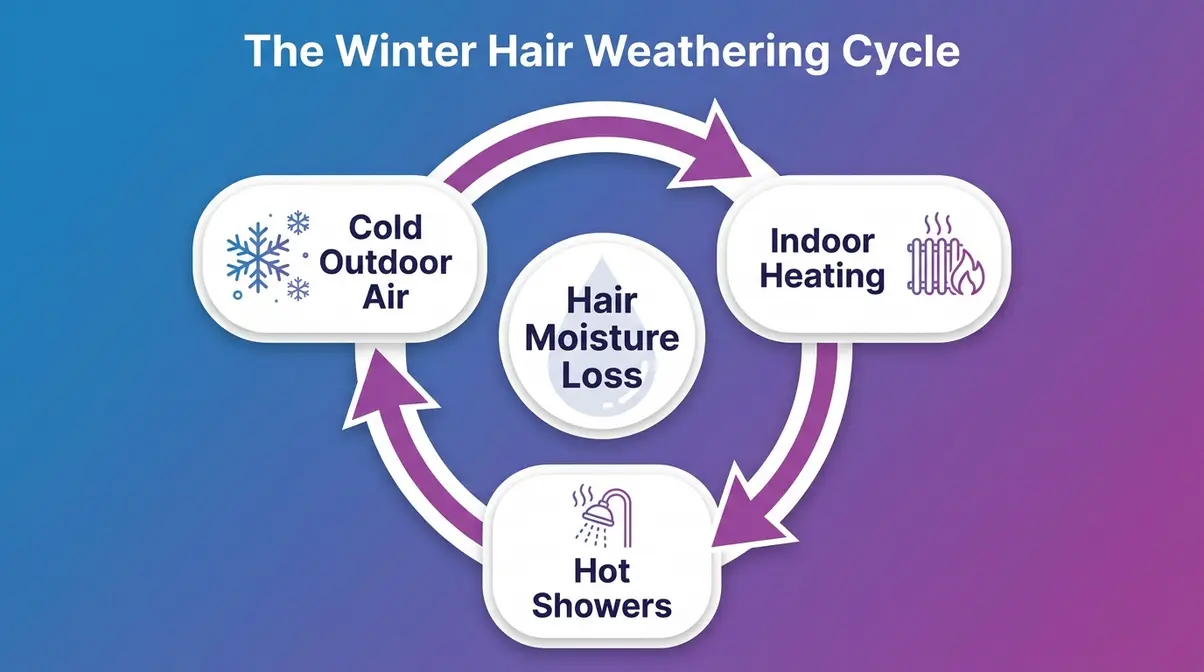
Winter hair care tips work best when you understand the root cause: The Winter Hair Weathering Cycle — the compounding damage loop created by cold air, indoor heating, and hot showers working together to strip your hair of moisture.
- Break the cycle early: Switching to a moisturizing shampoo and washing less often are the two highest-impact changes you can make immediately.
- Protect before you step outside: A silk- or satin-lined hat prevents friction damage and static — the #1 overlooked winter hair tip.
- Repair weekly: Deep conditioning once a week restores moisture that cold, dry air removes daily.
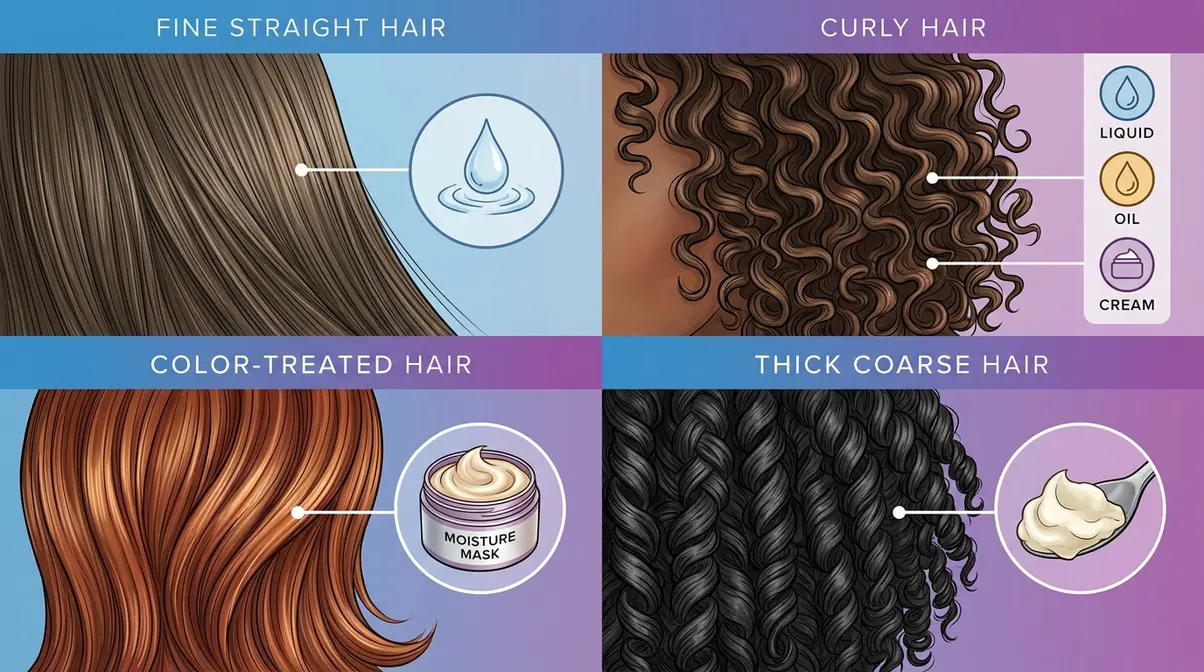
- Your hair type matters: Fine hair needs lightweight hydration; curly and coily hair needs heavier sealing oils to lock moisture in.
Recommended Products for Winter Hair Care
| # | Product | Best For |
|---|---|---|
| 1 | Kitsch Coconut & Argan Oil Hair Mask | Weekly deep conditioning |
| 2 | The Ordinary Multi-Peptide Serum for Hair Density | Scalp health & thinning concerns |
| 3 | MAREE Hydrating Hair Mask | Dry, brittle, color-treated hair |
| 4 | Native Moisturizing Shampoo & Conditioner | Sulfate-free daily cleansing |
| 5 | Keratin Hair Mask Deep Conditioning Treatment | Frizz control & smoothing |
| 6 | Matrix Total Results Frizz Control Serum | Anti-frizz finishing |
| 7 | L’Oréal Paris Elvive Extraordinary Oil Conditioner | Fine hair lightweight moisture |
No products found.
No products found.
No products found.
No products found.

- KERATIN FOR STRENGTH: This advanced keratin hair treatment from Pure Nature Lux Spa locks in moisture and helps reverse weak hair. The secret to our deep conditioning hair mask is the way the keratin smoothes the cuticles, giving your hair a sleeker appearance that’s less prone to breaking. Get the stronger, shinier hair you deserve with this premium keratin treatment.
- ZERO SULFATES: Be kinder to your scalp with a keratin hair mask that contains zero sulfates or parabens. What’s more, our hair repair treatment for damaged hair is cruelty free and never tested on animals. For hair care products that tread lighter on the planet, trust only Pure Nature Lux Spa.
- SALON FORMULA: Experience luxury at home with a salon grade hair conditioner for damaged dry hair. This hair mask for curly hair and straight locks has been formulated in close consultation with leading haircare experts. Get ready to turn heads with a professional hair mask for dry hair that is trusted by industry leaders.
- DAZZLING SHINE: It’s your time to shine with Pure Nature Lux Spa’s hair mask for frizzy hair. This keratin treatment at home mask is crafted to give you a dazzlingly sleek appearance. Take back control and banish flyaways with our advanced moisturizing hair mask.
- LOCK IN MOISTURE: Bring dry and frazzled locks back to life with our damaged hair treatment. This hydrating hair mask forms a protective seal around each strand locking in moisture and preventing damage from exposure. Get stronger, more manageable hair with Pure Nature Lux Spa’s hair treatment masks.

- Anti-Frizz Serum: Defeats frizz from summer humidity to winter static, leaving hair smooth and shiny.
- 96 Hour Frizz Control: This formula provides intense humidity protection for up to 96 hours & in up to 97% humidity.
- Heat Protection: Protects hair up to 450°F when using blow dryers, straighteners, or curling irons.
- Long-Lasting Shine: This vegan formula delivers instant fiber smoothness and vibrant shine that lasts up to 5 shampoos.
- Easy Application: Shake well, pump, and apply through hair, then heat style with your favorite hot tools.

- Conditioner for dry, lifeless hair
- Eliminates dryness in just 1 wash when you use the complete system of shampoo, conditioner, and treatment
- With Luscious, Lightweight Oils
- Deep nourishment without the weight
- L'Oreal Paris Hair Expert is now L'Oreal Paris Elvive - new look, same amazing formula
Why Your Hair Suffers in Winter (And What’s Really Going On)
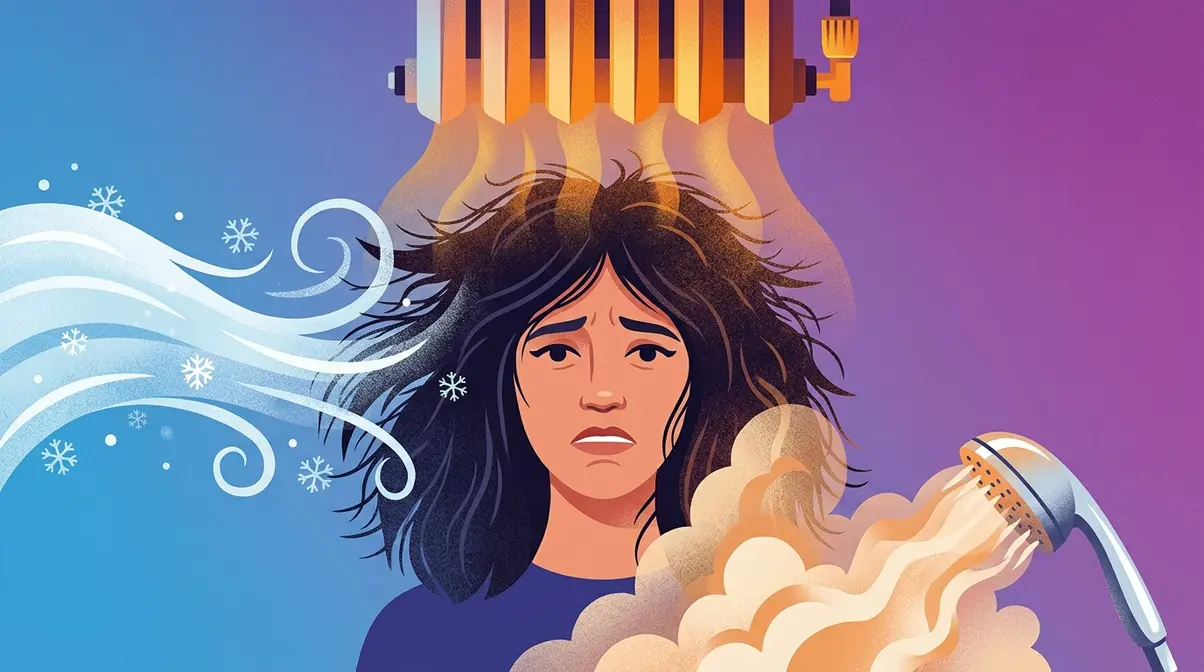
Winter doesn’t damage your hair through one single cause — it damages it through three forces hitting at the same time. Hair care professionals call this kind of compounding stress cumulative weathering, and it’s the reason your hair can feel perfectly healthy in September and completely unmanageable by December.
Understanding these three forces is the foundation of everything that follows. Once you see the pattern, the fixes make immediate sense.
The Winter Hair Weathering Cycle is the name for this three-part damage loop: cold outdoor air strips moisture from your hair cuticle, indoor heating evaporates what little moisture remains, and hot showers wash away your scalp’s natural protective oils — leaving your hair progressively more vulnerable with each passing week. Breaking any one link in this cycle gives your hair a chance to recover.
Cold Air and Low Humidity Strip Your Hair’s Moisture
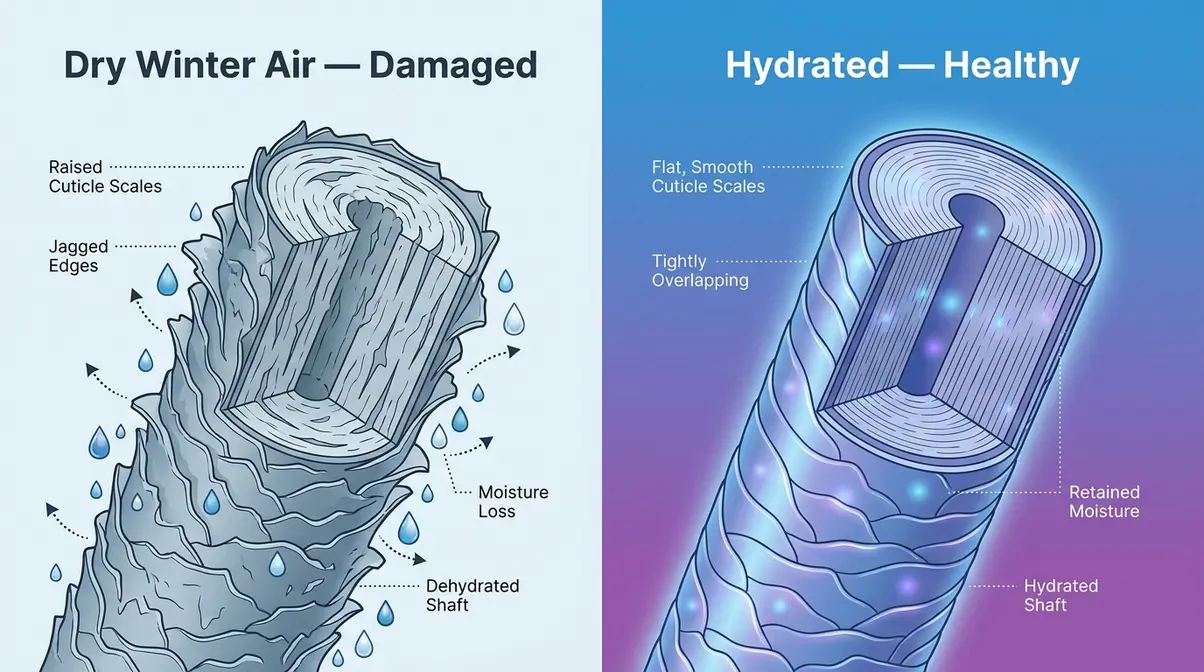
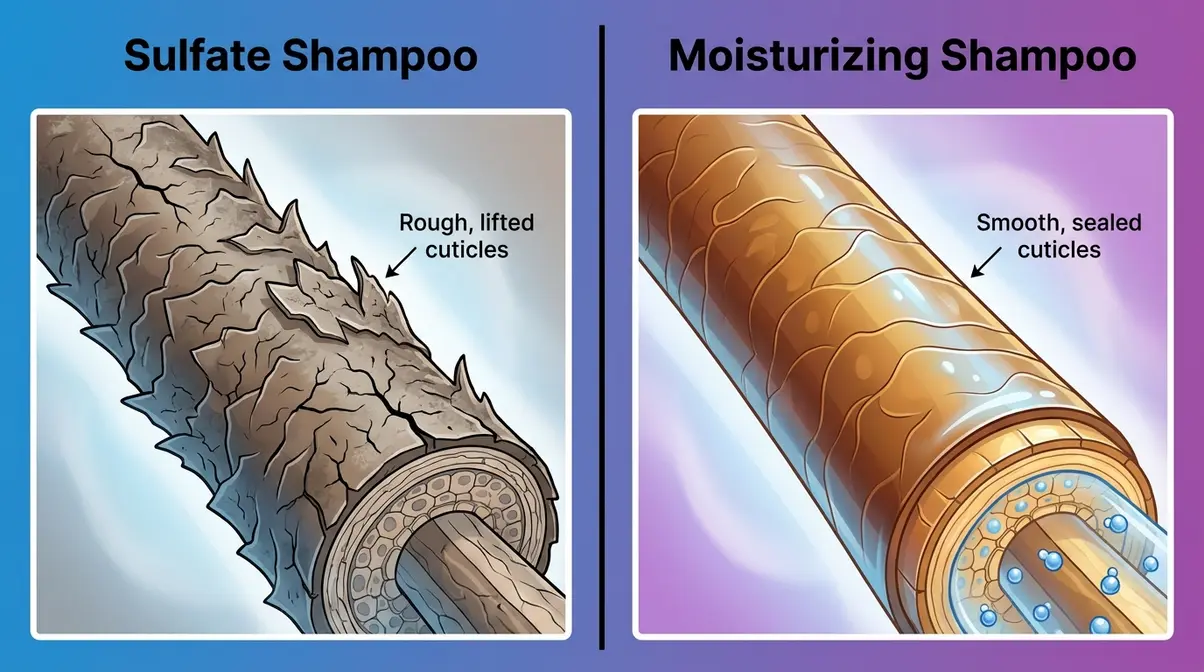
Your hair shaft is covered by a protective outer layer called the cuticle — tiny, overlapping scales that lie flat when your hair is healthy and hydrated. When the air outside is cold and dry, those scales lift up as moisture escapes, leaving your hair rough, porous, and prone to breakage.
Outdoor humidity in winter commonly drops below 30% in many parts of the US and Europe — well below the 50–60% level that hair needs to maintain its moisture balance (American Academy of Dermatology, 2024). At low humidity, your hair actually loses water to the surrounding air through a process called osmotic diffusion — moisture moves from where it’s concentrated (inside your hair shaft) to where it isn’t (the dry winter air around you). The result is the dry, brittle hair and split ends you’ve probably noticed by mid-January.
Research from the Journal of Cosmetic Science confirms that repeated cycles of moisture loss and re-absorption physically weaken the hair shaft over time, making it more likely to snap under everyday stress like brushing or styling. This means the damage isn’t just cosmetic — it’s structural.
Indoor Heating Makes the Problem Worse
Here’s the part most winter hair guides skip entirely: the indoor heating you rely on to stay warm is actively drying out your hair. Central heating, radiators, and forced-air systems all reduce indoor humidity — sometimes to levels as low as 10–20%, drier than the Sahara Desert (Consumer Reports, 2023).
When you move from cold outdoor air into a heated room, your hair goes from one dry environment straight into another. The heat from radiators and vents also raises the temperature around your hair, accelerating moisture evaporation from the shaft. Trichologists — hair and scalp specialists — note that this indoor-outdoor cycle of temperature and humidity swings is one of the primary drivers of hygral fatigue, the weakening of hair fibers caused by repeated swelling and shrinking as moisture levels fluctuate.
The fix isn’t to freeze — it’s to restore indoor humidity, which is why a bedroom humidifier (covered in Tip 7) is one of the most underrated winter hair care investments you can make.
Static, Frizz, and ‘Hat Hair’ — The Friction Factor
Static electricity in hair is a direct result of low humidity. When the air is dry, electrons can’t dissipate normally — instead, they build up on your hair strands, causing them to repel each other and stand on end. Hair care professionals note that fine hair is especially prone to static because it has less mass to weigh strands down.
Wearing a hat compounds the problem through friction. As you pull a wool or synthetic hat on and off, it rubs against your hair and generates additional static charge — plus physical breakage along the hairline and crown. This is the root cause of that flat, frizzy, broken-looking “hat hair” so many people experience in winter.
The Cleveland Clinic’s guidance on winter hair care recommends lining your hats with silk or satin fabric, which creates far less friction than wool or cotton. A leave-in conditioner or lightweight serum applied before putting on your hat also creates a protective barrier between your hair and the fabric.
8 Winter Hair Care Tips to Keep Your Hair Healthy
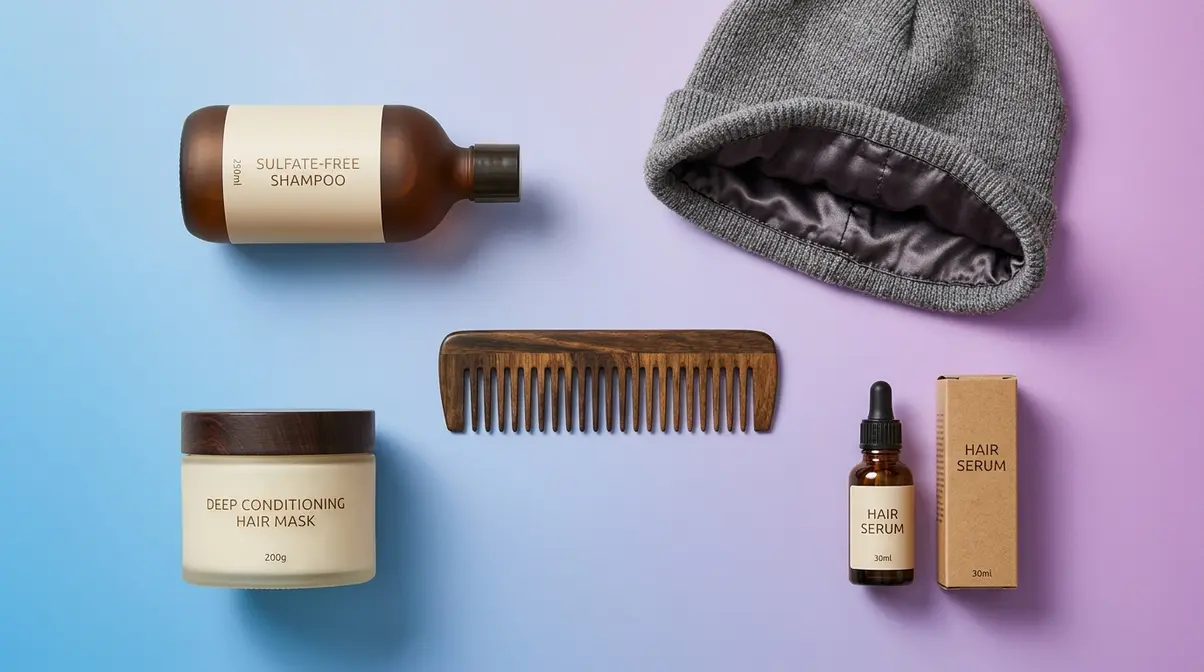
These 8 tips directly target each link in The Winter Hair Weathering Cycle. You don’t need to implement all of them at once — even starting with two or three will make a noticeable difference within a few weeks.
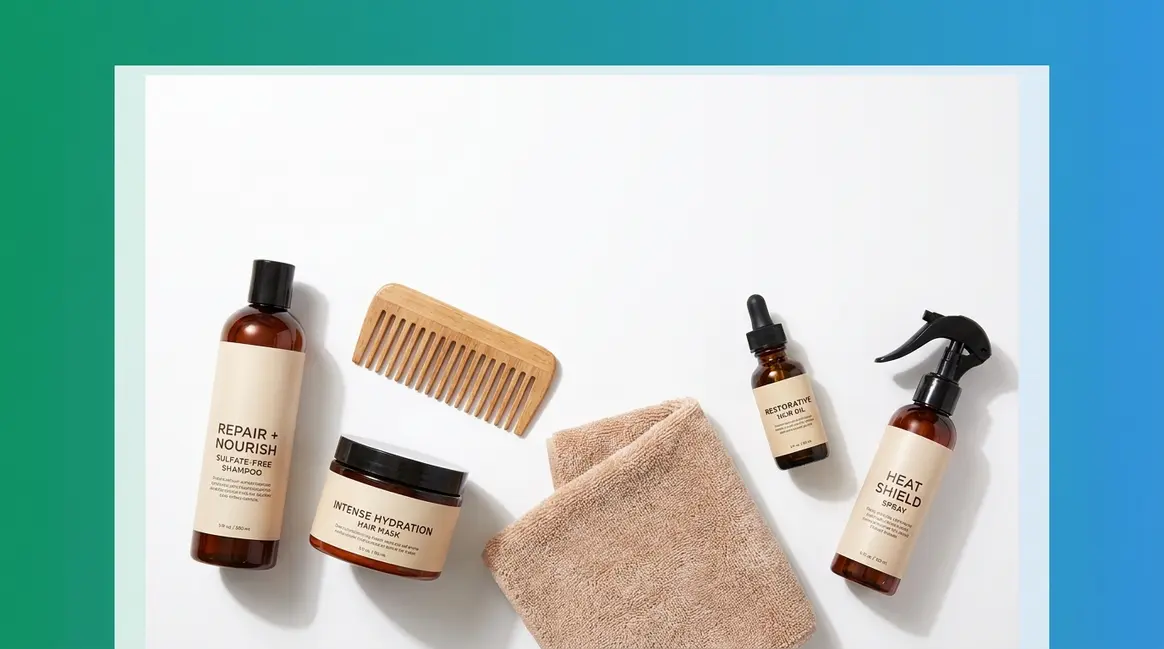
- What You’ll Need Before You Start:
- A moisturizing or sulfate-free shampoo and conditioner
- A deep conditioning mask (weekly use)
- A leave-in conditioner or lightweight hair serum
- A wide-tooth comb
- Optional: a humidifier, silk pillowcase, silk hat lining
Tip 1: Switch to a Moisturizing Shampoo and Conditioner
The shampoo and conditioner you use in summer may not be right for winter. Many standard shampoos contain sulfates — detergent-like cleansing agents that strip not just dirt but also your hair’s natural oils. In summer, that’s manageable. In winter, when your hair is already losing moisture to cold air and indoor heating, sulfates accelerate the damage.
Hair care professionals recommend switching to a sulfate-free, moisturizing formula for the winter months. Look for ingredients like glycerin (a humectant — an ingredient that draws moisture into the hair shaft), shea butter, argan oil, or keratin. These form a light coating over the cuticle that seals in moisture and smooths down those lifted scales.
The Native Moisturizing Shampoo and Conditioner is a solid sulfate-free option for daily use, and the L’Oréal Paris Elvive Extraordinary Oil Conditioner works well as a lightweight moisture boost for fine hair. Apply conditioner from mid-lengths to ends — not the scalp — to avoid weighing down roots.
Tip 2: Deep Condition Your Hair Every Week
If you do only one thing differently this winter, make it this: deep condition once a week. A deep conditioner (sometimes called a hair mask) is a concentrated treatment that penetrates further into the hair shaft than a regular rinse-out conditioner, replenishing the lipids and proteins that cold, dry air strips away.
A trichologist quoted in The New York Times noted that weekly deep conditioning is the single most effective maintenance treatment for preventing winter breakage, particularly for color-treated or chemically processed hair, which is already more porous and vulnerable to moisture loss.
- How to deep condition properly:
- Shampoo your hair as normal and gently squeeze out excess water.
- Apply the mask generously from roots to ends (or mid-lengths to ends if your scalp is oily).
- Cover with a shower cap or warm towel for 20–30 minutes — the warmth helps the treatment penetrate deeper.
- Rinse thoroughly with cool water to seal the cuticle.
The Kitsch Coconut & Argan Oil Hair Mask and MAREE Hydrating Hair Mask are both strong choices for this weekly ritual — the Kitsch mask suits most hair types, while the MAREE formula is especially effective for dry, color-treated hair. The Keratin Hair Mask Deep Conditioning Treatment is worth trying if frizz is your primary concern, as it temporarily fills gaps in the cuticle for a smoother finish.
Tip 3: Wash Your Hair Less Often
“In cold weather I usually try to wash it as less as possible.”
— Reddit user, r/longhair community discussion on winter long hair care
This instinct is exactly right — and there’s solid science behind it. Every time you wash your hair, you remove some of your scalp’s natural sebum — the protective oil your scalp produces to keep hair moisturized and the cuticle sealed. In summer, slightly oily roots can feel uncomfortable. In winter, that sebum is your hair’s primary natural defense against moisture loss.
Dermatologists generally recommend washing hair no more than 2–3 times per week in winter for most hair types, and even less frequently — once or twice a week — for dry, coily, or chemically treated hair (American Academy of Dermatology, 2024). Between washes, a dry shampoo applied lightly at the roots can absorb excess oil without stripping the lengths.
One important note: if you have a flaky or itchy scalp, washing less can sometimes worsen symptoms by allowing dead skin cells to build up. In that case, focus on using a gentler, more hydrating shampoo rather than reducing frequency dramatically.
Tip 4: Say Goodbye to Scalding Hot Showers
A long, steaming-hot shower on a freezing morning feels wonderful — but it’s one of the fastest ways to damage your hair in winter. Hot water raises the temperature of the hair shaft and forces the cuticle scales open, allowing moisture to escape rapidly. It also strips the scalp’s sebum far more aggressively than lukewarm water.
The American Academy of Dermatology specifically advises washing hair with lukewarm — not hot — water, and finishing with a brief cool rinse. The cool rinse actively closes the cuticle scales, locking in your conditioner’s moisture and leaving hair shinier and smoother. Hair care professionals describe this as one of the simplest, zero-cost changes with an immediate visible result.
The practical approach: Turn the water temperature down by just a few degrees. You don’t need a cold shower — lukewarm is enough. Then, in the final 15–20 seconds, turn it as cool as you can comfortably tolerate for a final rinse. Your hair will feel the difference within a week.
Tip 5: Protect Your Hair Before Going Outside
Going outside in winter without protecting your hair is the equivalent of skipping sunscreen in summer. Cold air, wind, and friction from scarves and hat fabric all damage the cuticle — and once you’re outside, there’s little you can do until you get back indoors.
- Before stepping outside, try these protective steps:
- Apply a small amount of leave-in conditioner or the Matrix Total Results Frizz Control Serum to damp or dry hair, focusing on ends.
- Put your hair up in a loose braid, bun, or low ponytail — protective styles reduce the surface area exposed to cold air and minimize wind-driven tangling.
- Wear a hat — but choose one lined with silk or satin rather than wool or cotton. The Cleveland Clinic recommends silk and satin linings specifically because they reduce friction and static compared to rougher fabrics.
If you can’t find a silk-lined hat, a simple workaround is to wear a thin silk or satin scarf under your hat — the same principle applies.
Tip 6: Let Your Hair Air Dry When You Can
Heat styling — blow-drying, flat-ironing, curling — adds thermal stress on top of the environmental stress your hair is already experiencing in winter. Hair care professionals recommend reducing heat tool use during the colder months wherever possible, and prioritizing air drying instead.
The key is planning ahead. If you wash your hair in the evening, it can air dry overnight while you sleep on a silk pillowcase (which reduces friction compared to cotton). If you need to dry your hair quickly in the morning, use your blow-dryer on the cool or low heat setting with a heat-protectant product applied first.
When you do use heat tools, keep the temperature below 350°F (175°C) — evidence from cosmetic science research suggests that hair protein begins to degrade at temperatures above this threshold, causing irreversible structural damage over time (International Journal of Cosmetic Science, 2023).
Tip 7: Add a Humidifier to Your Bedroom
This is the most underused winter hair tip — and one of the most effective. Because indoor heating can drop your home’s humidity to as low as 10–20%, the air in your bedroom is actively pulling moisture from your hair while you sleep. You spend roughly 7–8 hours in that environment every night.
A bedroom humidifier set to maintain 40–50% relative humidity counteracts this effect directly. Consumer Reports recommends ultrasonic cool-mist humidifiers for bedroom use — they’re quiet, energy-efficient, and don’t create the warm, damp conditions that can encourage mold growth. Place it within a few feet of where you sleep for maximum effect.
Beyond your hair, maintaining proper indoor humidity also benefits your scalp, skin, and respiratory health — making it one of the highest-return winter wellness investments you can make.
Tip 8: Trim Your Ends Every 6–8 Weeks
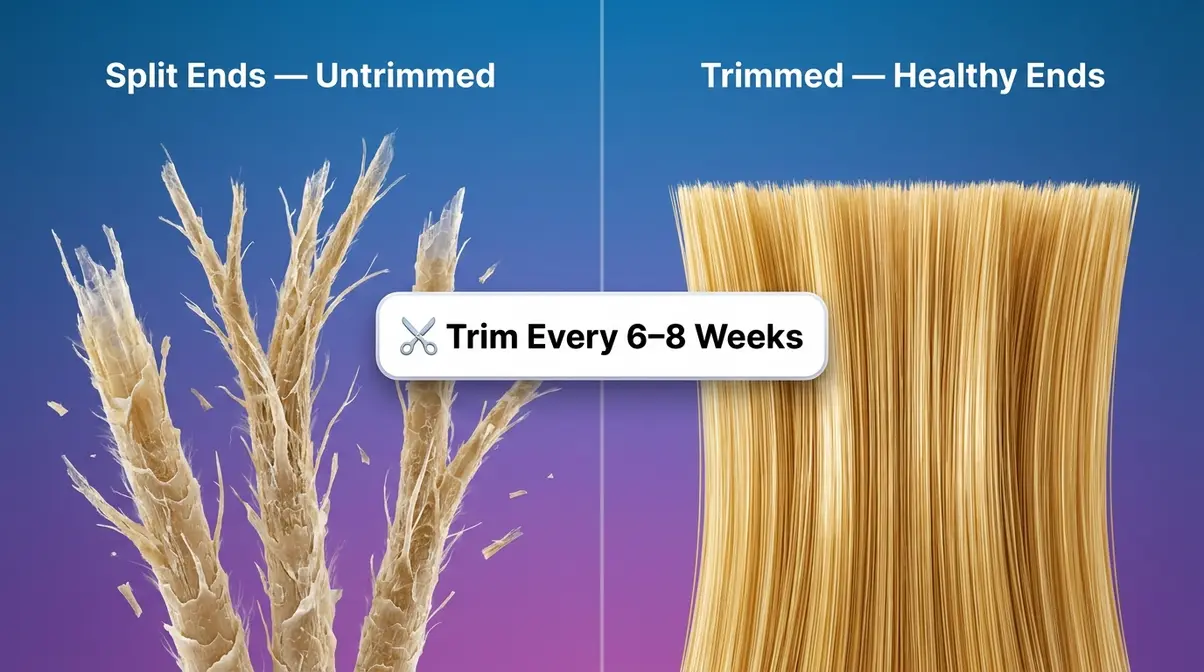
Split ends are not just a cosmetic issue. When a hair shaft splits at the end, the split travels upward along the strand if left untrimmed — a process called trichoptilosis. In winter, when hair is already weakened by moisture loss, split ends spread faster than in other seasons.
Regular trims — every 6 to 8 weeks — remove the damaged ends before the split can travel further up the shaft. This doesn’t mean losing length: a dusting (trimming just 1/4 inch or less) is enough to remove split ends while preserving length. Hair care professionals consistently recommend this as part of a seasonal maintenance routine, particularly for those who use heat tools or color their hair.
If you’ve noticed your hair looking increasingly dull and “frayed” at the ends through winter, a trim may be the single fastest way to restore a healthy appearance while your moisture routine works on the deeper structural issues.
Natural Home Remedies for Winter Hair Dryness
Not everyone wants to buy a new product every season — and the good news is that some of the most effective winter hair treatments are already in your kitchen. Hair care professionals acknowledge that certain natural ingredients have strong evidence behind them, particularly for moisture restoration and scalp health.
These remedies work best as supplements to your regular routine, not replacements for it. Think of them as a monthly boost on top of your weekly deep conditioning.
Coconut Oil Deep Conditioning Mask
Coconut oil is one of the most researched natural hair care ingredients. Unlike most oils, which coat the outside of the hair shaft, coconut oil’s medium-chain fatty acids — particularly lauric acid — are small enough to penetrate inside the hair shaft itself. A study published in the Journal of Cosmetic Science found that coconut oil significantly reduced protein loss in both damaged and undamaged hair, outperforming mineral oil and sunflower oil as a pre-wash treatment.
- How to use it:
- Warm 2–3 tablespoons of unrefined coconut oil between your palms until it melts.
- Apply from mid-lengths to ends (avoid the scalp if you’re prone to oiliness).
- Cover with a shower cap and leave on for 30–60 minutes — or overnight for very dry hair.
- Shampoo out thoroughly (you may need two rounds of shampoo).
- Follow with your regular conditioner.
Use this mask once or twice a month for best results. More frequent use can sometimes cause product buildup, particularly for fine hair.
Apple Cider Vinegar Scalp Rinse
An itchy, flaky scalp is one of the most common winter complaints — and apple cider vinegar (ACV) is a surprisingly effective remedy. Your scalp’s natural pH is slightly acidic, around 4.5–5.5. Many shampoos are more alkaline, which can disrupt this balance and lead to dryness and irritation. An ACV rinse restores that acidic pH, which helps calm the scalp and smooth the cuticle.
For a fuller guide on using ACV safely for scalp care, check our detailed guide on apple cider vinegar hair rinses — including the right dilution ratios and how often to use it for different scalp types.
- Basic ACV rinse recipe:
- Mix 2 tablespoons of raw apple cider vinegar with 1 cup of cool water.
- After shampooing and conditioning, pour the mixture over your scalp and hair.
- Leave on for 1–2 minutes, then rinse thoroughly with cool water.
Use once a week maximum. Always dilute ACV — undiluted application can cause scalp irritation.
Eat Your Way to Healthier Winter Hair
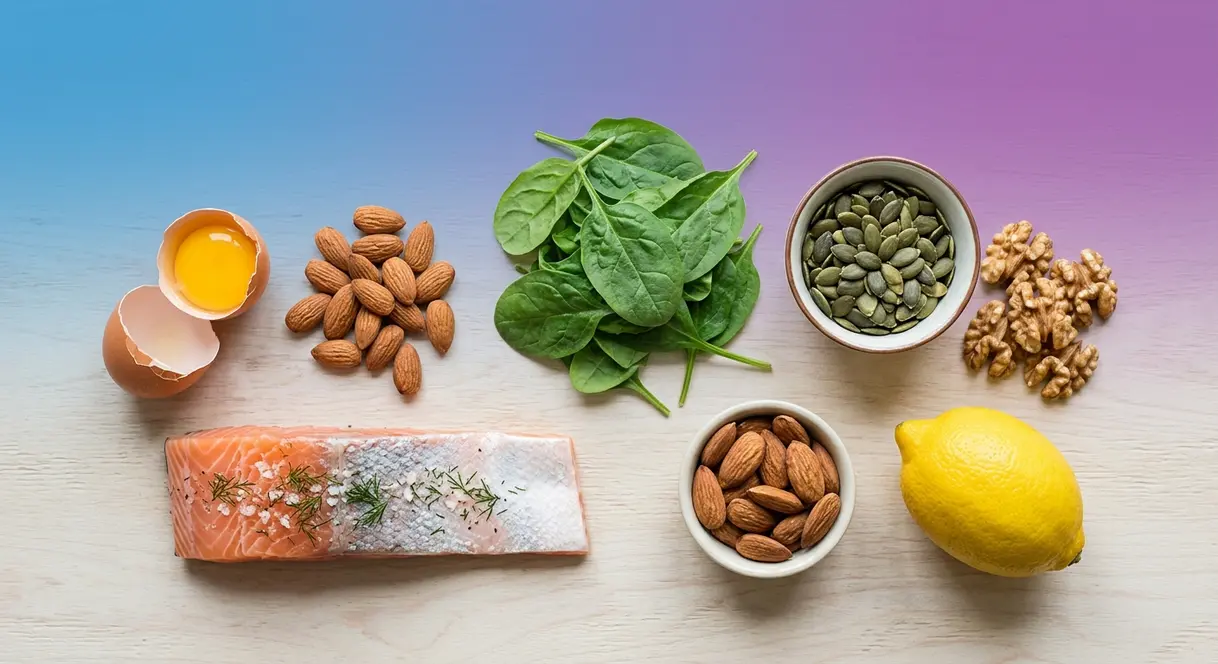
What you eat directly affects your hair’s structure and growth cycle. Hair follicles are among the most metabolically active cells in the body — they need a steady supply of specific nutrients to produce strong, healthy strands.
The nutrients most closely linked to hair health include:
| Nutrient | Role | Best Food Sources |
|---|---|---|
| Biotin (Vitamin B7) | Supports keratin production | Eggs, almonds, sweet potato |
| Omega-3 Fatty Acids | Reduces scalp inflammation, adds shine | Salmon, walnuts, flaxseed |
| Iron | Carries oxygen to hair follicles | Spinach, lentils, red meat |
| Zinc | Supports hair tissue growth and repair | Pumpkin seeds, chickpeas, oysters |
| Vitamin D | Linked to hair follicle cycling | Fatty fish, fortified foods, sunlight |
Research published in Dermatology Practical & Conceptual (2023) found that deficiencies in iron, zinc, and biotin are among the most common nutritional contributors to increased hair shedding — and these deficiencies are more likely to develop or worsen in winter due to reduced sun exposure (Vitamin D) and changes in diet. If you’re concerned about hair fall, a blood test to check these levels is a practical first step before adding supplements.
Winter Hair Care Tips for Your Hair Type
The Winter Hair Weathering Cycle affects everyone — but it doesn’t affect everyone equally. Your hair’s natural texture, density, and porosity determine exactly which problems hit hardest and which solutions work best.
Fine Hair in Winter
Fine hair loses moisture quickly because each strand has a smaller diameter and less structural mass to hold onto water. Static is also a bigger problem — fine strands have less weight to keep them grounded. However, fine hair can easily become limp and greasy with heavy moisturizing products.
- What works for fine hair:
- Choose a lightweight, volumizing moisturizing shampoo — avoid anything labeled “rich” or “intense moisture”
- Use a light leave-in conditioner spray rather than a cream
- The L’Oréal Paris Elvive Extraordinary Oil Conditioner is specifically formulated for fine hair — it adds moisture without the weight
- Apply a tiny amount of anti-frizz serum (like the Matrix Total Results Frizz Control Serum) to ends only
- Avoid heavy masks more than once every two weeks — buildup can flatten fine hair
For a complete routine tailored specifically to fine hair in winter, see our fine hair care guide.
Curly and Coily Hair in Winter
Curly and coily hair is naturally more prone to dryness year-round because the bends and coils in the strand make it harder for scalp oils to travel down the full length of the hair. In winter, this challenge is amplified significantly.
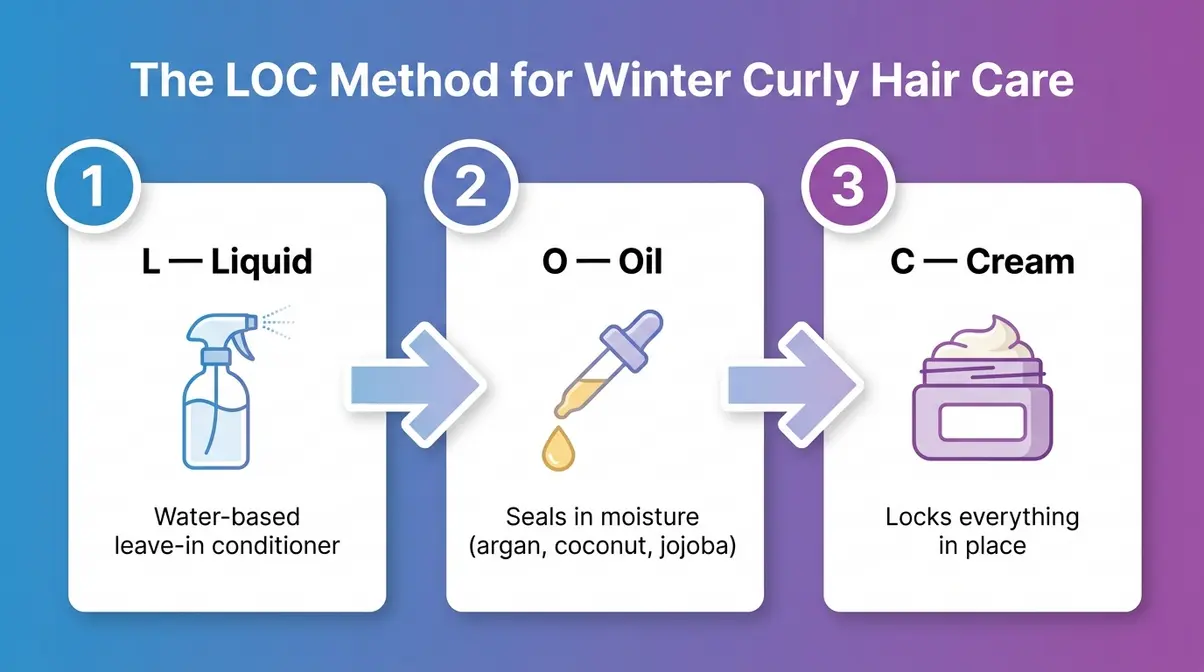
Hair care professionals recommend the LOC method (Liquid, Oil, Cream) for curly and coily hair in winter — applying a water-based leave-in conditioner first (liquid), then an oil to seal it in, then a cream to lock everything down. This layering approach dramatically slows moisture loss between wash days.
Protective styles — braids, twists, buns — are especially valuable for coily hair in winter because they minimize the surface area exposed to cold, dry air. Keep styles loose enough to avoid tension on the hairline.
Color-Treated Hair in Winter
Color-treated hair is more porous than virgin hair because the coloring process opens the cuticle to deposit or remove pigment. More porous hair loses moisture faster — meaning color-treated hair is at significantly higher risk of winter damage.
Trichologists advise that color-treated hair needs weekly deep conditioning as a non-negotiable, not an occasional treat. The MAREE Hydrating Hair Mask is a strong choice here — its formula is designed specifically for chemically processed hair. Avoid clarifying shampoos entirely during winter, as these are even more stripping than regular sulfate formulas.
Also avoid going outside with wet color-treated hair in freezing temperatures. Wet hair is more elastic and more fragile — freezing wet hair causes ice crystals to form inside the shaft, which can cause breakage. Always dry your hair before heading out in sub-freezing conditions.
For a deeper dive into protecting color-treated hair through the colder months, our color-treated hair care guide covers everything from toning to heat protection.
Thick and Coarse Hair in Winter
Thick and coarse hair has a larger diameter per strand, which means it takes longer to dry — but it also holds onto moisture better than fine or medium hair. The main winter challenge for thick hair is dryness along the lengths and ends, and difficulty managing frizz.
Heavier moisturizing products — creams, butters, and richer masks — work well for thick hair without the risk of limpness that fine hair faces. Focus deep conditioning treatments on the mid-lengths and ends, where dryness is most pronounced. A wide-tooth comb (rather than a brush) when detangling wet hair prevents breakage along the length.
Common Mistakes to Avoid (And How to Fix Them)
Even with the best intentions, certain habits can undo your winter hair care efforts. Hair care professionals consistently flag these as the most common mistakes they see during the colder months.
Common Pitfalls
1. Using the wrong hat material. Wool and synthetic hats generate friction and static. Switching to a silk-lined hat — or placing a thin satin scarf under your hat — removes one of the most consistent sources of winter breakage. This fix costs almost nothing and takes 30 seconds.
2. Over-conditioning the scalp. Applying deep conditioner directly to the scalp can block follicles and cause product buildup, which sometimes leads to increased shedding and an itchy scalp. Apply mask and conditioner from mid-lengths to ends only, unless a product is specifically formulated for scalp use (like a scalp serum).
3. Brushing dry, static-charged hair. Brushing dry hair in winter when it’s full of static makes the problem dramatically worse. Lightly mist hair with a water-based leave-in spray before brushing, and use a wide-tooth comb rather than a bristle brush when hair is dry and prone to static.
4. Skipping heat protection because you’re “using less heat.” Even occasional heat styling in winter can cause damage when hair is already compromised. A heat-protectant spray takes five seconds to apply and provides meaningful protection at temperatures up to 450°F.
5. Expecting overnight results. Hair grows approximately half an inch per month. Repairing existing damage takes time — typically 4–8 weeks of consistent routine before you notice significant improvement in texture and manageability. The key is consistency, not intensity.
When to Choose Alternatives
Standard over-the-counter moisturizing products may not be enough if you’re experiencing significant hair shedding (more than 100–150 strands per day), large patches of scalp dryness, or persistent itching that doesn’t respond to gentle shampoos and ACV rinses. These symptoms can indicate underlying conditions like seborrheic dermatitis, telogen effluvium (stress-related shedding), or nutritional deficiency — all of which require different approaches than standard winter hair care.
In these cases, a dermatologist or trichologist will be more effective than any product switch. The John Frieda winter hair care resource and Head & Shoulders’ scalp care guidance are also useful starting points for identifying whether your symptoms align with common seasonal issues or something that needs professional attention.
When to Seek Expert Help
If you’ve followed a consistent winter hair care routine for 8–10 weeks without improvement in scalp symptoms, or if you’re experiencing noticeable thinning or shedding beyond normal seasonal variation, book an appointment with a board-certified dermatologist. The Hair Club’s overview of winter hair care routines includes a helpful checklist for distinguishing normal seasonal dryness from symptoms that warrant clinical evaluation. A single consultation can save months of trial-and-error with products.
Frequently Asked Questions
How do I keep my hair healthy in winter?
Keeping your hair healthy in winter comes down to three core habits: moisturize consistently, reduce washing frequency, and protect your hair from friction and cold air before going outside. Switch to a sulfate-free, moisturizing shampoo and conditioner, deep condition weekly, and use a leave-in conditioner or serum before putting on a hat. Washing 2–3 times per week (or less for dry hair types) preserves your scalp’s natural oils. For most people, these three changes alone produce noticeable improvement within 3–4 weeks of consistent use.
Why is my hair so bad in winter?
Winter damages hair through three compounding forces — The Winter Hair Weathering Cycle — working simultaneously. Cold outdoor air drops humidity below 30%, causing the hair cuticle to open and release moisture. Indoor heating drops humidity even further, sometimes to 10–20%, evaporating what little moisture remains. Hot showers then strip the scalp’s protective oils completely. Research from the Journal of Cosmetic Science confirms that repeated moisture-loss cycles weaken the hair shaft structurally over time (Journal of Cosmetic Science, 2023). The result is the dry, frizzy, brittle hair most people experience by mid-winter.
Can cold weather cause an itchy scalp?
Yes — cold weather is a common trigger for an itchy scalp, though the mechanism isn’t the cold itself but rather the dry air that comes with it. Low humidity dries out the scalp’s skin barrier, causing flaking, tightness, and itching. Indoor heating worsens this by removing even more moisture from the air. The American Academy of Dermatology notes that seborrheic dermatitis — a chronic scalp condition — often flares in winter due to these same conditions (AAD, 2024). An apple cider vinegar rinse, a gentle moisturizing shampoo, and a humidifier can relieve mild symptoms. Persistent or severe itching with visible red patches warrants a dermatologist visit.
Which foods help stop hair fall in winter?
Foods rich in iron, biotin, zinc, and omega-3 fatty acids are most directly linked to reducing hair fall. Iron deficiency is one of the most common nutritional causes of increased shedding — good sources include spinach, lentils, and red meat. Biotin (found in eggs and almonds) supports keratin production, the protein hair is made of. Omega-3 fatty acids from salmon, walnuts, and flaxseed reduce scalp inflammation, which can contribute to shedding. Research published in Dermatology Practical & Conceptual (2023) found that iron, zinc, and Vitamin D deficiencies are particularly common contributors to winter hair loss. A blood panel checking these levels is the most reliable starting point before adding supplements.
How do you prevent hat hair?
Hat hair is caused by two things: friction and static, both of which can be significantly reduced with the right approach. First, choose a hat lined with silk or satin rather than wool or cotton — smooth fabrics generate far less friction against the hair shaft. Second, apply a light leave-in conditioner or anti-frizz serum before putting your hat on to create a protective barrier. Third, style your hair in a loose braid or low bun before wearing a hat — this protects the structure of your style underneath. When you remove your hat, a quick spritz of water-based leave-in spray and gentle finger-combing restores shape without brushing-induced static.
Give Your Hair the Winter Protection It Deserves
Winter hair damage is not inevitable. The Winter Hair Weathering Cycle — cold air, indoor heating, and hot showers working together — is the real culprit behind the dry, frizzy, brittle hair most people experience between November and March. But because it’s a cycle, breaking even one link in it gives your hair a genuine chance to recover. Switch your shampoo, deep condition weekly, turn down the shower temperature — any one of these steps starts to shift the balance in your hair’s favor.
The 8 tips in this guide are designed to address that cycle systematically. You don’t need to overhaul your entire routine at once. Start with the two or three tips that match your biggest current problem — frizz, breakage, itchy scalp, or hat hair — and build from there. Consistency over 4–6 weeks will produce more visible results than any single intensive treatment.
Your next step: pick up a sulfate-free moisturizing shampoo and a deep conditioning mask, and commit to one weekly deep conditioning session for the next month. That single habit, applied consistently, is the foundation every other winter hair care tip builds on — and it’s the fastest path from frustrated to confident about your hair this season.
For more seasonal hair advice, explore our complete hair care library — including guides on scalp care, heat protection, and hair growth.
Dealing with frizz beyond winter? Our year-round frizz control guide covers the best techniques and products for every season.
New to hair masks? Our beginner’s guide to hair masks explains how to choose the right formula for your hair type and how often to use it.

Dave King
Writes evidence-based hair-care guides for Care About Your Hair — for every hair type, jargon-free and independent.