 Dave King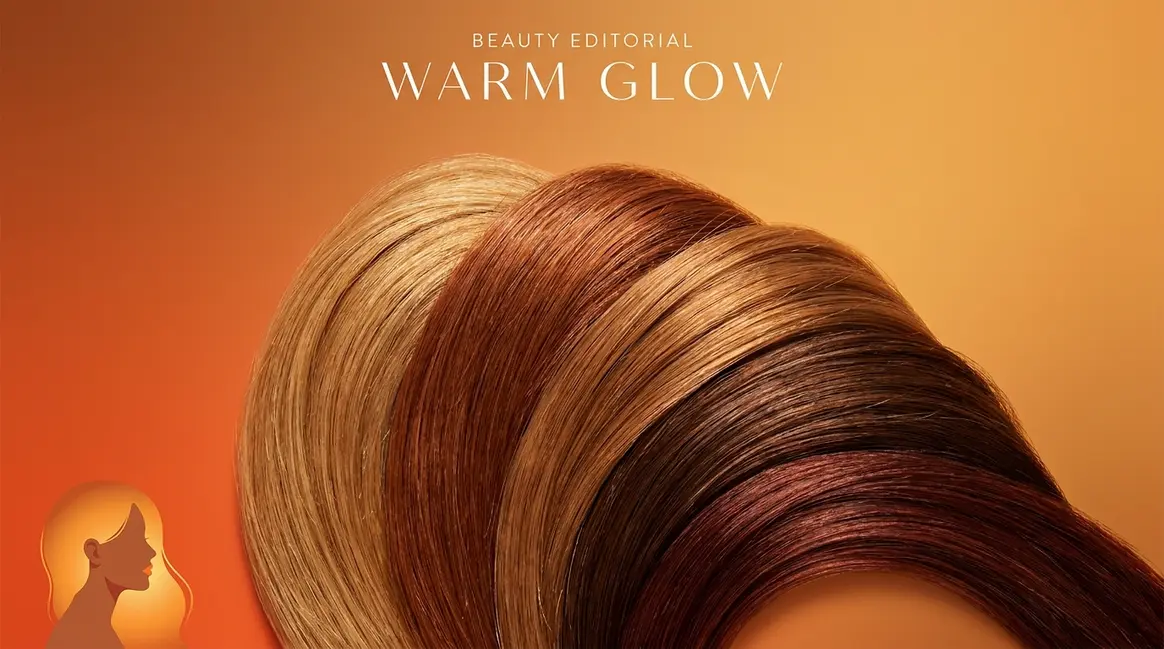
If you’ve ever typed “best hair colour for my skin tone” into a search bar and walked away more confused than when you started, you are not alone.
“Hi! Just looking for advice since I’ve found conflicting things on Pinterest and Google.”
That single sentence captures exactly what so many warm-skinned readers feel. One source says go honey blonde. Another says try auburn. A third pushes balayage with zero explanation of why any of it works for your complexion. One wrong shade can drain your complexion of life — and that’s a mistake that takes months to grow out.
By the end of this guide, you’ll know exactly which hair colours for warm skin tone flatter you most, which shades to avoid, and how to choose based on your specific eye colour and skin depth. We’ll cover five areas: how to identify your undertone, the 15 best shades, a visual colour chart, personalised advice by eye colour and ethnicity, and essential colouring technique tips.
Choosing hair colours for warm skin tone means matching warm-toned shades — golden, caramel, auburn, copper — to your natural peachy or golden undertones. Over 60 million Americans colour their hair at home (Statista, 2024), yet most choose shades without a system.
- The Tone-Match Triangle identifies three factors: undertone alignment, skin depth, and eye colour contrast
- Best warm blonde: Honey blonde and golden blonde — avoid ash or platinum
- Best warm brown: Caramel, chestnut, and chocolate brown — rich, not flat
- Best warm red: Auburn and copper — the most universally flattering on warm skin
- One golden rule: Stay within two shades of your natural colour for the safest result
What Is a Warm Skin Tone? (And How to Find Yours)
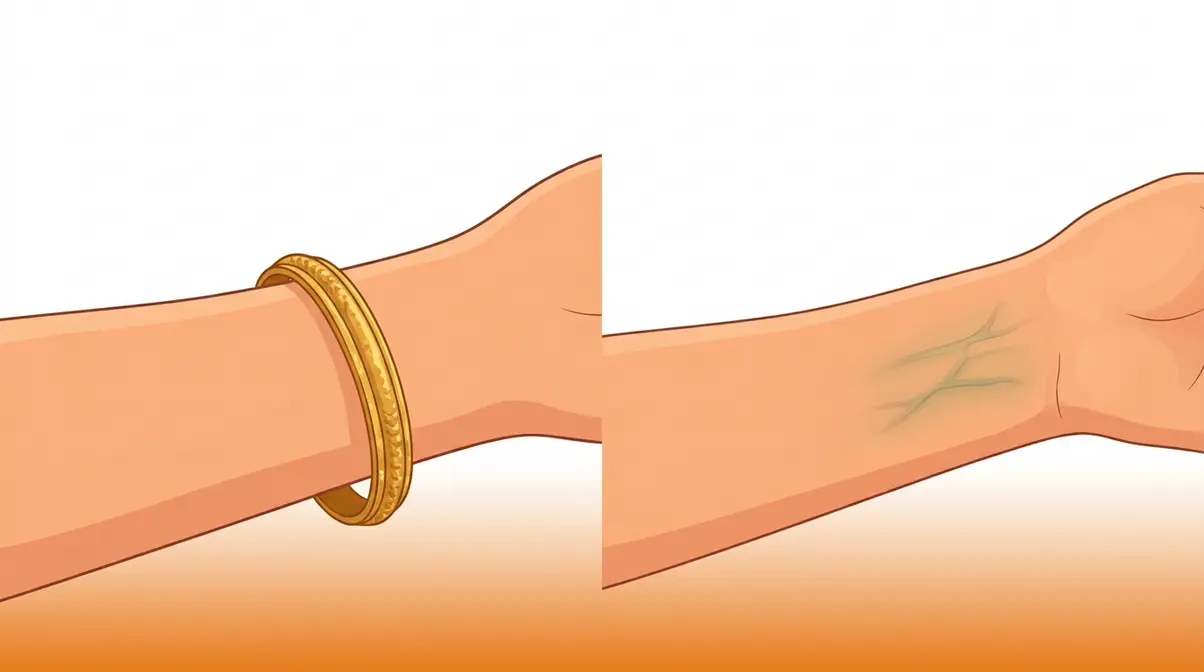
Warm skin tone is one of the most searched beauty terms online — and one of the most misunderstood. Before you choose a single hair shade, you need to know whether you actually have warm undertones, because the same honey blonde that glows on warm skin can look flat and muddy on cool skin. This section gives you the tools to find out in under five minutes, at home, for free.
Warm, Cool, and Neutral: What’s the Difference?
Your skin’s surface colour — whether you’re fair, medium, or deep — is called your complexion or skin depth. But underneath that surface sits something different: your undertone, the subtle hue that influences how colours interact with your skin.
There are three undertone categories:
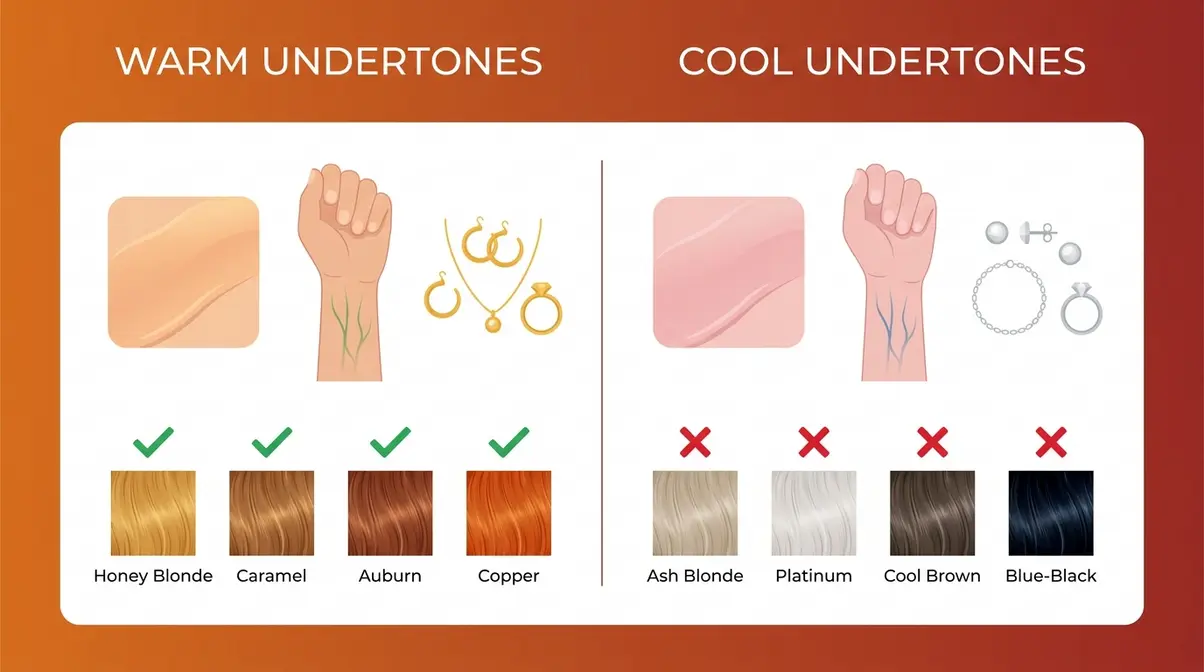
- Warm undertones (the golden, peachy, or yellow hues beneath your skin’s surface) mean your skin has a natural warmth. Think of the glow of late-afternoon sunlight on skin — that’s warm.
- Cool undertones (which carry pink, red, or bluish hues) give skin a porcelain or rosy quality. Think of the clarity of morning light.
- Neutral undertones (a balanced mix of both warm and cool) sit comfortably between the two. Most shades work, but neither extreme is optimal.
For hair colour, the distinction matters enormously. Warm-toned hair shades — honey, caramel, auburn, copper — contain yellow, orange, or red pigment bases. When those pigments sit next to warm skin, they mirror and amplify the skin’s natural glow. Cool-toned shades — ash blonde, platinum, blue-black — carry blue or violet pigment bases. Against warm skin, those cool pigments create a visual clash that can make skin look sallow or washed out.
Certified colourists recommend identifying your undertone before choosing any hair shade, because even the right colour family (blonde, brown, red) contains both warm and cool variants (L’Oréal Paris, 2024).
The Vein Test and Jewellery Test
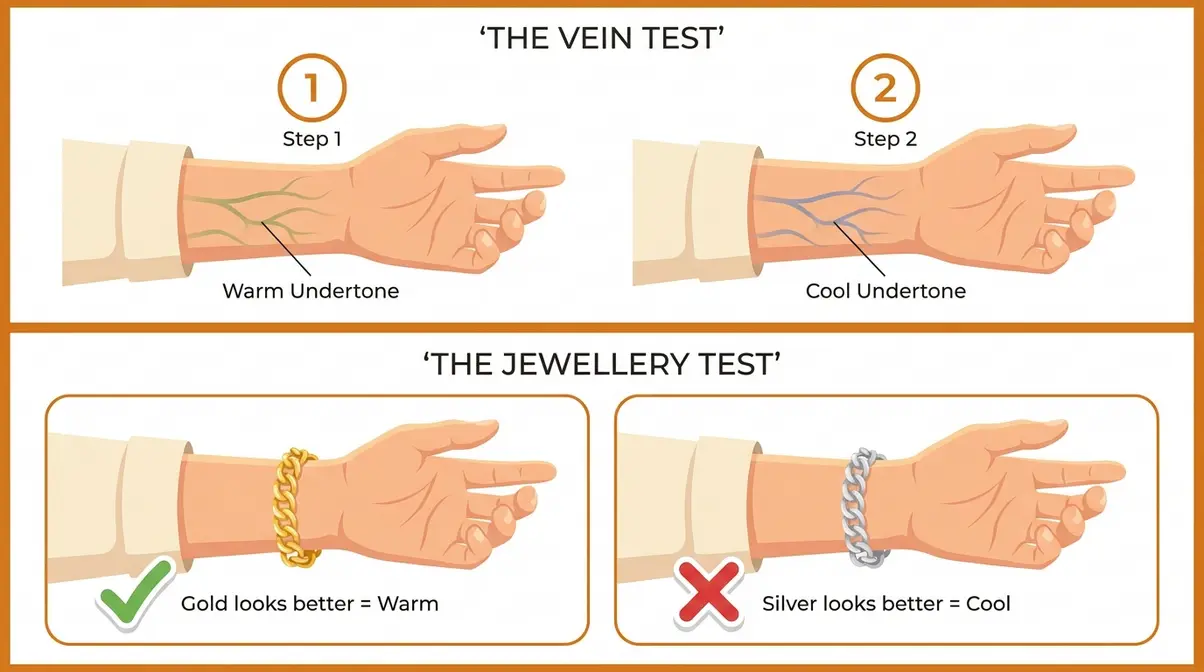
These two quick tests are the most reliable at-home methods for identifying your undertone. Certified colourists and dermatologists both recommend them as a starting point (Cleveland Clinic, 2023).
The Vein Test
- Find a well-lit area with natural daylight — artificial light distorts colour perception.
- Hold your inner wrist up and look at the veins running along it.
- Note the dominant colour of those veins.
- Greenish veins → warm undertones. Why? Oxygenated blood appears redder through yellow-toned skin, which makes the veins look green through the surface.
- Blue or purple veins → cool undertones. The pink or blue hues in cool skin shift the same blood colour toward the blue-violet spectrum.
- A mix of both → neutral undertones.
Why this matters: This isn’t an arbitrary trick. Research in human colour perception confirms that the visible tone of subcutaneous veins is directly influenced by the melanin and carotenoid composition of the overlying skin (University of Melbourne, 2021). In other words, the test works because of real biology.
The Jewellery Test
- Hold a piece of gold jewellery against your bare wrist in natural light.
- Then hold a piece of silver jewellery against the same spot.
- Notice which metal makes your skin look more alive, brighter, or healthier.
- Gold looks better → warm undertones.
- Silver looks better → cool undertones.
- Both look equally good → neutral undertones.
Why this matters: Gold’s warm yellow tones echo the golden or peachy hues in warm skin, creating a harmonious overall look. Silver’s cool metallic tone mirrors the pink or blue hues in cool skin. The contrast principle here is the same one that governs hair colour choice.
Why Undertones Matter When Choosing Hair Colour
“Warm undertones are characterised by peachy, yellow, or golden hues beneath the skin’s surface, often visible as greenish veins on the wrist” (Cleveland Clinic, 2023). That biological reality has a direct consequence for hair colour: shades that echo those warm hues will complement your skin, while shades that contradict them will compete with it.
This is the foundation of The Tone-Match Triangle — a three-point system for choosing hair colour. The three points are: undertone alignment (matching the warmth in your hair to the warmth in your skin), skin depth matching (choosing a shade intensity that suits your complexion’s lightness or darkness), and eye colour contrast (using your eye colour to add depth and dimension to the overall look). When all three points align, the result is a harmonious overall look that feels effortless and intentional.
The “golden rule” of hair colour — which we’ll expand on in the FAQ — is rooted in this same logic: stay within two shades of your natural colour to maintain undertone harmony. Straying too far outside that range increases the risk of choosing a shade that either washes you out or creates harsh, unnatural contrast.
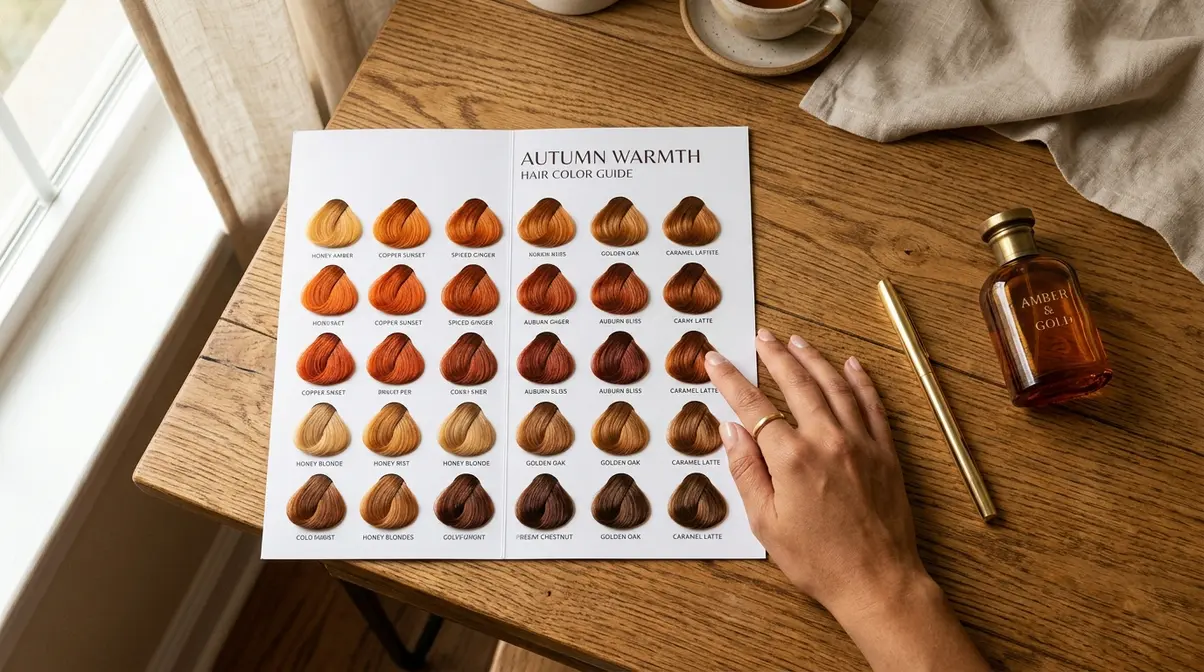
You’ll find the warm skin tone hair colour chart in a dedicated section further down — it maps all 15 shades to specific skin depths and eye colours.
Warm Skin Tone Characteristics at a Glance
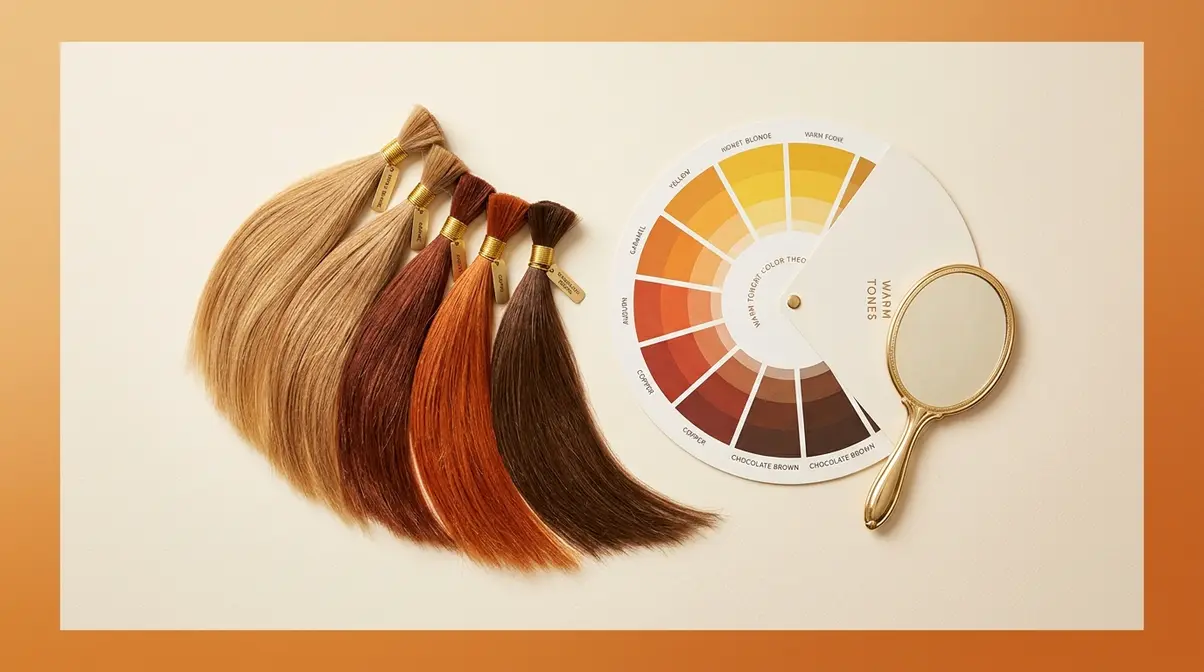
Not sure whether the tests above confirmed what you suspected? Here are the most common characteristics shared by people with warm undertones. You don’t need to tick every box — three or more is a strong indicator.
| Characteristic | Warm Undertone Signal |
|---|---|
| Vein colour | Greenish or olive-tinted |
| Jewellery preference | Gold flatters more than silver |
| Sun reaction | Tans easily, rarely burns |
| Natural hair colour | Golden blonde, warm brown, or black with red/gold tones |
| Eye colour | Brown, hazel, amber, or green |
| Blush/foundation shades | Peach, bronze, or golden tones suit better than pink |
| Skin descriptor | “Olive,” “golden,” “peachy,” or “sallow” |
Common concerns reported by users include confusion between “olive skin” and “warm undertones” — they often overlap but aren’t identical. Olive skin typically has both warm (yellow-green) and neutral undertones, which means most warm-toned shades will still flatter, though the specific shade intensity may differ.
The Best Hair Colours for Warm Skin Tones: 15 Flattering Shades
Finding the right hair colours for warm skin tone doesn’t have to mean guessing. The 15 shades below were selected using The Tone-Match Triangle framework: each one aligns with warm undertones, suits a specific range of skin depths, and creates flattering contrast with common warm-tone eye colours. Every recommendation here reflects guidance from certified colourists and cross-references with professional colour authority sources including L’Oréal Paris, John Frieda, and Hair.com.
How We Selected These Shades
Our editorial team reviewed guidance from certified colourists and cross-referenced with AAD dermatologist recommendations, L’Oréal Paris colour theory resources, and Hair.com’s professional shade guides. We applied The Tone-Match Triangle framework to each shade, evaluating: (1) whether the shade’s pigment base aligns with warm undertones, (2) which skin depths it suits, and (3) which eye colours it complements. Shades were excluded if they contained dominant ash, violet, or blue pigment bases — the three families most likely to clash with warm undertones.
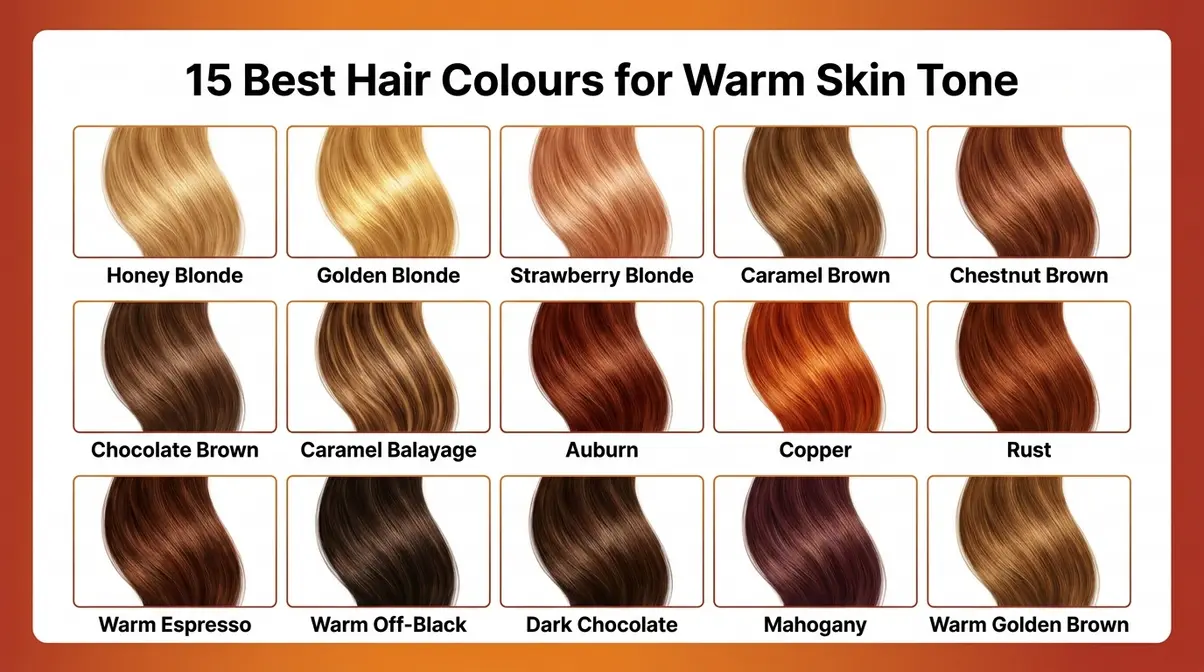
Warm Blonde Shades: Honey, Golden, and Strawberry Blonde
Blonde is the first place most warm-skinned readers look — and the first place they go wrong. The key is to avoid any blonde with “ash” in the name. Ash blondes contain blue-violet pigment that fights directly with warm undertones, creating a complexion that looks tired or yellow in the wrong way. The three blondes below do the opposite.
1. Honey Blonde
Honey blonde sits in the mid-range of the blonde spectrum, with a golden-amber base that mirrors the warmth in peachy and golden skin. It’s one of the most universally recommended shades for warm undertones across L’Oréal Paris, Hair.com, and John Frieda’s professional shade guides. It works across fair-to-medium warm complexions and pairs particularly well with brown and hazel eyes, where the amber tones create a warm, cohesive contrast.
2. Golden Blonde
Deeper and richer than honey, golden blonde has a more saturated yellow-gold base. It suits medium-to-deep warm complexions especially well, where a lighter shade might look washed out. According to certified colourists, golden blonde is the most requested shade among clients with olive warm skin tones — the gold in the hair echoes the olive-gold in the skin for a naturally luminous effect (Hair.com).
3. Strawberry Blonde
Strawberry blonde is a lighter shade with visible red-copper undertones running through the gold. It suits fair-to-light warm complexions best, particularly those with peachy rather than deeply golden skin. It’s a natural-looking option for those not ready to commit to a full auburn or copper shade, offering a hint of warmth without dramatic contrast.
Warm Brown and Brunette Shades: Caramel, Chestnut, and Chocolate
Brown is the most forgiving colour family for warm skin tones. The range from light caramel to deep chocolate contains natural red and yellow pigments that harmonise easily with golden and peachy undertones. Across professional beauty communities, the consensus is that warm browns are the single most flattering hair colour category for warm-skinned readers — they work at virtually every skin depth.
4. Caramel Brown
Caramel is a medium warm brown with golden and toffee tones. It’s one of the most recommended shades for warm skin tones with brown eyes, creating a monochromatic warmth that feels rich and intentional. Certified colourists often describe caramel as “the no-fail shade” for warm undertones — it’s warm enough to flatter without being dramatic, and it fades gracefully between salon visits.
5. Chestnut Brown
Chestnut sits slightly deeper than caramel, with more red-brown than yellow-brown pigment. It suits medium-to-deep warm complexions particularly well. The reddish base in chestnut creates a subtle warmth that makes warm skin glow rather than look flat. It’s a strong option for anyone transitioning from a cool-toned brown (like ash brown) who wants to re-warm their colour without a dramatic change.
6. Chocolate Brown
Rich, deep, and warm, chocolate brown has a reddish-brown base that works beautifully on medium-to-deep warm skin tones. It’s distinct from “cool chocolate” or “dark ash brown” — the latter contain grey or violet pigments that flatten warm complexions. True chocolate brown keeps its warmth at the roots and mid-lengths, creating depth without harshness.
7. Caramel Balayage
Balayage (a French highlighting technique where colour is painted freehand onto the hair for a sun-kissed effect) with caramel tones adds dimension to warm brunettes without requiring a full colour change. It’s particularly effective for medium-depth warm skin tones where a flat, single-process colour can look one-dimensional. The graduated, lighter ends create natural-looking contrast that enhances the warmth of the skin.
Warm Reds and Coppers: Auburn, Copper, and Rust
Red-family shades are arguably the most flattering colour category for warm skin tones. The orange-red pigment base in auburn, copper, and rust directly echoes the peachy or golden warmth in warm undertones — making the skin look radiant and the hair look intentional. Across professional beauty communities, the consensus is that warm-skinned readers can wear red more boldly than any other colour family without risk of clashing (L’Oréal Paris USA).
8. Auburn
Auburn is a medium-to-dark red-brown that sits between warm brown and true red. It’s one of the most universally flattering shades for warm skin tones across all depths — fair, medium, and deep. Its balanced red-brown mix means it’s warm enough to complement without being as bold as pure copper or rust. Auburn is particularly recommended for warm-skinned readers with hazel or green eyes, where the red-brown tones create a striking, jewel-like contrast.
9. Copper
Copper is a brighter, more orange-toned red that works best on fair-to-medium warm complexions. It’s bolder than auburn and creates high visual impact. Certified colourists note that copper is especially effective on clients with warm skin and dark brown or black eyes — the contrast between the bright copper and deep eyes creates a dramatic, editorial quality.
10. Rust
Rust sits between copper and auburn, with a deeper, earthier red-orange tone. It suits medium-to-deep warm skin tones and is particularly recommended for olive and golden complexions. Rust avoids the brightness of copper while retaining the warmth that makes red shades so flattering on warm skin.
Dark Shades for Warm Skin: Warm Espresso and Off-Black
Many warm-skinned readers assume that going dark means going cool — associating deep shades with blue-black or jet black, which can look harsh against warm skin. But dark shades are absolutely achievable for warm undertones. The key is choosing versions with warm, reddish, or brown pigment bases rather than cool, blue, or violet ones.
11. Warm Espresso
Warm espresso is a deep brown-black with subtle reddish undertones. It suits deep warm complexions particularly well, where a medium shade might look too light to create the depth and richness the complexion calls for. The red undertones in espresso keep the shade from looking flat or harsh against warm skin.
12. Warm Off-Black
Off-black with warm undertones — sometimes called “soft black” or “natural black” — avoids the blue-violet pigments of jet black or blue-black. It suits deep warm and olive complexions and creates a naturally rich look that feels like an enhanced version of natural dark hair rather than a harsh dye job. This shade partially answers the FAQ question “Can warm skin wear black?” — yes, with the right pigment base. The full answer is in the FAQ section.
13. Dark Chocolate
Darker than chocolate brown but lighter than espresso, dark chocolate is a versatile shade for medium-to-deep warm skin tones. It has a richer red-brown base than flat dark brown, giving the hair depth and warmth without the dramatic impact of a near-black shade.
14. Mahogany
Mahogany is a deep red-brown with a strong red-violet tilt — richer than auburn, darker than copper. It suits medium-to-deep warm complexions with brown or hazel eyes, where the deep red creates a luxurious, jewel-toned effect. It’s one of the bolder choices in this guide but remains firmly within the warm colour family.
15. Warm Golden Brown
A lighter, sun-kissed deep shade for medium warm skin tones that want richness without going too dark. Warm golden brown bridges the gap between caramel and chocolate, offering a naturally warm, dimensional look that suits a wide range of warm skin depths.
Your Warm Skin Tone Hair Colour Chart
A hair colour chart gives you a visual reference that works in two directions: you can use it to confirm a shade you’re already considering, or you can use it to discover shades you hadn’t thought of. The chart below maps all 15 shades to skin depth and eye colour, giving you a personalised shortcut to your best options.
How to Read and Use This Chart
The chart is organised by skin depth (light, medium, deep) on the vertical axis and hair colour family (blonde, brown, red, dark) on the horizontal axis. Eye colour pairings are noted in parentheses. Find your skin depth row, scan across to your preferred colour family, and use the eye colour note to confirm or refine your choice.
If your skin depth falls between two categories — for example, you’d describe yourself as “medium-to-deep” — look at both rows and choose the shade that appears in both. That overlap zone represents the most universally flattering options for your complexion.
Warm Tones by Depth: Light, Medium, and Dark Skin
Use this table as your quick-reference guide. The “Best For” column identifies the most flattering shades for each skin depth, based on The Tone-Match Triangle’s undertone alignment and skin depth matching criteria.
| Skin Depth | Best Blonde | Best Brown | Best Red/Copper | Best Dark |
|---|---|---|---|---|
| Light warm | Honey blonde, Strawberry blonde | Caramel brown, Caramel balayage | Copper, Auburn | Warm off-black |
| Medium warm | Golden blonde, Honey blonde | Chestnut, Chocolate brown, Warm golden brown | Auburn, Rust | Dark chocolate, Warm espresso |
| Deep warm / Olive | Golden blonde (as highlights) | Chocolate, Dark chocolate, Mahogany | Auburn, Rust | Warm espresso, Mahogany |
Key principle: The deeper your skin tone, the deeper your hair shade can go without losing warmth. Lighter shades on deep warm skin can look ashy or washed out — not because the shade is wrong, but because the contrast ratio between hair and skin is too high. Certified colourists recommend keeping no more than three to four levels of contrast between your hair and skin depth for the most natural result (John Frieda).
Shades to Avoid if You Have Warm Undertones
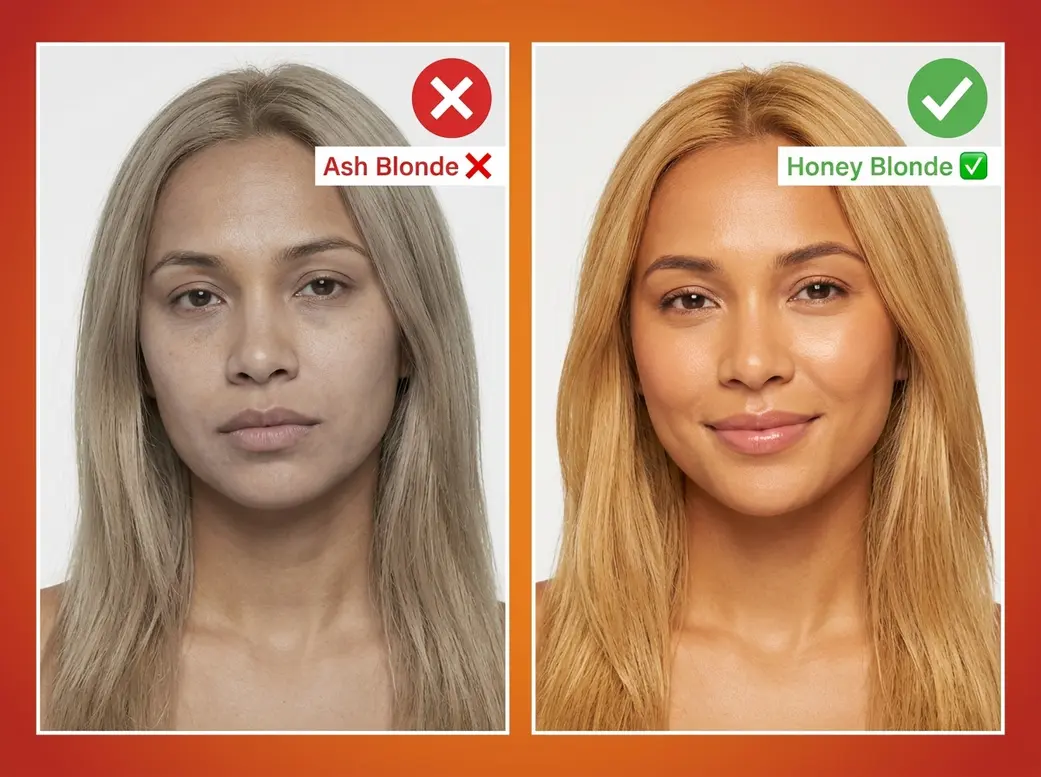
Knowing what not to choose is just as valuable as knowing what works. This is the section that 100% of competitor guides skip — and it’s the reason so many warm-skinned readers end up with a shade that makes their skin look sallow, tired, or washed out.
The Problem with Ashy and Cool-Toned Hair Colours
Ash-toned shades contain blue or violet pigment bases. When those pigments sit next to warm, golden, or peachy skin, the visual result is a colour clash that neither the hair nor the skin wins. The blue-violet in the hair draws the eye away from the warmth in the skin, making the complexion look dull, yellow, or grey — the opposite of the flattering warmth you’re going for.
The shades to avoid if you have warm undertones include:
- Ash blonde — contains blue-violet pigment; clashes with golden undertones
- Platinum blonde — the coolest end of the blonde spectrum; makes warm skin look sallow
- Cool ash brown — grey-toned rather than warm; drains warmth from medium skin tones
- Blue-black or jet black — the violet-blue pigment base creates harsh contrast against warm skin
- Silver or grey highlights — unless you’re embracing a fully intentional silver look, cool grey tones fight warm undertones
- Violet or burgundy (cool-based) — cool-leaning purple tones pull the skin toward grey
The key question to ask before choosing any shade: Does this colour’s name include “ash,” “cool,” “platinum,” or “silver”? If yes, it almost certainly contains the blue-violet pigment base that conflicts with warm undertones.
Do vs. Don’t: Side-by-Side Colour Comparisons
The difference between a flattering and unflattering shade is often subtle in a swatch but dramatic on the face. These side-by-side comparisons show the most common mistakes and their warm-toned alternatives.
| ❌ Avoid | ✅ Choose Instead | Why |
|---|---|---|
| Ash blonde | Honey blonde | Ash contains blue-violet; honey contains warm gold |
| Platinum blonde | Strawberry blonde | Platinum washes out warm skin; strawberry mirrors it |
| Cool ash brown | Caramel brown | Ash brown adds grey; caramel adds warmth |
| Jet black / blue-black | Warm espresso | Blue-black clashes; espresso’s red base complements |
| Cool burgundy | Auburn | Cool burgundy pulls grey; auburn stays warm-red |
Personalised Hair Colour Advice for Warm Tones
The Tone-Match Triangle’s third point — eye colour contrast — is where personalisation really begins. Two people can share the same warm skin depth but have entirely different best shades based on their eye colour. This section applies The Tone-Match Triangle to four specific combinations that appear most frequently in reader questions and search data.
Best Colours for Warm Skin and Brown Eyes
Brown eyes and warm skin are one of the most common combinations — and one of the most versatile. Because brown eyes already contain warm, earthy tones (amber, honey, hazel-brown), they pair beautifully with almost every shade in the warm colour family. The goal is to find a hair shade that creates contrast with the eyes while staying within the warm spectrum.
Top picks for warm skin + brown eyes:
- Caramel brown — the warm-on-warm combination creates a monochromatic richness. The slight lightness of caramel against deep brown eyes adds subtle contrast without jarring.
- Copper — the bright orange-red of copper against dark brown eyes creates a striking, high-contrast look that’s both warm and dramatic.
- Auburn — the red-brown base of auburn creates a jewel-toned effect against brown eyes, particularly hazel-brown. This is one of the most universally cited combinations by certified colourists.
- Golden blonde — for those with lighter brown or honey-coloured eyes, golden blonde creates a luminous, sun-kissed effect. Avoid this combination with very dark brown eyes, where the contrast may look unnatural.
Across professional beauty communities, the consensus is that warm skin + brown eyes is the combination with the widest range of flattering options — the warmth in both the skin and the eyes means almost any warm shade works, with copper and auburn receiving the highest recommendation frequency (Stella’s Wardrobe).
Best Colours for Asian Warm Skin Tones
Asian skin tones span a wide range of depths and undertones — from fair porcelain with neutral-warm undertones to deep golden-olive with strongly warm undertones. What unites many East and Southeast Asian warm complexions is a yellow-gold undertone that benefits from shades with matching warmth rather than the cool, ashy tones often marketed in East Asian beauty contexts.
Top picks for Asian warm skin tones:
- Warm chocolate brown — a natural-looking upgrade from natural dark hair that adds warmth without dramatic colour change. Particularly popular in Japan and South Korea as a “natural glow” shade.
- Caramel balayage — painted caramel highlights through dark brown hair create dimension and warmth without requiring full bleaching. This is the most popular technique for East Asian clients with warm undertones who want lightness without damage.
- Auburn — for deeper Asian warm skin tones, auburn adds a warm red-brown richness that complements the golden undertones beautifully.
- Copper highlights — copper tones as highlights (rather than all-over colour) add warmth and dimension while avoiding the harsh contrast of full copper on deeper complexions.
Common concerns reported by users with Asian warm skin tones include difficulty achieving lighter shades without bleach damage. The no-bleach section in H2-6 addresses this directly with specific shade alternatives.
Best Colours for Indian Skin Tones
Indian skin tones typically range from light golden to deep brown, with undertones that are most commonly warm (golden, peachy, or olive-warm). The key challenge for Indian warm skin tones is finding shades that add visible warmth and dimension without looking unnatural against naturally dark hair.
Top picks for Indian warm skin tones:
- Warm chocolate brown — a slight warming of natural dark hair that looks intentional and polished. It’s one of the most recommended first-colour options for Indian clients by certified colourists.
- Mahogany — the deep red-brown of mahogany against golden or brown Indian skin creates a rich, luxurious look. It’s particularly flattering on medium-to-deep Indian warm skin tones with brown or black eyes.
- Caramel highlights — caramel highlights through dark Indian hair add sun-kissed warmth and dimension without requiring a full colour change.
- Rust — for deeper Indian warm skin tones, rust’s earthy red-orange base creates a striking contrast that feels bold but harmonious.
- Golden brown balayage — a natural-looking graduated technique that suits a wide range of Indian skin depths, adding warmth from mid-lengths to ends.
Hair colour for Indian skin tones without bleach is a common search — options like warm chocolate brown, mahogany, and dark auburn can all be achieved on dark hair using high-lift colour or demi-permanent formulas without full bleaching.
Medium Warm Skin Tones: Matching Depth to Shade
Medium warm skin tones — often described as “olive,” “golden medium,” or “medium beige with warmth” — have the widest range of flattering options of any warm depth. They sit in the sweet spot between light and deep, meaning they can carry both lighter warm shades and darker warm shades without either washing out or creating harsh contrast.
For medium warm skin tones, the most important Tone-Match Triangle consideration is skin depth matching: choosing a shade that’s neither dramatically lighter nor dramatically darker than your natural complexion. Certified colourists recommend a maximum of three to four levels of contrast for the most natural, flattering result.
Best shades for medium warm skin tones: golden blonde (as highlights or balayage), chestnut brown, auburn, rust, warm chocolate brown, and dark chocolate. All of these sit within the two-to-four level contrast range for most medium warm complexions.
Colouring Techniques and What to Know Before You Start
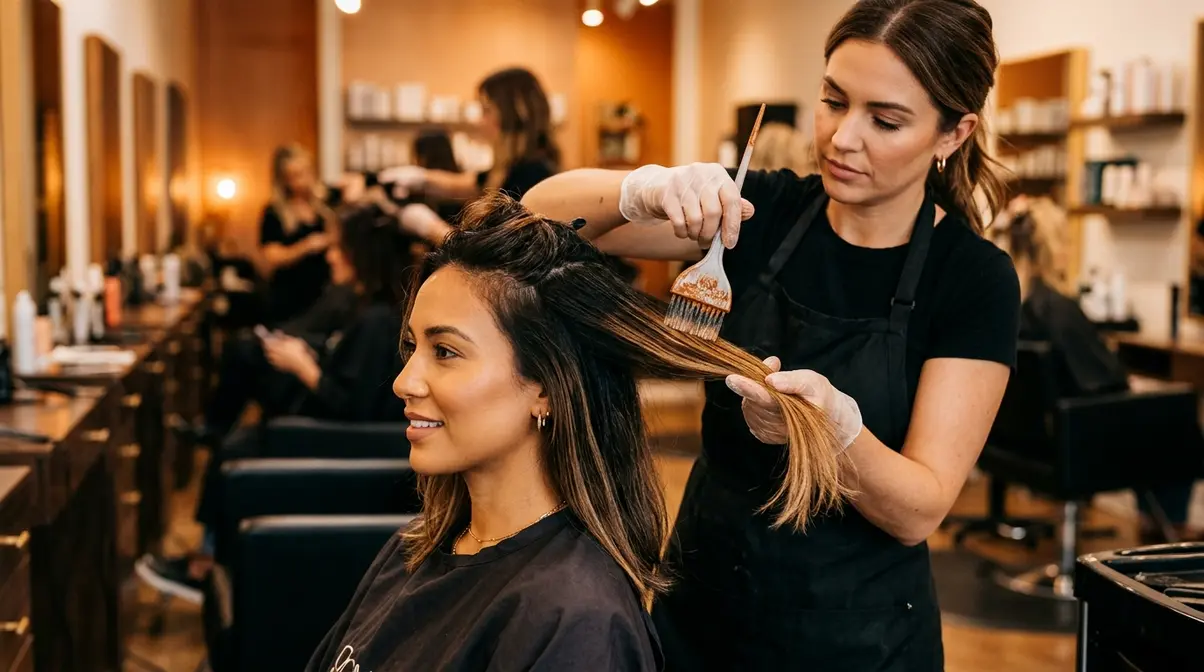
Choosing the right shade is only half the decision. How you apply that colour — and what you do before and after — determines whether the result looks professional or patchy. This section covers the four most common technique questions from warm-skinned readers.
Highlights vs. Full Colour: Which Is Right for Warm Skin?
Both highlights and full colour can work beautifully for warm skin tones — the right choice depends on your goals, your natural hair colour, and how much maintenance you’re willing to commit to.
- Highlights (individual sections of hair lightened or coloured, rather than all-over colour):
- Add dimension and depth without a dramatic change
- Grow out more naturally — less visible regrowth lines
- Ideal for first-time colourists or those nervous about commitment
- Warm-toned highlights (caramel, honey, copper) work especially well on warm skin
- Lower risk of colour clash — the natural hair base remains visible
- Full colour (all-over single-process colour):
- Creates maximum impact and consistency
- Requires more maintenance — regrowth is more visible
- Better for dramatic colour changes (e.g., going from dark brown to golden blonde)
- Requires more careful shade selection — an all-over cool tone is harder to correct than a few cool highlights
For most warm-skinned beginners, certified colourists recommend starting with highlights or balayage in a warm tone before committing to full colour. This approach lets you test how warm tones interact with your specific complexion before making a larger change.
No-Bleach Colour Options for Dark Hair
Bleaching (using a lightening chemical to strip pigment from the hair before adding new colour) opens up the full range of blonde and lighter shades. But it also carries the highest risk of damage, particularly for fine, chemically treated, or natural hair. The good news: several warm-toned shades are achievable on dark hair without bleach.
Warm shades achievable without bleach on dark hair:
| Shade | Method | Expected Result on Dark Hair |
|---|---|---|
| Warm chocolate brown | Demi-permanent over dark brown | Visible warmth, subtle shift |
| Mahogany | Demi-permanent or permanent | Rich red-brown depth |
| Auburn | Permanent colour | Visible auburn, especially in sunlight |
| Warm espresso | Permanent colour | Deepening with subtle warmth |
| Chestnut brown | Permanent colour | Warm red-brown shift |
Important note: On very dark (level 1–3) natural hair, shades like auburn and chestnut may only be visible in direct sunlight without a pre-lightening step. A colourist can advise on whether a single-process colour will give the visible result you’re looking for without bleach.
Permanent, Demi-Permanent, or Semi-Permanent: What’s the Difference?
Understanding your colour options helps you choose the right formula for your goals and your hair’s health.
| Type | How It Works | Longevity | Best For |
|---|---|---|---|
| Permanent | Opens hair shaft, deposits + develops colour inside | Until grown out | Dramatic changes, grey coverage |
| Demi-permanent | Deposits colour without full lift; no ammonia | 20–28 washes | Refreshing colour, subtle shifts |
| Semi-permanent | Coats the hair shaft; no developer | 4–12 washes | First-time colourists, temporary change |
For warm-skinned beginners trying a new shade, certified colourists recommend starting with a demi-permanent or semi-permanent formula in your target warm shade. This lets you see how the colour interacts with your skin before committing to a permanent result. Demi-permanent formulas also tend to fade more gracefully — warm tones fade to a lighter version of themselves rather than turning brassy, which is particularly useful for caramel and honey blonde shades.
Before and After Colouring: The Essential Rules
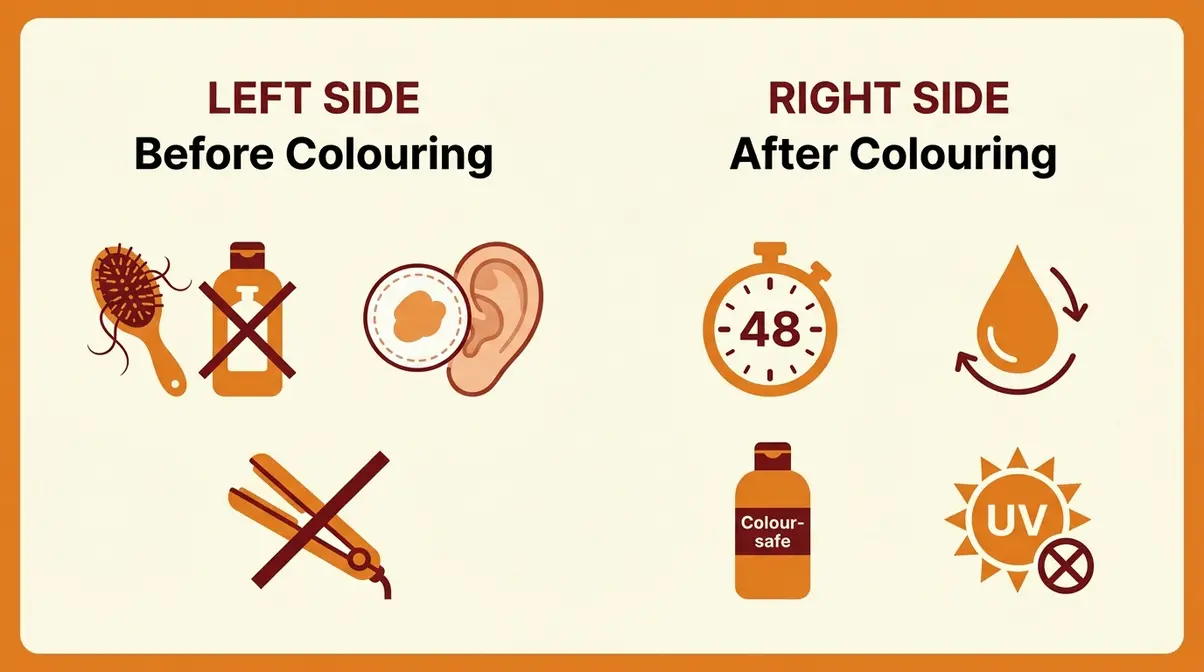
What not to do before colouring your hair:
- Do not wash your hair the day of colouring. Natural scalp oils protect the scalp from chemical irritation. The American Academy of Dermatology (AAD) recommends leaving hair unwashed for 24–48 hours before applying colour.
- Do not apply heat styling the morning before. Heat opens the hair cuticle and can cause uneven colour absorption.
- Do not skip the patch test. Apply a small amount of colour behind the ear or on the inner elbow 48 hours before full application. The FDA mandates this step for all coal-tar-based dyes — PPD (paraphenylenediamine) allergies can cause severe reactions (FDA, 2023).
- Do not colour over heavily damaged or bleached hair without a professional consultation. Over-processed hair absorbs colour unevenly and can break.
What not to do after colouring your hair:
- Do not wash your hair for 48–72 hours after colouring. The colour needs time to fully set in the hair shaft. Washing too soon strips pigment before it has bonded.
- Do not use hot water. Hot water opens the hair cuticle and accelerates colour fade. Use lukewarm or cool water for all washes after colouring.
- Do not use shampoo designed for oily or clarifying purposes. These strip colour faster. Use a colour-safe or colour-protecting shampoo from the first wash.
- Do not expose freshly coloured hair to direct sunlight for extended periods. UV rays break down hair pigment, causing warm tones to fade toward brassy or orange tones faster.
Common Mistakes and When to See a Professional
Even with the right shade selected, the process can go wrong. These are the most common mistakes that lead to disappointing results — and clear guidance on when DIY is not the right choice.
The Mistakes That Lead to Colour Going Wrong
Mistake 1: Choosing an ash shade thinking it will “tone down” warmth
Warm-skinned readers sometimes reach for ash tones hoping to neutralise what they perceive as “too orange” or “too yellow” results. The problem: ash tones on warm skin don’t neutralise — they clash. The result is often a muddy, grey-green tone that looks neither warm nor cool. If your colour has gone too brassy, the solution is a warm-toned toner or gloss, not an ash shade.
Mistake 2: Going more than four levels lighter in a single session
Attempting a dramatic lightening in one sitting — for example, going from dark brown to honey blonde — without professional help almost always results in uneven, brassy, or orange results. This is because dark hair contains warm (red and orange) pigment that requires multiple lightening sessions to lift fully.
Mistake 3: Skipping the patch test
Common concerns reported by users include scalp irritation and allergic reactions to hair dye. PPD (paraphenylenediamine), found in most permanent dark hair dyes, is one of the most common contact allergens (AAD, 2023). The patch test is not optional — it’s a safety requirement.
Mistake 4: Using box colour on previously chemically treated hair
Box colour formulas are designed for virgin (uncoloured) hair. On previously coloured, permed, or relaxed hair, the results are unpredictable. A colourist consultation is strongly recommended if your hair has any prior chemical treatment history.
When to Book a Colourist Instead of Going DIY
DIY colour is perfectly safe for many warm-skin scenarios — particularly demi-permanent single-process applications on virgin hair. However, book a professional colourist if:
- You want to go more than three levels lighter than your current shade
- Your hair has been previously bleached, permed, or relaxed
- You are experiencing a medical condition that affects the scalp or hair (see FAQ for HRT and lupus guidance)
- You want balayage, ombré, or any painted technique — these require freehand skill that is very difficult to replicate at home
- You have had a previous allergic reaction to hair dye of any kind
According to certified colourists, the cost of a professional consultation to assess your hair’s condition before a major colour change is almost always less than the cost of correcting a DIY result that went wrong.
FAQs: Hair Colour for Warm Skin Tones
What colours should warm undertones avoid?
Warm undertones should avoid ash, platinum, and cool-toned shades — any colour with “ash,” “cool,” or “platinum” in the name contains blue-violet pigments. Against warm skin, those pigments create a clash that makes the complexion look sallow, grey, or washed out. The specific shades to avoid include ash blonde, platinum blonde, cool ash brown, jet black, blue-black, and cool-based burgundy. For each of these, a warm-toned alternative exists: swap ash blonde for honey blonde, jet black for warm espresso, and cool ash brown for caramel brown.
What is the golden rule of hair colour?
The golden rule of hair colour is to stay within two shades of your natural colour for the safest, most flattering result. This rule exists because your natural hair colour already reflects your undertone — it’s a biological match for your skin. Straying more than two shades away increases the risk of choosing a shade that either washes you out or creates harsh, unnatural contrast. For warm-skinned readers, this means a natural warm brown can safely go to caramel or honey blonde without professional help, but going to platinum blonde requires multiple sessions and a professional.
What should you not do before dyeing your hair?
Do not wash your hair the day of colouring, skip the patch test, or apply heat before colouring. The AAD recommends leaving hair unwashed for 24–48 hours before application — natural scalp oils protect against chemical irritation. The patch test (applying colour behind the ear 48 hours before) is mandatory because PPD, a common ingredient in permanent dyes, is a known contact allergen (FDA, 2023). Heat styling opens the hair cuticle and causes uneven absorption. Also avoid colouring over heavily damaged hair without a professional consultation.
What should you not do after colouring your hair?
Do not wash your hair for 48–72 hours after colouring, use hot water, or use clarifying shampoo. Waiting allows the colour to fully bond with the hair shaft — washing too early strips pigment before it sets. Hot water opens the cuticle and accelerates fade. Use only colour-safe shampoo from the first wash. Avoid extended direct sunlight exposure in the first week, as UV rays break down warm pigments fastest, causing honey and caramel tones to fade toward brassy orange.
Can warm skin wear black hair?
Yes — warm skin can absolutely wear black hair, provided the shade has a warm, reddish, or brown pigment base. Jet black and blue-black contain violet-blue pigments that clash with warm undertones and create harsh contrast. Warm off-black, soft black, and warm espresso are specifically formulated with reddish or brown bases that complement rather than fight warm skin. For deep warm and olive complexions, warm espresso is a particularly recommended option — it creates richness and depth without the harshness of cool-based dark shades.
Can HRT affect hair dye results?
Yes — hormone replacement therapy (HRT) can affect how hair dye takes and holds colour. Hormonal changes alter the hair’s porosity (how readily the hair shaft absorbs and retains moisture and colour), which can cause colour to develop faster, fade more quickly, or produce unexpected results compared to pre-HRT applications (Mayo Clinic). Women on HRT are advised to consult both their prescribing doctor and a professional colourist before colouring, particularly for permanent colour or bleaching processes. A strand test before full application is strongly recommended. Always consult your doctor before making changes to your hair care routine during HRT.
Can I colour my hair if I have lupus?
Colouring hair with lupus requires medical guidance and careful product selection. Lupus can cause scalp sensitivity, hair thinning, and increased skin reactivity — all of which affect how the scalp responds to chemical hair dye (Mayo Clinic, 2023). PPD (paraphenylenediamine), a common ingredient in permanent dyes, is a known contact allergen that may cause stronger reactions in individuals with autoimmune conditions. Semi-permanent or plant-based (henna) options are often recommended as lower-risk alternatives, but even these should be discussed with your rheumatologist before use. Always consult your doctor before colouring your hair if you have lupus or any autoimmune condition.
Finding Your Perfect Warm-Toned Shade
Choosing hair colours for warm skin tone is genuinely simpler than the conflicting advice online suggests — once you have a framework. The Tone-Match Triangle gives you three clear checkpoints: does the shade’s pigment base align with your warm undertones? Does the shade depth suit your skin’s lightness or darkness? And does it create flattering contrast with your eye colour? When all three align, the result is a harmonious overall look that feels effortless.
The Tone-Match Triangle isn’t about finding one perfect shade and sticking to it forever. It’s a decision tool you can return to every time you want a change — whether that’s a subtle caramel refresh or a bolder copper transformation. Every recommendation in this guide passes all three checkpoints, which means your starting point is already far narrower than a Pinterest scroll.
Start with the vein test and jewellery test to confirm your undertone, then use the colour chart to match your skin depth to the right shade family. If you’re trying colour for the first time, a demi-permanent caramel or honey blonde is the lowest-risk entry point recommended by certified colourists. For anything involving bleaching, significant lightening, or a medical consideration, book a professional consultation first — the result will be worth it.

Dave King
Writes evidence-based hair-care guides for Care About Your Hair — for every hair type, jargon-free and independent.