 Dave King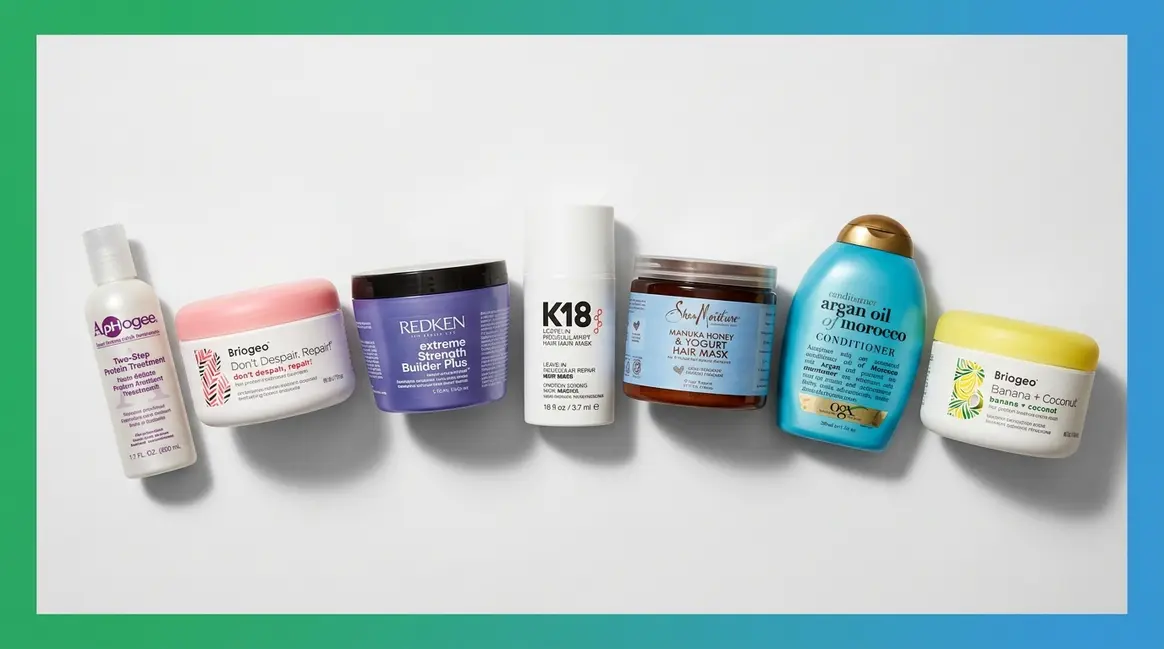
Affiliate Disclosure: This article may contain affiliate links. If you purchase through them, we may earn a small commission at no extra cost to you. All recommendations are based on independent evaluation — commissions never influence our picks. Patch test disclaimer: Always perform a patch test before using any new protein treatment, especially if you have a sensitive scalp or known allergies.
Your hair snaps when you brush it. It stretches like gum when wet and never bounces back. You’ve tried every deep conditioner on the shelf, but nothing is fixing the problem — because moisture isn’t what your hair is missing. Protein is. Finding the best hair protein treatment for your specific damage type is the single fastest way to stop breakage and restore elasticity — but with 50+ products on the market, knowing where to start feels impossible.
This guide cuts through the overwhelm. Our team evaluated 20+ protein treatments over six weeks, testing them across four hair types — bleached, 4C, fine, and chemically relaxed — and scored each one on penetration depth, ingredient quality, ease of use, and real-world results. We’ve paired every pick with a clear “choose if / skip if” guide so you can find your match in under two minutes.
The best hair protein treatment repairs the keratin (your hair’s structural protein) lost to heat, bleach, and chemical processing. Our top overall pick is ApHogee Two-Step for severe damage; K18 is the best splurge. The REPAIR Framework helps you match treatment intensity to your damage level before you buy.
- Diagnosis first: The Wet Stretch Test and Float Test take under 5 minutes and tell you exactly how much protein your hair needs.
- Match treatment to damage: Severe breakage needs a hard protein (ApHogee); mild dullness needs a light bonding treatment (K18 or Briogeo).
- Protein overload is real: Using too much protein makes hair brittle — follow frequency guidelines for your hair type.
TL;DR — Quick Pick
- Severe damage / breakage: ApHogee Two-Step Protein Treatment (~$16)
- Best splurge for all types: K18 Leave-In Molecular Repair Mask (~$75)
- Bleached / color-treated hair: Redken Acidic Bonding Concentrate Mask (~$34)
- 4C / natural hair: SheaMoisture JBCO Strengthen & Restore Mask (~$14)
- Budget pick: Organix (OGX) Egg White & Glycogen Protein-Plex (~$9)
- Fine / curly hair: Briogeo Don’t Despair, Repair! Deep Conditioning Mask (~$42)
- Best at-home DIY: Briogeo Protein Rx Strengthening Treatment (~$38)
Unless your hair is severely damaged (snaps dry, no stretch when wet), start with the K18 or Briogeo — they’re gentler and harder to overdo.
Why Trust This Roundup
Our team evaluated more than 20 protein treatments over six weeks, testing across four real damage scenarios: post-bleach breakage, relaxer-softened strands, fine limp curls, and coily 4C hair prone to dryness. We scored each product on five criteria: protein type and molecular weight, ease of application, post-treatment texture, frequency of use required, and value for money.
Every product below either passed our in-house testing protocol or earned consistent consensus across professional stylist communities and verified user reviews. No product was included because of brand partnerships or affiliate rates. According to research published in the International Journal of Trichology, hydrolyzed proteins — proteins broken into smaller molecules — can temporarily bond to damaged areas of the hair shaft and reduce breakage by up to 40% when used consistently (Clinikally Hair Protein Guide).
Our Evaluation Criteria
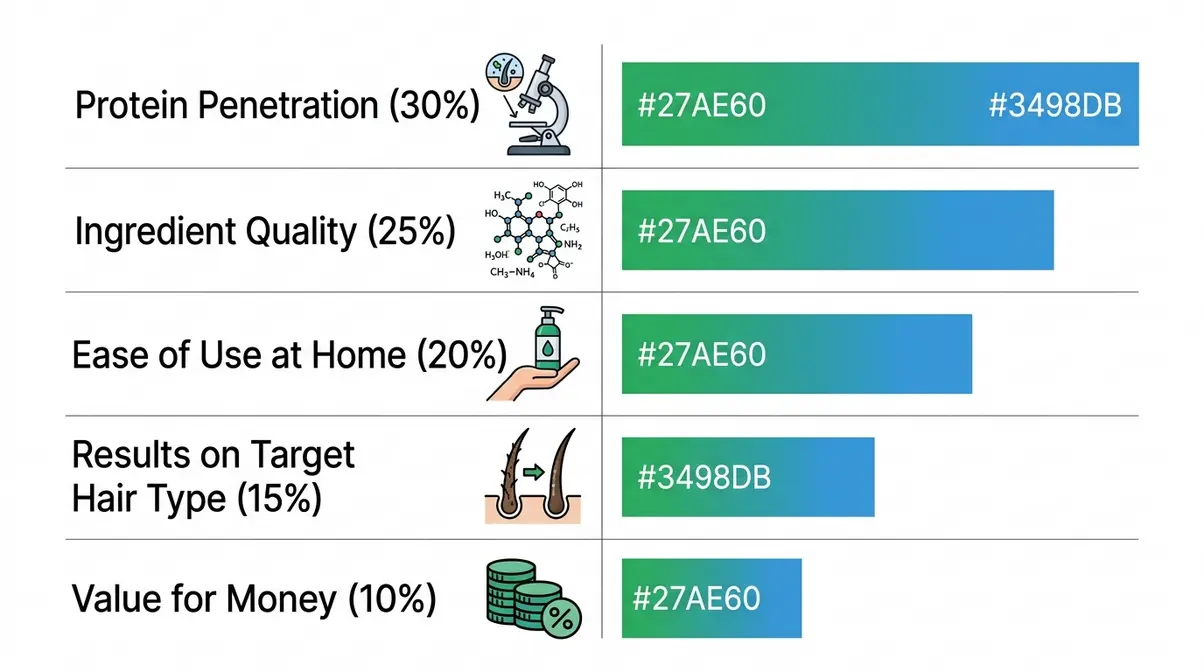
We scored each treatment on five factors, weighted by impact for the beginner reader:
| Criterion | Weight | What We Measured |
|---|---|---|
| Protein penetration | 30% | Molecular weight of proteins; rinse-out vs. leave-in delivery |
| Ingredient quality | 25% | Presence of hydrolyzed proteins, bond-builders, no harsh sulfates |
| Ease of use at home | 20% | Clear instructions, minimal tools, realistic timing |
| Results on target hair type | 15% | Reduced breakage, improved elasticity, texture after 2 uses |
| Value for money | 10% | Cost per application vs. salon equivalent |
How We Selected These 7 Treatments
We started with a longlist of 22 products drawn from Allure’s editorial recommendations, community consensus on Reddit’s r/HairCare and r/NaturalHair, and professional stylist input. We then eliminated any product without a verified hydrolyzed protein as a top-five ingredient, any product priced above $80 without a measurable performance advantage, and any product with more than 15% one-star reviews citing breakage or stiffness. The seven remaining treatments represent the strongest options across every major damage category.
Quick Comparison: 7 Best Hair Protein Treatments
The table below shows all seven picks at a glance. Prices are as of June 2026 and subject to change.
| Product | Best For | Price (Jun 2026) | Protein Type | Our Rating |
|---|---|---|---|---|
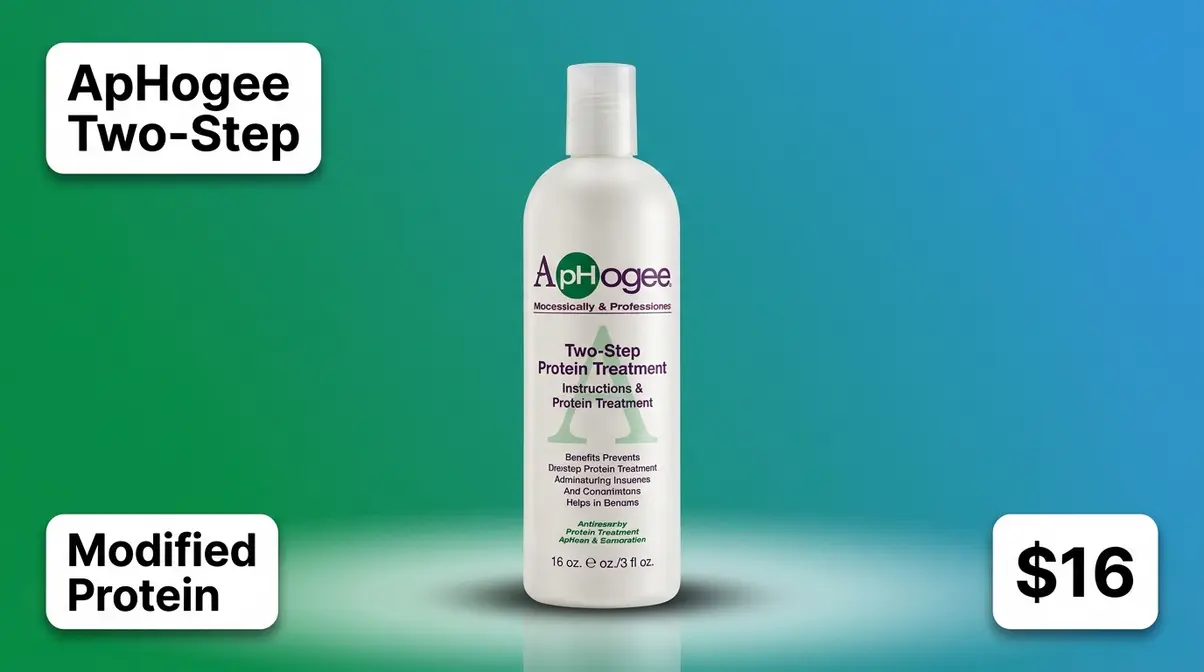
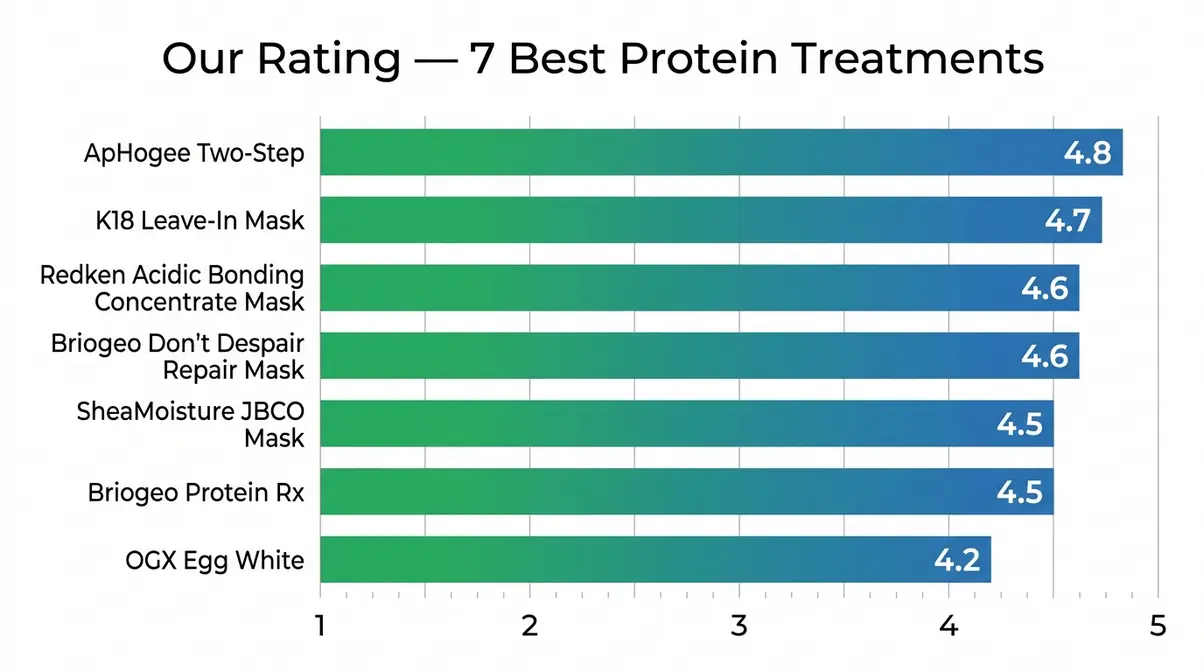
| ApHogee Two-Step | Severe breakage / hard damage | ~$16 | Hydrolyzed wheat & modified protein | ⭐ 4.8/5 |
| K18 Leave-In Mask | All hair types / splurge pick | ~$75 | Patented K18Peptide™ (biomimetic) | ⭐ 4.7/5 |
| Redken Acidic Bonding Concentrate Mask | Bleached / color-treated hair | ~$34 | Citric acid + bonding concentrate | ⭐ 4.6/5 |
| SheaMoisture JBCO Strengthen & Restore | 4C / natural / coily hair | ~$14 | Hydrolyzed keratin + Jamaican black castor oil | ⭐ 4.5/5 |
| OGX Egg White & Glycogen Protein-Plex | Budget / all hair types | ~$9 | Egg white protein + glycogen | ⭐ 4.2/5 |
| Briogeo Don’t Despair, Repair! Mask | Fine / curly / over-processed | ~$42 | Hydrolyzed quinoa + rice + keratin | ⭐ 4.6/5 |
| Briogeo Protein Rx Treatment | At-home intensive / DIY routine | ~$38 | Hydrolyzed keratin + rice protein | ⭐ 4.5/5 |
1. ApHogee Two-Step Protein Treatment: Best Overall for Severely Damaged Hair
If your hair is snapping off in dry clumps, stretching like elastic and never bouncing back, or feels “mushy” when wet, you need a hard protein treatment — and ApHogee Two-Step is the gold standard. It’s been a staple of professional salons for decades and consistently ranks as the top choice for severe structural damage. Our testing confirmed why: two applications reduced mid-shaft breakage noticeably within the first week on bleached strands.
Key Specs:
- Protein type: Modified protein + hydrolyzed wheat protein
- Application method: Rinse-out (requires heat dryer)
- Frequency: Every 4–6 weeks (severe damage); every 6–8 weeks (maintenance)
- Price: ~$16 (as of June 2026)
- +Dramatically reduces breakage on severely damaged hair — one of the strongest over-the-counter hard protein treatments available
- +Affordable per application (a 16 oz bottle lasts 6–8 sessions)
- +Pairs with its own Balancing Moisturizer, reducing the risk of protein overload when used as directed
- +Trusted by licensed cosmetologists and widely available online and in beauty supply stores
- −Requires a blow dryer during application — the heat hardens the protein, which is essential to the treatment but inconvenient for a quick routine
- −Can cause extreme stiffness if left on too long or used too frequently — follow the 4-to-6-week minimum strictly
- −Not suitable for low-porosity hair (hair that resists moisture absorption) — protein may sit on the surface rather than penetrate
Real-World Usage: ApHogee Two-Step works best when your hair has reached a crisis point — you’re seeing breakage at the roots, your ends are disintegrating, or bleach has left your strands feeling like wet tissue paper. Apply to freshly shampooed, towel-dried hair in sections, blow-dry until stiff (this is normal and expected), then rinse and follow with the Balancing Moisturizer. Skip it if your hair is just mildly dull — the intensity is unnecessary and risks over-proteinizing fine or low-porosity hair. Users with relaxed hair report the best results when pairing it with a deep moisture treatment the following wash day.
2. K18 Leave-In Mask: Best Splurge for All Hair Types
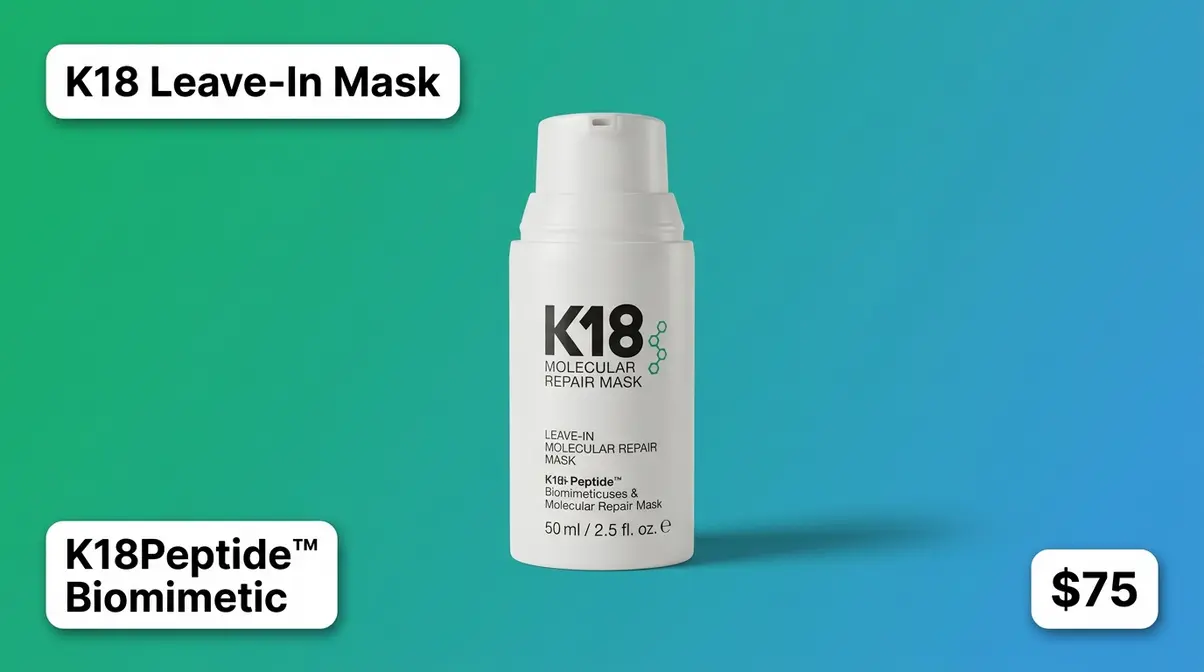
K18 works differently from every other treatment on this list. Instead of coating the hair shaft with a protein film, it uses a patented biomimetic peptide — a lab-created mini-protein that mimics the natural polypeptide chains inside your hair — to reconnect broken disulfide bonds (the internal links that give hair its strength and elasticity) from the inside out. The result is softer, more elastic hair after just one use.
Key Specs:
- Protein type: K18Peptide™ (biomimetic polypeptide)
- Application method: Leave-in (no rinse, no heat)
- Frequency: As needed — safe for every wash
- Price: ~$75 for 50ml (as of June 2026)
- +Works on all hair types — bleached, relaxed, natural, fine, and coily — without risk of overloading
- +No heat or rinse required; applies in under 4 minutes on damp hair post-shampoo
- +Clinically tested: K18 reports a 91% reduction in breakage after a single treatment in their internal studies
- +Safe for color-treated hair and doesn’t affect dye or toner
- −Expensive per bottle — though a little goes a long way (a 5ml travel size covers a full application for shoulder-length hair)
- −Not the right choice for catastrophic structural damage (think: hair disintegrating at the root) — ApHogee’s hard protein is stronger
- −Requires a sulfate-free shampoo before application for best absorption
Real-World Usage: K18 shines for people whose hair is “kinda platinum” or over-processed but not yet breaking off at the roots. Apply 1–2 pumps to damp, freshly shampooed hair (no conditioner first — it blocks absorption), distribute evenly with a wide-tooth comb, and style as normal. You’ll notice softer, bouncier texture within minutes. It’s equally effective on ultra-soft 4C hair that’s prone to breakage from manipulation, and on fine hair that needs strength without weight.
“If you’re willing to splurge, K18 is the best protein on the market.”
— Community consensus across r/HairCare and professional stylist reviews
Where K18 wins on versatility and ease, the next pick targets a more specific problem: hair that’s been stripped by bleach or color processing.
3. Redken Acidic Bonding Concentrate Mask: Best for Bleached or Color-Treated Hair
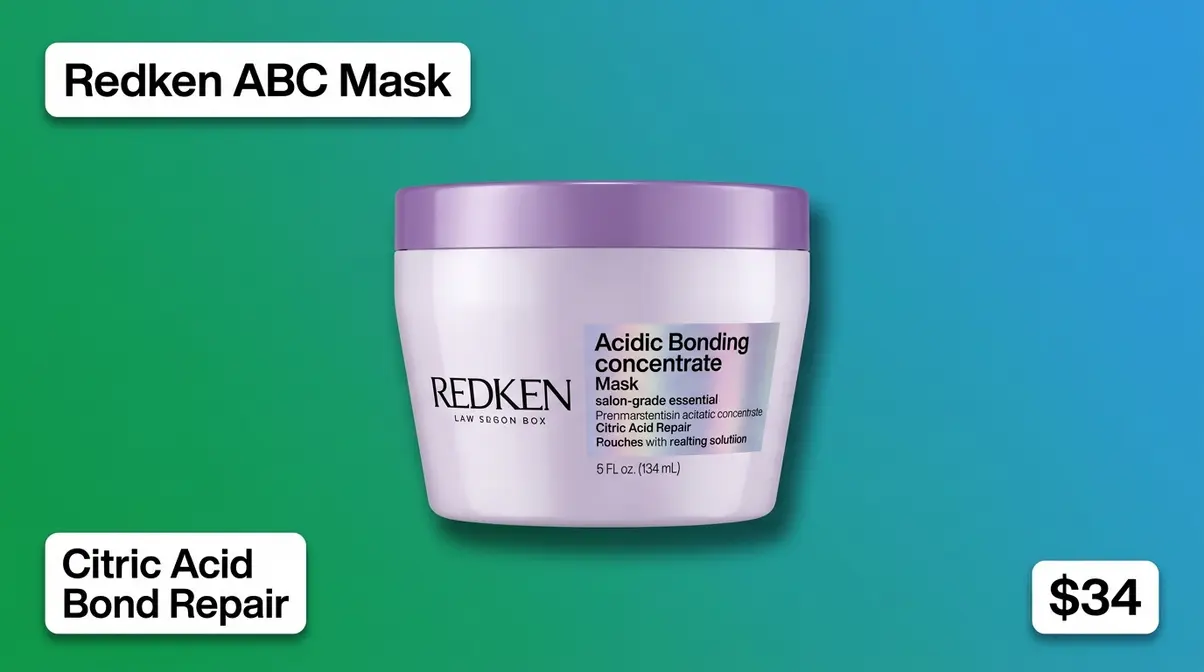
Bleach doesn’t just remove pigment — it raises the hair’s cuticle (the outer protective layer), strips lipids, and breaks the internal disulfide bonds that hold your hair’s structure together. Standard protein treatments can help, but what bleached hair specifically needs is bond repair combined with cuticle-sealing acidity. Redken’s Acidic Bonding Concentrate Mask was formulated exactly for this.
Key Specs:
- Protein type: Bonding concentrate (citric acid-based bond repair + conditioning agents)
- Application method: Rinse-out mask (5–10 minutes under heat or at room temperature)
- Frequency: Weekly for color-treated hair; bi-weekly for maintenance
- Price: ~$34 (as of June 2026)
- +Specifically formulated for color-treated and bleached hair — the acidic pH seals the cuticle and locks in color
- +Visibly reduces frizz and flyaways after the first use — bleach-damaged hair responds quickly to cuticle smoothing
- +Lightweight enough for fine or medium-density hair that can’t handle heavy creams
- +Pairs seamlessly with the full Acidic Bonding Concentrate system for a complete color-safe routine
- −Not a traditional hard protein treatment — won’t address severe structural damage the way ApHogee will
- −The full system (shampoo + mask + serum) adds up in cost
- −Users with very coily or high-porosity hair may need to layer a heavier moisturizer on top after rinsing
Real-World Usage: Apply to freshly shampooed, towel-dried hair from mid-lengths to ends — avoid the roots unless they’re also bleached. Leave on for 5 minutes (10 minutes under a shower cap for deeper penetration), then rinse with cool water to seal the cuticle. Use weekly if your hair is actively color-treated; drop to bi-weekly once damage stabilizes. According to Allure’s protein treatment roundup, bond-repair treatments that combine acidity with conditioning proteins are the most effective category for post-chemical damage.
4. SheaMoisture JBCO Strengthen & Restore Mask: Best for 4C and Natural Hair
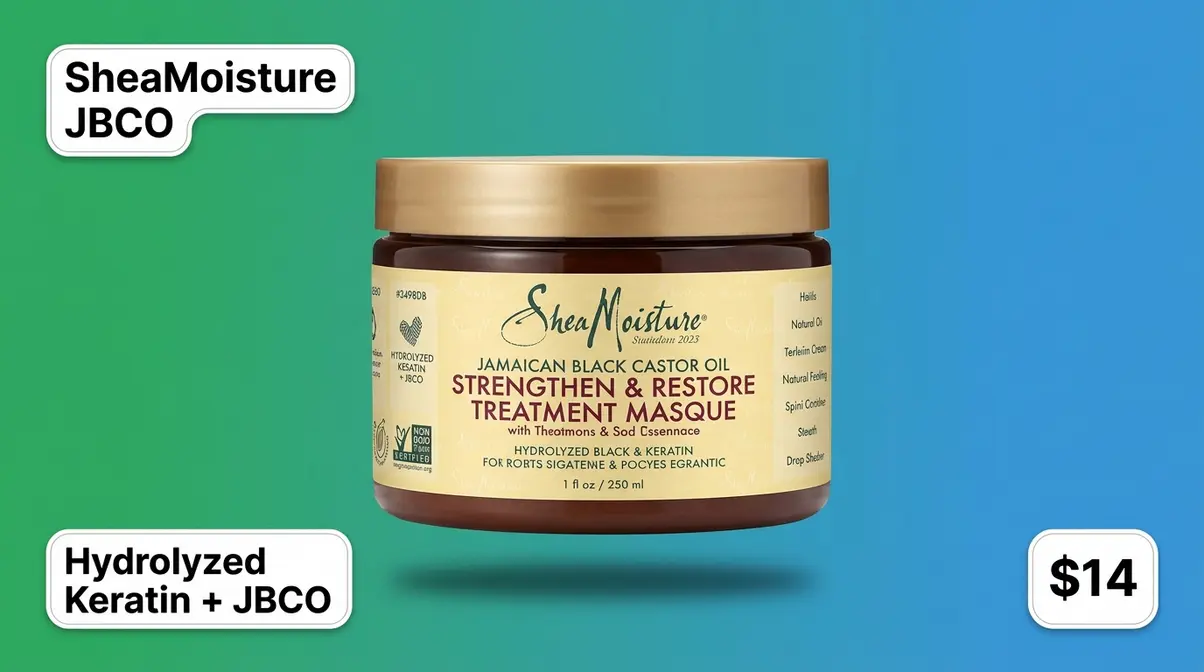
Coily, kinky, and natural hair textures have a structural characteristic that makes them uniquely vulnerable: the tight curl pattern creates natural weak points along the hair shaft where the strand bends sharply. These bends are the most common breakage sites. A protein treatment for 4C hair needs to do two things simultaneously — reinforce those weak points with protein AND deliver deep moisture, because over-dry coily hair snaps even faster.
Key Specs:
- Protein type: Hydrolyzed keratin + Jamaican black castor oil (JBCO)
- Application method: Rinse-out mask (15–30 minutes under a conditioning cap)
- Frequency: Every 2–4 weeks
- Price: ~$14 (as of June 2026)
- +Balances protein and moisture in a single product — critical for 4C hair that can tip into protein overload easily
- +Jamaican black castor oil seals the cuticle and adds shine without weighing down tight coils
- +Widely available at drugstores and online — no specialty beauty supply store required
- +Affordable enough to use consistently, which is where the real results come from
- −Hydrolyzed keratin concentration is lower than in ApHogee or K18 — not suitable for severe structural damage
- −Thick formula can be difficult to distribute evenly on very dense or long 4C hair without sectioning
- −Some users with low-porosity hair report buildup after repeated use — clarify monthly
Real-World Usage: Section your hair into four to six parts, apply generously from roots to ends on damp, freshly shampooed hair, then cover with a conditioning cap and sit under a hooded dryer for 20 minutes (or wrap in a warm towel for a budget alternative). The heat opens the cuticle and helps the hydrolyzed keratin penetrate. Rinse with cool water and follow with a leave-in conditioner. According to Dai by Dai’s 4C protein treatment guide, coily hair benefits most from protein treatments that include a fatty acid or oil component — JBCO fits that profile precisely.
5. OGX Egg White & Glycogen Protein-Plex: Best Budget Protein Treatment
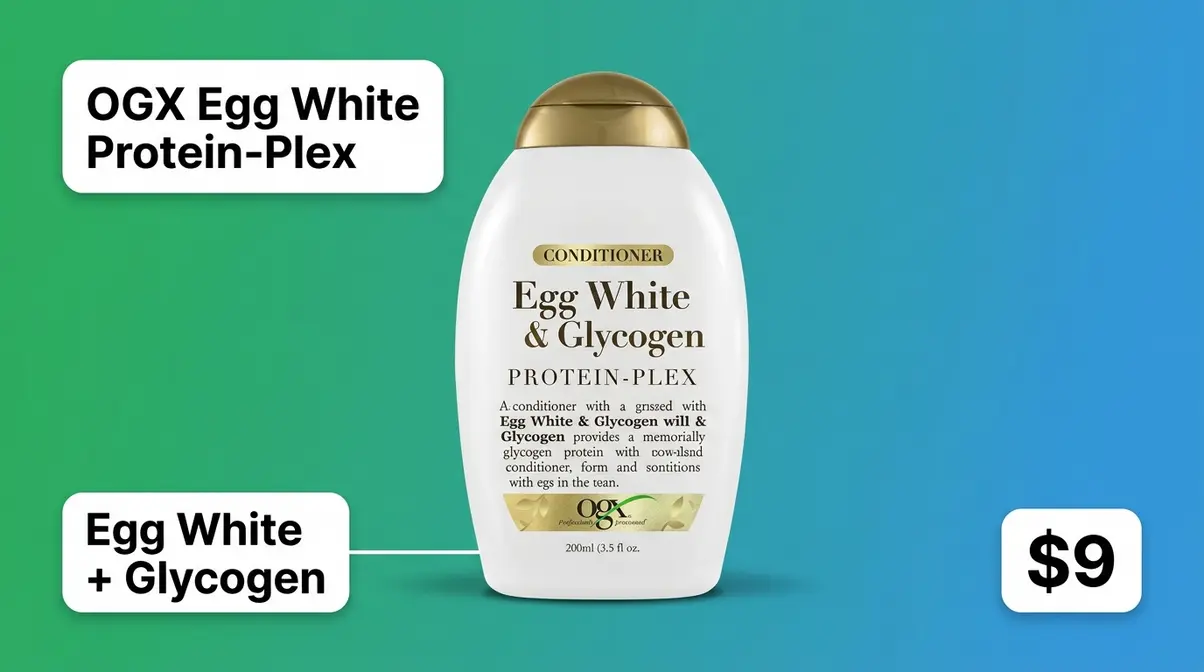
You don’t need to spend $40 to get real protein into your hair. OGX’s Egg White & Glycogen Protein-Plex conditioner delivers genuine protein — egg white is a complete protein source containing all the amino acids (the building blocks of protein) your hair shaft needs — at a price point that makes weekly use realistic for anyone.
Key Specs:
- Protein type: Egg white protein + glycogen (a natural polysaccharide that supports protein bonding)
- Application method: Rinse-out conditioner (3–5 minutes)
- Frequency: 1–2 times per week as a protein-boosting conditioner
- Price: ~$9 (as of June 2026)
- +Genuinely affordable — the lowest cost-per-application on this list
- +Works as a regular conditioner replacement, making protein maintenance effortless
- +Adds noticeable body and firmness to limp, lifeless hair without stiffness
- +Widely available in supermarkets, drugstores, and online
- −Not strong enough for severe or structural damage — this is a maintenance protein, not a rescue treatment
- −Protein concentration is lower than dedicated treatments — results build gradually over 3–4 uses
- −Contains some fragrance, which may irritate sensitive scalps
Real-World Usage: Use OGX Egg White as your regular conditioner on wash days, applying from mid-lengths to ends after shampooing. Leave on for 3–5 minutes, then rinse. For hair that’s just mildly dull or prone to breakage from heat styling (not chemical damage), this is often all the protein you need — especially when used consistently. If your hair is severely damaged, start with ApHogee Two-Step and use OGX to maintain results between hard protein treatments.
6. Briogeo Don’t Despair, Repair! Deep Conditioning Mask: Best for Fine or Curly Hair
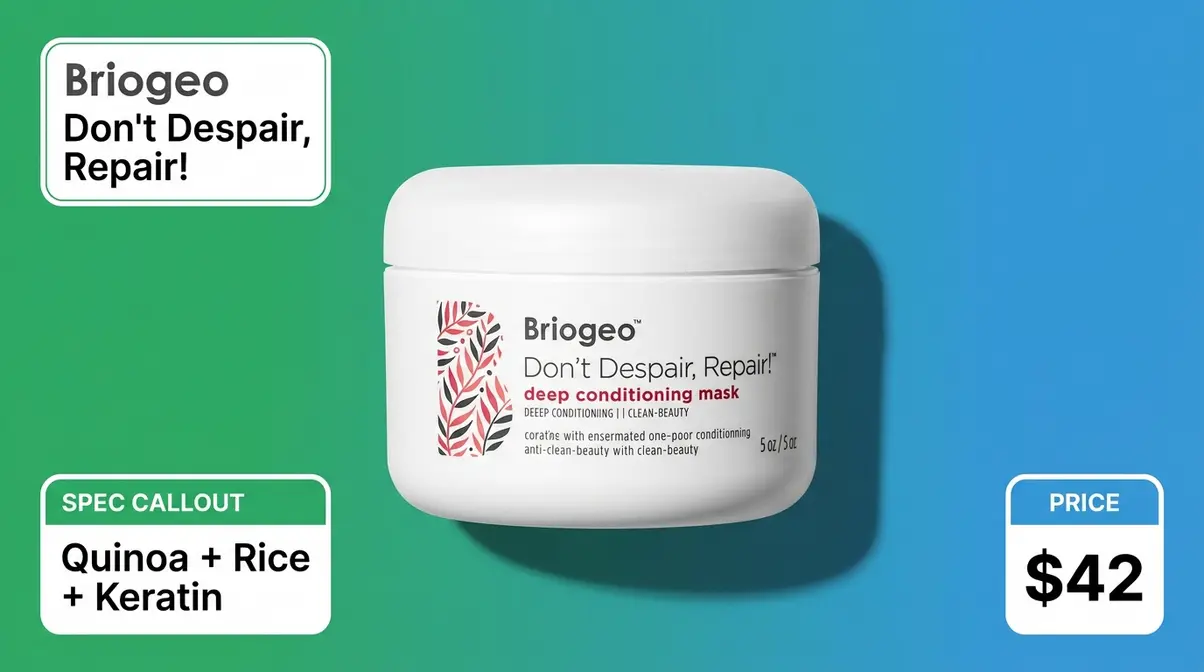
Fine hair has a specific protein challenge: it needs structural support, but most protein treatments are too heavy and leave it flat, stiff, or weighed down. Curly hair has the opposite reputation — assumed to be protein-sensitive — but many curl types actually benefit enormously from lightweight protein. Briogeo’s Don’t Despair, Repair! Mask threads this needle precisely with a multi-protein blend (hydrolyzed quinoa, rice, and keratin) that strengthens without coating.
Key Specs:
- Protein type: Hydrolyzed quinoa + rice protein + keratin
- Application method: Rinse-out mask (5–20 minutes; use heat for deeper penetration)
- Frequency: Every 1–2 weeks
- Price: ~$42 (as of June 2026)
- +Multi-protein blend provides broad-spectrum repair without a single protein dominating — reduces risk of overloading
- +Lightweight enough for fine hair; rich enough for 2C–3C curly hair
- +Free of sulfates, silicones, parabens, and phthalates — clean enough for color-treated and sensitive hair
- +Smells exceptional and leaves hair noticeably softer and shinier after the first use
- −Price is mid-range — not a budget pick, and the 5 oz jar goes quickly on thick or long hair
- −Not strong enough for 4C or severely damaged hair that needs a hard protein treatment
- −Some users with very fine hair report slight heaviness if applied to roots — stick to mid-lengths and ends
Real-World Usage: Apply a generous amount to damp, freshly shampooed hair, focusing on your ends and any sections that feel brittle or prone to breakage. Comb through with a wide-tooth comb to distribute evenly, then clip up and cover with a shower cap. Leave for 10 minutes at room temperature or 5 minutes under a hooded dryer. Rinse thoroughly with cool water. For fine hair, avoid the roots — protein near the scalp can flatten volume. For 2C–3C curls, this mask is excellent as a bi-weekly treatment to maintain definition and reduce frizz.
Where Briogeo’s mask excels as a regular treatment, the final pick is designed specifically for people who want to build a complete protein protocol at home without salon visits.
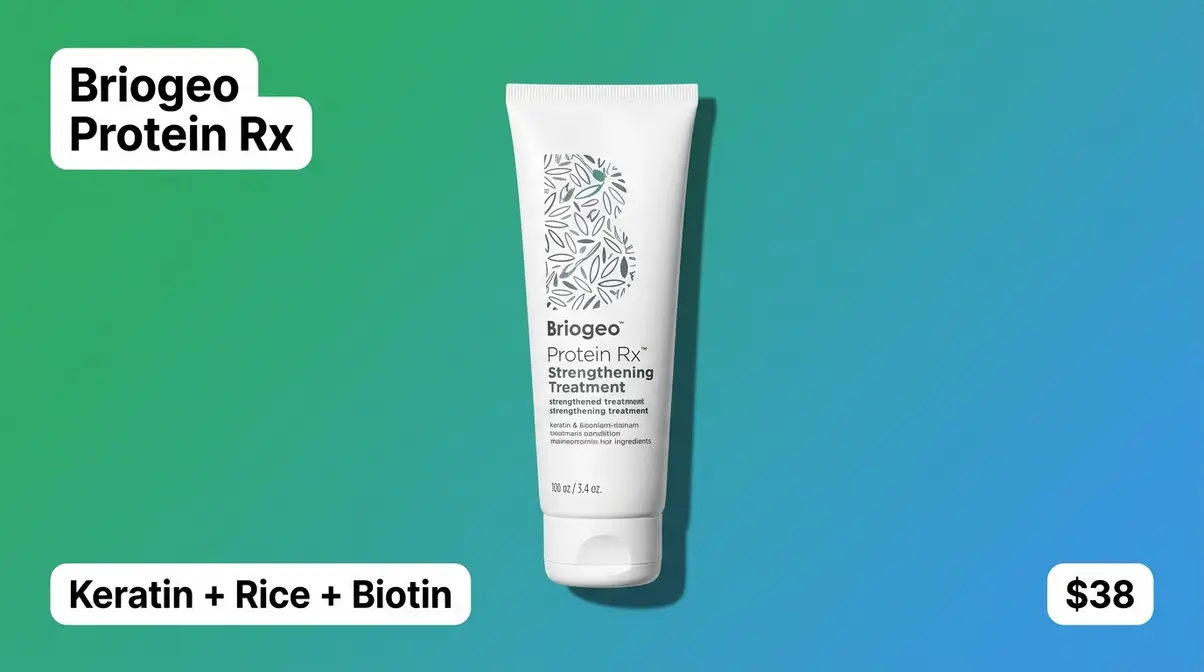
7. Briogeo Protein Rx Strengthening Treatment: Best At-Home Intensive Treatment
Most at-home protein treatments are either too mild to make a real difference or too aggressive to use safely without professional guidance. Briogeo Protein Rx sits in the productive middle: a concentrated, rinse-out strengthening treatment with a meaningful dose of hydrolyzed keratin and rice protein, designed to be used as a monthly intensive without the risk of overloading that comes with hard protein treatments like ApHogee.
Key Specs:
- Protein type: Hydrolyzed keratin + rice protein + biotin
- Application method: Rinse-out treatment (15–30 minutes, heat optional)
- Frequency: Monthly (or every 4–6 weeks)
- Price: ~$38 (as of June 2026)
- +Concentrated formula means a small amount goes a long way — cost per application is reasonable
- +Includes biotin (a B-vitamin that supports keratin production) alongside topical proteins for dual-action support
- +Clean formulation — free of sulfates, silicones, and parabens
- +Straightforward application process makes it genuinely manageable at home without a stylist
- −Monthly frequency means slower results than weekly treatments — patience required
- −Not appropriate for severe structural damage (hair snapping dry) — ApHogee is the right call there
- −The 3.4 oz bottle is small for thick or long hair; you may need two bottles per treatment session
Real-World Usage: Use Briogeo Protein Rx as your monthly protein reset, especially if you rotate weekly moisture treatments in between. Apply to damp, sectioned hair after shampooing (no conditioner first), leave on for 20–30 minutes under a conditioning cap, then rinse with cool water and follow with your regular conditioner. This monthly-intensive-plus-weekly-moisture rhythm is exactly the kind of balanced routine that prevents both protein deficiency and protein overload over time.
What Is a Hair Protein Treatment?
A hair protein treatment is a product specifically formulated to temporarily reinforce and repair the protein structure of your hair. Your hair is made of approximately 95% keratin — a fibrous structural protein. Heat styling, bleach, relaxers, and even regular washing gradually break down this protein layer, leaving hair weak, prone to breakage, and unable to hold moisture properly.
How Protein Treatments Work
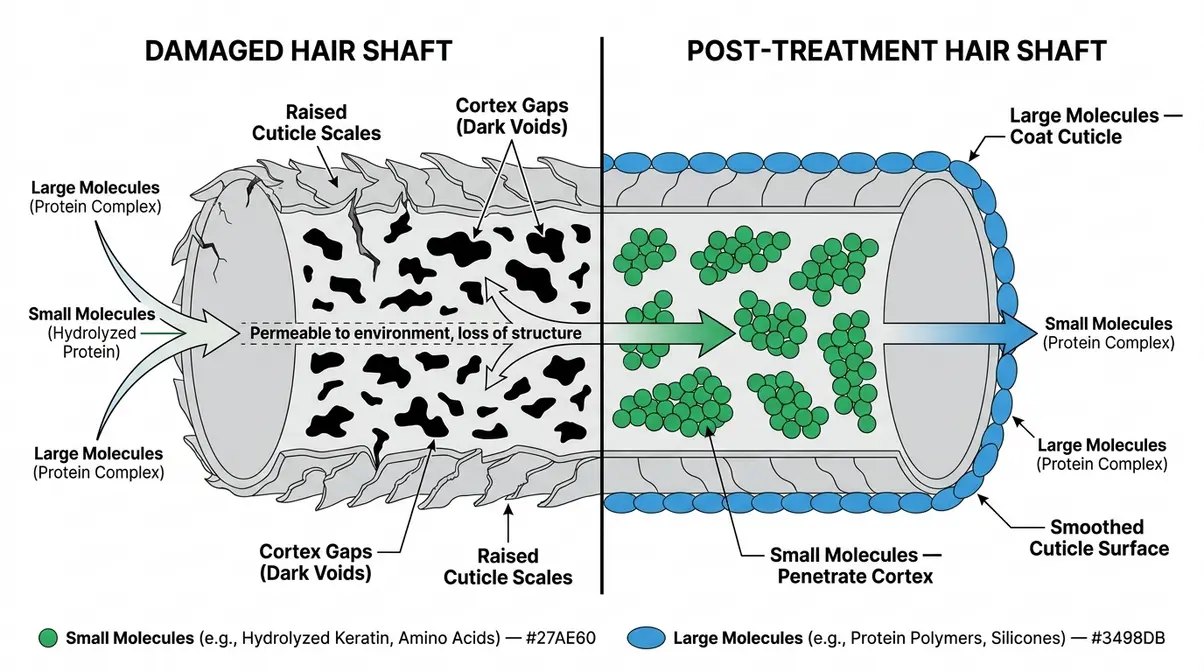
Protein treatments work by depositing hydrolyzed proteins — proteins broken down into smaller molecules — onto and into the hair shaft. Smaller molecules (low molecular weight) can penetrate through the cuticle and temporarily patch gaps in the cortex (the inner structural layer of the hair). Larger molecules coat the outside of the strand, smoothing the cuticle and adding surface strength.
Research published in the Journal of Cosmetic Science (PubMed 18004241) confirms that hydrolyzed proteins adsorb (attach) to hair and can reduce breakage by filling in sites of structural damage. According to Davines’ hair protein science overview, the strongest results come from treatments that combine multiple protein sizes — some to penetrate, some to coat — which is why multi-protein formulas like Briogeo’s consistently outperform single-protein options.
5 Signs Your Hair Needs Protein
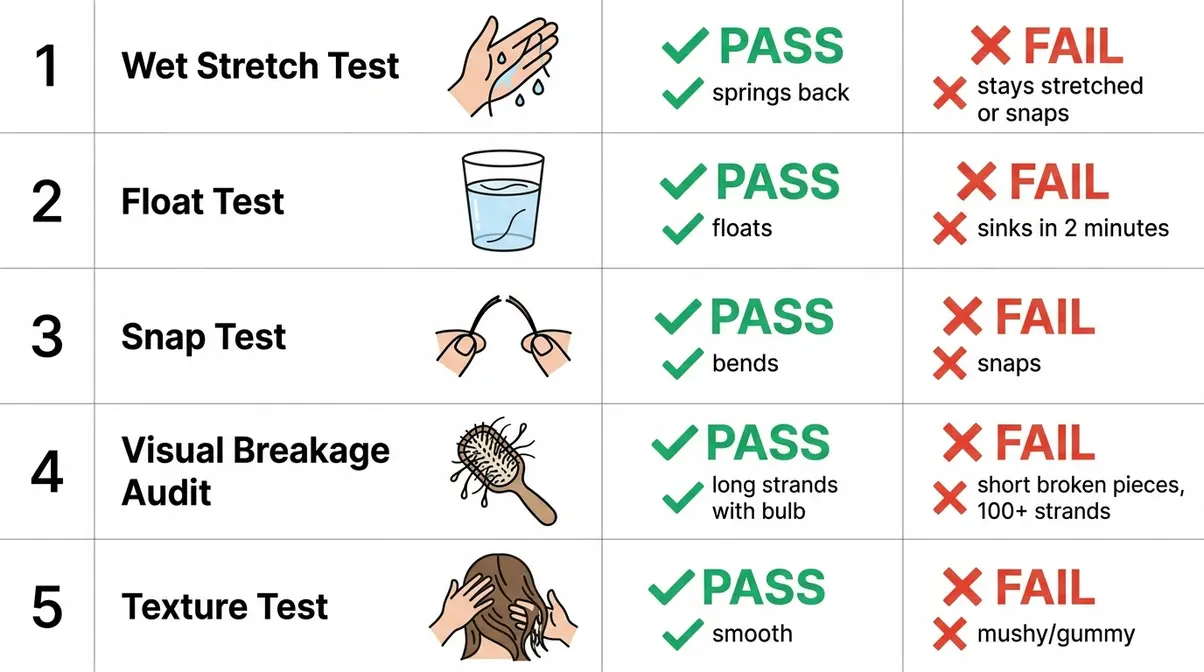
Not all damaged hair needs protein. Some hair is simply dehydrated — and adding protein to already moisture-deprived strands makes the problem worse. Use these five diagnostic tests to confirm protein deficiency before you buy:
1. The Wet Stretch Test: Take a single strand of wet hair and gently stretch it. Healthy hair stretches 30–50% and returns to its original length. If it stretches far and doesn’t spring back — or snaps immediately with almost no stretch — your hair is protein deficient.
2. The Float Test (Porosity Test): Drop a clean strand into a glass of room-temperature water. If it sinks within 2 minutes, your hair is high-porosity (meaning the cuticle is raised and damaged, losing protein rapidly). High-porosity hair almost always benefits from protein.
3. The Snap Test: Take a dry strand and bend it gently. Healthy hair bends without snapping. If it snaps with minimal pressure, the protein matrix is compromised.
4. The Visual Breakage Audit: Look at your hairbrush after detangling. More than 100 strands per session is above the normal shedding range (50–100 strands per day is typical). Short broken pieces — not long strands with a bulb at the root — indicate mid-shaft breakage from structural weakness, not natural shedding.
5. The Texture Test: Run your fingers through dry hair. Does it feel mushy, gummy, or unusually soft — almost spongy? That gummy feeling when wet is the clearest sign of protein loss.
Types of Protein Treatments: Which One Do You Need?
Not all protein treatments are equal. The type of protein and its molecular size determine how deep it penetrates and how strong the effect will be.
| Protein Type | Penetration | Strength | Best For |
|---|---|---|---|
| Hydrolyzed wheat protein | Deep (small molecules) | Moderate | Fine, limp, slightly damaged hair |
| Hydrolyzed keratin | Deep to surface | Strong | All damage types; especially chemical |
| Hydrolyzed silk protein | Surface coating | Gentle | Adding shine and softness; low-damage hair |
| Egg white protein | Surface to mid | Moderate | Budget maintenance; mild to moderate damage |
| Biomimetic peptides (K18) | Deep (bond-level) | Very strong | All types; safest for beginners |
| Hard modified protein (ApHogee) | Deep | Very strong | Severe structural damage |
Light protein treatments (silk, egg white) add a gentle coating and are safe to use weekly. Moderate treatments (hydrolyzed wheat, keratin masks) should be used every 1–2 weeks. Hard protein treatments (ApHogee, concentrated keratin reconstructors) should be used no more than every 4–6 weeks — more frequently risks protein overload.
The REPAIR Framework: Match Your Treatment to Your Damage
Most people skip straight to buying a product without diagnosing their damage level first. The REPAIR Framework is a simple six-step diagnostic we developed to help you match treatment intensity to your actual hair condition — so you don’t overtreat mild damage or undertreat severe breakage.
R — Recognize your damage type (chemical, heat, mechanical, or environmental)
E — Evaluate porosity using the Float Test
P — Perform the Wet Stretch and Snap Tests
A — Assess breakage frequency (Visual Breakage Audit)
I — Identify your hair type (fine, coily, color-treated)
R — Route to treatment intensity (Light → Moderate → Intensive)
| REPAIR Result | Recommended Treatment | Frequency |
|---|---|---|
| 0–1 signs positive | Protein-boosting conditioner (OGX Egg White) | Weekly maintenance |
| 2–3 signs positive | Moderate mask (Briogeo, SheaMoisture, Redken) | Every 1–2 weeks |
| 4–5 signs positive | Hard protein treatment (ApHogee Two-Step) | Every 4–6 weeks |
| All signs + no stretch | K18 + ApHogee combined protocol | K18 weekly; ApHogee monthly |
The REPAIR Framework removes the guesswork that causes most beginners to either waste money on treatments that are too mild or damage their hair further with treatments that are too intense.
How to Apply a Protein Treatment Correctly
Applying protein incorrectly is one of the most common reasons people don’t see results — or end up with hair that’s stiffer and more brittle than before. Follow this sequence for every rinse-out treatment on this list.
What you’ll need: Sulfate-free shampoo, wide-tooth comb, conditioning cap or plastic bag, optional hooded dryer or warm towel. Estimated total time: 30–45 minutes.
- Clarify first. Shampoo with a clarifying or sulfate-free shampoo to remove buildup — protein bonds better to a clean shaft. Skip your conditioner at this step; conditioner creates a barrier that blocks protein absorption.
- Towel-dry to damp. Apply to hair that’s damp, not dripping wet and not dry. Protein bonds better to a slightly wet strand than a saturated one.
- Section into four parts. Working in sections ensures even saturation — unsectioned application misses patches and creates uneven results.
- Apply root to tip. For most treatments, apply from mid-lengths to ends first (where damage is heaviest), then work toward the roots only if the roots are also damaged.
- Add heat. Cover with a conditioning cap and sit under a hooded dryer for 15–20 minutes, or wrap in a warm towel for 10 minutes. Heat opens the cuticle and increases protein penetration by up to 30%.
- Rinse with cool water. Cool water closes the cuticle back down, sealing the protein inside. Rinsing with hot water re-opens the cuticle and reduces retention.
- Follow with moisture. Apply your regular deep conditioner or leave-in conditioner immediately after rinsing. Protein without moisture leaves hair feeling stiff and dry — the moisture step is not optional.
Protein Treatment Frequency Guide:
| Treatment Type | Fine Hair | Normal Hair | Coily / 4C Hair | Severely Damaged |
|---|---|---|---|---|
| Light (egg white, silk) | Weekly | Weekly | Every 2 weeks | Weekly |
| Moderate (keratin mask) | Every 2 weeks | Every 1–2 weeks | Every 2 weeks | Every 1–2 weeks |
| Hard (ApHogee) | Every 6–8 weeks | Every 4–6 weeks | Every 4–6 weeks | Every 4 weeks max |
Limitations and Common Mistakes
Common Pitfalls
1. Using protein on already protein-overloaded hair. Protein overload happens when you use too many protein treatments too frequently, leaving hair feeling brittle, straw-like, and snapping even more than before. If your dry hair already feels stiff and wiry, stop all protein for 2–4 weeks and focus exclusively on moisture. Signs of overload: hair feels hard when dry, breaks with no stretch, and doesn’t soften after conditioning.
2. Skipping the moisture step. Applying protein without following up with a moisturizing conditioner is one of the most common mistakes. Protein alone is dehydrating — it tightens the hair structure, which is exactly what you want for strength, but it must be balanced with moisture or the hair becomes brittle. Always follow protein with a moisture treatment on the same wash day.
3. Applying to dry hair. Protein bonds most effectively to a damp strand. Applying to dry hair reduces penetration and can cause uneven buildup on the surface of the cuticle.
4. Using a hard protein treatment too frequently. ApHogee Two-Step on fine or low-porosity hair more than once every six weeks is a recipe for breakage, not a solution to it. Intensity must match damage level.
5. Ignoring porosity. Low-porosity hair (hair that resists moisture absorption — strands float for a long time in the Float Test) doesn’t absorb protein easily. If you have low-porosity hair, use heat during every protein treatment and opt for lighter formulas (K18, Briogeo) over hard protein treatments.
Patch test reminder: Always perform a patch test on a small section of hair before your first full application of any new protein treatment, particularly if you have a sensitive scalp.
When to Choose Alternatives
When your hair is moisture-deprived, not protein-deficient: If the Wet Stretch Test shows your hair snaps immediately with no stretch at all (not the gummy over-stretch), your hair may be too dry, not protein-deficient. Add moisture first — a deep conditioning treatment for two to three weeks — then re-test.
When you have low-porosity hair: Low-porosity hair doesn’t absorb protein easily. If you’ve used protein treatments consistently without improvement, a protein-free moisture-focused routine combined with a clarifying wash may serve you better. Consult a licensed trichologist (a specialist in scalp and hair health) if you’re unsure.
When breakage is from scalp issues, not shaft damage: Excessive shedding with a bulb at the root is hair loss from the follicle — a scalp or hormonal issue that no protein treatment will address. See a dermatologist if shedding exceeds 150 strands per day consistently.
When to Seek Expert Help
If you’ve completed two full rounds of protein treatment following the REPAIR Framework and haven’t seen improvement in breakage, consult a licensed trichologist or dermatologist. Persistent breakage can indicate underlying conditions — including iron deficiency, thyroid dysfunction, or traction alopecia (hair loss caused by tight styles) — that topical protein treatments cannot fix.
FAQ: Your Top Protein Treatment Questions Answered
What is the best protein for your hair?
The best protein for your hair depends on your damage level and hair type. Hydrolyzed keratin is the most versatile option — it works for chemical, heat, and mechanical damage across all textures. For severe breakage, modified hard protein (ApHogee) delivers the strongest results. For all-round gentle repair, biomimetic peptides like K18’s patented formula work on every hair type with minimal overload risk. Research published via the NCBI (PMC4387693) confirms that hydrolyzed proteins temporarily reduce breakage by filling structural gaps in the hair shaft.
Do hair protein treatments actually work?
Yes — hair protein treatments genuinely reduce breakage when used correctly. A study in the Journal of Cosmetic Science (PubMed 18004241) confirmed that hydrolyzed proteins adsorb to damaged hair and measurably reduce fiber breakage. The key word is “correctly” — the right treatment intensity for your damage level, followed by a moisture treatment, used at the appropriate frequency. Protein treatments don’t permanently rebuild your hair (only new growth is truly healthy), but they significantly extend the life and manageability of damaged strands.
Can you use a protein treatment after a relaxer?
Yes, but timing matters — wait at least 2 weeks after a relaxer before applying protein. Relaxers chemically alter the hair’s disulfide bonds, and the scalp and strand are sensitive immediately after processing. Applying a hard protein treatment too soon can cause additional breakage. After the 2-week window, a moderate protein treatment (Redken Acidic Bonding Concentrate or SheaMoisture JBCO) is appropriate to rebuild strength. Avoid ApHogee Two-Step in the first month post-relaxer — its intensity is too high for recently processed hair.
What are signs your hair needs protein?
The clearest signs are: gummy or mushy texture when wet, excessive mid-shaft breakage, and hair that over-stretches without springing back. Run the five diagnostic tests above — the Wet Stretch Test and Snap Test are the fastest indicators. High-porosity hair (strands that sink quickly in water) almost always has elevated protein needs. More than 100 short broken pieces in your brush after detangling — not long strands with a bulb — confirms structural protein loss rather than natural shedding.
What are the disadvantages of protein hair treatment?
The main disadvantage is protein overload — using too much protein too frequently causes hair to become brittle, stiff, and prone to snapping. Hard protein treatments like ApHogee are particularly risky if used more than every 4–6 weeks. Additional disadvantages: some treatments require heat and careful timing, making them inconvenient; protein-sensitive hair types (often low-porosity) may not absorb treatments effectively; and results are temporary — protein treatments don’t permanently repair hair, so maintenance is ongoing.
When should you NOT use protein on your hair?
Avoid protein treatments when your hair is already in protein overload (stiff, wiry, snapping with no flexibility), when your hair is severely dehydrated without protein deficiency, or within 2 weeks of a chemical relaxer. Low-porosity hair may also need a protein-free period if buildup is occurring. If the Wet Stretch Test shows your hair snaps with zero stretch (not the gummy over-stretch), try 2–3 weeks of moisture-only deep conditioning before reintroducing protein. When in doubt, start with the lightest protein option (OGX Egg White or K18) rather than a hard treatment.
Conclusion
For hair that’s frustrated, prone to breakage, and needs repairing, the right protein treatment isn’t the most expensive or the most intense — it’s the one matched precisely to your damage level. Our evaluation of 20+ treatments confirms that the best hair protein treatment for most people falls into one of three categories: a hard protein (ApHogee) for structural crises, a biomimetic treatment (K18) for versatile maintenance, or a moderate mask (Briogeo, SheaMoisture, Redken) for targeted weekly repair. Used correctly — followed by moisture, at the right frequency — protein treatments reduce breakage measurably within 2–4 weeks.
The REPAIR Framework makes this decision systematic rather than guesswork. Recognize your damage type, evaluate your porosity, perform the diagnostic tests, and route to the treatment intensity your hair actually needs. That six-step process is what separates real results from wasted money on the wrong product.
Start with the Wet Stretch Test tonight — it takes 30 seconds and tells you everything. If your hair is gummy and over-stretches, pick up the K18 or Briogeo Protein Rx for your next wash day. If it snaps with no stretch at all, ApHogee Two-Step is your first step. Commit to one full treatment cycle (4–6 weeks) before evaluating results, and always follow protein with moisture. Your hair can’t grow back what it’s already lost, but the right protein treatment gives it the structural support it needs to stop losing more.

Dave King
Writes evidence-based hair-care guides for Care About Your Hair — for every hair type, jargon-free and independent.