
Table of Contents
- Introduction to 4B Hair Texture
- Defining 4B Hair Within the Andre Walker Hair Typing System
- Identifying Your Curl Pattern
- The Science and Characteristics of 4B Hair
- The Essential 4B Hair Care Regimen
- Best Ingredients and Products for 4B Hair
- Styling 4B Hair for Length Retention and Definition
- Common Challenges and Solutions for 4B Hair
- Diet, Health, and Hair Growth
- Seasonal Care for 4B Textures
- Frequently Asked Questions
This blog post may contain affiliate links. As an Amazon Associate I earn from qualifying purchases.
Introduction to 4B Hair Texture
4B hair is one of the most beautifully complex textures in the natural hair world, yet it remains widely misunderstood. This coily, densely packed hair type features a distinctive zigzag pattern that creates incredible volume, softness, and versatility when cared for properly.
If you have 4B hair, you already know the unique journey of learning to work with your texture rather than against it. The tight bends, the dramatic shrinkage, and the constant need for moisture can feel overwhelming at first. But once you understand the science behind your strands and develop a routine tailored to your specific needs, 4B hair becomes a source of pride and endless styling possibilities.
This comprehensive guide covers everything you need to know about identifying, nurturing, and styling 4B hair. Whether you are newly natural, transitioning from relaxed hair, or simply looking to refine your current routine, you will find actionable strategies backed by trichological research and real-world experience from the natural hair community.
Defining 4B Hair Within the Andre Walker Hair Typing System
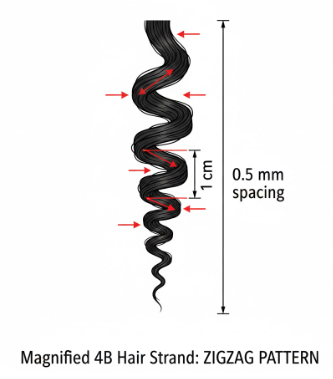
4B hair sits in the middle of the Type 4 spectrum, characterized by tightly coiled strands that bend at sharp angles rather than forming defined spirals. Understanding where your hair falls within this classification helps you select appropriate products and techniques.
The Unique Geometry of the Z-Shaped Strand
The defining characteristic of 4B hair is its Z-shaped or zigzag pattern. Unlike 4A hair, which forms visible S-shaped coils, 4B strands bend at sharp, almost right angles. This geometry creates several important characteristics that influence how you should care for your hair.
Each bend in the strand represents a potential weak point where breakage can occur. The tight angles also mean that natural sebum produced by your scalp has difficulty traveling down the hair shaft. While someone with straight or wavy hair might find their strands become oily within a day or two, 4B hair can go weeks without adequate sebum coverage at the ends.
This structural reality explains why moisture is the cornerstone of any successful 4B hair care routine. The bends and angles that make your texture so unique also require intentional hydration strategies to maintain health and prevent damage.
Distinguishing Features of 4B Texture
4B hair presents several recognizable characteristics that set it apart from other curl types. The texture often feels soft and fluffy, sometimes described as having a cotton-like quality. When stretched, 4B hair reveals significant length that shrinks dramatically when released, often reducing to half its true length or less.
The curl pattern in 4B hair is less defined than in looser curl types. Without product manipulation, 4B hair typically does not form visible ringlets or coils. Instead, it creates a dense, full appearance with individual strands bending tightly against each other. This lack of obvious curl definition is not a flaw but rather a characteristic feature of the texture.
Density in 4B hair tends to run high, meaning there are many strands packed into each square inch of scalp. Combined with the volume created by the zigzag pattern, this density produces the impressive fullness that many 4B naturals celebrate.
Why 4B Hair Is Often Misunderstood
For decades, mainstream beauty standards largely ignored Type 4 hair, leaving those with coily textures without proper guidance or representation. The hair care industry historically formulated products for straighter textures, and styling advice rarely addressed the specific needs of tightly coiled patterns.
This lack of representation led to widespread misconceptions. Many people with 4B hair grew up believing their texture was unmanageable, difficult, or needed to be chemically altered to be beautiful. These damaging narratives persist today, even as the natural hair movement has created more resources and community support.
The truth is that 4B hair is not difficult. It simply has different requirements than other textures. Once you understand these requirements, caring for 4B hair becomes a straightforward process of meeting your strands’ specific needs for moisture, protection, and gentle handling.
The Biological Structure of Coily Hair
At the microscopic level, 4B hair has several structural differences from straighter hair types. The cross-section of a 4B strand is typically more elliptical or flat compared to the round cross-section of straight hair. This shape contributes to the bending pattern and affects how light reflects off the strand surface.
The cuticle layer, which consists of overlapping scales protecting the inner cortex, tends to be raised in coily hair types. This raised cuticle means moisture can escape more easily, contributing to the dryness that 4B hair often experiences. It also affects how products absorb into the strand and how light reflects, which is why 4B hair may appear less shiny than straighter textures even when perfectly healthy.
Understanding these biological realities helps explain why certain products and techniques work better for 4B hair. You are not fighting against bad hair but rather working with a texture that has specific structural needs.
Embracing Natural Shrinkage and Density
Shrinkage is one of the most discussed aspects of 4B hair care, and for good reason. The same zigzag pattern that defines the texture also causes dramatic length reduction when hair is in its natural state. Many 4B naturals experience shrinkage of 50 to 75 percent, meaning hair that stretches to shoulder length might appear only a few inches long when dry.
While shrinkage can feel frustrating, especially when you want to show off your length, it is actually a sign of healthy, elastic hair. Strands that have lost elasticity due to damage often show reduced shrinkage, so that tight coil-up indicates your hair is in good condition.
Learning to appreciate shrinkage rather than fight against it can transform your relationship with your hair. Many styling techniques work with shrinkage to create beautiful, voluminous looks. For times when you want to display length, gentle stretching methods can elongate your strands without causing damage.
Identifying Your Curl Pattern
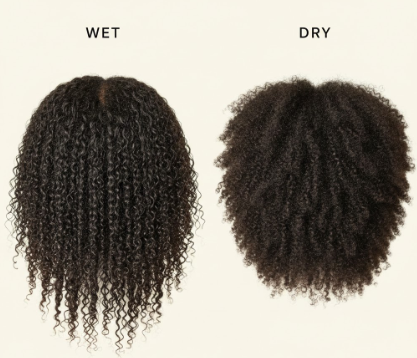
Accurately identifying your curl pattern is the first step toward developing an effective hair care routine. Many people with Type 4 hair find themselves uncertain whether they have 4A, 4B, or 4C texture, and some have multiple patterns on different areas of their head.
Visual and Tactile Indicators of 4B Hair
The most reliable way to identify 4B hair is through careful observation of clean, product-free strands. After washing and allowing your hair to dry without any styling products, examine individual strands closely.
4B hair forms a distinct zigzag or Z pattern rather than well-defined spirals. If you stretch a single strand, you will notice it bends at sharp angles, almost like the letter Z repeated along the length. When released, the strand springs back into these tight bends.
The overall appearance of 4B hair is often described as fluffy or cotton-like. It has significant volume and density but lacks the clearly visible coil definition seen in 4A hair. From a distance, 4B hair may appear as a soft, dense cloud rather than a collection of individual curls.
Touching 4B hair reveals a soft, sometimes wiry texture. The strands feel fine but pack together densely, creating substantial fullness. Some people with 4B hair have coarser individual strands, while others have fine strands that simply grow close together.
Common Confusion Between 4B, 4A, and 4C
Many naturals struggle to determine their exact curl type, and this confusion is understandable. Hair typing exists on a spectrum, and your hair may display characteristics of multiple types. Additionally, different sections of your head may have different curl patterns.
The key differences come down to curl definition and pattern shape. If you have 4A hair, you might notice that understanding what sets apart the looser, more defined S-pattern helps clarify your own texture. Meanwhile, distinguishing between 4B and 4C often comes down to visibility of any pattern at all, with 4C showing the least definition.
Rather than stressing over exact classification, use hair typing as a general guide. What matters most is understanding your hair’s specific needs for moisture, protein, and handling, which may vary even among people with the same curl type.
Key Differences Between 4A and 4B Hair
4A hair forms visible S-shaped coils that are clearly defined even without product. These coils are typically about the width of a crochet needle or small spring. The curl pattern is consistent and recognizable, with each strand forming discrete spirals.
4B hair, in contrast, bends in sharp Z-shaped angles rather than smooth curves. The pattern is tighter and less defined, creating more of a crimped appearance than obvious coils. Without product manipulation, 4B hair does not naturally clump into ringlets.
Moisture retention also differs between these types. The tighter bends in 4B hair make it harder for sebum to travel down the shaft, meaning 4B hair typically needs more frequent moisture application. Shrinkage is also more dramatic in 4B hair due to the acute angles of the zigzag pattern.
When styling, 4A hair tends to hold curl definition more easily, while 4B hair often requires more product and manipulation to create visible curl patterns. This is not a limitation but simply a characteristic that informs styling approach.
Key Differences Between 4B and 4C Hair
Distinguishing between 4B and 4C hair can be particularly challenging since both are tightly coiled with significant shrinkage. The primary difference lies in the visibility of any curl pattern.
4B hair, despite its tight bends, still shows a visible zigzag pattern when examined closely. Individual strands have a clear, repeating Z-shape that you can observe when you stretch and release a single hair.
4C hair has an even tighter pattern with almost no definition visible to the naked eye. The coils are so compact that individual strands appear almost straight until you stretch them and observe them closely. 4C hair often has the most shrinkage of any hair type, sometimes appearing 75 percent shorter than its true length.
Texture also differs slightly. 4C hair is often described as having a more wiry feel, while 4B tends toward a softer, cottony texture. However, individual variation means these generalizations do not apply to everyone.
Both 4B and 4C hair require similar care approaches, emphasizing moisture, gentle handling, and protective styling. If you are uncertain which type you have, focus on learning your hair’s specific responses to products and techniques rather than achieving a precise classification.
The Science and Characteristics of 4B Hair
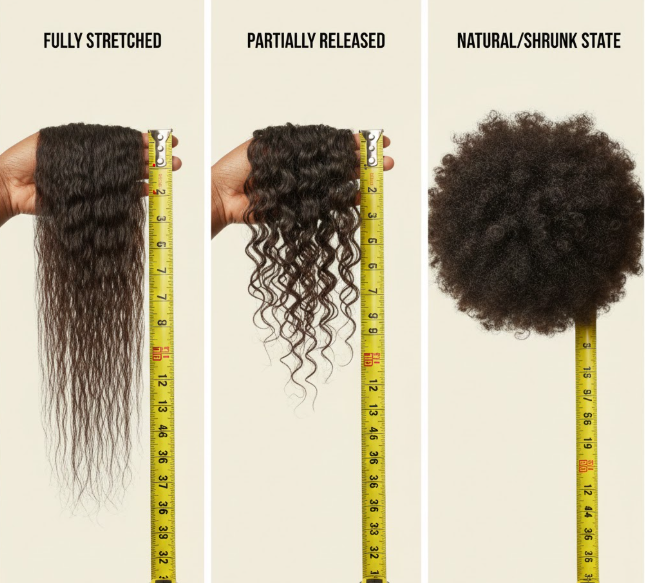
Understanding the science behind your hair texture empowers you to make informed decisions about products and techniques. The characteristics that define 4B hair stem from biological and structural factors that respond to specific care approaches.
The Mechanics of Shrinkage
Shrinkage occurs because the bends in each hair strand cause it to coil back on itself when dry. The tighter and more numerous these bends, the more dramatic the shrinkage. For 4B hair, shrinkage typically ranges from 50 to 75 percent of stretched length.
Several factors influence how much your hair shrinks. Humidity can increase or decrease shrinkage depending on your hair’s porosity. Products that provide hold or stretching can reduce shrinkage temporarily. Heat styling eliminates shrinkage but can cause permanent damage if done improperly.
Shrinkage indicates that your hair has good elasticity, which is a marker of strand health. Hair that has been damaged by heat, chemicals, or mechanical stress often loses elasticity and shows reduced shrinkage. If you notice your shrinkage decreasing without intentional intervention, it may signal damage that needs to be addressed.
Rather than viewing shrinkage as a problem to solve, consider it a feature of your texture. Many gorgeous styles work with shrinkage rather than against it, from twist-outs that showcase volume to wash-and-go styles that celebrate your natural coil pattern.
Tensile Strength and Fragility
Every bend in a 4B strand represents a stress point where breakage can occur. The acute angles of the zigzag pattern create multiple vulnerable areas along each hair, making 4B hair more prone to breakage than straighter textures under mechanical stress.
This fragility does not mean 4B hair is inherently weak. When properly moisturized and handled gently, 4B hair can grow to impressive lengths. The key is understanding that rough handling, aggressive detangling, or excessive manipulation will cause breakage at those vulnerable bend points.
Chemical damage from relaxers, color treatments, or improper use of heat tools weakens the protein bonds within the strand, making breakage even more likely. Many naturals with 4B hair find that avoiding or minimizing chemical processing significantly improves their length retention.
Mechanical damage from tight hairstyles, rough towel drying, or using the wrong tools also contributes to breakage. Switching to wide-tooth combs, finger detangling, and low-tension styles can dramatically reduce mechanical stress on your strands.
Hair Porosity and 4B Textures
Porosity refers to your hair’s ability to absorb and retain moisture, determined by the condition of the cuticle layer. Understanding your porosity helps you select products that work with rather than against your hair’s structure.
Low porosity hair has a tightly closed cuticle layer that resists absorbing moisture. Water and products tend to sit on top of the strand rather than penetrating. Signs of low porosity include products sitting on hair rather than absorbing, water beading on strands rather than soaking in, and hair taking a long time to dry.
For low porosity 4B hair, lighter products work better than heavy butters. Applying products to damp hair and using heat or steam during deep conditioning helps open the cuticle for better absorption. Avoiding heavy product buildup is essential since low porosity hair struggles to absorb additional layers.
High porosity hair has a raised or damaged cuticle that absorbs moisture quickly but also loses it rapidly. Signs include hair that gets wet almost instantly, dries very quickly, and feels dry again soon after moisturizing.
High porosity 4B hair benefits from heavier products that help seal moisture inside the strand. Protein treatments can help temporarily fill gaps in the cuticle. Layering products using methods like LOC or LCO helps maintain moisture longer.
To test your porosity at home, place a clean strand of hair in a glass of room temperature water. Low porosity hair floats for an extended time, normal porosity hair floats then slowly sinks, and high porosity hair sinks quickly.
Density and Strand Thickness
Density refers to how many strands grow from your scalp, while thickness describes the diameter of individual strands. These are separate characteristics, and 4B hair can be any combination of dense or sparse, fine or coarse.
Fine 4B hair has strands with a small diameter that may feel soft and silky. Fine strands are more fragile and prone to breakage, requiring gentler handling. Lighter products often work better to avoid weighing down fine hair.
Coarse 4B hair has strands with a larger diameter that feel thicker and may be more resistant to styling. Coarse strands are generally stronger but can be more prone to dryness since the larger surface area means more cuticle layer needing moisture.
High density means you have many strands growing close together, creating substantial volume and fullness. High density hair may need more product to ensure coverage and can take longer to dry and style.
Low density means fewer strands per square inch, which may make your scalp more visible, especially when hair is wet. Low density 4B hair benefits from voluminous styles and products that create the appearance of fullness.
The Essential 4B Hair Care Regimen
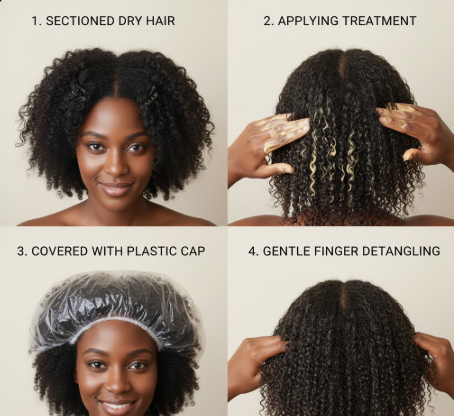
Building an effective care routine for 4B hair requires understanding the fundamental steps and how they work together to maintain moisture, prevent breakage, and support growth. This section outlines the core components of a successful 4B hair care regimen.
Pre-Poo and Detangling Strategies
The pre-poo step, short for pre-shampoo, prepares your hair for washing and prevents the stripping of natural oils. For 4B hair, this step also provides an opportunity for gentle detangling that prevents breakage during the wash process.
Applying oil or conditioner before shampooing creates a protective barrier on the strand. The shampoo can still cleanse the scalp and remove buildup, but it does not strip as much moisture from the hair itself. Oils like olive, coconut, or avocado work well for pre-pooing, as do rich conditioners.
Detangling during the pre-poo phase, when hair is coated with a slippery product, significantly reduces breakage compared to detangling dry hair. Start at the ends of your hair and work upward toward the roots, removing tangles gradually without pulling.
Finger detangling is the gentlest method for 4B hair. Using your fingers allows you to feel knots and tangles and work them apart without the mechanical stress of combs or brushes. For more stubborn tangles, a wide-tooth comb can be used after finger detangling.
Sectioning your hair before detangling makes the process more manageable and reduces the risk of re-tangling sections you have already completed. Dividing hair into four or more sections and clipping them separately keeps your work organized and thorough.
Cleansing Routine for Coily Hair
Cleansing removes buildup from products, sebum, sweat, and environmental pollutants. For 4B hair, the goal is achieving a clean scalp without stripping moisture from the strands.
Sulfate-free shampoos are generally recommended for 4B hair because they cleanse without being as harsh as traditional sulfates. Look for shampoos that list gentle surfactants like cocamidopropyl betaine or decyl glucoside as cleaning agents. These will remove dirt and buildup while preserving more of your hair’s natural moisture.
Clarifying shampoos, which contain stronger cleansing agents, are still necessary occasionally to remove stubborn product buildup. Using a clarifying shampoo once a month or when you notice your hair feeling coated or weighed down helps reset your strands. Follow clarifying washes with extra conditioning since they are more drying.
Co-washing, or washing with conditioner only, has gained popularity in the natural hair community. This method cleanses gently while adding moisture. However, co-washing alone may not adequately cleanse the scalp over time, potentially leading to buildup, flaking, or irritation. Most 4B naturals find success alternating between low-poo washes and occasional co-washes rather than exclusively co-washing.
When shampooing, focus the product on your scalp where oil and buildup accumulate. Let the suds run through the length of your hair as you rinse rather than scrubbing the strands themselves, which can cause tangling and damage.
The Art of Deep Conditioning
Deep conditioning is arguably the most important step in any 4B hair care routine. This treatment infuses moisture and nutrients into the strand, restoring what is lost through daily exposure and styling.
The balance between protein and moisture is crucial for healthy 4B hair. Protein treatments strengthen the strand by temporarily filling gaps in the cuticle and reinforcing the hair structure. Moisture treatments hydrate and increase flexibility. Most people need more moisture than protein, but both are necessary.
Signs you need protein include hair that feels mushy or gummy when wet, excessive stretching without snapping back, and difficulty holding styles. Signs you need moisture include hair that feels dry, stiff, or brittle, snapping with little stretch, and excessive breakage.
Deep conditioners work best when given time to penetrate the strand. Apply generously to clean, wet hair, then cover with a plastic cap to trap heat from your body. For even better penetration, sit under a hooded dryer or warm your conditioner before applying. Leave the treatment on for at least 15 to 30 minutes before rinsing.
Frequency of deep conditioning depends on your hair’s needs and the stress it experiences. Most 4B naturals benefit from weekly deep conditioning, with protein treatments every four to six weeks or as needed.
Moisturizing Methods LOC vs LCO
The LOC and LCO methods are layering techniques designed to maximize moisture retention in coily hair. Both involve the same three components applied in different orders: Liquid, Oil, and Cream.
The LOC method starts with a water-based liquid (often water itself or a water-based leave-in conditioner), follows with oil, and finishes with cream. The theory is that oil applied over water helps trap that moisture in, while cream provides additional sealing and nourishment.
The LCO method applies cream before oil, using the oil as the final sealing layer. This order often works better for low porosity 4B hair because heavy creams can sit on top of low porosity strands without absorbing. Applying cream while hair is still very wet from the liquid step, then sealing with oil, can improve absorption.
Experimenting with both methods helps you determine what works best for your specific hair. Some people find variations that suit them better, such as adding an additional layer of oil before the cream or using a butter as their final seal.
Regardless of which method you choose, the key principle remains consistent: 4B hair needs water-based moisture followed by products that seal that moisture in. Without sealing, water evaporates quickly, leaving hair feeling dry again within hours.
Sealing Moisture Effectively
Sealing is the process of applying a product that locks moisture inside the hair strand, preventing evaporation. For chronically dry 4B hair, effective sealing can make the difference between moisturized and perpetually parched strands.
Oils are the most common sealing products. Heavier oils like castor oil, olive oil, and jamaican black castor oil provide strong sealing for very dry or high porosity hair. Lighter oils like jojoba, sweet almond, and grapeseed work better for fine or low porosity hair that can be weighed down by heavy products.
Butters also function as sealants. Shea butter, mango butter, and murumuru butter create a protective coating on the strand. Some naturals prefer butter-based products for their ends, which are the oldest and driest part of the hair.
When sealing, focus on the length of your hair rather than your scalp. Your scalp produces its own sebum and generally does not need additional oil, which can clog follicles or cause buildup. Your ends, however, benefit from concentrated sealing since they are furthest from the scalp’s natural oil production.
Best Ingredients and Products for 4B Hair
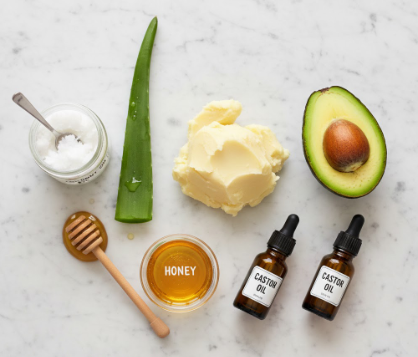
The ingredients in your hair products directly affect their performance on 4B hair. Understanding which ingredients hydrate, soften, and protect your strands helps you evaluate products and build an effective routine.
Humectants to Draw Moisture In
Humectants are ingredients that attract water molecules from the environment and bind them to your hair. They function as the moisture-boosting component in many leave-in conditioners and styling products.
Glycerin is one of the most common humectants in hair care. It effectively draws moisture to the strand and helps maintain hydration. Aloe vera gel provides humectant properties along with vitamins and soothing compounds. Honey is a natural humectant that also provides shine and some hold.
However, humectants have a potential drawback: they draw moisture from wherever it is most available. In humid environments, this means pulling moisture from the air into your hair, which can cause frizz. In very dry environments, humectants may actually draw moisture out of your hair and into the dry air.
Pay attention to dew point when using humectant-heavy products. When the dew point is between 40 and 60 degrees Fahrenheit, humectants generally work well. Below 40 degrees or above 60 degrees, you may want to minimize humectant use or choose products with humectants lower on the ingredient list.
Emollients for Softening and Smoothing
Emollients soften hair and improve its texture by filling gaps in the cuticle and smoothing the strand surface. They make hair feel more supple and help reduce tangles.
Shea butter is a popular emollient for 4B hair, providing softness along with sealing properties. Mango butter offers similar benefits with a lighter feel that some find works better for fine or low porosity hair. Cocoa butter provides intense emollient effects though it can be heavy.
Fatty alcohols like cetyl alcohol and stearyl alcohol are emollients commonly found in conditioners. Despite containing “alcohol” in their names, these ingredients are not drying like short-chain alcohols. They provide slip that makes detangling easier and leave hair feeling smooth.
Emollient-rich products work well for styling cream formulations that need to smooth hair into defined patterns. They also make excellent leave-in conditioners that combat the rough, dry feel that 4B hair can develop between wash days.
Occlusives for Sealing Ends
Occlusives create a physical barrier on the hair surface that prevents moisture loss. They are the final step in sealing routines, locking in the hydration provided by water and humectants.
Castor oil is highly occlusive and popular for 4B hair. Jamaican black castor oil, which is processed with ash, is particularly favored for its thickness and potential scalp benefits. The heaviness of castor oil makes it ideal for ends but potentially too much for full-strand application on fine hair.
Jojoba oil closely mimics human sebum and provides moderate occlusive properties with excellent absorption. It works well for those who find heavier oils leave their hair feeling greasy.
Avocado oil offers occlusive sealing along with penetrating properties, meaning some of it absorbs into the strand while some remains on the surface. This dual action makes it a versatile choice for 4B hair.
Silicones are effective occlusives that create a smooth, shiny finish. However, non-water-soluble silicones like dimethicone can build up on hair over time, requiring clarifying shampoo to remove. Water-soluble silicones like cyclomethicone provide similar smoothing effects without the buildup issues.
Ingredients to Avoid or Limit
Certain ingredients can be counterproductive for 4B hair, causing dryness, brittleness, or buildup that interferes with moisture absorption.
Drying alcohols like alcohol denat, isopropyl alcohol, and SD alcohol evaporate quickly and can strip moisture from hair. These are different from beneficial fatty alcohols and should be avoided or used minimally in leave-in products. In rinse-out products, they are less concerning since they wash away.
Mineral oil and petrolatum create a strong occlusive barrier but do not actually moisturize. When used heavily without proper hydration underneath, they can give the appearance of moisturized hair while actually sealing in dryness. Used sparingly as the final step in a thorough moisture routine, they can be effective sealants.
Heavy proteins applied too frequently can make hair feel stiff and brittle. If you have low porosity 4B hair, you may be especially sensitive to protein overload. Watch for signs of too much protein and reduce usage if your hair feels dry and hard despite moisture application.
Sulfates in shampoo effectively cleanse but strip natural oils. While occasional clarifying with sulfate shampoo is fine, daily or weekly sulfate use can keep 4B hair in a perpetual state of dryness. Opt for sulfate-free cleansers for regular washing.
Styling 4B Hair for Length Retention and Definition
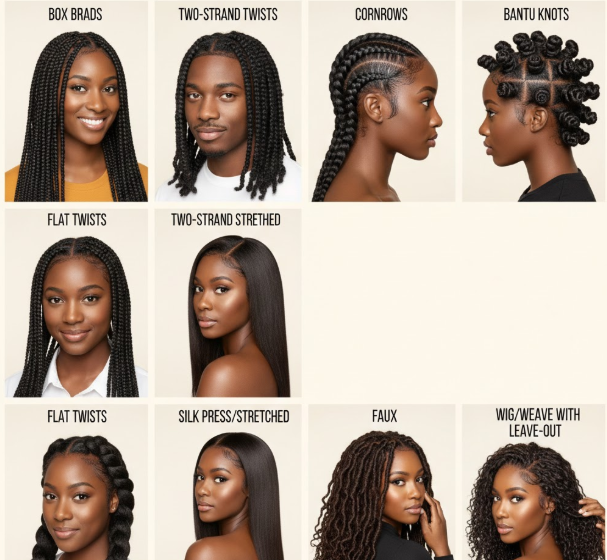
Styling 4B hair involves balancing aesthetic goals with hair health. The right styles protect vulnerable ends, minimize manipulation, and still allow you to express your personal style.
Protective Styling Fundamentals
Protective styles tuck away the ends of your hair, shielding them from environmental exposure, friction, and manipulation. For 4B hair, protective styling is one of the most effective strategies for length retention.
Box braids, twists, and cornrows are classic protective styles that keep ends secured. When installed properly with low tension, these styles allow you to go days or weeks without manipulating your hair while still looking polished.
The key phrase is “installed properly.” Protective styles can become damaging styles if done with excessive tension, too-small sections, or too much added hair weight. Signs that a protective style is too tight include headaches, bumps along the hairline, and scalp soreness. These symptoms indicate tension that can lead to traction alopecia, a form of hair loss from chronic pulling.
Maintaining your scalp and strands while wearing protective styles is essential. Moisturize your scalp with lightweight oils and hydrate your hair length as much as the style allows. Do not leave protective styles in longer than recommended, typically two to six weeks depending on the style.
Some naturals worry about whether they should transition between curl types when their hair texture seems similar to other types. If you have recently come from a looser texture due to transitioning or simply want to understand how neighboring patterns differ, exploring how 2C hair textures compare to your own can provide helpful context on the curl spectrum.
Low-Manipulation Styles
Low-manipulation styles require minimal daily handling while still allowing your hair to be loose or stretched. These styles reduce mechanical damage from constant styling while showcasing your natural texture.
Twist-outs are created by sectioning damp hair, applying product, twisting each section, allowing it to dry completely, and then unraveling the twists. The result is defined, elongated curls that can last several days. Braid-outs follow the same process using braids instead of twists, creating a slightly different wave pattern.
For naturals who want to understand how their 4B twist-out results might differ from those with slightly looser patterns, looking into how 3B hair responds to these same techniques provides interesting comparisons across the texture spectrum.
The puff is a simple low-manipulation style that gathers hair at the crown. Using a satin scrunchie or gentle hair tie minimizes breakage at the hairline. The puff works well for second or third day hair when your curl definition has relaxed.
Afros celebrate 4B volume in its full glory. Picking out hair gently with a wide-tooth pick creates maximum fullness. Shaping an afro with minimal pulling and using light oils for sheen keeps this style healthy.
Wash and Go on 4B Hair
The wash and go remains a debated topic in the 4B hair community. Some naturals achieve beautiful results, while others find the shrinkage and potential tangling too challenging. Success often depends on technique and product selection.
Shingling involves applying gel or curl cream to small sections and smoothing the product through from root to end. This technique encourages curl clumping and definition. For 4B hair, shingling creates more visible curl pattern than simply scrunching in product.
The prayer hands method smooths product through sections by pressing hair between flat palms. This distributes product evenly and encourages curl definition without causing tangles from raking or rubbing.
Product choice significantly impacts wash and go success on 4B hair. Gels provide hold that maintains curl definition as hair dries and throughout the day. Custards offer softer hold with more moisture but may not maintain definition as long. Experiment with different formulas to find what works for your hair.
A key factor in 4B wash and go success is drying time. Air drying can take many hours and may not fully set the style. Using a diffuser on low heat speeds drying while maintaining curl pattern. Hooded dryers also work well, allowing you to dry hands-free.
Nighttime Maintenance Routine
What you do before bed directly impacts how your hair looks and feels the next day. Proper nighttime care extends the life of styles, prevents tangles, and reduces breakage.
Silk or satin bonnets and pillowcases are essential for 4B hair. Cotton fabric absorbs moisture from hair and creates friction that leads to frizz and breakage. Silk and satin have smooth surfaces that allow hair to glide rather than catch, preserving both moisture and style.
The pineapple method involves gathering hair in a loose, high ponytail at the crown of your head. This keeps hair stretched and prevents the flattening that occurs when lying on loose hair. For shorter 4B hair, multiple smaller “pineapples” placed around the head may work better.
Re-moisturizing before bed can help combat the dryness that develops during the day. A light mist of water and a small amount of oil refreshes hair without overwetting. Avoid heavy product application at night, which can cause buildup and transfer to your pillowcase.
For twist-outs, braid-outs, or wash-and-go styles, consider loosely retwisting or rebraiding sections before covering with your bonnet. This helps maintain the curl pattern you have created and prevents tangles from forming overnight.
Common Challenges and Solutions for 4B Hair
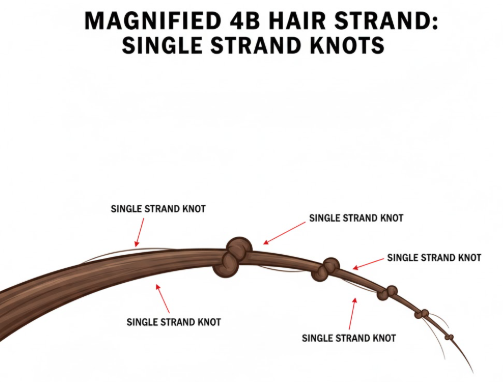
Even with a solid routine, 4B hair presents specific challenges that require targeted solutions. Understanding these issues and their causes empowers you to address them effectively.
Combating Fairy Knots
Fairy knots, technically called trichonodosis, are tiny single-strand knots that form when individual hairs curl around themselves and tangle. The tight bend pattern of 4B hair makes it particularly prone to these knots.
Fairy knots form most often on loose, unstretched hair. The free ends of 4B strands can curve and loop, catching themselves into knots. These knots, once formed, are nearly impossible to untangle and create weak points where breakage occurs.
Prevention is more effective than treatment. Keeping ends stretched through braiding, twisting, or banding reduces the opportunity for fairy knots to form. Keeping hair moisturized and ends sealed reduces the dryness that makes strands more likely to tangle.
Regular trimming removes existing fairy knots before they travel up the strand or cause splits. Trimming every eight to twelve weeks, or as needed based on visual inspection, keeps ends healthy. When you find fairy knots, carefully snip them out with sharp hair shears rather than trying to untangle them, which typically just makes them tighter.
Overcoming Dryness and Dullness
Chronic dryness is the most common complaint among 4B naturals, and it often has multiple contributing factors that need to be addressed simultaneously.
Hard water, which contains high levels of minerals like calcium and magnesium, can deposit on hair and prevent moisture from absorbing. If you live in a hard water area, you may notice your hair feels coated or stiff even after washing. Installing a shower filter or using a chelating shampoo periodically can help remove mineral buildup.
Product buildup similarly creates a barrier that blocks moisture. Regular clarifying washes, proper rinsing of conditioners, and avoiding excessively heavy products prevent buildup from interfering with hydration.
The pH level of your products affects how the cuticle responds. Products with high pH open the cuticle, while those with acidic pH close it. Using an acidic final rinse, such as diluted apple cider vinegar, can help smooth the cuticle and improve shine.
Oil rinsing, which involves applying oil to wet hair in the shower and then rinsing with water, can restore sheen to dull 4B hair. The water helps distribute the oil evenly while washing away any excess, leaving hair glossy but not greasy.
Dealing with Heat Damage
Heat damage occurs when high temperatures break the protein bonds in hair, permanently altering the strand structure. For 4B hair, this often manifests as sections that no longer coil tightly, appearing limp and straight among otherwise healthy curls.
Signs of heat damage include straight ends that do not shrink with the rest of your hair, a limp or mushy texture when wet, and difficulty holding styles. Heat damaged hair has lost elasticity and cannot return to its original curl pattern.
Once heat damage occurs, the only real solution is growing out the affected hair and trimming away the damaged ends. Protein treatments can temporarily strengthen heat damaged strands, but they cannot restore the original texture.
If you choose to use heat on 4B hair, protecting against damage is essential. Always use a heat protectant product that creates a barrier between your hair and the hot tool. Keep temperatures at or below 350 degrees Fahrenheit. Limit heat styling to once a week or less. Ensure hair is fully dry before applying heat, since sizzling steam indicates water boiling inside the strand and causing damage.
Some 4B naturals choose to avoid heat entirely, embracing stretch methods like banding, threading, or African threading that elongate hair without heat. Others find occasional heat styling manageable with proper precautions.
Diet, Health, and Hair Growth

Hair health starts from within. While external products and techniques are important, the nutrients you consume and your overall health directly impact how your hair grows.
Internal Nutrition for Follicle Health
Hair is primarily made of protein, specifically keratin. Consuming adequate dietary protein provides the building blocks your body needs to produce strong, healthy strands. Lean meats, fish, eggs, legumes, and dairy all supply quality protein for hair growth.
Biotin, a B vitamin, supports hair growth and is often included in hair supplements. While severe biotin deficiency can cause hair loss, most people consuming a varied diet get adequate biotin. Foods rich in biotin include eggs, nuts, and whole grains.
Iron carries oxygen to hair follicles, supporting their metabolic activity and growth. Iron deficiency can cause hair shedding and slow growth. Red meat, spinach, beans, and fortified cereals provide dietary iron. If you suspect iron deficiency, a blood test can confirm your levels before you start supplementation.
Zinc supports hair tissue growth and repair and helps keep oil glands around follicles functioning properly. Oysters, beef, pumpkin seeds, and chickpeas are good zinc sources.
Omega-3 fatty acids nourish the scalp and support the oils that keep hair moisturized. Fatty fish like salmon and mackerel, along with walnuts and flaxseed, provide omega-3s.
Staying hydrated is often overlooked in hair care. Dehydration affects every cell in your body, including hair follicles. Drinking adequate water supports overall health and hair hydration from the inside out.
Stress and Hair Shedding
Chronic stress can trigger a condition called telogen effluvium, where a larger than normal percentage of hair follicles enter the resting phase simultaneously. Several months after a stressful event, you may notice increased shedding as these resting hairs fall out together.
Managing stress through exercise, adequate sleep, and relaxation techniques supports both your overall health and your hair health. If you experience sudden or significant hair shedding, consult a healthcare provider to rule out underlying medical conditions.
Realistic Growth Expectations
Hair grows an average of about half an inch per month, though individual rates vary. For 4B hair, the challenge is often not growth rate but retention, meaning keeping the hair you grow rather than losing it to breakage.
Focusing on retention through moisture, gentle handling, and protective styling often yields better results than trying to speed up growth. You may be growing half an inch monthly, but if breakage claims half an inch monthly, your length stays the same.
Terminal length, the maximum length your hair will grow before naturally shedding, is genetically determined. Some people have terminal lengths past their waist, while others may reach mid-back length at maximum. Understanding that terminal length exists helps set realistic expectations.
Seasonal Care for 4B Textures
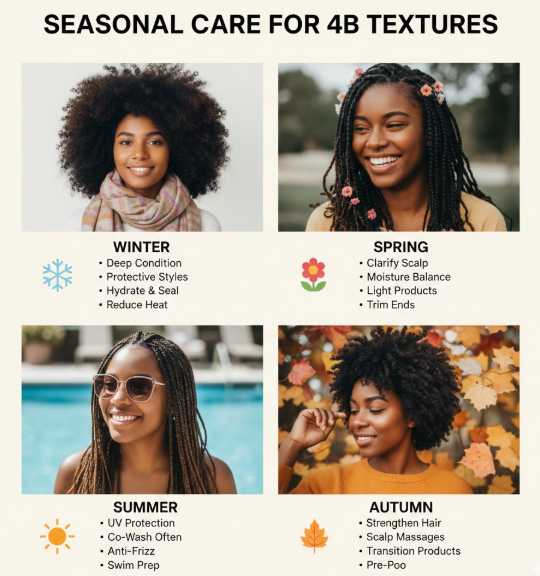
Different seasons present different challenges for 4B hair. Adjusting your routine to address seasonal factors keeps your hair healthy year-round.
Winter Hair Care Tips
Winter presents significant challenges for 4B hair. Cold outdoor air holds less moisture, while indoor heating creates dry environments that pull moisture from your strands.
Increasing the richness of your products in winter helps combat this extra dryness. Switching from lighter oils to heavier options like castor oil provides more sealing power. Using butter-based products for ends adds extra protection.
Protective styling becomes even more beneficial in winter. Keeping ends tucked away protects them from cold wind, friction from wool scarves and coats, and the dry indoor air.
When wearing hats, choose satin-lined options when possible. Regular wool or cotton hat interiors create friction and absorb moisture from your hair. If satin-lined hats are not available, wearing a silk scarf or bonnet under your hat provides protection.
Static electricity increases in winter due to low humidity. Using anti-humectant products and ensuring your hair is well-moisturized helps reduce static and the frizz and tangling it causes.
Summer Hair Care Tips
Summer brings different challenges, including UV exposure, chlorine from pools, salt from ocean water, and humidity that can cause unpredictable frizz.
UV rays can damage hair protein and dry out strands. Wearing hats or head wraps when spending extended time in direct sun protects your hair. Some leave-in products now include UV filters for additional protection.
Before swimming in chlorinated pools or salt water, saturating your hair with plain water reduces the amount of damaging water it can absorb. Wearing a swim cap provides further protection. Always rinse hair thoroughly after swimming and follow with a moisturizing routine.
Humidity affects how humectants in your products perform. In very high humidity, products heavy in glycerin or other humectants may absorb excess moisture from the air, causing frizz and puffing. Switching to anti-humectant products or those with humectants lower on the ingredient list can help.
Lighter products often work better in summer when heat and humidity make heavy butters feel greasy. Adjusting your routine to use lighter oils and creams keeps hair moisturized without feeling weighed down.
Frequently Asked Questions
How often should I wash 4B hair?
Most 4B naturals benefit from washing every seven to ten days. This frequency allows for adequate cleansing without stripping natural oils that are already difficult to distribute on coily hair. Your scalp condition and styling products used may require adjustments to this general guideline.
What is the best way to define curls on 4B hair?
Shingling with a gel or curl cream on wet, sectioned hair creates the most definition on 4B texture. Apply product to small sections, smooth through from root to end, and allow to dry completely before touching. A diffuser or hooded dryer speeds drying while setting the definition.
Can 4B hair grow long?
Yes, 4B hair can absolutely grow long. The key is retention rather than growth rate. Protective styling, consistent moisture, gentle handling, and regular trimming to remove damaged ends help you keep the length you grow. Shrinkage may hide your true length until you stretch your hair.
Why is my 4B hair so dry and brittle?
Chronic dryness in 4B hair often results from insufficient sealing after moisturizing. Water-based products hydrate the strand, but without an oil or butter to seal that moisture in, it evaporates quickly. Also evaluate whether hard water, product buildup, or over-use of protein might be contributing to dryness.
What is the difference between 4B and 4C hair?
4B hair has a visible Z-shaped zigzag pattern with sharp bends. 4C hair has an even tighter pattern with minimal visible definition. 4C hair typically experiences more shrinkage and may have a more wiry texture. Both types require similar care focusing on moisture and gentle handling.
Is 4B hair high or low porosity?
Porosity is an individual characteristic, not determined by curl type. 4B hair can be low, normal, or high porosity. Test your porosity using the float test or by observing how your hair responds to water and products. Low porosity hair resists moisture, while high porosity absorbs and loses moisture quickly.
How do I stop my 4B hair from shrinking?
Banding, stretching, twist-outs, and braid-outs elongate 4B hair without heat damage. African threading and curlformers also provide stretch. Some shrinkage is healthy and indicates good elasticity. Embrace styles that work with your natural shrinkage rather than fighting against it constantly.
Does the LOC method work for 4B hair?
How often should I trim 4B hair?
Trimming every eight to twelve weeks removes split ends and fairy knots before they cause further damage. However, assess your hair visually rather than following a strict schedule. If ends look healthy and are not splitting, you can extend time between trims. Regular dusting of small amounts preserves length while maintaining health.
What are the best protective styles for 4B hair?
Box braids, twists, cornrows, and bantu knots are excellent protective styles for 4B hair. Wigs and crochet styles also protect natural hair underneath. Choose styles installed with low tension to avoid traction alopecia. Keep styles in for the recommended time and maintain scalp and hair moisture while wearing them.