 Dave King
⚠️ Medical Disclaimer: This article is for informational purposes only and does not constitute medical advice. Consult a board-certified dermatologist or healthcare professional before starting any new supplement, treatment, or hair care regimen — especially if you are experiencing significant hair loss.
Medically Reviewed: May, 2026 by a Board-Certified Dermatologist
“How to grow my hair faster? I’m so sad…”
If you’ve ever typed something like that into a search bar at midnight, you are not alone. That feeling — the frustration, the impatience, the creeping worry that your hair has simply decided to stop — is one of the most common things people search for, and it deserves a real answer.
Here’s the hard truth: most people are doing two or three things every single week that are actively slowing their hair growth without realizing it. Every day of wrong habits means preventable breakage, weakened follicles, and another month of spinning your wheels. That is time you don’t have to waste.
By the end of this guide, you’ll know exactly how to grow hair faster using a science-backed system called The Hair Growth Stack — and you can start today. We’ll cover six core steps, a dedicated section on hair loss and medical causes, a myth-busting breakdown, and eight frequently asked questions — so you leave with a real plan, not another vague tip list.
Hair grows an average of half an inch per month — but the right combination of scalp care, nutrition, and protective habits (The Hair Growth Stack) can help you reach your maximum biological potential faster.
- Scalp massage for 4 minutes daily has been linked to measurable hair thickness improvements over 24 weeks (Koyama et al., 2016)
- Protein, iron, and zinc deficiencies are among the most common — and fixable — causes of slow growth (NIH, 2017)
- Breakage, not growth rate, is why most people feel their hair “won’t grow past a certain length”
- Natural remedies like rosemary oil show promising evidence but require consistent weekly use for 3+ months to show results
- Realistic timeline: expect roughly 1 inch of growth per 2 months — not 2 inches
To grow hair faster, follow a consistent 6-step system combining scalp stimulation, targeted nutrition, and protective daily habits. This process — built around The Hair Growth Stack — takes about 10–15 minutes a day and can show early improvements in hair texture and thickness within 4–8 weeks. Visible length gains typically take 3–6 months of consistent effort. No single tip produces dramatic results on its own. The compounding effect of all three pillars working together is what makes the difference.
What You Need to Know Before You Start
Before you change a single habit, you need to understand what you’re actually working with. Hair growth isn’t a faucet you turn on — it’s a biological cycle with its own rules. Understanding those rules will save you months of frustration.
The 3 Phases That Control Your Hair Growth Speed
Every single hair on your head is moving through a cycle right now. There are three main phases, and knowing them explains why your hair seems to “stall” sometimes.
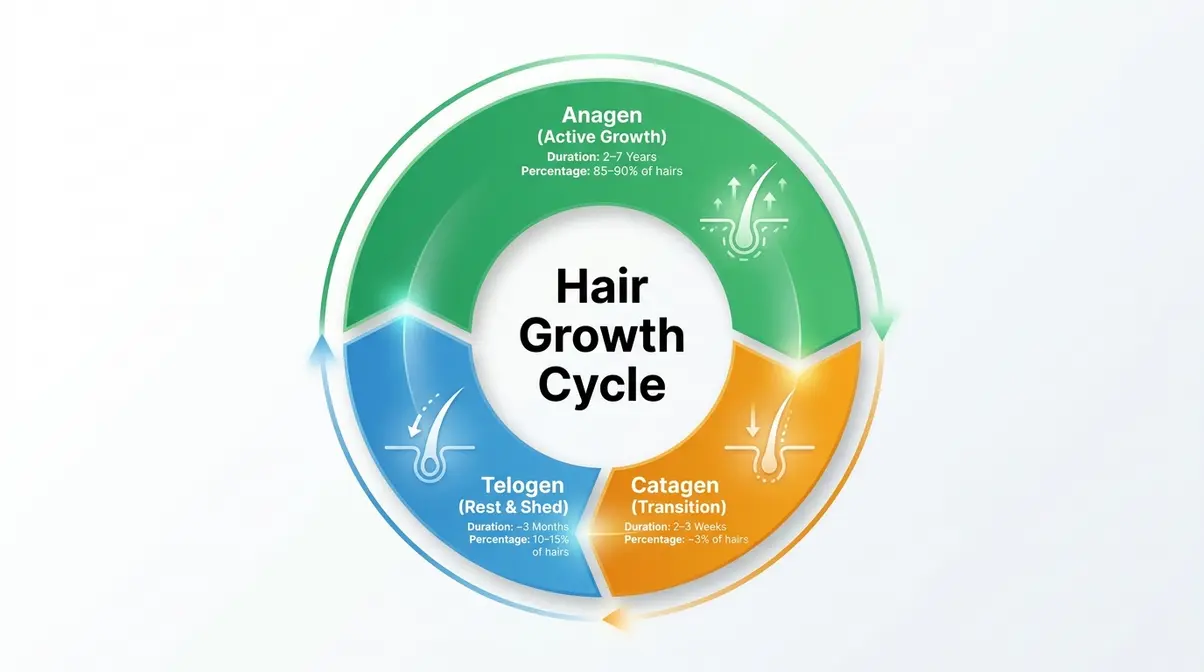
The anagen phase is the active growing period. This is when your hair follicle is producing new cells and your strand is physically getting longer. It lasts anywhere from 2 to 7 years, depending on genetics and overall health. The longer your anagen phase, the longer your hair can grow.
The catagen phase is a short, 2–3 week transition. The follicle shrinks, growth stops, and the hair prepares to shed. Only about 3% of hairs are in this phase at any given time.
The telogen phase is the resting and shedding period. It lasts roughly 3 months. About 10–15% of your hairs are here right now — this is completely normal. Losing 50–100 hairs a day is healthy. Stress, poor nutrition, and hormonal shifts can push more hairs into telogen early, a condition called telogen effluvium (sudden, temporary shedding triggered by a physical or emotional shock).
How Fast Does Hair Actually Grow?
Here’s the number that changes everything: human scalp hair grows approximately 0.35 mm per day, or about half an inch (1.25 cm) per month, according to a widely referenced study in the Journal of Investigative Dermatology. That works out to roughly 6 inches per year under healthy conditions.
What does that mean for the popular “2 inches in 2 months” claim? It means it’s biologically unlikely for most people. At the average growth rate, 2 months yields about 1 inch — not 2. Believing the 2-inch myth sets you up for disappointment and makes you feel like something is wrong when nothing is. According to Cleveland Clinic, no treatment has been proven to push growth significantly beyond your genetic maximum — but you can absolutely get closer to that maximum by removing the obstacles that hold you back.
Why Genetics Isn’t the Whole Story
Yes, genetics determines your hair’s maximum growth potential — the length of your anagen phase, your natural thickness, and your texture. But genetics is the ceiling, not the floor. Most people are operating well below their genetic ceiling because of nutrient deficiencies, scalp damage, chronic stress, or mechanical breakage.
Think of it like this: your genetics is the engine size of a car. But if the fuel tank is empty, the tires are flat, and the brakes are stuck — the engine doesn’t matter. The Hair Growth Stack is how you fix the fuel, the tires, and the brakes. You may not be able to change your engine, but you can absolutely run it at full capacity.
Step 1: Massage Your Scalp Daily to Boost Blood Flow

Scalp massage is one of the most underused, zero-cost tools for faster hair growth. The mechanism is straightforward: physical pressure on your scalp increases blood circulation to the hair follicles, delivering more oxygen and nutrients exactly where growth happens. Research supports this more than most people realize.
The Right Technique for a Growth-Stimulating Scalp Massage
You don’t need a special tool — your fingertips are enough. Here’s the protocol that mirrors the technique used in clinical research:
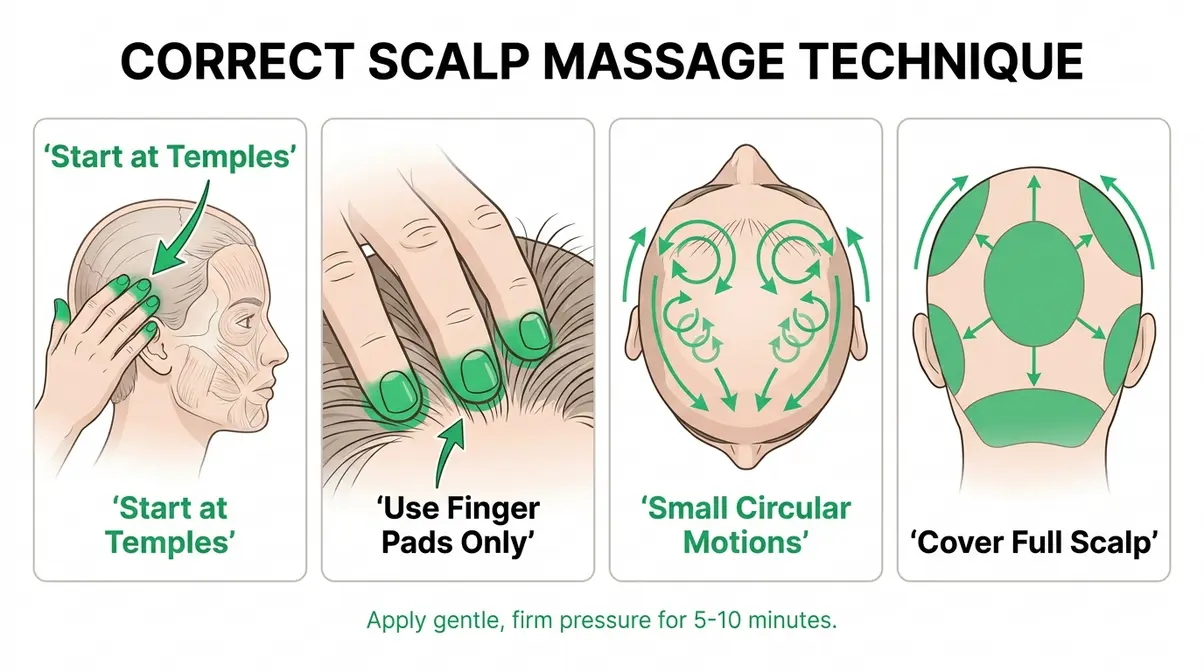
- Start at the temples. Place all four fingertips on your temples, applying gentle but firm pressure.
- Use the pads of your fingers — never your nails. Nails can scratch and irritate the scalp.
- Move in small circular motions. Work from the temples toward the crown, then down to the nape of your neck.
- Apply consistent, moderate pressure. You want to feel the scalp moving slightly against the skull — not just hair sliding around.
- Cover the full scalp. Don’t skip the sides or the back — follicles are everywhere.
You can do this on a dry scalp, with a few drops of diluted rosemary oil, or in the shower with conditioner as a slip agent.
How Often and How Long to Massage for Results
A landmark 2016 study by Koyama et al. found that participants who performed standardized scalp massages for 4 minutes daily showed significantly increased hair shaft thickness after 24 weeks. This is one of the most cited pieces of evidence in trichology (the science of hair and scalp health) for non-pharmaceutical hair growth support.
The practical takeaway: 4 minutes, every day. Set a phone timer. Do it while watching TV, in the shower, or before bed. Consistency matters far more than duration — a daily 4-minute massage beats a 20-minute massage once a week.
If your scalp is oily, consider doing your massage before shampooing so the stimulation doesn’t add to product buildup. If your scalp is sensitive or irritated, reduce pressure and avoid any areas of active inflammation until they heal.
What to Expect After 4 Weeks (Checkpoint)
After 4 weeks of daily massage, most people notice their scalp feels less tense and their hair at the roots looks slightly fuller at the part line. You are unlikely to see measurable length gains at this stage — that takes longer. What you will notice is improved scalp texture and potentially less daily shedding. Thickness changes, as seen in the Koyama study, take closer to 6 months. Be patient with this step. It is working even when you can’t see it yet.
Step 2: Eat the Right Foods to Feed Your Hair Follicles
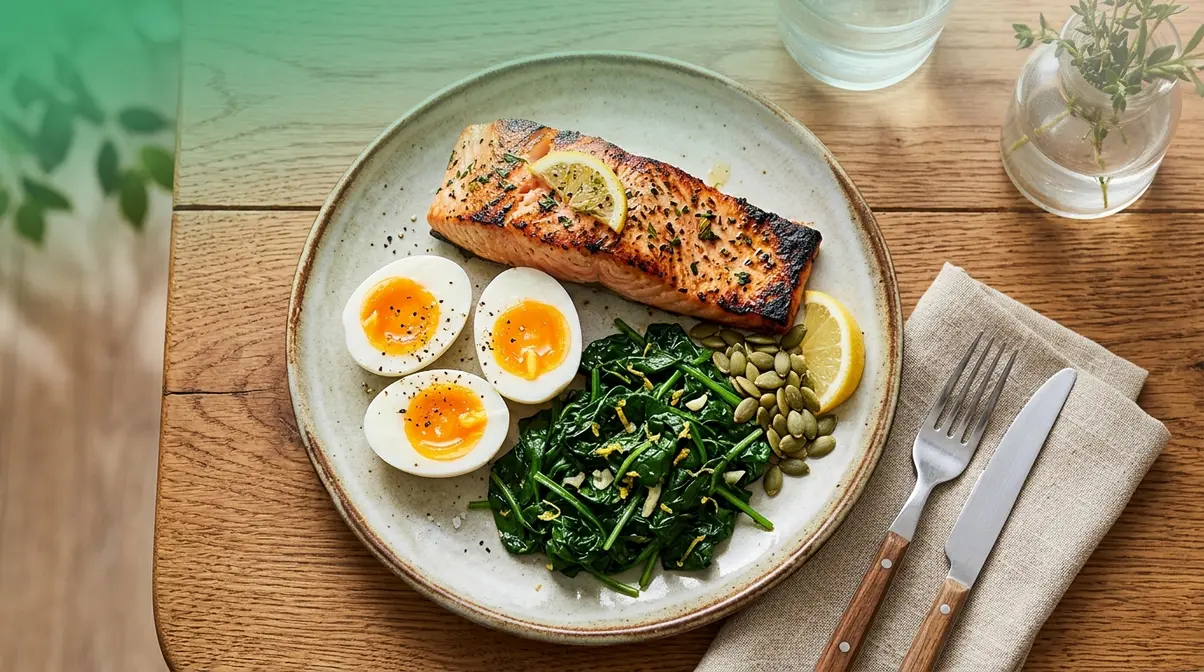
Hair is made of a protein called keratin, and your follicles are among the most metabolically active cells in your body. That means they need a steady, rich supply of nutrients to produce strong, fast-growing strands. If you want to grow hair faster, what you eat is not optional — it’s foundational.
The Top Nutrients Your Hair Needs
Dermatologists and nutritionists consistently point to the same group of nutrients when hair growth stalls. According to the National Institutes of Health, deficiencies in protein, iron, and zinc are among the most common — and most correctable — drivers of slow or thinning hair.
| Nutrient | Why It Matters for Hair | Top Food Sources |
|---|---|---|
| Protein | Hair is ~95% keratin (a protein) — without enough, follicles shrink | Eggs, chicken, Greek yogurt, lentils |
| Iron | Carries oxygen to follicles via red blood cells | Red meat, spinach, lentils, fortified cereals |
| Zinc | Supports follicle repair and oil gland function | Pumpkin seeds, beef, chickpeas, cashews |
| Biotin (B7) | Supports keratin production; deficiency linked to hair thinning | Eggs, almonds, sweet potatoes, salmon |
| Omega-3 Fatty Acids | Reduce scalp inflammation; support follicle health | Salmon, sardines, walnuts, flaxseed |
| Vitamin D | Low levels are associated with alopecia (hair loss) | Fatty fish, fortified milk, sunlight |
A note on biotin: it’s often marketed as the #1 hair supplement, but research from Healthline notes that biotin deficiency is actually rare in people who eat varied diets. Supplementing biotin when you’re not deficient is unlikely to produce noticeable results. Focus on iron and protein first — deficiencies there are far more common and far more impactful.
The Best Foods for Fast Hair Growth
You don’t need to overhaul your entire diet. Adding a few key foods consistently makes a measurable difference. Here are the highest-impact choices:
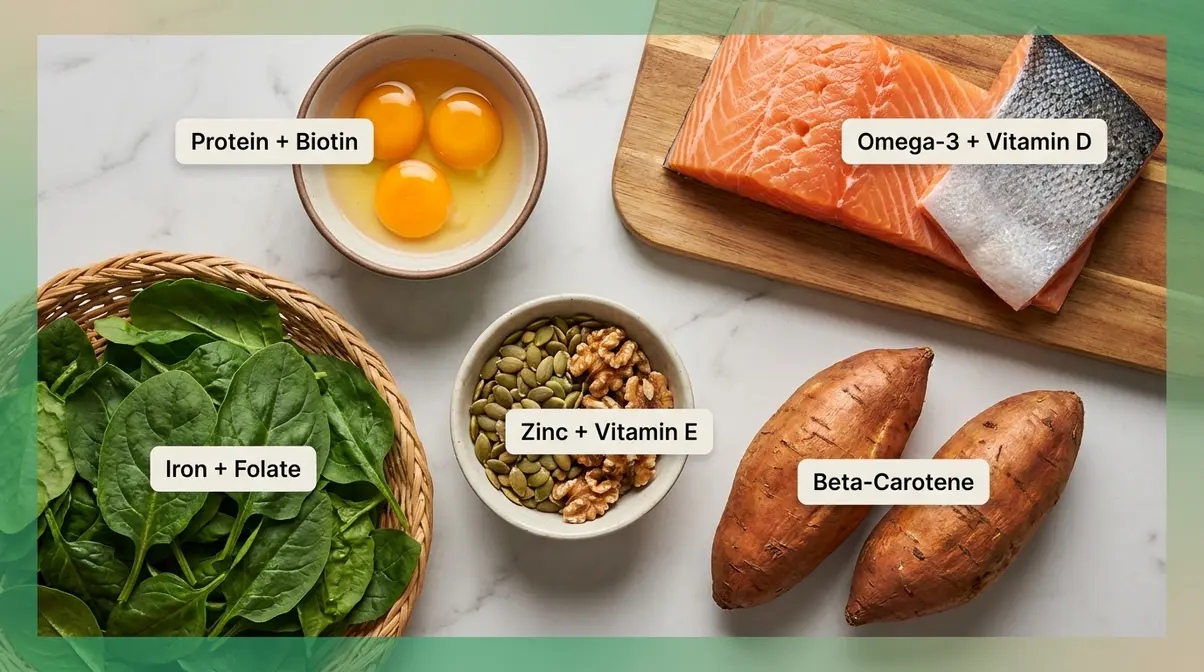
- Eggs — provide both protein and biotin in one food. One of the most complete hair-growth foods available.
- Fatty fish (salmon, mackerel, sardines) — deliver omega-3 fatty acids and vitamin D simultaneously.
- Spinach and dark leafy greens — rich in iron, folate, and vitamins A and C, which help produce sebum (your scalp’s natural conditioner).
- Sweet potatoes — packed with beta-carotene, which your body converts to vitamin A to support cell growth in follicles.
- Nuts and seeds (especially pumpkin seeds, walnuts) — provide zinc, vitamin E, and healthy fats that protect follicle cell membranes.
- Lentils and beans — excellent plant-based source of protein, iron, and zinc for vegetarians and vegans.
A practical tip: if your current diet is low in protein, simply adding one egg or a palm-sized portion of chicken or fish to two meals per day can meaningfully improve your hair’s nutrient supply within a few weeks.
When to Consider Hair Growth Supplements
Food should always come first. Supplements fill gaps — they don’t replace a poor diet. That said, there are specific situations where supplementation makes sense:
- You follow a vegan or vegetarian diet and may be low in iron, B12, or zinc
- A blood test has confirmed a deficiency (this is the gold standard — always test before supplementing iron)
- You are recovering from illness, surgery, or significant stress that depleted your nutrient stores
- You have diagnosed hair loss and a dermatologist has recommended a specific supplement protocol
If you do supplement, look for formulas that include iron, zinc, vitamin D, and omega-3s rather than biotin-only products. WebMD notes that supplements like Viviscal (which contains a marine protein complex) have shown results in clinical trials — but always consult a healthcare provider before adding iron supplements, as excess iron can be harmful.
Step 3: Protect Your Length — Stop Breakage Before It Starts
Here is the single most important mindset shift in this entire guide: your hair is probably growing just fine — it’s breaking off before you can see it. Most people who feel stuck at a certain length are not experiencing slow growth. They’re experiencing breakage at the same rate as growth, so the net length never changes. Protecting your length is how you grow hair faster in practice.
How to Handle Wet Hair Without Causing Damage
Wet hair is at its most vulnerable. When hair absorbs water, the hydrogen bonds in the keratin structure temporarily weaken — making each strand up to 30% more elastic and significantly more prone to snapping under tension. These habits protect it:
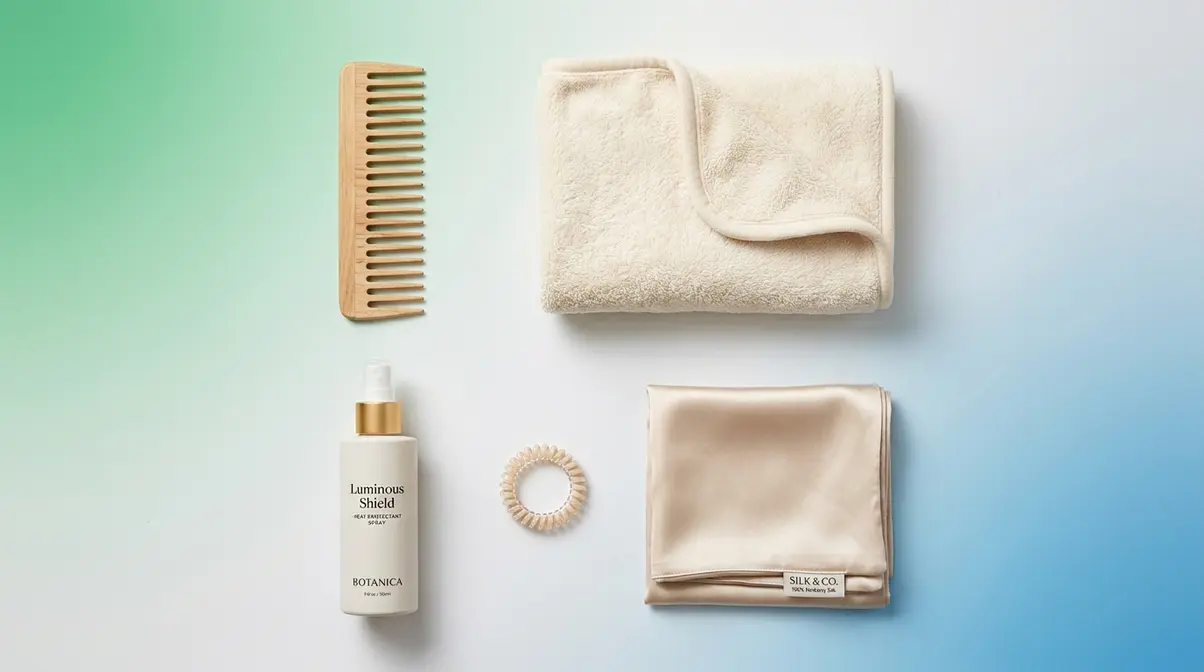
- Never brush wet hair with a paddle brush. Use a wide-tooth comb or a wet-specific detangling brush instead. Start from the ends and work upward toward the roots — never yank from the root down.
- Pat, don’t rub, with a towel. Rubbing creates friction that roughens the cuticle (the outer protective layer of each strand) and causes frizz and breakage. Use a microfiber towel or a soft cotton t-shirt instead.
- Apply a leave-in conditioner or detangling spray before combing. Slip reduces the tension needed to move through tangles.
- Don’t twist wet hair into a towel turban and leave it for 20+ minutes. The tight wrapping and prolonged moisture exposure both stress the hair shaft.
Heat Styling Rules That Actually Protect Your Hair
Heat is one of the biggest silent killers of length retention. Temperatures above 300°F (149°C) begin to break down the protein bonds in your hair, causing permanent structural damage that no conditioner can fully reverse. According to Vogue, consistent heat damage is a primary reason people plateau at a certain length.
Follow these rules to style with heat without sacrificing growth:
- Always use a heat protectant spray before any hot tool touches your hair. These products coat the cuticle and reduce moisture loss from heat.
- Set your tools to the lowest effective temperature. Fine or color-treated hair: 250–300°F. Medium hair: 300–350°F. Thick or coarse hair: 350–400°F maximum.
- Limit heat styling to 2–3 times per week. Air-dry or use heatless styling methods on the other days.
- Never apply heat to soaking wet hair. The water inside the hair shaft turns to steam and physically blows out the cuticle from the inside. Always dry to at least 80% before using a flat iron or curling wand.
Why Regular Trims Help You Grow Longer Hair Faster
This sounds counterintuitive, but it’s one of the most misunderstood truths in hair care. Trimming does not make your hair grow faster — that growth happens at the scalp, and scissors can’t affect follicles. What trimming does is remove split ends before they travel up the hair shaft.
A split end, left untreated, doesn’t just stay at the tip. It splits further up the strand over time, causing the hair to break off higher and higher — sometimes inches above where the original split started. Regular trims every 8–12 weeks remove that damage before it spreads, preserving your length. Think of it as maintenance on a fraying rope: you cut the frayed section before it unravels further.
Step 4: Try These Natural Remedies at Home
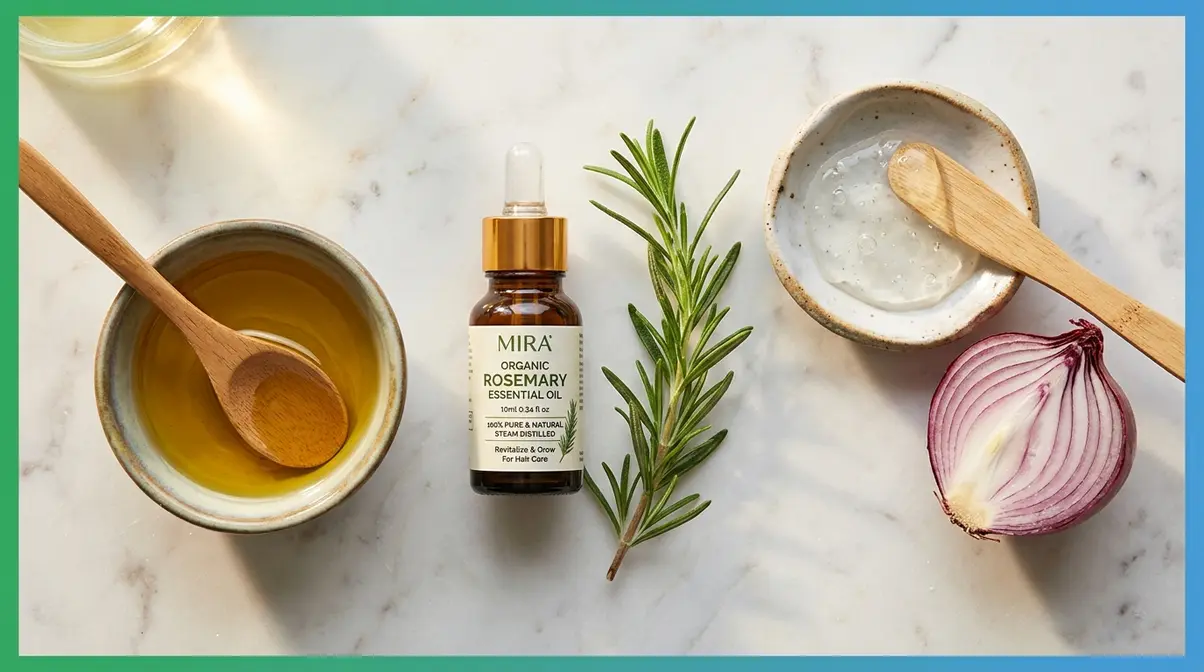
Natural remedies are where hope and hype collide most dramatically. Some have genuine scientific support. Others are popular on social media but have no meaningful evidence behind them. Here’s an honest, evidence-based breakdown of what’s worth your time.
Rosemary Oil — The Most Studied Natural Growth Booster
Rosemary oil is the natural remedy with the strongest clinical evidence. A 2015 study published in SKINmed Journal compared rosemary oil to 2% minoxidil (a clinically proven hair loss treatment) over 6 months. Both groups showed similar improvements in hair count — and the rosemary oil group reported significantly less scalp itching. This is one of the most cited studies in natural hair care, and it positions rosemary oil as a genuinely evidence-backed option.
How to use it correctly:
- Mix 2–3 drops of rosemary essential oil with 1 tablespoon of a carrier oil (jojoba, coconut, or sweet almond oil work well). Never apply undiluted essential oil directly to your scalp — it can cause irritation.
- Part your hair into sections and apply the mixture directly to your scalp using your fingertips.
- Massage it in for 2–3 minutes using the technique from Step 1.
- Leave it on for at least 30 minutes (or overnight with a shower cap).
- Wash out thoroughly with your regular shampoo.
- Repeat 2–3 times per week for at least 3 months before evaluating results.
Consistency is everything here. Sporadic use produces no measurable benefit.
Onion Juice, Rice Water, and Aloe Vera: What Works?
Onion juice: A small but legitimate study found that applying onion juice to the scalp twice daily for 4–6 weeks produced hair regrowth in participants with patchy alopecia areata (an autoimmune hair loss condition). The proposed mechanism is the high sulfur content, which may support keratin production. The evidence is limited to small studies, but it’s real. The major downside: the smell is difficult to wash out. If you try it, leave it on for 15–30 minutes max, then shampoo thoroughly.
Rice water: Rice water contains inositol, a carbohydrate that may temporarily coat and strengthen the hair shaft. The evidence is largely anecdotal and comes from the Yao women of China, who are famous for their extremely long hair. There are no large-scale clinical trials. Rice water is unlikely to grow hair faster, but it may reduce breakage by improving strand elasticity — which, as we covered in Step 3, is a meaningful indirect benefit.
Aloe vera: Aloe vera gel contains proteolytic enzymes that may repair dead skin cells on the scalp and unclog follicles blocked by excess sebum. It also has a soothing, anti-inflammatory effect on an irritated scalp. The evidence for aloe directly growing hair is thin, but as a scalp conditioner and anti-inflammatory treatment, it has genuine value. Apply pure aloe gel to the scalp, leave it for 30 minutes, and rinse.
How to Make and Apply a Weekly Oil Treatment
A weekly hot oil treatment is one of the most affordable and effective things you can do for your hair’s overall health. Here’s a simple protocol:
What you need: 2 tablespoons of a carrier oil (coconut, jojoba, or argan), an optional 2–3 drops of rosemary essential oil, a shower cap, and a warm towel.
- Steps:
- Gently warm the oil in your hands or in a small bowl set in hot water (not microwaved — overheating can degrade the oil).
- Apply to your scalp first, massaging in circular motions for 3–4 minutes.
- Work the remaining oil through the mid-lengths and ends of your hair.
- Cover with a shower cap and wrap a warm towel around your head for 20–30 minutes. The warmth helps the oil penetrate the hair shaft.
- Rinse, then shampoo once or twice to remove the oil completely.
- Repeat once per week.
Step 5: Tackle Hair Loss, Thinning, and Bald Spots
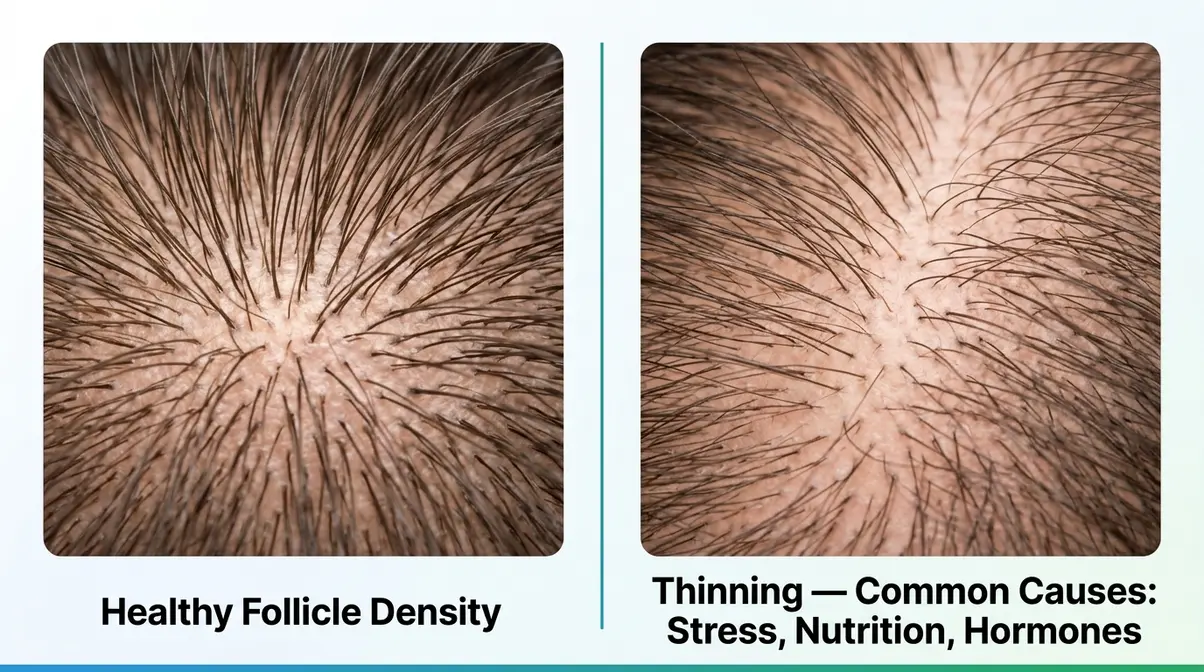
Sometimes the obstacle to faster hair growth isn’t habits — it’s an underlying medical condition. This step is the most important one for anyone experiencing noticeable thinning, shedding beyond 100 hairs a day, or bald patches. Treating the root cause is the only path to real regrowth.
Why Is Your Hair Thinning? Common Causes Explained
Hair thinning has dozens of possible causes, but most cases fall into a handful of categories. According to Cleveland Clinic, the most common include:
- Androgenetic alopecia (pattern hair loss) — the most common type, affecting roughly 50% of men and women over 50. Driven by genetics and hormones (specifically DHT, a testosterone derivative that shrinks hair follicles over time).
- Telogen effluvium — diffuse shedding triggered by physical or emotional stress, illness, surgery, childbirth, or crash dieting. Usually temporary and reversible within 3–6 months once the trigger is resolved.
- Nutritional deficiencies — iron-deficiency anemia is a particularly common cause of diffuse thinning in women, often overlooked because standard blood panels don’t always test ferritin (stored iron) levels.
- Hormonal imbalances — thyroid disorders, polycystic ovary syndrome (PCOS), and postpartum hormonal shifts can all trigger significant shedding.
- Scalp conditions — seborrheic dermatitis (dandruff), psoriasis, and fungal infections can damage follicles and impede growth if left untreated.
Why Gen Z Is Losing Hair
Hair loss in people under 30 is rising, and dermatology practices are seeing it firsthand. The driving forces are a combination of lifestyle factors that are uniquely concentrated in Gen Z:
- Chronic stress and cortisol overload. High cortisol (the stress hormone) is a documented trigger for telogen effluvium. A 2021 study in Nature found that chronic stress depletes hair follicle stem cells by activating a stress hormone pathway — a mechanism now confirmed at the cellular level. Financial anxiety, academic pressure, and social media comparison culture create persistent low-grade stress that accumulates over months.
- Ultra-processed diets and nutrient gaps. Fast food, energy drinks, and heavily processed snack foods are low in the iron, zinc, and protein that follicles need. Many Gen Z individuals — especially those following restrictive diets without professional guidance — are unknowingly deficient.
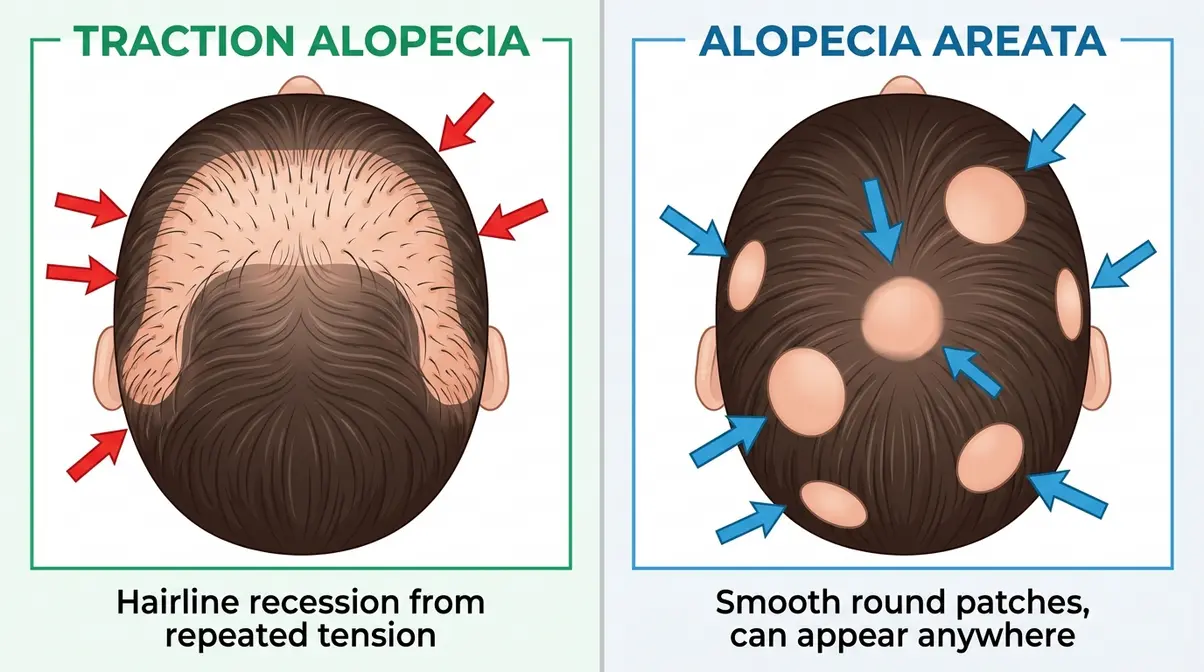
- Tight, high-tension hairstyles. Slicked-back buns, tight ponytails, and braids worn daily can cause traction alopecia (hair loss from repeated mechanical pulling on the follicle). This is especially common and often reversible if caught early.
- Scalp product overload. Dry shampoo used daily, heavy styling products, and infrequent washing can clog follicles and create a hostile scalp environment for growth.
If you’re in your teens or twenties and noticing more hair in the shower drain, it is almost certainly not genetics alone. Start with the nutrition and stress management pieces from this guide before assuming the worst.
How to Regrow Hair in Bald Spots
The right approach depends entirely on the cause of the bald spot. Here’s a quick framework:
- Traction alopecia (from tight styles): Stop the tension immediately. Switch to loose, low-manipulation styles. Many people see regrowth within 3–6 months once the pulling stops — but prolonged traction can cause permanent follicle damage.
- Telogen effluvium: Address the trigger (nutrition, stress, illness). Regrowth typically begins within 3–6 months. The new growth often appears as fine, short hairs along the hairline and part.
- Alopecia areata (patchy, smooth bald spots): This is an autoimmune condition — see the next section and consult a dermatologist. Treatments include corticosteroid injections, topical immunotherapy, and newer JAK inhibitor medications.
- Androgenetic alopecia: Minoxidil (topical or oral) is FDA-approved and clinically proven for this type. Finasteride is FDA-approved for men. Both require ongoing use to maintain results.
When to See a Doctor About Hair Loss
Some hair loss is a medical issue, not a lifestyle issue. See a dermatologist or your primary care physician if you experience:
- Shedding of more than 150–200 hairs per day for longer than 3 months
- Smooth, round bald patches appearing suddenly
- Scalp pain, burning, itching, or visible scaling
- Hair loss accompanied by fatigue, unexplained weight changes, or joint pain
- Autoimmune conditions that cause hair loss include:
- Alopecia areata — the immune system attacks hair follicles, causing patchy or total hair loss
- Lupus (systemic lupus erythematosus) — can cause both scarring and non-scarring hair loss; hair at the hairline is often affected first
- Hashimoto’s thyroiditis — autoimmune thyroid disease frequently causes diffuse thinning
If you have lupus-related hair loss, treatment focuses on managing the underlying disease with your rheumatologist. Gentle hair care, avoiding sun exposure on the scalp, and working with a dermatologist on topical options are the standard approach. According to the Lupus Foundation of America, hair loss from lupus is often reversible when the disease is well-controlled.
Step 6: Tailor Your Approach — Men and Facial Hair
Hair growth strategies are not one-size-fits-all. Men face specific challenges — from androgenetic alopecia patterns to the unique biology of facial hair — that deserve their own focused guidance.
How Men Can Grow Hair Longer, Faster
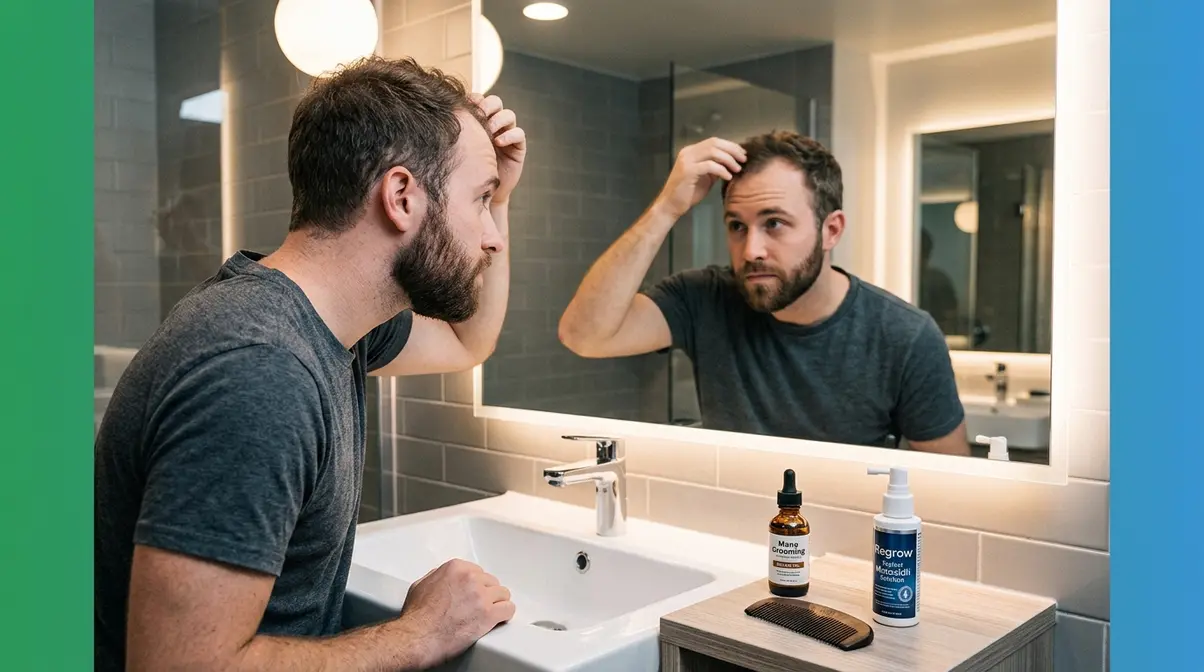
Men’s scalp hair follows the same biology as women’s, but with one significant difference: higher levels of dihydrotestosterone (DHT) mean men are more susceptible to androgenetic alopecia (male pattern hair loss) earlier in life. That said, the foundational steps in this guide — scalp massage, nutrition, protective habits, and stress management — apply fully to men.
Additional strategies specifically relevant for men:
- Reduce DHT-related damage by keeping the scalp clean and well-moisturized. Excess sebum can combine with DHT to create an environment that accelerates follicle miniaturization.
- Consider minoxidil early. For men noticing a receding hairline or thinning crown in their 20s or 30s, early intervention with topical minoxidil (available over the counter) is far more effective than starting after significant loss has occurred.
- Avoid tight headwear worn daily. Constant friction and pressure from hats worn for hours every day can contribute to traction at the hairline over time.
- Protein intake matters more for men who exercise intensely, as muscle repair competes with hair follicles for available amino acids. Aim for at least 0.8g of protein per pound of body weight daily if you train regularly.
How to Grow a Fuller Beard and Mustache
Facial hair growth is controlled by the same androgenic hormones as scalp hair — but the response is inverted. DHT, which shrinks scalp follicles in pattern hair loss, actually stimulates facial hair follicles. This is why some men with thinning scalp hair have thick beards.
For men with patchy or slow-growing facial hair:
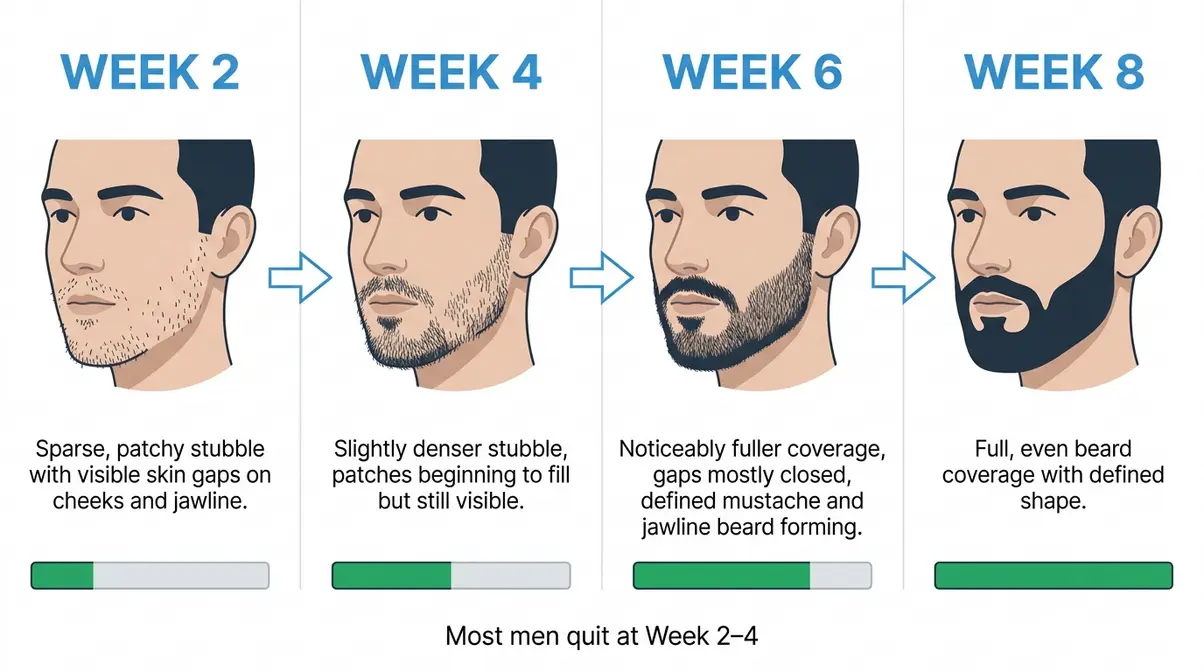
- Be patient with the awkward phase. Most beards look patchy at 2–4 weeks. By 6–8 weeks, enough coverage fills in that patchiness becomes less visible. Most men who give up during the patchy phase never discover what their beard could actually look like.
- Beard oil and daily moisturizing reduce itchiness and keep the skin beneath the beard healthy, which supports follicle function. Look for jojoba or argan oil-based products.
- Minoxidil for beard growth has gained significant traction (and evidence) in recent years. A 2016 study found that topical 3% minoxidil applied to the face twice daily produced significant beard density improvements over 16 weeks. This is an off-label use — consult a dermatologist before trying it.
- Derma rolling (microneedling with a 0.5mm roller) on the beard area has early evidence for stimulating dormant follicles, similar to its mechanism on the scalp. Use 1–2 times per week and always follow with a growth-supporting serum.
Myth Busting — What Doesn’t Work
The internet is flooded with hair growth claims that range from exaggerated to completely false. Here’s a clear-eyed look at the most persistent myths — with evidence.
Can You Grow Hair Overnight or in 1 Week?
No. This is biologically impossible. Hair grows from the follicle at approximately 0.35mm per day — a rate set by your body’s cellular biology, not by a product or treatment. Even the most aggressive clinically proven treatments (like minoxidil) take 3–4 months to show visible results because they work by extending the anagen phase over time, not by accelerating the daily growth rate.
Any product claiming to “grow hair overnight” or “add an inch in a week” is either misusing the word “growth” (they may mean temporary swelling of the hair shaft from hydration) or making an outright false claim. According to Bosley, no topical product has been clinically shown to meaningfully accelerate the base rate of hair growth beyond what healthy follicle conditions already support.
Does Vaseline Make Hair Grow?
No — but it can reduce breakage, which is a different thing. Vaseline (petroleum jelly) is an occlusive (a substance that seals moisture into the surface). Applied to the ends of hair, it can lock in hydration and reduce split ends. Applied to the scalp, it creates a temporary barrier but does not penetrate the follicle, stimulate blood flow, or influence any biological process involved in growth.
Dermatologists consistently caution against applying Vaseline directly to the scalp in large amounts — it can clog pores, trap dead skin cells, and create conditions that promote fungal growth if not washed out completely. The viral “Vaseline for hair growth” trend on social media is built on the confusion between moisture retention (real) and growth stimulation (not real).
Other Popular Myths Debunked
| Myth | Reality |
|---|---|
| Brushing 100 strokes a day grows hair | Excessive brushing causes mechanical breakage — especially when hair is dry. Brush only to detangle, not as a growth ritual. |
| Cutting hair makes it grow faster | Scissors don’t reach your follicles. Trimming preserves length by preventing split ends from traveling up the shaft. |
| Flipping your hair upside down grows hair | No clinical evidence. Inversion may temporarily increase circulation, but there’s no study showing lasting growth effects. |
| Cold water rinses seal the cuticle permanently | Cold water causes temporary cuticle contraction — it can add shine, but it doesn’t permanently seal or repair damage. |
| You should wash your hair every day | For most hair types, daily washing strips natural oils that protect the scalp. 2–3 times per week is appropriate for most people. |
Common Mistakes That Are Slowing Your Growth
Knowing what to do is only half the equation. Here are the habits that quietly undo all your progress — and when it’s time to bring in professional help.
The 5 Habits That Are Secretly Killing Your Growth
- Elastic hair ties worn too tight. Thin rubber bands and tight elastics cause constant tension breakage at the same spot every day. Switch to spiral hair ties or fabric scrunchies.
- Skipping conditioner. Conditioner isn’t optional for growing longer hair — it temporarily seals the cuticle, reduces friction between strands, and prevents the tangling that leads to breakage during detangling.
- Sleeping on a cotton pillowcase. Cotton creates friction against your hair all night. A silk or satin pillowcase dramatically reduces this friction and is one of the simplest, highest-impact swaps you can make.
- Crash dieting or skipping meals. Your body treats hair as a non-essential tissue. During caloric restriction, nutrients are diverted to vital organs first — follicles get whatever is left. Consistent, adequate caloric and protein intake is non-negotiable for hair growth.
- Ignoring scalp buildup. Product residue, excess oil, and dead skin cells can clog the follicle opening, creating a hostile environment for new growth. Clarifying your scalp with a gentle scalp scrub or clarifying shampoo once or twice a month removes this buildup.
When to Choose Professional Treatments Instead
If you’ve followed this guide consistently for 3–6 months and seen no improvement, or if your hair loss is accelerating, it’s time to consider clinical options. Professional treatments with proven evidence include:
- Topical minoxidil (Rogaine): FDA-approved for both men and women. Available over the counter. Most effective when started early.
- Platelet-rich plasma (PRP) therapy: A dermatologist draws a small amount of your blood, concentrates the growth factors, and injects them into the scalp. Growing evidence supports its use for androgenetic alopecia and alopecia areata.
- Low-level laser therapy (LLLT): FDA-cleared devices (combs, caps, helmets) use red light to stimulate follicle activity. Results are modest but real in clinical trials.
- Prescription medications: Finasteride (men), spironolactone (women), and oral minoxidil are all prescribed by dermatologists for appropriate candidates.
When to Seek Medical Help
Seek medical attention promptly — not “eventually” — if you experience any of the following:
- Sudden, dramatic shedding (more than 300 hairs a day for multiple days in a row)
- Smooth, coin-sized bald patches that appeared quickly
- Hair loss accompanied by systemic symptoms: fatigue, joint pain, skin rashes, or unexplained weight changes
- Scalp scarring, redness, or pustules — these can indicate scarring alopecia (cicatricial alopecia), which permanently destroys follicles if not treated promptly
- Any hair loss in a child or teenager that cannot be explained by traction or nutritional factors
These scenarios go beyond lifestyle intervention. A board-certified dermatologist — specifically one with a focus on hair disorders — is the right first call.
Frequently Asked Questions
How do you grow hair faster naturally?
Growing hair faster naturally means removing the obstacles that slow your biological maximum. Focus on three pillars: scalp stimulation (4-minute daily massage), targeted nutrition (protein, iron, zinc, omega-3s from food first), and length protection (reducing heat, friction, and mechanical damage). Research supports rosemary oil as the most evidence-backed natural topical option, showing results comparable to 2% minoxidil in a 6-month trial (Panahi et al., 2015). Consistency over 3–6 months is required before drawing any conclusions about what’s working.
What should you do for lupus hair loss?
Lupus-related hair loss requires treating the underlying autoimmune disease first — hair regrowth follows disease control. Work with a rheumatologist to manage lupus activity, as active inflammation is the primary driver of follicle damage. Dermatologically, gentle hair care is essential: avoid chemical processing, tight styles, and sun exposure on the scalp. Topical treatments like minoxidil may be recommended by your dermatologist for non-scarring lupus hair loss. According to the Lupus Foundation of America, hair loss is often reversible when the disease is in remission.
Can you grow 2 inches of hair in 2 months?
Growing 2 inches of hair in 2 months is not achievable for most people under normal biological conditions. Average hair growth is approximately 0.5 inches (1.25 cm) per month, meaning 2 months yields roughly 1 inch under ideal conditions. No clinically proven treatment accelerates the base growth rate to 1 inch per month consistently. The “2 inches in 2 months” claim circulates widely on social media but has no support in peer-reviewed literature. Set your expectation at 1 inch per 2 months and measure from a fixed point to track accurately.
Why is Gen Z losing hair?
Gen Z hair loss is driven primarily by chronic stress, nutritional gaps, and high-tension hairstyles — not genetics. Persistent elevated cortisol from financial, academic, and social pressures can trigger telogen effluvium (stress-induced shedding) at any age. Diets high in ultra-processed foods and low in iron, zinc, and protein create deficiencies that impair follicle function. A 2021 study in Nature confirmed that chronic stress depletes hair follicle stem cells at the cellular level. The good news: these causes are largely reversible with lifestyle changes.
Does Vaseline make hair grow?
Vaseline does not stimulate hair growth. It is an occlusive agent — it seals moisture into the surface of the hair shaft and skin, which can reduce breakage at the ends. It does not penetrate the scalp, reach hair follicles, or influence any biological growth process. Applying large amounts of Vaseline to the scalp can clog pores and promote fungal overgrowth if not thoroughly removed. For moisture retention at the ends, Vaseline can help marginally — but it is not a growth treatment and should not be applied to the scalp as a growth remedy.
What foods stop hair from falling out?
Foods that help prevent hair loss are those rich in the nutrients follicles need most: protein (eggs, chicken, lentils), iron (spinach, red meat, fortified cereals), zinc (pumpkin seeds, beef, chickpeas), and omega-3 fatty acids (salmon, walnuts, flaxseed). Iron deficiency is one of the most common nutritional causes of diffuse shedding in women — increasing iron-rich foods or getting a ferritin blood test is a high-priority step. Vitamin D deficiency is also associated with alopecia; fatty fish and fortified dairy are good dietary sources. Consistency in eating these foods matters more than any single superfood.
What autoimmune disease causes hair loss?
Several autoimmune diseases cause hair loss, each through a different mechanism. Alopecia areata occurs when the immune system directly attacks hair follicles, causing smooth, round bald patches — it affects roughly 2% of the global population (National Alopecia Areata Foundation). Lupus (SLE) can cause both scarring and non-scarring hair loss, often starting at the hairline. Hashimoto’s thyroiditis (autoimmune hypothyroidism) causes diffuse thinning across the whole scalp. Dermatomyositis, an inflammatory muscle disease, can also cause scalp involvement. Diagnosis requires blood work and often a scalp biopsy — a dermatologist is the right starting point.
Which race has the thickest hair?
Hair thickness varies significantly by ethnicity, with Asian hair (particularly East Asian) generally having the largest individual strand diameter — typically 70–80 microns in cross-section compared to 60–70 microns for European hair and 50–60 microns for African hair, according to research published in the International Journal of Trichology. However, density (the number of follicles per square centimeter) and texture (curl pattern) differ separately from strand thickness. African hair, for example, tends to have a tightly coiled structure that can make it appear less voluminous while being highly resilient when healthy. These are averages — individual variation within any group is substantial.
Putting It All Together — Your Action Plan
The Hair Growth Stack works because it attacks the problem from three directions simultaneously: scalp health, internal nutrition, and protective habits. Any one of these pillars alone produces modest results. All three together create a compounding effect — better blood flow delivers more nutrients to healthier follicles, while protective habits ensure the growth you produce actually stays on your head.
The science is clear: hair grows roughly half an inch per month under healthy conditions, and the most reliable way to reach that maximum is to remove the obstacles in your way. According to Healthline, the combination of scalp stimulation, adequate protein and micronutrient intake, and reduced mechanical damage represents the evidence-based foundation for optimizing hair growth — and that’s exactly what this system delivers.
Start with the simplest wins: a 4-minute scalp massage tonight, one additional protein-rich meal tomorrow, and a silk pillowcase this week. These three changes cost almost nothing and have the most consistent evidence behind them. Add rosemary oil treatments and a weekly oil treatment in week two. Address any nutritional gaps with a blood test and your doctor’s guidance.
If you’ve been doing everything right for 3–6 months and still aren’t seeing progress, that’s your signal to see a dermatologist — not a reason to give up. Hair loss with a medical cause needs medical treatment. But for the vast majority of people who feel frustrated and stuck, The Hair Growth Stack is the structured, science-backed system that turns vague hope into a real plan.

Dave King
Writes evidence-based hair-care guides for Care About Your Hair — for every hair type, jargon-free and independent.