 Dave King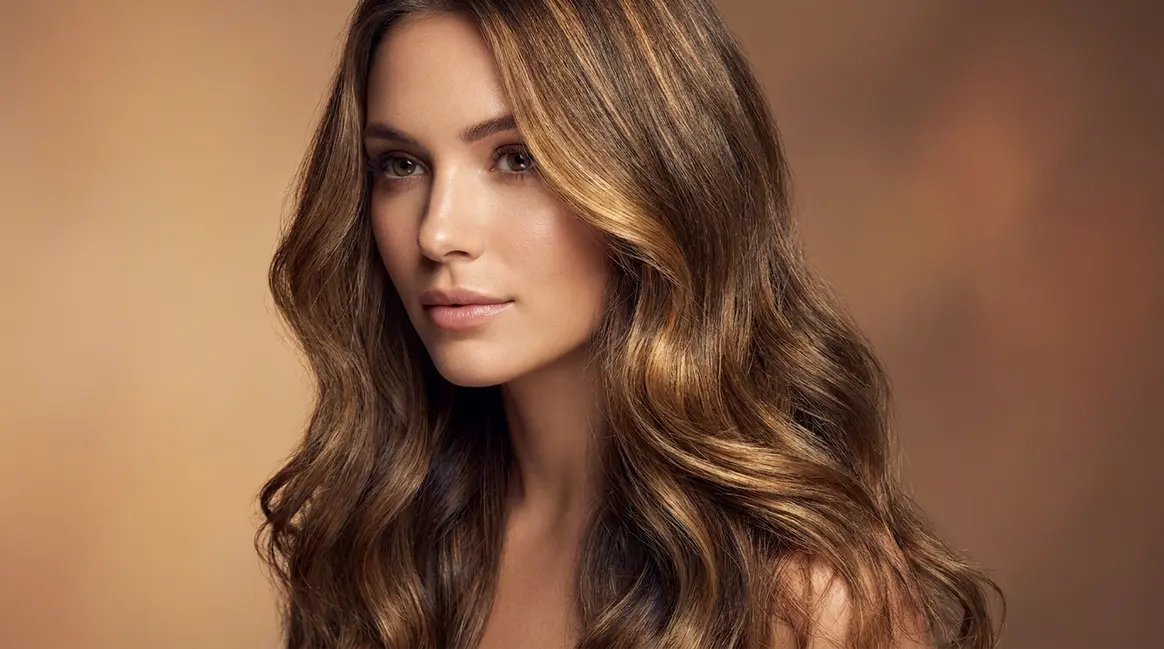
“Is my hair dark blonde or light brown?”
If you’ve ever stood under a bathroom light wondering the same thing, you are in very good company. It’s one of the most common questions in hair color communities — and most articles skip right past it to show you a gallery of beautiful photos that leave you no closer to an answer.
Here’s what’s different about this guide: you’ll discover exactly what dark blonde hair is, learn a simple diagnostic tool called The Level 6 Line that settles the dark-blonde-vs.-light-brown debate once and for all, and explore 30 shade and styling ideas matched to your skin tone. You’ll also find a safe, step-by-step at-home dye tutorial, advice for mature hair, and a maintenance plan to keep your color looking fresh. Whether you want to stick to your natural shade, go darker or lighter, or finally achieve that PERFECT dark blonde you’ve been picturing — this guide walks you through every step.
Dark blonde hair sits at Level 6 on the universal hair color scale — one shade lighter than light brown (Level 5) and one shade darker than medium blonde (Level 7), with warm or cool undertones that determine your perfect shade.
- The Level 6 Line is your fastest tool for distinguishing dark blonde from light brown — if it’s Level 6, it’s dark blonde, full stop
- Cool undertones → ash dark blonde; warm undertones → golden or strawberry dark blonde
- Highlights and lowlights add dimension without fully committing to an all-over color change
- DIY is possible but staying within two shades of your natural color minimizes damage risk
- 60+ readers: lighter, softer shades around the face create a more youthful and luminous appearance
What Is Dark Blonde Hair? Definition & Scale
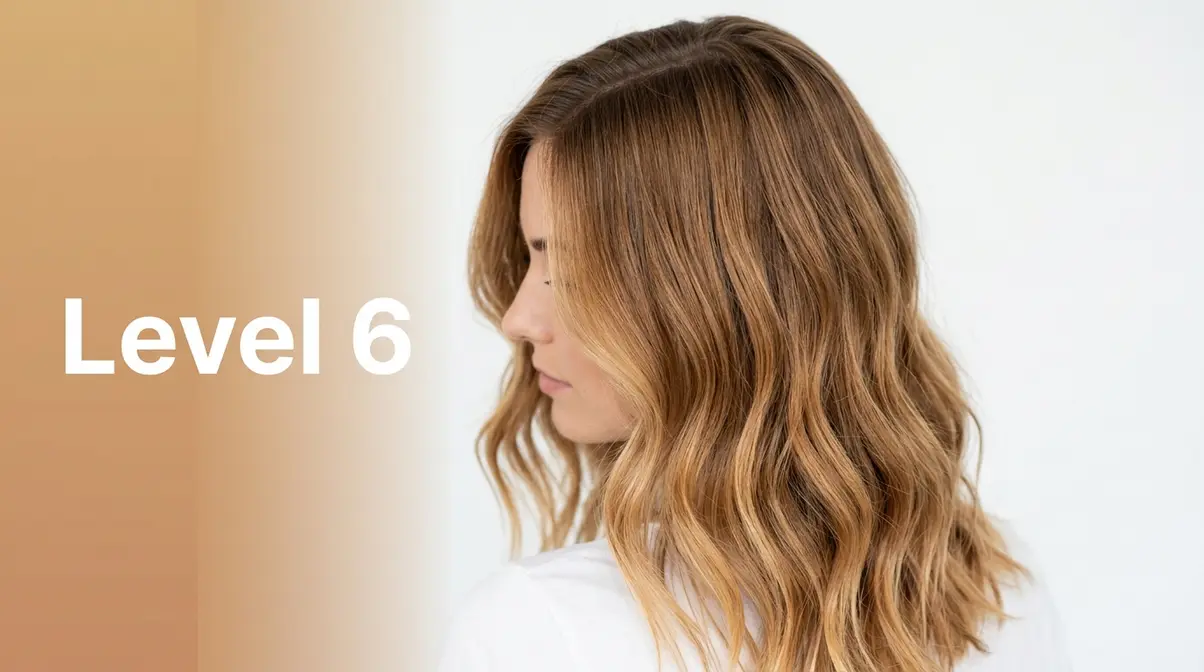
Dark blonde hair is a natural hair color that sits at Level 6 on the universal color scale — lighter than light brown (Level 5) and deeper than medium blonde (Level 7). According to the Madison Reed color level guide, Level 6 is characterized by underlying golden-orange pigments that create warm dimension in sunlight and a slightly muted, honey-toned appearance indoors. Knowing your level number means you can walk into any salon and point to exactly the shade you want, without guessing. For a deeper dive into maintenance and styling, check out our complete dark blonde hair guide.
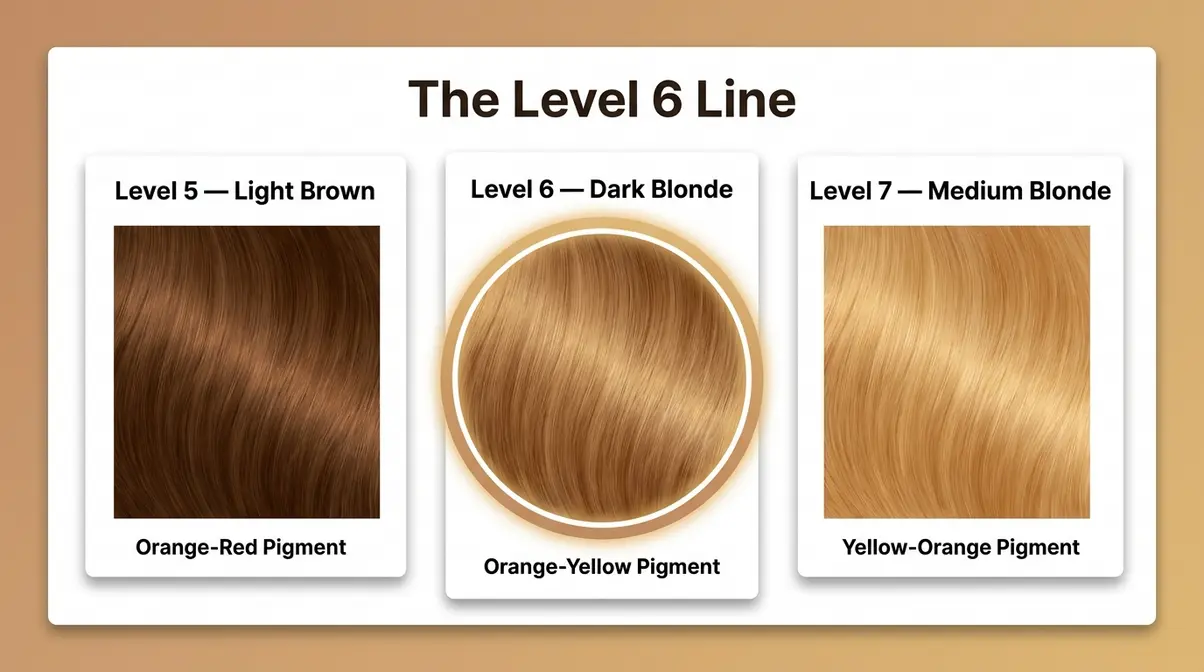
Dark blonde hair color encompasses a surprisingly wide range of looks. The natural dark blonde hair you were born with may appear almost brown in winter light and noticeably golden in summer sun. That’s the underlying pigment at work. According to Paul Mitchell Schools color theory, dark blonde hair at Level 6 contains orange-yellow underlying pigments — which is why, when you lighten it, warmth (brassiness) emerges first. Understanding this chemistry helps you choose the right toner (a semi-permanent color that neutralizes unwanted brassiness) before you ever touch a box of dye (Paul Mitchell Schools, 2026).
Is Dark Blonde the Same as Light Brown?
No — dark blonde and light brown are genuinely different shades, and The Level 6 Line is the fastest way to tell them apart. Dark blonde occupies Level 6 on the universal color scale and has a blonde base with golden or ash undertones. Light brown sits at Level 5 and has a true brown base that appears richer, deeper, and reflects less light overall.
“Is my hair dark blonde or light brown?”
Here is the simple at-home test: take a strand of your hair outside in natural sunlight and hold it against a white background. If you see golden, honey, or ash glints catching the light, your hair is dark blonde. If it reads as an even, warm brown with no visible lightness, you are looking at light brown. Indoor bathroom lighting often flattens both shades together — which is exactly why so many people are confused.
The informal names add to the mix-up. Dirty blonde is the informal name for natural dark blonde hair with muted, ashy tones — it’s still Level 6, just with cooler underlying pigments. “Dishwater blonde” refers to a similar shade with a slightly greyer, less saturated quality. Both are technically dark blonde. Light brown blonde hair sits right at the Level 5–6 border, which is why it genuinely looks different depending on the light. If you are standing at that boundary, a professional colorist can confirm your level in under a minute using a color chart.
According to the Madison Reed color level guide, the primary difference between Level 5 and Level 6 is the underlying warm pigment — Level 6 retains more golden-yellow tone, while Level 5 shifts toward orange-red (Madison Reed, 2026). That single difference is why the two shades behave completely differently when you apply toner or highlights.
Now that you know where dark blonde sits on the scale, let’s look at what that number actually means for your specific shade — because Level 6 comes in cool, warm, and neutral variations.
The Level 6 Line Color Scale Position
The Level 6 Line is the defining insight of this guide: dark blonde occupies precisely Level 6 on the professional cosmetology color scale, making this single number the fastest diagnostic tool any reader or stylist can use.
The universal hair color level system runs from Level 1 (black) to Level 10 (lightest blonde). Each level represents a measurable difference in how much natural pigment remains in the hair strand. Here is how the middle range maps out:
| Level | Color Name | Underlying Pigment | Looks Like |
|---|---|---|---|
| Level 5 | Light Brown | Orange-red | Rich warm brown, minimal blonde glints |
| Level 6 | Dark Blonde | Orange-yellow | Honey-toned, golden in sunlight |
| Level 7 | Medium Blonde | Yellow-orange | Clearly blonde, warm or cool depending on toner |
| Level 8 | Light Blonde | Yellow | Light, bright blonde |
Professional cosmetology standards — including those taught at Paul Mitchell Schools — use this system universally, which means any colorist anywhere in the world references the same chart (Paul Mitchell Schools, 2026). Deep dark blonde hair sits at the darker end of Level 6, closer to Level 5, while lighter Level 6 hair nudges toward Level 7. Both are still dark blonde.
Knowing your level number is genuinely useful: it tells your colorist how many levels to lift (lighten) or deposit (darken), which developer strength to use, and which toner will neutralize unwanted warmth.
Warm, Cool, and Neutral Undertones
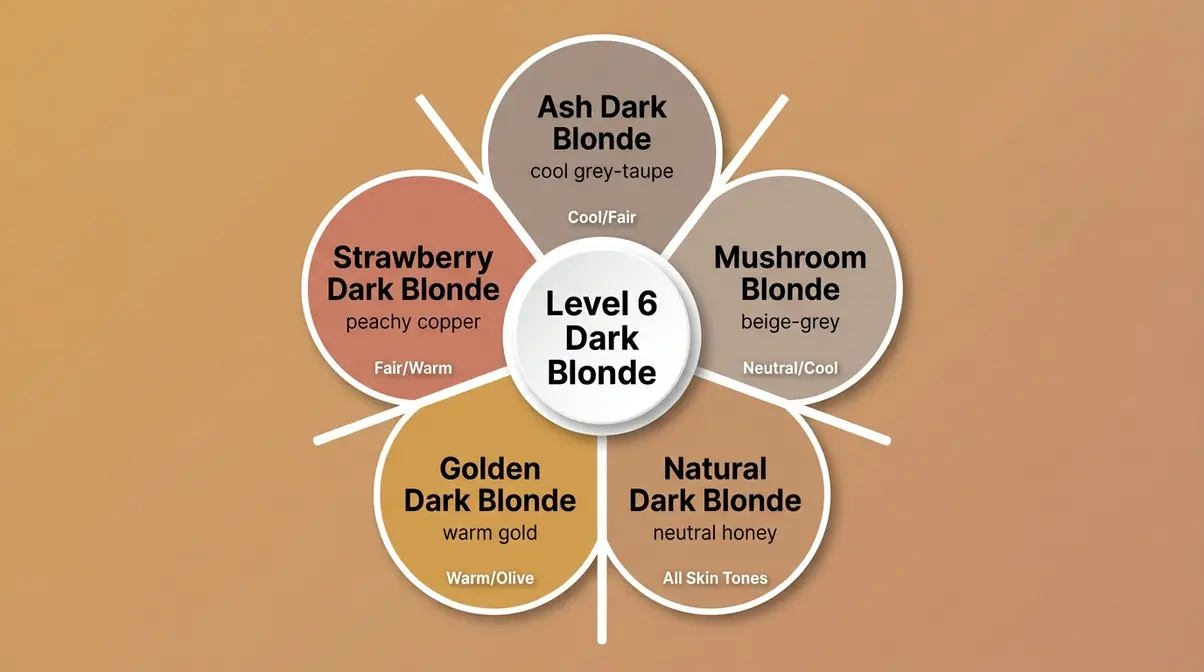
Undertones are the secondary hues that live beneath your hair’s main color — and they change everything about how your dark blonde shade looks on you. At Level 6, three undertone families exist:
- Warm undertones produce honey-gold, caramel, and strawberry-blonde effects. These pair beautifully with warm skin tones (golden, olive, peachy complexions).
- Cool undertones produce ash, smoky, and platinum-adjacent effects. These complement cool skin tones (pink, rosy, or bluish undertones in the skin).
- Neutral undertones fall between warm and cool — often described as “natural” or “beige blonde.” They work with almost every skin tone.
The practical takeaway: before choosing a dark blonde hair color, identify whether you want to enhance warmth or neutralize it. A violet or blue toner neutralizes orange-yellow pigments (cool result); a gold or copper toner enhances them (warm result). Your skin tone acts as your guide — colorists consistently recommend choosing a shade that either matches or gently contrasts your skin’s undertone for the most flattering result.
Dark Blonde Hair Shades: Ash, Golden & More
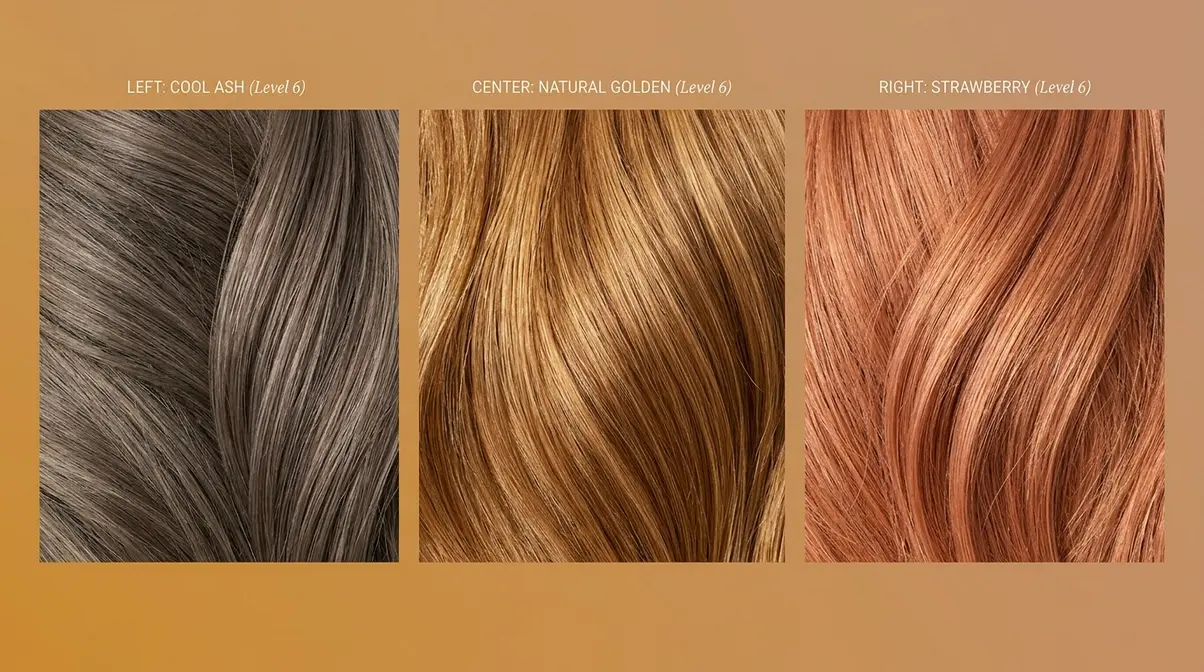
Dark blonde hair is not one shade — it’s a family of colors that spans from cool, smoky ash to sun-warmed gold, each one flattering a different skin tone. The Level 6 range is where the most versatile and wearable colors in all of hair color live. According to Wella Professional, dimensional color at Level 6 consistently performs as one of the most requested salon shades year over year, precisely because it reads as natural and low-maintenance on a wide range of complexions (Wella, 2026).
Ash Dark Blonde: Cool-Toned and Modern
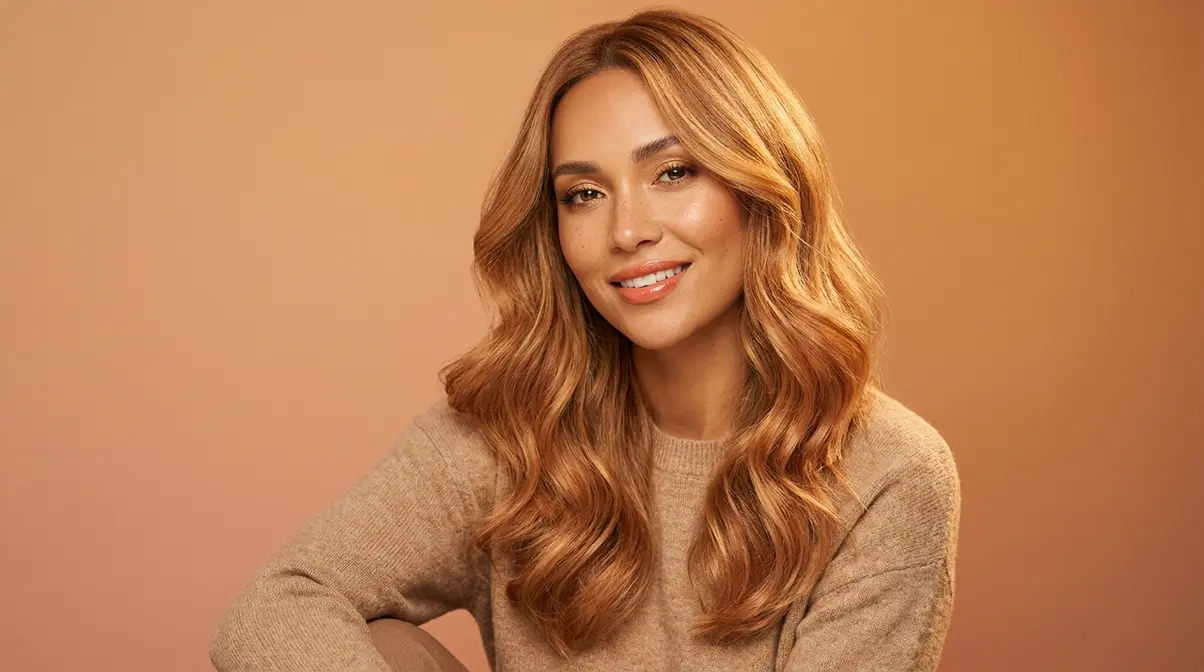
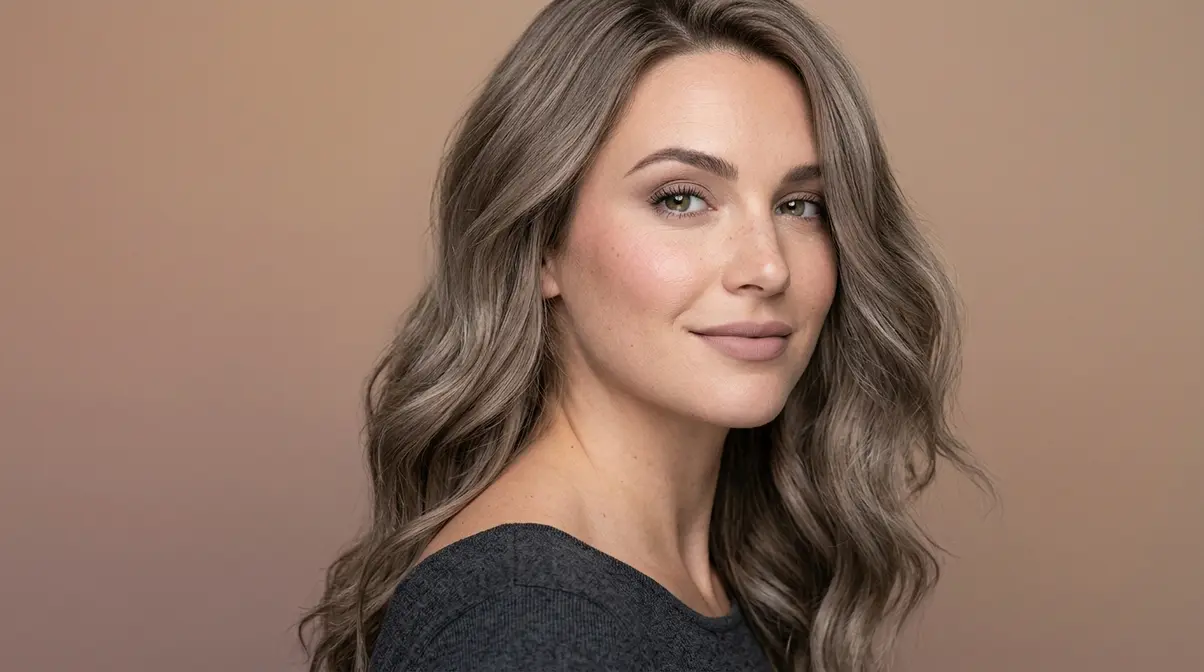
When you want a cool-toned look, ash dark blonde is the perfect member of the Level 6 family. It leans toward grey, taupe, and smoky silver rather than gold or honey — giving hair a modern, sophisticated look that photographs beautifully in natural light.
This shade is created by applying a blue- or violet-based toner over Level 6 hair, which neutralizes the natural orange-yellow pigment and replaces it with a cooler, more muted tone. The result is a color that reads almost like a “natural” shade found in Northern European hair — which is part of why it feels so effortless.
Best skin tones for ash dark blonde: Cool skin tones with pink, rosy, or neutral undertones benefit most. Fair to medium complexions with cool undertones look especially luminous next to this shade. Those with very warm or golden skin tones may find ash dark blonde a little stark — in that case, a “sandy” or “beige” dark blonde (a softer, slightly warm ash) is a better bridge.
- 30 ideas that feature ash dark blonde:
- Ash dark blonde all-over with a cool shadow root
- Ash dark blonde balayage (freehand highlights) on natural brown hair
- Smoky ash dark blonde with fine babylights (extremely fine, natural-looking highlights) woven throughout
- Cool ash dark blonde with a tonal gloss finish
- Ash dark blonde with slate-grey lowlights for depth
Maintenance note: Ash tones fade faster than warm tones because cool pigments are smaller molecules. A blue or purple toning shampoo (used once or twice a week) extends the life of your ash shade between salon visits.
Golden and Strawberry Dark Blonde
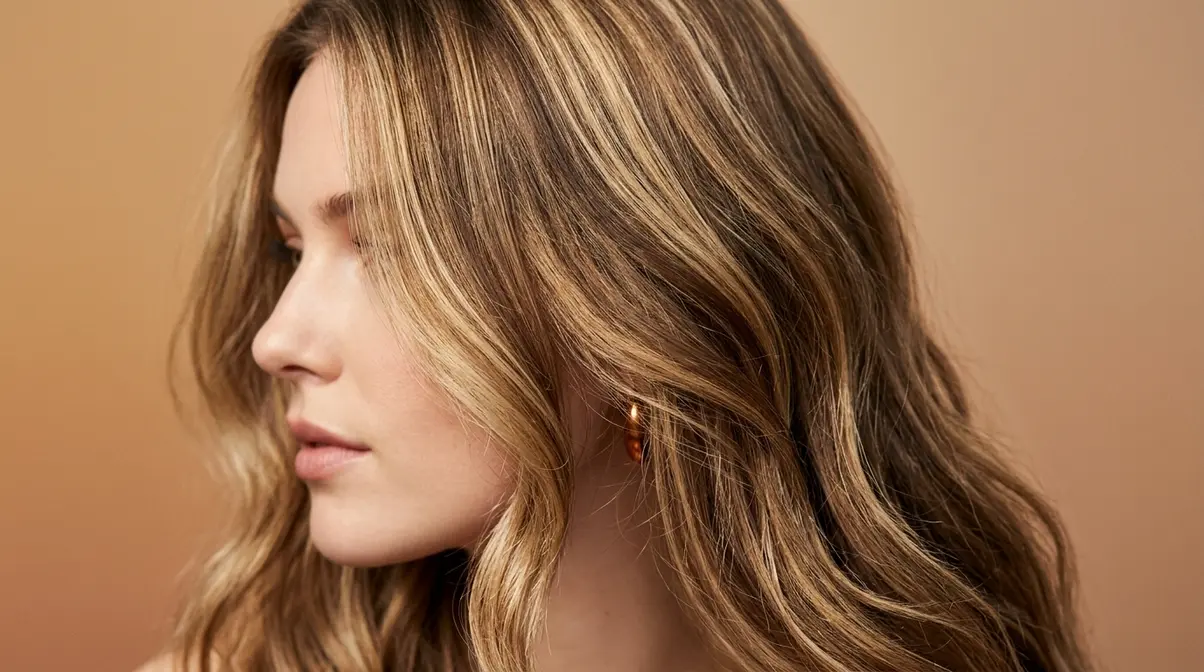
If you prefer a sun-kissed glow, golden dark blonde serves as the warm counterpart to ash — honey-colored, luminous, and full of the kind of dimension that looks like you just returned from two weeks at the beach. Strawberry dark blonde adds a soft peachy-copper flush to the golden base, creating a shade that reads almost like a natural redhead who has spent the summer in the sun.
Both shades sit firmly at Level 6 but lean toward the warmer side of the underlying pigment. They are created by either enhancing the natural orange-yellow pigment already present in Level 6 hair (using a warm-toned gloss or deposit-only color) or by applying a golden or copper toner after lightening.
Best skin tones for warm dark blonde shades: Golden dark blonde flatters warm and neutral skin tones — think olive, caramel, peachy, and golden complexions. Strawberry dark blonde works exceptionally well on fair skin with warm or neutral undertones, particularly those with freckles or a naturally rosy flush.
- Ideas from the 30-look gallery:
- Golden dark blonde all-over with a warm honey gloss
- Strawberry dark blonde with copper face-framing pieces
- Golden dark blonde balayage blended from a natural Level 5 base
- Sun-kissed golden dark blonde with scattered fine highlights
- Strawberry dark blonde with peachy-toned lowlights for depth
Colorist consensus indicates that golden dark blonde is one of the most forgiving shades for at-home maintenance — the warm tones mask brassiness rather than clashing with it, making touch-ups more predictable.
Mushroom Blonde and Bronde Trends
Two of the most talked-about shades in the Level 6 family right now are mushroom blonde and bronde — both beautifully ambiguous, and both genuinely wearable for a wide range of people.
Mushroom blonde is a cool-neutral dark blonde with grey-beige undertones, named for the muted, earthy tones of a cremini mushroom. It reads as neither warm nor cool — just effortlessly sophisticated. It requires a taupe or beige-grey toner and works best on those with neutral or cool skin tones.
Bronde (a blend of brown and blonde) sits right at the Level 5–6 boundary — darker than most dark blondes, lighter than most light browns. It’s created by adding warm or cool highlights to a brown base, creating the impression of dimensional, sun-touched color without a dramatic commitment.
- Ideas from the gallery:
- Mushroom blonde with a blended shadow root
- Bronde with warm caramel highlights and cool brown lowlights
- Mushroom blonde balayage on naturally dark Level 5 hair
- Bronde with face-framing money pieces (bright, bold highlights around the face)
- Cool mushroom blonde with an ashy gloss finish
Highlights and Lowlights for Dark Blonde Hair
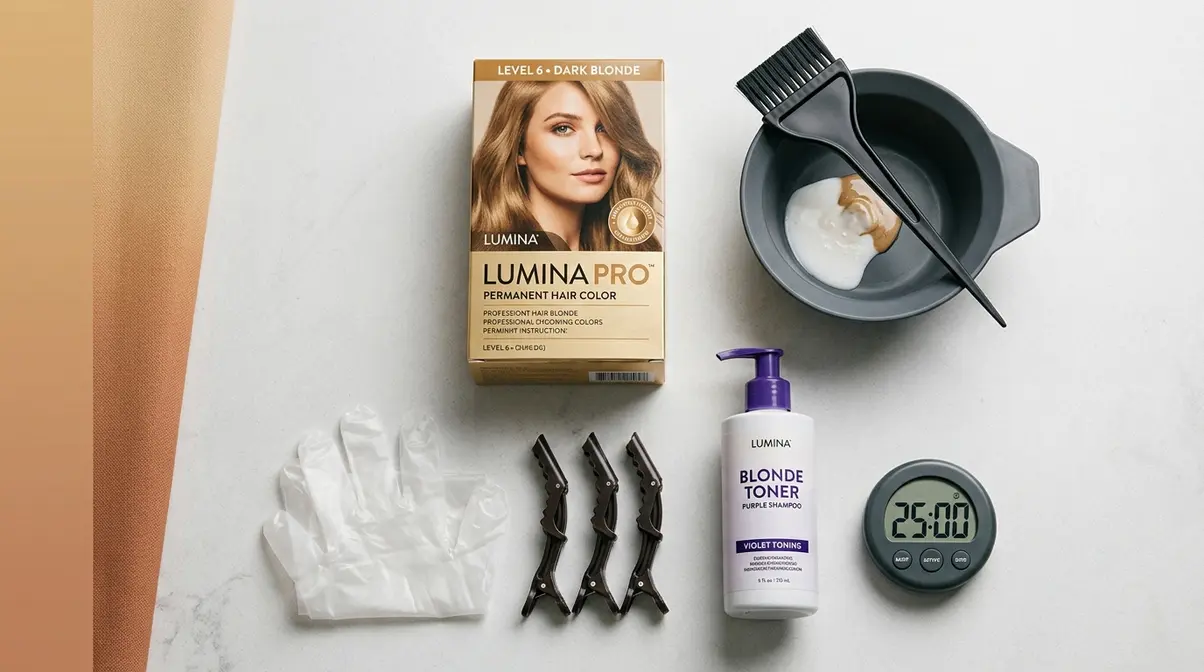
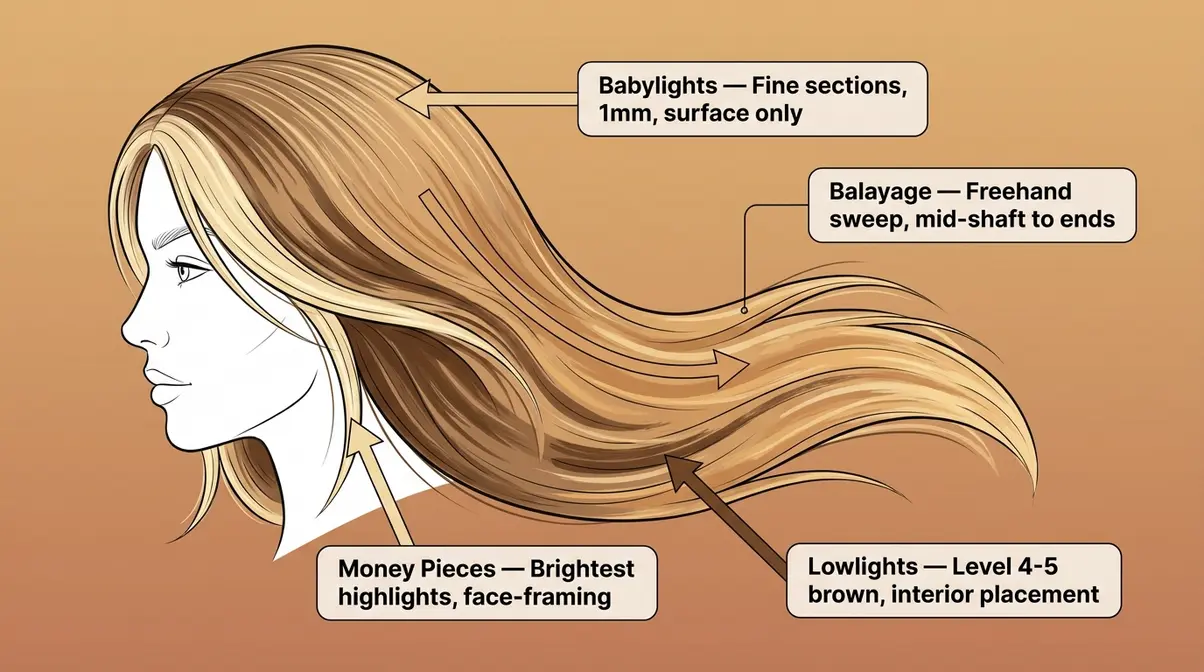
Adding dark blonde hair color highlights or lowlights is the most popular way to create dimension — and for good reason. A single, flat all-over color at Level 6 can look one-dimensional in photographs. Strategic highlights lift and brighten; lowlights add depth and shadow. Together, they create the multi-tonal effect that makes hair look genuinely healthy and alive. According to Byrdie’s dark blonde hair color guide, dimensional color techniques on Level 6 hair are consistently among the most requested salon services, precisely because they mimic the natural variation sunlight creates (Byrdie, 2026).
Balayage and Foilyage Techniques
Stylists use balayage (bah-lee-AHJ) as a freehand highlighting technique where they paint lightener directly onto the hair surface, concentrating color at the mid-lengths and ends to mimic natural sun exposure. Foilyage combines freehand painting with foil wrapping, which increases the lift (lightening power) and creates slightly brighter, more defined highlights than classic balayage.
Both techniques work exceptionally well on dark blonde hair because Level 6 lifts (lightens) relatively predictably — you typically need one to two levels of lift to create visible highlights, which means less processing time and less risk of damage compared to lifting from dark brown or black.
Professional communities consistently report that balayage on Level 6 hair is one of the lowest-maintenance color services available: because the color is painted away from the root, regrowth blends naturally and you can go 12–16 weeks between appointments.
Blonde balayage on brown hair (lifting from Level 5 to create Level 7–8 highlights on a Level 6 base) is a particularly popular request — the contrast creates a lived-in, sun-kissed effect that looks natural even as it grows out.
- Ideas from the gallery:
- Classic balayage: warm golden highlights swept from mid-shaft to ends
- Foilyage: bright Level 8 pieces on a Level 6 ash dark blonde base
- Reverse balayage: adding deeper brown lowlights to a lighter dark blonde base
- Dark hair color with blonde highlights — Level 5 base with Level 7 balayage
- Bronde balayage: seamless warm-to-cool blend across Level 5–6
Babylights for Subtle Dimension
To mimic the natural, sun-bleached look children develop in summer, colorists apply extremely fine, closely spaced highlights known as babylights. They are applied using very thin sections of hair — often as thin as a millimeter — which creates a soft, shimmery effect rather than a bold contrast.
For dark blonde hair, babylights are the subtlest way to add dimension without changing your overall shade. The result looks like your natural hair color has simply been “woken up” by the sun. They are ideal for:
- First-time color clients who want to test the waters before committing to full highlights
- Those who want to brighten their dark blonde hair without the maintenance of full balayage
- Natural dark blonde hair that has become flat or dull over time
Dark blonde hair color highlights using the babylight technique typically require 60–90 minutes in the salon and cost between $150–$300 depending on hair length and density (prices vary by region and stylist).
- Ideas from the gallery:
- Babylights scattered throughout natural dark blonde hair for a lit-from-within effect
- Babylights concentrated around the face (brightest where the sun naturally hits)
- Fine foil highlights in a cool ash tone on mushroom blonde hair
- Babylights on dark blonde hair with a toning gloss finish in honey or champagne
Lowlights and Brown Tones for Depth
Instead of brightening the hair, lowlights do the exact opposite by adding darker tones back into the strands to create shadow, depth, and dimension. For dark blonde hair, lowlights typically use Level 4–5 brown shades, which sit one to two levels below the base color.
Adding dark brown hair with blonde highlights and lowlights simultaneously creates a truly multi-dimensional result: the highlights catch the light, the lowlights create shadow, and the dark blonde base ties everything together. The effect mimics the natural variation in virgin (uncolored) hair that most people lost after childhood.
Lowlights are also a strategic tool for those who have over-highlighted their hair. If your dark blonde hair has become too light or too uniform from repeated bleaching, a round of carefully placed lowlights can restore depth without a full color correction.
- Ideas from the gallery:
- Warm caramel lowlights woven through ash dark blonde for contrast
- Rich chestnut lowlights on golden dark blonde for a bronde effect
- Cool brown lowlights on mushroom blonde for a smoky, dimensional finish
- Alternating highlights and lowlights on dark blonde hair for a ribbon effect
How to Dye Dark Blonde Hair at Home
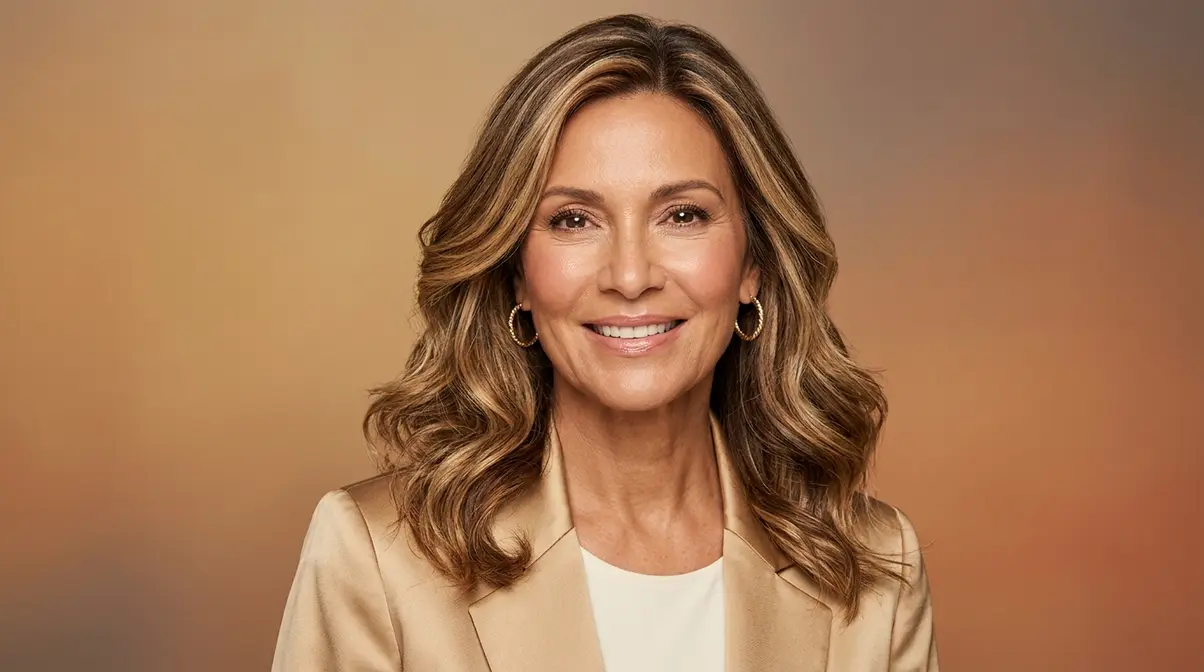
Dyeing your hair dark blonde at home is entirely achievable — but it requires preparation, the right products, and a realistic understanding of what your current hair color can do. L’Oréal Paris’s dark blonde hair guide recommends staying within two shades of your natural color for any at-home color service, which keeps the process manageable and minimizes damage risk (L’Oréal Paris, 2026). This section gives you the full process, step by step.
Prerequisites Before You Start
Before you open a single box of dye, gather everything on this list. Starting without the right tools is the most common reason at-home color goes wrong.
- You will need:
- Dark blonde permanent or semi-permanent hair dye (choose a Level 6 shade that matches your undertone preference — warm or cool)
- Developer (included in most box dye kits; 20-volume developer is standard for Level 6)
- Toning shampoo or gloss (purple for ash tones, blue for golden tones) — optional but strongly recommended
- Plastic mixing bowl and brush (or use the applicator bottle included in your kit)
- Sectioning clips (at least 8)
- Old towel and old T-shirt (dye stains permanently)
- Petroleum jelly or barrier cream (apply along your hairline to prevent skin staining)
- Gloves (always included in box kits — wear them)
- Timer
Estimated total time: 90–120 minutes (30 minutes prep + 30–45 minutes processing + 15–30 minutes rinse and condition)
Skill level: Beginner-friendly, provided your starting color is within two shades of dark blonde.
Safety First: Before applying any hair dye, the American Academy of Dermatology (AAD) strongly recommends performing a patch test at least 48 hours before full application. Apply a small amount of mixed dye behind your ear or on the inner elbow, leave for 48 hours, and check for redness, itching, or swelling. This step is non-negotiable — allergic reactions to hair dye can range from mild irritation to severe swelling (AAD, 2026).
Step-by-Step At-Home Application
Follow these steps in order. Do not skip the patch test or the strand test — they protect both your skin and your hair.
Step 1 — Patch test (48 hours before)
Mix a pea-sized amount of dye and developer. Apply to the skin behind your ear. Leave for 48 hours. If you experience any redness, itching, or swelling, do not proceed — see a dermatologist.
Step 2 — Strand test (24 hours before)
Cut a small section of hair from an inconspicuous area (near the nape of your neck). Mix a small amount of dye and apply to the strand. Process for the recommended time, rinse, and dry. This tells you exactly what color result to expect — and whether you need to adjust your shade selection.
Step 3 — Prepare your workspace
Lay an old towel on the floor. Put on your old T-shirt. Apply petroleum jelly along your hairline, ears, and the back of your neck. Put on your gloves.
Step 4 — Section your hair
Divide your hair into four sections: two in the front, two in the back. Clip each section separately. Working in sections ensures even coverage and prevents missed spots.
Step 5 — Mix the dye
Follow the instructions in your kit exactly. Most box dyes use a 1:1 ratio of color to developer. Mix until the color is smooth and uniform.
Step 6 — Apply to roots first
Start at the roots, where your hair is most resistant to color. Work section by section, applying dye from root to mid-shaft. Roots process faster than ends, so they get the most time.
Step 7 — Work color through to ends
After covering all roots (approximately 15 minutes into processing time), work the remaining dye through the mid-lengths and ends. This ensures even coverage without over-processing the ends.
Step 8 — Set the timer
Process for the time specified on your kit — usually 25–35 minutes. Do not exceed the recommended time, as over-processing weakens the hair shaft.
Step 9 — Rinse thoroughly
Rinse with lukewarm (not hot) water until the water runs completely clear. Hot water opens the hair cuticle and accelerates color fade.
Step 10 — Apply the conditioning treatment
Use the conditioning treatment included in your kit. Leave for 3–5 minutes, then rinse. This closes the cuticle and seals in color.
Expected outcome: A uniform Level 6 dark blonde result that matches your strand test. Color will appear slightly darker when wet — wait until your hair is fully dry to assess the final result.
| Step | Action | Time |
|---|---|---|
| 1 | Patch test | 48 hrs before |
| 2 | Strand test | 24 hrs before |
| 3–5 | Prepare, section, mix | ~15 min |
| 6–7 | Apply color | ~20 min |
| 8 | Process | 25–35 min |
| 9–10 | Rinse and condition | ~15 min |
How to Avoid Brassiness and Red Tones
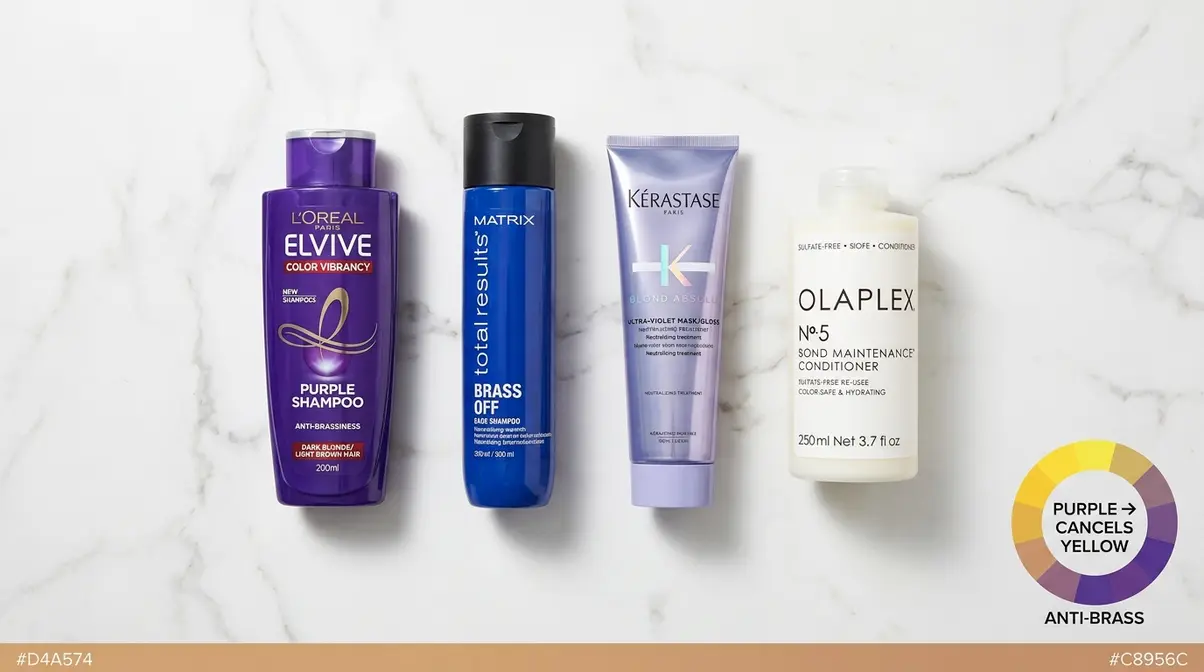
Brassiness is the #1 frustration in at-home dark blonde color — and it’s entirely predictable. When you lighten hair, the underlying orange-yellow pigment at Level 6 becomes exposed. Without a toner to neutralize it, the result looks brassy, orange-red, or muddy rather than the clean golden or ash shade you wanted.
Dark blonde hair dye without red tones is achievable with the right approach:
- Choose a dye with a built-in toner. Many Level 6 box dyes include a blue or violet pigment in the formula specifically to counteract brassiness. Look for words like “ash,” “cool,” or “pearl” in the shade name.
- Use a toning treatment after coloring. Apply a purple or blue toning mask (leave on for 5–15 minutes) immediately after rinsing your dye. This neutralizes any remaining warmth.
- Maintain with a purple shampoo. Use once or twice a week to keep cool tones fresh. Purple shampoo is the single most effective at-home tool for keeping dark blonde hair looking clean and bright.
Colorist consensus indicates that the most common at-home mistake is applying a warm-toned Level 6 dye to hair with high underlying warmth — the result doubles the brassiness rather than reducing it. If your hair is naturally very warm, choose a cool or neutral Level 6 shade and follow with a toning treatment.
Safety First: Patch Testing Rules
The FDA advises consumers to always perform a patch test before using any permanent hair dye, even if you have used the same brand before — formulas change, and sensitization can develop over time (FDA, 2026). Allergic reactions to p-phenylenediamine (PPD), the primary active ingredient in most permanent hair dyes, can range from mild contact dermatitis to severe anaphylaxis in rare cases.
- Additional chemical precautions:
- Never mix dye from different brands or formulas — the developer volumes may be incompatible
- Do not apply permanent hair dye over chemically relaxed or permed hair without professional guidance — the combination of chemicals can cause severe breakage
- Keep dye away from eyes — if contact occurs, rinse immediately with lukewarm water and seek medical advice
- Ensure your workspace is well-ventilated — ammonia fumes from permanent dye can cause irritation in enclosed spaces
- Follow the AAD recommendation to wait at least two weeks between chemical services (AAD, 2026)
Patch test reminder: This step is non-negotiable. Allergic reactions to hair dye can develop even after years of safe use. Always test 48 hours before application.
Dark Blonde Hair Ideas for Men
Dark blonde hair is not exclusively a women’s concern — and yet most articles treat it that way. Men with naturally dark blonde or dirty-blonde hair have their own set of styling questions, particularly around whether to embrace their natural shade, add subtle highlights, or pair their color with a specific cut. Real Simple’s dirty blonde hair guide notes that natural dark blonde hair in men reads as particularly masculine when paired with short, textured cuts or skin fades (Real Simple, 2026). If you are looking for more specific cuts, explore our gallery of blonde hairstyles for men.
Natural Dark Blonde Styles for Men
Dark blonde hair men who want to work with their natural color (rather than chemically alter it) have more options than they might realize. Natural dark blonde hair at Level 6 already has built-in dimension — the underlying warm pigment creates natural variation between individual strands, especially in sunlight.
- Style ideas for natural dark blonde men:
- The textured crop: A short, textured cut that lets the natural variation in dark blonde hair catch the light. Works best when air-dried or lightly product-styled — heat styling can flatten the natural dimension.
- The side-swept undercut: Dark blonde hair swept to one side with a skin fade on the sides. The contrast between the darker top and lighter sides emphasizes the natural warmth in Level 6 hair.
Low-maintenance color enhancement for men: A clear gloss treatment (applied at a salon or using an at-home gloss kit) adds shine and slightly deepens the color without changing the overall shade — ideal for men who want a polished look without visible color work.
Dark blonde hair men natural styles benefit from a lightweight, nourishing hair oil or serum to enhance the natural shine. Heavy pomades or waxes can make Level 6 hair look dull by coating the cuticle.
Highlights and Fade Styles for Men
For men who want to enhance their dark blonde hair with color, the most masculine and low-maintenance approach is subtle highlights concentrated at the top of the head, paired with a clean fade or taper on the sides.
Brown hair with blonde highlights men — specifically, a Level 5 base with Level 7–8 highlights on top — creates a natural sun-kissed effect that reads as intentional without looking overtly colored. The key is keeping highlights concentrated at the surface of the hair, where sunlight would naturally lighten it.
- Style ideas with color:
- The highlighted quiff: Subtle balayage highlights on the top section of a quiff or pompadour, blended into natural dark blonde at the sides. The contrast adds visual height and interest.
- The frosted tip (modern version): A contemporary update on the 2000s classic — soft, diffused highlights at the very tips of a textured crop, creating a natural sun-bleached effect rather than the sharp contrast of the original.
- The fade with toned roots: A skin fade paired with a light ash toner on the top to cool down natural warmth — a clean, modern look that requires minimal upkeep.
Maintenance note for men: A color-depositing shampoo used once a week maintains both highlights and natural dark blonde color without a salon visit.
Dark Blonde Hair for Mature Women: Shades for 60+
Hair color advice for women over 60 is one of the most underserved areas in beauty content — and dark blonde is a genuinely excellent choice for mature women. As hair naturally lightens and loses pigment with age, Level 6 dark blonde shades often align beautifully with the natural silver-blonde many women develop in their 60s and 70s. The Cleveland Clinic notes that hair porosity (the hair’s ability to absorb and retain moisture and color) increases with age, which means color absorbs faster and fades faster in mature hair — a critical factor in shade selection and maintenance planning (Cleveland Clinic, 2026).
Hair Colors for a Younger Look at 60
Colorist consensus indicates that the most youth-enhancing hair color choices for women over 60 share two qualities: they are lighter around the face and softer in contrast than the person’s natural color. Dark, flat, all-over color tends to emphasize lines and shadows around the face; lighter, multi-tonal color reflects light upward and creates a brightening effect.
For dark blonde hair specifically:
- Soft golden or honey highlights around the face (face-framing pieces) create warmth and luminosity that counteract the natural hollowing effect of facial aging
- Ash or beige dark blonde softens the overall look without the starkness of silver or platinum
- A shadow root (slightly darker roots that blend into lighter mid-lengths and ends) reduces the harsh contrast of regrowth and extends time between appointments
What color hair makes a 60-year-old look younger? According to professional communities, shades in the Level 6–7 range — particularly warm golden blonde and soft honey-blonde — consistently outperform darker shades for a youthful, vibrant appearance. The key is avoiding shades more than three levels darker than your current natural color, which can create a heavy, aging effect.
Practical note on mature hair porosity: Because older hair is more porous, it absorbs color faster — which means processing time should be reduced by 5–10 minutes compared to younger hair, and conditioning treatments should be used every single wash. Discuss this with your colorist before any chemical service.
Going Lighter vs. Darker as You Age
The age-old question — should you go lighter or darker as you get older? — has a nuanced answer that depends on your skin tone, your natural hair’s current level, and your personal style.
Going lighter (toward Level 7–8) as you age has strong support from professional stylists. Lighter shades around the face reflect light and minimize the appearance of fine lines. They also blend more naturally with emerging grey and silver hair, reducing the contrast between colored and uncolored sections as regrowth appears. For women who are naturally dark blonde (Level 6) and developing silver, a soft Level 7–8 with grey-blending highlights is often the most flattering and lowest-maintenance option.
Going darker (toward Level 5) can look dramatic and chic on women with strong, defined features and naturally warm skin tones — but it requires careful management. The higher contrast between dark hair and aging skin can emphasize rather than minimize facial lines. If you want to go darker or lighter, professional stylists consistently recommend a consultation before committing, particularly for women over 60.
For women over 70: The AAD recommends a patch test before every single color application in mature hair, as skin sensitivity tends to increase with age (AAD, 2026). Gentle, ammonia-free formulas (often labeled “demi-permanent” or “no-ammonia”) are a safer choice for fragile, high-porosity mature hair.
How to Maintain Dark Blonde Hair Color
Great color is only half the battle — maintenance is what keeps it looking fresh between appointments. Dark blonde hair color is among the most forgiving to maintain because the Level 6 range naturally contains warmth that can mask minor fade. Still, without the right routine, even the most beautiful dark blonde shade will shift brassy, dull, or flat within weeks.
How to Prevent Brassiness
Brassiness (an unwanted orange, copper, or yellow cast) is the most common maintenance complaint for dark blonde hair. It happens because color molecules — especially cool, ash tones — are smaller than warm molecules and exit the hair shaft faster during washing. The warm underlying pigment at Level 6 is then left exposed.
The most effective anti-brassiness routine:
- Purple shampoo, 1–2 times per week. Purple cancels yellow and gold tones (opposite colors on the color wheel). Use in place of your regular shampoo — lather, leave on for 3–5 minutes, rinse.
- Blue shampoo for more orange-leaning brassiness. If your dark blonde hair pulls more orange than yellow, blue shampoo is more effective than purple. The two can be alternated.
- Toning gloss every 4–6 weeks. A semi-permanent toning gloss (available at-home or in-salon) refreshes your cool tones and adds shine. This is the single most effective tool for extending the life of an ash or neutral dark blonde shade.
- Cold water rinse. Always finish your wash with a cool or cold rinse. Hot water opens the hair cuticle and allows color molecules to escape faster.
User consensus across hair communities indicates that switching from daily washing to every-other-day washing (or less) is the single biggest lifestyle change for color longevity — color fade accelerates dramatically with frequent washing.
Products for Color-Treated Hair
Color-treated dark blonde hair has specific needs that regular haircare products do not address. The coloring process opens the hair cuticle to deposit pigment, which leaves it temporarily more porous and vulnerable to moisture loss and breakage.
Essential products for color-treated dark blonde hair:
| Product Type | What It Does | How Often |
|---|---|---|
| Color-safe sulfate-free shampoo | Cleans without stripping color molecules | Every wash |
| Color-depositing conditioner (gold or ash) | Refreshes tone while conditioning | 1–2× per week |
| Deep conditioning mask | Restores moisture lost during chemical processing | Once per week |
| Purple or blue toning shampoo | Neutralizes brassiness | 1–2× per week |
| UV-protectant hair spray or serum | Prevents sun-induced color fade | Daily (if outdoors) |
| Toning gloss | Refreshes overall tone and adds shine | Every 4–6 weeks |
Avoid: Shampoos containing sulfates (sodium lauryl sulfate, sodium laureth sulfate) — these are highly effective cleansers but strip color molecules rapidly. Check your shampoo label and switch to a sulfate-free formula as soon as you color your hair.
Touch-Up Frequency Guidelines
Touch-up frequency depends on the type of color service you have:
- All-over permanent color: Every 4–6 weeks for root touch-up; full refresh every 8–12 weeks
- Balayage or foilyage: Every 12–16 weeks (the seamless blend means regrowth is far less visible)
- Semi-permanent or demi-permanent color: Every 4–8 weeks (fades gradually rather than growing out with a harsh line)
- Toning gloss only: Every 4–6 weeks to maintain tone between highlight appointments
Colorist consensus indicates that waiting too long between touch-ups for permanent color creates a “two-tone” effect that is harder and more expensive to correct than a regular maintenance appointment. If you are on a budget, a toning gloss at home can extend time between salon visits by 2–4 weeks.
Common Mistakes to Avoid with Dark Blonde Hair
Even with the best intentions, at-home dark blonde color can go sideways. Knowing the most common pitfalls — and how to avoid them — is the difference between a result you love and an expensive salon correction.
Common At-Home Dyeing Mistakes
Mistake 1: Choosing the wrong shade for your starting color.
If your natural hair is Level 4 (dark brown) or lower, a single box of Level 6 dark blonde dye will not lift it to dark blonde — permanent box dye can only lighten hair by one to two levels. Attempting to jump more than two levels at home leads to uneven, patchy results and potential breakage. How to avoid it: If you are more than two levels away from dark blonde, see a professional colorist for a controlled lightening service first.
Mistake 2: Skipping the strand test.
The strand test tells you exactly how your hair will respond to the formula before you commit your entire head. Skipping it is the most common reason at-home color surprises people. How to avoid it: Always do a strand test 24 hours before application, even if you have used the same brand before.
Mistake 3: Applying dye to dirty hair.
Many people assume clean hair is best for coloring — but very freshly washed hair (washed within the last 24 hours) has less natural oil on the scalp, which can cause irritation from developer. How to avoid it: Apply dye to hair that is slightly dirty — washed 24–48 hours before application.
Mistake 4: Overlapping color on previously colored sections.
Applying fresh dye over already-colored mid-lengths and ends with each touch-up causes cumulative damage and can make the ends appear darker and more porous over time. How to avoid it: Apply fresh dye to roots only for touch-ups; refresh ends with a conditioning gloss rather than full dye.
When to See a Professional Colorist
DIY dark blonde color is appropriate for straightforward situations — but some scenarios genuinely require a professional.
- See a professional colorist if:
- Your hair is currently darker than Level 4 (dark brown or black) and you want to achieve dark blonde — this requires controlled bleaching that is difficult to manage safely at home
- Your hair has been chemically relaxed, permed, or recently bleached — combining chemical services at home significantly increases breakage risk
- You want a complex technique (balayage, foilyage, babylights) — these require professional placement skills that are difficult to replicate alone
- You have experienced a previous allergic reaction to hair dye — a dermatologist or experienced colorist should supervise any future applications
- Your last color result was uneven, brassy, or patchy — a color correction is significantly harder than a fresh color application and requires a professional assessment
The bottom line: At-home dark blonde color is a reasonable choice for maintenance, root touch-ups, and simple all-over color within two shades of your natural level. For anything more complex, the cost of a professional appointment is almost always less than the cost of correcting a DIY mistake.
Frequently Asked Questions About Dark Blonde Hair
What is dark blonde hair called?
Dark blonde hair is most commonly called “dirty blonde” in everyday conversation, though the terms are not perfectly interchangeable. Dirty blonde typically refers to natural dark blonde hair with muted, ashy, or slightly greyed tones — it sits at Level 6 on the universal color scale. Other informal names include “dishwater blonde” (a slightly more muted, grey-leaning version) and “sandy blonde” (a warmer, beige-toned version). In professional cosmetology, the correct technical term is simply Level 6, which is the universal designation used across all salon systems (Madison Reed, 2026).
What not to do before dying hair?
Do not wash your hair immediately before dyeing it, as freshly washed hair lacks the natural scalp oils that protect against developer irritation. Additionally, avoid applying deep masks or oils 48 hours prior, and never color recently heat-damaged hair (AAD, 2026).
Hair colors for 60-year-olds?
Lighter, softer shades around the face consistently create the most youthful appearance for women over 60. Warm golden blonde and honey-toned highlights reflect light upward, minimizing the appearance of fine lines and facial shadows.
Is dark blonde the same as light brown?
No — dark blonde and light brown are different shades, separated by one level on the universal hair color scale. Dark blonde is Level 6; light brown is Level 5. The practical difference: in natural sunlight, dark blonde reflects golden or ash highlights, while light brown reads as an even, warm brown with no visible lightness. The easiest at-home test is the Level 6 Line diagnostic — hold a strand in natural light against a white background. Golden or ash glints indicate dark blonde; even warm brown indicates light brown (Madison Reed, 2026).
Is dark blonde just brown?
Dark blonde is not brown, though it sits immediately adjacent to brown on the color scale. The defining difference is the underlying pigment: dark blonde (Level 6) contains orange-yellow pigments that create warmth and dimension in sunlight. Brown (Level 5 and below) contains predominantly orange-red pigments that produce a richer, deeper appearance without the golden glints characteristic of dark blonde. In flat indoor lighting, the two can look almost identical — which is why the sunlight test and The Level 6 Line framework are so useful for making the distinction.
What is the 2nd rarest hair color?
Red hair is the second rarest natural hair color, occurring in approximately 1-2% of the global population. The absolute rarest natural hair color is red combined with blue eyes, which affects less than 1% of people worldwide (National Geographic, 2026).
What not to do right after dying hair?
Do not wash your hair for at least 48–72 hours after dyeing it. Freshly deposited color molecules are still settling into the hair cuticle during this window — washing too soon flushes them out before they fully bond, causing rapid fade. Additionally, avoid heat styling (blow-dryers, flat irons, curling irons) for the first 24–48 hours, as heat opens the cuticle and accelerates color loss. The AAD recommends avoiding swimming — particularly in chlorinated pools — for at least one week after coloring, as chlorine aggressively strips color molecules (AAD, 2026).
Hair colors for 70-year-olds?
There is no single “right” hair color for a 70-year-old, but colorists consistently recommend softer, lighter shades. Warm golden blonde and silver-blended highlights work beautifully and are much easier to maintain than heavy, dark permanent colors.
Conclusion
For anyone navigating the warm-to-cool spectrum of Level 6 color, dark blonde hair offers more versatility than almost any other shade on the scale. It sits at the crossroads of brown and blonde, works across a remarkable range of skin tones, and responds beautifully to highlights, lowlights, and toning treatments that make it uniquely customizable. Whether you are adding warm golden balayage for a sun-kissed summer look or cooling things down with ash tones and a purple-shampoo routine, the foundation is the same: know your level, understand your undertone, and choose techniques that match your lifestyle and maintenance commitment.
The Level 6 Line is the framework that makes all of this possible. Once you know that dark blonde begins and ends at Level 6 — one number above light brown, one number below medium blonde — every other decision becomes clearer. You can walk into a salon, point to a shade on a chart, and speak the same language as your colorist. You can read a box of at-home dye and understand exactly what it will and won’t do to your hair. That single number removes the confusion that keeps so many people from achieving the color they actually want.
Your next step: take the Level 6 Line test on your own hair (strand in natural light, white background, look for golden or ash glints), then bring this guide — or a screenshot of your favorite look from the 30 ideas above — to your next salon appointment. If you are going the DIY route, start with the patch test 48 hours out and follow the step-by-step tutorial above. Great dark blonde hair is closer than you think.

Dave King
Writes evidence-based hair-care guides for Care About Your Hair — for every hair type, jargon-free and independent.